Mon - Fri: 8 am - 4 pm MT


About Backcountry Journeys
Why Choose Backcountry Journeys
If you're considering a photography trip, hear why Backcountry Journeys delivers the best experience in the industry.Frequently Asked Questions
If you're new to photography trips, or new to BCJ, you can find our common travel questions here.Fitness Levels
Our trips vary on physical intensity, and by reviewing our fitness levels, you can find out which trips may be more challenging, or aligned more closely with your comfort level.Meet The Crew
We've built an amazing team of experienced guides, and dedicated office staff that elevate your travel experience. Get to know their backgrounds, and hear their stories.Loyalty Program
We reward our frequent photo adventurers with exclusive discounts on amazing photography trips.Contact Us
If you need to get in touch with our office staff, or have additional business inquiries, you can find our information here.Refer a Friend
Know someone perfect for one of our tours? Recommend them through this quick form.Stay Up To Date On All Things
Backcountry Journeys
Backcountry Journeys
Our Photography Community
Our Webinars
Our regularly hosted webinars provide photography instruction from our own guides on a wide range of topics.Our Education Portal
Explore our library of articles that cover everything from common questions, to in-depth guides on how to achieve that perfect shot.Community Testimonials
We're proud to foster an amazing group of photo travelers, and here you can find their stories from their past adventures.Resources For Photographers
About Our Company
Resources For Photographers
About Our Company
From Sunrise to Blue Hour: Building a Complete Grand Canyon Photography Portfolio in a Single Day!
Published July 1, 2026
Many photographers arrive at the Grand Canyon with a single image in mind: a dramatic sunrise spilling golden light across one of the world's most iconic landscapes.
While there's nothing wrong with chasing that shot, limiting your vision to one moment means missing the countless photographic opportunities that unfold throughout the day! The Grand Canyon is not a one-scene destination. It is a constantly changing canvas of light, shadow, color, texture, and atmosphere. The photographers who leave with the strongest portfolios aren't necessarily the ones who captured the most spectacular sunrise; they're the ones who learned how to see the canyon differently as the day evolved.
Imagine spending a full autumn day photographing the Grand Canyon, from the first hint of dawn until the last traces of blue hour! By the end of the day, your memory cards could contain an entire portfolio of images that feel as though they were captured in different locations altogether. In this article, we’ll give you a good idea of how to structure out your shooting schedule to encompass all the opportunities you’ll have for an impeccable and diverse portfolio!
Before Sunrise: The Build-Up
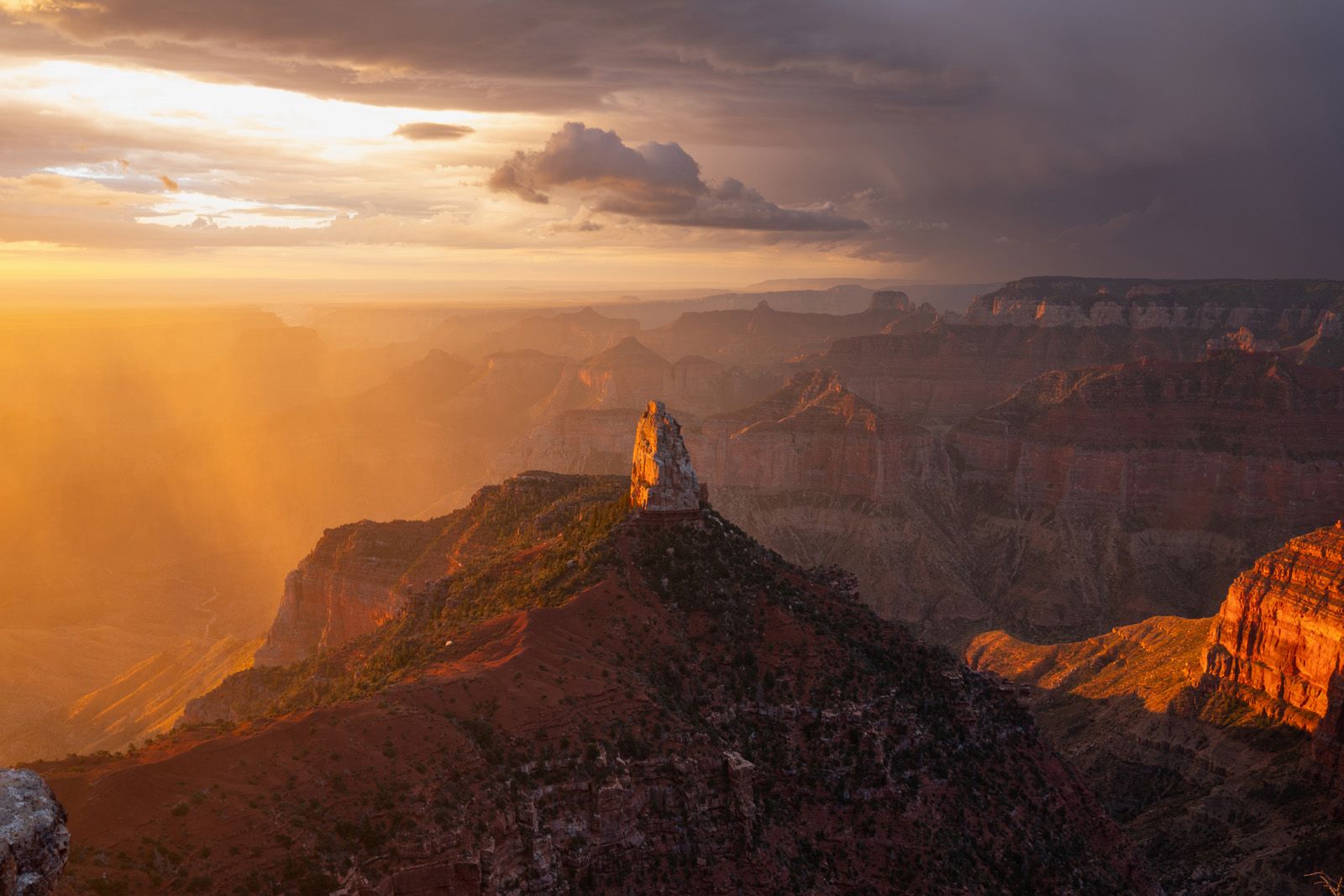
The day begins well before the sun appears above the horizon.
In the darkness, the canyon is reduced to shape and suggestion. As dawn approaches, subtle bands of color begin to emerge across the sky. The deep shadows of the canyon remain mysterious while the horizon glows with soft magentas, oranges, and blues.
This is often the best time to create images that emphasize atmosphere rather than detail.
A sturdy tripod becomes essential here. With low light levels, slower shutter speeds allow you to maintain image quality by keeping ISO settings low. A wide-angle lens between 16mm and 35mm can help capture the expansive sky while still incorporating canyon formations into the foreground.
Many photographers pack up as soon as the sun appears. The reality is that some of the most beautiful light often occurs during the twenty to thirty minutes before sunrise.

Sunrise: The Main Event
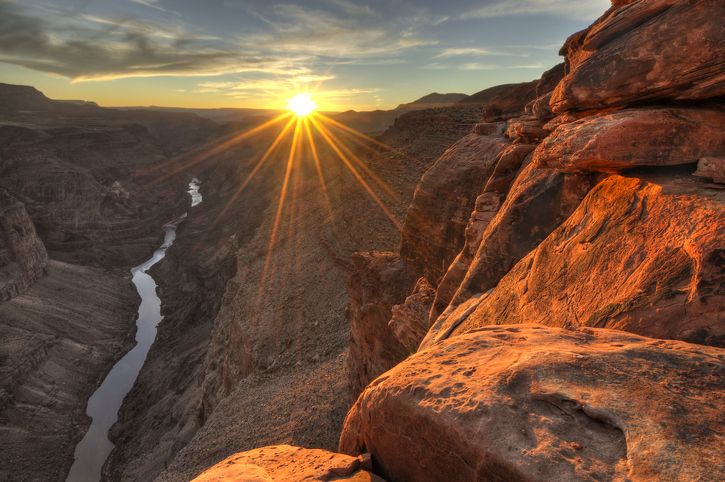
When the first sunlight reaches the canyon walls, everything changes!
Massive cliffs that appeared flat moments ago suddenly reveal texture, depth, and dimension. Layers of sandstone begin to glow in shades of gold, orange, and crimson. The interplay between illuminated formations and deep shadows creates natural contrast that guides the viewer's eye through the frame.
This is the moment when composition becomes critical.
Rather than trying to include everything, look for visual pathways through the landscape. Leading ridges, repeating layers, and isolated buttes can provide structure to an otherwise overwhelming scene. A mid-range zoom lens, such as a 24-70mm, often becomes more valuable than an ultra-wide lens during sunrise. The ability to tighten compositions allows photographers to emphasize the dramatic relationship between light and shadow.
As brightness increases, adjust your shutter speed accordingly and consider bracketing exposures to preserve detail in both highlights and shadows!
Mid-Morning: Discovering Details
As the golden light fades, many visitors leave for breakfast.
Photographers should stay.
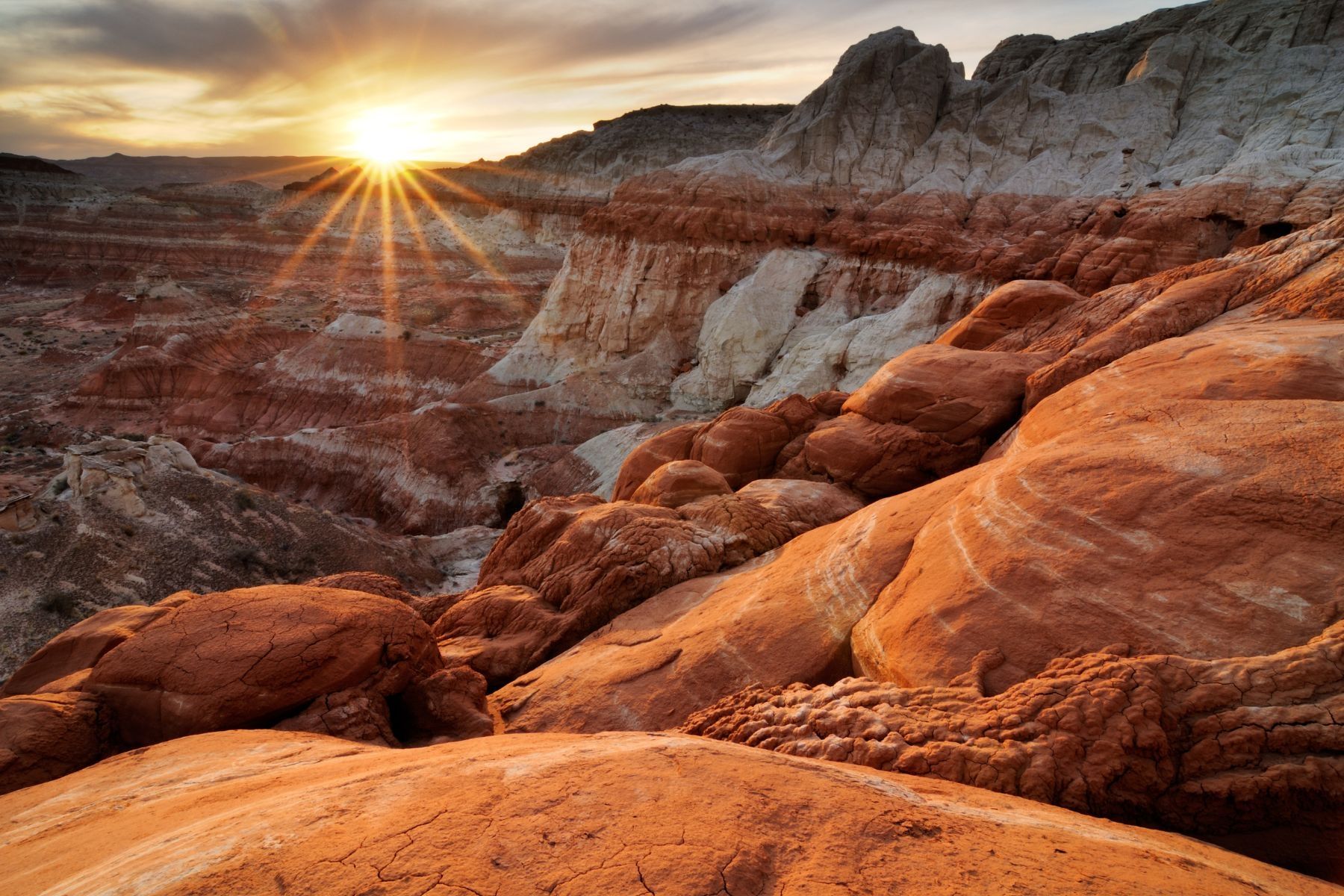
The softer directional light of mid-morning is ideal for exploring smaller scenes hidden within the vastness of the canyon. This is when telephoto lenses become powerful creative tools.
A 70-200mm or 100-500mm lens allows photographers to isolate rock formations, highlight repeating patterns, and compress distant layers into graphic compositions.
Suddenly, the Grand Canyon becomes a collection of intimate landscapes.
A single illuminated ridgeline can become the entire subject. A patch of autumn foliage glowing against red sandstone can tell a story all its own. The goal shifts from documenting the canyon's scale to interpreting its character.
These images often become portfolio favorites because they offer something unexpected!
Midday: Embracing Light
Conventional wisdom tells photographers to avoid midday light.
At the Grand Canyon, that advice isn't always true.
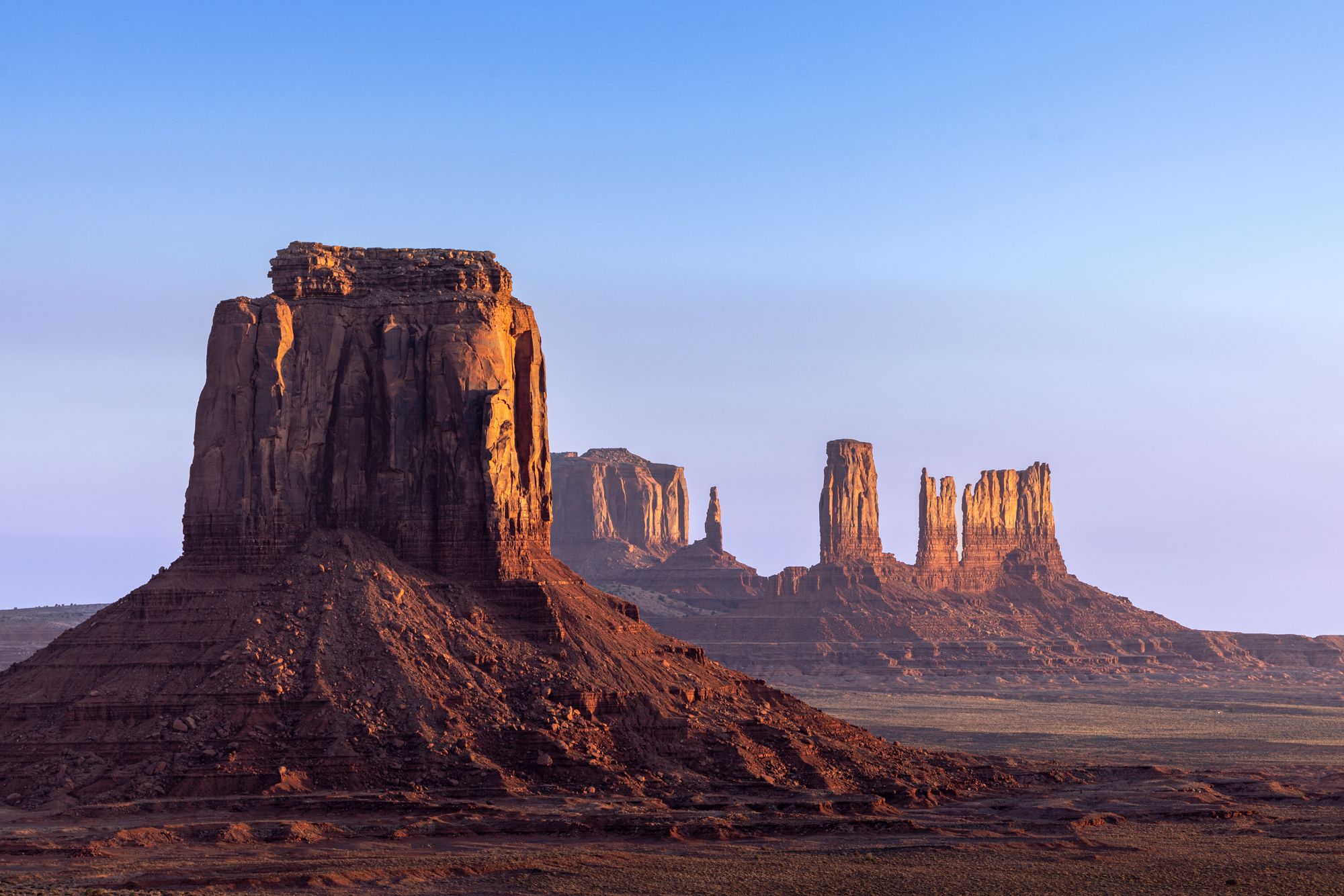
The high sun creates deep shadows that emphasize texture and geological complexity. While broad scenic images may become more challenging, abstract and graphic compositions often thrive under these conditions.
This is an excellent time to experiment!
Look for strong shadow patterns cutting across canyon walls. Search for repeating textures, color contrasts, and isolated formations. Black-and-white photography can be particularly effective during these hours, emphasizing shape and form over color.
Switching to a telephoto lens can help simplify compositions and eliminate distracting elements.
Rather than fighting the light, learn to use it!
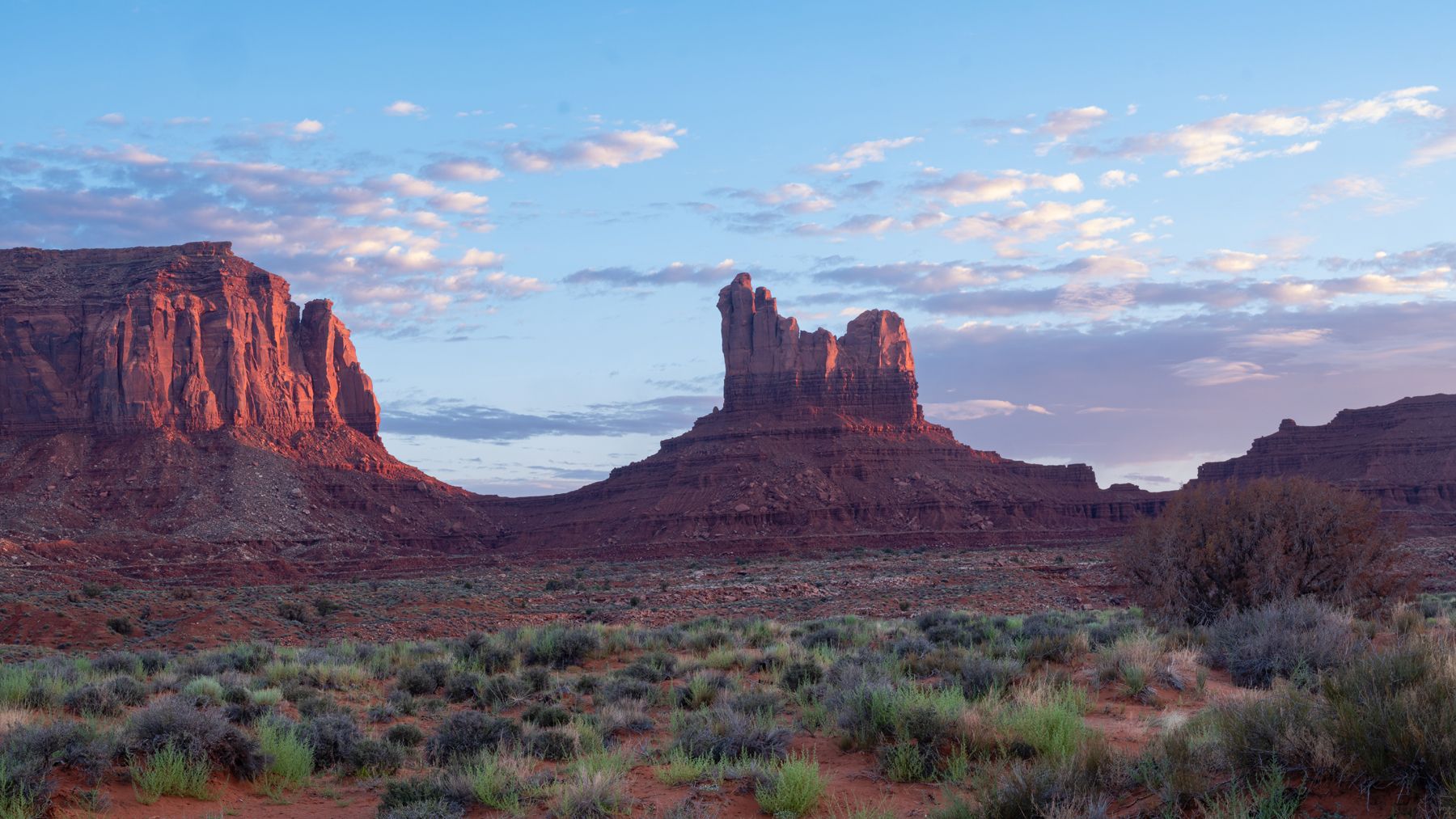
Afternoon: The Canyon Changes
As the sun begins its descent, the canyon undergoes another transformation!
The harsh contrast of midday softens. Warm tones return to the landscape. Long shadows begin stretching across the canyon floor, creating depth and dimension.
This is often when photographers revisit locations they photographed earlier in the day. The scene may be familiar, but the light is entirely different! This can be an ideal time for layered compositions that showcase the immense scale of the canyon.
A graduated neutral density filter can help balance exposure between the bright sky and darker landscape while preserving detail throughout the frame.
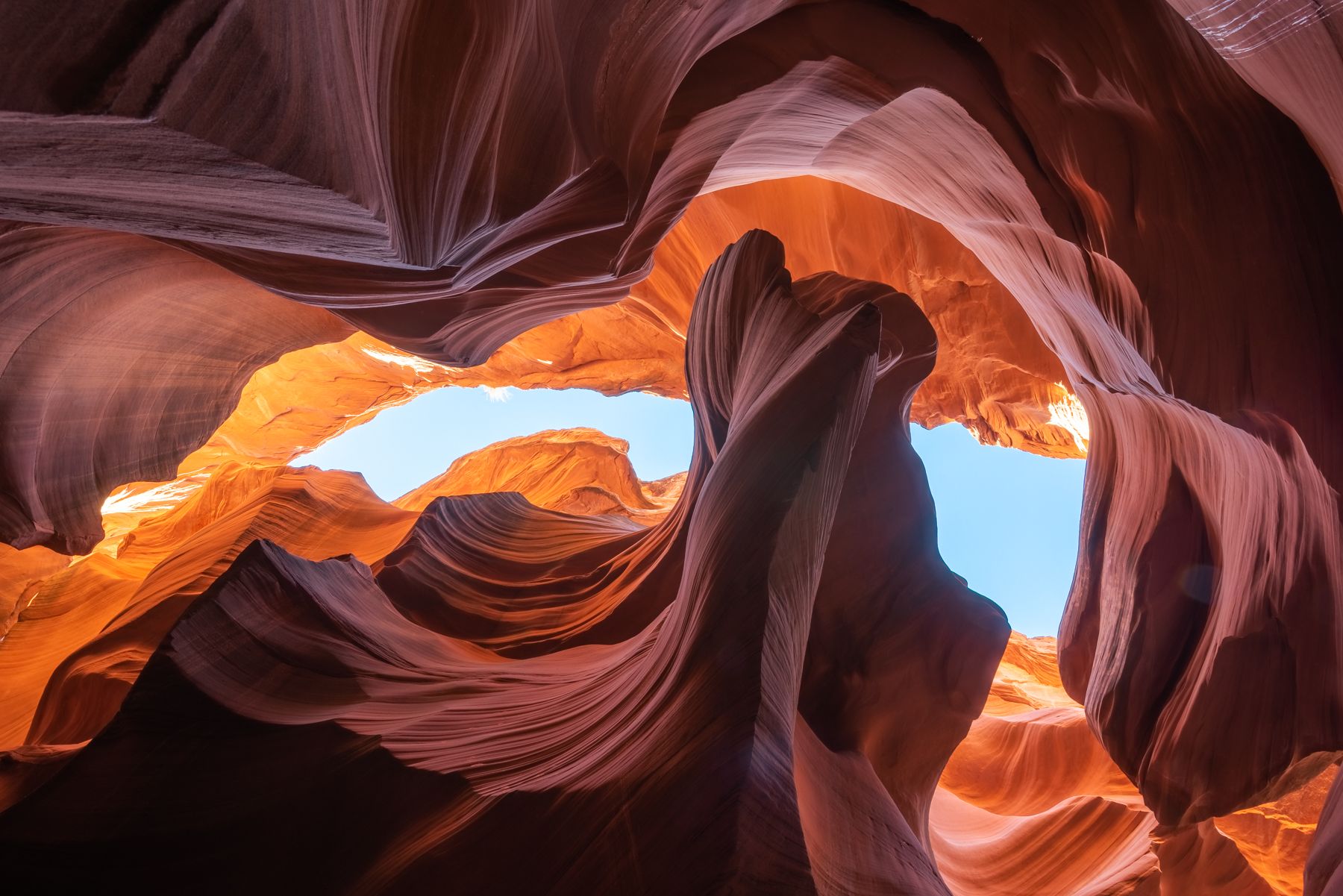
Sunset: Chasing Color and Atmosphere
Sunset is not simply a repeat of sunrise!
The canyon receives light differently in the evening. Formations that remained in shadow during the morning may now glow brilliantly. Warm sidelight reveals textures that were previously hidden.
This is the time to create images filled with drama!
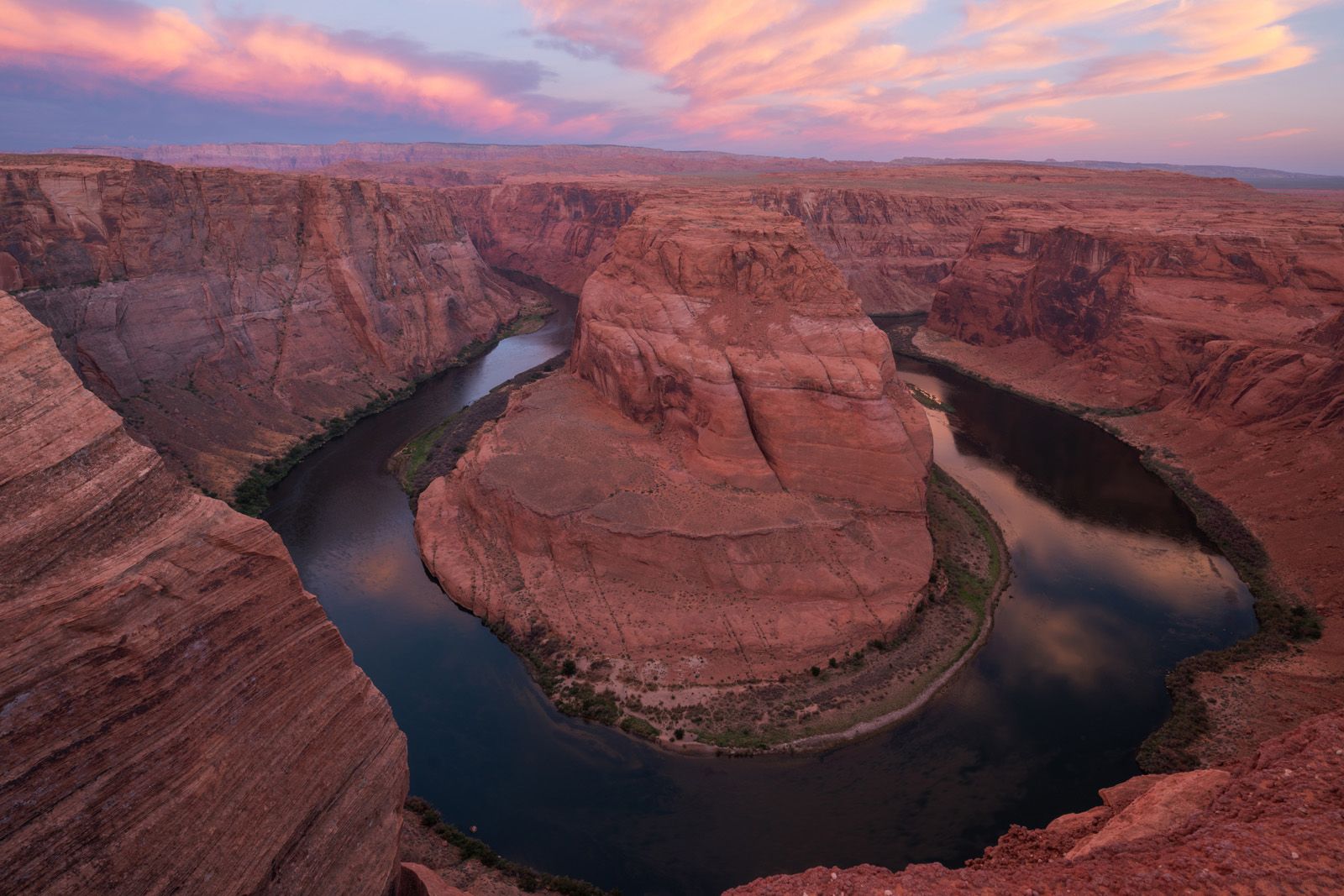
Keep an eye on the sky behind you as much as the horizon. Some of the strongest sunset photographs occur when reflected color illuminates the canyon walls after the sun itself has disappeared.
A wide-angle lens helps capture expansive scenes, while a telephoto lens can isolate distant peaks bathed in the day's final streaks of light.
Flexibility is key. The best compositions often reveal themselves in the final moments before darkness.
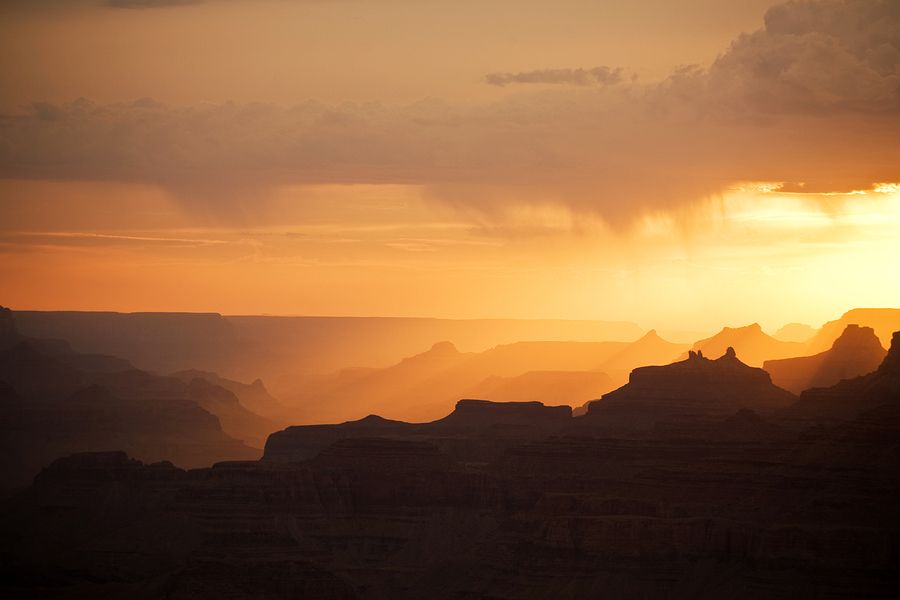
Blue Hour: The Photographer's Secret Weapon
Most visitors are already heading back to their vehicles when blue hour begins.
The sky takes on deep cobalt tones while the canyon settles into a quieter, more subdued palette. Colors become cooler and more refined. The landscape feels calmer, almost contemplative.
Blue hour offers an opportunity to create photographs that stand apart from the typical Grand Canyon portfolio.
Long exposures become increasingly useful. A tripod is essential, and careful attention to focus ensures sharp results in the fading light. Rather than dramatic contrast, these images rely on mood, color harmony, and subtle detail.
The result is often a photograph that feels less like a postcard and more like a personal experience.
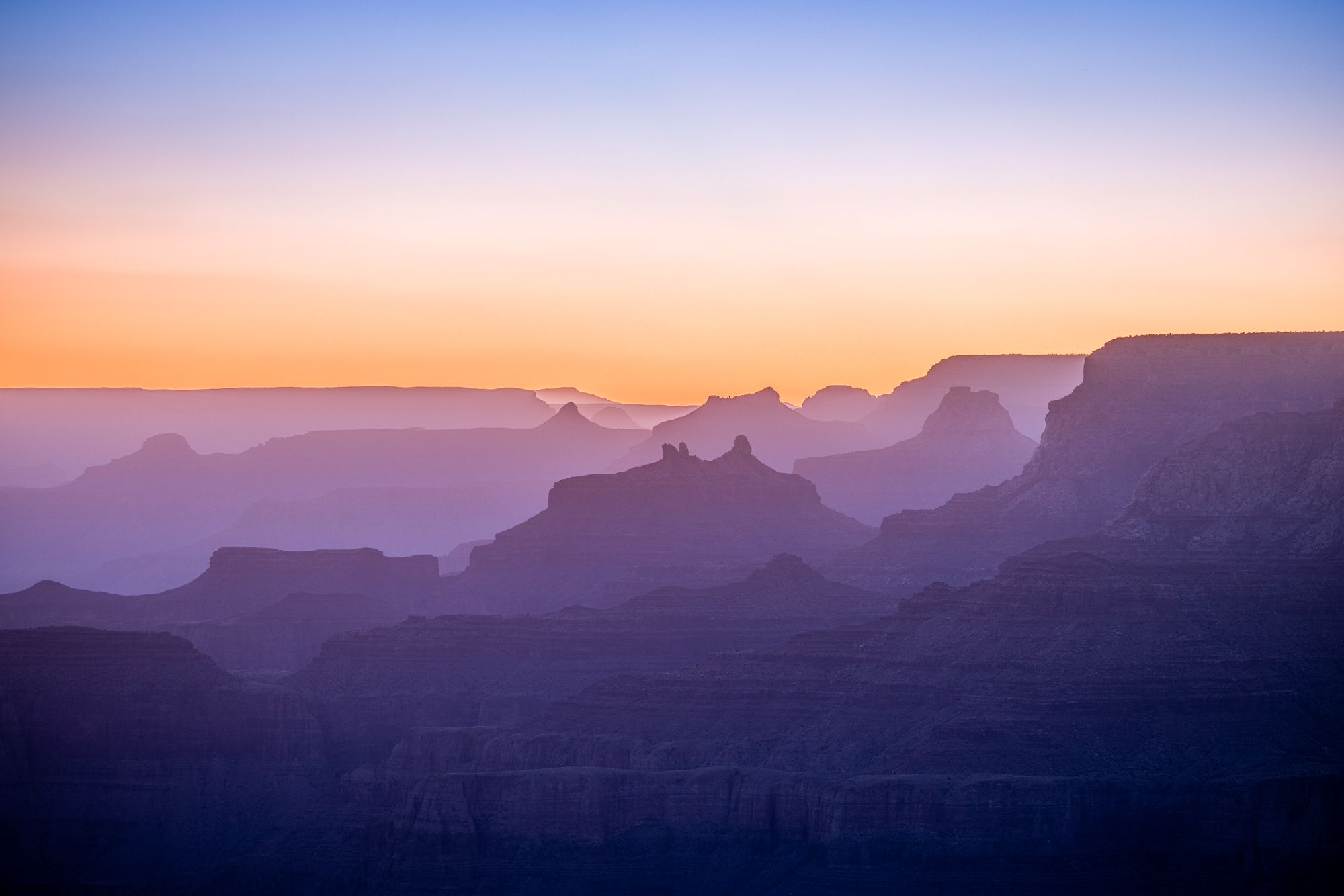
One Location, Countless Possibilities
The most successful Grand Canyon photographers understand that great portfolios are built through variety.
A single day can yield sweeping vistas, intimate landscapes, abstract studies, dramatic light, atmospheric scenes, and quiet blue-hour images. Each photograph contributes something different to the story of the place.
That variety is what transforms a collection of images into a cohesive portfolio.
Autumn is particularly rewarding because the lower sun angle, comfortable temperatures, and often-clear conditions maximize opportunities throughout the entire day. Instead of chasing one iconic photograph, photographers can immerse themselves in the changing rhythms of the canyon and return home with a body of work that reflects its true complexity.
The Grand Canyon doesn't reveal itself all at once. It unfolds hour by hour, light by light, scene by scene. The photographers willing to stay for the entire journey are often rewarded with far more than a single great image!
Interested in joining a Grand Canyon in Autumn expedition and expanding your portfolio?
Visit us: https://backcountryjourneys.com/destinations/American-Southwest/Autumn-in-Grand-Canyon-Photo-Workshop
 Autumn in Grand Canyon
 Lodge-Based Photo Workshop
From $6,995.00
Up To 7 Guests
Fitness Level 1 - What's This?
Wanna Get Away?
Starts
Current Price:$0.00
Start: Flagstaff, AZ
Led By
Start: Flagstaff, AZ
Led By

Backcountry Journeys
Connecting Passionate People To
Exceptional Experiences.
Exceptional Experiences.
Business Hours:
Mon-Fri, 8AM-4PM MT
928-478-1521
adventure@backcountryjourneys.com
Mon-Fri, 8AM-4PM MT
928-478-1521
adventure@backcountryjourneys.com
arrow_drop_down_circle
Divider Text
All Images & Content Are Property Of Backcountry Journeys Photography Tours, Workshops & Safaris LLC - Copyright 2026


About Us
Receive a Digital Trip Catalog
Find an upcoming photography tour with our interactive catalog.