2025 Travelers' Choice

About Backcountry Journeys
Why Choose Backcountry Journeys
If you're considering a photography trip, hear why Backcountry Journeys delivers the best experience in the industry.Frequently Asked Questions
If you're new to photography trips, or new to BCJ, you can find our common travel questions here.Fitness Levels
Our trips vary on physical intensity, and by reviewing our fitness levels, you can find out which trips may be more challenging, or aligned more closely with your comfort level.Meet The Crew
We've built an amazing team of experienced guides, and dedicated office staff that elevate your travel experience. Get to know their backgrounds, and hear their stories.Loyalty Program
We reward our frequent photo adventurers with exclusive discounts on amazing photography trips.Contact Us
If you need to get in touch with our office staff, or have additional business inquiries, you can find our information here.Refer a Friend
Know someone perfect for one of our tours? Recommend them through this quick form.Stay Up To Date On All Things
Backcountry Journeys
Backcountry Journeys
Our Photography Community
Our Webinars
Our regularly hosted webinars provide photography instruction from our own guides on a wide range of topics.Our Education Portal
Explore our library of articles that cover everything from common questions, to in-depth guides on how to achieve that perfect shot.Community Testimonials
We're proud to foster an amazing group of photo travelers, and here you can find their stories from their past adventures.Resources For Photographers
About Our Company
Resources For Photographers
About Our Company
How Color Transforms Arctic Landscape Photography
Published November 5, 2026
Greenland's Arctic landscapes are often associated with endless expanses of ice, brilliant blue water, snow-covered mountains, and muted coastal scenery. For landscape photographers, these environments offer an incredible opportunity to explore scale, texture, light, and composition. But there's another element that can make Arctic photography especially compelling: color.
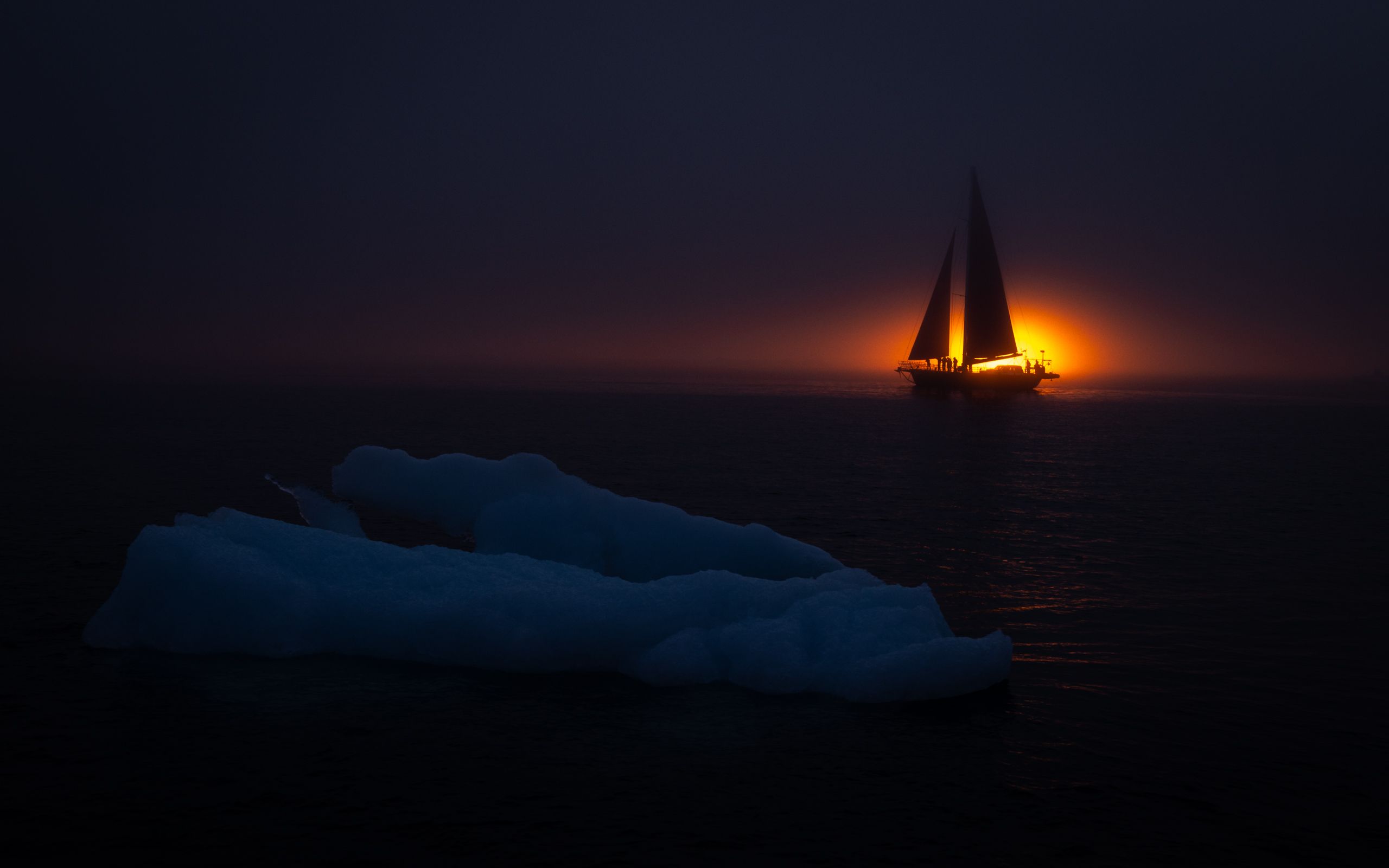
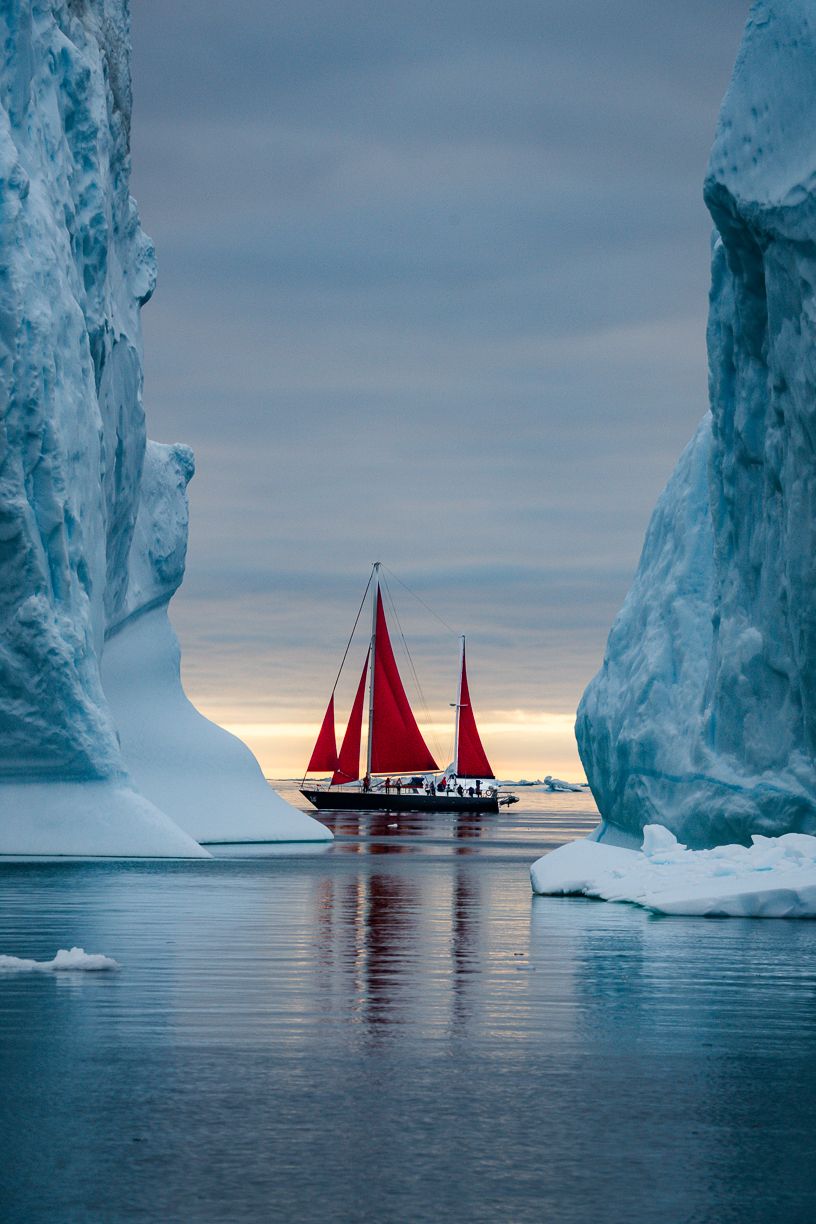
In a landscape dominated by cool tones and neutral surroundings, even a small splash of color can completely transform an image. A red sail against a towering iceberg, a brightly painted coastal home along a rocky shoreline, or a warm sunset reflected across icy water can introduce contrast, establish a focal point, and give an otherwise minimalist composition a sense of visual energy.
Learning to recognize and work with these moments can help photographers create more intentional images, especially in destinations where the landscape itself can feel almost overwhelming in scale.
Understanding Color Contrast in Arctic Photography
One of the most effective ways to create visual interest in landscape photography is through contrasting colors. Complementary colors, which sit opposite one another on the color wheel, naturally draw the viewer's attention and can help distinguish a subject from its surroundings.
In Greenland, the combination of red and blue offers a particularly striking example. The cool blue tones of glacial ice and Arctic water provide a natural backdrop for warmer colors, making red objects stand out almost immediately.
This contrast is especially noticeable when photographing traditional Greenlandic boats with vivid red sails. Against enormous ice formations, the sails introduce a concentrated area of warmth that gives the viewer somewhere to focus. Rather than competing with the scale of the landscape, the color creates a visual connection between the foreground subject and the surrounding environment.
Photographers can use this relationship to build more deliberate compositions. Instead of simply documenting an impressive iceberg or coastal scene, look for opportunities to introduce contrasting colors that give the image additional depth and character.

Using a Pop of Color to Establish a Focal Point
When photographing expansive landscapes, one of the biggest challenges is helping viewers understand where to look. A towering iceberg can be visually impressive, but without a clear focal point or compositional anchor, the image may lack a sense of direction.
Introducing a colorful subject can solve this problem.
A small boat with red sails positioned against a massive iceberg gives the viewer an immediate point of reference. It also introduces a sense of scale, helping communicate just how enormous the surrounding ice formations really are.
This technique works particularly well in minimalist landscape photography. Rather than filling the frame with multiple competing subjects, photographers can use a single colorful element to create balance and visual hierarchy.
When composing these images, consider where the colorful subject sits within the frame. Placing it near an intersection of the rule of thirds can create a natural focal point while allowing the surrounding landscape to retain its presence. Leaving plenty of negative space around the subject can also emphasize the contrast between the small boat and the immense Arctic environment.
Sometimes, the strongest composition is the simplest one.
Finding Color Beyond the Icebergs
While the ice formations of Disko Bay are an obvious photographic attraction, some of the most interesting opportunities to work with color can be found along the coastline.
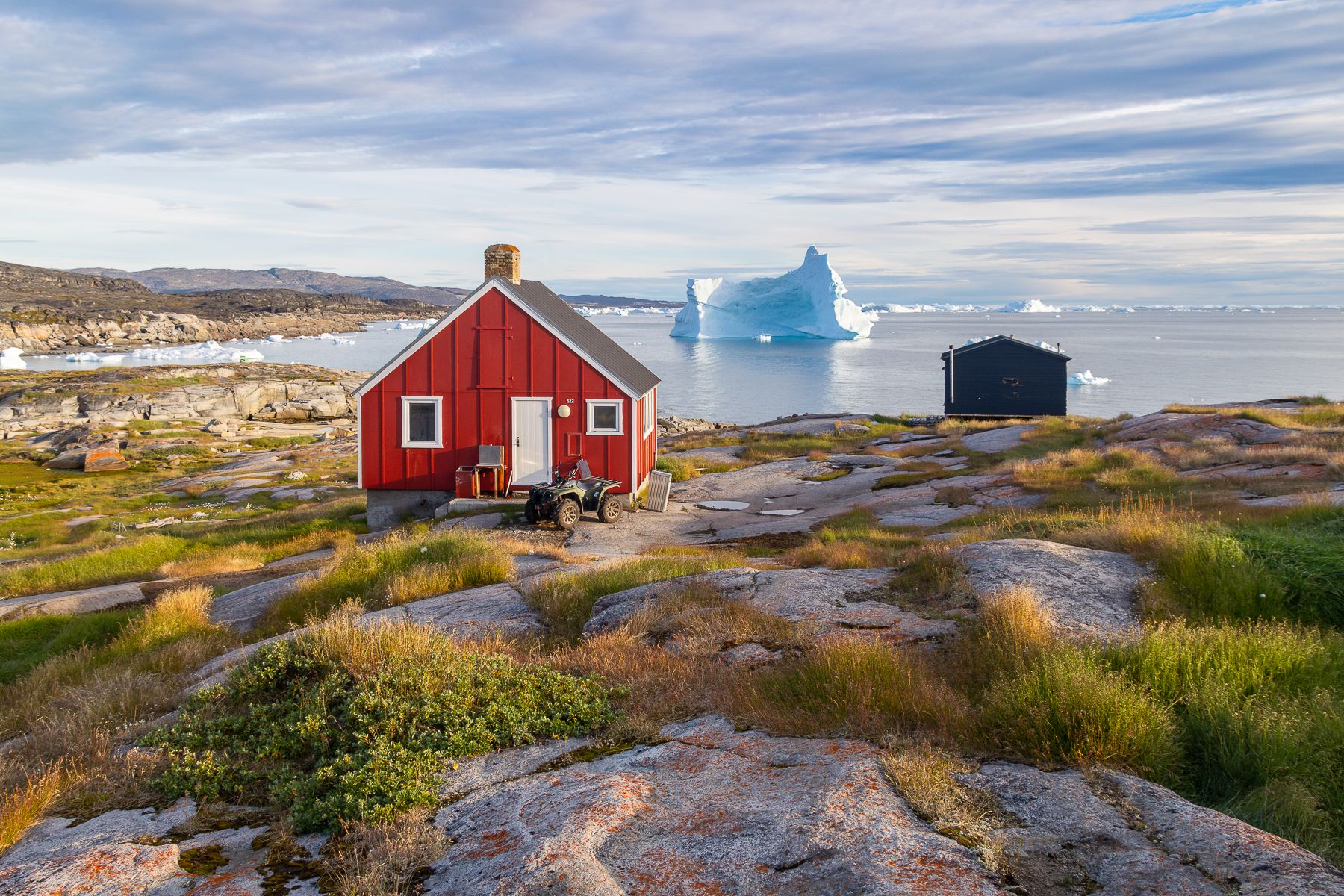
Greenland's coastal communities offer a different visual experience from the open water. Colorful buildings stand out against rocky terrain, muted skies, and the surrounding sea, creating opportunities to explore color relationships on a smaller scale.
The settlement of Rodebay, also known as Oqaatsut, offers photographers an opportunity to capture colorful homes alongside Greenland's dramatic coastline. With fewer than 50 residents, this small community provides a glimpse into traditional Greenlandic life and a different perspective on the region's visual character.
When photographing coastal settlements, look beyond the buildings themselves.
Consider how individual colors interact with the surrounding environment. A brightly painted home might become the primary subject, while a neighboring building, fishing boat, or stretch of coastline creates a secondary point of interest.
Pay attention to the relationship between foreground and background elements, too. A colorful building photographed against a neutral landscape can create a strong, graphic composition, while including more of the surrounding environment can help tell a broader visual story.
These scenes are a reminder that compelling landscape photography doesn't always require dramatic mountains or enormous ice formations. Sometimes, the most interesting compositions are found in the smaller details of a place.
Photographing Greenland's Red Sails and the Ice of Disko Bay
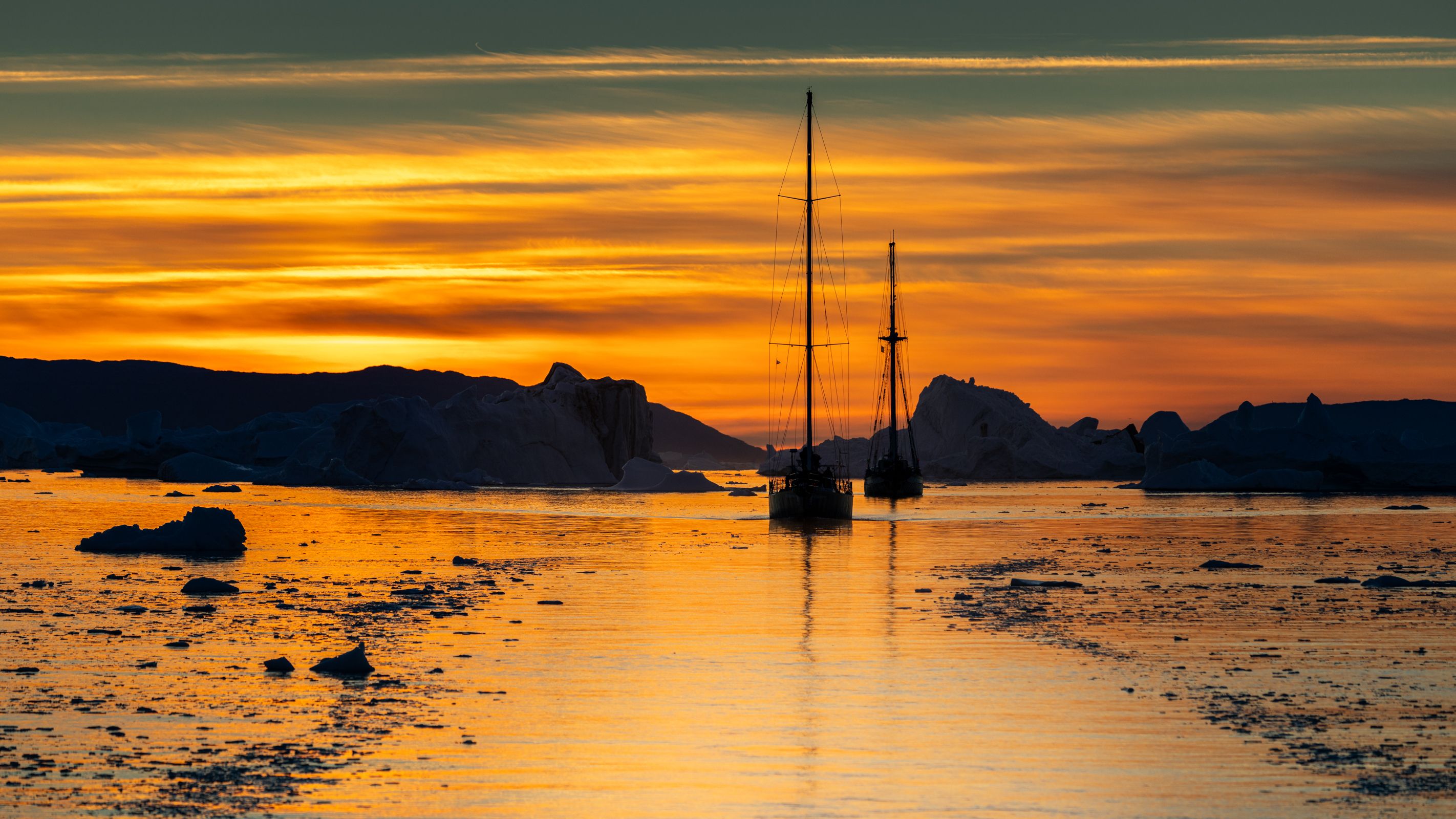
Few photographic opportunities bring these concepts together quite like photographing Greenland's red-sailed boats against the enormous ice formations of Disko Bay.
The combination of vibrant sails, shifting reflections, and cathedral-like icebergs creates an environment where color and composition work together naturally. But capturing these scenes requires more than simply pointing a camera toward an impressive landscape.
Positioning, timing, focal length, and perspective all influence the final image. A slight change in the boat's angle can alter how the sails interact with an iceberg in the background. Moving to a different position can introduce reflections or separate overlapping elements, creating a cleaner composition.
This is one reason dedicated photography access can make such a difference. On the Backcountry Journeys Greenland: Red Sails & Disko Bay Photo Workshop, two coordinated red-sailed yachts are reserved specifically for photographers. Their crews work with photography guides to adjust positioning, angles, and timing around the icebergs, reflections, and changing Arctic light.
The workshop also explores Ilulissat Icefjord and the colorful coastal settlement of Rodebay, providing opportunities to photograph Greenland's visual character from multiple perspectives.
Ultimately, photographing the Arctic in color is about learning to recognize the relationships between subjects and their surroundings. A small splash of red can transform an enormous landscape, while a restrained palette can reveal details that might otherwise go unnoticed.
The next time you find yourself photographing an expansive landscape, look beyond the obvious subject.
Pay attention to the colors already present, consider how they interact, and think about how a single contrasting element might change the entire composition!
Sometimes, the smallest detail makes the biggest difference.

 Greenland: Red Sails & Disko Bay
Lodge-Based Photo Workshop
From $7,995.00
Up To 16 Guests
Fitness Level 1 - What's This?
Wanna Get Away?
Starts
Current Price:$0.00
Start: Ilulissat, Greenland
Led By
Start: Ilulissat, Greenland
Led By

Backcountry Journeys
Connecting Passionate People To
Exceptional Experiences.
Exceptional Experiences.
Business Hours:
Mon-Fri, 8AM-4PM MT
928-478-1521
adventure@backcountryjourneys.com
Mon-Fri, 8AM-4PM MT
928-478-1521
adventure@backcountryjourneys.com
arrow_drop_down_circle
Divider Text
All Images & Content Are Property Of Backcountry Journeys Photography Tours, Workshops & Safaris LLC - Copyright 2026


About Us
Receive a Digital Trip Catalog
Find an upcoming photography tour with our interactive catalog.