2025 Travelers' Choice

About Backcountry Journeys
Why Choose Backcountry Journeys
If you're considering a photography trip, hear why Backcountry Journeys delivers the best experience in the industry.Frequently Asked Questions
If you're new to photography trips, or new to BCJ, you can find our common travel questions here.Fitness Levels
Our trips vary on physical intensity, and by reviewing our fitness levels, you can find out which trips may be more challenging, or aligned more closely with your comfort level.Meet The Crew
We've built an amazing team of experienced guides, and dedicated office staff that elevate your travel experience. Get to know their backgrounds, and hear their stories.Loyalty Program
We reward our frequent photo adventurers with exclusive discounts on amazing photography trips.Contact Us
If you need to get in touch with our office staff, or have additional business inquiries, you can find our information here.Refer a Friend
Know someone perfect for one of our tours? Recommend them through this quick form.Stay Up To Date On All Things
Backcountry Journeys
Backcountry Journeys
Our Photography Community
Our Webinars
Our regularly hosted webinars provide photography instruction from our own guides on a wide range of topics.Our Education Portal
Explore our library of articles that cover everything from common questions, to in-depth guides on how to achieve that perfect shot.Community Testimonials
We're proud to foster an amazing group of photo travelers, and here you can find their stories from their past adventures.Resources For Photographers
About Our Company
Resources For Photographers
About Our Company
Photography Without a Script: The Art of Working With an Unpredictable Arctic

Published November 10, 2026
Some of the most compelling photographs happen when things don't go according to plan. A wildlife encounter unfolds differently than expected. The light changes just as a subject enters the frame. A shifting perspective reveals a composition that wasn't visible moments before.
For photographers, learning to recognize these opportunities is just as important as knowing how to use a camera.
Few environments put that ability to the test quite like the Arctic.
In Svalbard, Norway, the landscape is constantly changing. Sea ice moves with the currents, weather conditions shift across enormous fjords, and wildlife follows natural patterns that rarely align with a photographer's schedule. There is no guarantee that a polar bear will appear where you expect it, that a whale will surface within reach of your lens, or that the light will cooperate with the composition you've imagined.
That unpredictability is precisely what makes photographing the Arctic so rewarding.
An expedition through Svalbard offers an opportunity to develop a different kind of photographic awareness: one built around anticipation, adaptability, and the ability to recognize a compelling image before the moment disappears.
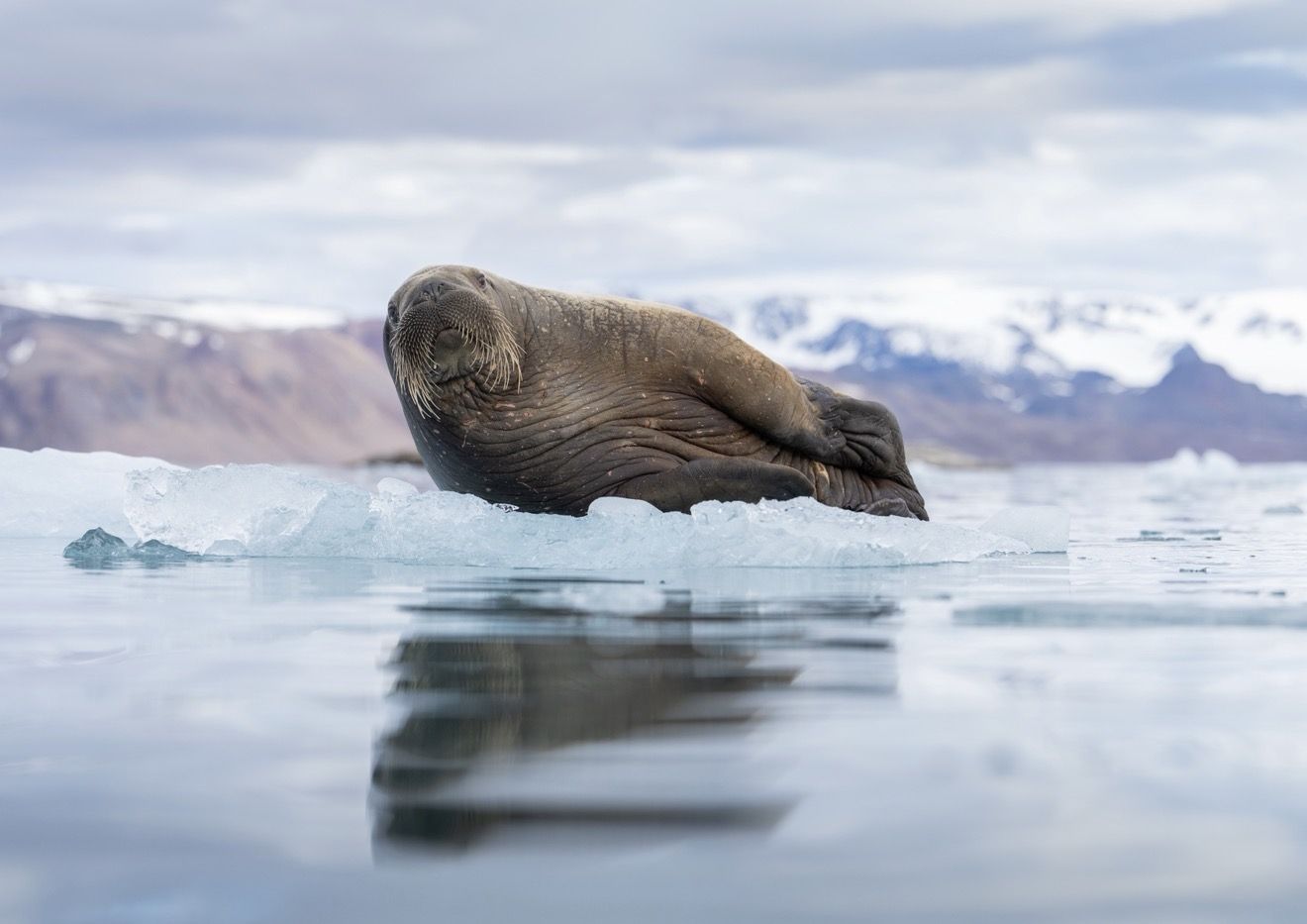
Learning to Anticipate the Photograph
Wildlife photography often involves a considerable amount of waiting. But successful wildlife photographers aren't simply waiting for something to happen. They're observing, looking for patterns, and anticipating what might happen next.
In Svalbard, that distinction can make all the difference.
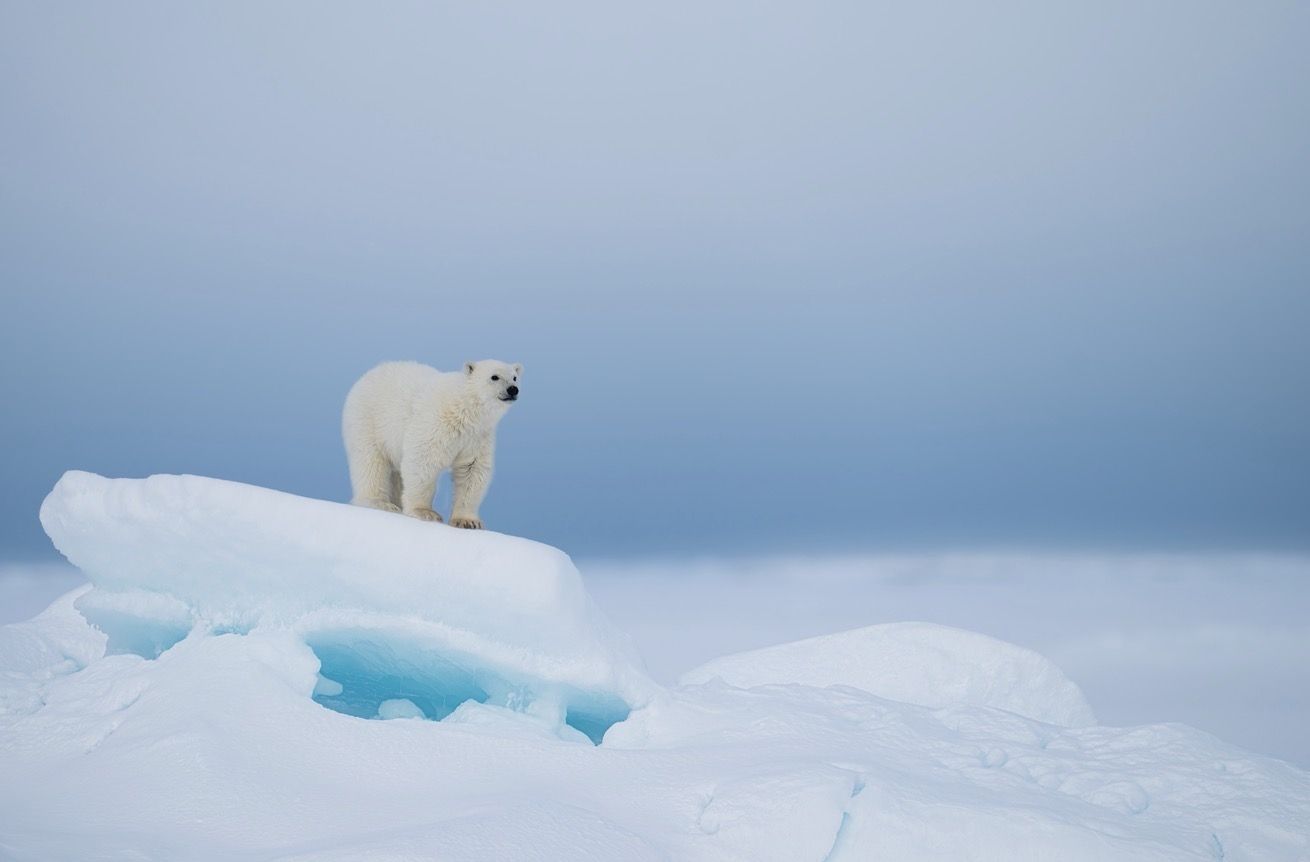
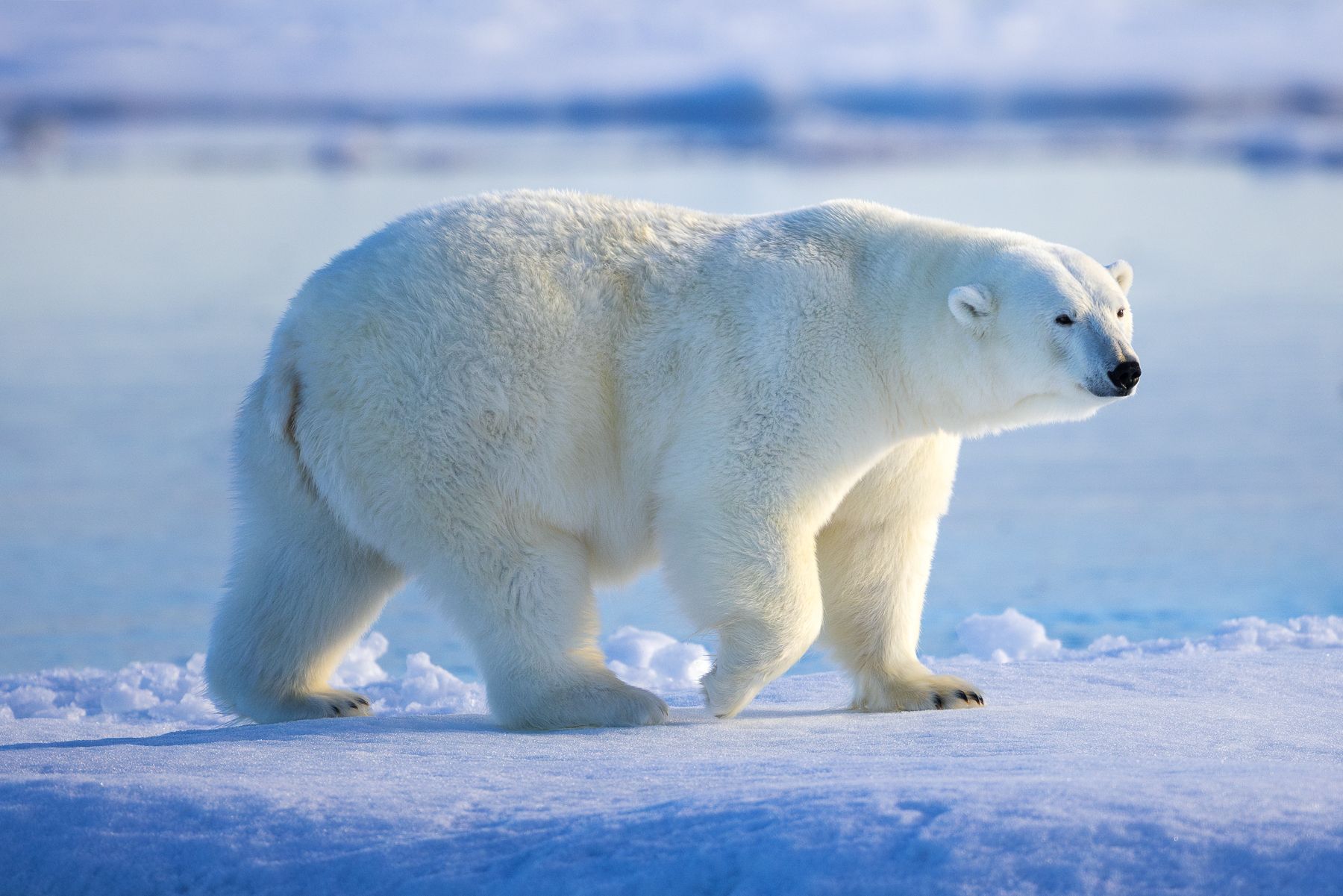
Consider photographing a polar bear moving across a stretch of sea ice. A traditional approach might involve tracking the animal and waiting for a clear portrait. But what happens when the bear pauses, looks toward the horizon, or begins moving along the edge of an iceberg? Each change in behavior introduces a different photographic possibility.
The strongest image might not be the closest view of the animal. It could be a wider composition that places the bear within the surrounding landscape, emphasizing the scale of its environment. It might be a moment of movement, an interaction with another animal, or a brief expression that reveals something about its behavior.
Learning to anticipate these moments starts with observation. Watching an animal's direction of travel, posture, and interactions can help photographers make more informed decisions about framing and camera settings before the action unfolds.
The same principle applies to marine wildlife. When photographing whales, for example, recognizing patterns of movement and surfacing behavior can help photographers prepare for a breach, a tail fluke, or a brief appearance at the surface.
The Arctic rewards photographers who remain engaged even when the camera isn't at their eye. Sometimes the most important part of capturing a photograph happens before pressing the shutter.
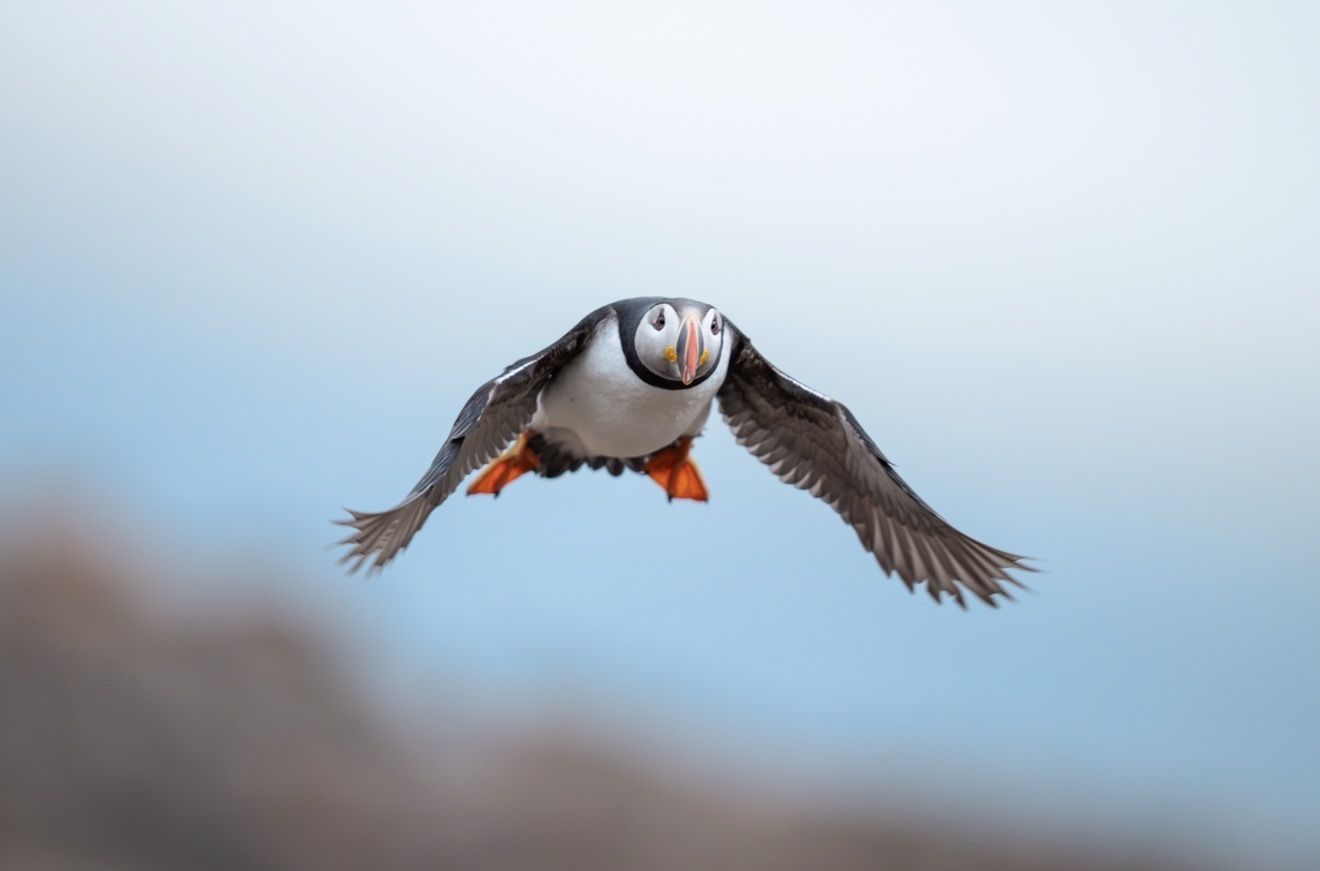
A Moving Perspective Changes Everything
Photographing from a fixed location offers a certain degree of control. You can choose your position, establish a composition, and wait for the light or subject to cooperate.
A ship-based expedition introduces a different set of considerations.
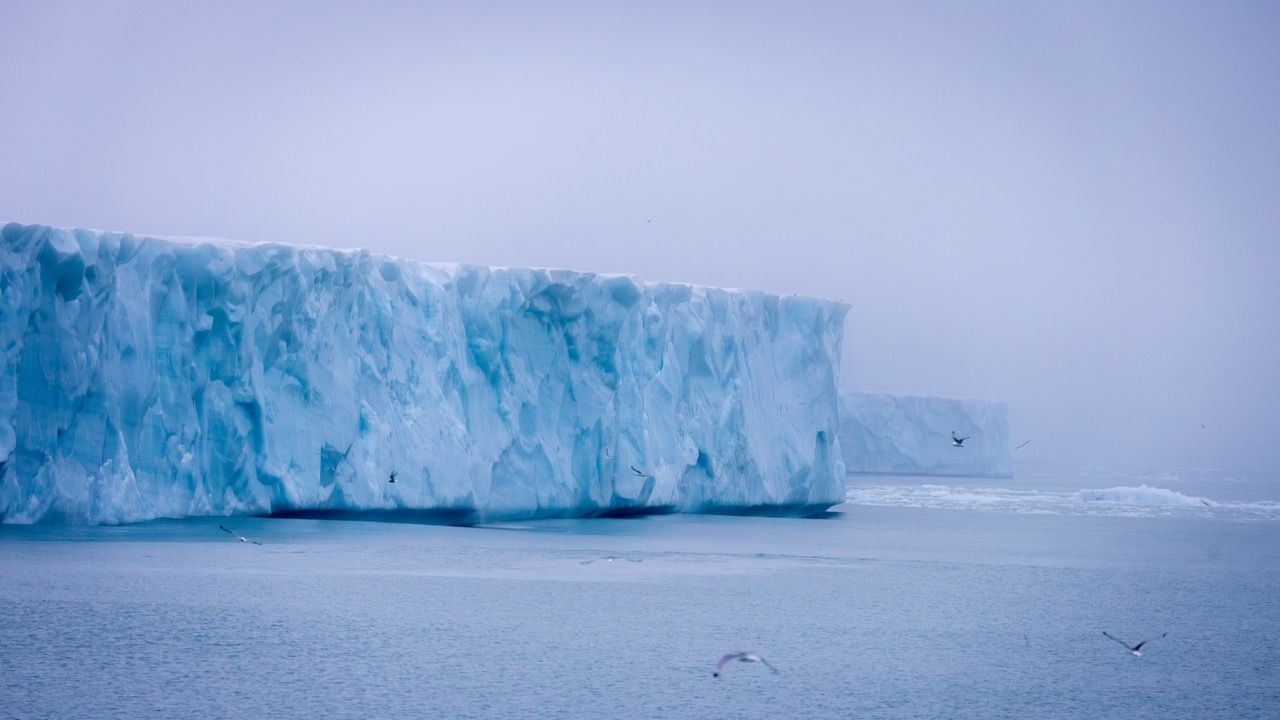
As the vessel moves through Svalbard's fjords and along its ice-covered coastlines, the photographic perspective is constantly evolving. A mountain that initially appears as a distant backdrop might gradually become the dominant feature of a composition. An iceberg that looks relatively unremarkable from one angle might reveal intricate textures and dramatic shapes as the viewing position changes.
This creates an interesting challenge: photographers must learn to recognize compositions while their surroundings are moving.
Rather than committing to a single viewpoint, it becomes important to continually reassess the scene. How does the relationship between the foreground and background change as the ship moves? Does a wider focal length better communicate the scale of the landscape, or does a tighter composition reveal details that might otherwise be overlooked?
The water itself becomes part of the creative process. Reflections, floating ice, and subtle variations in color can introduce foreground elements that add depth to an image. Even a seemingly simple photograph of a glacier can become more compelling when the composition incorporates the water and ice surrounding it.
Zodiac excursions introduce another perspective. These smaller vessels allow photographers to explore closer to the waterline, navigate along coastlines, and experience the landscape from a more intimate vantage point.
The result is a photographic environment that encourages experimentation. Instead of looking for one perfect angle, photographers have opportunities to explore how a subject changes as their relationship to it changes.
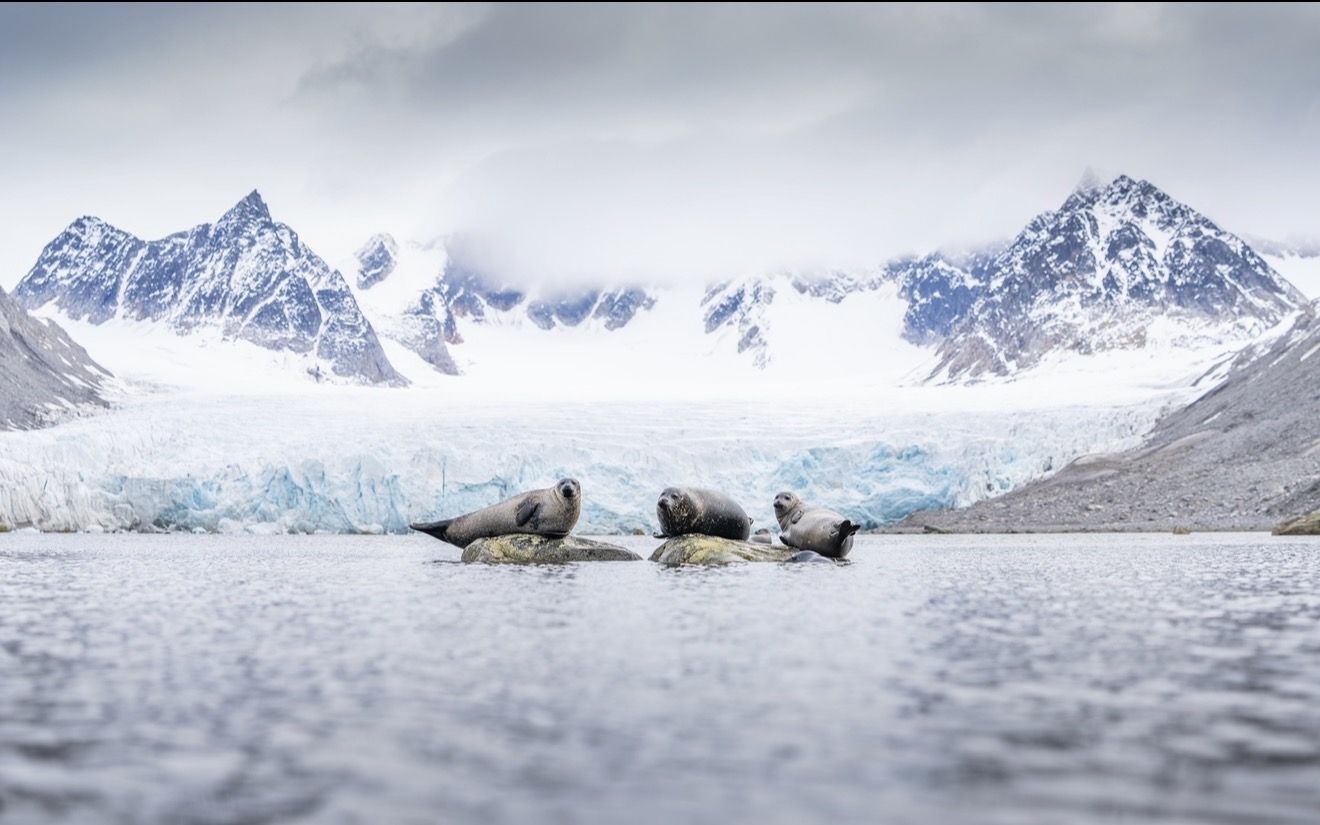
Working With Light That Refuses to Cooperate
Arctic light can be beautiful, but it doesn't always behave the way photographers might expect.
Cloud cover, atmospheric conditions, reflective snow, and expansive ice fields all influence how light interacts with the landscape. The result can be subtle tonal differences, muted colors, and scenes where highlights and shadows are less pronounced than they might be in more temperate environments.
For photographers accustomed to chasing dramatic golden-hour light, this presents an opportunity to approach exposure and composition differently.
Overcast conditions, for example, can reveal intricate details in ice formations without the harsh contrast created by direct sunlight. Soft light can also help preserve texture across snow-covered landscapes, while breaks in the clouds may introduce dramatic patches of illumination across distant mountains.
Reflective surfaces introduce another challenge. Snow and ice can easily mislead a camera's metering system, sometimes resulting in underexposed images.
Understanding exposure compensation and monitoring the histogram can help preserve the brightness of Arctic scenes without losing important detail.
But technical adjustments are only part of the equation. Photographers must also learn to recognize when the available light is better suited to a particular subject.
A muted, overcast afternoon might not produce the dramatic landscape image you initially envisioned, but it could be ideal for photographing the subtle patterns of sea ice or the textures of a glacier.
Rather than waiting for ideal conditions, the challenge is learning to make the most of the conditions available.
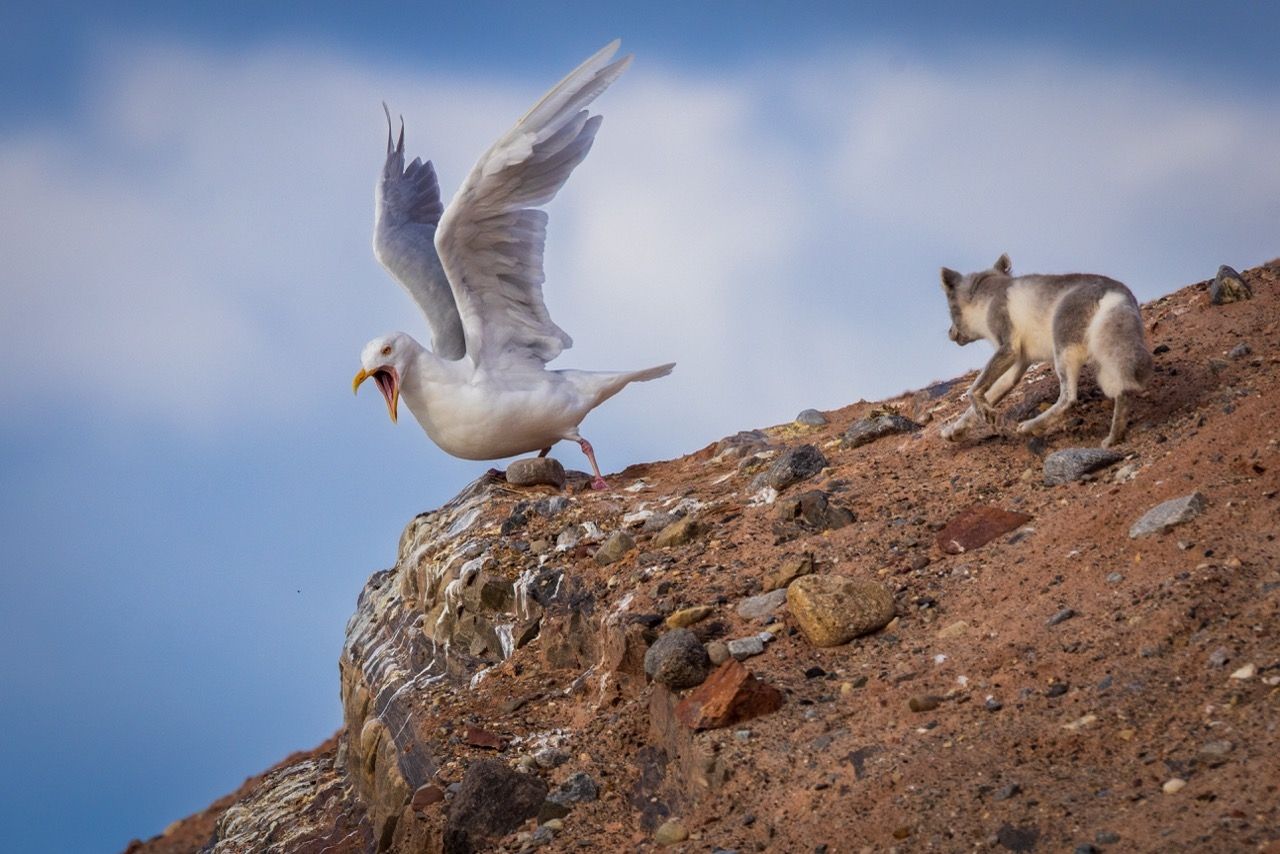
Finding the Photograph Beyond the Obvious Subject
When photographing somewhere as visually extraordinary as Svalbard, it's easy to gravitate toward the most recognizable subjects. Polar bears, glaciers, whales, and towering Arctic mountains naturally attract attention.
But compelling photography doesn't always require a dramatic subject.
Some of the most interesting images can come from details that initially seem insignificant: the repeating patterns of fractured ice, the contrast between dark water and white snow, the textures along a glacier's edge, or the relationship between a small seabird and an enormous stretch of coastline.
These details can provide a different way to interpret the Arctic.
A close composition of ice formations might become an abstract study of shape and texture. A distant wildlife subject surrounded by negative space can communicate isolation and scale more effectively than a tightly framed portrait. Even a relatively simple scene can become visually engaging when photographers pay attention to lines, patterns, and the relationships between elements within the frame.
This is where slowing down becomes valuable.
Instead of moving immediately from one major sighting to the next, take time to study the surrounding environment. Look beyond the obvious subject. Consider how the photograph might communicate the atmosphere of a place rather than simply document what was there.
A strong expedition portfolio should reflect more than the animals encountered. It should convey the experience of being there.
Photographing the Arctic Means Embracing the Unexpected
No two days in Svalbard are exactly alike.
Wildlife movements, sea ice, weather, and light all influence where an expedition can travel and what photographic opportunities might emerge.
That flexibility is an important part of the experience. Rather than following a rigid schedule, the expedition can adapt its route around changing conditions and wildlife activity, allowing photographers to respond to the environment as it unfolds.
Over 11 days and 10 nights, the Svalbard Ultimate Arctic Expedition combines ship-based exploration, Zodiac excursions, wildlife encounters, and dedicated photographic instruction in one of the world's most extraordinary wilderness environments.
But perhaps the greatest takeaway isn't a particular photograph or a specific wildlife encounter.
It's the ability to approach photography differently.
To recognize that a changing perspective can reveal an entirely new composition. To understand that challenging light can create opportunities rather than limitations. To anticipate a moment instead of simply reacting to it. And to recognize that the most meaningful photograph might be something you never expected to capture.
The best Arctic photographs aren't necessarily the ones you set out to make. They're the ones you're prepared to recognize when the opportunity presents itself.
 Svalbard: Ultimate Arctic Expedition
Ship-Based Photo Workshop
From $17,995.00
Up To 12 Guests
Fitness Level 1 - What's This?
Wanna Get Away?
Starts
Current Price:$0.00
Start: Longyearbyen, Norway
Led By
Start: Longyearbyen, Norway
Led By

Backcountry Journeys
Connecting Passionate People To
Exceptional Experiences.
Exceptional Experiences.
Business Hours:
Mon-Fri, 8AM-4PM MT
928-478-1521
adventure@backcountryjourneys.com
Mon-Fri, 8AM-4PM MT
928-478-1521
adventure@backcountryjourneys.com
arrow_drop_down_circle
Divider Text
All Images & Content Are Property Of Backcountry Journeys Photography Tours, Workshops & Safaris LLC - Copyright 2026


About Us
Receive a Digital Trip Catalog
Find an upcoming photography tour with our interactive catalog.