2025 Travelers' Choice

About Backcountry Journeys
Why Choose Backcountry Journeys
If you're considering a photography trip, hear why Backcountry Journeys delivers the best experience in the industry.Frequently Asked Questions
If you're new to photography trips, or new to BCJ, you can find our common travel questions here.Fitness Levels
Our trips vary on physical intensity, and by reviewing our fitness levels, you can find out which trips may be more challenging, or aligned more closely with your comfort level.Meet The Crew
We've built an amazing team of experienced guides, and dedicated office staff that elevate your travel experience. Get to know their backgrounds, and hear their stories.Loyalty Program
We reward our frequent photo adventurers with exclusive discounts on amazing photography trips.Contact Us
If you need to get in touch with our office staff, or have additional business inquiries, you can find our information here.Refer a Friend
Know someone perfect for one of our tours? Recommend them through this quick form.Stay Up To Date On All Things
Backcountry Journeys
Backcountry Journeys
Our Photography Community
Our Webinars
Our regularly hosted webinars provide photography instruction from our own guides on a wide range of topics.Our Education Portal
Explore our library of articles that cover everything from common questions, to in-depth guides on how to achieve that perfect shot.Community Testimonials
We're proud to foster an amazing group of photo travelers, and here you can find their stories from their past adventures.Resources For Photographers
About Our Company
Resources For Photographers
About Our Company
The Ultimate Grand Teton Photography Guide
Published July 23, 2026
Every year, thousands of photographers make the pilgrimage to Grand Teton National Park hoping to capture one of America's most iconic landscapes. They arrive with memory cards ready, cameras in hand, and a mental checklist of famous locations they've seen across social media.
And they usually come home with...the same photographs everyone else has.
There's nothing wrong with photographing the classic views. In fact, there's a reason they're classics! But the photographers who consistently create memorable images of Grand Teton aren't simply visiting the right places; they're making the most of the right conditions, the right light, and the fleeting moments that most visitors never experience!
If you're planning a photography trip to Grand Teton National Park, here's the guide photographers rarely hear.
Stop Chasing Locations. Start Chasing Light.
One of the biggest misconceptions about landscape photography is that great images are all about finding the "perfect spot."
In Grand Teton, the location is only half the equation.
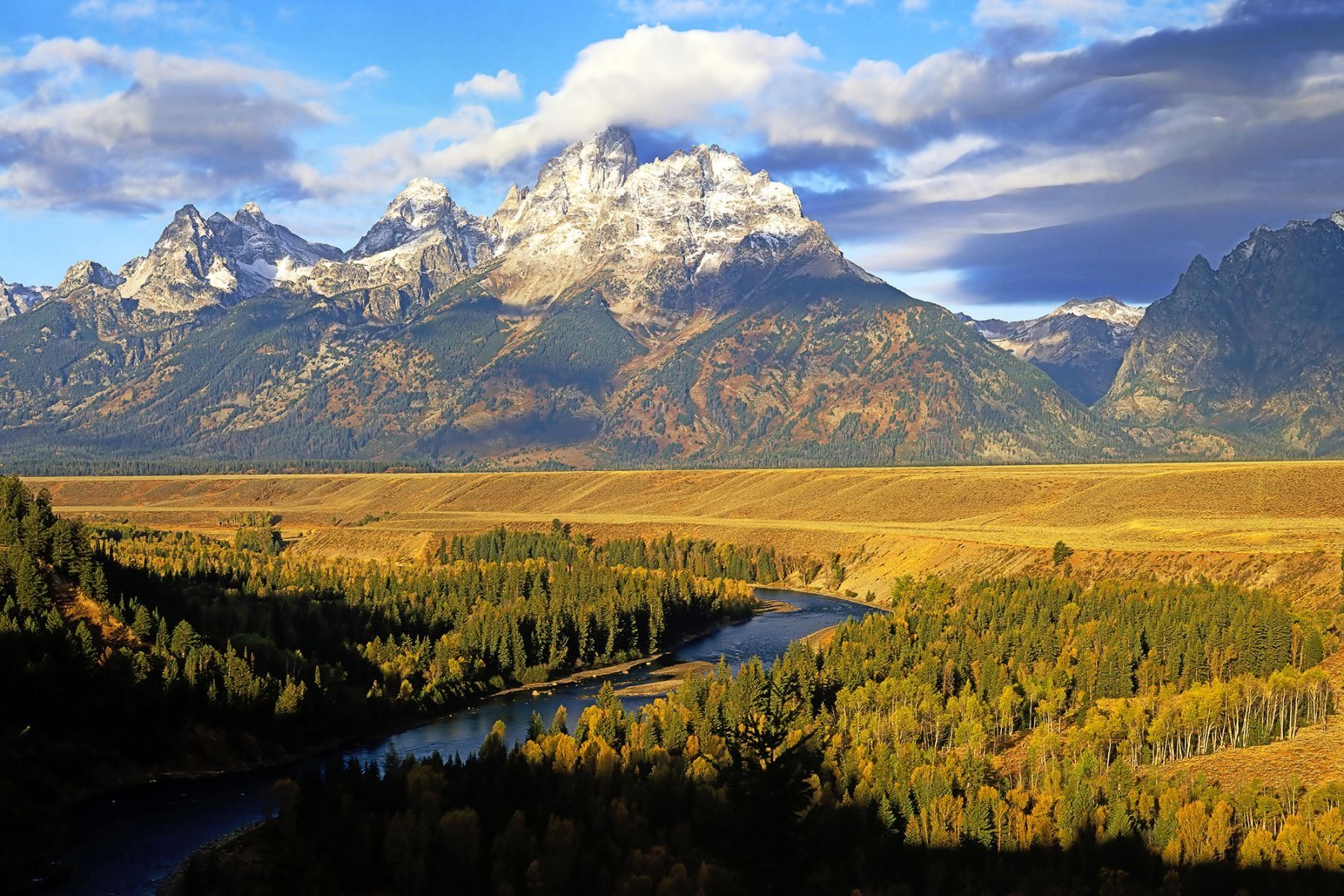
The same overlook can produce a flat, forgettable image one morning and a portfolio-worthy photograph the next. The difference isn't where you're standing; it's what the light is doing!
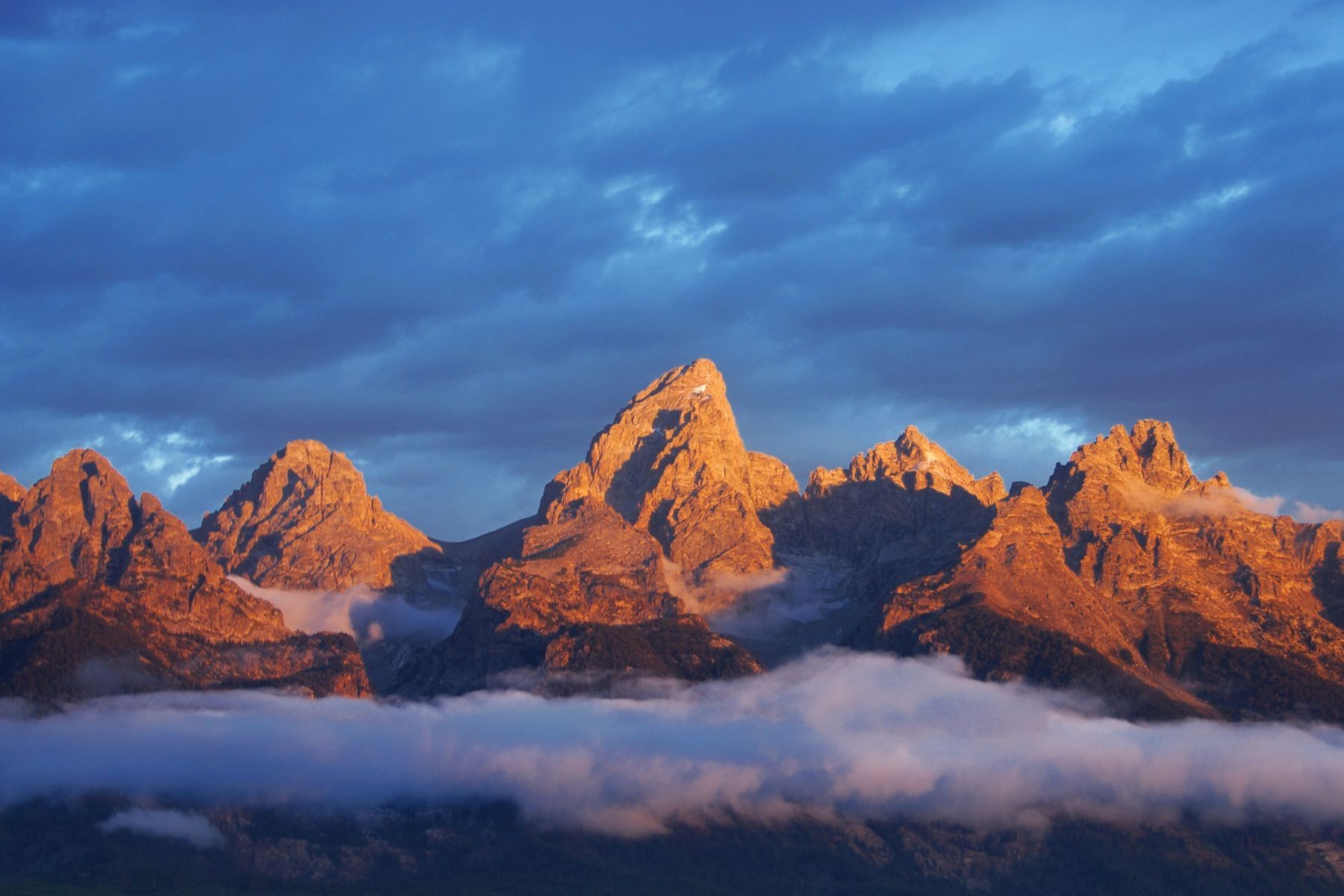
A storm clearing just before sunrise can ignite the peaks with alpenglow. Low clouds drifting through the valley can add depth and drama. Soft morning fog over the Snake River can transform a familiar composition into something extraordinary.
Experienced photographers don't just ask, "Where should we shoot?"
They ask, "What is the light telling us today?"
Sometimes the best decision isn't driving to the most famous viewpoint. It's changing plans entirely because the weather is creating something even better somewhere else.
The Most Iconic Shot Isn't Always the Best One
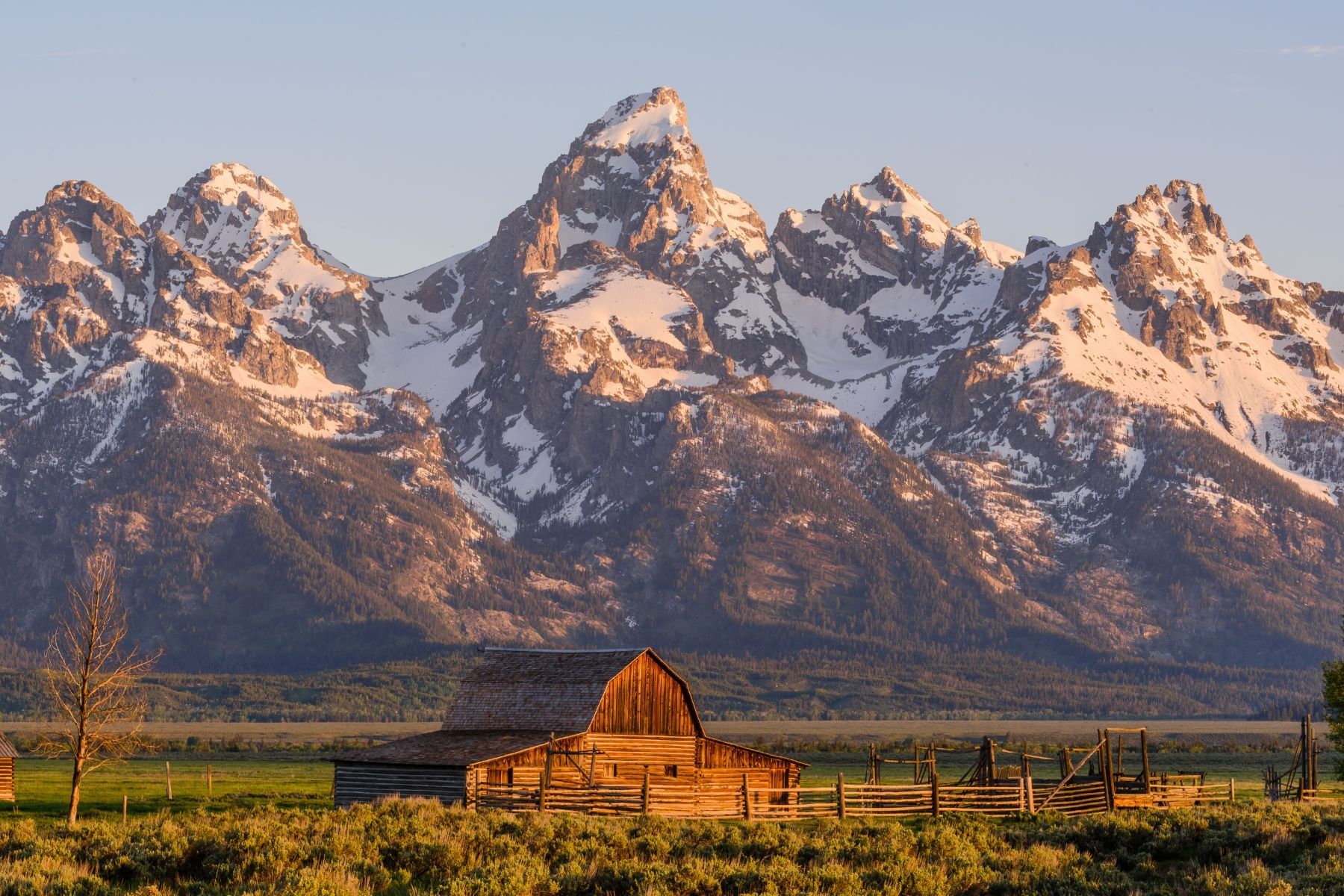
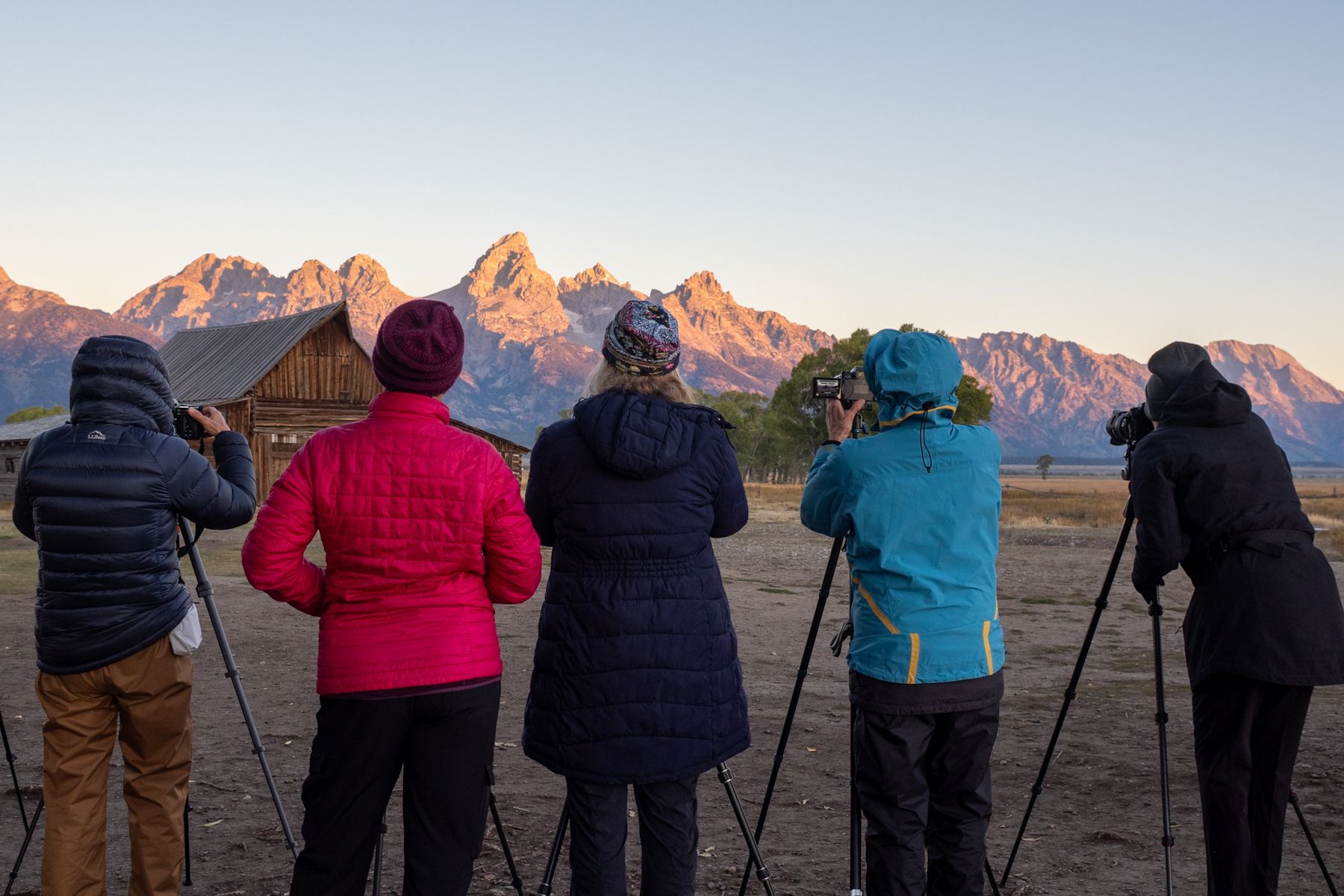
Yes, you'll want to photograph Mormon Row, Schwabacher Landing, and the sunrise over the Teton Range.
But once you've captured those scenes, ask yourself a different question:
What else is Grand Teton trying to show me?
Some of the most compelling photographs happen when you stop looking at the mountains for a moment.
Keep an eye out for:
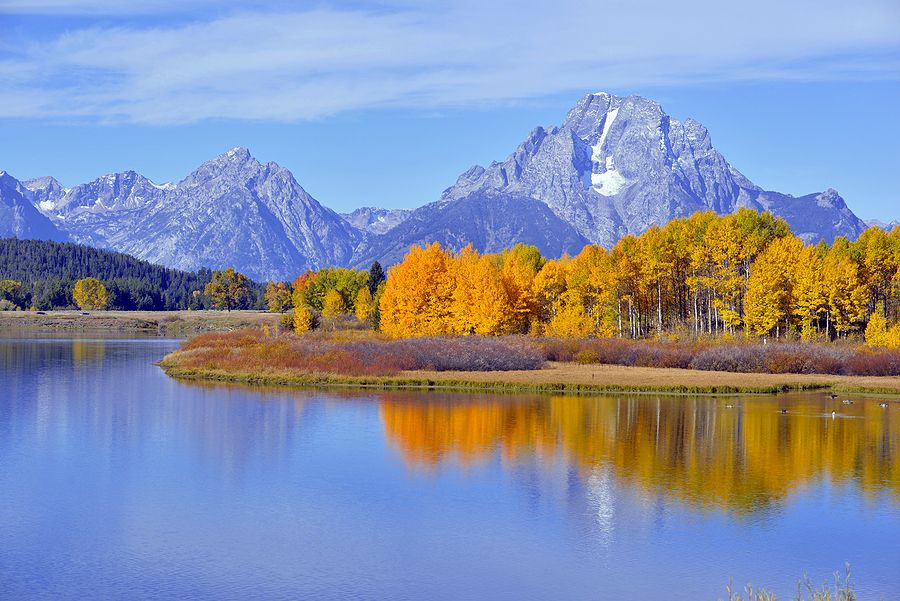
Aspen leaves catching early morning light
Frost-covered grasses in autumn
Reflections after an overnight rain
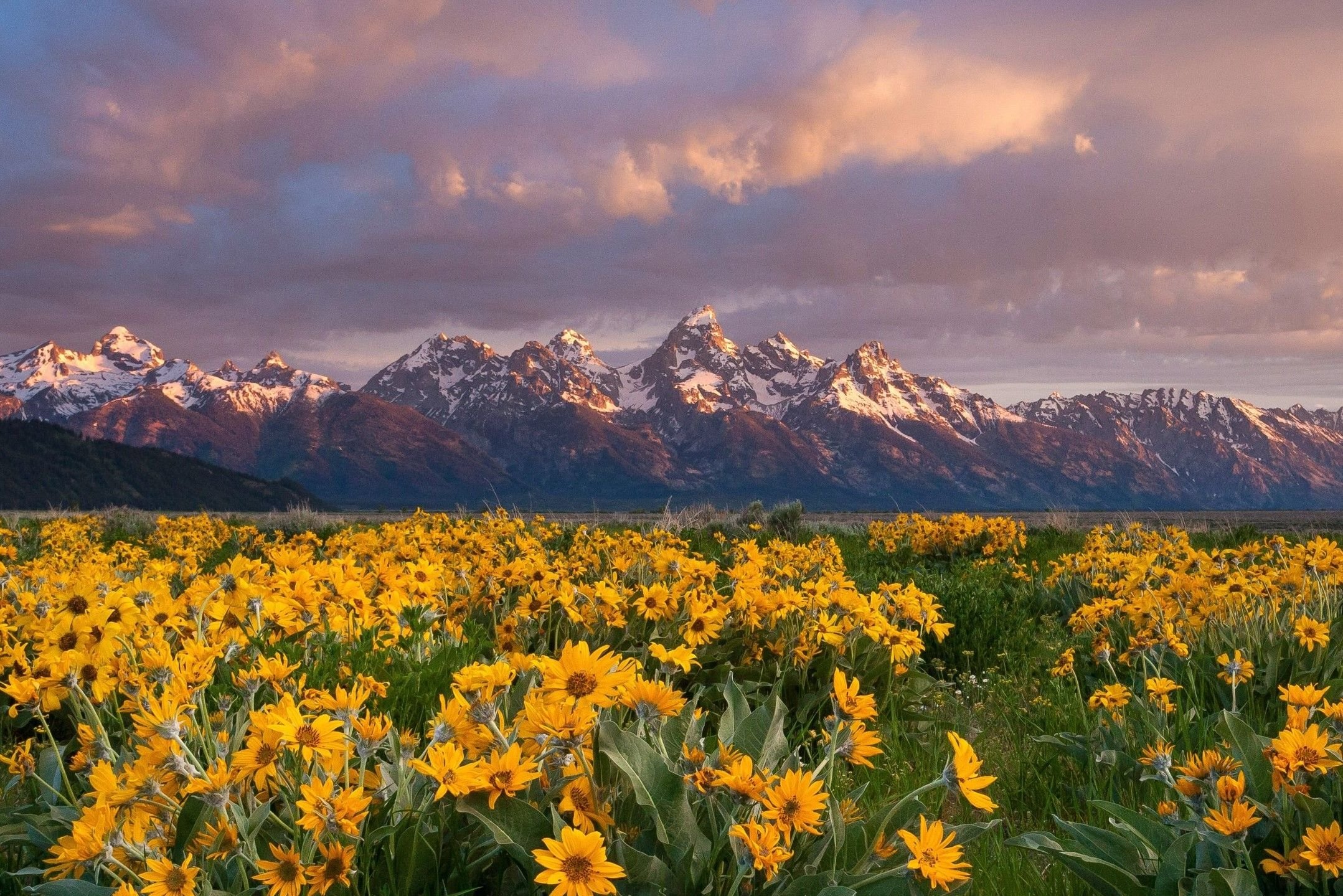
Wildflowers framing distant peaks
Abstract patterns in the Snake River
Dramatic storm clouds rolling across the valley
The Tetons are the star of the show—but they're not the only story unfolding in the park!
Wildlife Doesn't Work on a Schedule
One of the greatest rewards of photographing Grand Teton is its incredible wildlife.
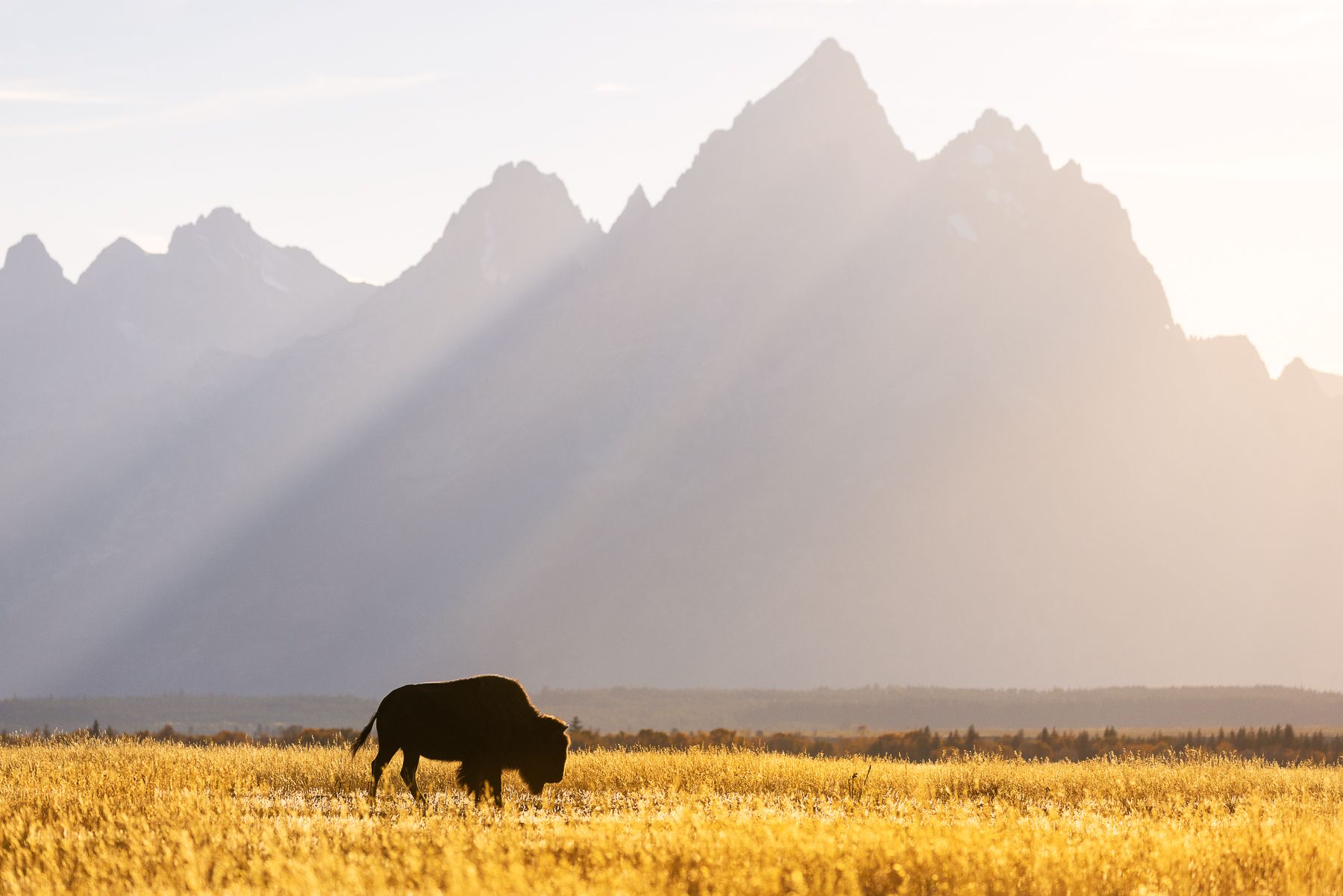
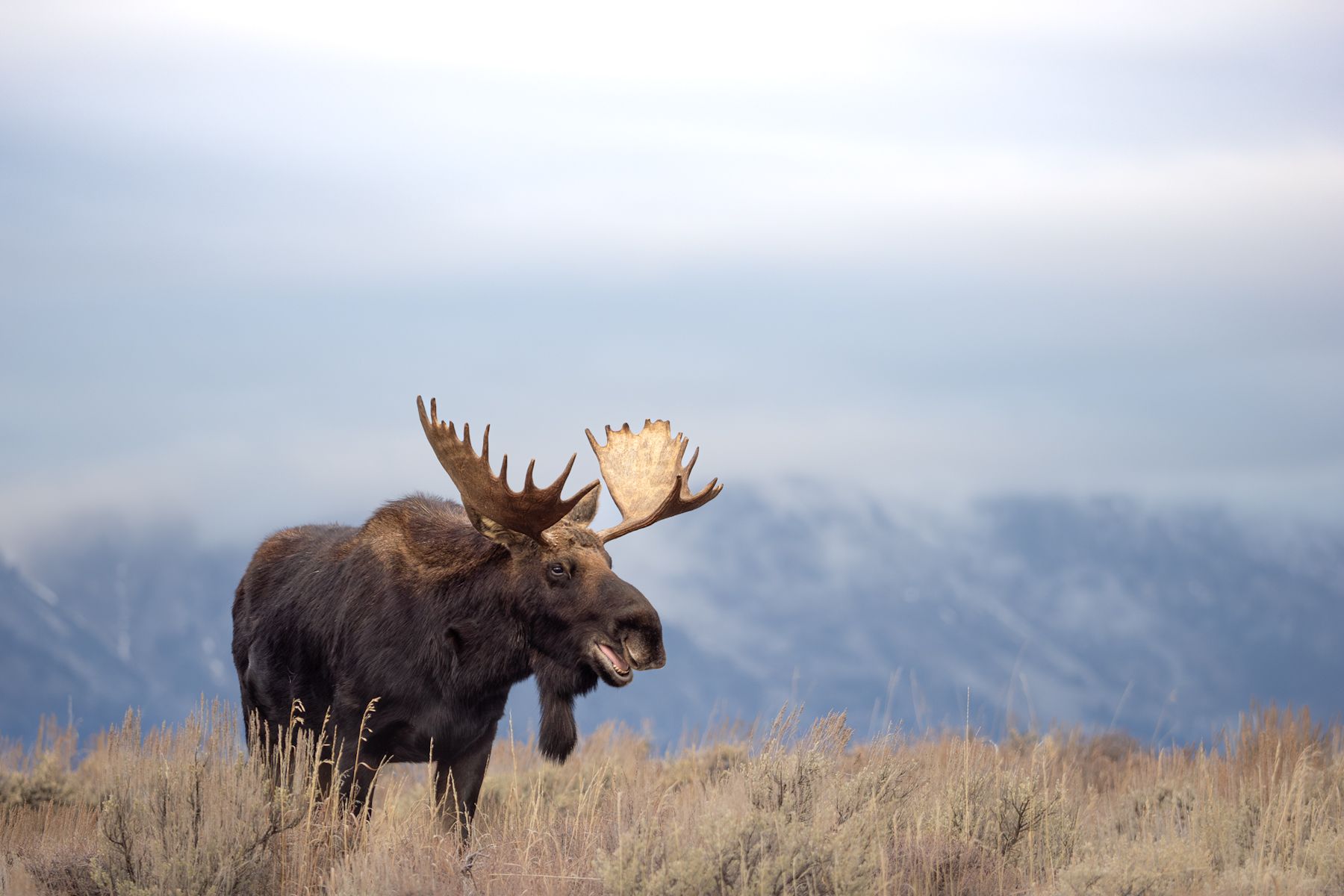
Moose feeding in willow flats. Bison wandering through morning fog. Pronghorn racing across open sagebrush. Black bears emerging from the forest edge. Bald eagles perched along the Snake River. The wildlife here are bountiful.
But here's the truth:
Wildlife photography isn't about luck nearly as much as it is about patience and preparation.
Animals move with the weather, the season, and the availability of food; not your itinerary.
That's why flexibility matters. Sometimes you'll spend an hour waiting for a moose to step into perfect light. Other times, an unforgettable encounter happens just minutes after leaving the road.
The photographers who consistently come home with remarkable wildlife images are often the ones willing to slow down and let the moment come to them.
Midday Isn't Always a Waste
Many photographers pack away their cameras once the morning light fades.
That's a mistake.
While harsh midday sun isn't ideal for sweeping landscapes, it's perfect for so many other subjects; if you know what to look for!
Bright overcast conditions are wonderful for:
Waterfalls
Forest scenes
Close-up wildflowers
Black-and-white compositions
Wildlife in shaded areas
Some of the strongest images from Grand Teton are made while everyone else is eating lunch!
Weather Is Your Greatest Creative Tool
If you've ever looked out your window and thought, "Today's weather ruined my photography plans," Grand Teton might change your mind!
Some of the park's most dramatic photographs happen during conditions many visitors try to avoid.
Rain creates saturated colors. Snow simplifies busy scenes. Fog adds mystery. Thunderstorms produce incredible skies. Instead of hoping for blue skies every day, learning to embrace changing conditions creates a diverse and exciting portfolio full of dynamic images, beautiful composition and a more realistic view of the subject.
They're often what separate a good photograph from an unforgettable one!
Every Season Has Its Magic
Photographers often ask, "When is the best time to visit Grand Teton?". The better question is: "What do you want to photograph?"
Spring brings newborn wildlife, rushing rivers, and vibrant greens.
Summer offers wildflowers, long days, and alpine scenery.
Autumn delivers golden aspens, bugling elk, colorful willows, and crisp mornings.
Winter transforms the park into a quiet landscape of snow-covered peaks, frost, and incredible opportunities to photograph wildlife against pristine white backdrops.
There isn't a wrong season at Grand Teton. There are simply different stories waiting to be told.
Experience Grand Teton Beyond the Postcard
Grand Teton National Park has inspired photographers for generations, and for good reason. Towering peaks, abundant wildlife, ever-changing weather, and spectacular light make every visit unique.
But the photographers who leave with the most jaw-dropping images aren't simply collecting famous viewpoints.
They're learning to see the park differently.
They notice the subtle shifts in light. They embrace changing weather. They slow down when wildlife appears. They look beyond the obvious.
That's where the most rewarding photography begins.
If you're ready to experience Grand Teton beyond the postcard, a guided photography workshop can help you spend less time worrying about logistics and more time focusing on what matters most: creating photographs you'll be proud to share for years to come!
 Grand Teton National Park
 Lodge-Based Photo Workshop
From $5,495.00
Up To 7 Guests
Fitness Level 1 - What's This?
Wanna Get Away?
Starts
Current Price:$0.00
Start: Jackson, WY
Led By
Start: Jackson, WY
Led By

Backcountry Journeys
Connecting Passionate People To
Exceptional Experiences.
Exceptional Experiences.
Business Hours:
Mon-Fri, 8AM-4PM MT
928-478-1521
adventure@backcountryjourneys.com
Mon-Fri, 8AM-4PM MT
928-478-1521
adventure@backcountryjourneys.com
arrow_drop_down_circle
Divider Text
All Images & Content Are Property Of Backcountry Journeys Photography Tours, Workshops & Safaris LLC - Copyright 2026


About Us
Receive a Digital Trip Catalog
Find an upcoming photography tour with our interactive catalog.