2025 Travelers' Choice

About Backcountry Journeys
Why Choose Backcountry Journeys
If you're considering a photography trip, hear why Backcountry Journeys delivers the best experience in the industry.Frequently Asked Questions
If you're new to photography trips, or new to BCJ, you can find our common travel questions here.Fitness Levels
Our trips vary on physical intensity, and by reviewing our fitness levels, you can find out which trips may be more challenging, or aligned more closely with your comfort level.Meet The Crew
We've built an amazing team of experienced guides, and dedicated office staff that elevate your travel experience. Get to know their backgrounds, and hear their stories.Loyalty Program
We reward our frequent photo adventurers with exclusive discounts on amazing photography trips.Contact Us
If you need to get in touch with our office staff, or have additional business inquiries, you can find our information here.Refer a Friend
Know someone perfect for one of our tours? Recommend them through this quick form.Stay Up To Date On All Things
Backcountry Journeys
Backcountry Journeys
Our Photography Community
Our Webinars
Our regularly hosted webinars provide photography instruction from our own guides on a wide range of topics.Our Education Portal
Explore our library of articles that cover everything from common questions, to in-depth guides on how to achieve that perfect shot.Community Testimonials
We're proud to foster an amazing group of photo travelers, and here you can find their stories from their past adventures.Resources For Photographers
About Our Company
Resources For Photographers
About Our Company
The Ultimate Small-Group Fall Foliage Photography Tour of the Great Smoky Mountains
Published September 15, 2026
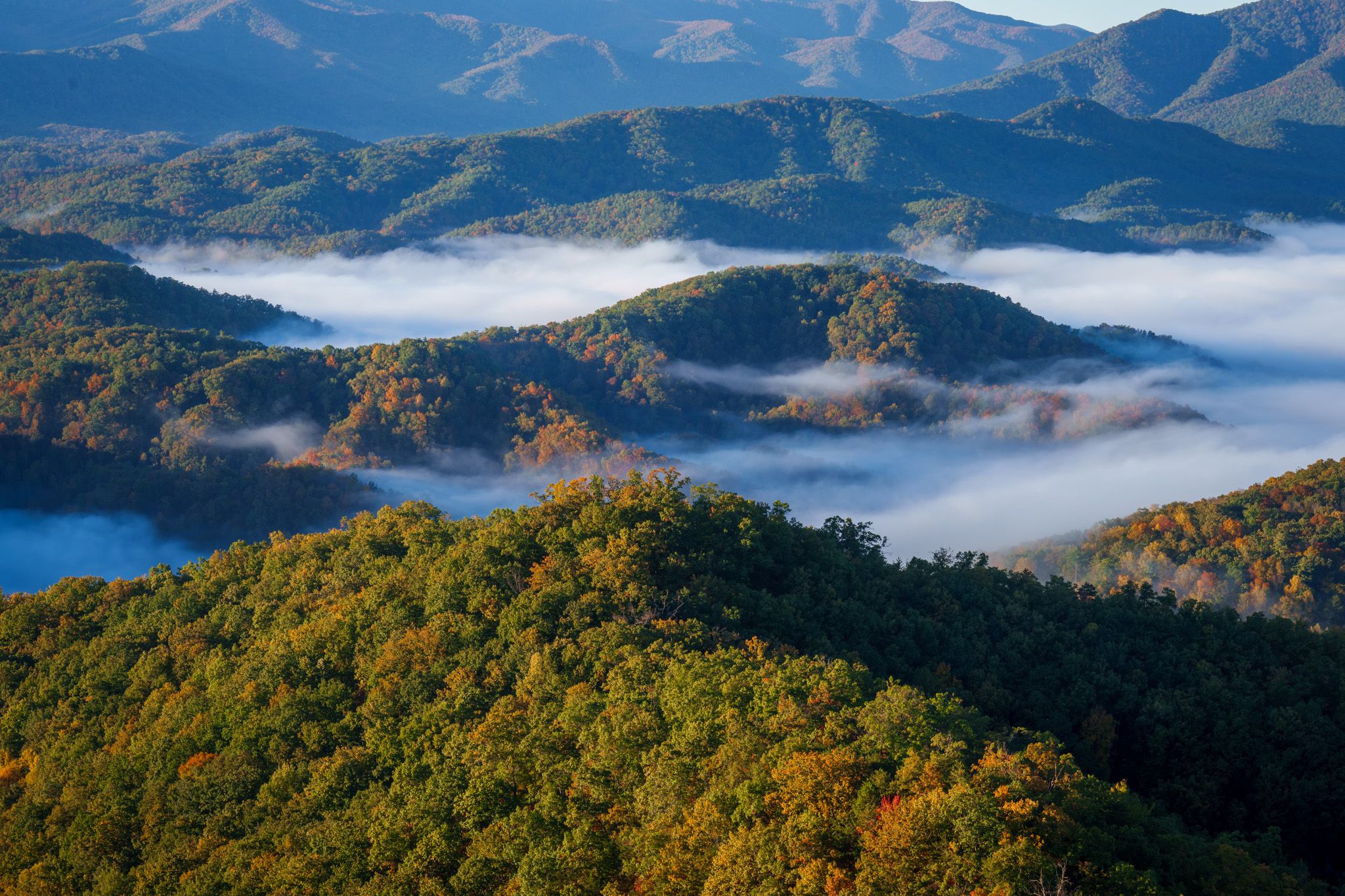
As summer fades, the mountainsides of the Great Smokies begin to glow with layers of red, orange, gold, and yellow. Morning fog settles into the valleys. Warm autumn light filters through the forest. And around every bend, another ridge seems to reveal itself in a completely different palette.
For photographers, fall in the Smokies isn't simply about seeing beautiful colors. It's about knowing where to be, when to be there, and how to photograph the landscape when conditions are at their best.
Our Great Smokey Mountains departures are designed around the experience of photographing the Smokies during one of the most spectacular seasons of the year; with expert guidance, a small group of photographers, and a focus on finding compelling compositions beyond the most crowded viewpoints.
Why Photograph the Great Smoky Mountains in Fall?
The Great Smoky Mountains are famous for their fall colors, but the sheer variety of the landscape is what makes the region so rewarding for photographers.
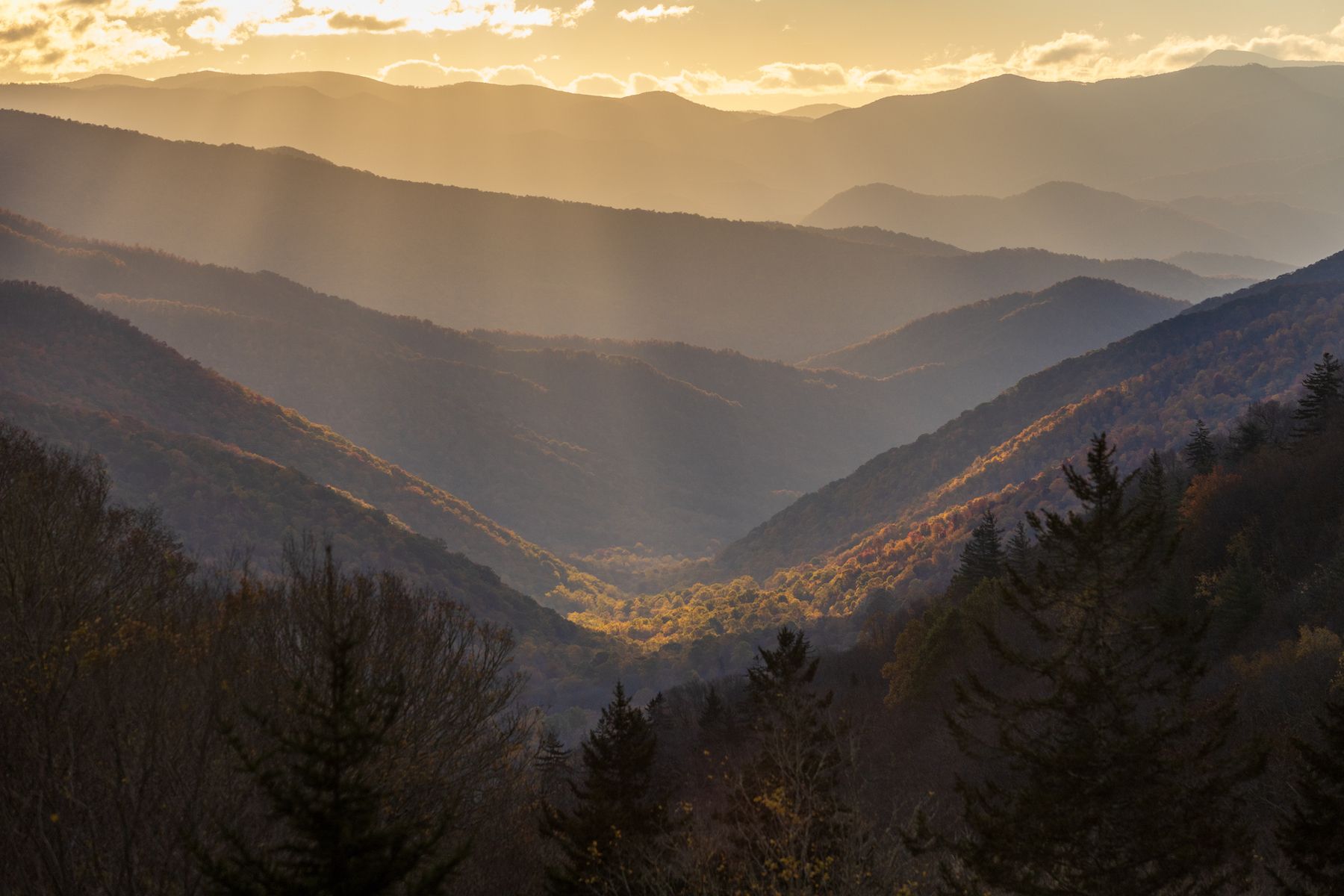
The park contains an incredible range of elevations, which means fall color doesn't arrive everywhere at the same time. Lower elevations can still be showing late-summer greens while higher elevations are already transitioning into brilliant autumn color.
That creates a constantly changing photographic landscape.
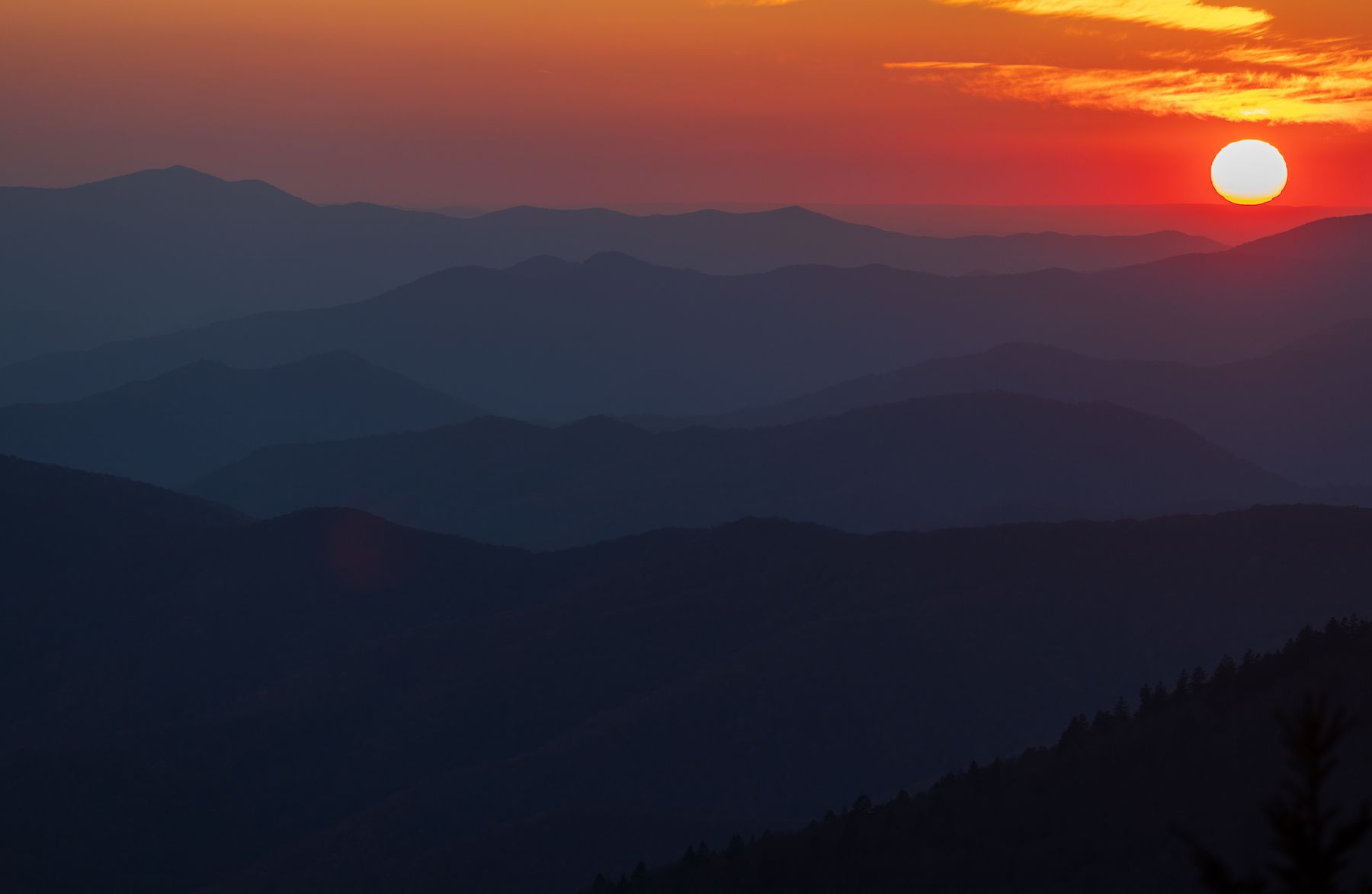
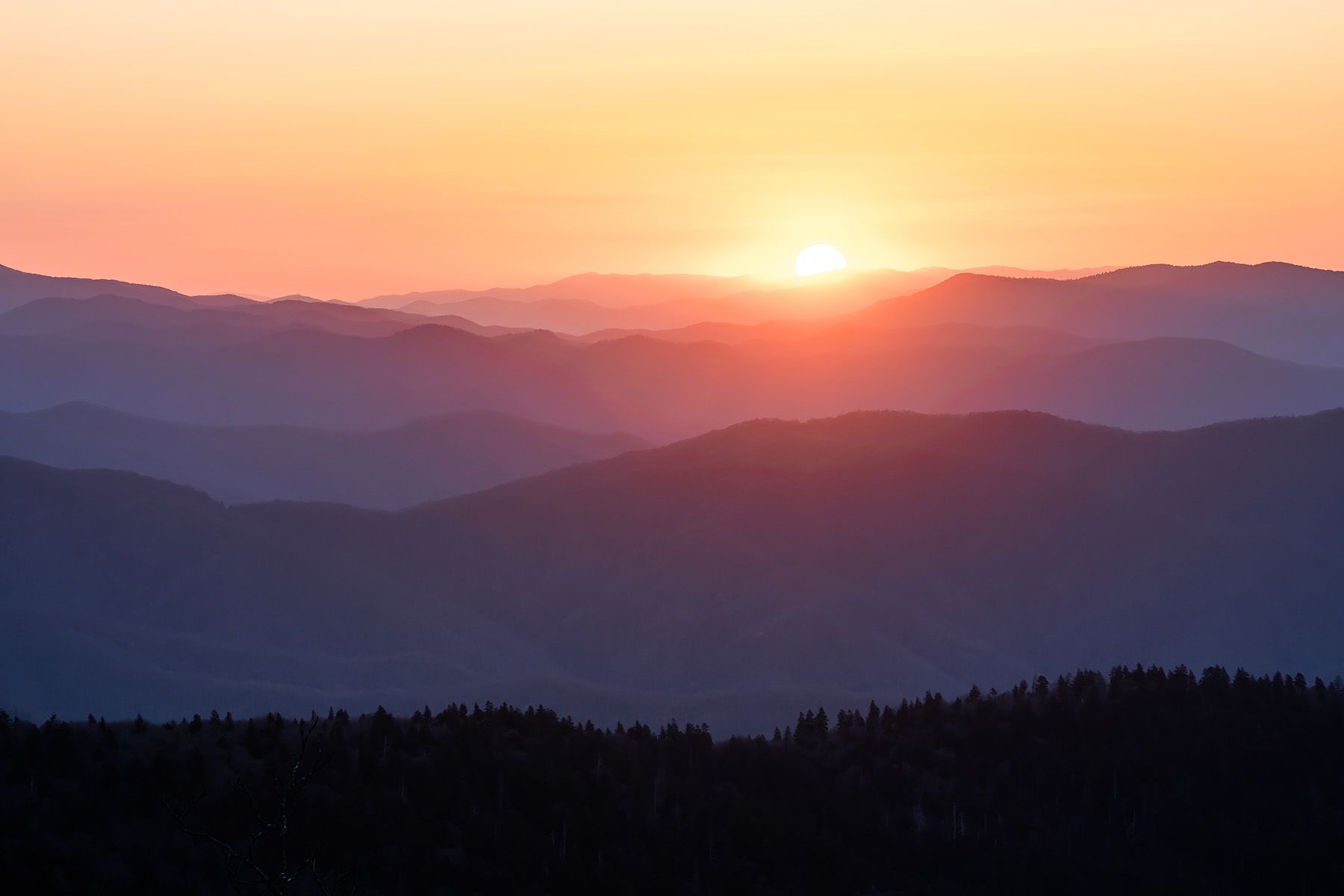
One morning might offer a misty valley filled with muted autumn tones. Later in the trip, higher elevations may provide fiery foliage against distant blue ridges. Streams, waterfalls, winding roads, historic structures, and layers of mountains provide additional opportunities when you're looking for something beyond the traditional "fall colors" photograph.
The challenge, and the opportunity, is knowing how to put yourself in the right place at the right time.
Photographing Peak Fall Color Isn't Just About the Calendar
One of the biggest misconceptions about photographing fall foliage is that there is a single "peak" week.
In reality, fall color moves through the mountains.
Temperature, elevation, weather, and other environmental conditions can all influence when individual areas reach their peak. That means a date on the calendar can only tell you so much.
This is where having experienced photography guides makes a difference.
Instead of simply following a predetermined sightseeing itinerary, Backcountry Journeys guides pay attention to where fall color is developing and how changing conditions can affect the day's photography.
The goal isn't just to visit the Smokies...It's to make the most of the conditions you actually encounter!
A Small Group Changes the Photography Experience
There is a big difference between photographing the Great Smoky Mountains with a large tour group and traveling with a small group of fellow photographers.
With fewer people around, there's more flexibility.
We can spend additional time working a location when the light is right, make adjustments when weather changes, and move more efficiently when an unexpected photographic opportunity appears.
Just as importantly, you're surrounded by people who are there for the same reason you are: to take better photographs.
There's time to compare compositions, talk through camera settings, share ideas, and learn from the photographers around you.
The result is a trip that feels less like checking destinations off a list and more like an immersive photography experience. You aren't huddled in a large group with various goals to gain out of the experience; whether it's nature based fitness hikers, sightseers and tourists - you are only there with like-minded creatives looking to improve their photography skills, expand their portfolios, and enjoy the journey alongside you.
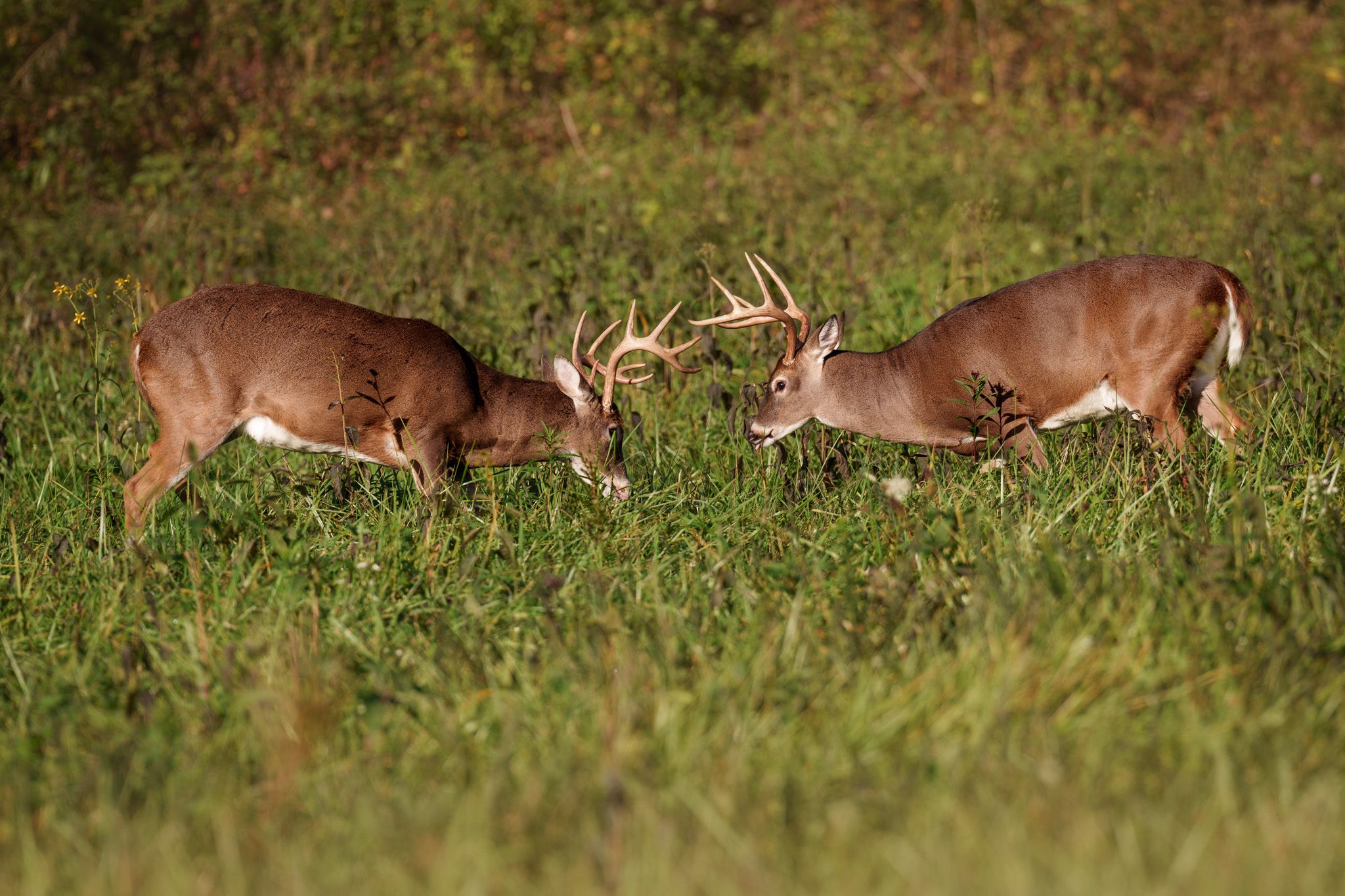
Getting Beyond the Crowded Overlooks
The Great Smoky Mountains have no shortage of famous viewpoints, and while those iconic locations can certainly produce beautiful photographs, some of the most memorable images come from slowing down and looking beyond the obvious.
A small-group photography tour gives you the flexibility to do exactly that. Rather than simply pulling over at the first overlook and taking the same photograph everyone else has taken, you can spend time looking for the details, layers, and changing conditions that make a scene uniquely yours.
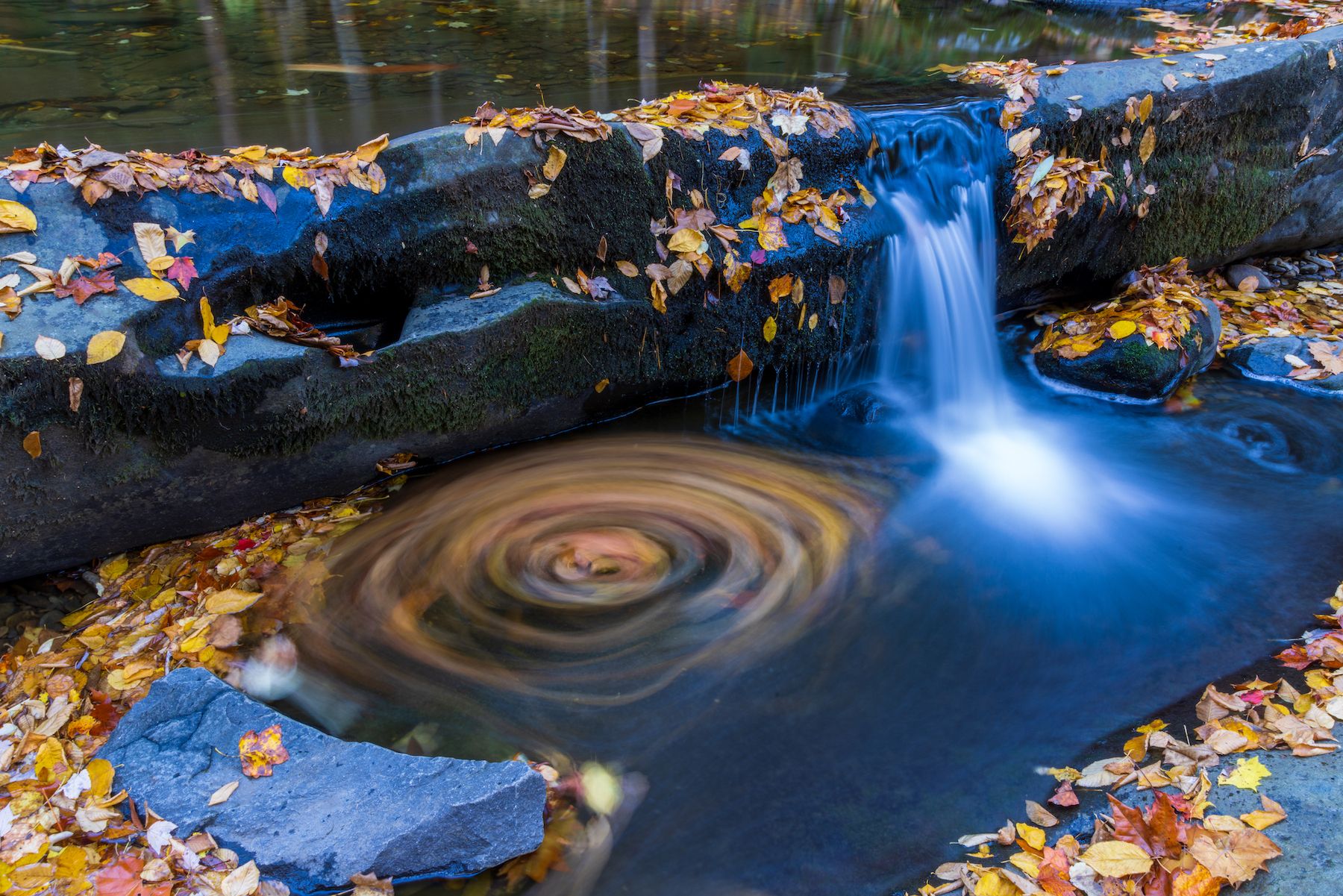
Our guides help you recognize opportunities as they unfold, from layered mountain landscapes and fog-filled valleys to intimate scenes within the autumn forest. You may find a rushing mountain stream framed by fall color, a winding road disappearing into the trees, or a historic structure surrounded by brilliant foliage. Even the smallest details; patterns in the leaves, reflections in the water, or changing light across distant ridgelines, can become compelling photographs when you know how to see them.
The goal isn't to avoid the iconic locations altogether. It's to approach them with a photographer's eye, while remaining open to the unexpected scenes and fleeting conditions that can turn a familiar Smoky Mountains landscape into something truly memorable.
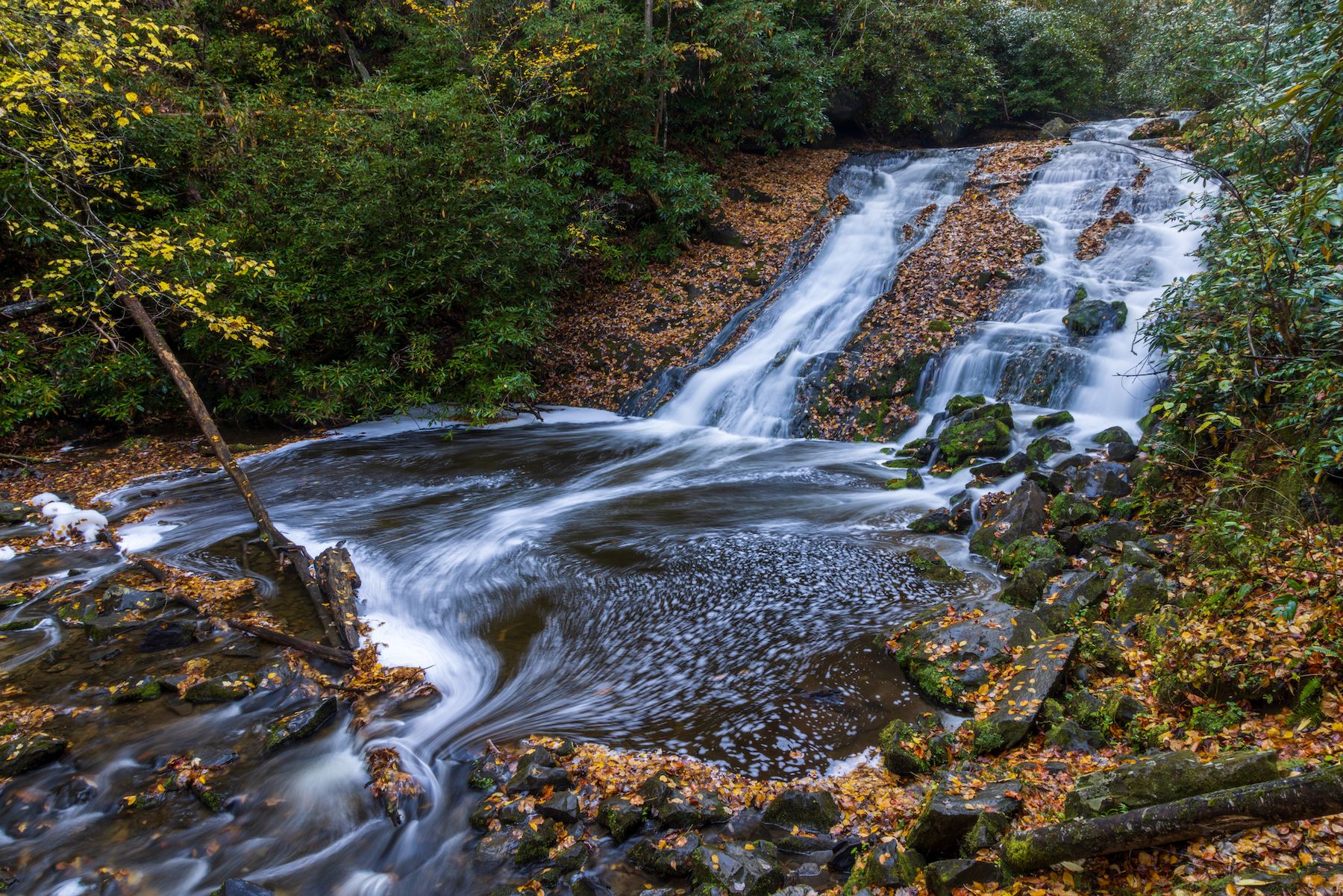
Learn to Photograph More Than Just "Fall Colors"
Great fall foliage photography isn't simply about pointing your camera at a colorful hillside.
Composition becomes especially important when you're surrounded by visual abundance.
How do you create depth in a landscape filled with trees? How do you use layers of mountains to communicate scale? When should you use a wide-angle lens versus a longer focal length? How can fog simplify a scene? When does soft overcast light work better than direct sunlight?
These are the kinds of questions that can turn a beautiful vacation photograph into a stronger photographic composition.
Throughout the trip, our guides provide hands-on instruction and help you respond to the conditions in front of you.
You'll have opportunities to work on composition, exposure, focal length, depth, light, and creative approaches to landscape photography while you're actually in the field making photographs.
And because the group is small, there's room for individual questions and personalized guidance!
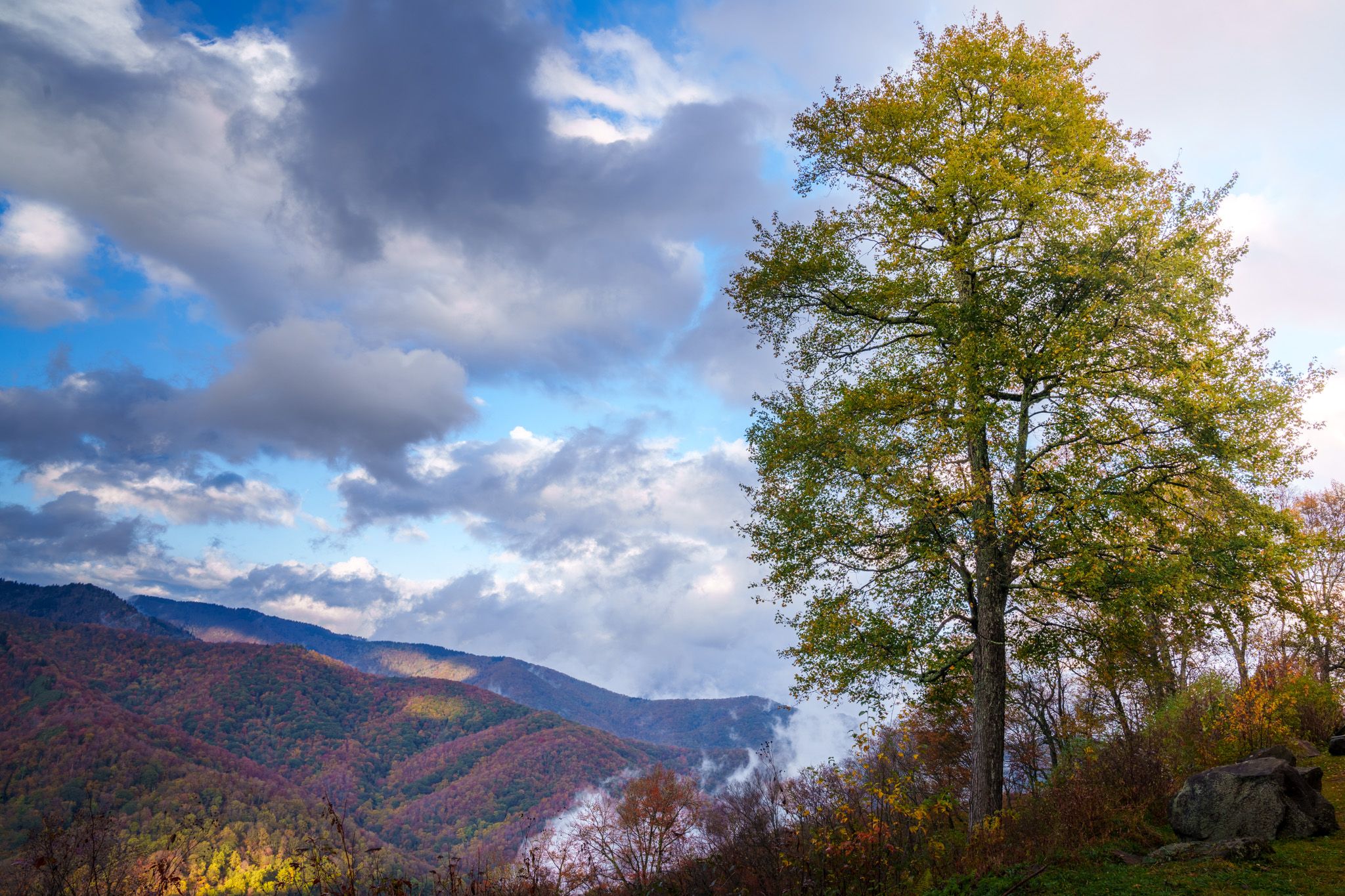
The Advantage of Traveling With Photographers
There's another benefit to a photography-focused trip that doesn't show up on an itinerary: the community.
You're traveling alongside people who understand why you'll happily wake up before sunrise for a few minutes of good light.
People who don't mind waiting for the fog to move.
People who will stop to photograph an interesting tree, reflection, or patch of light.
And people who are just as excited to talk about photography over dinner afterward.
That shared enthusiasm creates a different kind of travel experience.
You're not simply visiting the Great Smoky Mountains in autumn.
You're experiencing them with a community of photographers who want to make the most of every opportunity.
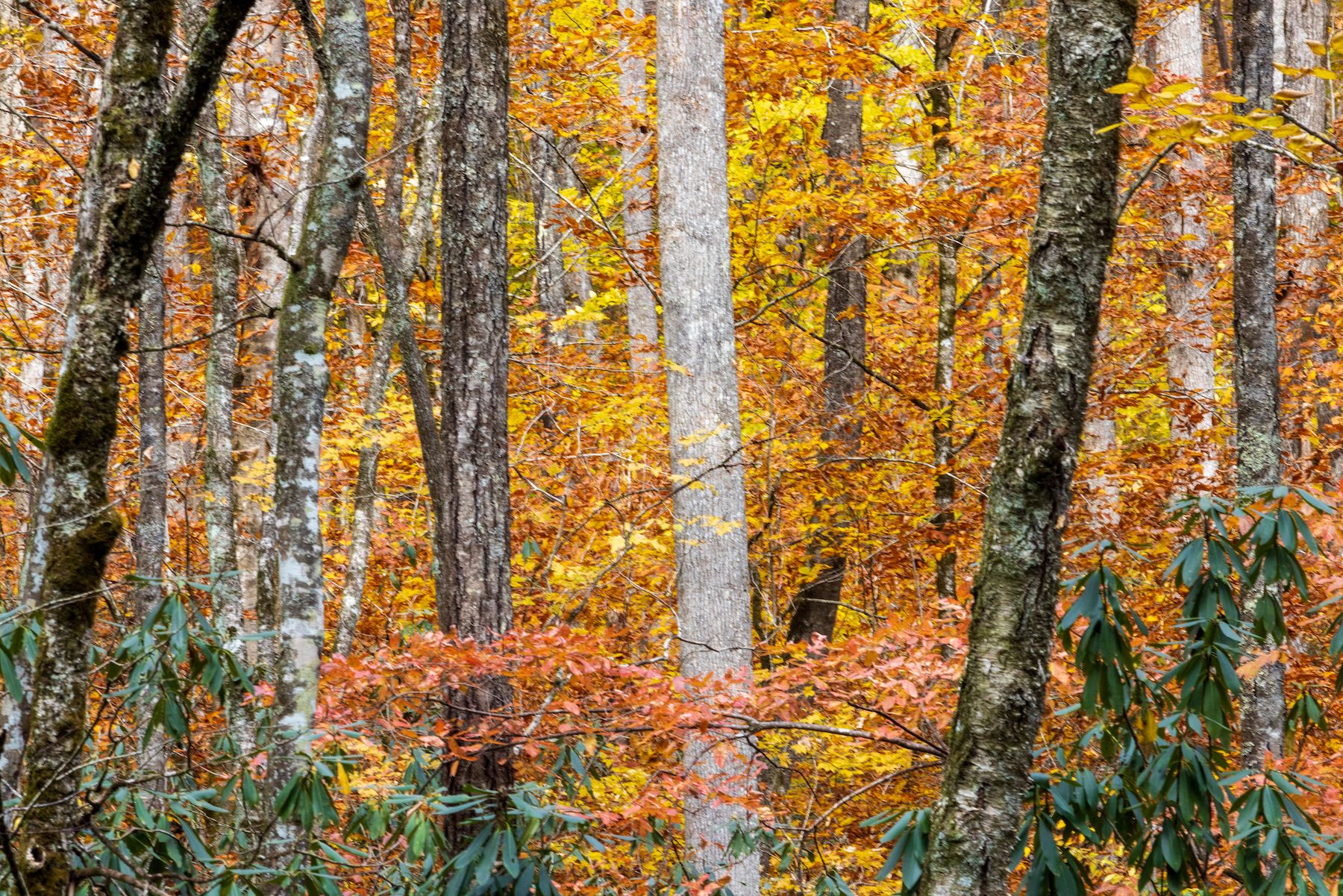
Let Us Handle the Logistics. You Focus on the Photography.
Planning a fall foliage photography trip to the Smokies independently can involve a surprising amount of work.
Where should you stay? Which roads should you prioritize? Where will you find the best conditions? When should you arrive at a location? What happens when weather changes your plans?
With Backcountry Journeys, you don't have to spend your trip managing those details.
We take care of the logistics so you can concentrate on your photography.
That means less time navigating, researching, coordinating, and second-guessing your plans, and more time with your camera in hand.
It's the difference between taking a trip to photograph the Smokies and taking a trip designed around photographing the Smokies.
 Great Smoky Mountains in Autumn
 Lodge-Based Photo Workshop
From $6,495.00
Up To 7 Guests
Fitness Level 1 - What's This?
Wanna Get Away?
Starts
Current Price:$0.00
Start: Knoxville, TN
Led By
Start: Knoxville, TN
Led By

Backcountry Journeys
Connecting Passionate People To
Exceptional Experiences.
Exceptional Experiences.
Business Hours:
Mon-Fri, 8AM-4PM MT
928-478-1521
adventure@backcountryjourneys.com
Mon-Fri, 8AM-4PM MT
928-478-1521
adventure@backcountryjourneys.com
arrow_drop_down_circle
Divider Text
All Images & Content Are Property Of Backcountry Journeys Photography Tours, Workshops & Safaris LLC - Copyright 2026


About Us
Receive a Digital Trip Catalog
Find an upcoming photography tour with our interactive catalog.