2025 Travelers' Choice

About Backcountry Journeys
Why Choose Backcountry Journeys
If you're considering a photography trip, hear why Backcountry Journeys delivers the best experience in the industry.Frequently Asked Questions
If you're new to photography trips, or new to BCJ, you can find our common travel questions here.Fitness Levels
Our trips vary on physical intensity, and by reviewing our fitness levels, you can find out which trips may be more challenging, or aligned more closely with your comfort level.Meet The Crew
We've built an amazing team of experienced guides, and dedicated office staff that elevate your travel experience. Get to know their backgrounds, and hear their stories.Loyalty Program
We reward our frequent photo adventurers with exclusive discounts on amazing photography trips.Contact Us
If you need to get in touch with our office staff, or have additional business inquiries, you can find our information here.Refer a Friend
Know someone perfect for one of our tours? Recommend them through this quick form.Stay Up To Date On All Things
Backcountry Journeys
Backcountry Journeys
Our Photography Community
Our Webinars
Our regularly hosted webinars provide photography instruction from our own guides on a wide range of topics.Our Education Portal
Explore our library of articles that cover everything from common questions, to in-depth guides on how to achieve that perfect shot.Community Testimonials
We're proud to foster an amazing group of photo travelers, and here you can find their stories from their past adventures.Resources For Photographers
About Our Company
Resources For Photographers
About Our Company
Trip Report: Ultimate Costa Rica - April 2026
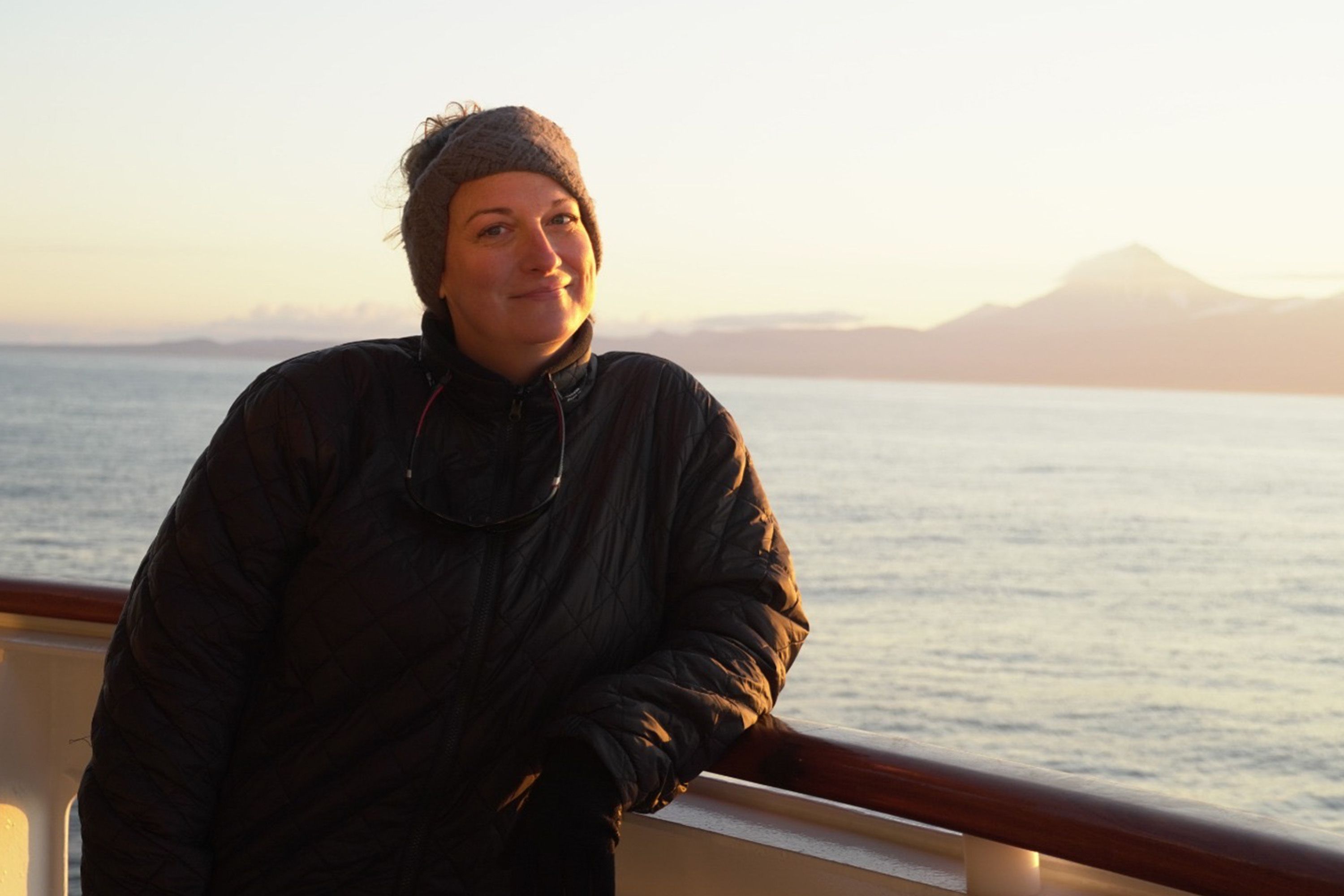
Published September 29, 2026
Ever since I first became a Photography guide at BCJ a little over a year ago, I have been looking forward to this Costa Rica trip. I was excited to guide in my adopted home country of the past 13 years because I was excited to share a place and forest full of animals that I love so much and know so well. Not only would I be able to spot the animals and tell everyone their English name, but I also was able to tell everyone their Spanish name. Turns out this was too much information, and everyone was ok just knowing the English name ;-) For a wildlife photography trip, there really is no place better than Costa Rica. With 5% of the worlds Biodiversity in a landmass roughly the size of West Virginia, Costa Rica is FULL of life and opportunity to practice your wildlife photography skills.
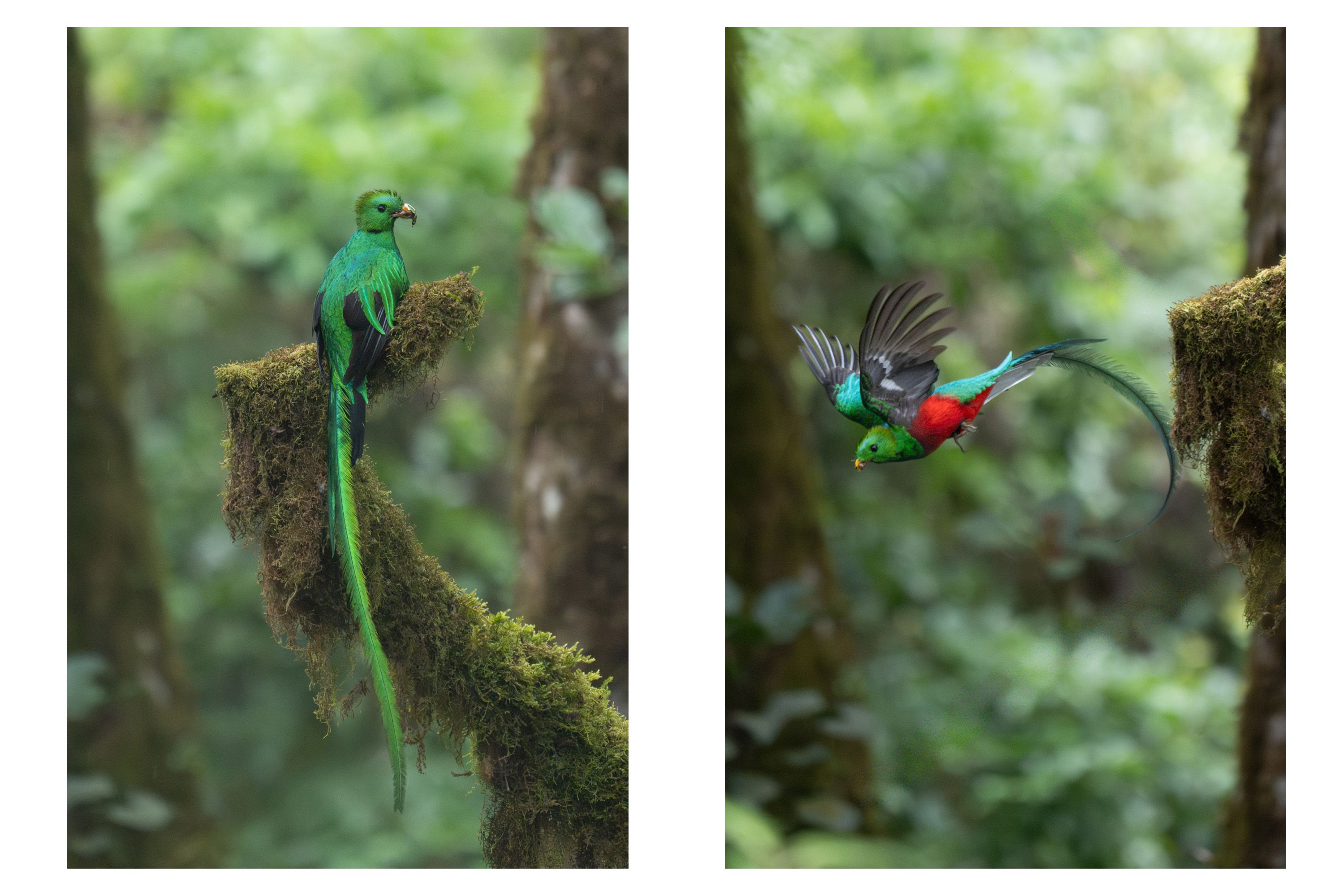
We started our trip in the capital city, San Jose, where we met for our first night to get acquainted with each other before heading out early the next morning. First stop on our adventure: Parque Nacional Los Quetzales in San Gerardo de Dota. This national park was first formed in 2006 with the purpose of protecting the main home range of the Resplendent Quetzal. People come from all over the world to see and photograph this species because they are renowned for their beauty. The males are covered in bright green iridescent feathers and during breeding season they grow a 3-foot-long tail feather that helps the female quetzals decide who is worthy of her affection. Luckily our local guide knew exactly where to find an active quetzal nest and so we waited (for hours) for the happy couple to come back and forth from the nest. While this method required a bit of patience, it is the best way to view and photograph quetzals because we know they will be in this area at some point. We watched the male and female take turns going in and out of the nest feeding babies which our guide explained were only a couple of weeks old.
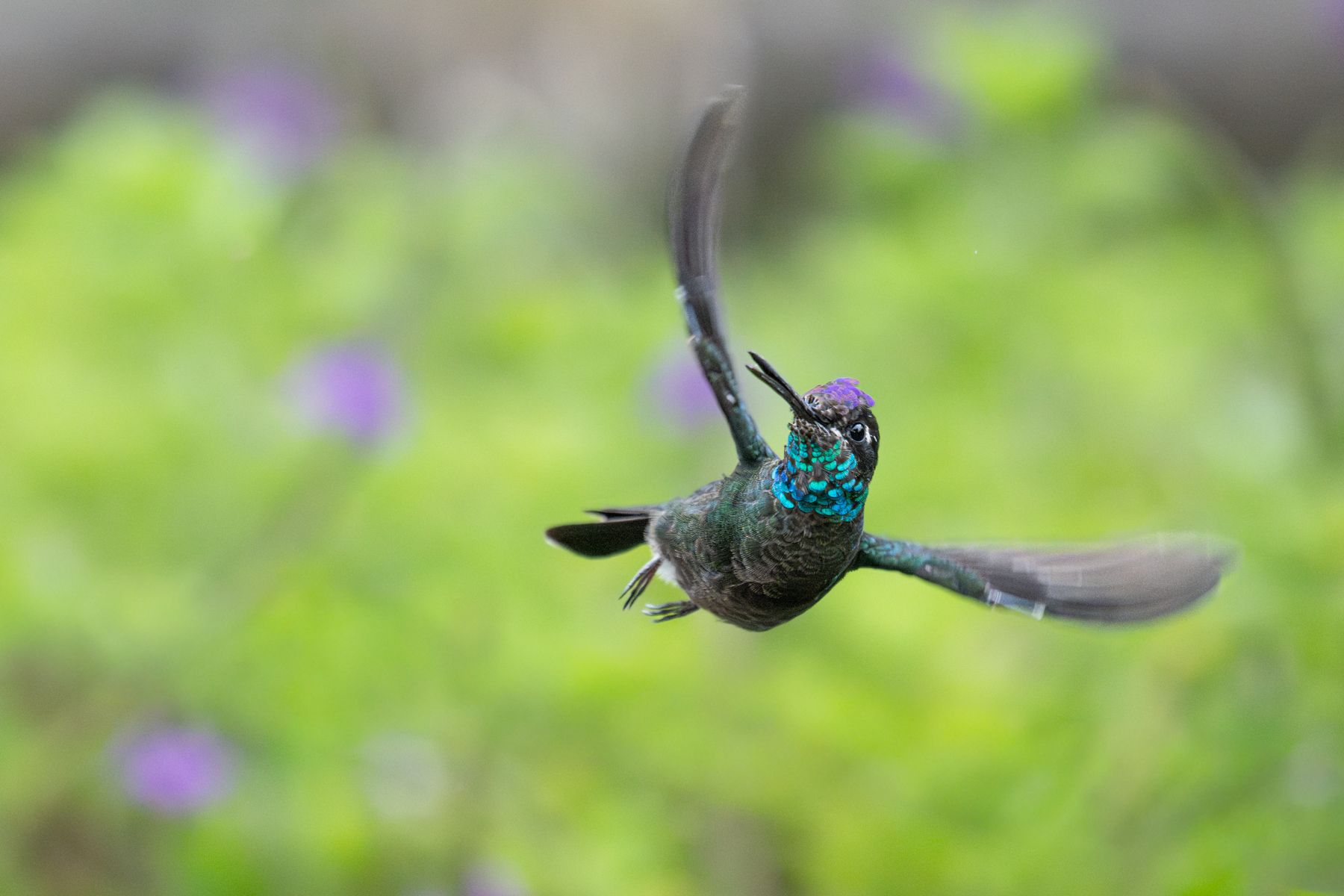
After spending enough quality time with the quetzals, we went to find some other birds to photograph. San Gerardo de Dota is a high-altitude cloud forest that is home to over 300 species of birds, therefore visiting gardens near our hotel set up specifically to attract birds proved very fruitful. We saw many different species of hummingbirds and songbirds giving everyone an opportunity to practice their skills with birds in flight. I think this would also be a good time to mention that if you like avocados, this is a great town for you to visit. Both Quetzals and humans have plenty of opportunities to eat fresh avocado here as one of the local restaurants that we visit uses their own supply of avocados that are grown right on site.
After two days of looking for quetzals, eating avocados and needing to wear a jacket at night, it was time to head back to San Jose where we would catch our flight down south to the Osa Peninsula! The flight down south is only an hour long in a very small 12-seater plane. If you’re not afraid of heights, it’s a great opportunity to look outside the window and watch as we fly over the Pacific Coast of Costa Rica. Landing in Puerto Jimenez, it was clear we were no longer in the cloud forest. Heat, humidity and a much sweatier looking group of guests, were signals that we were now in a completely different type of habitat: Lowland Tropical Rainforest.
The Osa Peninsula contains 2.5% of the world’s biodiversity and has been referred to as “the most biologically intense place on Earth” by National Geographic. As a mammologist, I was personally very excited for this change because I knew that we had a very good chance of seeing a high variety of mammal species. But first, we had an appointment with some frogs!
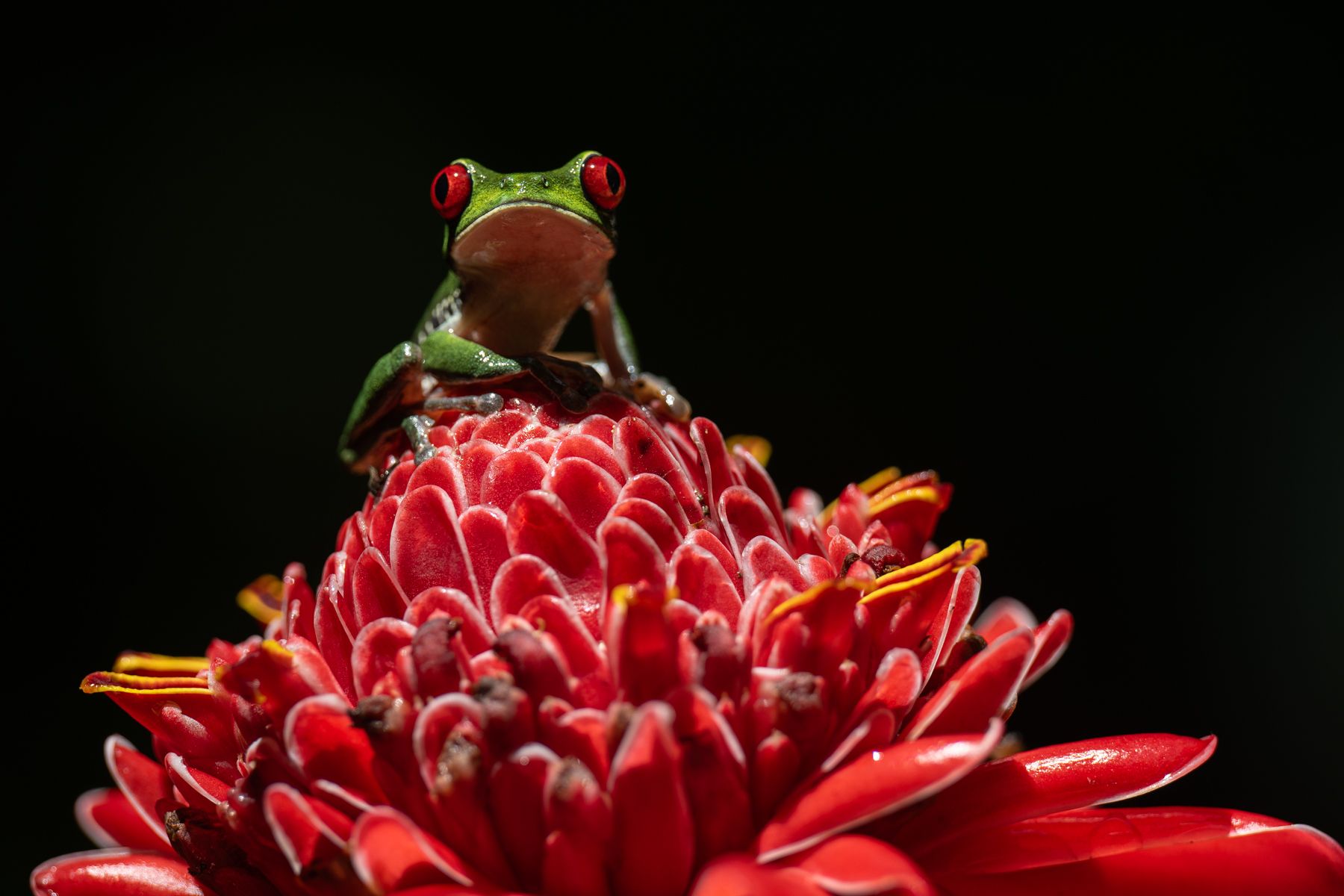
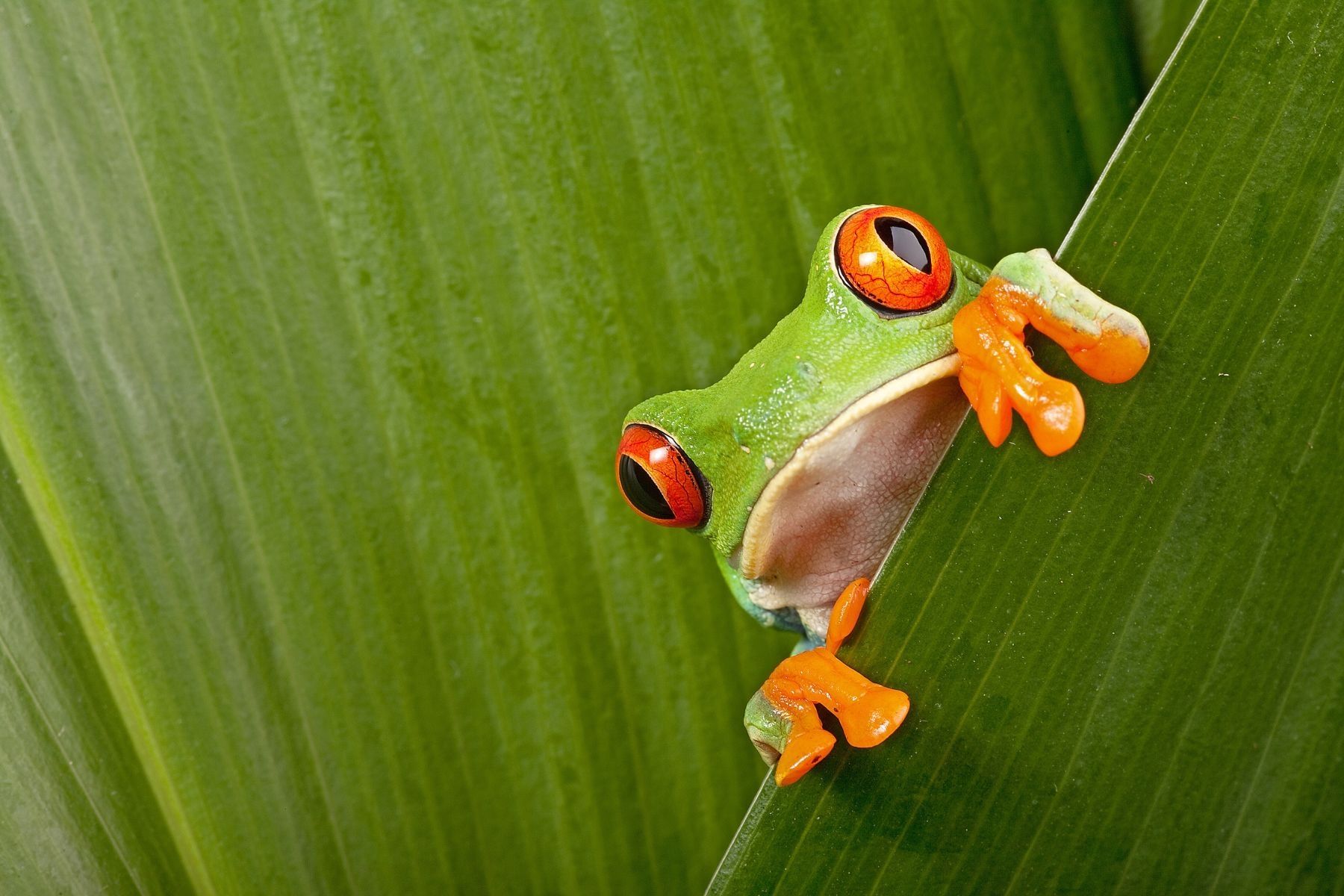
Anyone who has seen photos of Costa Rica, has probably seen a photo of a red-eyed tree frog. They are just THAT iconically linked to this country. With their big beautiful red eyes and bright green skin, they are unmistakable. During this photo session, we were able to practice portraits of tiny creatures, also known as macro photography. In addition to red-eyed tree frogs, we also had the opportunity to photograph gladiator frogs and a couple different species of snakes.
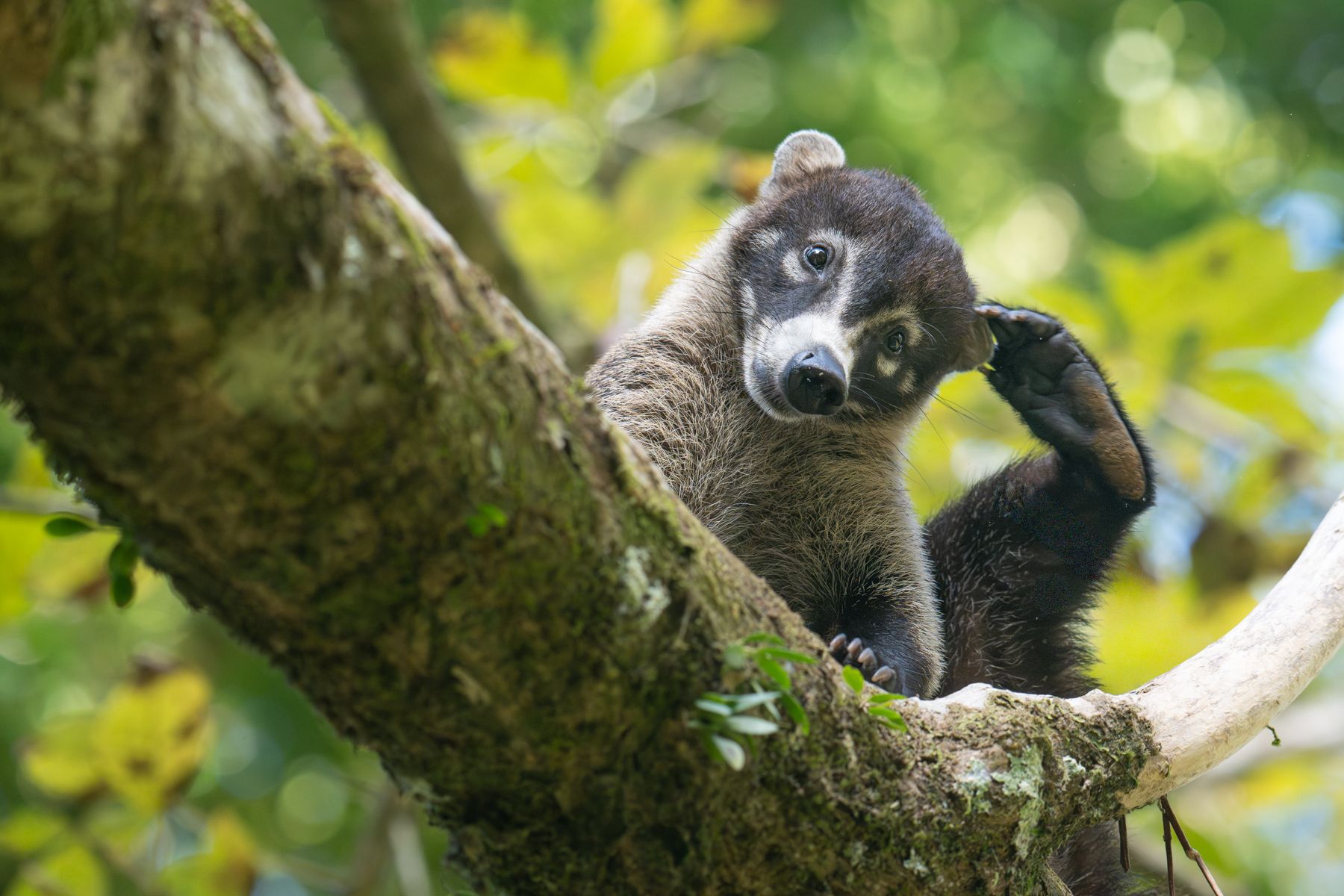
Following this session, we headed towards our next hotel for the remainder of the trip: Bosque del Cabo – an Ecolodge set in the middle of the rainforest right along the coast of Golfo Dulce. As soon as we arrived, we were greeted with wildlife! Our first mammal sighting was a coati walking across the grass. During lunch we heard and saw a pair of Scarlet Macaws fly overhead and a yellow headed caracara landed close to reception.
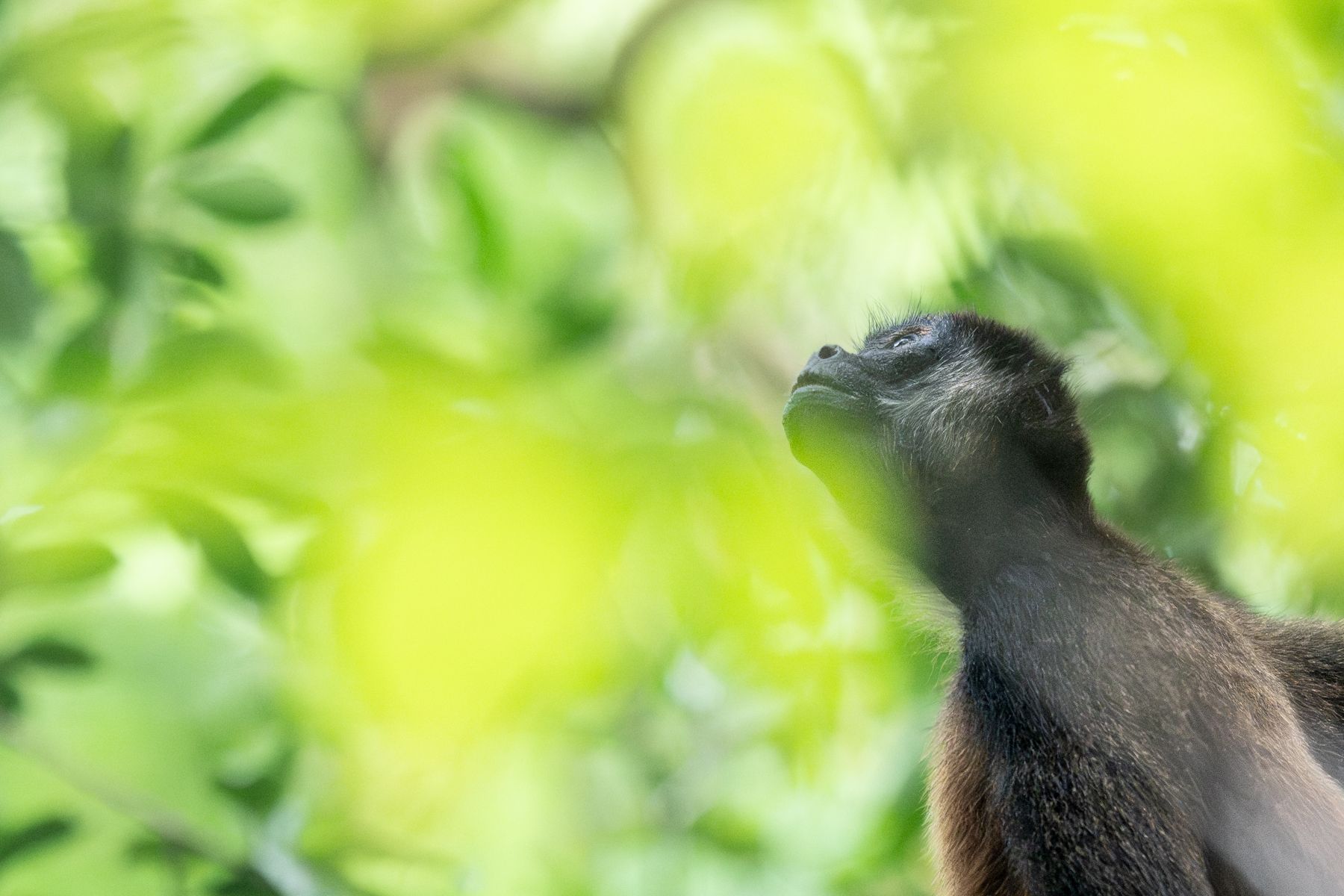
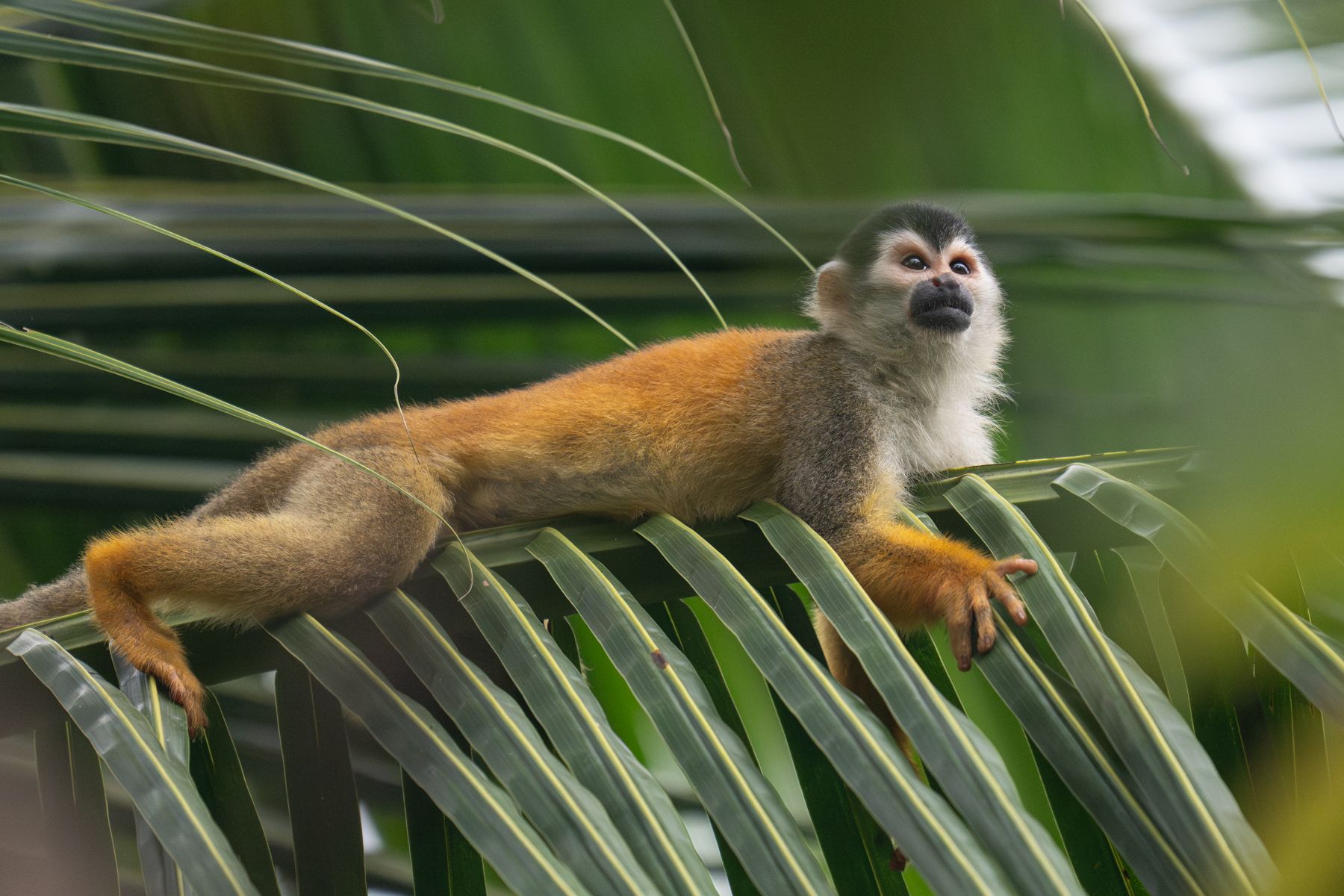
It was obvious we wouldn’t need to travel far to find subjects for our cameras. However, after lunch and getting settled into our rooms, we went out exploring. During this first hike around the Bosque del Cabo grounds, we found a troop of Spider Monkeys. Spider Monkeys are special to see, in my opinion, because they aren’t as widespread around Costa Rica as some other monkey species like the White-faced Capuchins or the Mantled Howler Monkeys. Also, they’re just really adorable and fun to watch. We watched them forage for food and often heard them “whinny” which is a vocalization that they make when they are happy. Lucky for us, this was the first time we saw spider monkeys, but it certainly wasn’t the last. Turns out, spider monkeys are very common on Bosque del Cabo’s property and we saw them every day, usually multiple times per day!
Our second day at Bosque del Cabo started with an early morning hike with their onsite biologist, Carlos. Carlos took us around the property and showed us various areas that were good for spotting wildlife. Later that night he also took us on a night hike where we were able to find more frogs, bats, and even a glow in the dark scorpion! However, our second day with Carlos was probably my favorite as this was the day our long-awaited anticipation was finally over. We finally found a sloth!
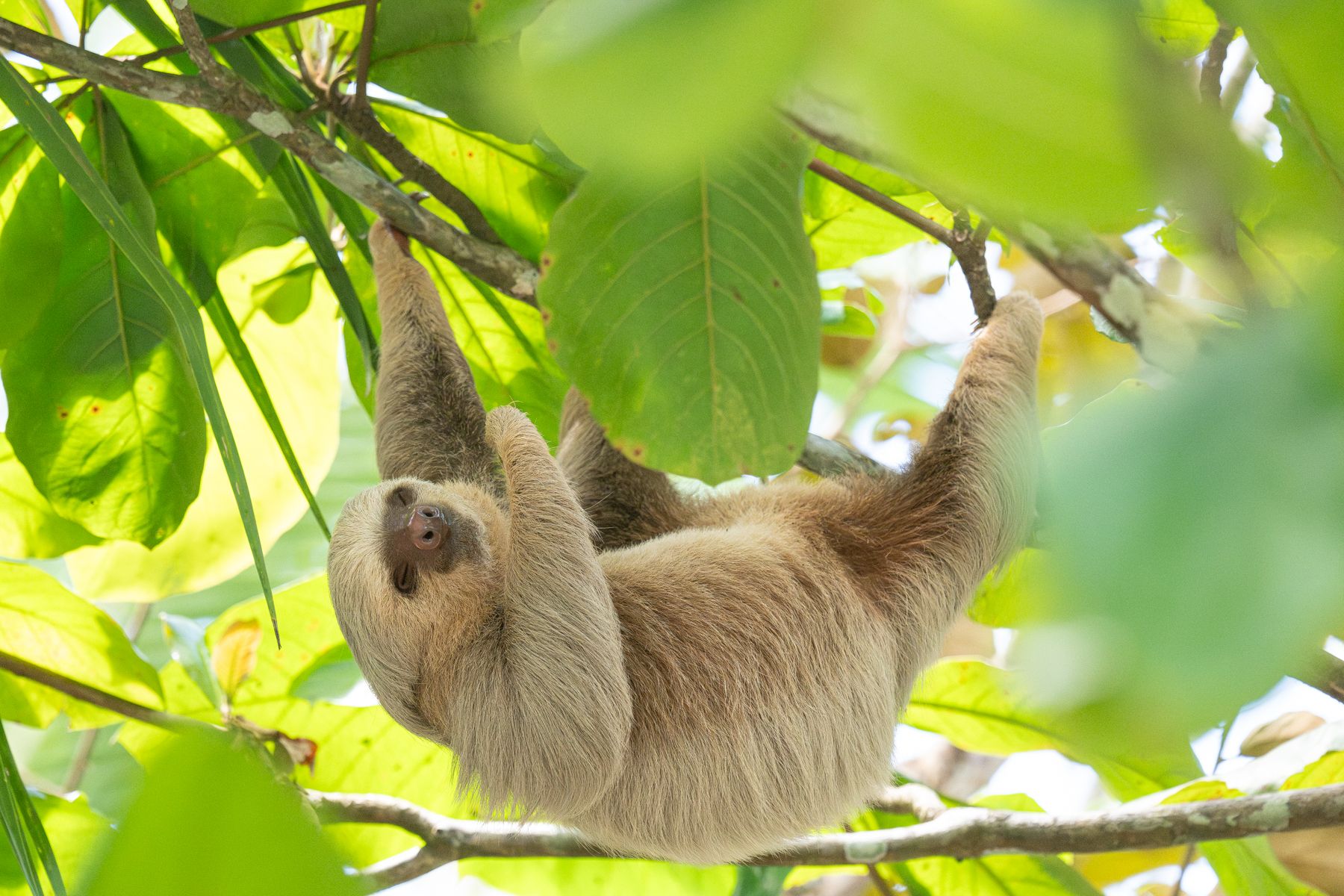
As someone who has worked with, studied and created an entire non-profit dedicated to sloths in Costa Rica; it was essential that we found a sloth during this trip! Just like a typical two-fingered sloth, this young female was hanging out in a beach almond tree near one of the main beaches in Puerto Jimenez. Sloths are silent and excellent at hiding because of their ability to camouflage, so finding a sloth isn’t as easy as it sounds. But lucky for us, she was not only visible, but she was also active and in decent light! We photographed her while she foraged for leaves, rested and did and little grooming.
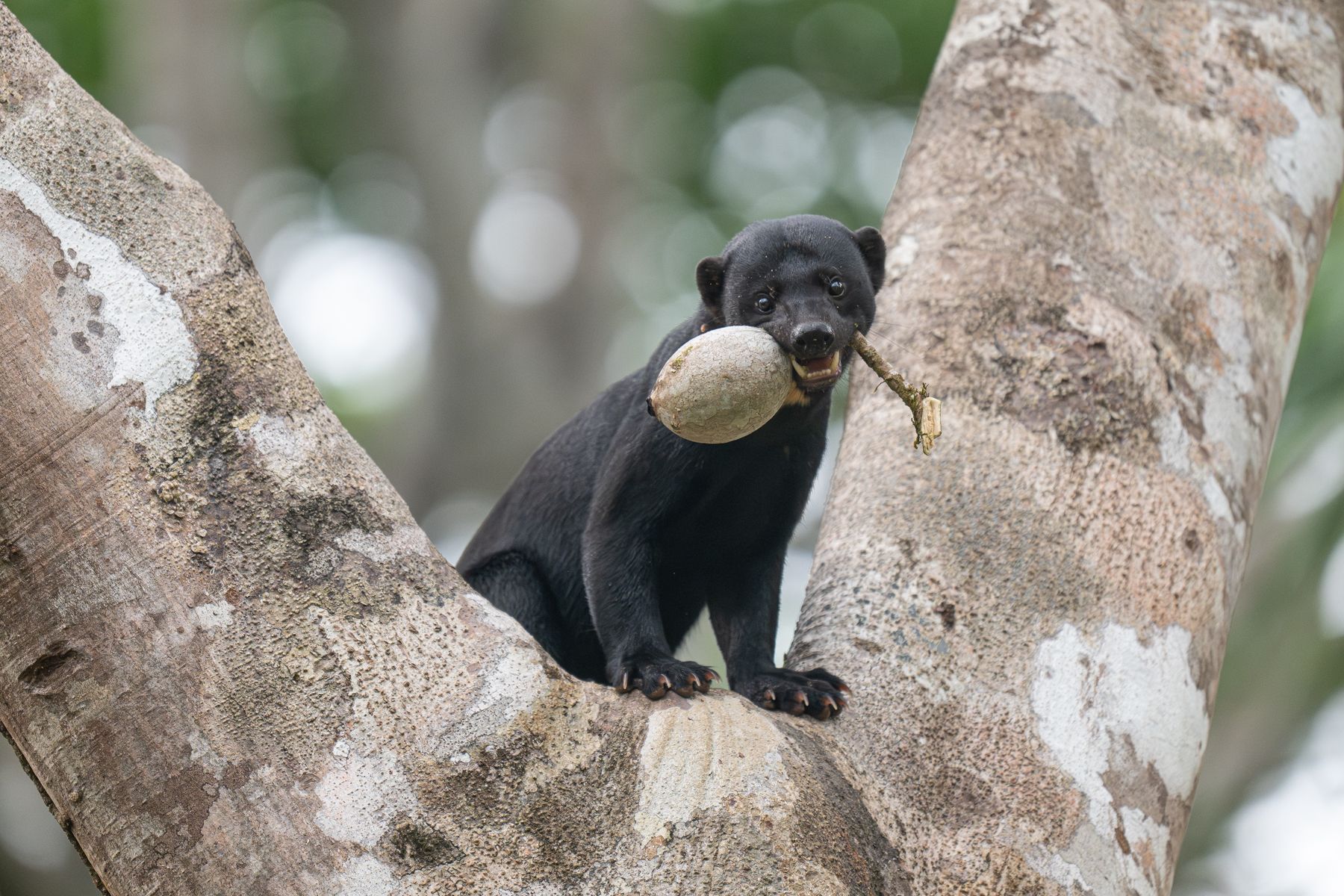
The next few days were spent searching for wildlife with Carlos in the mornings off of Bosque del Cabo’s property and searching for wildlife onsite during the afternoons. We saw thirteen different mammal species including all four species of monkeys, agoutis, peccaries, coatis, an anteater, tayras and of course both species of sloths.
But the species we were most excited to see didn’t come until our final afternoon. When we first arrived at Bosque del Cabo, the staff mentioned to us a pond in the tropical garden where they were sometimes seeing a Baird’s Tapir. Tapirs are VERY rare in Costa Rica and are officially Endangered due to habitat loss and poaching. I had personally never really seen one in the wild, let alone had a chance to photograph one. Being crepuscular, meaning they are most active at dawn and dusk, I knew our best chance was in the early morning or in the late afternoon. So every morning I checked this pond hoping to see a tapir taking a bath to know whether it was worth taking the guests in the afternoon. Then finally, on our last full day, a Tapir appeared! Completely silently he slipped into the water and then back out again. The plan for the afternoon was set. We walked out to the pond, and observed monkeys for a few hours until finally, we looked over and the tapir was taking a bath! VERY carefully, so as not to step on any kind of noise crunching leaf, we walked slightly closer to the pond so everyone could get a shot. The tapir graced us with his presence for at least 15 minutes. We watched him soak in the water, take a few dips underneath and then finally walk out and shake all the water off. It was magical.
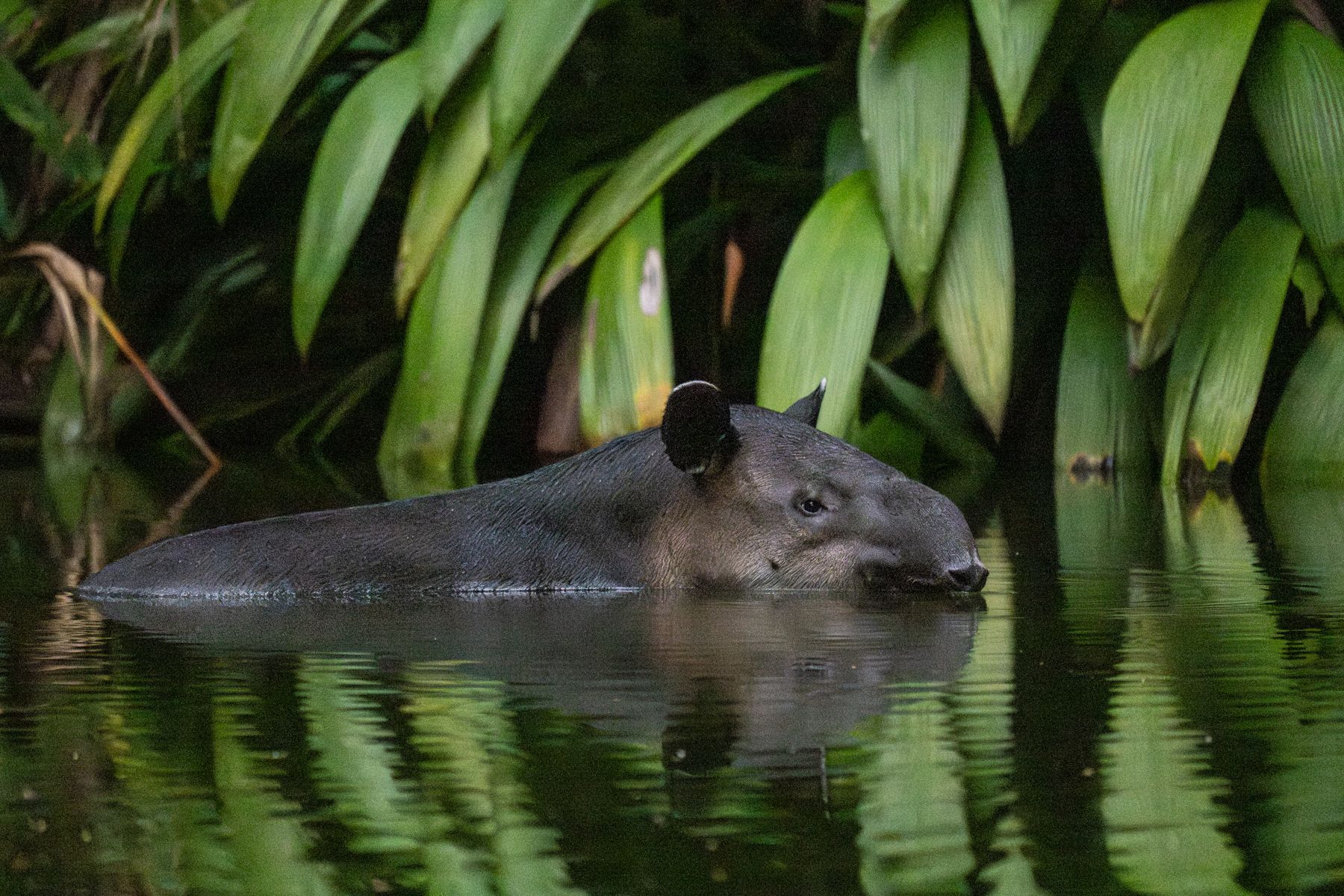
We finished our trip with a sighting of one of the rarest mammals in all of Costa Rica. It wasn’t going to get any better than that, so it was time to pack our bags and start our journey back to San Jose for our flights home. This trip was everything I dreamed it would be and I can’t wait to share Costa Rica with the next set of BCJ guests.

We offer world-class travel photography
experiences around the world.
Each tour is bundled with lodging, meals, and transportation between workshops included, allowing you to focus on photography instead of the stress of traveling.
experiences around the world.
Each tour is bundled with lodging, meals, and transportation between workshops included, allowing you to focus on photography instead of the stress of traveling.
Learn More About This Trip
Get Our Trip Catalog
Receive a trip catalog that highlights all of our upcoming photo tours and workshops.Schedule a Trip Consultation
Meet with a photo experience coordinator, and experience a personal touch to your booking experience.Landscape Guide
Receive a FREE Landscape Cheat Sheet Written By a Pro Photographer.Webinars
Our regularly hosted webinars provide photography instruction from our own guides on a wide range of topics.Education Portal
Explore our library of articles that cover everything from common questions, to in-depth guides on how to achieve that perfect shot.
Backcountry Journeys
Connecting Passionate People To
Exceptional Experiences.
Exceptional Experiences.
Business Hours:
Mon-Fri, 8AM-4PM MT
928-478-1521
adventure@backcountryjourneys.com
Mon-Fri, 8AM-4PM MT
928-478-1521
adventure@backcountryjourneys.com
arrow_drop_down_circle
Divider Text
All Images & Content Are Property Of Backcountry Journeys Photography Tours, Workshops & Safaris LLC - Copyright 2026


About Us
Receive a Digital Trip Catalog
Find an upcoming photography tour with our interactive catalog.