2025 Travelers' Choice
About Backcountry Journeys
Why Choose Backcountry Journeys
If you're considering a photography trip, hear why Backcountry Journeys delivers the best experience in the industry.Frequently Asked Questions
If you're new to photography trips, or new to BCJ, you can find our common travel questions here.Fitness Levels
Our trips vary on physical intensity, and by reviewing our fitness levels, you can find out which trips may be more challenging, or aligned more closely with your comfort level.Meet The Crew
We've built an amazing team of experienced guides, and dedicated office staff that elevate your travel experience. Get to know their backgrounds, and hear their stories.Loyalty Program
We reward our frequent photo adventurers with exclusive discounts on amazing photography trips.Contact Us
If you need to get in touch with our office staff, or have additional business inquiries, you can find our information here.Refer a Friend
Know someone perfect for one of our tours? Recommend them through this quick form.Stay Up To Date On All Things
Backcountry Journeys
Backcountry Journeys
Our Photography Community
Our Webinars
Our regularly hosted webinars provide photography instruction from our own guides on a wide range of topics.Our Education Portal
Explore our library of articles that cover everything from common questions, to in-depth guides on how to achieve that perfect shot.Community Testimonials
We're proud to foster an amazing group of photo travelers, and here you can find their stories from their past adventures.Resources For Photographers
About Our Company
Resources For Photographers
About Our Company
Trip Report: Wild Horses of Utah
Published July 17, 2026
When Backcountry Journeys announced they would be launching a new Wild Horses of Utah trip, my ears perked up and my heart skipped a beat. I knew immediately that I wanted to lead this trip, and I was determined to make it mine. I told my boss I was the right person for the job, and after months of anticipation and careful planning, it was finally time to head out and find these incredible horses!
I picked up our trusty BCJ van in Bozeman, Montana, and began the journey south to Tooele, Utah. With joy in my heart, I drove through Big Sky Country along the Madison River, across the plains and through the valleys of Idaho, and past wide-open ranchlands. Gradually, the landscape shifted from snowcapped peaks and rolling pastures, to a desert basin dotted with sagebrush, cheatgrass, and salt flats; terrain that felt deeply familiar, reminding me of my home in the high desert of Northern Nevada.
When I rolled into Tooele, I wasted no time heading out in search of the Onaqui horses. About an hour outside of town, I turned onto a dirt road, and almost immediately, fate seemed to be on my side. As I crested the first hill, I came upon what felt like every horse girl’s dream: a large band of wild horses, well over a hundred! They were grazing, playing, and running freely under the desert sun. In that moment, I knew I was exactly where I was meant to be. I couldn’t wait to bring our guests out to witness this extraordinary scene and to create meaningful images of these animals together.
To understand why leading these trips means so much to me, it helps to know a bit about my background. I grew up on Leonard Creek Ranch as a fourth-generation cowgirl, part of a long line of talented horsemen and women. I often say I learned to ride before I could walk. To this day, I spend as much time as I can at the ranch helping my family work cattle on horseback. I’ve competed in rodeo, participated in 4-H, and guided horseback trips around the world before joining Backcountry Journeys.
Horses have always been, and will always be, a central part of my life. Mustangs, in particular, hold a special place in my heart. There’s a herd near our ranch that I pass every time I go home, and when I was a child, my family adopted two mustangs from a local adoption center. They’ve since become trusted members of our herd and excellent cattle horses. In fact, I was riding one of them just this past weekend during spring branding.
That lifelong connection makes sharing the story of wild horses with our guests even more meaningful.
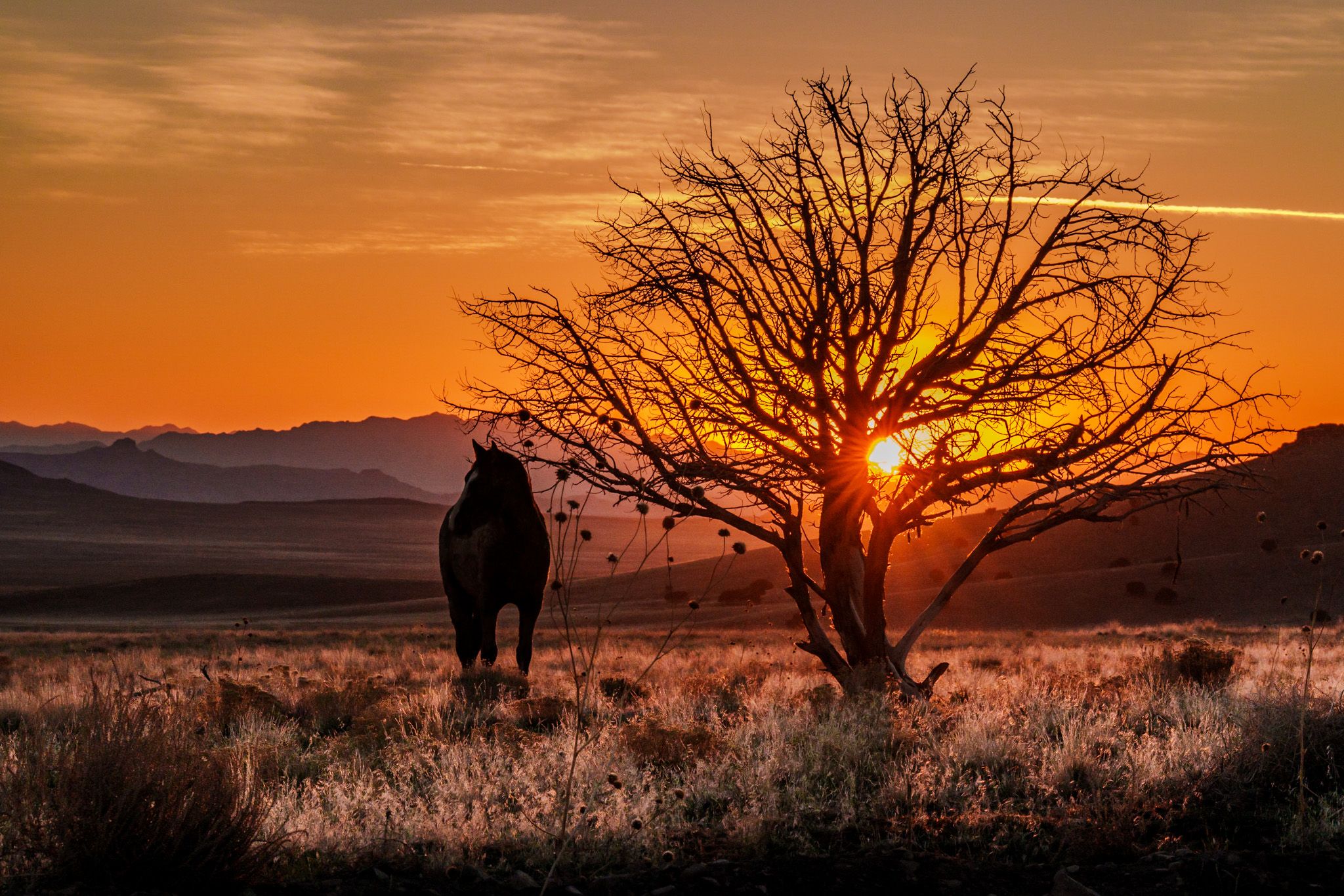
After picking up my guests in Salt Lake City and briefing them on how to safely and respectfully observe wild horses, we made our way to our home base in Tooele. Each morning began before sunrise as we headed out to the Onaqui Herd Management Area.
Some days, the horses revealed themselves quickly; other mornings required patience. We would climb to higher vantage points and scan the vast basin with spotting scopes, searching for movement or the telltale dust trails that signaled a nearby band. It was fun learning their patterns and trying to predict their movements as the weeks passed by.
Their movements seemed primarily driven by the need for water, and occasionally changing weather would alter their usual routes. We would return to town for a nice brunch around eleven and a bit of recharge time, then head back out again each afternoon to shoot at sunset. One of my favorite parts of the day would be eating dinner with the herd as light faded into dusk.
The Onaqui herd, managed by the Bureau of Land Management, roams across a large expanse of public land west of Tooele. These horses are descendants of Spanish mustangs mixed with ranch horses turned loose generations ago, and today they are known not only for their beauty but also for their remarkable diversity. Unlike many wild horse populations, the Onaqui horses display an incredible range of coat colors—bays, sorrels, palominos, grays, pintos, and more, making them especially compelling subjects for photography.
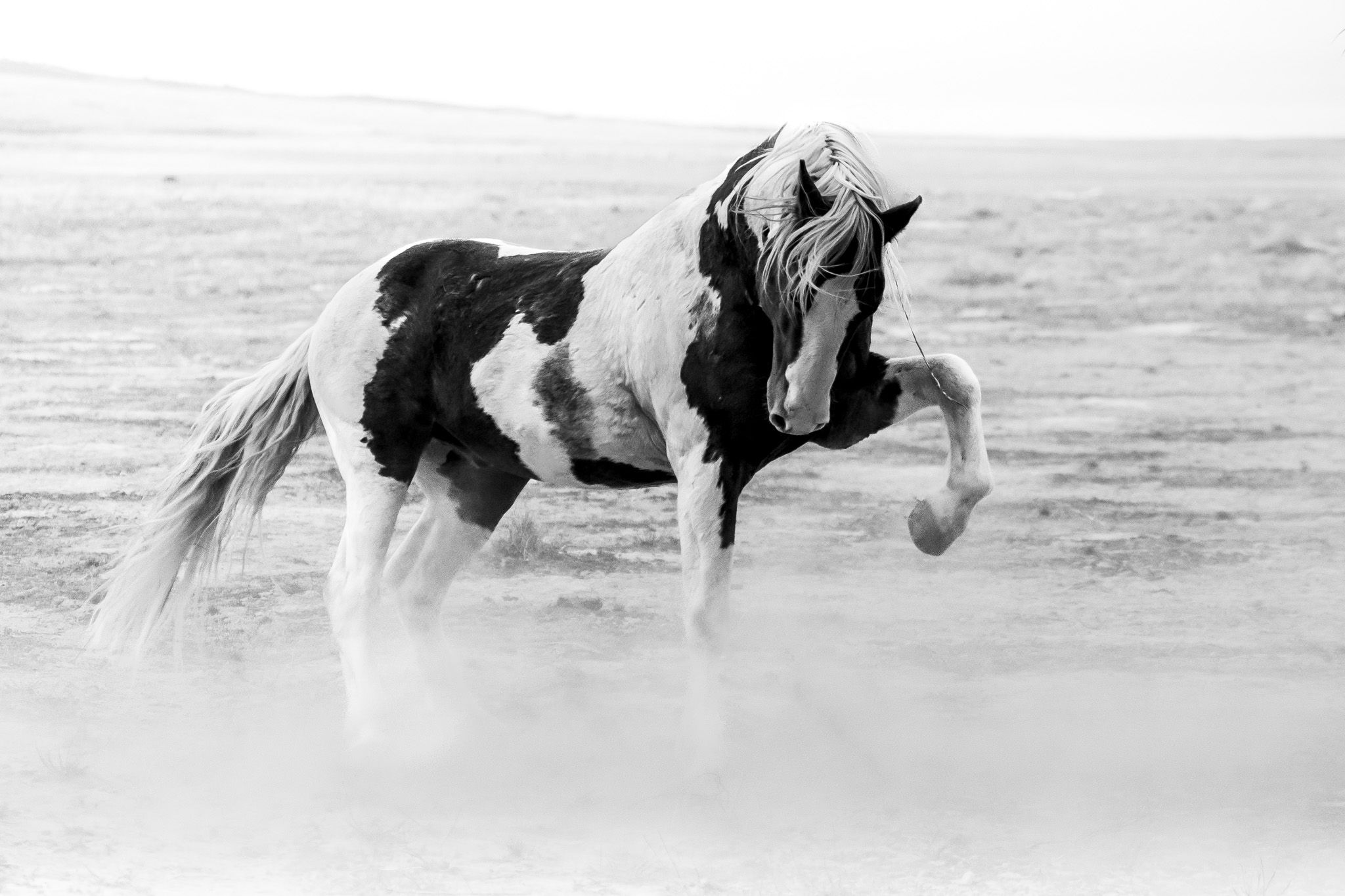
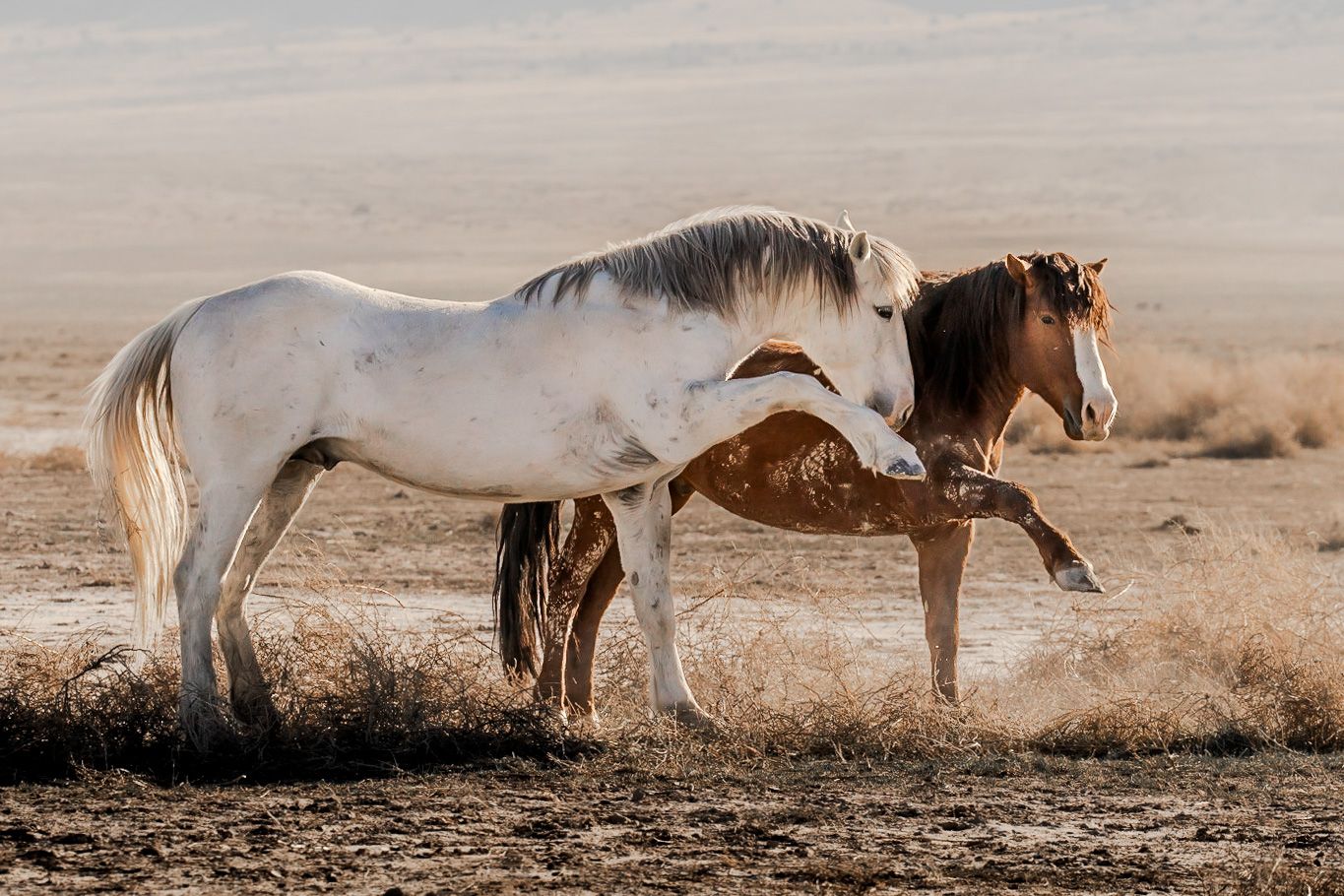
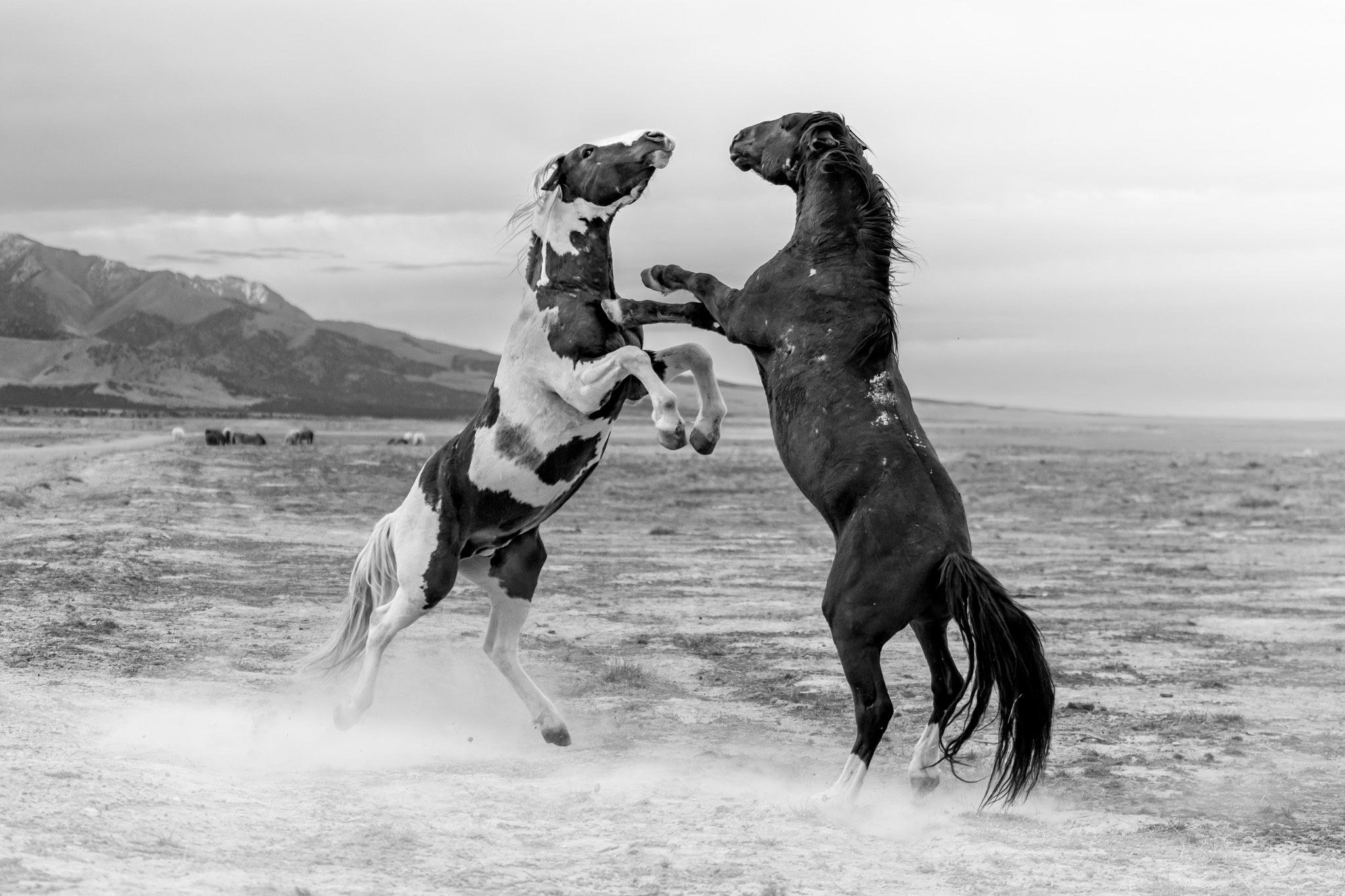
While they weren’t always easy to locate, we did manage to find them every day. Once we did, we approached slowly and maintained a respectful distance, allowing the horses to remain at ease. From there, we had the privilege of quietly observing as their complex social dynamics unfolded. We watched stallions defend their bands, mares nurture their foals, and young horses test boundaries through play. At times there was tension, posturing, chasing, and sparring, but just as often there were moments of tenderness: nuzzling, grooming, and resting together in the sun. There are three herds in the Onaqui HMA, North, South and East.
We spent most of our days with the North Herd because they are the largest and often the easiest to find and photograph.
It felt like an honor to spend time in their world, witnessing both their power and their gentleness. Over the course of the three trips, we were especially fortunate to see several newborn foals, one of the many highlights of spring in the West.
The presence of new life added an extra layer of excitement and emotion for our guests, as well as wonderful photographic opportunities. The Onaqui horses share their range with cattle from local ranches, and when we took breaks from photographing the horses, there was no shortage of other subjects. Guests enjoyed capturing images of curious calves, antelope, the occasional coyote, and even a few baby lambs at a nearby homestead.
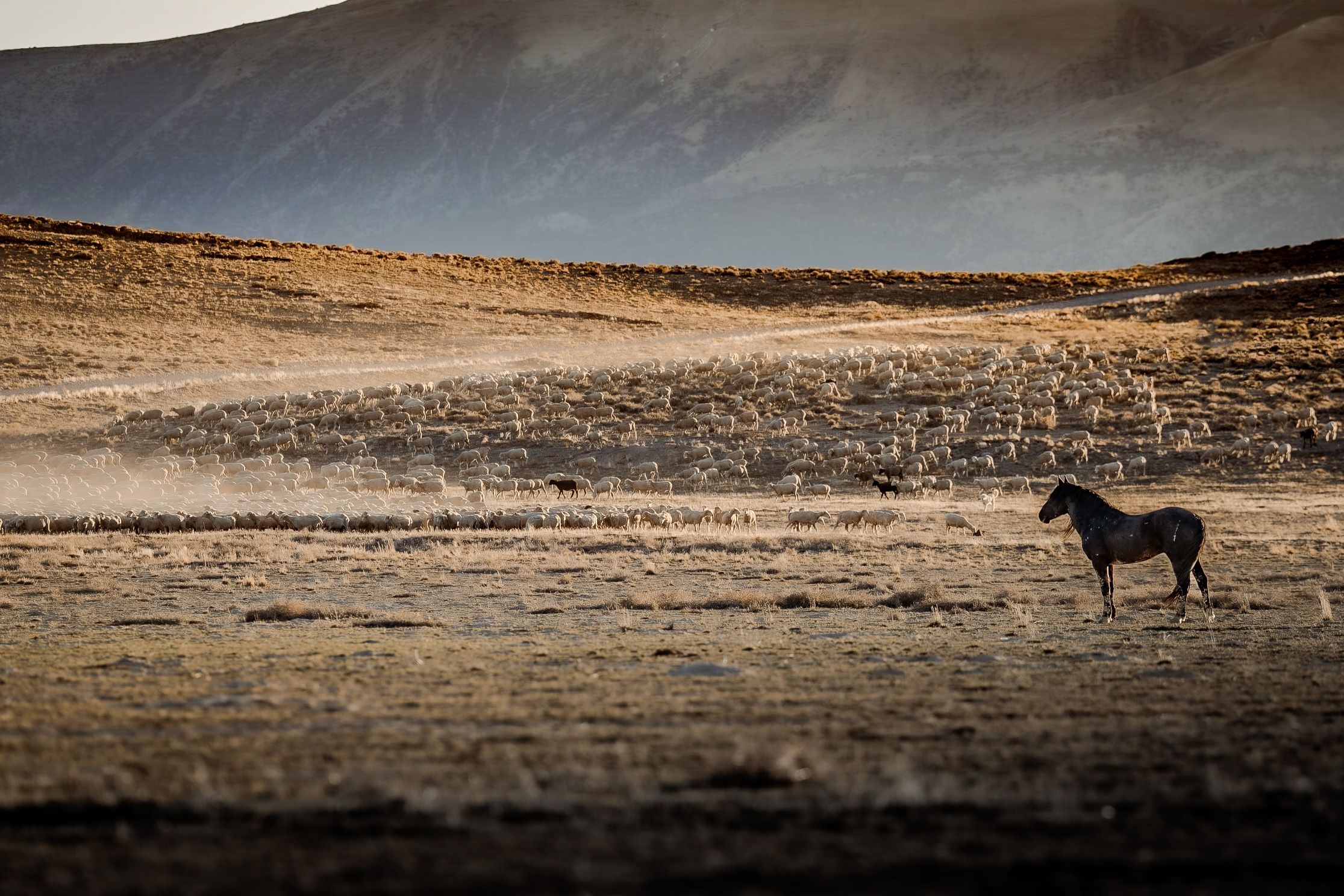
These trips were not only about photography, but they were also about connection: to the land, to the animals, and to a way of life that continues to shape the American West.
Being able to guide guests through that experience, while sharing something so deeply personal to me, made these weeks in Utah truly unforgettable. I would love to continue sharing these beautiful animals with other horse lovers and activists.
For those who feel inspired by the Onaqui horses and want to learn more, I encourage you to visit the Onaqui Catalogue Foundation website.
The foundation is dedicated to documenting, preserving, and advocating for this unique herd, while promoting responsible management and public awareness. Their work offers a deeper look into the lives and lineage of these horses, and they provide meaningful ways for individuals to support ongoing conservation efforts. It’s a wonderful resource for anyone who wants to stay connected to the Onaqui horses long after the trip ends.

 Wild Horses of Utah
 Lodge-Based Photo Safari
From $3,995.00
Up To 7 Guests
Fitness Level 1 - What's This?
Wanna Get Away?
Starts
Current Price:$0.00
Start: Salt Lake City, UT
Led By
Start: Salt Lake City, UT
Led By

Backcountry Journeys
Connecting Passionate People To
Exceptional Experiences.
Exceptional Experiences.
Business Hours:
Mon-Fri, 8AM-4PM MT
928-478-1521
adventure@backcountryjourneys.com
Mon-Fri, 8AM-4PM MT
928-478-1521
adventure@backcountryjourneys.com
arrow_drop_down_circle
Divider Text
All Images & Content Are Property Of Backcountry Journeys Photography Tours, Workshops & Safaris LLC - Copyright 2026


About Us
Receive a Digital Trip Catalog
Find an upcoming photography tour with our interactive catalog.