2025 Travelers' Choice

About Backcountry Journeys
Why Choose Backcountry Journeys
If you're considering a photography trip, hear why Backcountry Journeys delivers the best experience in the industry.Frequently Asked Questions
If you're new to photography trips, or new to BCJ, you can find our common travel questions here.Fitness Levels
Our trips vary on physical intensity, and by reviewing our fitness levels, you can find out which trips may be more challenging, or aligned more closely with your comfort level.Meet The Crew
We've built an amazing team of experienced guides, and dedicated office staff that elevate your travel experience. Get to know their backgrounds, and hear their stories.Loyalty Program
We reward our frequent photo adventurers with exclusive discounts on amazing photography trips.Contact Us
If you need to get in touch with our office staff, or have additional business inquiries, you can find our information here.Refer a Friend
Know someone perfect for one of our tours? Recommend them through this quick form.Stay Up To Date On All Things
Backcountry Journeys
Backcountry Journeys
Our Photography Community
Our Webinars
Our regularly hosted webinars provide photography instruction from our own guides on a wide range of topics.Our Education Portal
Explore our library of articles that cover everything from common questions, to in-depth guides on how to achieve that perfect shot.Community Testimonials
We're proud to foster an amazing group of photo travelers, and here you can find their stories from their past adventures.Resources For Photographers
About Our Company
Resources For Photographers
About Our Company
Trip Report: Wild Namibia Photo Safari
Published October 30, 2026
When you tell people you’re going to Namibia, you tend to get a mix of curiosity and quiet awe. It’s not always the first destination that comes to mind for wildlife photography in Africa, but those who know, know.
Namibia is a land of extremes; towering dunes, stark coastlines, desert-adapted wildlife, and vast open spaces that seem to stretch endlessly in every direction. For photographers, it offers something entirely unique: a chance to capture not just wildlife, but the raw, graphic beauty of landscapes unlike anywhere else on Earth. Over the course of this journey, beginning in Windhoek and looping through some of the country’s most iconic regions, we experienced exactly that.
Our group met in Windhoek, Namibia’s capital and gateway to adventure. After our orientation and a chance to get to know one another, we prepared for the journey ahead. Namibia is a country best experienced by covering ground, and our first leg took us south toward the iconic red dunes of the Namib Desert. As we drove, the landscape gradually transformed as trees thinned out, colors warmed, and the horizon opened wider with every mile.
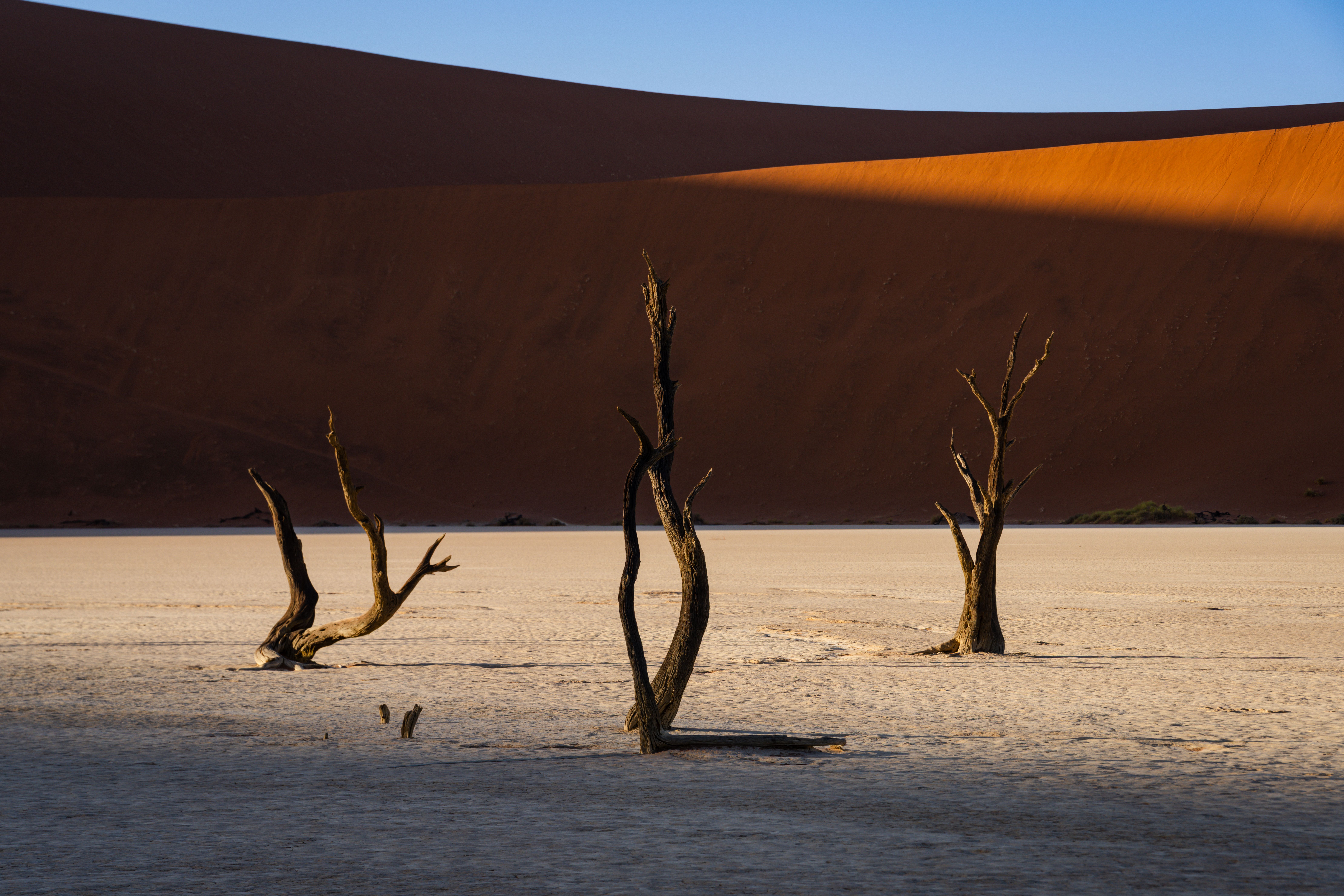
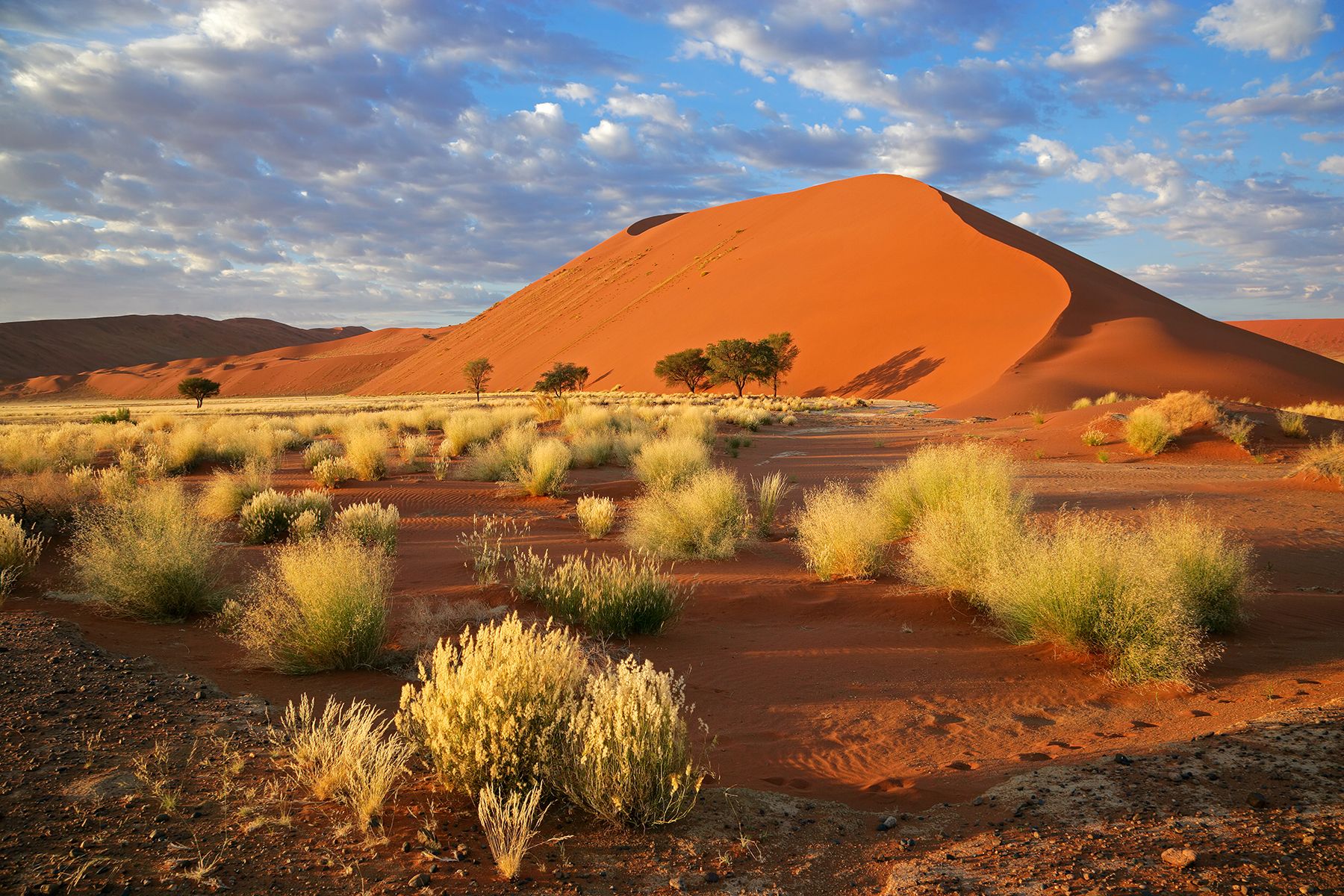
Our destination was the Sossusvlei region, home to some of the tallest sand dunes in the world. These dunes, shaped by wind over millions of years, rise in elegant curves and sharp ridgelines, glowing deep orange at sunrise and sunset. Our days here began early, entering the park before dawn to catch first light illuminating the dunes. The desert unfolds in every direction, with shadows carving dramatic patterns across the landscape.
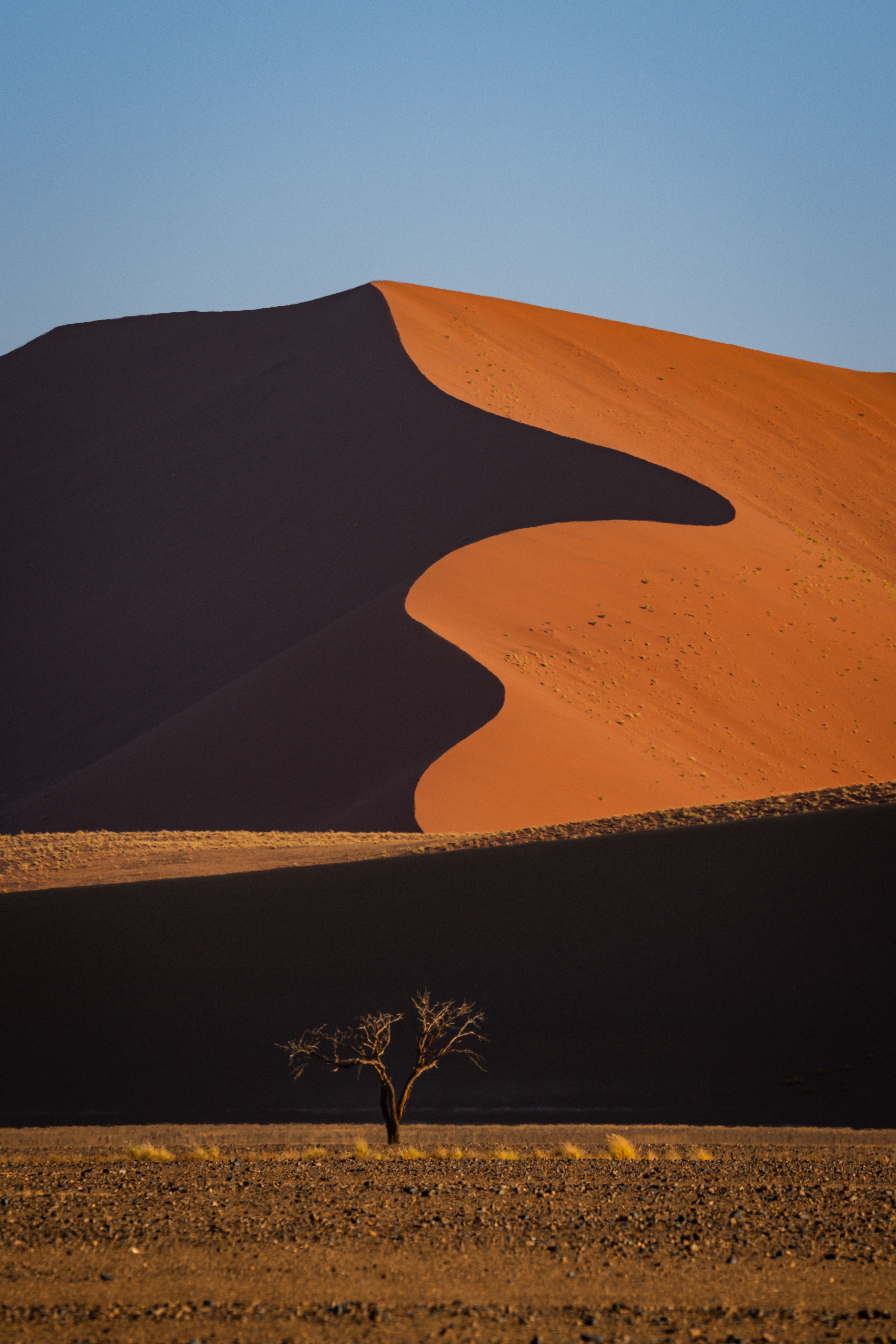
One of the highlights of this portion of the trip was Deadvlei, a surreal white clay pan dotted with ancient, skeletal camelthorn trees. These trees, some over 600 years old, stand frozen in time, their dark forms contrasting against the bright ground and the towering dunes behind them.
Photographing here feels almost otherworldly. The light shifts quickly, and compositions seem endless, from minimalist abstracts to sweeping wide-angle scenes.
We also took to the skies; many of us did twice. First, in a helicopter over the dunes, where the true scale and artistry of the desert becomes clear. From above, the dunes resemble brushstrokes, with ridges flowing like waves across the sand. Later in the trip, we’d experience Namibia again from the air in a completely different environment, but this first flight set the tone: Namibia is as much about perspective as it is about place.
From the desert, we traveled west to the coast, arriving in the charming town of Swakopmund. The transition is striking; suddenly, cool ocean air replaces desert heat, and German colonial architecture lines the streets. But it’s just beyond town where the real adventure begins.
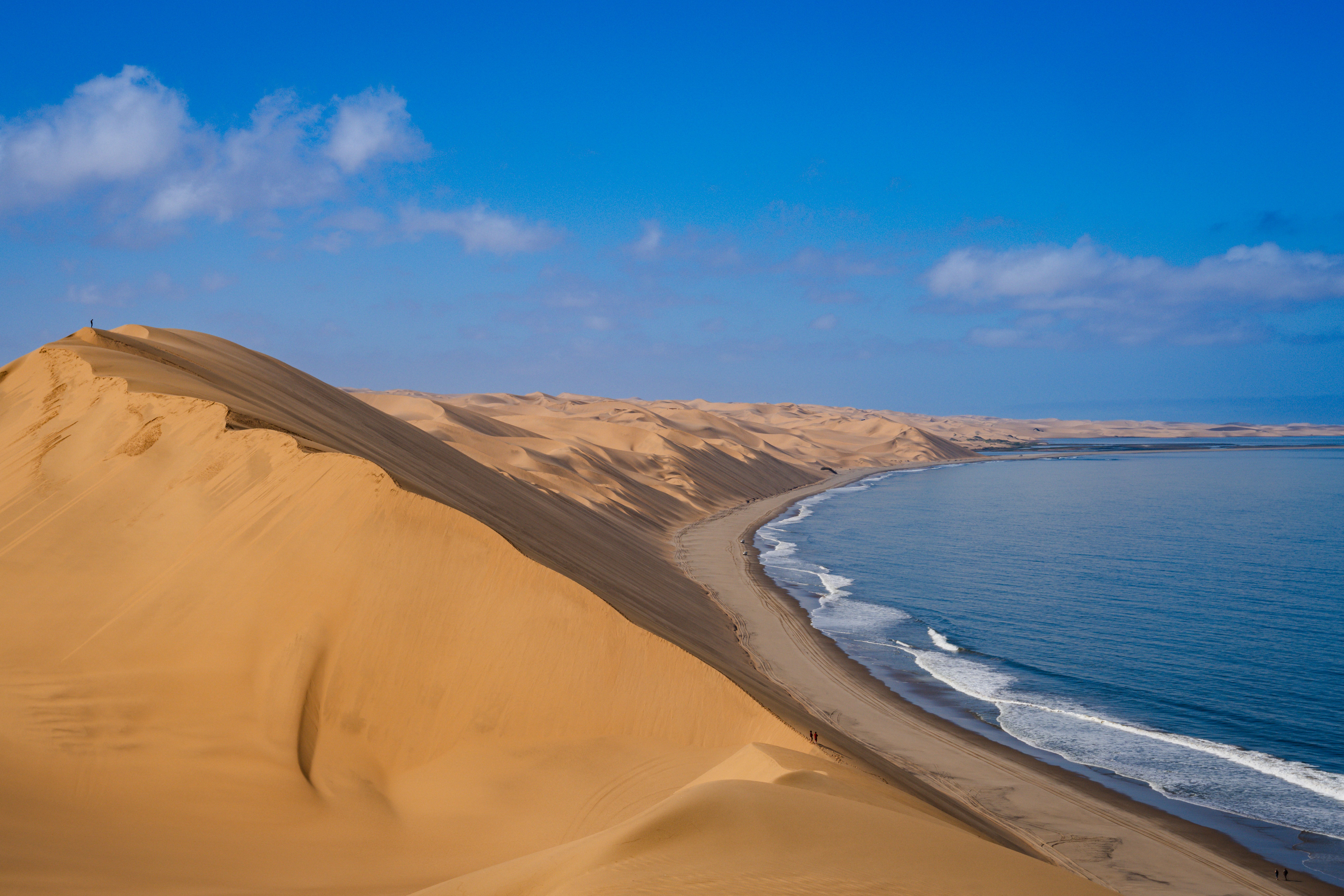
We loaded into 4x4 vehicles and headed south toward Sandwich Harbour, where massive dunes plunge dramatically into the Atlantic Ocean. Photographically, Sandwich Harbour is spectacular. Curving dune lines meet crashing waves, and the contrast between desert and ocean creates scenes that feel almost impossible.
From ground level, the compositions are bold and graphic. From above, yes, we took another helicopter flight, again with the doors off. Looking straight down at dunes meeting the ocean, with the wind carving textures into the sand, is something that’s hard to fully process until you see it for yourself.
While in Swakopmund, we also explored the smaller wonders of the desert on a “Little 5” tour.
Tracking down geckos, chameleons, and sidewinder snakes that have adapted perfectly to this harsh environment. It’s a reminder that even in the most seemingly barren places, life thrives in fascinating ways. Along the coast, we visited massive seal colonies, where thousands of Cape fur seals gather, filling the air with sound and energy; an entirely different kind of wildlife experience compared to the quiet desert.
From the coast, we headed inland to Damaraland, a region defined by rugged mountains, ancient geology, and a sense of isolation that’s hard to describe. The landscapes here are some of the most striking in Namibia; rocky outcrops, dry riverbeds, and open plains stretching toward distant peaks.
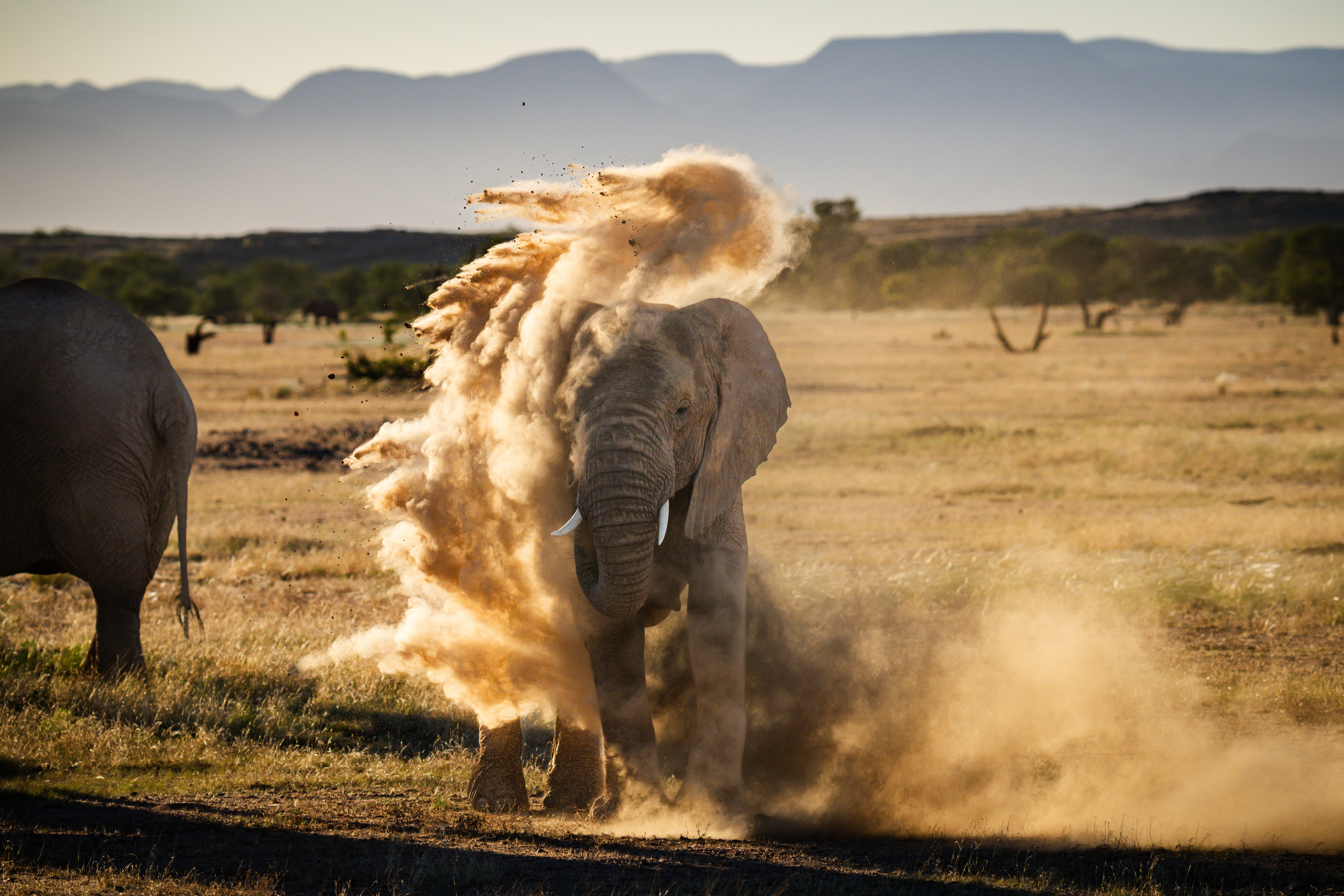
It’s a place where light and shadow play constantly across the terrain. This is also an area with wildlife, and we were lucky enough to have plenty of time with plenty of elephants.
One evening in particular stands out. After photographing an elephant herd for over an hour, we headed to a beautiful vista where we sat above them. As the sun dipped toward the horizon, the light turned golden, then deep orange, and eventually, a fiery pink. During sunset, an unbelievably beautiful moment occurred, when two of the elephants mated. It was one of those moments that feels timeless, where everything aligns, and you’re simply there to witness it.
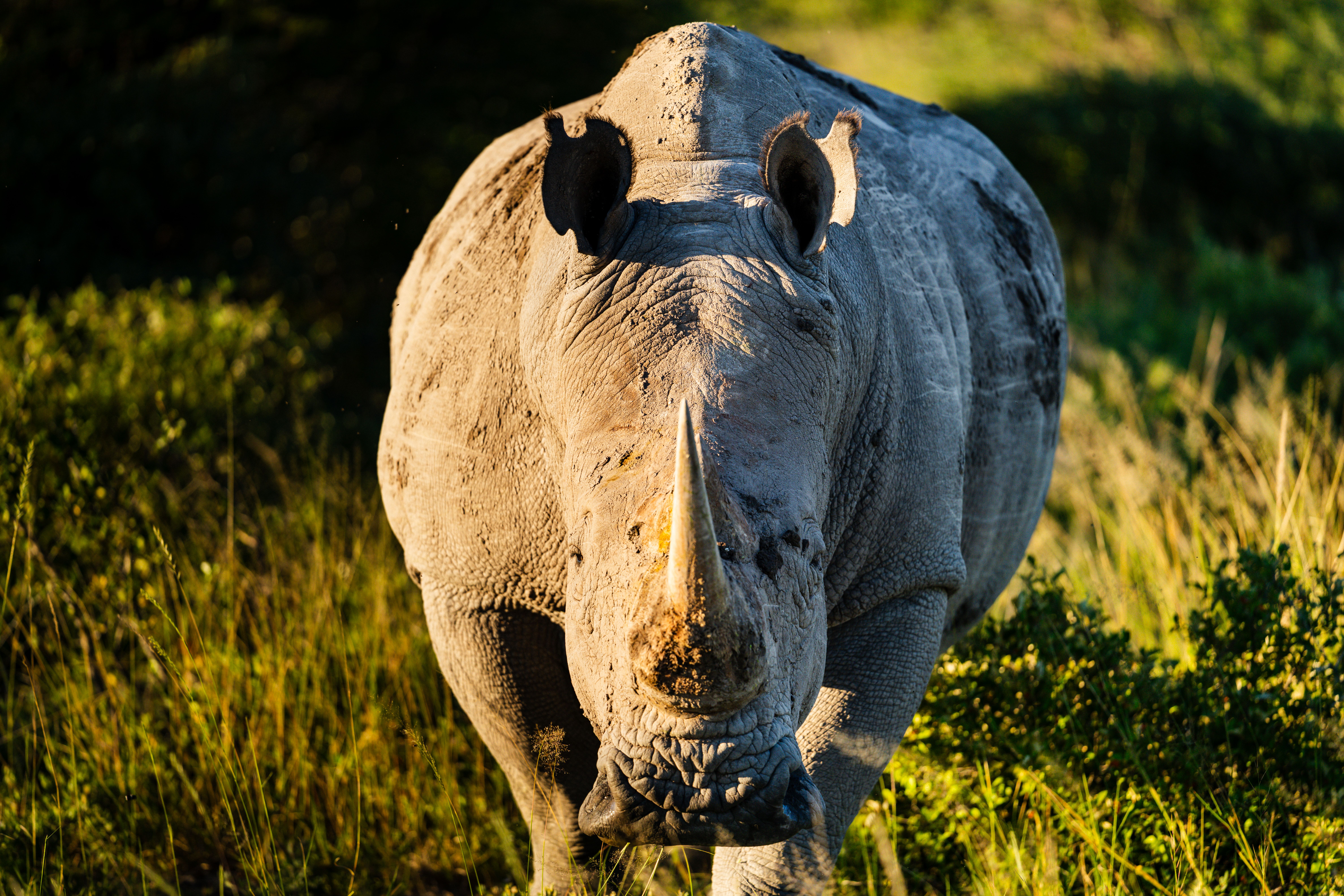
Next, we made our way to Etosha National Park, one of Africa’s premier wildlife destinations, along with time in the adjacent Onguma Game Reserve. We had fantastic sightings throughout our time, including both black and white rhinos, often visiting waterholes in the soft light of early morning or late afternoon. Seeing these animals in the wild—particularly the critically endangered black rhino—is always a powerful experience.
We also spent time with beautiful birds, as well as lions, including a mother with four cubs. One of the more memorable encounters was with spotted hyena cubs, playful and curious. Moments like these offer a glimpse into behaviors that are as compelling as they are photogenic.
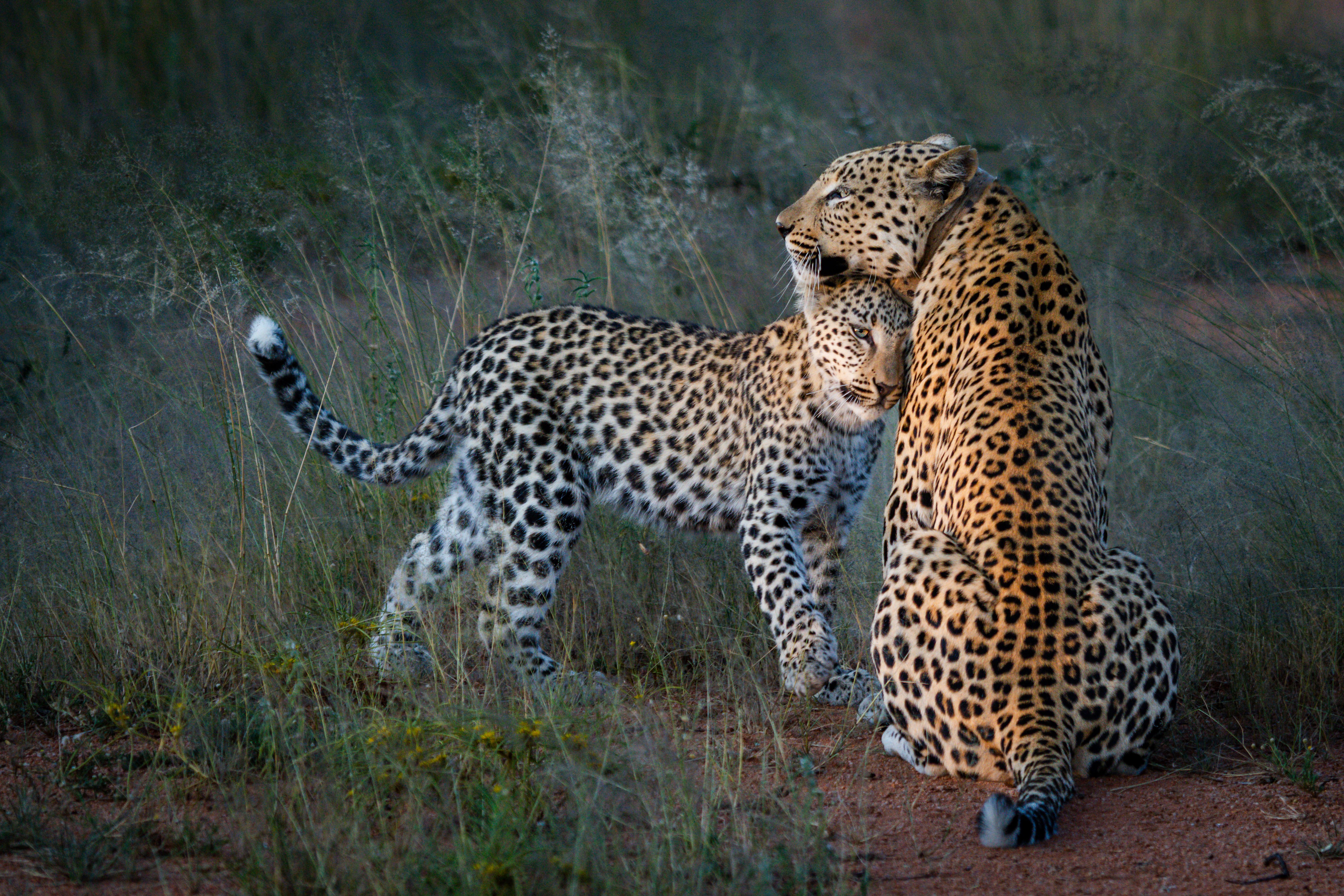
As the trip began to wind down, we made our final stop at Okonjima Nature Reserve, known for its conservation efforts and, notably, its leopard population. If there’s one species that consistently captivates photographers, it’s the leopard—and Okonjima delivered in spectacular fashion.
Over our time there, we had multiple incredible leopard sightings. We witnessed a mother with her cub on two occasions, and also a male with a fresh kill. Leopards have a way of commanding attention without effort; their movement, their gaze, their quiet confidence. Being able to spend extended time photographing them in such conditions was a fitting finale to the trip.
As we returned to Windhoek and prepared for departures, there was a shared sense among the group that we had experienced something truly special. Namibia is not just a destination; it’s a collection of environments, each offering its own visual language.
From the towering dunes of Sossusvlei to the crashing waves of Sandwich Harbour, from desert elephants in Damaraland to rhinos in Etosha and leopards in Okonjima, the diversity is remarkable.
This was a journey defined by contrast, scale, and unforgettable moments. As photographers, we chase light, composition, and subject, but trips like this remind us that what we’re really chasing is experience.
And Namibia delivers that in every sense.
 Wild Namibia Photo Safari
 Lodge-Based Photo Workshop
From $14,995.00
Up To 8 Guests
Fitness Level 1 - What's This?
Wanna Get Away?
Starts
Current Price:$0.00
Start: Windhoek, Namibia
Led By
Start: Windhoek, Namibia
Led By

Backcountry Journeys
Connecting Passionate People To
Exceptional Experiences.
Exceptional Experiences.
Business Hours:
Mon-Fri, 8AM-4PM MT
928-478-1521
adventure@backcountryjourneys.com
Mon-Fri, 8AM-4PM MT
928-478-1521
adventure@backcountryjourneys.com
arrow_drop_down_circle
Divider Text
All Images & Content Are Property Of Backcountry Journeys Photography Tours, Workshops & Safaris LLC - Copyright 2026


About Us
Receive a Digital Trip Catalog
Find an upcoming photography tour with our interactive catalog.