2025 Travelers' Choice

About Backcountry Journeys
Why Choose Backcountry Journeys
If you're considering a photography trip, hear why Backcountry Journeys delivers the best experience in the industry.Frequently Asked Questions
If you're new to photography trips, or new to BCJ, you can find our common travel questions here.Fitness Levels
Our trips vary on physical intensity, and by reviewing our fitness levels, you can find out which trips may be more challenging, or aligned more closely with your comfort level.Meet The Crew
We've built an amazing team of experienced guides, and dedicated office staff that elevate your travel experience. Get to know their backgrounds, and hear their stories.Loyalty Program
We reward our frequent photo adventurers with exclusive discounts on amazing photography trips.Contact Us
If you need to get in touch with our office staff, or have additional business inquiries, you can find our information here.Refer a Friend
Know someone perfect for one of our tours? Recommend them through this quick form.Stay Up To Date On All Things
Backcountry Journeys
Backcountry Journeys
Our Photography Community
Our Webinars
Our regularly hosted webinars provide photography instruction from our own guides on a wide range of topics.Our Education Portal
Explore our library of articles that cover everything from common questions, to in-depth guides on how to achieve that perfect shot.Community Testimonials
We're proud to foster an amazing group of photo travelers, and here you can find their stories from their past adventures.Resources For Photographers
About Our Company
Resources For Photographers
About Our Company
Trip Report: Southeast Alaska: Fjords, Glaciers & Wildlife Photo Expedition - July 2025
Published December 18, 2025
SE Alaska: Fjords, Glaciers &Wildlife Aboard the David B.
The hum of the old diesel engine and the smell of salt air greeted us the first morning aboard the historic David B. There’s something about stepping onto a wooden vessel with nearly a century of stories etched into its timbers that makes you feel you’ve joined a lineage of explorers. The David B, once a working tugboat, now serves as a floating lodge for photographers and adventurers with an appetite for wild landscapes and unhurried discovery. Unlike the massive cruise ships that thunder up and down Alaska’s Inside Passage, she carries only a handful of guests. That intimacy shapes every moment of the workshop—photography is not just about pointing lenses at glaciers, but about immersing ourselves in the rhythm of tide, light, and the living wilderness. The crew is just as magical as the vessel, with Jeffrey as our captain and modern-day MacGyver, his wife Christine (also a captain) overseeing and creating the amazing home cooked meals onboard, and first mate Matt, keeping night watch and being a man of all trades. Not only do they run the ship, but they are also all in tune with the flora, fauna, history and geology of SE Alaska.
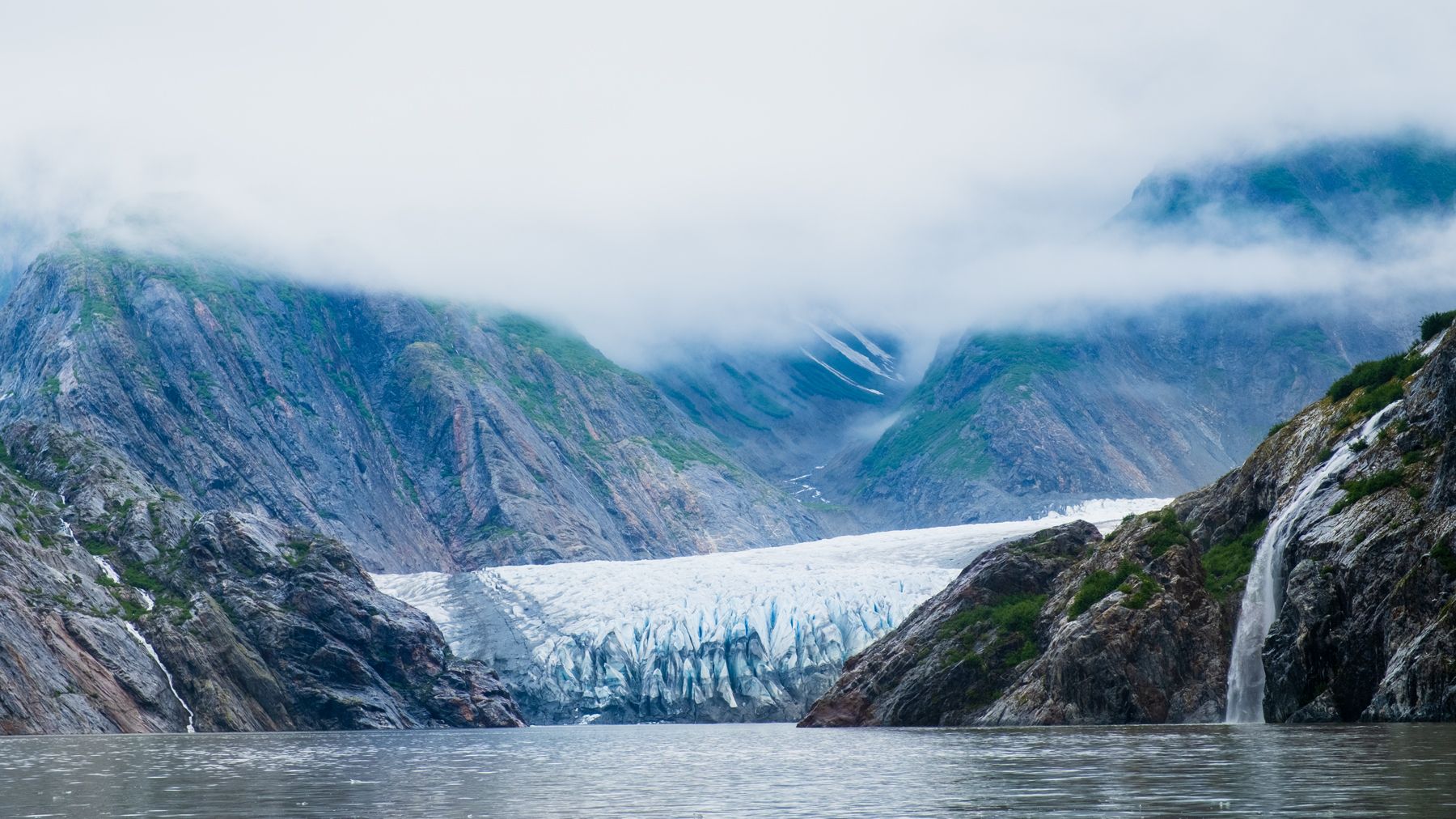
Our first evening set the tone. We dropped anchor in Cannery Cove, a sheltered bay that felt like the very definition of tranquility. The water was glassy, mountains wrapped around us in soft shades of green, and the mist drifted lazily between ridges. We took the skiff onto shore and explored the remnants of the cannery, its antiquity fading back into nature. The stillness of Cannery Cove, punctuated by the click of shutters and the occasional eagle’s call, reminded us that sometimes the best images come not from drama, but from a quiet intimacy with place.
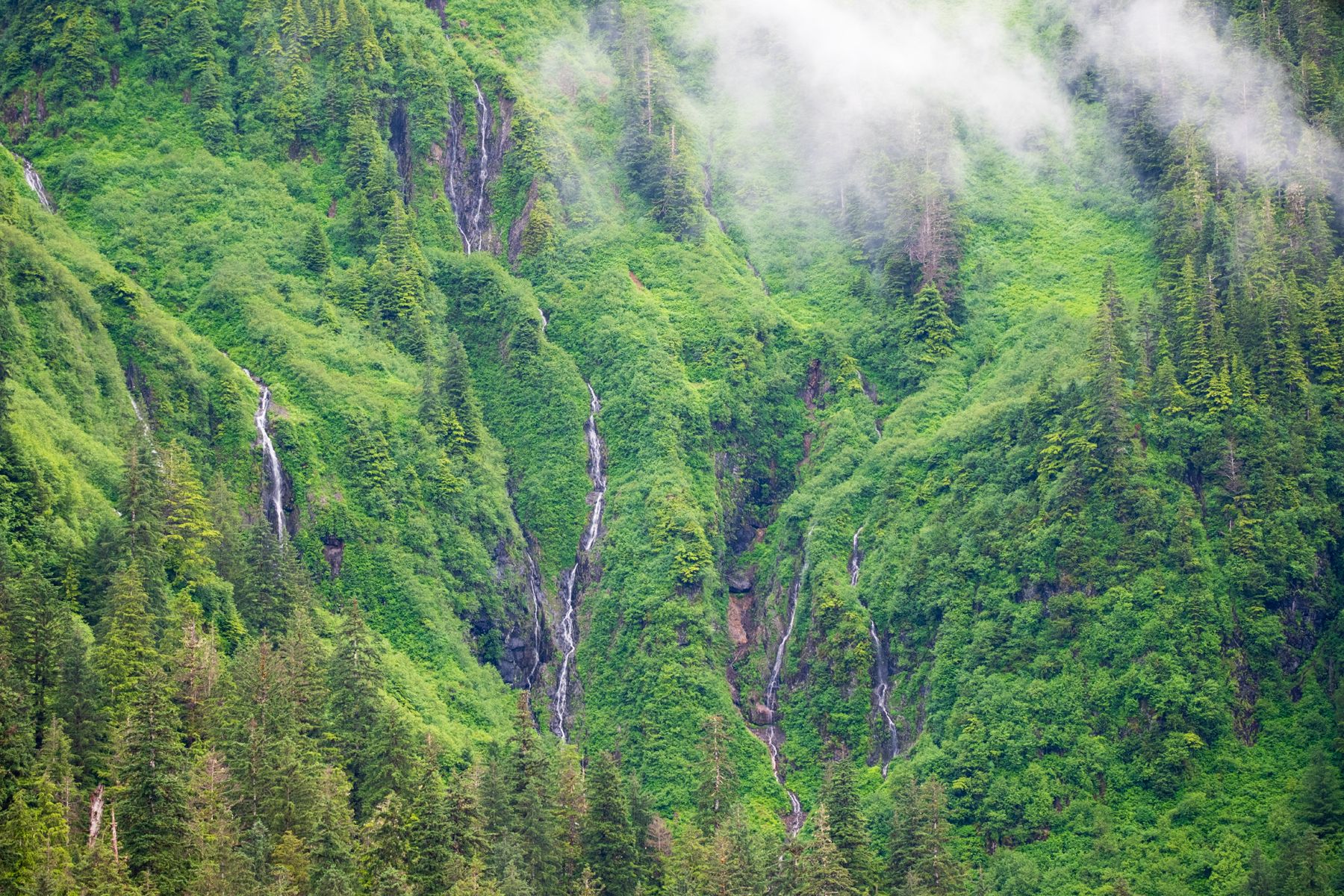
The following day brought a big day on the water and to our destination Admiralty Island, known as the “Fortress of the Bears.” With one of the highest concentrations of brown bears in the world. From the deck, we watched the forest edge like patient hunters—only our quarry was photographs. More than once, we spotted movement, a dark shape slipping through the alder only to be a deer. The workshop shifted into a lesson on patience: how to anticipate behavior, how to be ready without overshooting, how to let wildlife dictate the pace. While nature did not deliver bears, it did however, offer moments of serenity—reflections of spruce mirrored perfectly in still water, loons calling across the bay. For some, those quiet frames were as rewarding as the potential wildlife encounters.
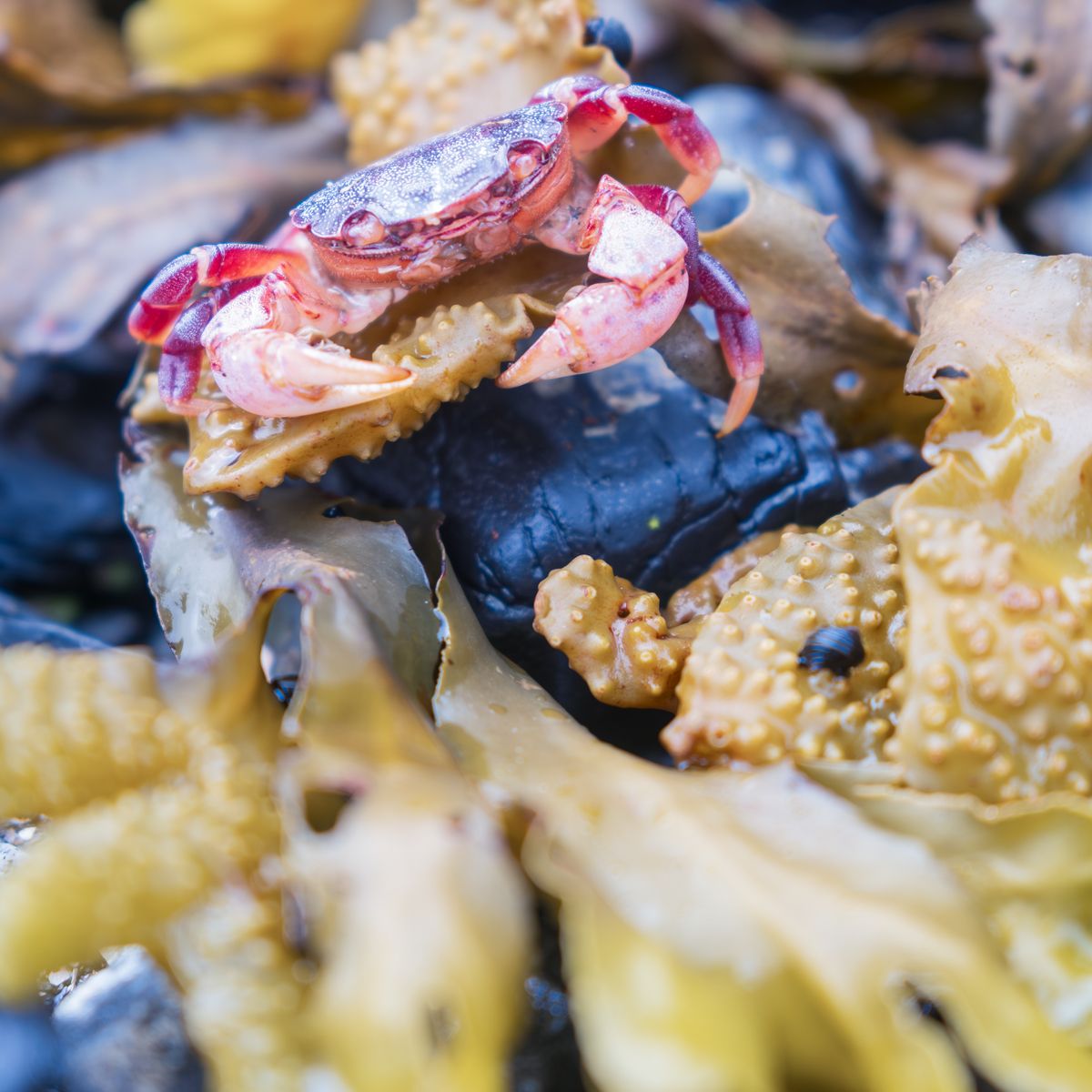
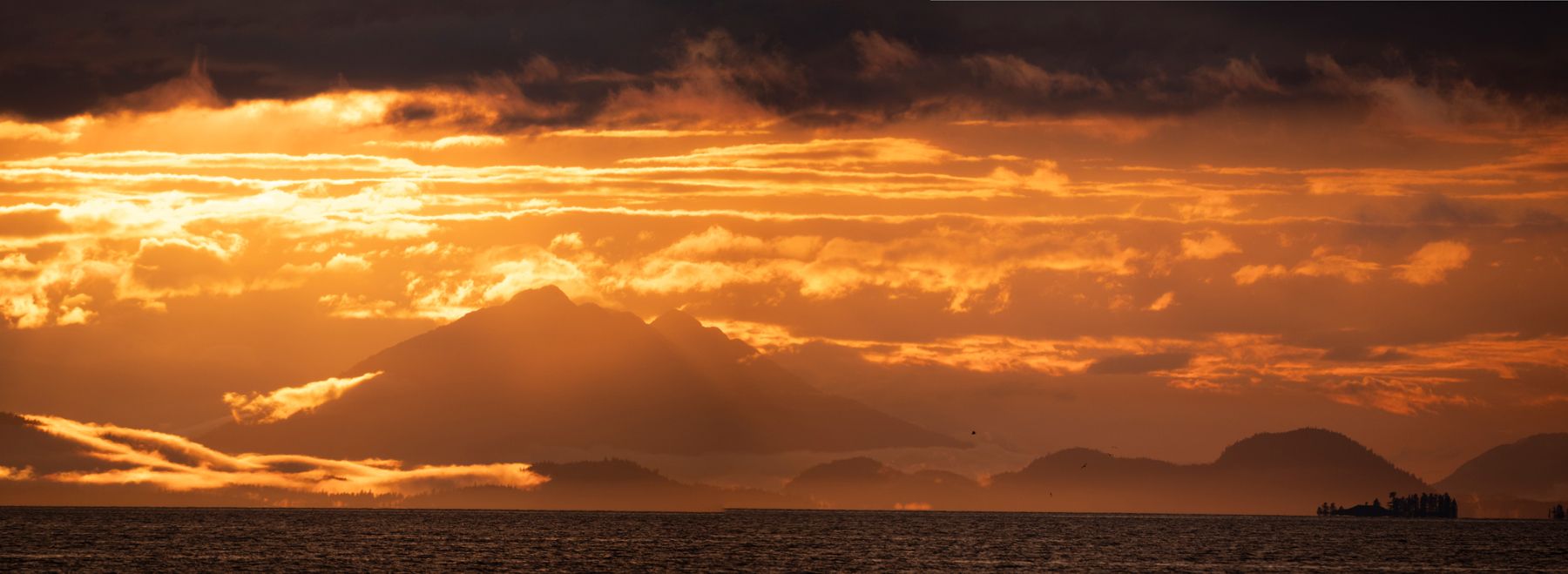
Good Island, our next anchorage, was aptly named. It was a place of shifting tides and endless photographic possibilities. Low tide revealed intertidal zones teeming with textures—barnacle-encrusted rocks, kelp washed into golden tangles, and tidepools that became abstract studies of color and shape. We spent an afternoon on shore, working on close-up compositions, experimenting with depth of field, and finding patterns where others might have seen only chaos. As the sun dipped, the island gave us one of the most spectacular alpenglow displays of the trip. The surrounding peaks blushed pink and orange and red, and the fjord transformed into a painter’s palette. Cameras were busy, but so were our eyes—it was one of those rare evenings when you knew the memory would outlast the pixels.
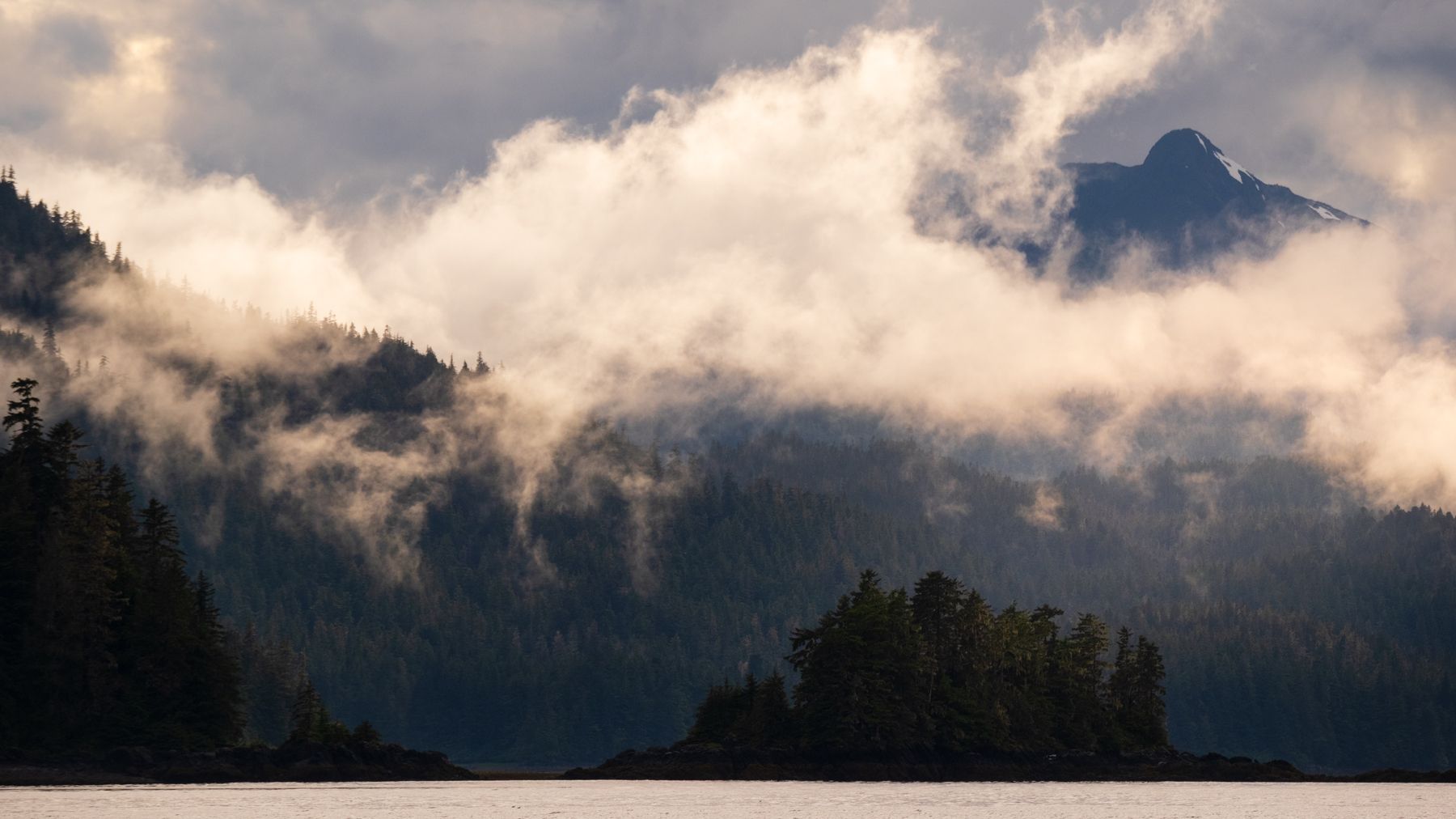
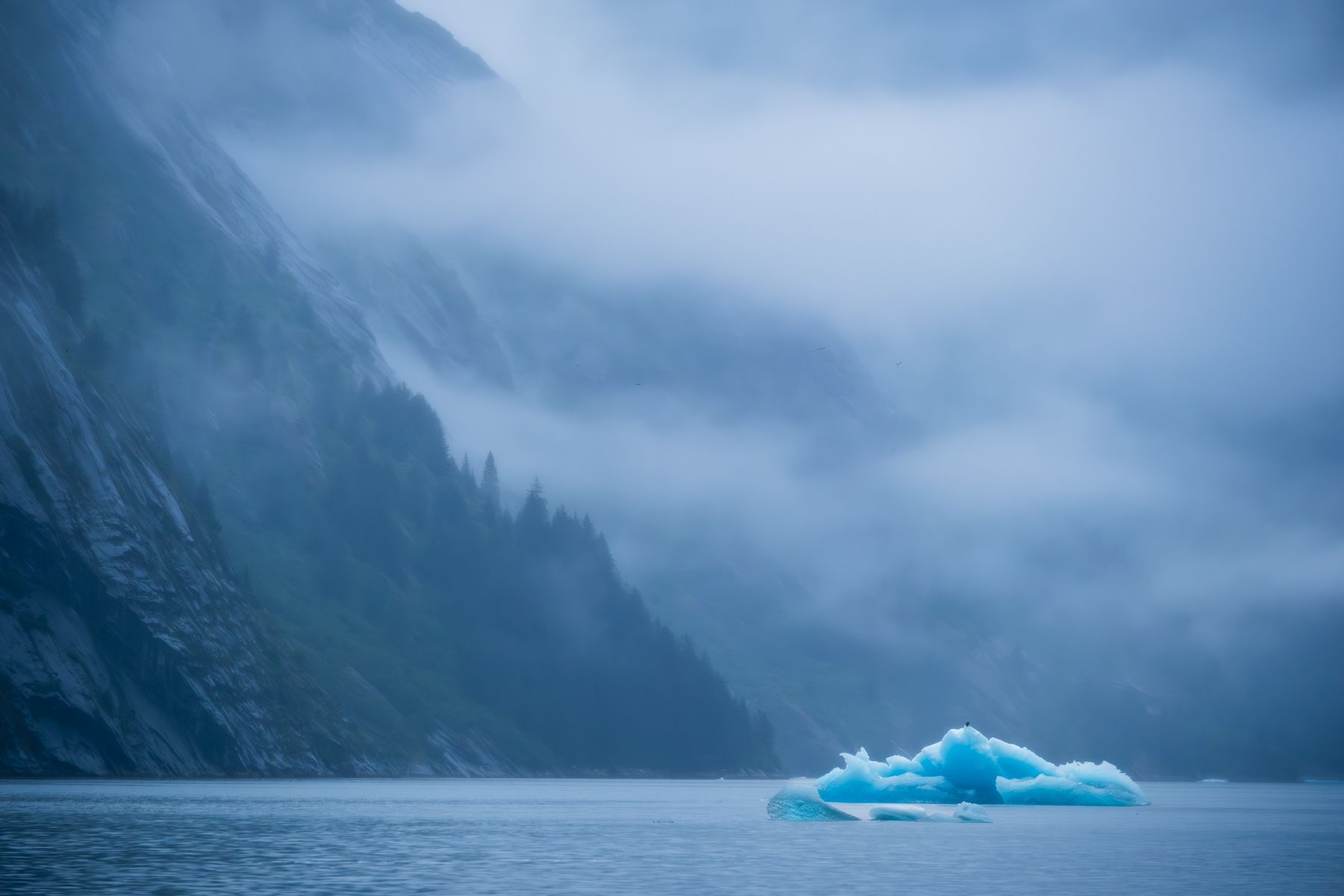
And then came Ford’s Terror. Just the name carries weight, and the place lives up to its reputation. Accessible only through a narrow, tide-dependent entrance, the David B anchored right at the passage and then in the skiff we threaded carefully through, timing our passage with the slack current. Inside, the world closed in around us—towering granite walls, waterfalls spilling down in white veils, in the misty sky in a silence so deep it seemed sacred. Photographing Ford’s Terror wasn’t about chasing grand subjects, but about finding scale and detail. A single iceberg dwarfed by a thousand-foot cliff, or a tiny spruce clinging impossibly to bare stone. The place demanded humility, and our images reflected that—small things against vast backdrops, light shifting quickly across rock and water.
More than one person put their camera down entirely, just to sit with the enormity of it all.
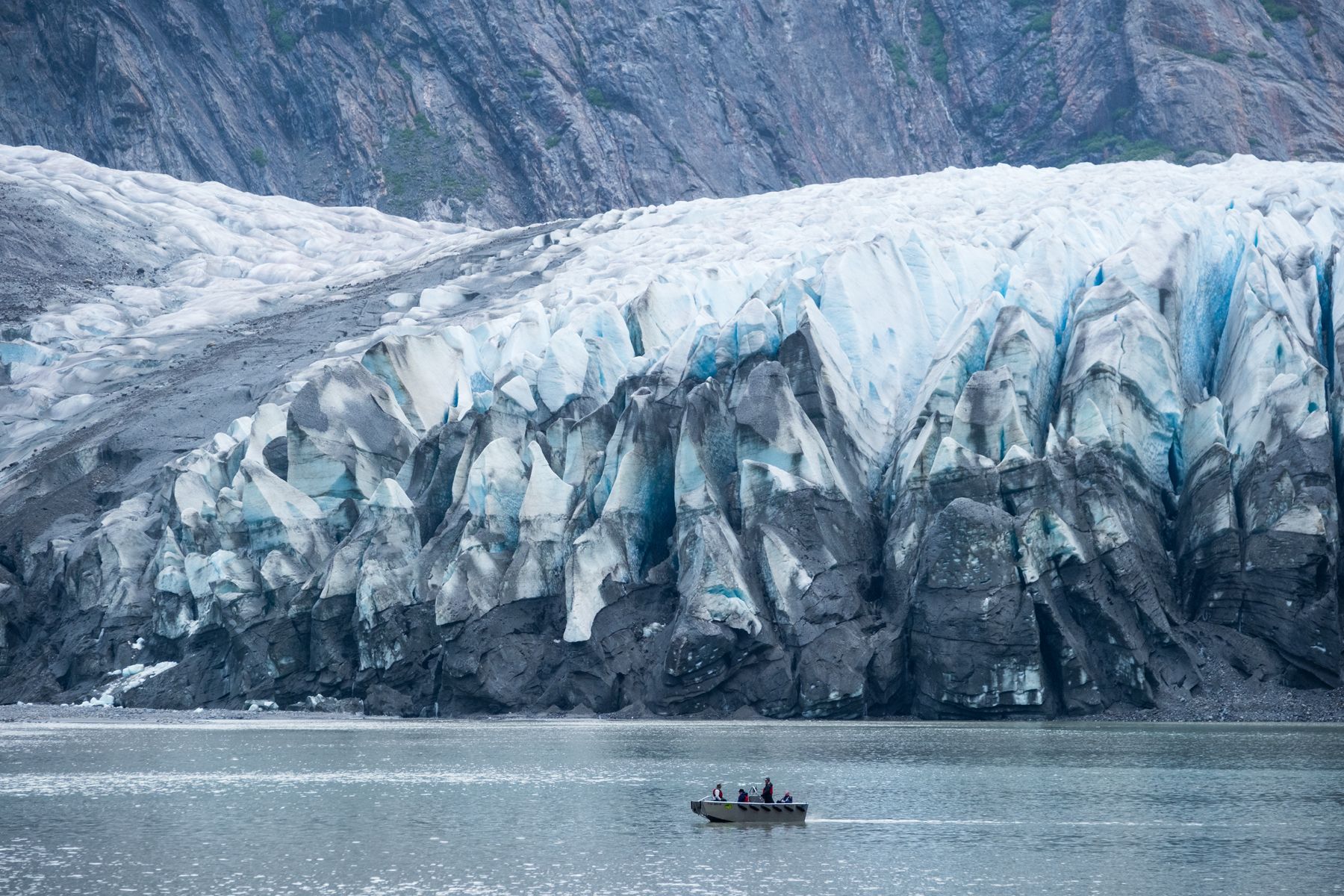
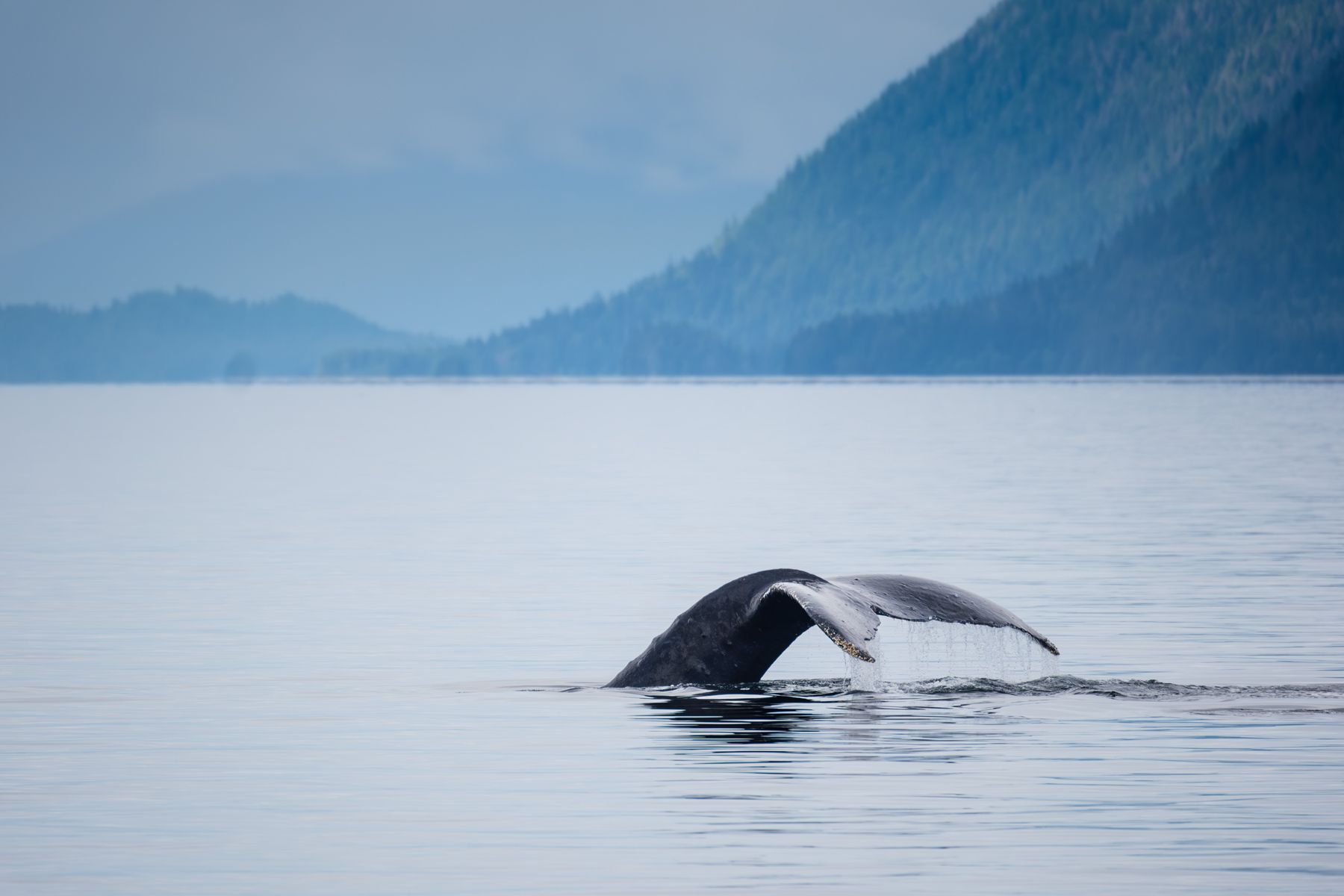
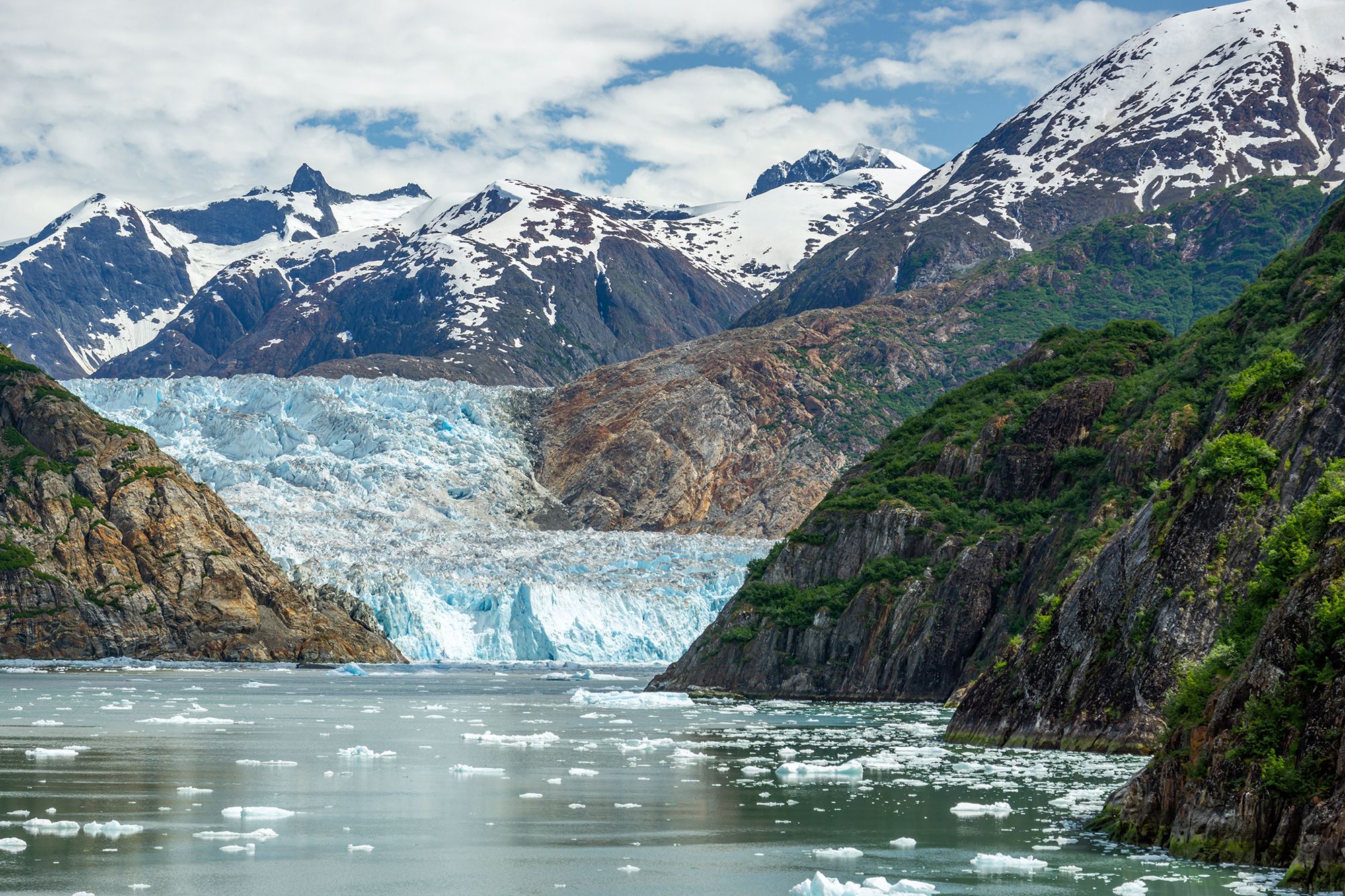
Our journey continued deeper into Endicott Arm, where Dawes Glacier thundered into the sea, and later into Tracy Arm, its narrower passage alive with seals, eagles, and the towering ice face of Sawyer Glacier. Everywhere we went, the David B and our skiff adventures allowed us to linger, to circle back for better compositions, or to simply drift in silence with engines cut. One moment it was about wildlife—the shy glance of a seal on an ice floe, the sudden plume of a humpback’s exhale. Another, it was about landscape—the shifting moods of rain and fog, or the brief, golden windows when sun pierced the clouds and turned the fjords into cathedrals of light.
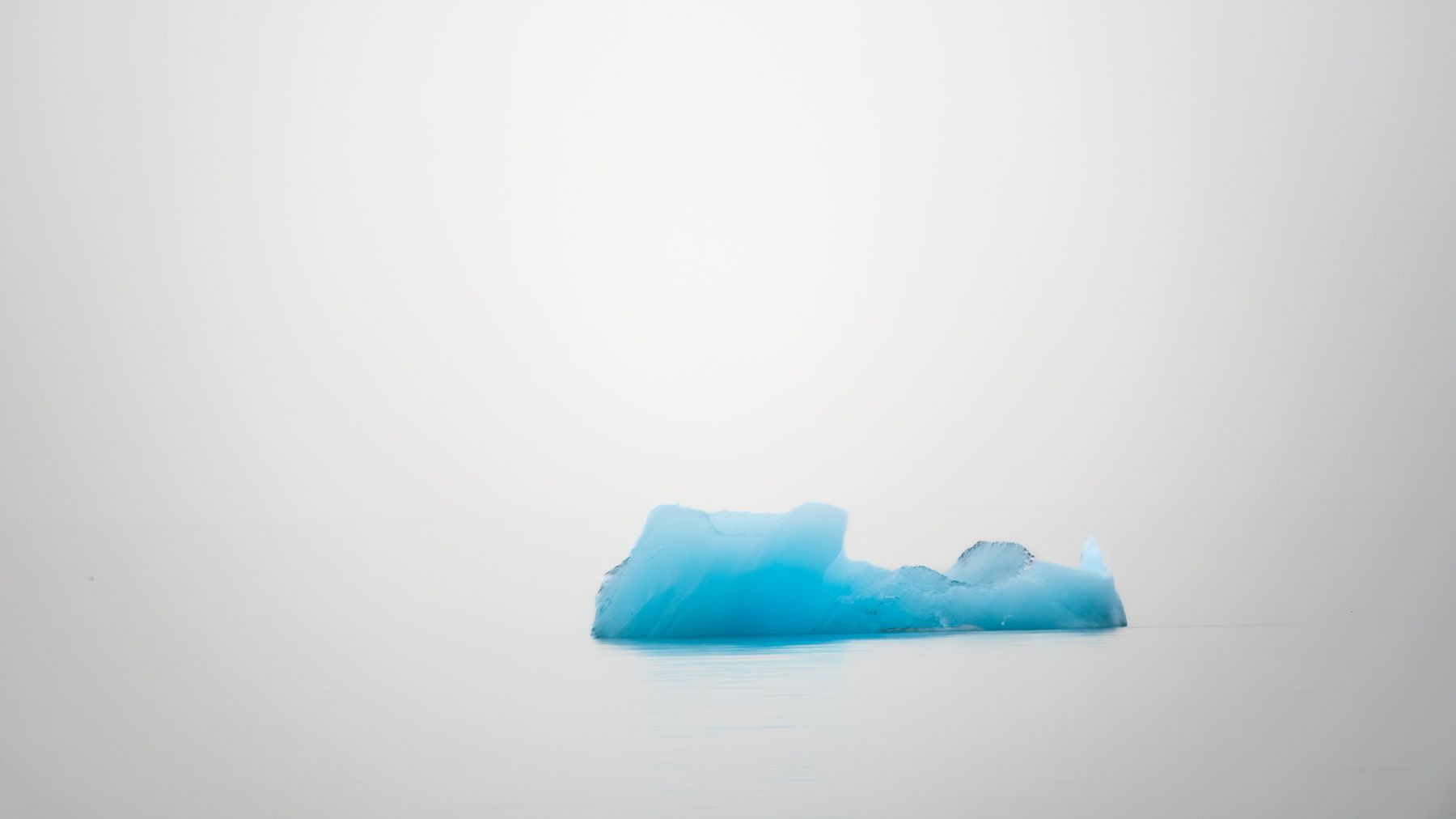
Evenings and long sails aboard the David B had their own rhythm. After hours of shooting, we’d gather in the cozy salon with laptops and mugs of tea, reviewing images and trading advice. Some of the best learning happened in those informal critiques. Someone might show how negative space makes for the most simplistic of compositions, or how framing an iceberg against the dark cliffs gave a sense of scale. Discussions about composition flowed as easily as the stories.
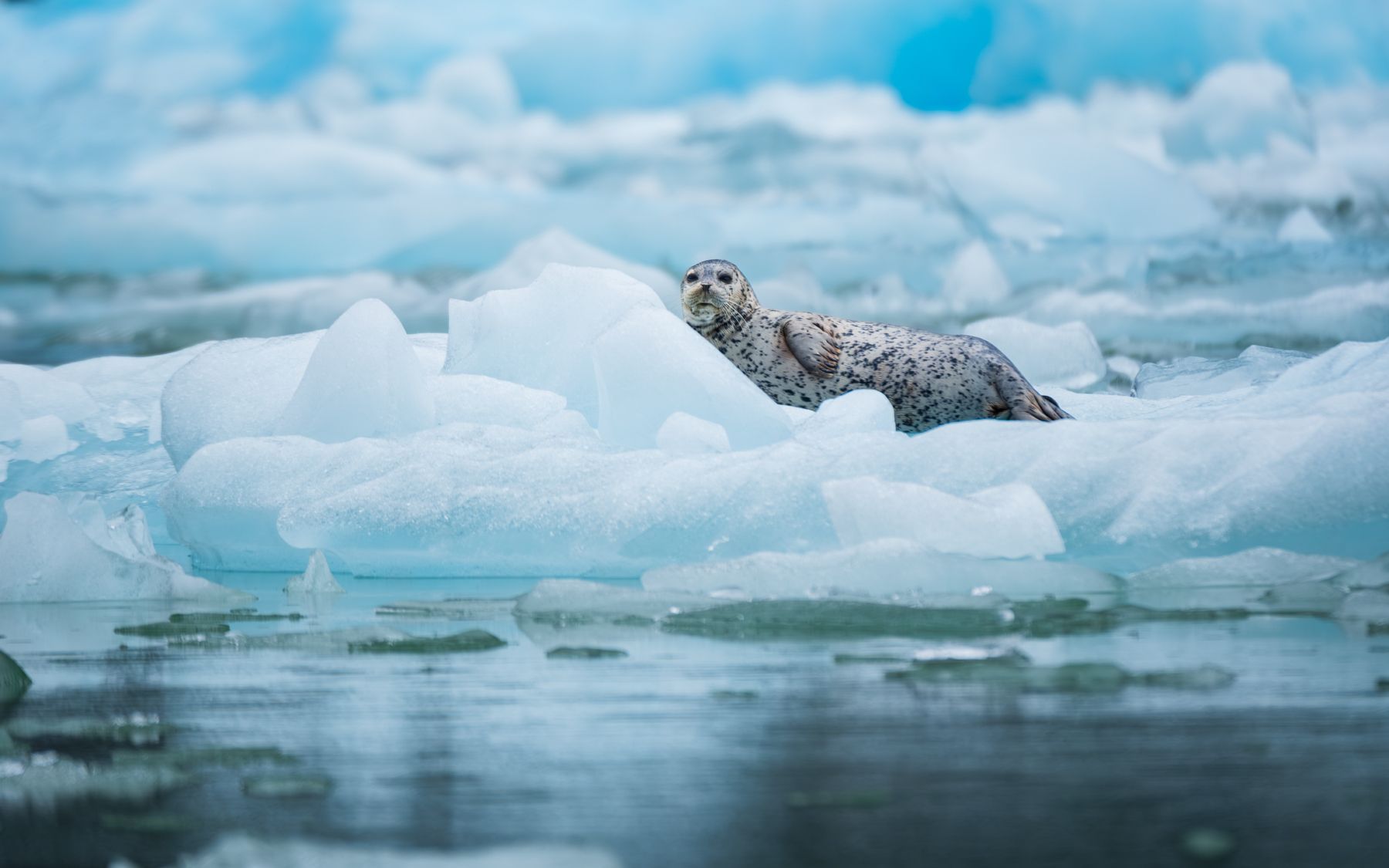
Photography workshops often promise epic shots and technical instruction, but this one also offered something rarer: a slowing down, a chance to tune into the rhythms of ice and tide, of seals and eagles, of mist and fleeting light. Cannery Cove with its history, Admiralty Island’s wilderness, the surprising beauty of Good Island, and the awe of Ford’s Terror Endicott Arm and Tracy Arm are places where nature still writes the rules, and aboard the David B, we had front-row seats to watch and learn. As we disembarked at journey’s end, gear packed and memory cards full, there was the unmistakable sense that we’d each taken home more than images. We had taken home the practice of seeing, of noticing, of being fully present in a landscape that humbles and inspires in equal measure.
 Southeast Alaska: Fjords, Glaciers & Wildlife Photo Expedition
 Ship-Based Photo Workshop
From $11,995.00
Up To 8 Guests
Fitness Level 1 - What's This?
Wanna Get Away?
Starts
Current Price:$0.00
Start: Juneau, AK
Led By
Start: Juneau, AK
Led By

Backcountry Journeys
Connecting Passionate People To
Exceptional Experiences.
Exceptional Experiences.
Business Hours:
Mon-Fri, 8AM-4PM MT
928-478-1521
adventure@backcountryjourneys.com
Mon-Fri, 8AM-4PM MT
928-478-1521
adventure@backcountryjourneys.com
arrow_drop_down_circle
Divider Text
All Images & Content Are Property Of Backcountry Journeys Photography Tours, Workshops & Safaris LLC - Copyright 2026


About Us
Receive a Digital Trip Catalog
Find an upcoming photography tour with our interactive catalog.