2025 Travelers' Choice

About Backcountry Journeys
Why Choose Backcountry Journeys
If you're considering a photography trip, hear why Backcountry Journeys delivers the best experience in the industry.Frequently Asked Questions
If you're new to photography trips, or new to BCJ, you can find our common travel questions here.Fitness Levels
Our trips vary on physical intensity, and by reviewing our fitness levels, you can find out which trips may be more challenging, or aligned more closely with your comfort level.Meet The Crew
We've built an amazing team of experienced guides, and dedicated office staff that elevate your travel experience. Get to know their backgrounds, and hear their stories.Loyalty Program
We reward our frequent photo adventurers with exclusive discounts on amazing photography trips.Contact Us
If you need to get in touch with our office staff, or have additional business inquiries, you can find our information here.Refer a Friend
Know someone perfect for one of our tours? Recommend them through this quick form.Stay Up To Date On All Things
Backcountry Journeys
Backcountry Journeys
Our Photography Community
Our Webinars
Our regularly hosted webinars provide photography instruction from our own guides on a wide range of topics.Our Education Portal
Explore our library of articles that cover everything from common questions, to in-depth guides on how to achieve that perfect shot.Community Testimonials
We're proud to foster an amazing group of photo travelers, and here you can find their stories from their past adventures.Resources For Photographers
About Our Company
Resources For Photographers
About Our Company
Trip Report: Svalbard: Ultimate Arctic Expedition - August 2025
Published December 19, 2025
When I look back on our most recent Backcountry Journeys expedition to Svalbard, guiding alongside Doug Marshall and our group of twelve enthusiastic guests, it feels less like a photography trip and more like stepping into a living documentary. For ten days, we sailed the archipelago, chasing light, ice, and wildlife, weaving a story made of towering cliffs, drifting pack ice, and unforgettable encounters with creatures that embody the spirit of the Arctic.
I’ve been fortunate to lead photography workshops in many of the world’s most breathtaking landscapes, but Svalbard holds a unique place in my heart. It is raw, remote, and unpredictable—the kind of destination that forces photographers and guides to embrace spontaneity, to surrender to the rhythm of the wild. This voyage, beginning and ending in Longyearbyen, gave us everything one could hope for: walruses hauled out on beaches, polar bears feeding on a narwhal, thousands of seabirds filling the cliffs, bearded seals sprawled across icy floes, and puffins in brilliant late-summer light. Every turn of the journey offered something new, and by the end, none of us wanted to leave.
Departure from Longyearbyen
Longyearbyen, the northernmost permanent settlement in the world, always feels like a gateway to another world. Our group gathered there on a crisp morning to board the expedition ship. Guests arrived buzzing with energy, hauling serious photography gear—telephoto lenses, sturdy tripods, and waterproof clothing for hours out on deck or in zodiacs.
Boarding the vessel was its own moment of excitement. As cases of equipment were loaded, smiles spread across the group. There’s a special kind of anticipation before leaving port in the Arctic—it’s equal parts awe, humility, and quiet exhilaration.
Once aboard, Doug and I gathered everyone on deck to introduce ourselves, meet the crew, and go over safety. We outlined the general plan for the journey: exploring Svalbard’s remote coasts and drifting north into the sea ice, allowing plenty of flexibility for whatever wildlife encounters and photographic opportunities presented themselves. With cameras cleaned, batteries charged, and spirits high, the ship slipped out of Longyearbyen and into Arctic silence.
Arctic Foxes and Baby Kittiwakes
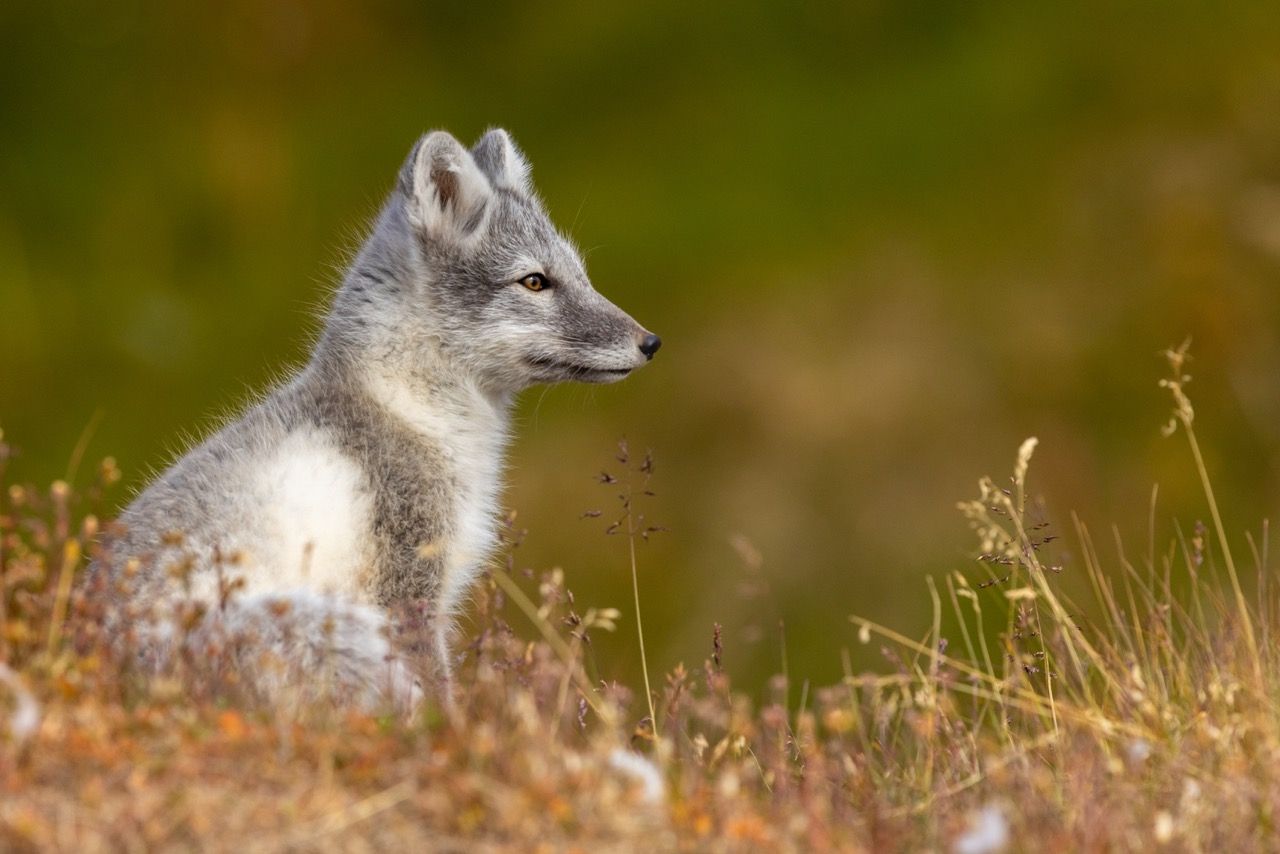
Among the many incredible wildlife moments we experienced, one of the more intimate and fascinating was observing arctic foxes in action. We were fortunate to spot several of these clever, hardy creatures making their way along the rocky shores and tundra patches.
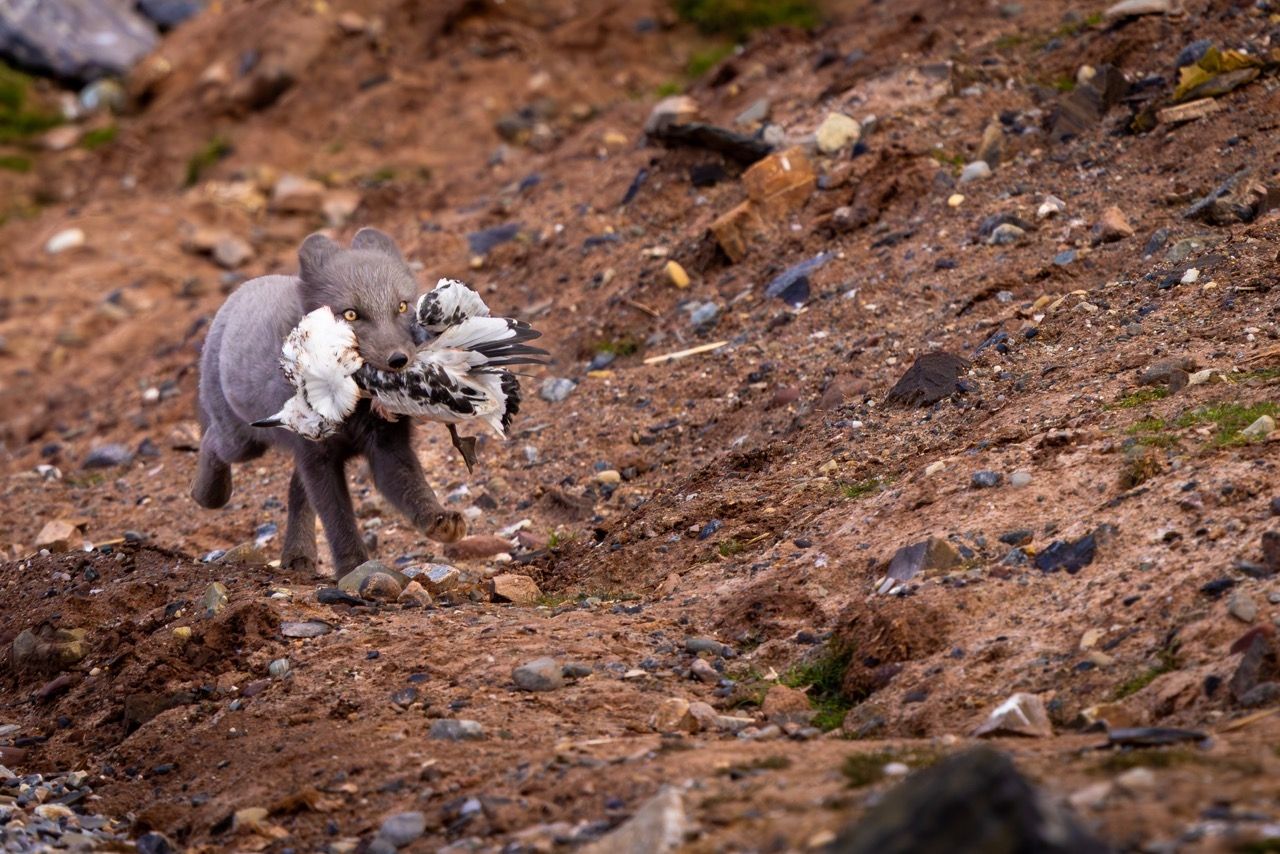
The highlight came when our group witnessed an arctic fox feeding on baby kittiwakes. The fox moved swiftly and silently among the cliffs where the seabird colonies nested, demonstrating the harsh realities of Arctic survival. Our guests captured dramatic images of the fox’s sleek, white winter coat contrasting beautifully against the rocky landscape, and the intensity of their hunt added powerful storytelling to the trip portfolio.
It was a stark reminder of the delicate balance in this ecosystem—how the lives of seemingly small animals like kittiwakes and the resourcefulness of predators like the arctic fox are all intertwined in the Arctic’s web of life.

Walruses on the Coast
It didn’t take long before our first major wildlife encounter. Early in the voyage, we came upon a stretch of coast where a group of walruses hauled out on a pebbly beach. At first glance they looked like a jumble of oversized logs, until one shifted, raised its massive tusks, and let out a rumbling bark that made everyone laugh.
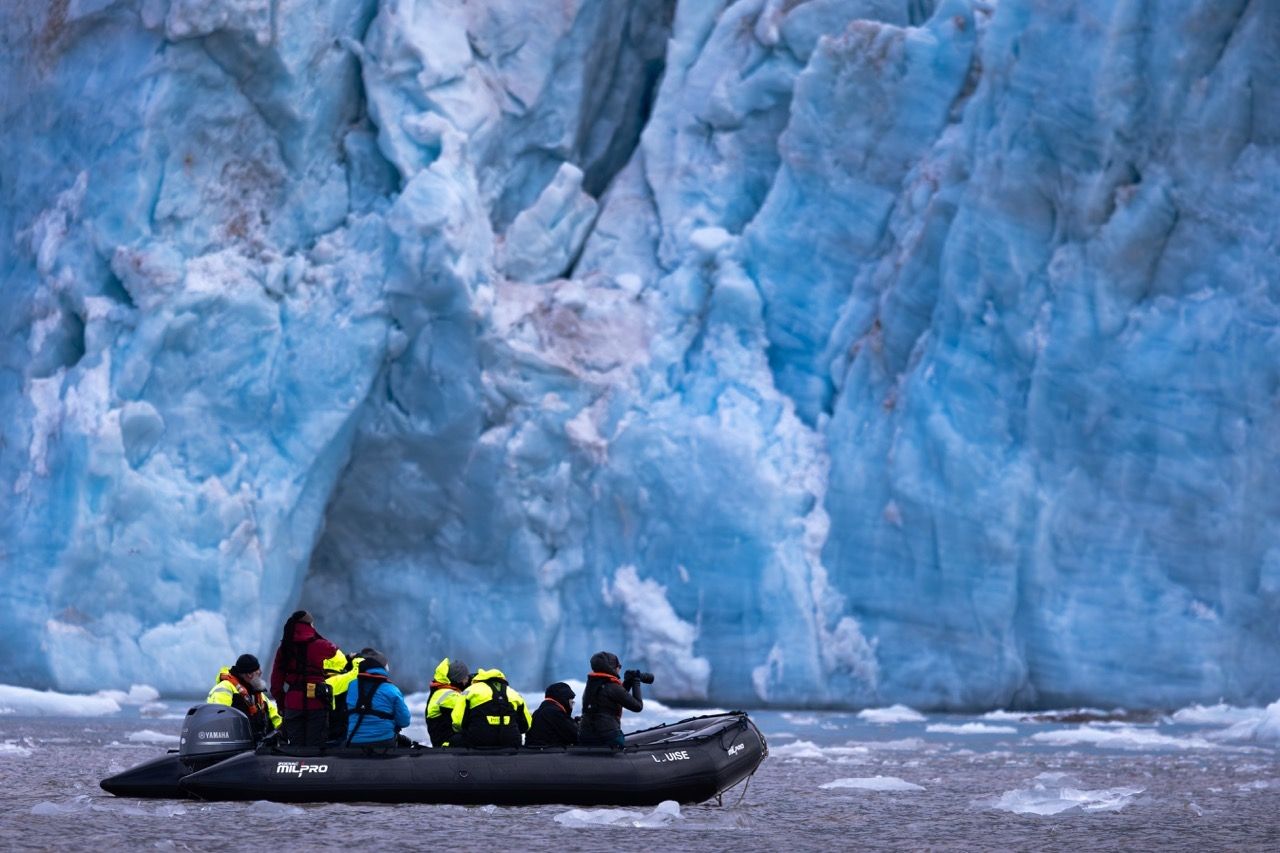
Approaching carefully by zodiac, we kept low and moved quietly. Photographing walruses is always a fascinating challenge. On land, they appear lumbering and almost comical, yet once they slip into the water they show their true grace and power. Our guests leaned across the sides of the zodiac with telephotos pressed tightly, capturing intimate portraits—close-ups of whiskered faces, tusks gleaming in the pale light, skin wrinkled with age and scars.
It was also a perfect teaching opportunity. Doug and I emphasized wildlife ethics: moving close enough for strong images yet never to the point of disturbing the animals. The fact that the walruses hardly acknowledged us proved we were doing it right. For many in the group, this set the tone for the rest of the expedition: our presence would be careful and respectful, guided always by the well-being of the wildlife.
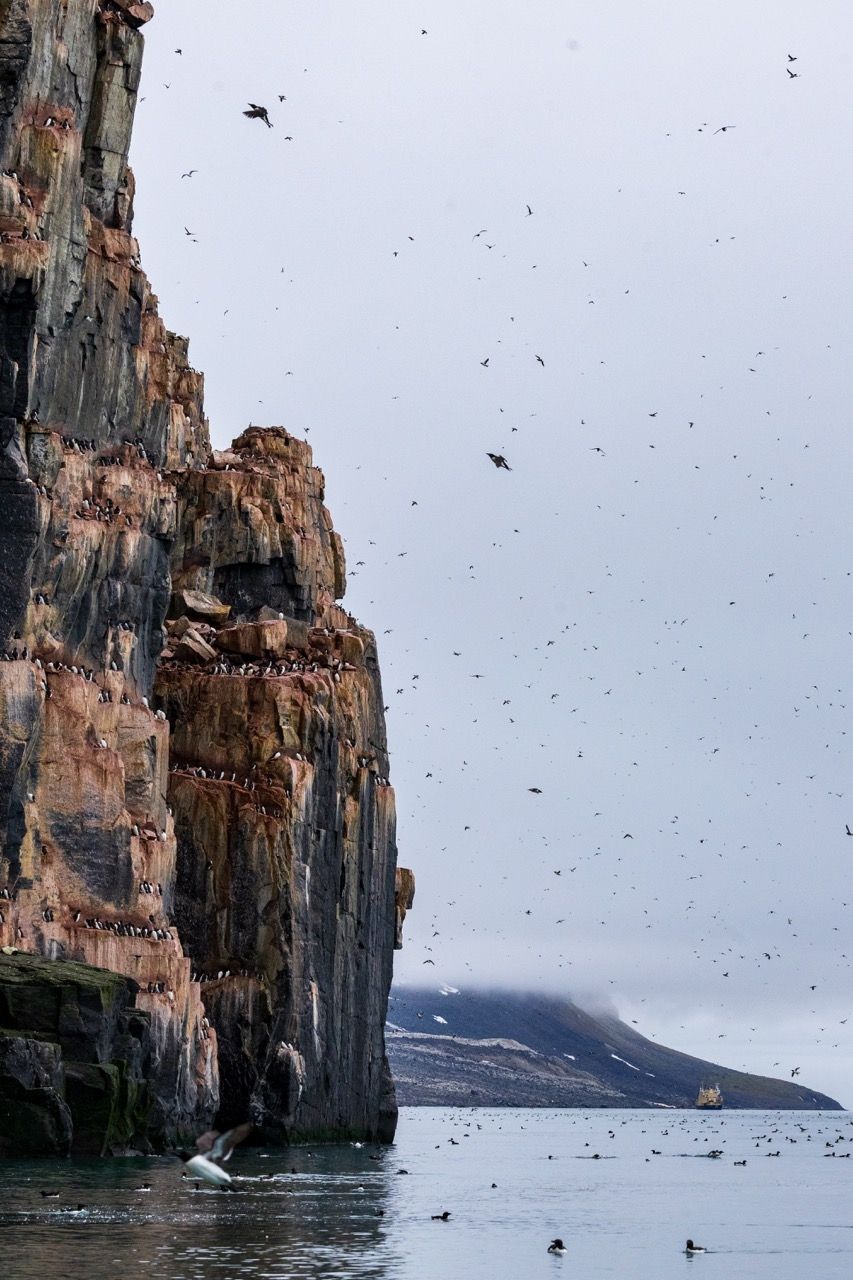
The Cliffs Alive with Guillemots
Continuing onward, days settled into a rhythm of long hours at sea punctuated by bursts of intensity when wildlife called us to action. One afternoon, we approached sheer cliffs alive with black guillemots.
The scale was staggering—thousands of birds wheeling and circling, the air vibrating with their shrill calls. Against the dark stone and streaks of guano, their jet-black feathers and fiery red legs stood out like brushstrokes of color across a muted canvas.
Photographing them presented challenges and rewards. Guests practiced tracking birds in flight with high shutter speeds to freeze their rapid wingbeats, then slowed things down to experiment with motion blur. Some aimed wide to capture the chaos of birds streaming from the cliffs, while others zoomed tight on individuals pausing mid-flight.
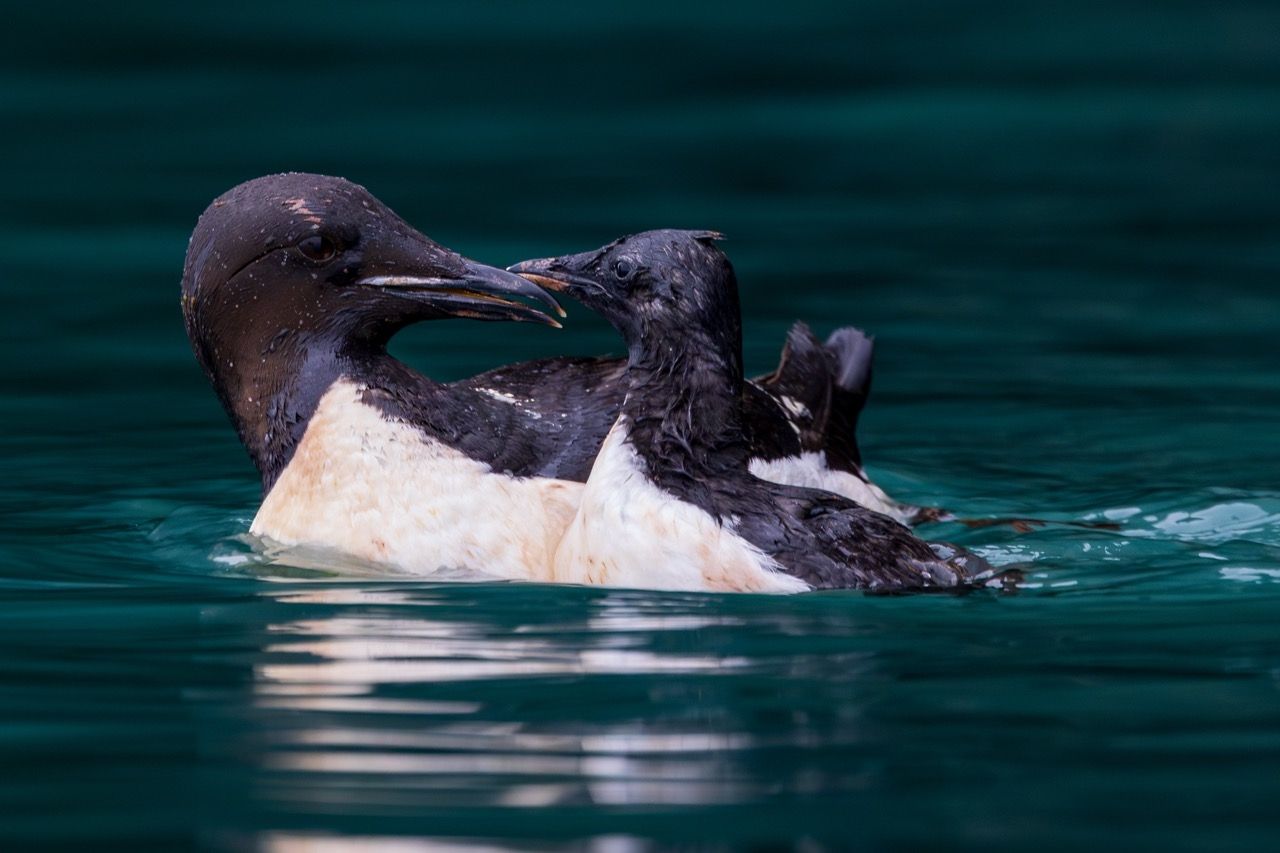
For photographers used to landscapes and still subjects, the energy here was almost overwhelming—but it was also exhilarating. Between waves of seabirds, our group filled memory cards rapidly, each guest finding their rhythm amidst the chaos of wings.
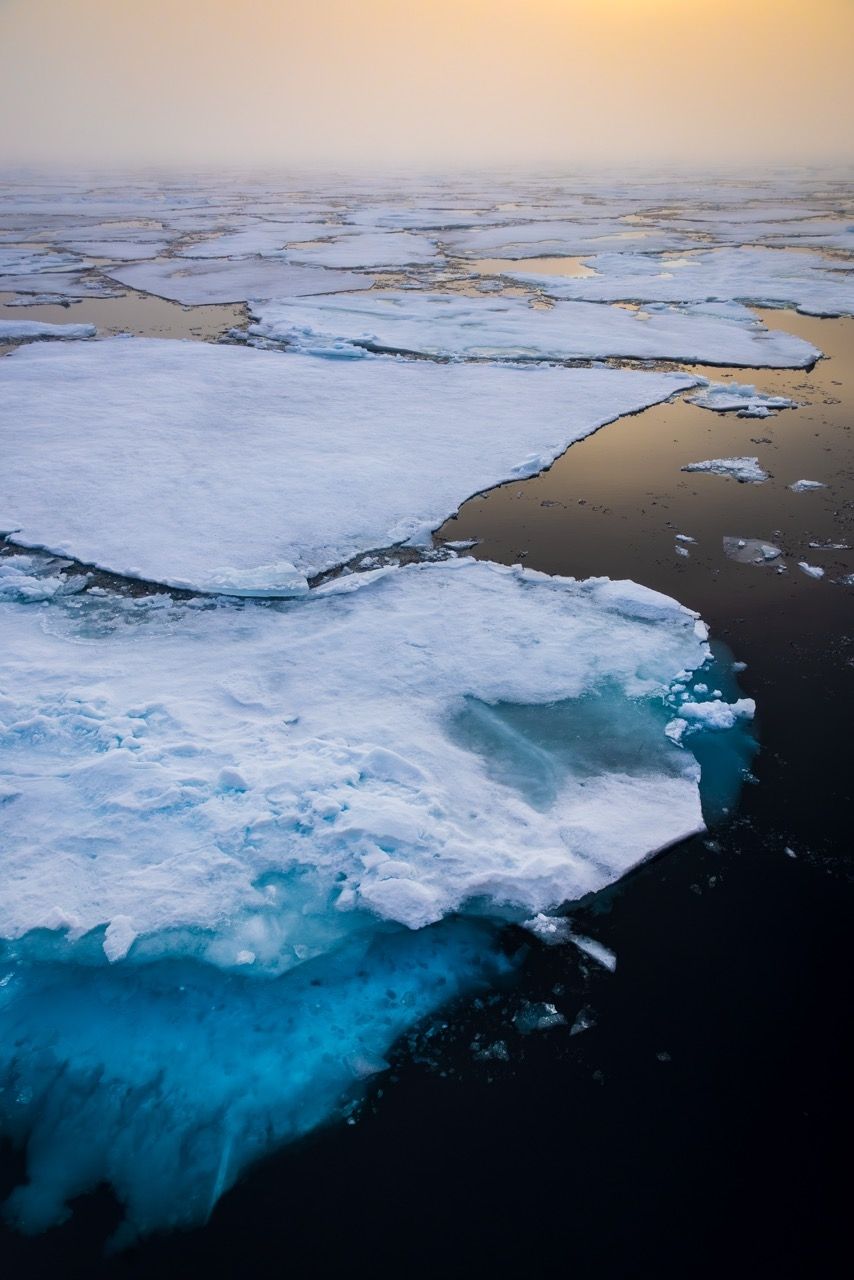
Into the High Arctic: The Sea Ice at 83 Degrees North
One of our biggest goals was to head far north into the sea ice, seeking both predators and prey where ice reigns supreme. The ship pushed onward, every deck filled with eyes scanning the horizon as we nudged deeper into the frozen world.
By the time we reached 83° north, the world around us had become a maze of drifting ice. Time seemed to slow as the hull groaned against floes, and the silence was broken only by the crackle of shifting ice and the sigh of Arctic wind.
We spent hours drifting there, cameras ready for the possibility of bears. But no polar bears revealed themselves to us in this northernmost stretch. Instead, bearded seals became our companions. Their long bodies sprawled on floes looked like extensions of the ice itself. Every so often one would raise its whiskered head, black eyes reflecting the light, before collapsing back to rest.
It was a quieter day than some anticipated, but photography thrived nonetheless. Guests practiced wide compositions framing seals like tiny markers against vast wilderness, then shifted to tighter studies—the curve of a flipper, droplets on fur, the textured layering of snow and ice. It was a moment of calm in the Arctic, one that reminded us that not every story here is written in chase or drama. Sometimes, it is about presence, about learning to see life layered onto silence.
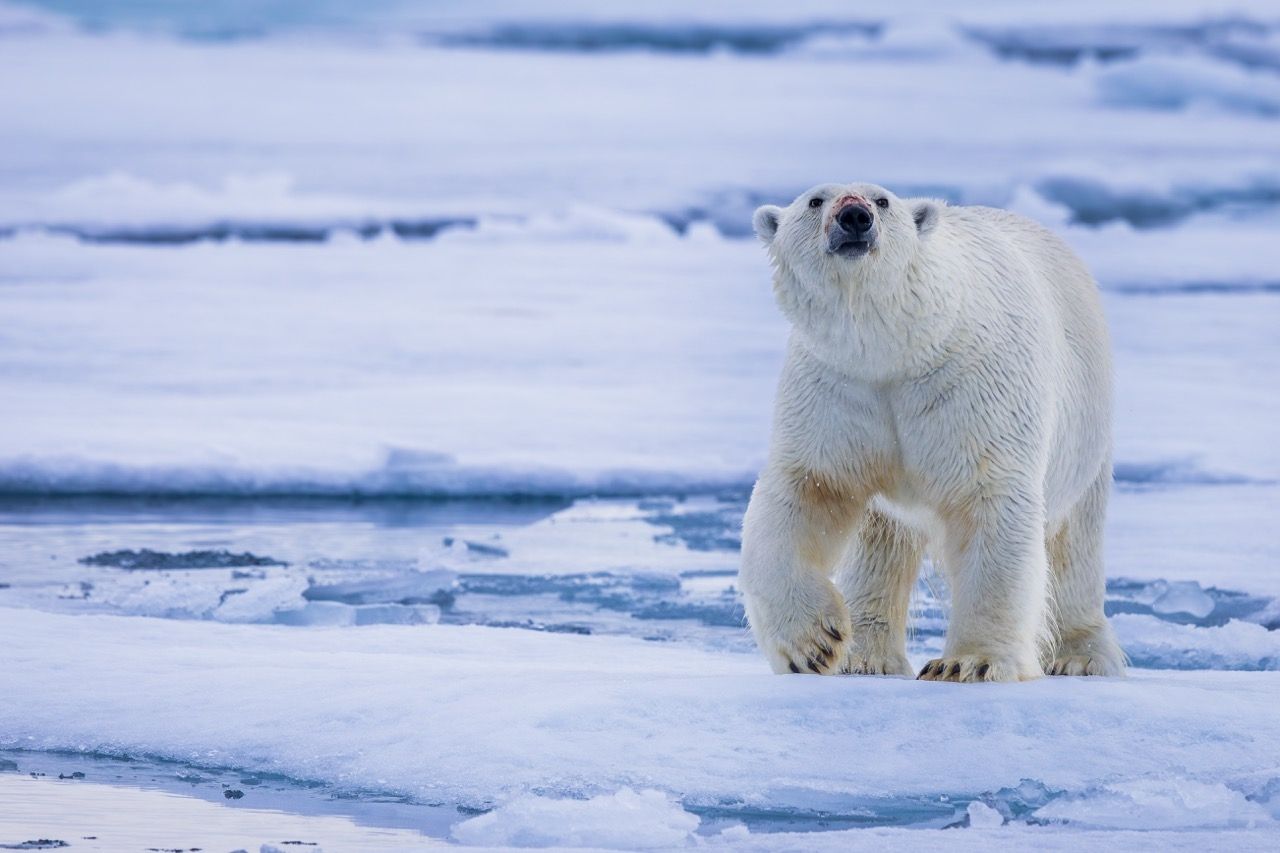
The Narwhal Carcass: Twelve Bears in the Ice
If the high north gave us seals, the return south gave us spectacle. Over the final two and a half days of the trip, we sailed through ice again, and the Arctic gave us the moment that defined the expedition.
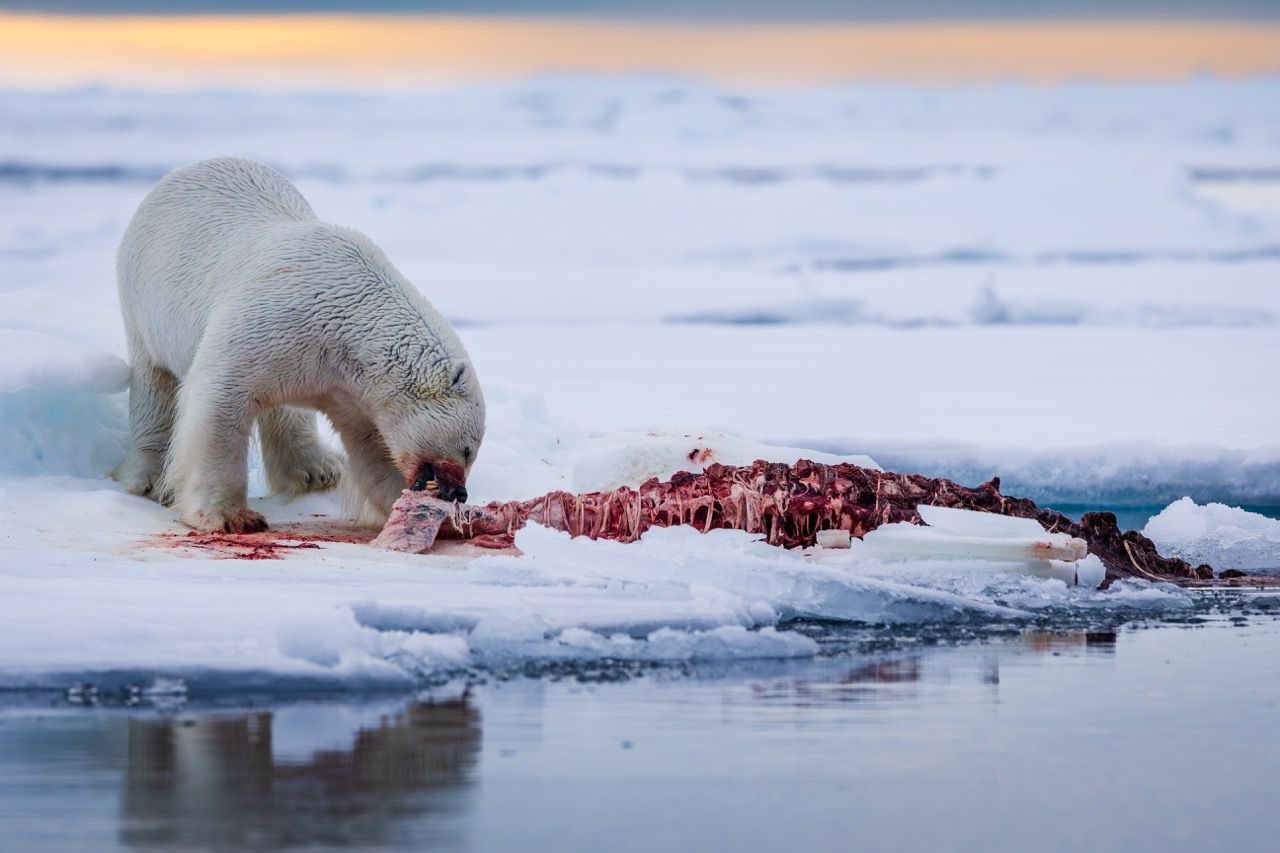
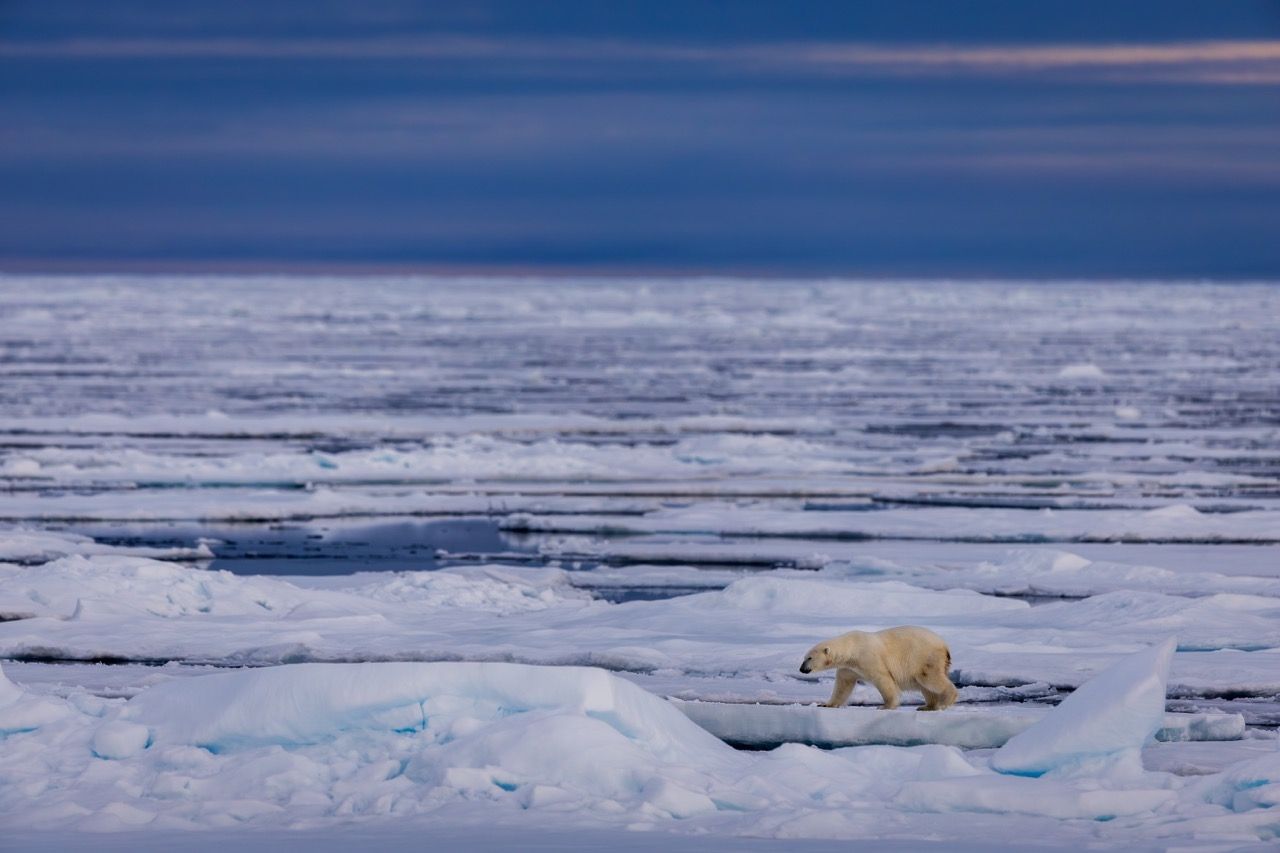
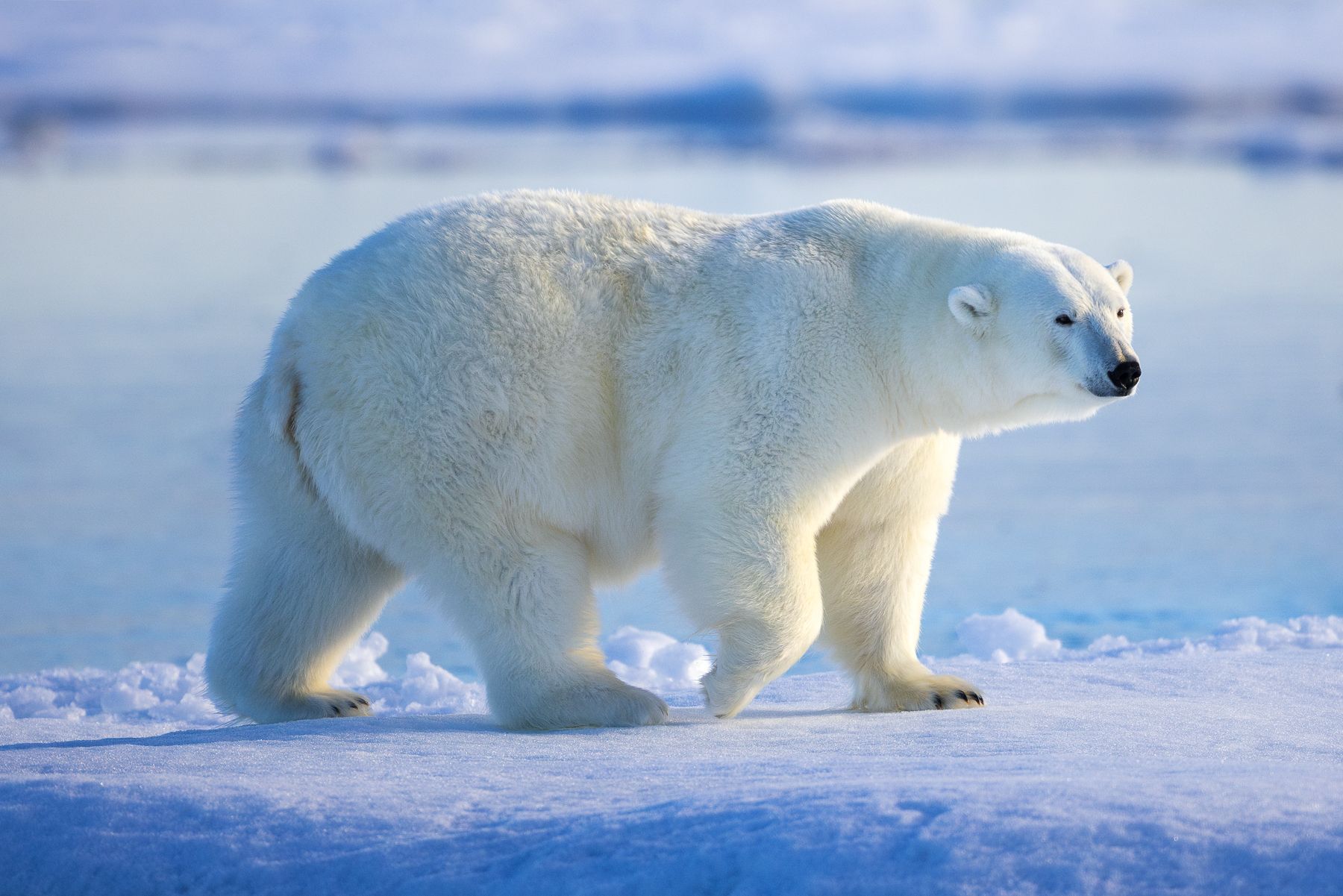
As we pushed along through broken floes, shapes clustered on the horizon caught our eyes. Slowly it became clear: polar bears. Not just one, but several. As we approached, the scene revealed itself—twelve bears gathered around the remains of a narwhal.
The sight was almost beyond comprehension. Bears of every age converged: hulking adults with red-stained muzzles, timid subadults pacing on the edges, mothers with cubs keeping cautious distance while still eager to feed. Some bears gorged, tearing deep into the carcass. Others circled, testing the hierarchy and waiting for openings. Cubs wrestled, whined, and tugged while being guided by their mothers’ subtle signals.
From a photographer’s perspective, it was hard to know where to aim. Every angle offered drama and intimacy—dominant males guarding their portions, mothers tenderly shielding young, cubs mimicking feeding behaviors under the guidance of their elders. The soundscape was unforgettable: the snap of jaws, the crunch of ice beneath heavy paws, the low growls of warning across the floes.
The ship drifted in silence, engines cut, as everyone lined the rails with cameras rattling at full pace. For hours, we watched and photographed this unscripted theater of Arctic survival, eyes wide with awe and gratitude.
For most of us, it was the pinnacle of the journey, a once-in-a-lifetime sight that no one could have anticipated. It was Svalbard in its purest form: dramatic, raw, humbling.
Final Evening: A Colony of Puffins
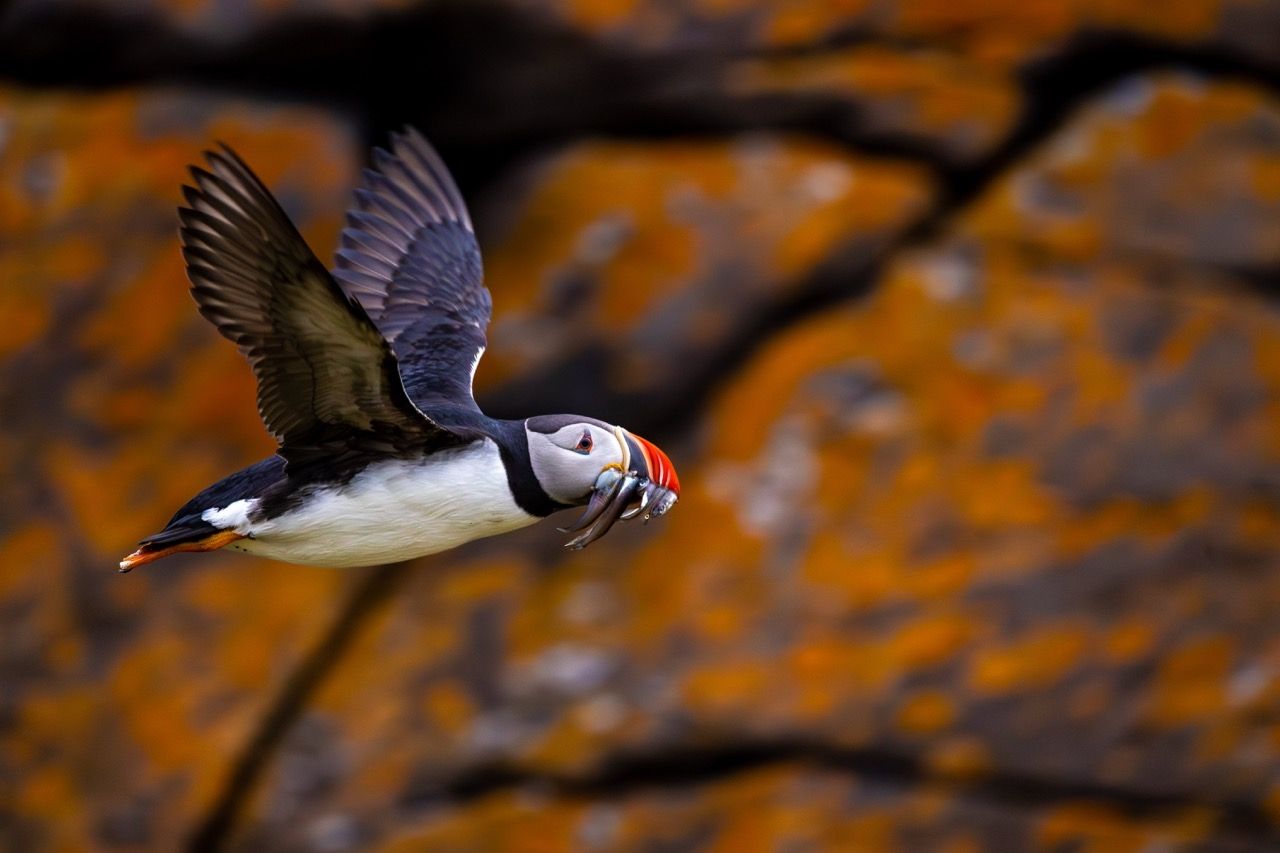
As if to end on a lighter note, our last evening brought us ashore to a puffin colony. The cliffs were alive with movement and sound, puffins zipping overhead like flying footballs, their bright orange beaks glowing against the grey rock.
Guests spread out on the rocks, lying prone with cameras steady, waiting for puffins to land in clusters. Their comic expressions and energetic wingbeats made them irresistible subjects. Flight photography tested everyone’s patience, but the puffins rewarded it, buzzing in and out with mouthfuls of fish, standing alert at the colony entrance before disappearing underground.
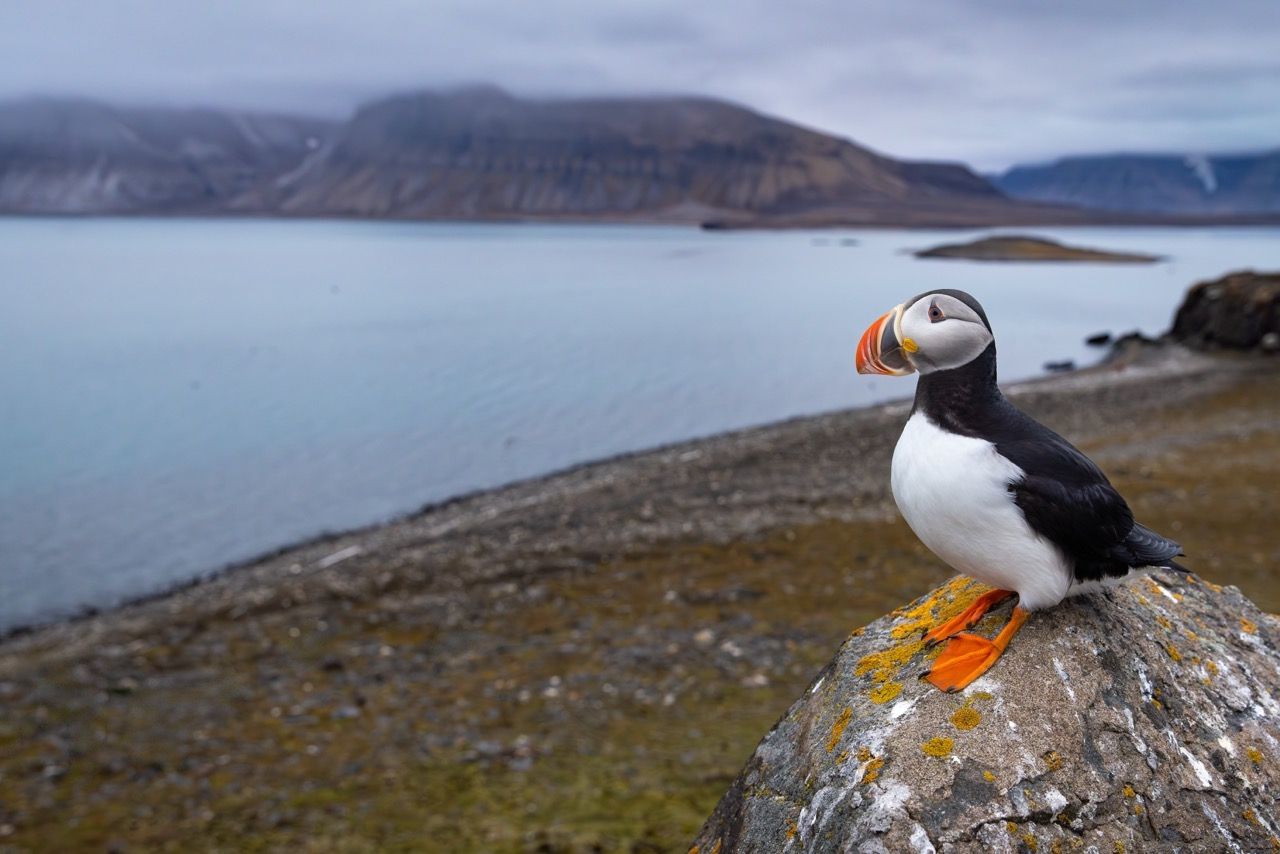
It was as though the Arctic wanted us to carry home both halves of its story: the grandeur and the brutality of bears, balanced by the charm and color of one of its most beloved seabirds.
Closing Thoughts
By the time we returned to Longyearbyen, I was flooded with a mix of awe and gratitude that is hard to put into words. Holding a camera heavy with images felt like carrying the weight of something truly special—this trip had unfolded like a real-life National Geographic documentary, immersing me completely in the raw, untamed wilderness of the Arctic. The rhythm of those ten days—full of rugged landscapes, intimate wildlife moments, and endless shimmering ice—etched itself deeply into my soul, and stepping back onto solid ground felt almost surreal.
Guiding this journey, I realized that Svalbard has now joined the shortlist of my absolute favorite places on Earth to photograph. The experience of watching twelve polar bears gathered on a single ice floe was undeniably one of the most powerful wildlife encounters I’ve ever had, but it was just part of the story. The way thousands of guillemots filled the cliffs, the quiet solitude of bearded seals resting on the ice, and the joyful chaos of puffins in flight—all these moments combined to create a perfect balance of grandeur and intimacy.
Svalbard is more than a destination; it’s a place that changes how you see the world. It reveals the fragile beauty of wilderness and the incredible resilience of life in one of the harshest places on the planet. For me—and I believe for everyone on this trip—it was far beyond a photography expedition. It was a deep, humbling immersion in nature’s most extraordinary theater, one that leaves an imprint not just through images, but through every sense.
As we said our goodbyes on the dock, shaking hands and embracing new friendships already rooted in shared wonder, I felt certain that each guest was carrying home a piece of this place in their heart. For Doug and me, every expedition here confirms the same truth: Svalbard truly is the Kingdom of Ice, a breathtaking land of endless stories that will stay with us forever.
 Svalbard: Ultimate Arctic Expedition
 Ship-Based Photo Workshop
From $17,995.00
Up To 12 Guests
Fitness Level 1 - What's This?
Wanna Get Away?
Starts
Current Price:$0.00
Start: Longyearbyen, Norway
Led By
Start: Longyearbyen, Norway
Led By

Backcountry Journeys
Connecting Passionate People To
Exceptional Experiences.
Exceptional Experiences.
Business Hours:
Mon-Fri, 8AM-4PM MT
928-478-1521
adventure@backcountryjourneys.com
Mon-Fri, 8AM-4PM MT
928-478-1521
adventure@backcountryjourneys.com
arrow_drop_down_circle
Divider Text
All Images & Content Are Property Of Backcountry Journeys Photography Tours, Workshops & Safaris LLC - Copyright 2026


About Us
Receive a Digital Trip Catalog
Find an upcoming photography tour with our interactive catalog.