2025 Travelers' Choice

About Backcountry Journeys
Why Choose Backcountry Journeys
If you're considering a photography trip, hear why Backcountry Journeys delivers the best experience in the industry.Frequently Asked Questions
If you're new to photography trips, or new to BCJ, you can find our common travel questions here.Fitness Levels
Our trips vary on physical intensity, and by reviewing our fitness levels, you can find out which trips may be more challenging, or aligned more closely with your comfort level.Meet The Crew
We've built an amazing team of experienced guides, and dedicated office staff that elevate your travel experience. Get to know their backgrounds, and hear their stories.Loyalty Program
We reward our frequent photo adventurers with exclusive discounts on amazing photography trips.Contact Us
If you need to get in touch with our office staff, or have additional business inquiries, you can find our information here.Refer a Friend
Know someone perfect for one of our tours? Recommend them through this quick form.Stay Up To Date On All Things
Backcountry Journeys
Backcountry Journeys
Our Photography Community
Our Webinars
Our regularly hosted webinars provide photography instruction from our own guides on a wide range of topics.Our Education Portal
Explore our library of articles that cover everything from common questions, to in-depth guides on how to achieve that perfect shot.Community Testimonials
We're proud to foster an amazing group of photo travelers, and here you can find their stories from their past adventures.Resources For Photographers
About Our Company
Resources For Photographers
About Our Company
Trip Report: Wild Galapagos: Luxe Photo Safari - May 2025
Published August 22, 2025
Who's ready for an adventure?
Are you seeking a break from those long days of working with hours of stress vibrating down your spine? Or do you need an opportunity to change your daily routine and venture onward toward something new and incredible? Then pack your bags because I invite you to embark on our brand-new expedition aboard a luxurious yacht, cruising among the Galapagos Islands! It’s a wildlife photographer’s dream photographing the island’s iconic wildlife and endemic species both on land and in the sea. This is the trip report for Backcountry Journey’s Wild Galapagos Luxe Photo Safari conducted in May 2025.
Santa Cruz Island
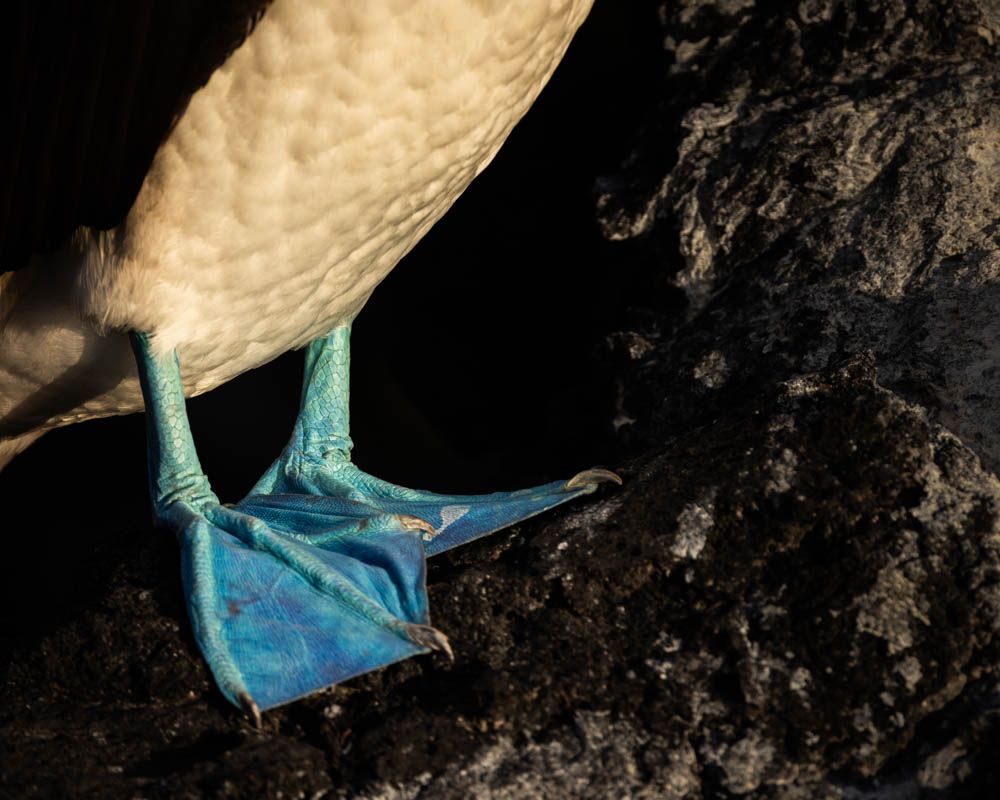
Our journey began in Quito, Ecuador, where we boarded our plane and flew to Seymour Ecological Airport on Baltra Island. After taking the bus to the harbor, we boarded the yacht and ventured to our first stop, Bachas Beach. This was a good introduction to our expedition. The wet landing consisted of a simple beach walk to photograph Sally lightfoot crabs, frigate birds and blue-footed boobies. It was a great opportunity to warm up those photography muscles and dial in those settings in preparation for what is to come on this 8-day photography workshop.
The following morning, we hiked at Dragon Hill. The 1.5-mile hike took us up a hill overlooking the bay and the dry, shrubby landscape. During the hike, land iguanas were seen basking along the trail. Mockingbirds and finches approached out of curiosity and studied us from the safety of the branches. After a few hours of hiking, the lighting became harsh, and it was time to return to the boat for our first snorkel excursion.
Bartolome Island
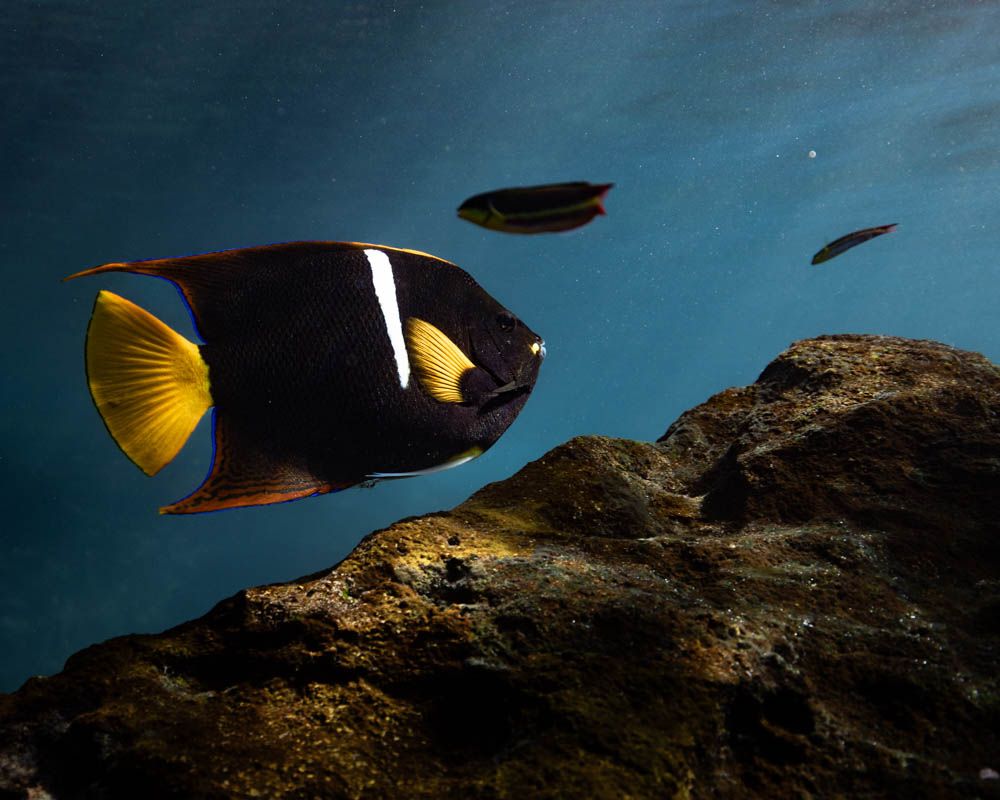
Swimming along the rocky coastline, we saw an array of marine wildlife. The most challenging part about snorkeling is putting on a wet suit. While in the water, the buoyancy of the wetsuit kept folks afloat as they photographed and filmed fish, penguins, sea lions, and sea turtles. A life vest and an orange ring were presented as an option to add extra buoyancy. As we snorkeled, the boat crew counted heads and kept an eye on the guests as they drifted alongside us in their zodiacs. Two guides took the lead, pointing out all that they found. A third guide brought up the rear, making sure no one got left behind. All this helped keep folks feeling safe and comfortable while in the water.

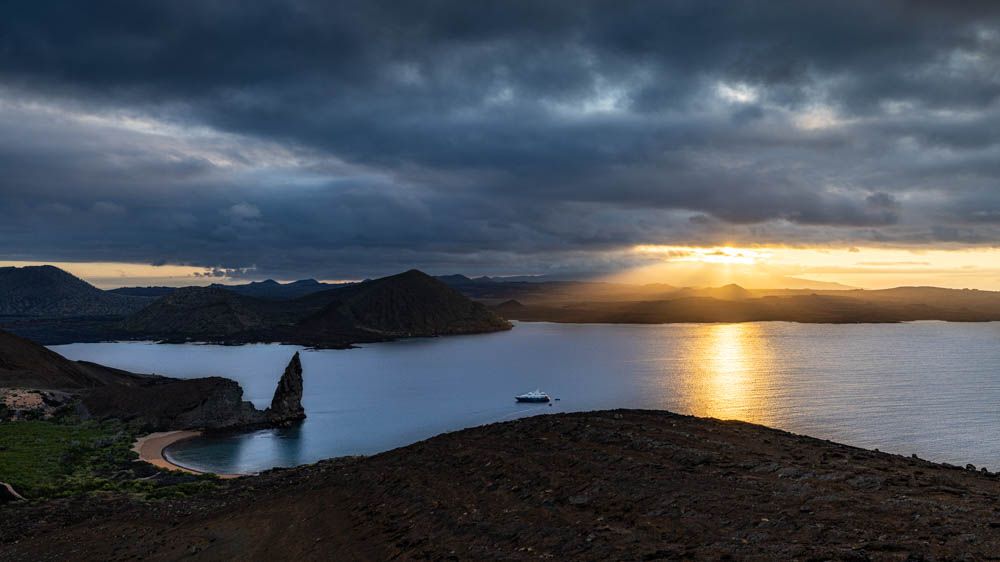
After about an hour and half of snorkeling, we concluded the evening with two options. Option one was a zodiac ride around the island photographing wildlife. Option two was for the more adventurous folks who desired to climb up 390 stairs to the top of a volcano, to photograph a gorgeous sunset.
Fernandina Island
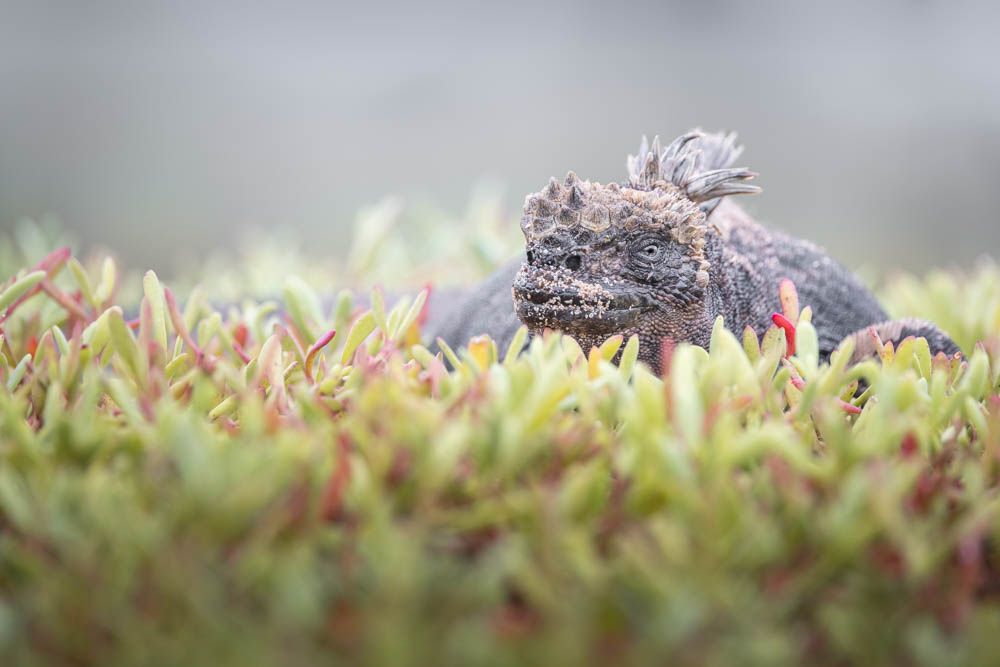
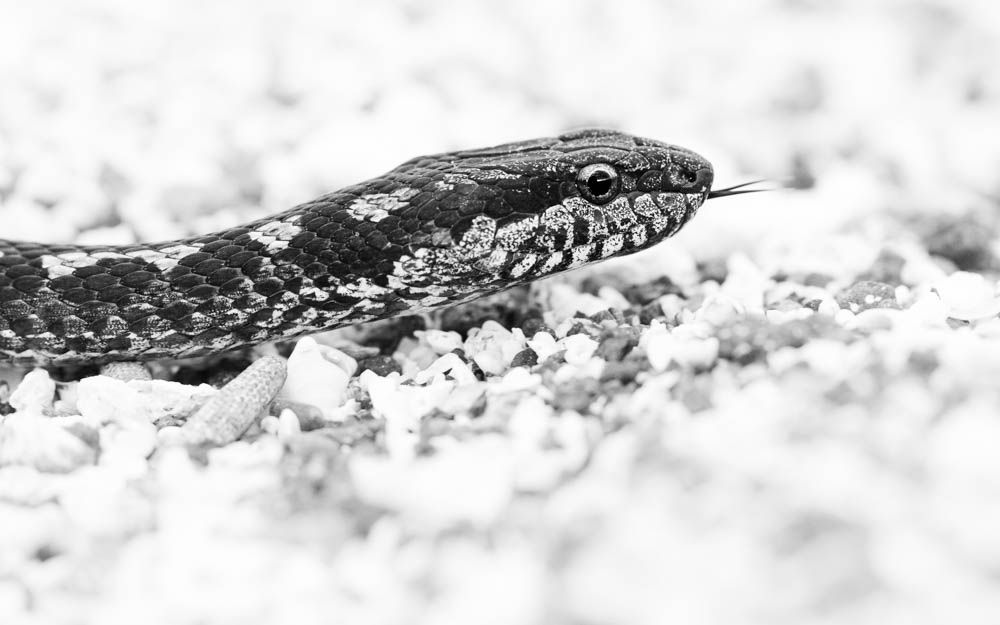
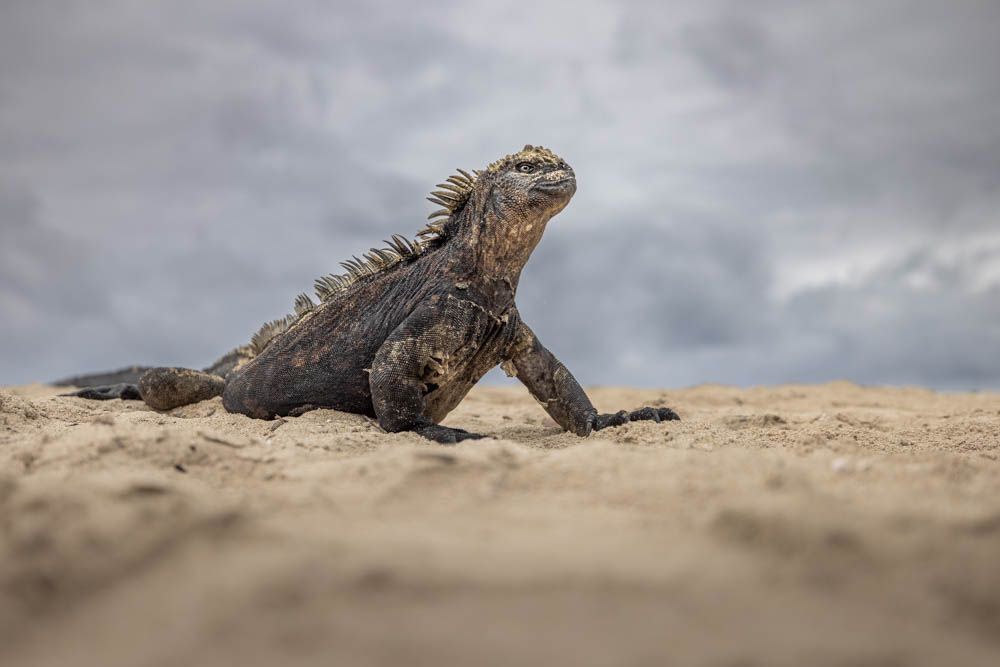
The next few days were spent exploring different parts of Isabela Island with a stop at Fernandina Island. Fernandina Island is one of the best places to photograph marine iguanas, both on land and in the water. It was also the location of the iconic shot in BBC Earth II where the Galapagos racer chased after the newborn marine iguana as it fled for its life. We didn’t see the epic trial of survival but did manage to spot a few snakes searching for food.
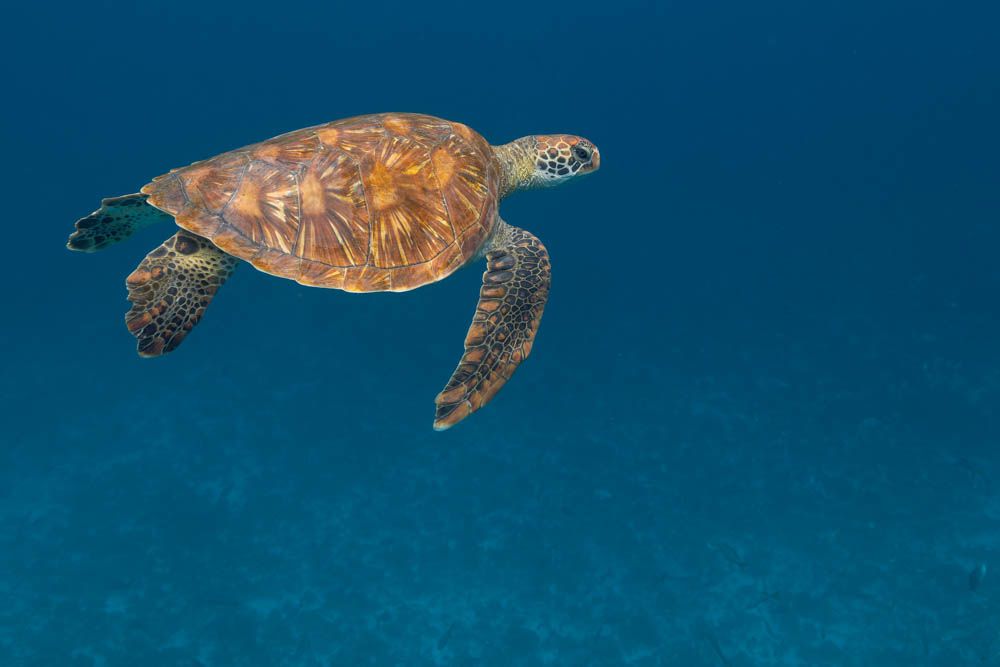
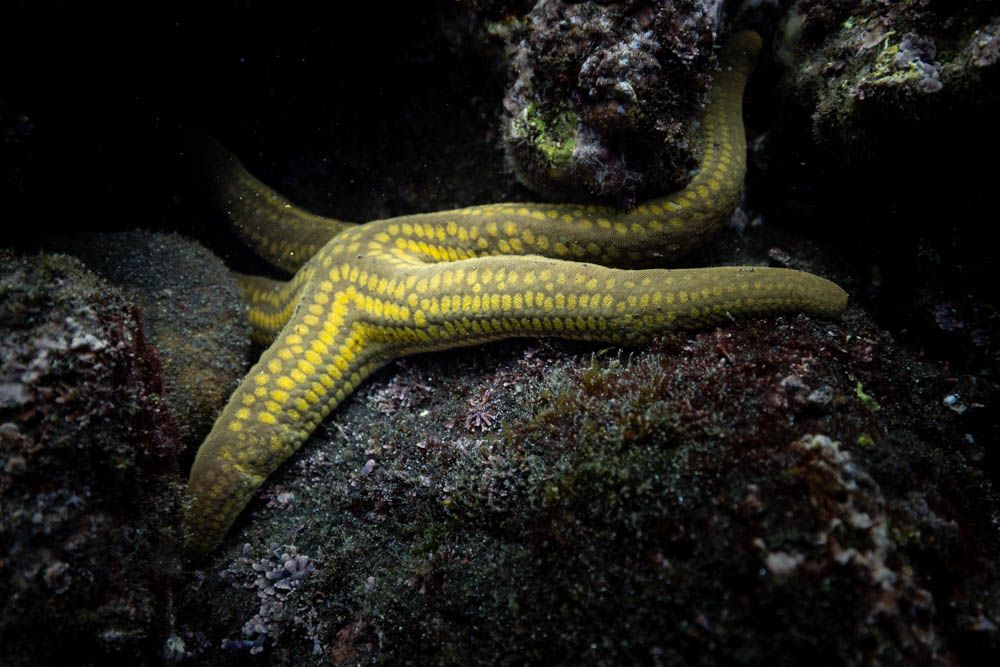
One of the best snorkeling experiences we had during our voyage around the islands was along Fernandina Island at Espinoza Point. The visibility was great for photography. There was an abundance of marine iguanas and green sea turtles foraging along the rocky seafloor. Often, while photographing one turtle, three more would appear around you, feeding on the aquatic vegetation. The rocky columns made for great composition while the afternoon light shot beams across the water column. It was a remarkable place and one of the reasons why I would suggest anyone give snorkeling a try, at least once, during their visit to the Galapagos Islands.
Isabela Island
Considering Isabela Island was the largest island in the Galapagos archipelago with 1,771 square miles, four days were spent cruising around the island. During the voyage, we ventured into a sea cave near the cliffs of Vicente Roca Point, hiked up Darwin's Lake and swam with manta rays at Tagus Cove, and got to photograph the famous Galapagos tortoises at Urbina Bay.
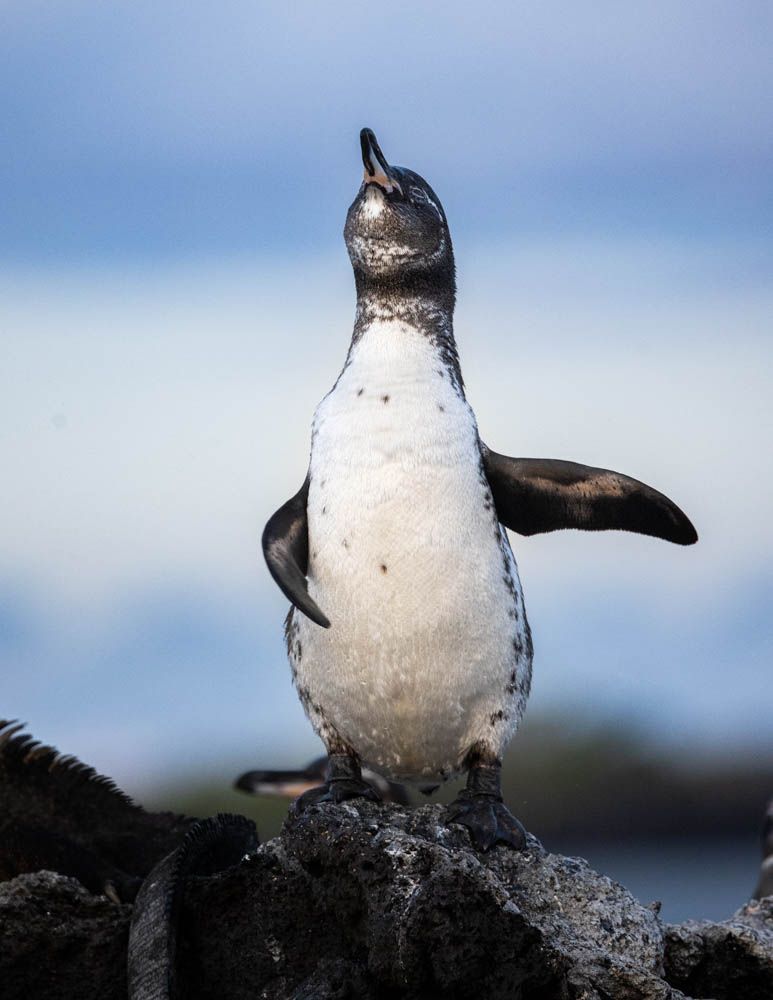
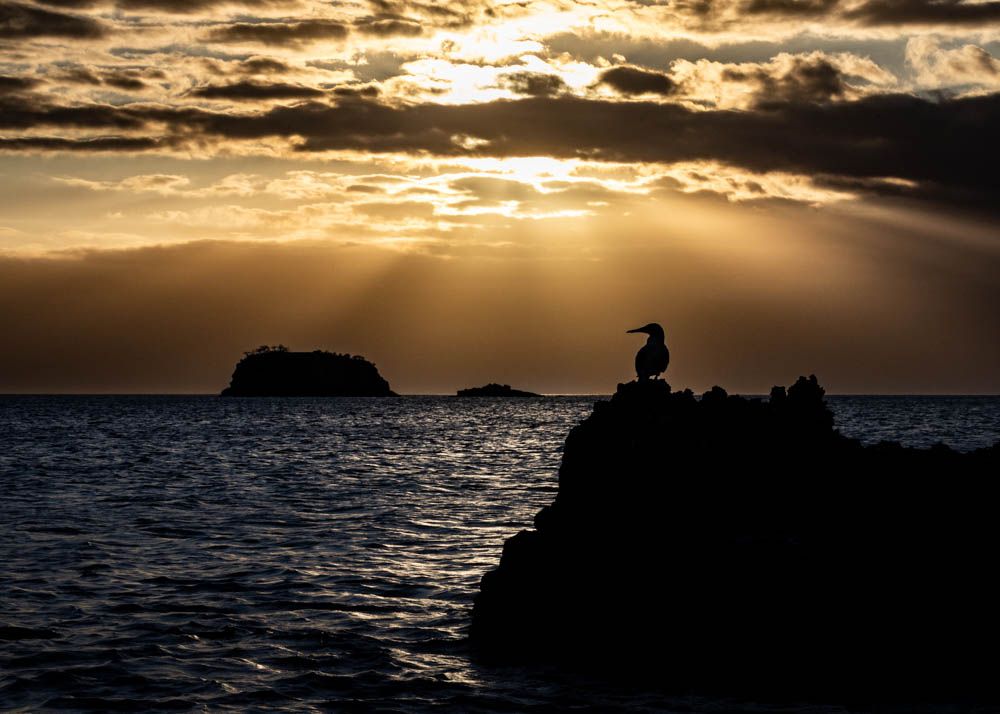
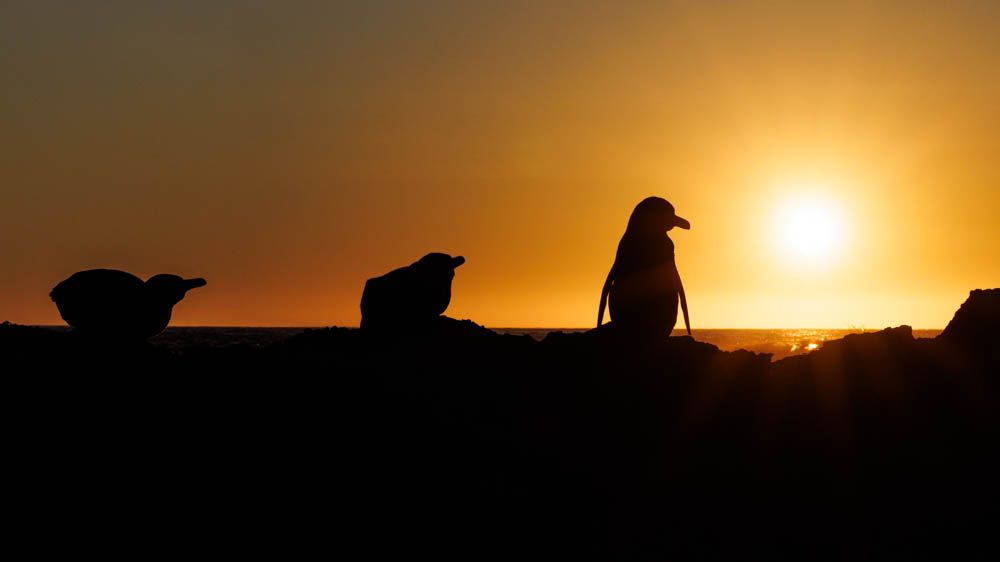
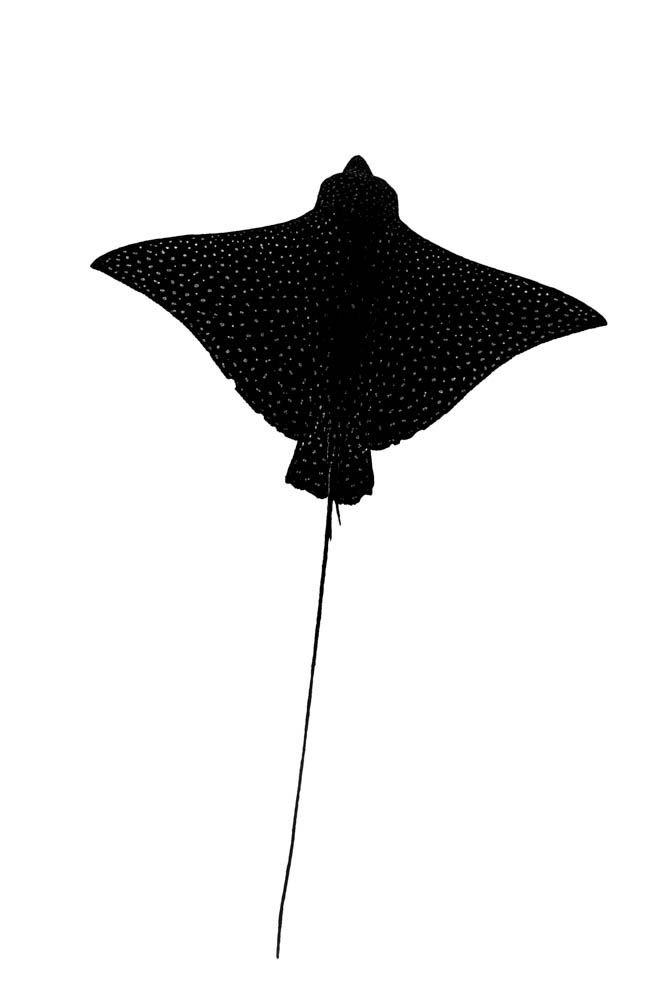
The two places we explored were the mangrove lagoons of both Elizabeth Bay and Moreno Point. These calm, evening waters provided homes for juvenile blacktip reef sharks, green sea turtles, golden cownose rays, and eagle rays. Being a nursery and a preserve, snorkeling was not permitted in the area. However, folks were able to capture some great images by dipping their GoPros or DJI Osmos into the water as the fish swam by. The evening light also gifted us with amazing opportunities to photograph diving boobies and roosting birds. The best part was the setting sun at Moreno Point which made for some great silhouette shots of penguins perched on a rock.
Our last day on Isabela Island was spent at Puerto Villamil, a small town where visitors come to visit the Tortoise Breeding Center. This was a great opportunity to learn more about tortoise conservation while seeing them in multiple stages of their life. After the morning excursion, we did a little bit of snorkeling before finishing the evening exploring the town.
Floreana Island
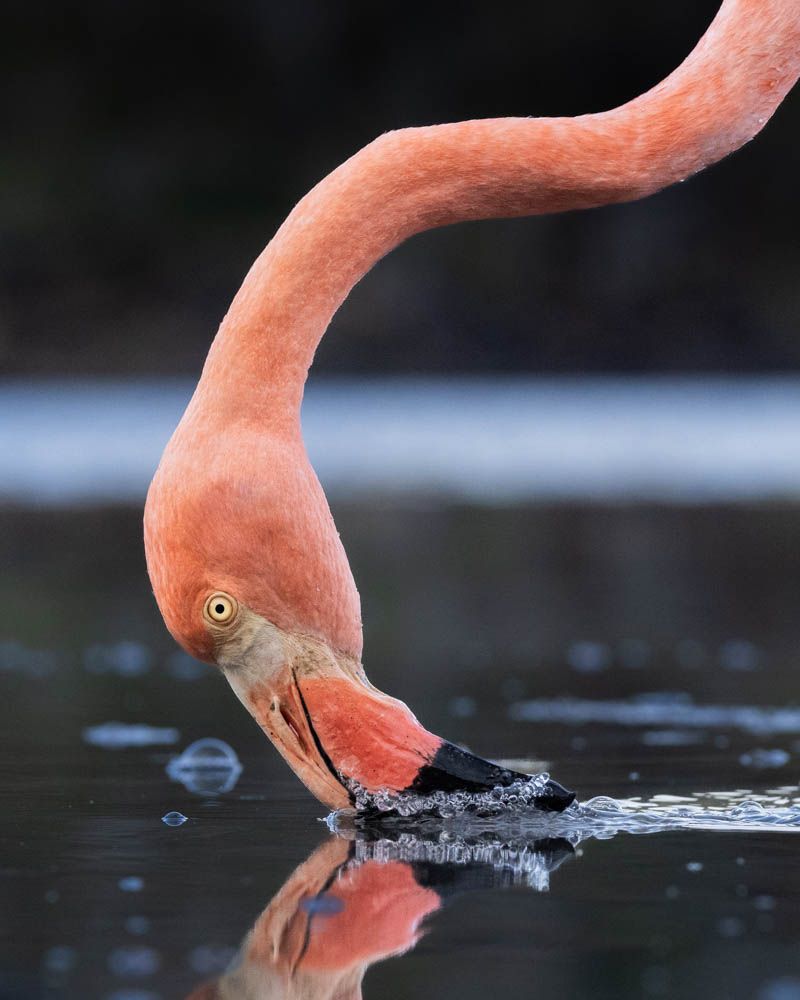
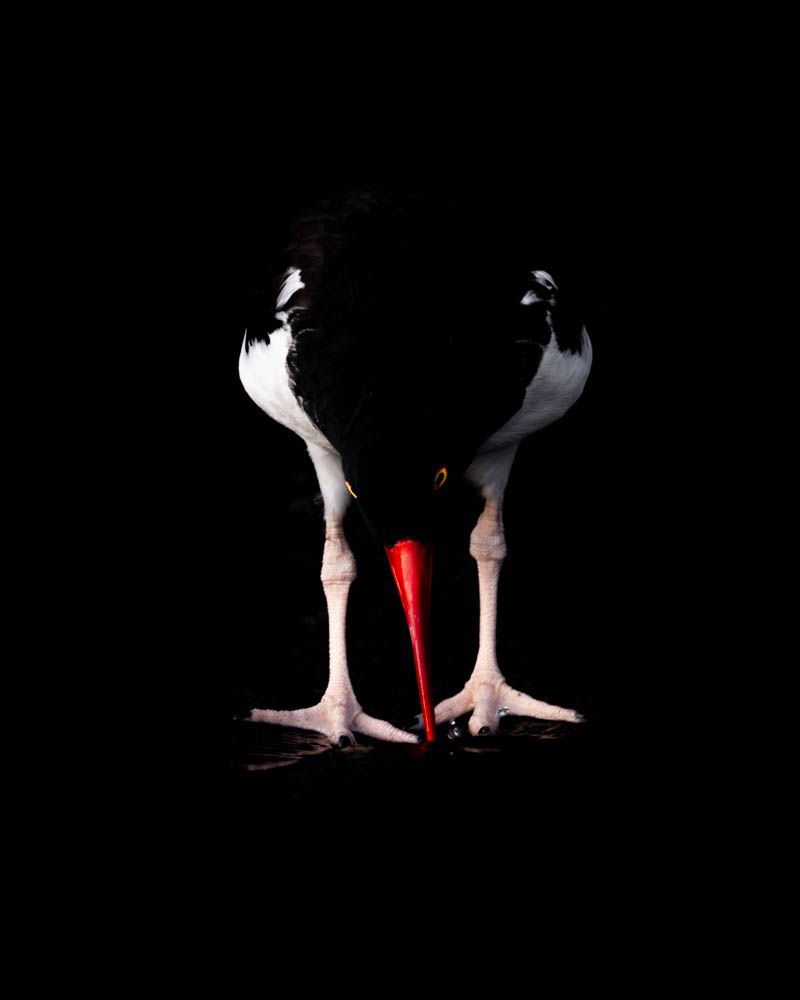
This island contained a large, coastal lagoon making it a popular place to photograph flamingos. The elevated landscape made for some great wide-angel shots with the birds foraging in the shallow, murky water. A telephoto lens worked great for tight portraits of the birds skimming their bills through the water. Out of all the places we’ve seen flamingos, this was definitely the best spot to photograph them.
Following our morning land and zodiac excursions, we snorkeled at Devil’s Crown. The current was strong around the island. We would hop into the water, let the current take us around the crown, then hop back into the zodiacs to repeat the process. There were a lot of great underwater photography opportunities at Devil’s crown. Some of the highlights included eagle rays, Galapagos sharks, reef sharks, and best of all, hammerhead sharks. It was a rewarding and magical experience and one of the best dives we had on the tour.
Seymour Island
Our final morning was spent at north Seymour Island photographing Galapagos sea lions and frigate birds. On the island, we were able to have close encounters with sea lions while observing frigate birds picking up nesting material from the beach. On the Zodiak, we cruised along the cliffs where hundreds of frigate birds soar. After our morning excursion, it was time to pack up and return to the airport for our long flight back home.
This concluded our 8-day Wild Galapagos Luxe Photo Safari tour. It was a fun and rewarding experience exploring the islands on a yacht with a great crew, amazing food, and cozy rooms. If you are ready to escape a busy world and dive into a luxurious adventure photographing endemic wildlife in a tropical paradise, then make your reservations today and we will see you next year on our next Galapagos adventure!

 Wild Galapagos: Luxe Photo Safari
 Ship-Based Photo Safari
From $12,995.00
Up To 14 Guests
Fitness Level 1 - What's This?
Wanna Get Away?
Starts
Current Price:$0.00
Start: Quito, Ecuador
Led By
Start: Quito, Ecuador
Led By

Backcountry Journeys
Connecting Passionate People To
Exceptional Experiences.
Exceptional Experiences.
Business Hours:
Mon-Fri, 8AM-4PM MT
928-478-1521
adventure@backcountryjourneys.com
Mon-Fri, 8AM-4PM MT
928-478-1521
adventure@backcountryjourneys.com
arrow_drop_down_circle
Divider Text
All Images & Content Are Property Of Backcountry Journeys Photography Tours, Workshops & Safaris LLC - Copyright 2026


About Us
Receive a Digital Trip Catalog
Find an upcoming photography tour with our interactive catalog.