2025 Travelers' Choice

About Backcountry Journeys
Why Choose Backcountry Journeys
If you're considering a photography trip, hear why Backcountry Journeys delivers the best experience in the industry.Frequently Asked Questions
If you're new to photography trips, or new to BCJ, you can find our common travel questions here.Fitness Levels
Our trips vary on physical intensity, and by reviewing our fitness levels, you can find out which trips may be more challenging, or aligned more closely with your comfort level.Meet The Crew
We've built an amazing team of experienced guides, and dedicated office staff that elevate your travel experience. Get to know their backgrounds, and hear their stories.Loyalty Program
We reward our frequent photo adventurers with exclusive discounts on amazing photography trips.Contact Us
If you need to get in touch with our office staff, or have additional business inquiries, you can find our information here.Refer a Friend
Know someone perfect for one of our tours? Recommend them through this quick form.Stay Up To Date On All Things
Backcountry Journeys
Backcountry Journeys
Our Photography Community
Our Webinars
Our regularly hosted webinars provide photography instruction from our own guides on a wide range of topics.Our Education Portal
Explore our library of articles that cover everything from common questions, to in-depth guides on how to achieve that perfect shot.Community Testimonials
We're proud to foster an amazing group of photo travelers, and here you can find their stories from their past adventures.Resources For Photographers
About Our Company
Resources For Photographers
About Our Company
Utah’s Mighty 5 for Photographers: A Small-Group Itinerary Built Around Golden Hour
Published September 23, 2026
There are two ways to experience Utah’s Mighty 5.
The first is to make a list:
Zion: check.
Bryce Canyon: check.
Capitol Reef: check.
Arches: check.
Canyonlands: check.
Five parks. Five days. As many viewpoints as possible.
The second is to forget the checklist for a moment and ask a different question: Where will the light be best?
For a photographer, that question can completely change the way you experience southern Utah!
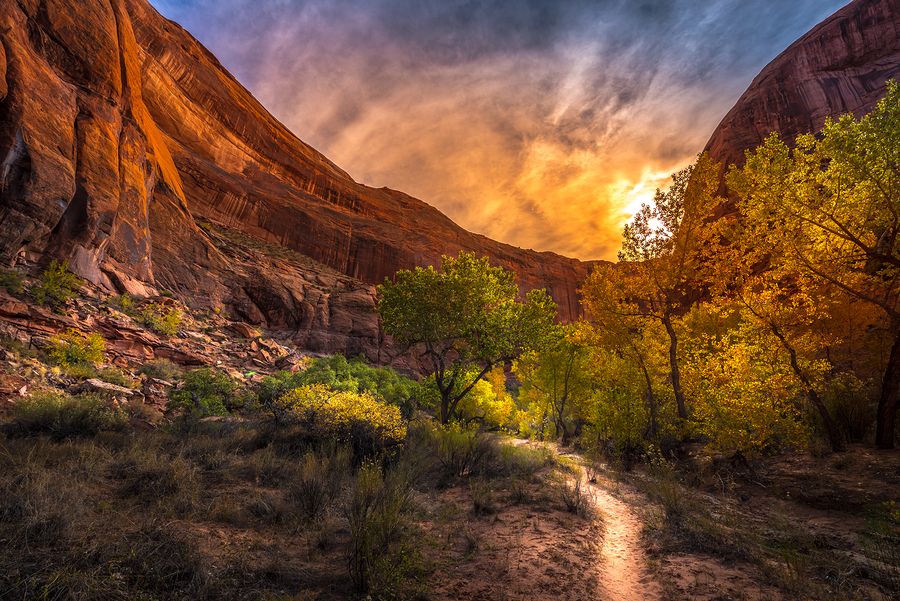
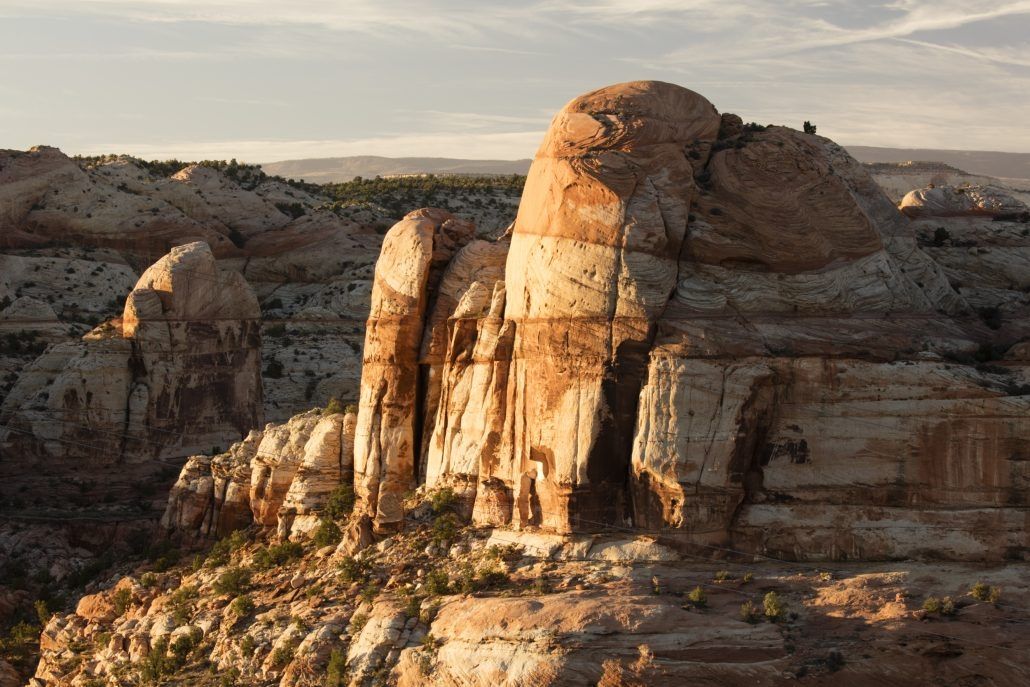
The sandstone doesn't look the same at 10 a.m. as it does at 7 p.m. A canyon that feels flat beneath overhead sunlight can suddenly become layered and dimensional when shadows stretch across it. Hoodoos glow. Cliffs turn orange. Distant mesas separate into distinct layers.
The landscape isn't changing, the light is!
And that's why a great Utah Mighty 5 tour for photographers shouldn't be designed simply around how many places you can see. It should be designed around the hours when those places are most worth photographing!
The Clock Is Part of the Itinerary
Most sightseeing itineraries organize a day around destinations.
Photography itineraries organize a day around conditions! That's an important distinction.
If you're trying to see as much as possible, arriving at a viewpoint at noon is perfectly reasonable. If you're trying to make your strongest landscape photograph of the day, noon may be the least interesting time to be there.
The edges of the day are different.
At sunrise, the landscape is often cooler and quieter. Low-angle light begins picking out individual formations while the surrounding shadows remain deep.
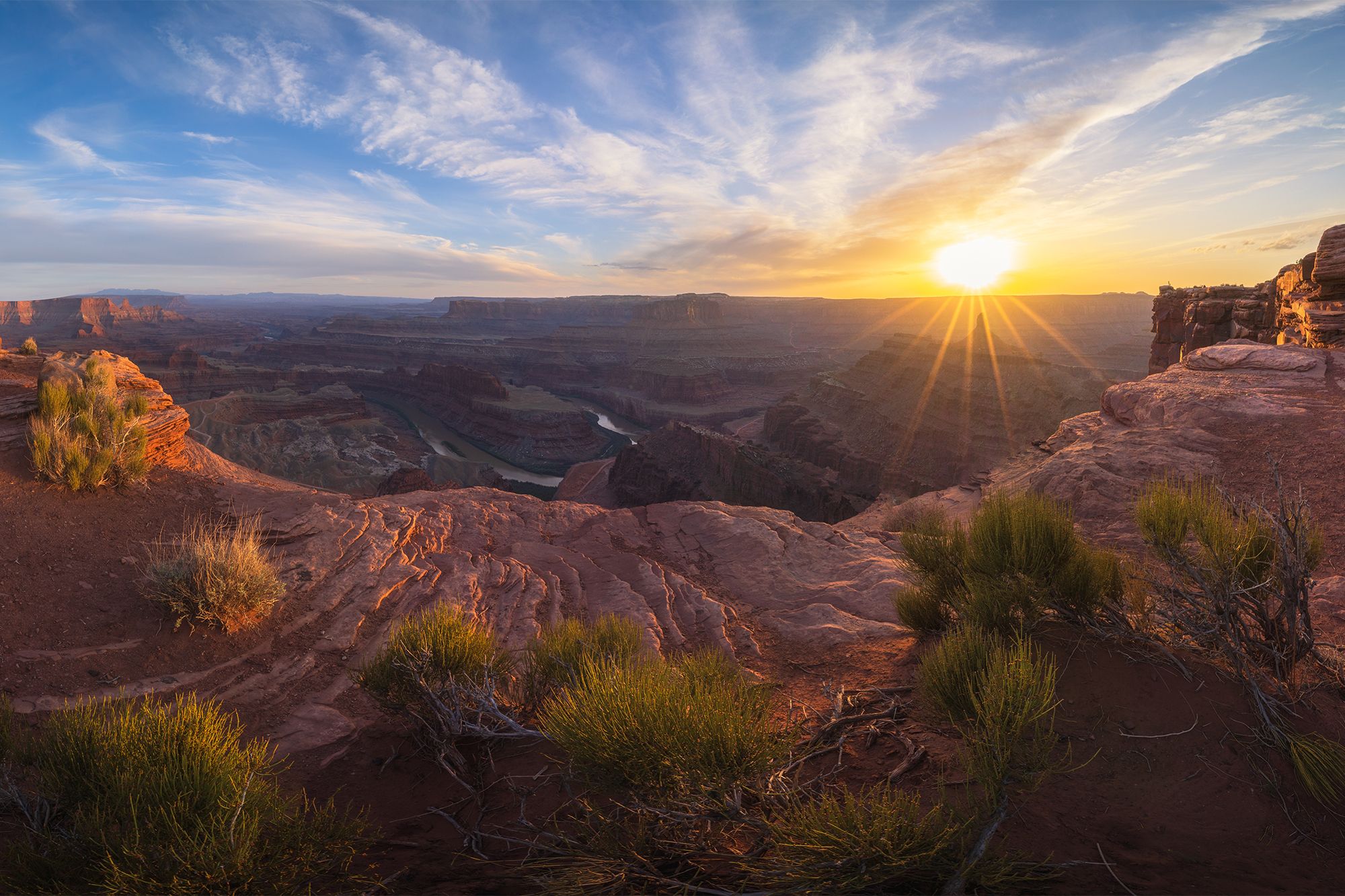
As the sun drops in the evening, the process happens in reverse. Rock faces catch warm light while canyons and washes fall into shadow. Clouds can become illuminated from below. Textures become more pronounced.
Those transitions don't last forever. A photography-focused itinerary must protect them.
That means sometimes doing less during the middle of the day so you can do more when the light gets good.
It's one of the biggest differences between traveling to photograph a landscape and traveling simply to see it.
Think of the Mighty 5 as Five Different Photography Challenges
One reason Utah works so well for photographers is that the five parks don't simply give you five versions of the same red-rock scenery. They ask you to photograph differently.
Zion is about verticality and scale.
How do you communicate the feeling of standing beneath enormous walls of sandstone? Wide-angle compositions can exaggerate the height, while layers of vegetation and rock can give the frame depth.
Bryce Canyon is about repetition and pattern.
Thousands of hoodoos create a visual maze. Instead of photographing the entire amphitheater, you can isolate individual formations, search for repeating shapes, or use telephoto compression to turn the landscape into an almost abstract arrangement of stone.
Capitol Reef is about geological structure.
The Waterpocket Fold provides enormous folds, cliffs, domes, and layers to work with. It's a landscape where looking beyond the obvious viewpoint can pay off.
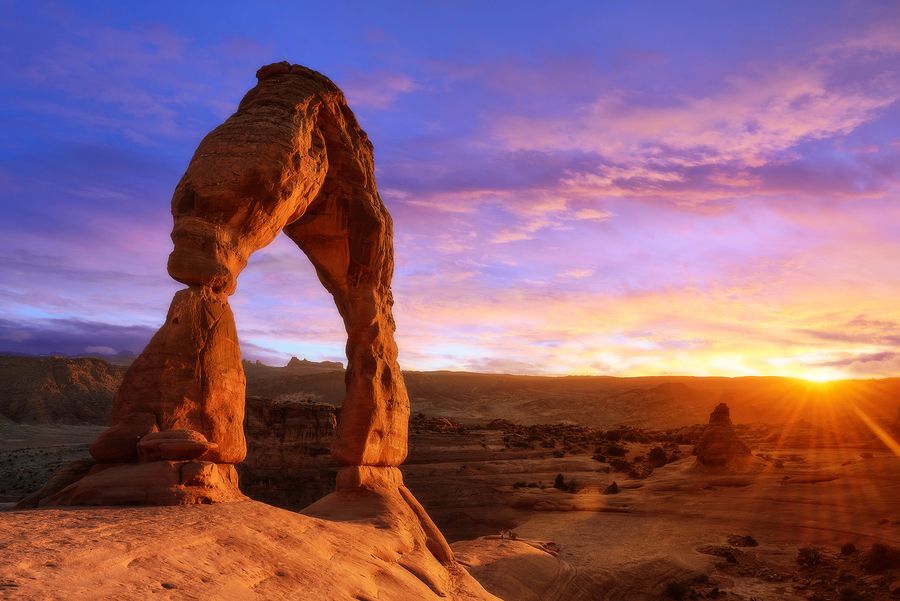
Arches is about recognizable forms.
An arch is already a strong graphic element. The challenge becomes using it creatively. Framing distant scenery, incorporating foreground, experimenting with scale, or allowing the changing light to completely alter a familiar composition.
Canyonlands is about distance.
From a photographer's perspective, the park is full of opportunities to compress enormous spaces into layers. A telephoto lens can turn distant mesas into graphic shapes, while a wider composition can reveal just how immense the landscape really is.
Five parks. Five very different photographic puzzles.
And that's far more interesting than five boxes on a checklist!
The Photograph Might Be 50 Feet From the Famous Viewpoint
There's another problem with checklist travel: the famous viewpoint becomes the destination.
You arrive. You take the picture everyone else takes. You leave.
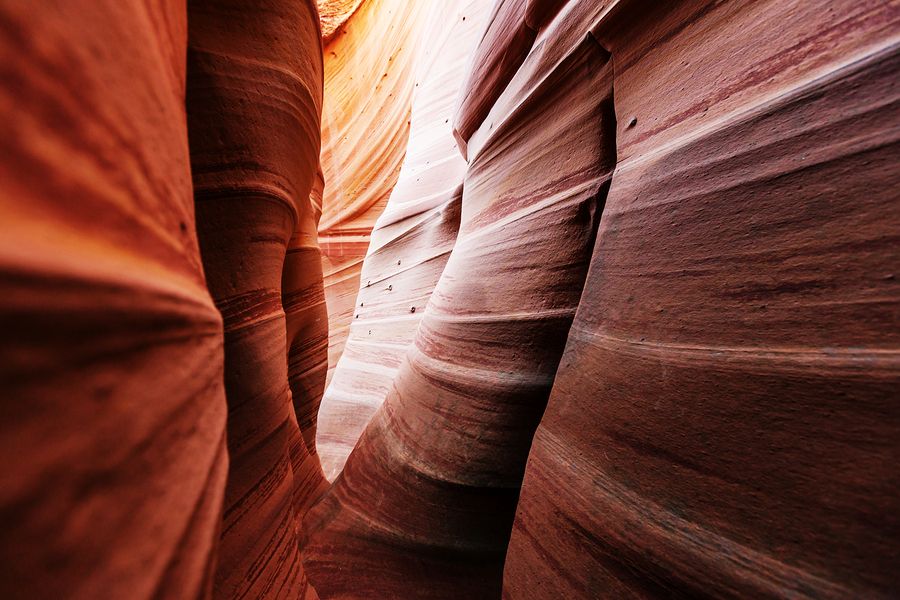
But photographers know that the most interesting frame isn't always the obvious one. Sometimes it's a few steps to the side.
It could be in a tighter composition that eliminates the tourist-heavy foreground. Or a distant formation illuminated by a narrow break in the clouds. Maybe it’s tucked into patch of desert vegetation that creates the foreground you were missing.
That's where an experienced photography guide becomes much more valuable than a standard sightseeing guide.
The goal isn't merely to know where the viewpoint is. It's to recognize what else is happening around it.
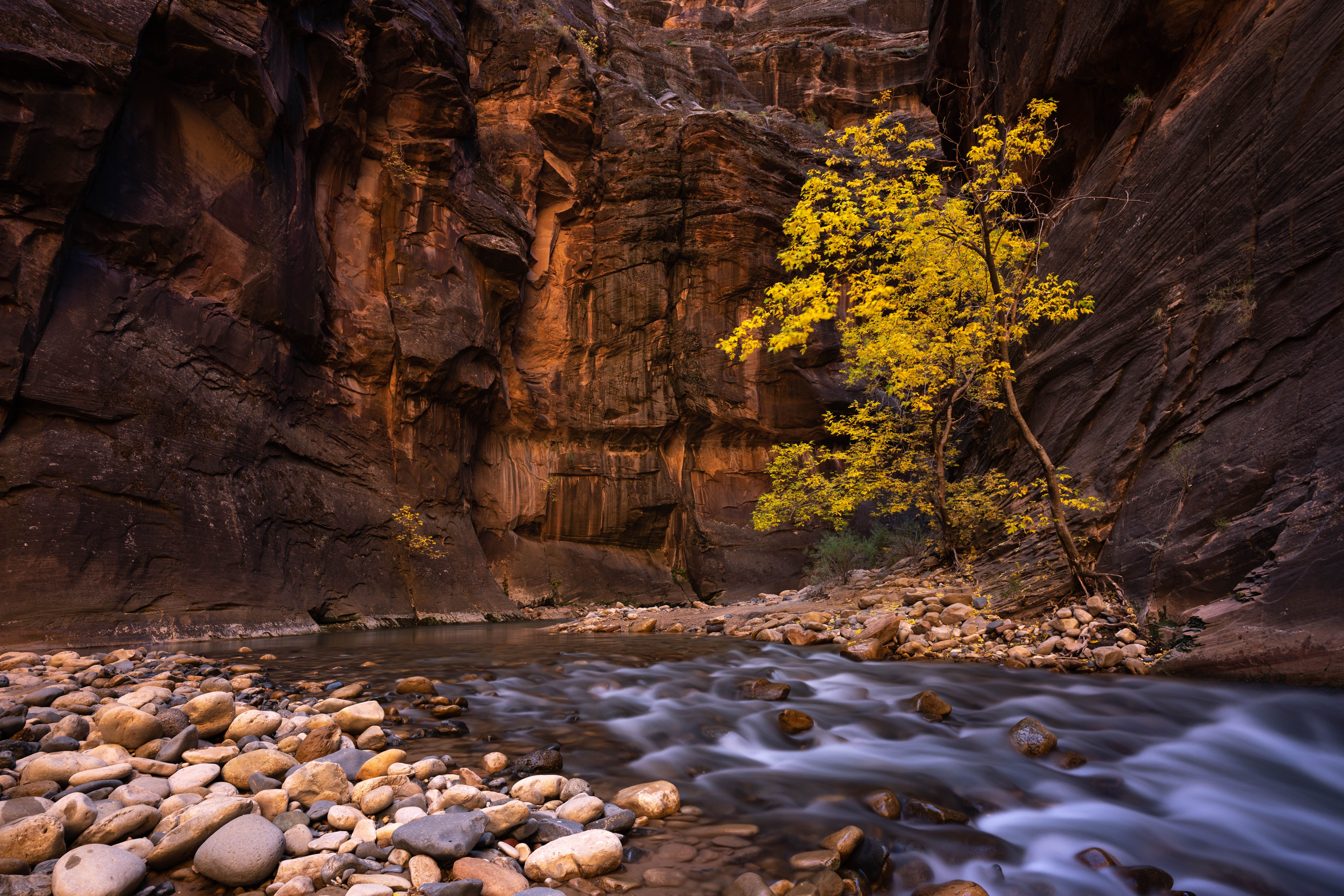
What Happens When the Weather Doesn't Cooperate?
This is another reason to avoid an overly rigid itinerary.
Photographers don't necessarily see clouds as bad weather. A completely clear sky can produce a beautiful photograph. But clouds can give a landscape movement, contrast, texture, and drama.
A storm moving across Canyonlands can completely change the scene. Cloud shadows can travel across distant mesas. A brief opening in the clouds can spotlight a section of sandstone.
At Bryce Canyon, changing conditions can shift the balance between warm rock and cool shadow.
The important thing is being somewhere photographically interesting when something happens.
That requires flexibility.
And flexibility is difficult when you're moving a large group through a tightly scheduled sightseeing itinerary.
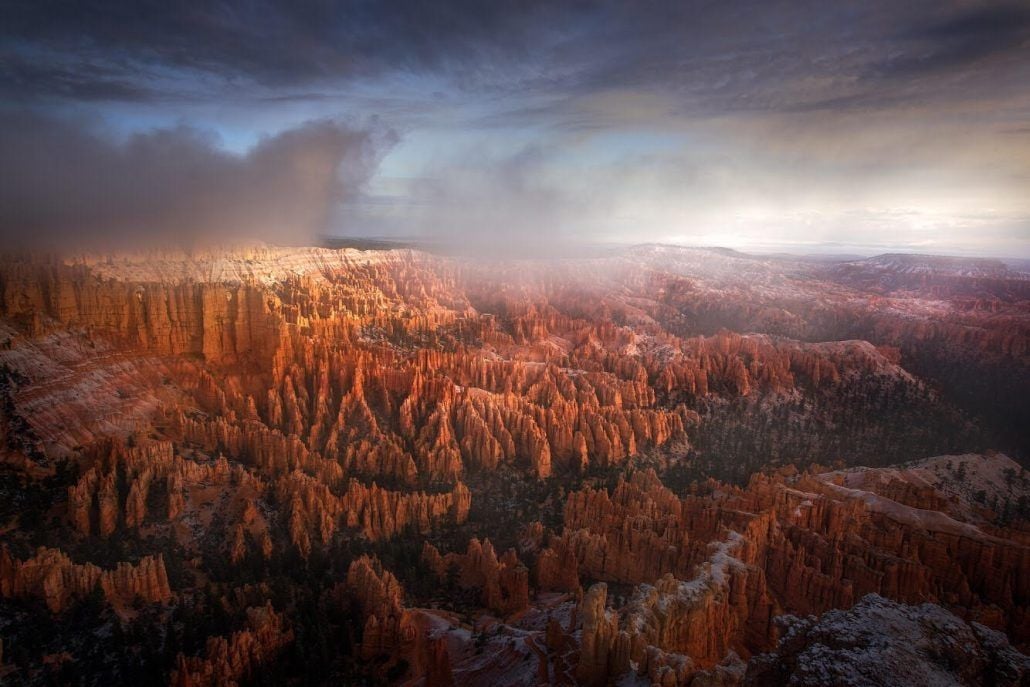
Why Small Groups Change the Experience
Photography has a funny relationship with time.
Five minutes can mean everything when you're waiting for the sun to move behind a cloud.
A small group makes those decisions easier.
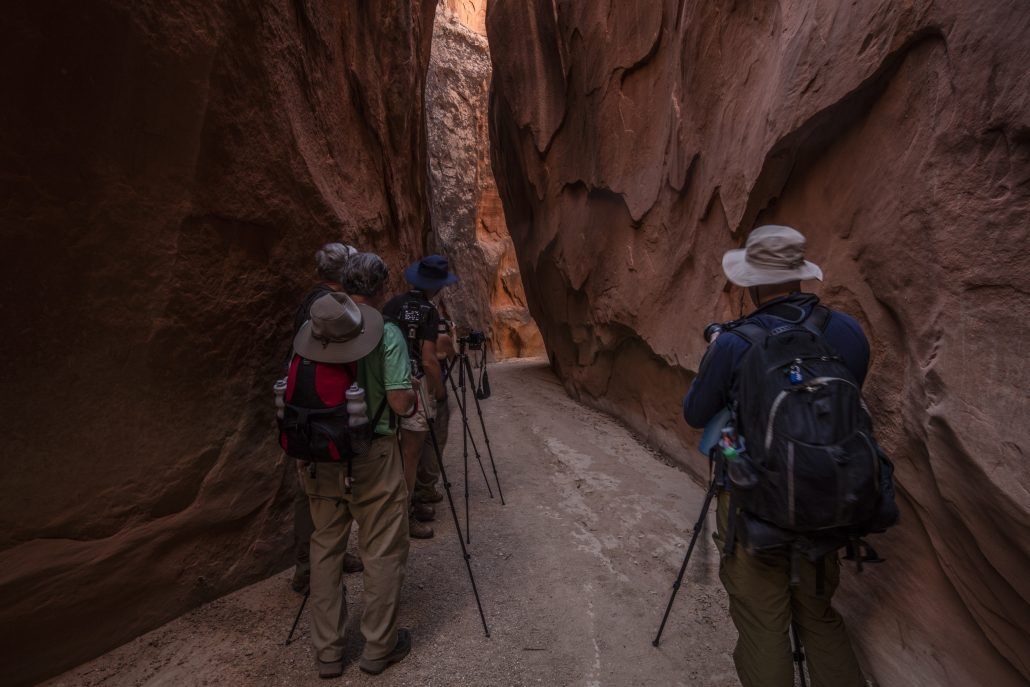
You can spend another ten minutes working a composition without holding up 40 people. You can change lenses. Try a different perspective. Wait for the light. Ask your guide about an alternative composition.
The group can respond to the landscape instead of constantly responding to the clock.
That's particularly important in a destination like Utah, where conditions can change remarkably quickly.
The goal isn't to eliminate structure.
It's to build enough breathing room into the structure that photography can actually happen.
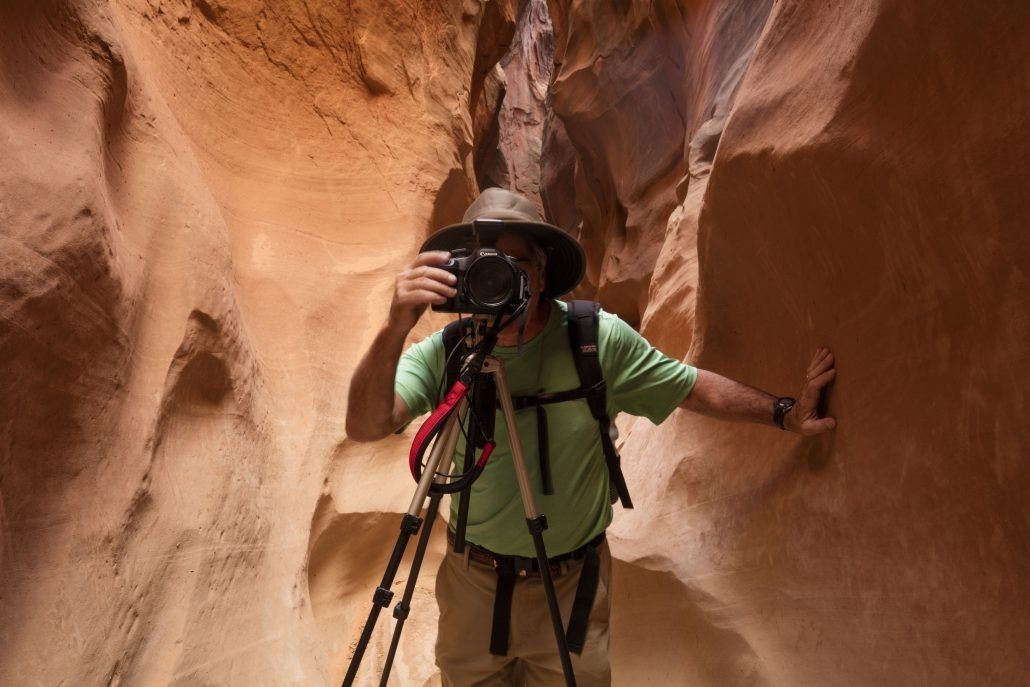
The Best Part of the Day Might Be the Part Most Tours Skip
Here's the irony of many traditional tours:
The middle of the day is often when you're busiest.
You're moving between attractions, checking into hotels, grabbing lunch, driving to the next destination.
Meanwhile, the most dramatic light is waiting for you in the morning and evening.
A photography itinerary flips that priority.
The day might feel slower. That's intentional.
You might have time to eat, recharge batteries, download images, and reset your camera bag during the harshest midday hours.
Then, as the light begins to soften, the focus shifts back to photography.
You're already where you need to be.
No scrambling out of a hotel, driving around looking for a parking space or wondering whether you'll make it to the overlook before sunset.
You're simply waiting for the landscape to turn on.
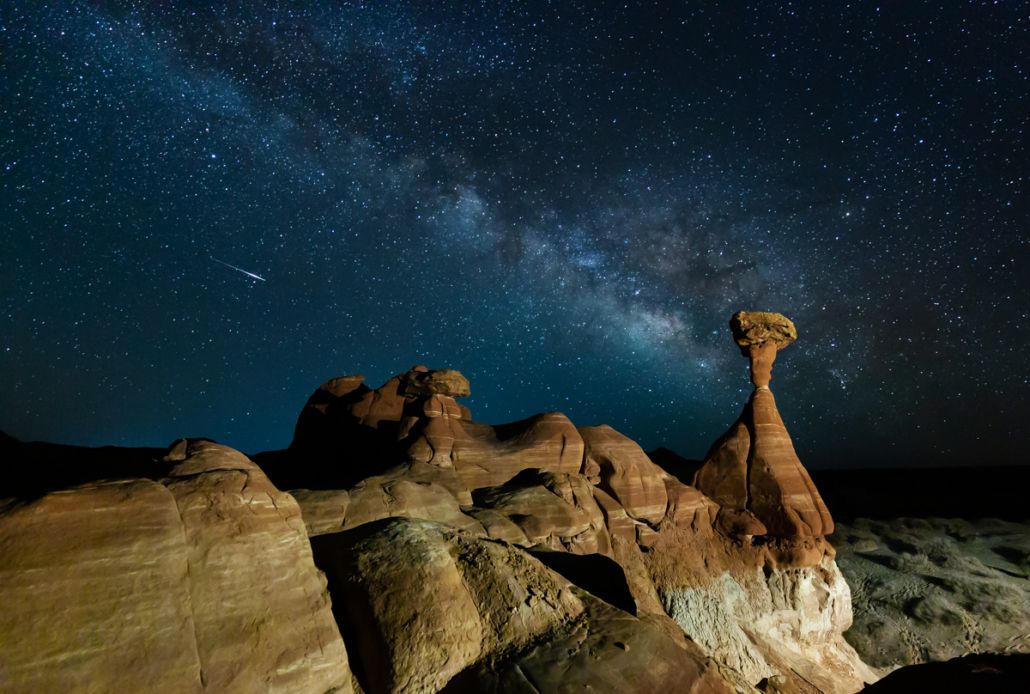
This Is What “Access” Really Means
When photographers hear “unique access,” it's easy to think only about reaching somewhere the general public can't.
But access can mean something much simpler:
Access to the right place at the right time.
Access to a guide who knows where to position you, to local knowledge about changing conditions, to an itinerary that doesn't treat sunrise and sunset as inconvenient obstacles. Or even access to enough time to make decisions instead of simply documenting where you've been.
That kind of access is one of the things that separates a photography trip from a conventional tour.
A Different Kind of Utah Mighty 5 Tour
You can drive through southern Utah and collect five national parks.
Or you can slow down long enough to photograph what happens between the itinerary points.
At Backcountry Journeys, our Utah Mighty 5 tour is designed for photographers who want the latter.
Small groups. Expert guides. Thoughtful timing. And an itinerary built with photography, not sightseeing alone, in mind.
Because the objective isn't to return home and say:
“I visited all five.”
It's to look through your images and remember exactly what the light was doing when you pressed the shutter.
 Utah's Mighty 5
 Lodge-Based Photo Workshop
From $5,995.00
Up To 7 Guests
Fitness Level 1 - What's This?
Wanna Get Away?
Starts
Current Price:$0.00
Start: Grand Junction, CO
Led By
Start: Grand Junction, CO
Led By

Backcountry Journeys
Connecting Passionate People To
Exceptional Experiences.
Exceptional Experiences.
Business Hours:
Mon-Fri, 8AM-4PM MT
928-478-1521
adventure@backcountryjourneys.com
Mon-Fri, 8AM-4PM MT
928-478-1521
adventure@backcountryjourneys.com
arrow_drop_down_circle
Divider Text
All Images & Content Are Property Of Backcountry Journeys Photography Tours, Workshops & Safaris LLC - Copyright 2026


About Us
Receive a Digital Trip Catalog
Find an upcoming photography tour with our interactive catalog.