2025 Travelers' Choice

About Backcountry Journeys
Why Choose Backcountry Journeys
If you're considering a photography trip, hear why Backcountry Journeys delivers the best experience in the industry.Frequently Asked Questions
If you're new to photography trips, or new to BCJ, you can find our common travel questions here.Fitness Levels
Our trips vary on physical intensity, and by reviewing our fitness levels, you can find out which trips may be more challenging, or aligned more closely with your comfort level.Meet The Crew
We've built an amazing team of experienced guides, and dedicated office staff that elevate your travel experience. Get to know their backgrounds, and hear their stories.Loyalty Program
We reward our frequent photo adventurers with exclusive discounts on amazing photography trips.Contact Us
If you need to get in touch with our office staff, or have additional business inquiries, you can find our information here.Refer a Friend
Know someone perfect for one of our tours? Recommend them through this quick form.Stay Up To Date On All Things
Backcountry Journeys
Backcountry Journeys
Our Photography Community
Our Webinars
Our regularly hosted webinars provide photography instruction from our own guides on a wide range of topics.Our Education Portal
Explore our library of articles that cover everything from common questions, to in-depth guides on how to achieve that perfect shot.Community Testimonials
We're proud to foster an amazing group of photo travelers, and here you can find their stories from their past adventures.Resources For Photographers
About Our Company
Resources For Photographers
About Our Company
What Lens Do You Need to Photograph a Solar Eclipse? A Photographer’s Guide to Focal Length

Published August 12, 2026
Photographing a total solar eclipse is one of the most challenging and rewarding experiences in astro-photography. The event itself lasts only minutes, but this speedy scientific phenomenon has been enamoring people for the entire length of human history.
Artists, poets, scientists, and people across cultures have been captivated by eclipses for thousands of years. The earliest known visual depiction of an eclipse dates back to 3340 BCE in Ireland, a testament to the enduring wonder these cosmic events inspire. While we understand more about eclipses today than ever before, witnessing one is still awe-inspiring, and capturing that spectacle through a camera is an entirely different challenge.
Before worrying about camera settings or composition, there is one important question every photographer should get the answer to: what is the best lens for solar eclipse photography?
The answer depends on the photograph you want to create.
Before we fully jump into the equipment best used to shoot your photos; I feel it’s paramount to mention the safety precaution one must exercise during any kind of solar eclipse event: Solar glasses for your eyes, and Solar lens filters for your camera. Both pieces of equipment are the single non-negotiable in this article, as the sun, even tucked behind the moon, can damage your camera – and more importantly, your eyes – even with short exposure times.
There is no single “best” solar eclipse photography lens. A 600mm telephoto can produce incredible detail in the solar corona, but it may be the wrong choice if your goal is to photograph the eclipse over a dramatic mountain range. A 24mm wide-angle lens may seem too short for photographing the Sun, but it can create a powerful environmental image showing the eclipse within an expansive landscape.
Understanding focal length allows you to choose your equipment based on your creative goals rather than simply reaching for the longest lens in your camera bag.
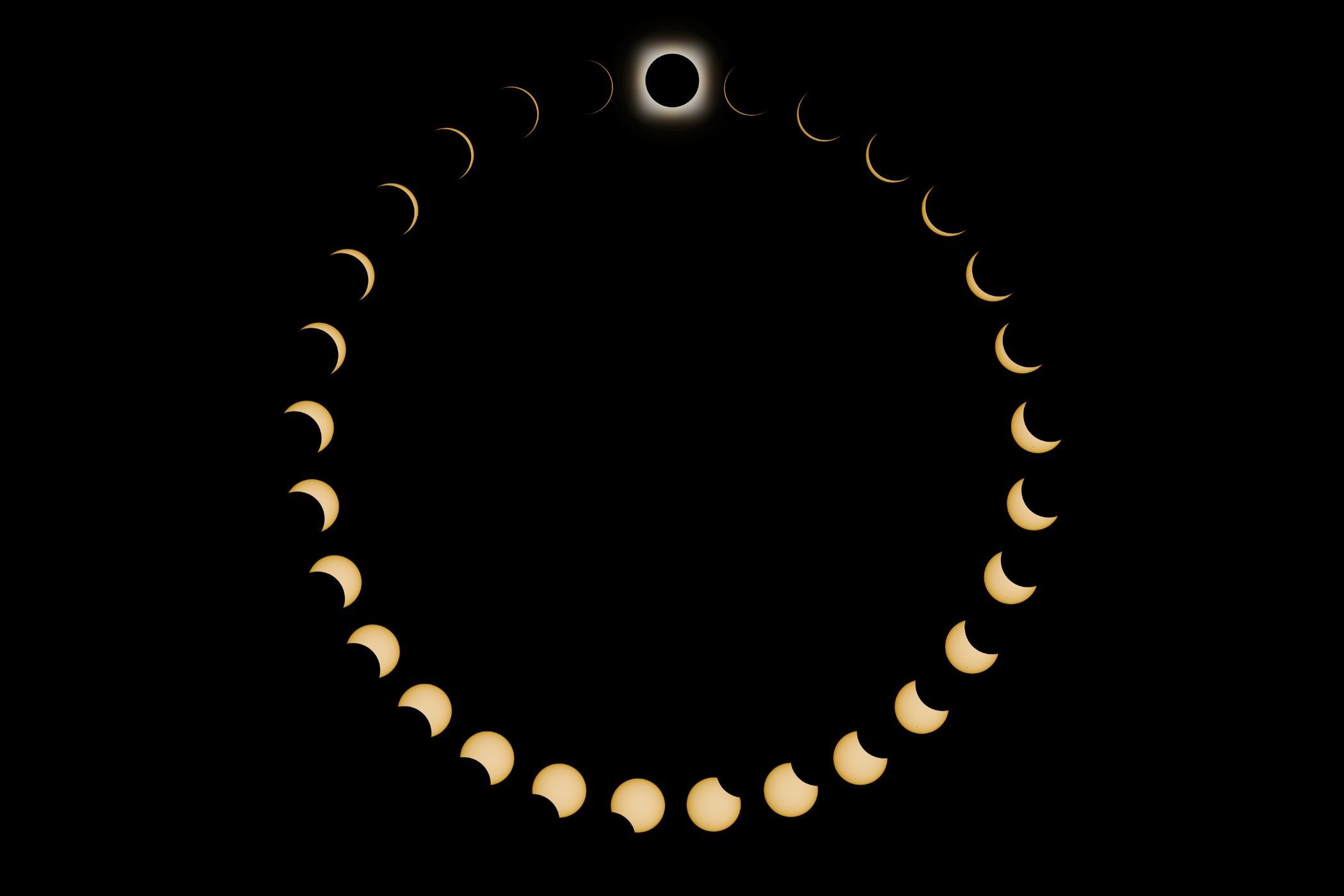
Why Focal Length Matters for Eclipse Photography
Focal length determines how large the Sun will appear in your frame and how much of the surrounding environment you can include.
A wide-angle lens gives you a broad field of view, allowing the eclipse to become part of a larger landscape. As focal length increases, the Sun becomes larger in the frame and the surrounding environment gradually disappears. At extreme telephoto focal lengths, you can fill much of the frame with the Sun itself and capture details such as the solar corona during totality.
That means your choice of lens is really a choice about how you want to tell the story of the eclipse.
Do you want the viewer to see the eclipse as an astronomical event? Choose a longer focal length. Do you want them to remember the mountains, desert, coastline, or people surrounding you when totality occurred? A shorter lens may be the better option.
For many photographers, the ideal approach is to bring more than one lens and deliberately create both detailed and environmental images.
14–35mm: Photograph the Eclipse as Part of the Landscape
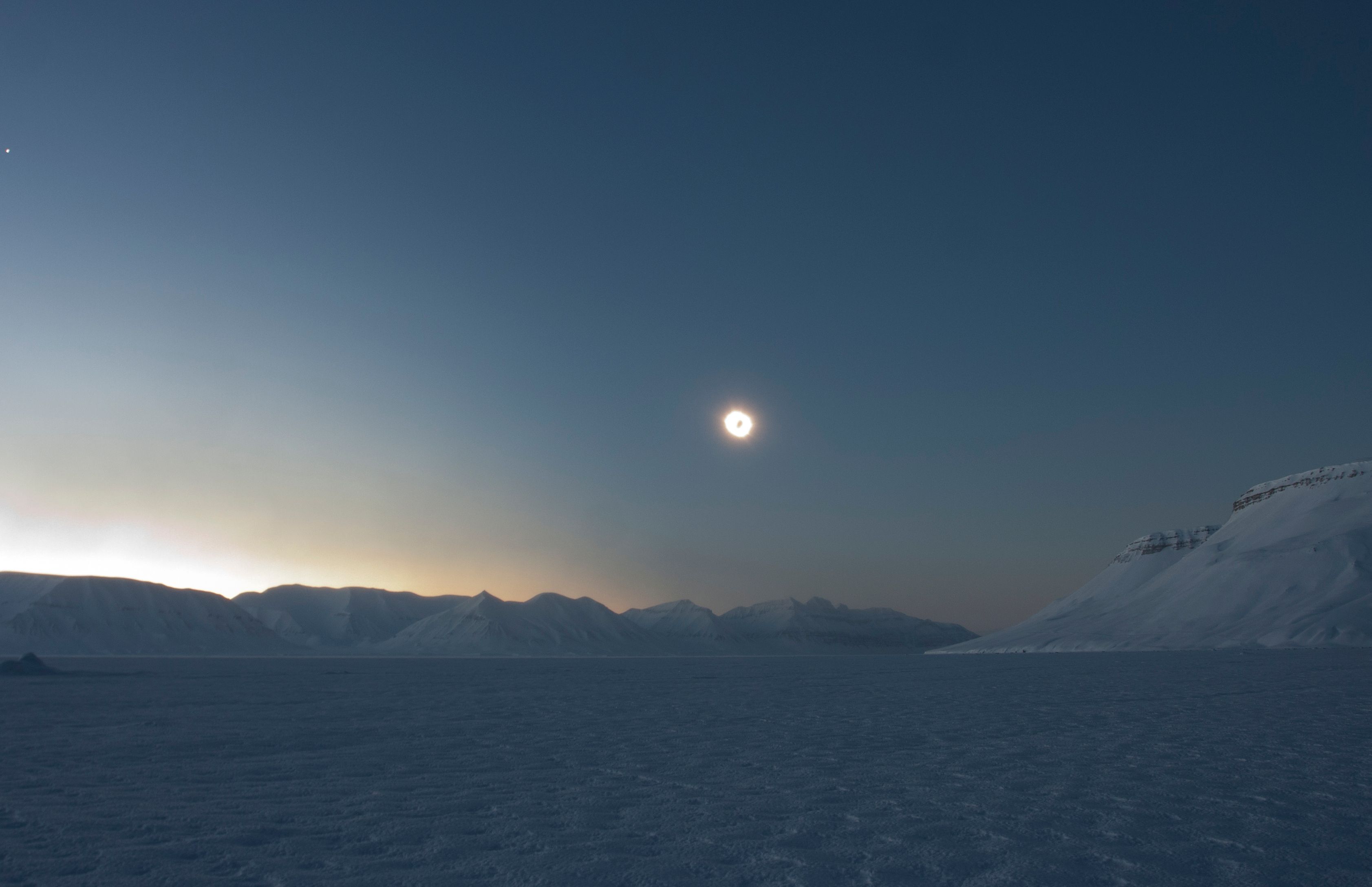
Ultra-wide and wide-angle lenses are not the first lenses most photographers think of when considering what lens to use for a solar eclipse. However, they can be incredibly effective when your goal is to create an environmental photograph. A lot of solar portfolios end up looking identical – and if that is your dream shot, absolutely go for it! (and we’ll detail how to get it in this guide, too!) But, parsing through research for this article, we discovered a fair bit of interest actually placed in wanting to record a specific, identifiable location during the cosmic event.
At 14–35mm, the Sun will occupy only a small portion of the frame, similar to your average sunset or sunrise shot, but with the added interest of a scientific phenomenon occurring. That is precisely what makes this focal range useful.
Instead of making the eclipse the entire photograph, you can use it as one element within a much larger composition. Imagine a total eclipse above a Patagonian mountain range, the Sun disappearing behind the rugged landscape of Andalucía, or a darkened sky stretching above the Moroccan desert.
The landscape becomes part of the story.
At these focal lengths, composition becomes particularly important. Look for strong foreground elements, leading lines, silhouettes, reflections, architectural features, or people that can provide scale. The eclipse itself may be small, but the unusual quality of the light can transform the entire scene.
A wide-angle lens is also useful for capturing the 360-degree environmental effect of totality. During a total solar eclipse, the sky around you can take on an unusual twilight appearance while the horizon may retain a glow of sunlight. A wide field of view allows you to capture more of that atmosphere.
The tradeoff is obvious: the Sun will be very small. If your goal is a detailed image of the corona, this suggestion is not the tool for the job.
Best for: environmental portraits, landscapes, silhouettes, architecture, dramatic foregrounds, and storytelling images.
70–200mm: The Versatile Eclipse Lens
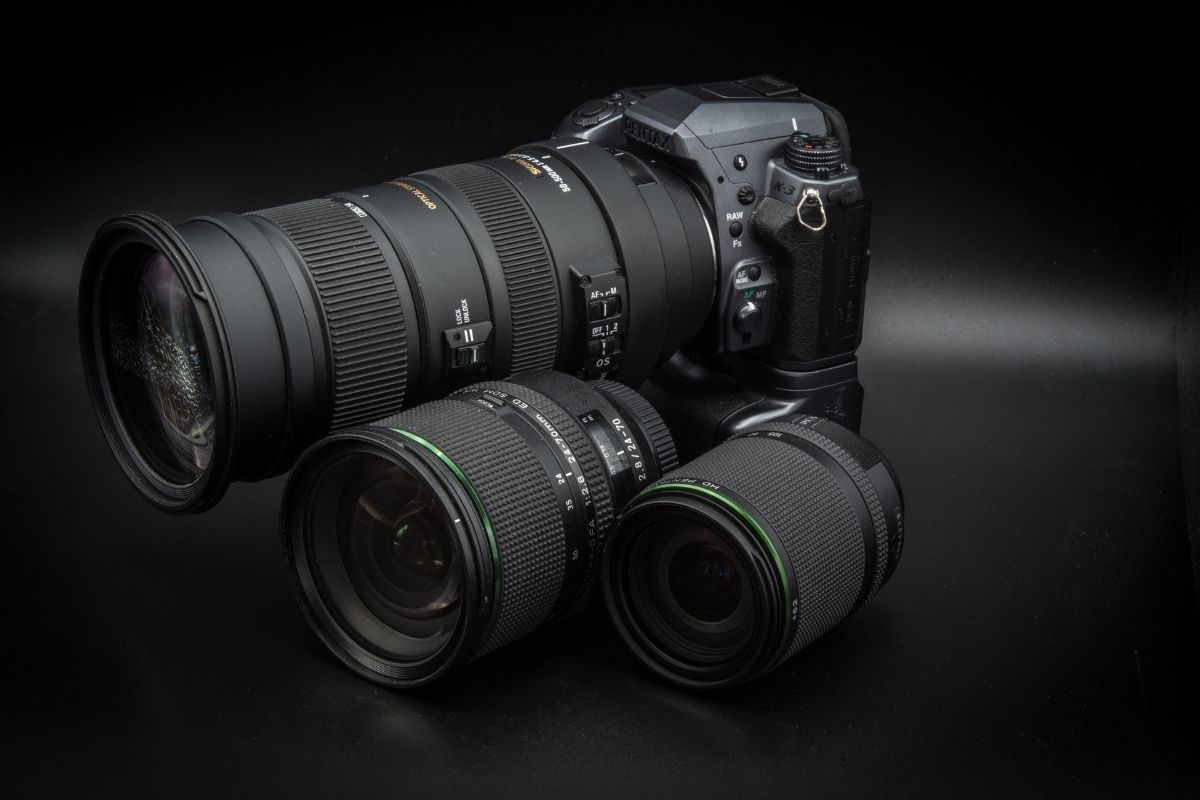
A 70–200mm lens can be one of the most versatile pieces of equipment in your bag during an eclipse.
At 70mm, you can still incorporate substantial environmental context. At 200mm, the Sun becomes noticeably larger while remaining small enough to include surrounding landscape or other subjects.
This makes the range particularly useful for photographers who want to move between the eclipse itself and the experience surrounding it.
A 70–200mm can also be valuable before and after totality. Eclipse photography isn't limited to the few minutes when the Moon completely covers the Sun. The changing light, shadows, landscape, and reactions of people around you can all become photographs.
If you are traveling specifically to photograph an eclipse, this versatility matters. You may spend hours waiting for totality, and you don't want your only lens to be a highly specialized 600mm telephoto.
A 70–200mm also provides more flexibility for photographing people and wildlife encountered during the rest of a photography trip.
Best for: environmental eclipse images, landscapes, people, storytelling, and photographers who want one highly versatile lens.
300–400mm: A Strong Balance Between Detail and Context
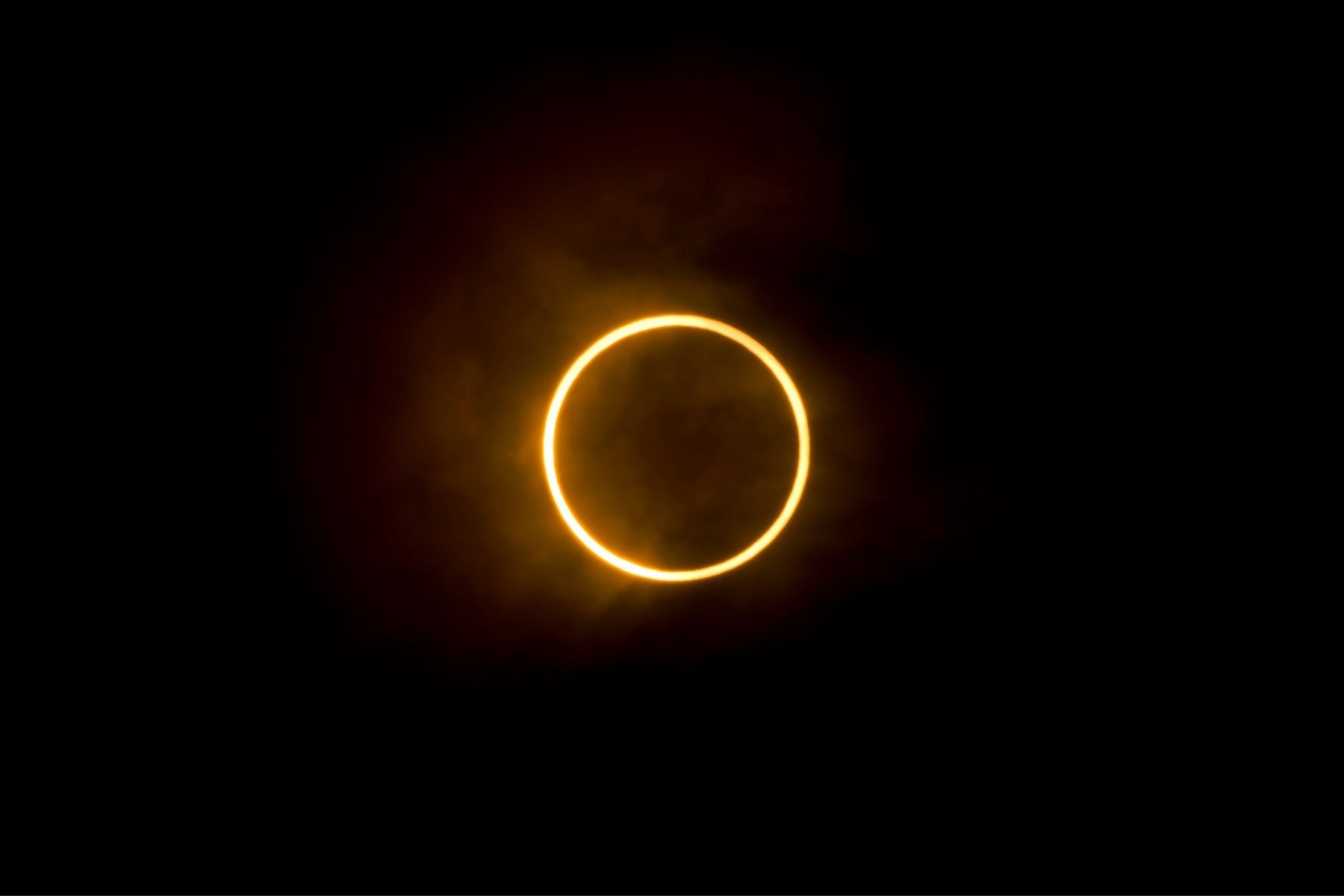
Once you move into the 300–400mm range, the Sun becomes much more prominent in the frame.
This is where telephoto lenses begin to provide a compelling balance between solar detail and environmental context.
At approximately 400mm on a full-frame camera, the Sun will still occupy only a portion of the frame, but it will be substantially larger than it appears at 200mm. This gives you enough resolution to create a recognizable solar disc while still allowing some surrounding sky to influence the composition.
This range can be especially useful for photographers who want to photograph the eclipse without completely isolating it from its surroundings.
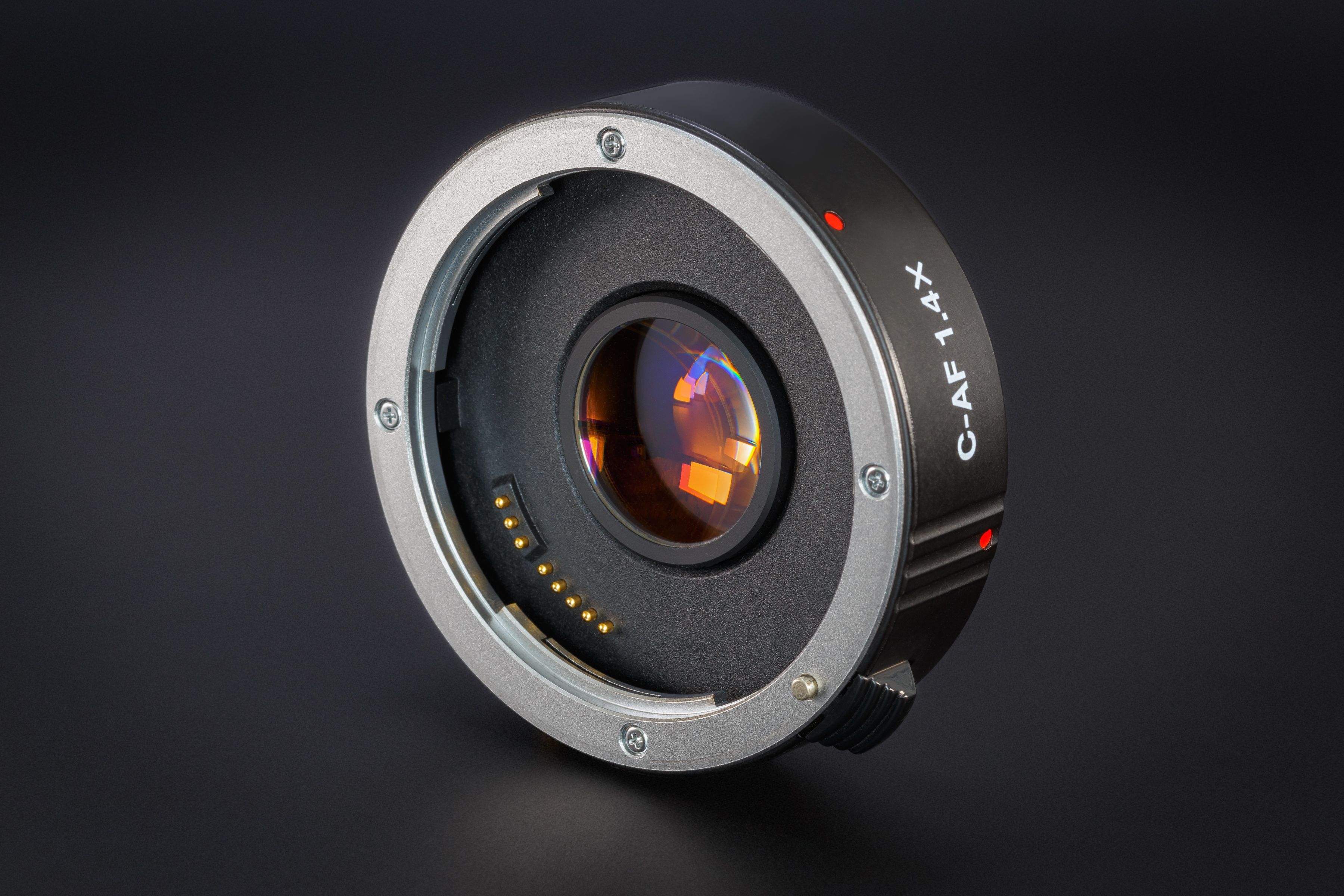
A 400mm lens can also be paired with a teleconverter when additional reach is needed. A 1.4x teleconverter, for example, turns a 400mm lens into an effective 560mm focal length, although you will need to account for the associated loss of light and potential changes in autofocus performance.
At these focal lengths, however, tracking becomes increasingly important. The Sun moves surprisingly quickly through a high-magnification frame, and even a carefully composed photograph can drift out of position if you are not paying attention.
Best for: larger solar discs, partial eclipse phases, environmental context, and photographers looking for a compromise between versatility and reach.
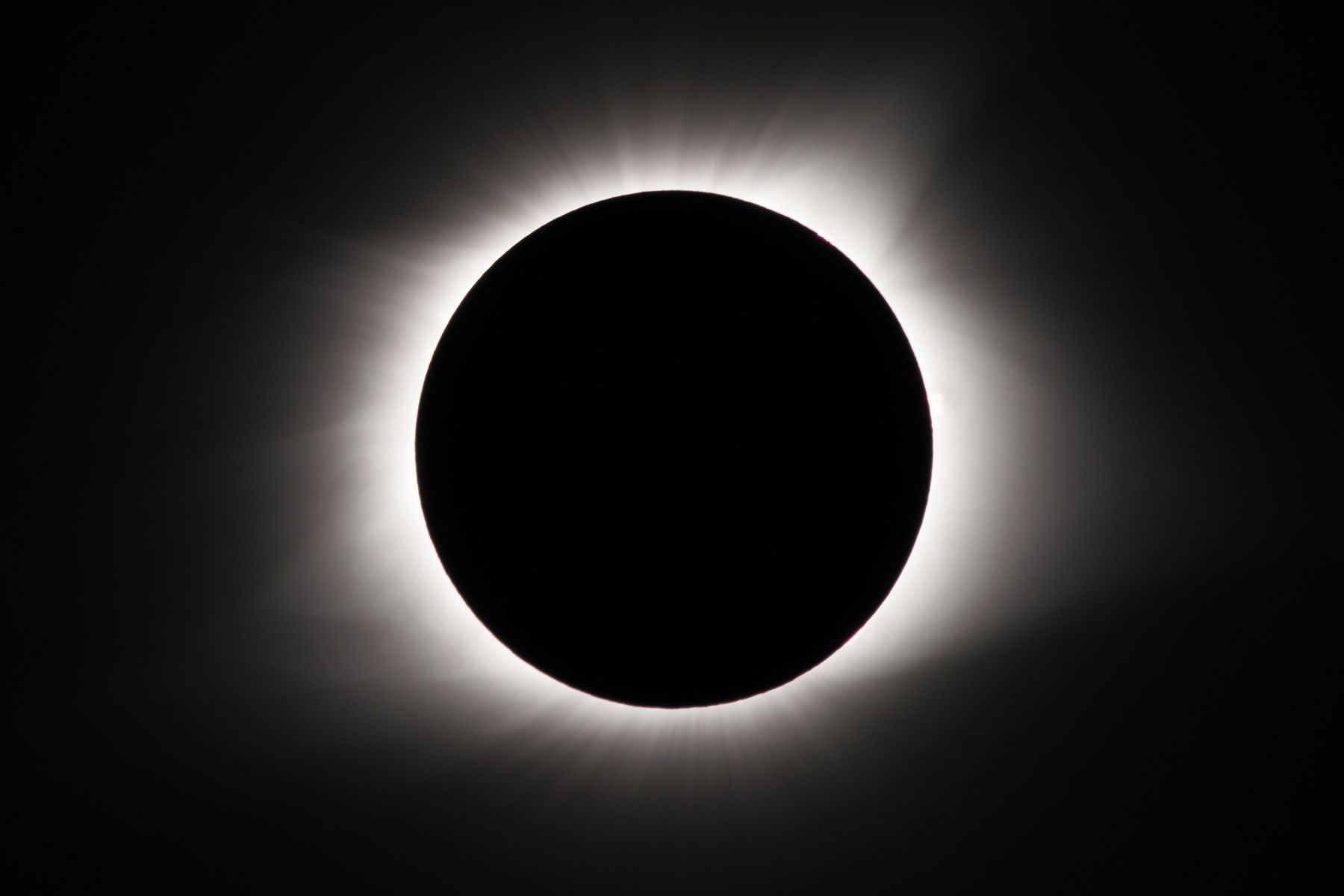
500–600mm: Detail Becomes the Priority
For photographers specifically interested in photographing the Sun itself, 500–600mm is where things become much more specialized.
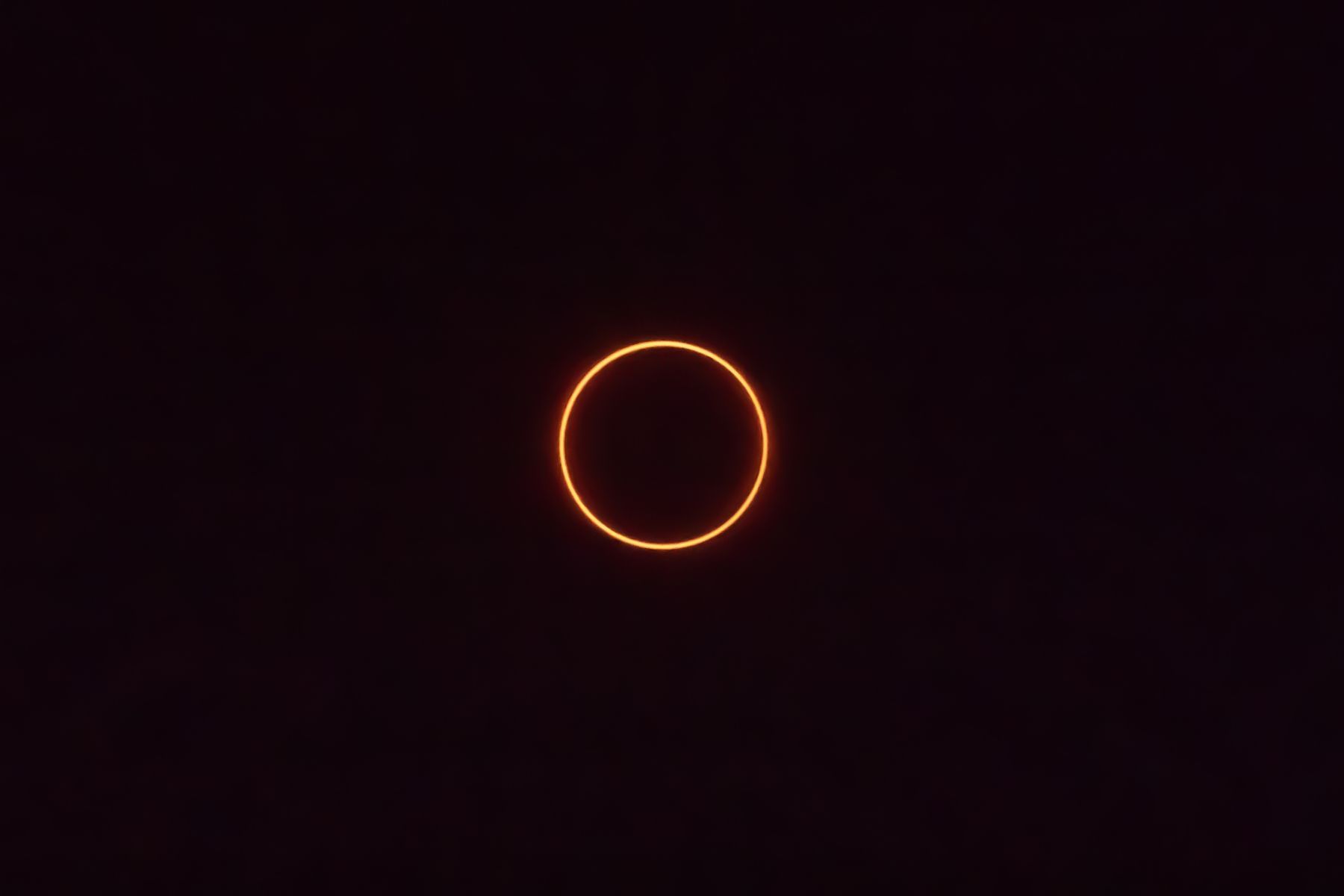
At these focal lengths, the solar disc becomes large enough to capture considerably more detail. During totality, this additional magnification can help you create photographs of the solar corona, prominences, and other features around the edge of the Moon.
This is the focal range many wildlife and bird photographers already understand well. If you regularly photograph birds or distant wildlife with a 500mm or 600mm lens, that equipment can be extremely useful for eclipse photography.
However, there is a major difference between photographing a stationary distant subject and photographing the Sun.
The Sun is moving across the sky, and at 600mm even a small amount of camera movement becomes obvious. A sturdy tripod or other stable support can make a significant difference, particularly when working with longer exposures during totality.
A longer focal length also narrows your field of view. That makes finding and keeping the Sun in the frame more difficult, especially if you are using a very long lens without a precise tracking system.
Best for: detailed solar photography, the corona, prominences, partial phases, and photographers prioritizing the Sun itself over the surrounding landscape.
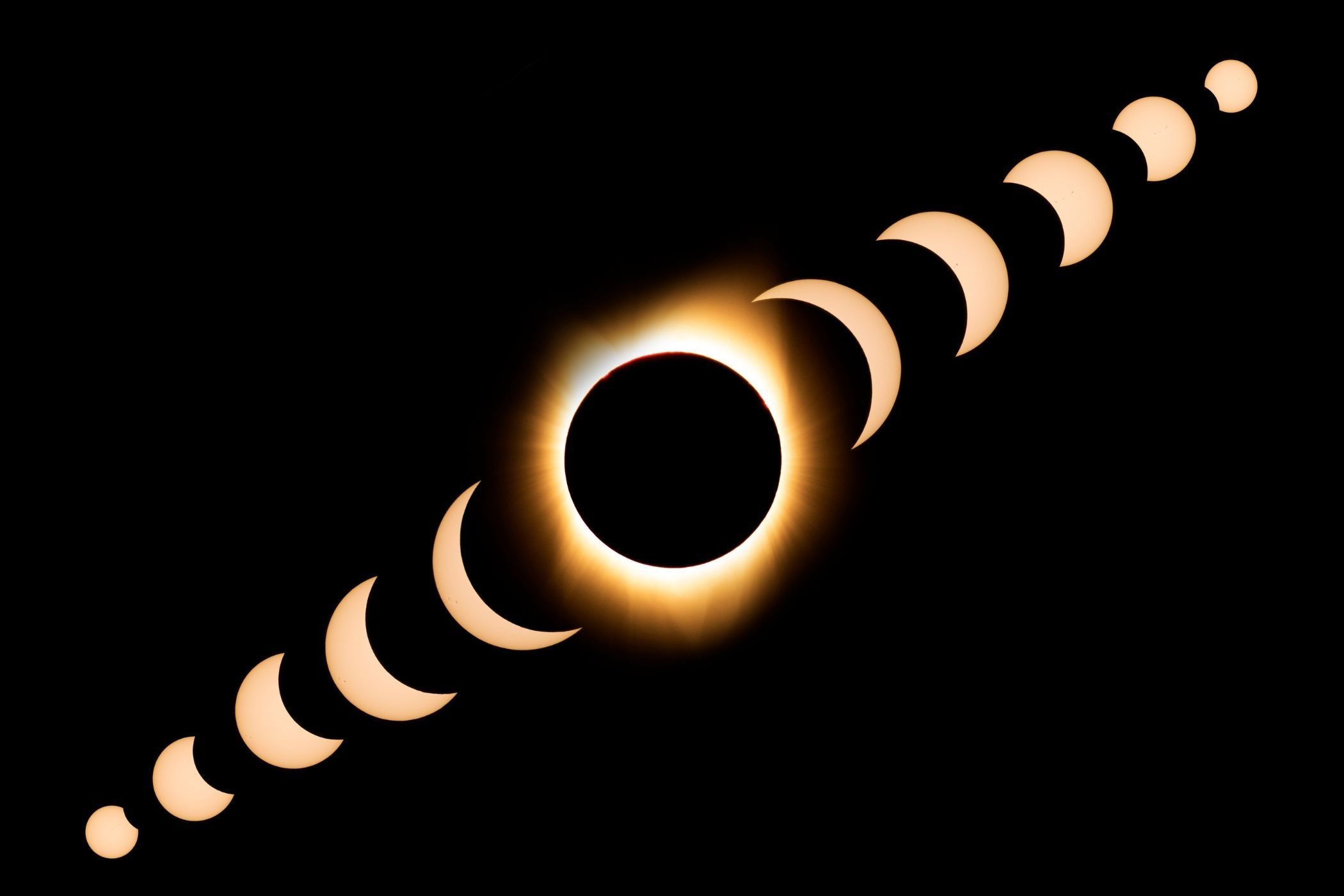
800mm and Beyond: Maximum Magnification, Maximum Difficulty
An 800mm lens can produce spectacular solar images.
It can also be surprisingly difficult to use.
At this focal length and beyond, the Sun fills much more of the frame, allowing you to capture extremely detailed images. But your margin for error becomes much smaller.
Finding the Sun can be difficult. Keeping it centered is more challenging. Atmospheric turbulence can reduce apparent sharpness. Camera vibration becomes more noticeable. And if you are attempting to capture a rapidly changing phase of the eclipse, you have very little room for experimentation.
This is where specialized equipment such as equatorial mounts or solar tracking systems can become useful for photographers who want to pursue highly detailed astronomical images.
For most photographers traveling to experience a total solar eclipse, however, an 800mm lens isn't automatically the best choice.
The longest lens doesn't necessarily produce the best photograph.
It produces the largest Sun.
Those are two very different things.
Best for: extreme solar detail, specialized eclipse photography, and photographers with experience handling very long telephoto equipment.
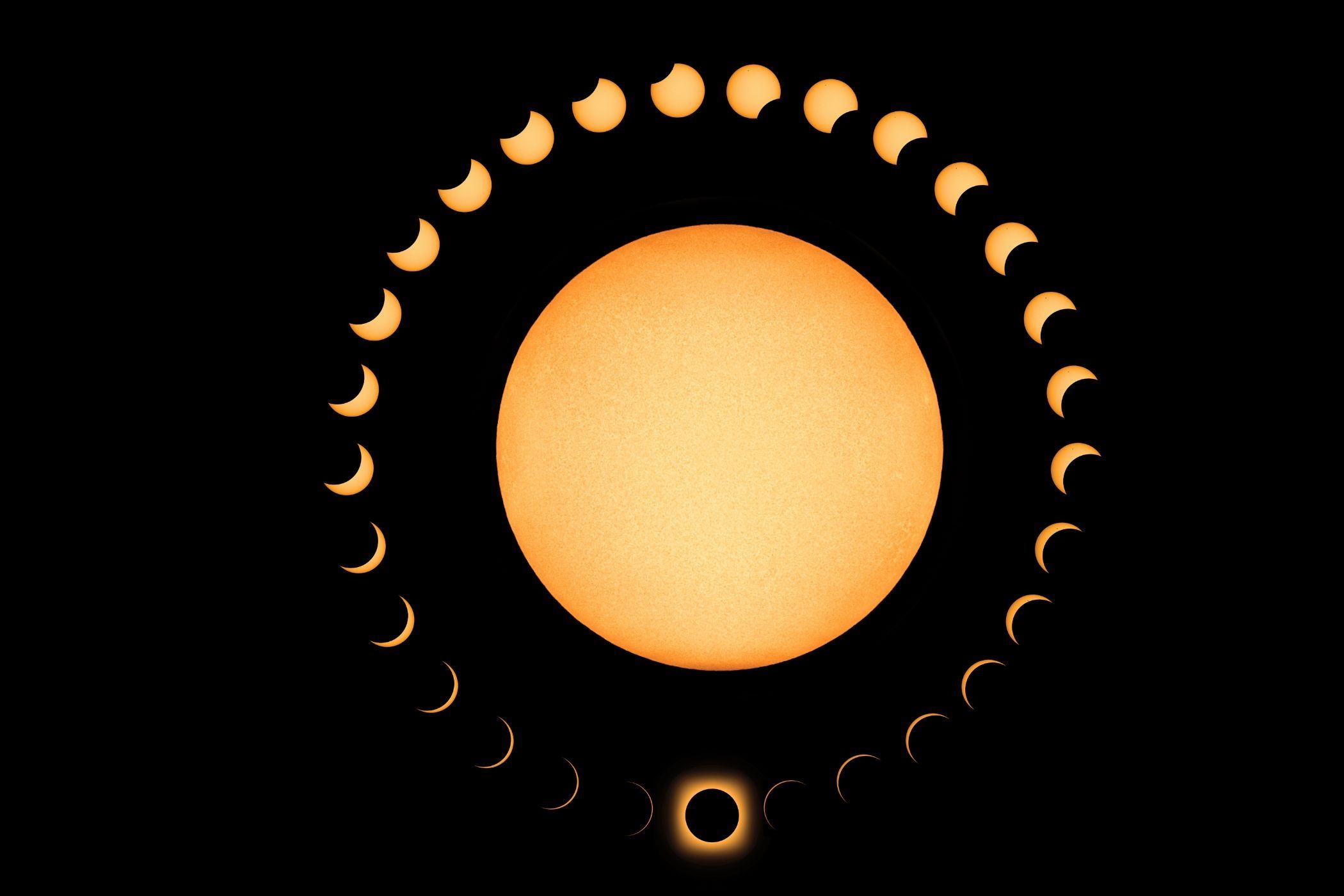
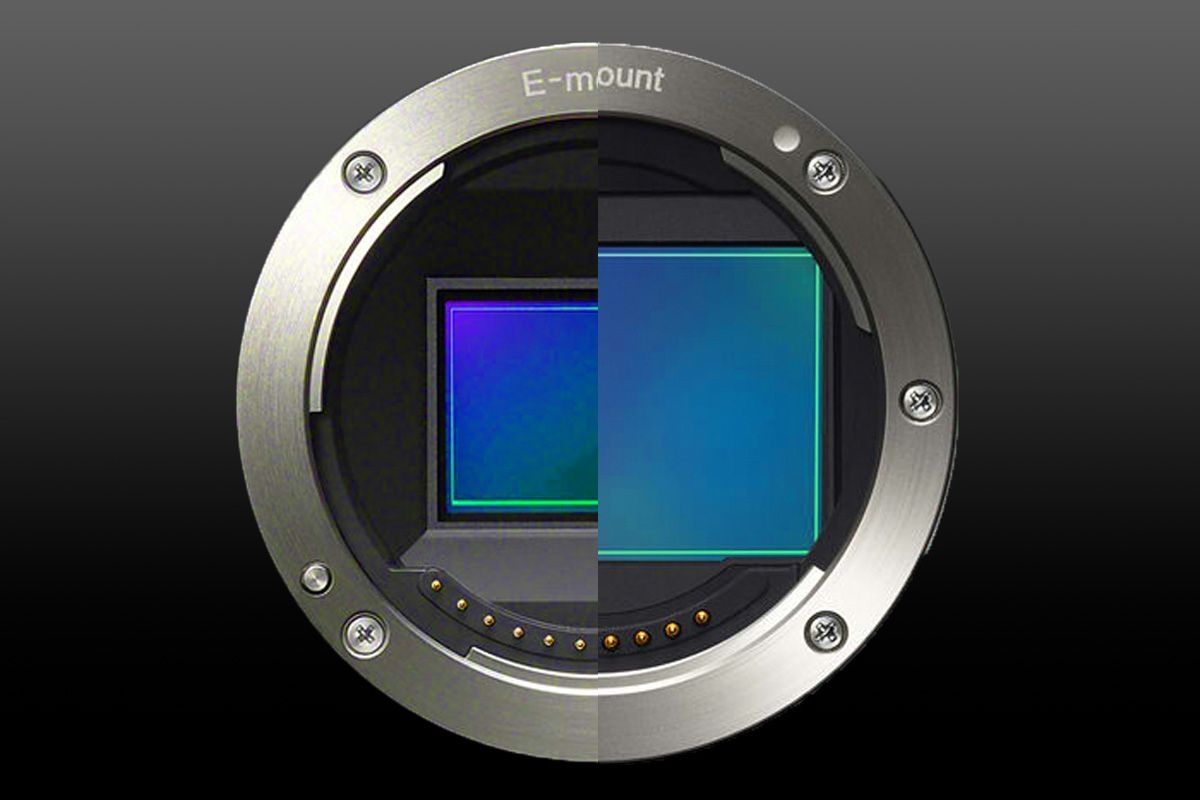
Full-Frame vs. Crop-Sensor Cameras
Your camera's sensor size also affects how your chosen focal length behaves in practice.
A full-frame camera provides a wider field of view than a crop-sensor camera using the same lens. A crop-sensor camera effectively narrows the field of view, making the Sun appear larger within the resulting frame.
For example, a 400mm lens on a camera with a 1.5x crop factor provides a field of view comparable to approximately 600mm on a full-frame camera.
That doesn't actually change the physical focal length of the lens, but it does change how much of the scene is captured. This can be advantageous when your goal is to make the Sun larger in the frame without purchasing an even longer lens.
The tradeoff is that you have less surrounding context. If your goal is an environmental eclipse photograph, the wider field of view of a full-frame camera may actually be preferable.
In other words, crop sensors can provide additional reach, but that reach isn't automatically an advantage. Your intended composition should determine which combination of camera and lens makes the most sense.
What About Teleconverters?
Teleconverters can be an excellent way to increase your effective focal length without purchasing a new lens.
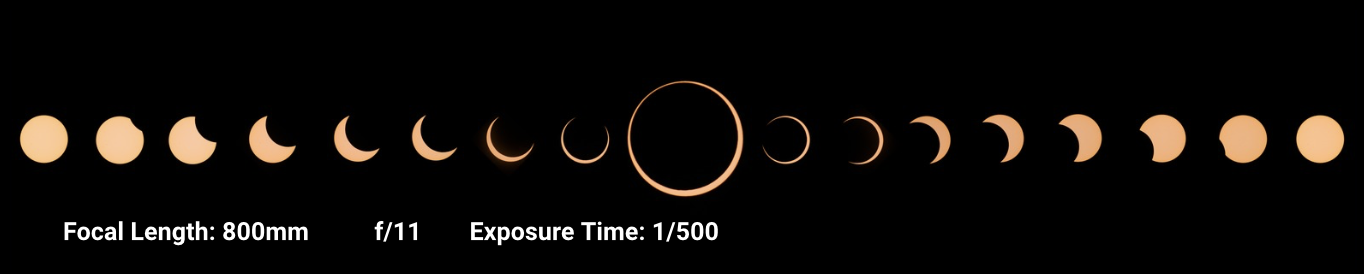
A 1.4x teleconverter increases a 400mm lens to approximately 560mm, while a 2x teleconverter turns it into approximately 800mm.
However, there are tradeoffs.
Teleconverters reduce the amount of light reaching the sensor and can affect autofocus performance and image quality. With a 2x converter in particular, atmospheric conditions and lens quality become increasingly important.
For eclipse photography, a teleconverter can be useful when you already have a high-quality telephoto lens and want additional reach for detailed solar images.
It is worth testing your lens and converter combination well before eclipse day, rather than discovering compatibility or focusing problems during the few minutes of totality.
Teleconverters can be an excellent way to increase your effective focal length without purchasing a new lens.
A 1.4x teleconverter increases a 400mm lens to approximately 560mm, while a 2x teleconverter turns it into approximately 800mm.
However, there are tradeoffs.
Teleconverters reduce the amount of light reaching the sensor and can affect autofocus performance and image quality. With a 2x converter in particular, atmospheric conditions and lens quality become increasingly important.
For eclipse photography, a teleconverter can be useful when you already have a high-quality telephoto lens and want additional reach for detailed solar images.
It is worth testing your lens and converter combination well before eclipse day, rather than discovering compatibility or focusing problems during the few minutes of totality.
Do You Need a Tripod?
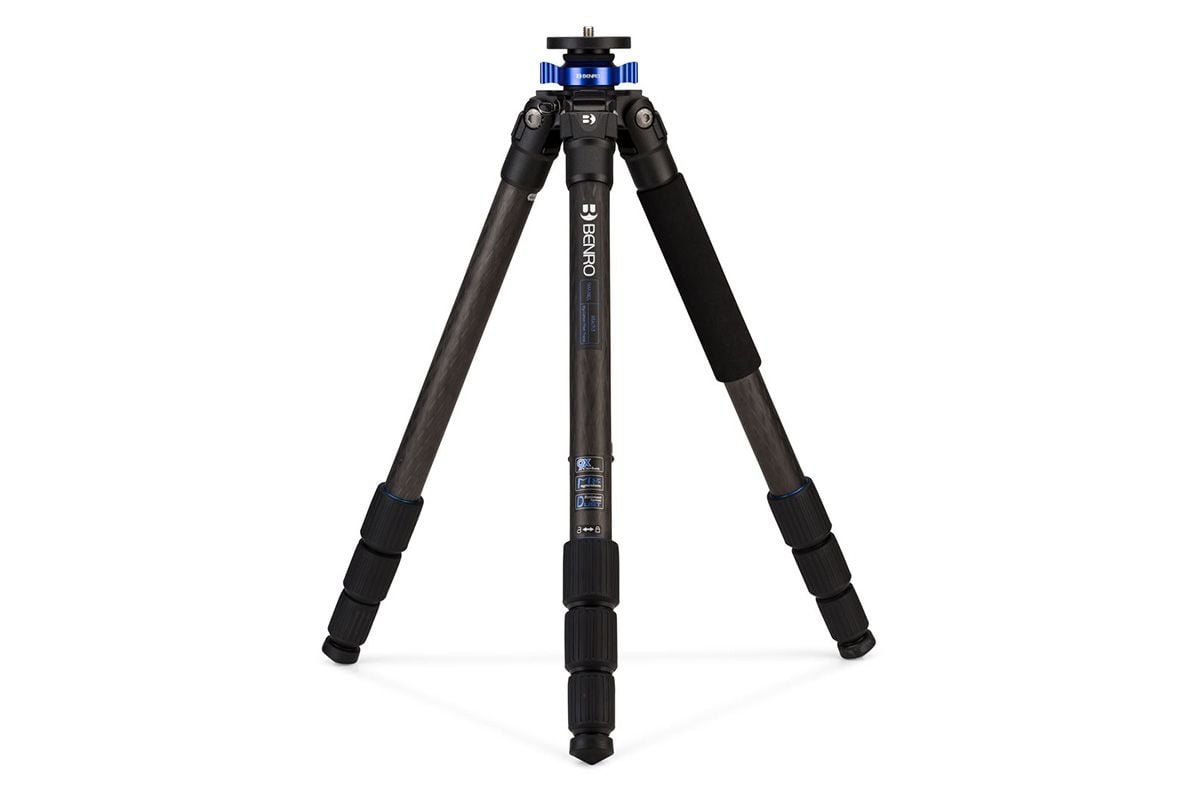
The longer the focal length, the more useful stable support becomes.
At 14–35mm, you may have little need for a tripod if you are photographing handheld environmental scenes. At 600mm or 800mm, however, even small movements can noticeably affect composition and sharpness.
A sturdy tripod with a reliable head can make long telephoto setups much easier to manage.
Image stabilization can also help reduce vibration, although photographers should understand how their particular camera and lens combination behaves when mounted on a tripod.
For very long focal lengths, a gimbal or specialized tracking mount can provide additional control.
The key is to practice with your complete setup beforehand. Eclipse day is not the time to learn how to balance a 600mm lens on a tripod.
Don't Forget the Solar Filter
Choosing the right lens is only part of preparing for eclipse photography.
During the partial phases of a solar eclipse, the Sun is still extremely bright and can damage camera equipment if photographed without appropriate solar protection. A proper solar filter designed for photographic use should be used whenever the bright Sun is being photographed outside of the safe totality period.
The filter must be attached securely to the front of the lens and should be appropriate for solar imaging. Never improvise with ordinary sunglasses, neutral-density filters, or other equipment that is not specifically designed for direct solar observation or photography.
During totality, when the Moon completely blocks the bright solar photosphere, the filter is typically removed to photograph the much fainter corona. It must be replaced before the bright Sun re-emerges.
Because this transition happens quickly, practicing the process beforehand is essential.

So, What Is the Best Lens for Solar Eclipse Photography?
The answer depends entirely on what you want your photograph to communicate.
A 14–35mm lens is ideal when you want the eclipse to become part of a larger landscape.
A 70–200mm gives you flexibility and allows you to photograph the eclipse alongside people, landscapes, and other subjects.
A 300–400mm provides a strong balance between solar detail and environmental context.
A 500–600mm is better suited to photographers who want to emphasize the Sun and capture detailed images of the corona during totality.
An 800mm or longer lens provides extreme magnification but requires significantly more precision, stability, and experience.
There is no universal winner.
The best lens is the one that produces the photograph you envisioned before totality begins.
The most memorable eclipse photographs are not always the ones with the largest Sun. Sometimes, they are the photographs that show where you were when the world went dark.
Photograph Totality With Backcountry Journeys
Capturing a total solar eclipse requires more than having the right lens. You need to be in the right location, understand the timing of totality, anticipate the movement of the Sun, prepare your equipment, and know what you want to photograph before the event begins.
That is where a dedicated photography experience can make a difference.
Backcountry Journeys' eclipse experiences are designed around the idea that photographers should have the opportunity to experience totality while also creating meaningful photographs of the landscapes, wildlife, and cultures surrounding it.
Instead of spending the trip managing every transportation detail, accommodation, route, and photographic opportunity yourself, you can focus on the reason you traveled in the first place: taking photographs.
Whether your ideal eclipse image is a tightly framed photograph of the corona at 600mm or a sweeping landscape captured with a wide-angle lens, choosing the right focal length is ultimately about deciding what story you want your photograph to tell.
And when totality arrives, you want to be ready!

We offer world-class travel photography
experiences around the world.
Each tour is bundled with lodging, meals, and transportation between workshops included, allowing you to focus on photography instead of the stress of traveling.
experiences around the world.
Each tour is bundled with lodging, meals, and transportation between workshops included, allowing you to focus on photography instead of the stress of traveling.
Get Our Trip Catalog
Receive a trip catalog that highlights all of our upcoming photo tours and workshops.Schedule a Trip Consultation
Meet with a photo experience coordinator, and experience a personal touch to your booking experience.Landscape Guide
Receive a FREE Landscape Cheat Sheet Written By a Pro Photographer.Webinars
Our regularly hosted webinars provide photography instruction from our own guides on a wide range of topics.Education Portal
Explore our library of articles that cover everything from common questions, to in-depth guides on how to achieve that perfect shot.
Backcountry Journeys
Connecting Passionate People To
Exceptional Experiences.
Exceptional Experiences.
Business Hours:
Mon-Fri, 8AM-4PM MT
928-478-1521
adventure@backcountryjourneys.com
Mon-Fri, 8AM-4PM MT
928-478-1521
adventure@backcountryjourneys.com
arrow_drop_down_circle
Divider Text
All Images & Content Are Property Of Backcountry Journeys Photography Tours, Workshops & Safaris LLC - Copyright 2026


About Us
Receive a Digital Trip Catalog
Find an upcoming photography tour with our interactive catalog.