2025 Travelers' Choice
About Backcountry Journeys
Why Choose Backcountry Journeys
If you're considering a photography trip, hear why Backcountry Journeys delivers the best experience in the industry.Frequently Asked Questions
If you're new to photography trips, or new to BCJ, you can find our common travel questions here.Fitness Levels
Our trips vary on physical intensity, and by reviewing our fitness levels, you can find out which trips may be more challenging, or aligned more closely with your comfort level.Meet The Crew
We've built an amazing team of experienced guides, and dedicated office staff that elevate your travel experience. Get to know their backgrounds, and hear their stories.Loyalty Program
We reward our frequent photo adventurers with exclusive discounts on amazing photography trips.Contact Us
If you need to get in touch with our office staff, or have additional business inquiries, you can find our information here.Refer a Friend
Know someone perfect for one of our tours? Recommend them through this quick form.Stay Up To Date On All Things
Backcountry Journeys
Backcountry Journeys
Our Photography Community
Our Webinars
Our regularly hosted webinars provide photography instruction from our own guides on a wide range of topics.Our Education Portal
Explore our library of articles that cover everything from common questions, to in-depth guides on how to achieve that perfect shot.Community Testimonials
We're proud to foster an amazing group of photo travelers, and here you can find their stories from their past adventures.Resources For Photographers
About Our Company
Resources For Photographers
About Our Company
Why Early Winter Might Be the Best Time to Photograph Yellowstone’s Northern Ranges
Published September 22, 2026
There is a particular feeling I get every time I enter Yellowstone in early winter. The landscape feels quieter, wilder, and perhaps just a little more real. The summer crowds are gone, snow has firmed its grip on mountains and at higher elevations while starting to stick around down low in the valleys, and the animals that remain are settling into the rhythm of winter. Depending on the day, the location, and the weather, parts of the park can look like late fall while others feel like the dead of winter, and that unpredictability and diversity is part of what makes this place so special.
One morning you might be driving beneath brilliant blue skies with golden grasses still poking through the snow. A few hours later, a storm can roll over the mountains and completely transform the landscape. The next morning, you might wake up to fresh snow, dramatic clouds, and a valley that looks nothing like it did the day before.
And then there’s the wildlife.
Bighorn sheep are in the peak of their rut, bull elk and moose are still carrying their enormous antlers, bison are pushing through the snow in search of food, and bald and golden eagles can be seen patrolling the skies. There is a sense that everything is preparing for the long and extreme winter ahead, and that creates some incredible opportunities for nature and wildlife photographers.
I've spent hundreds of days photographing the Northern Ranges of Yellowstone, and somehow, I never get tired of it. If anything, the more time I spend there, the more I appreciate how much this landscape has to offer. Early winter has become one of my favorite times to photograph the wild beauty of Yellowstone. If you’re passionate about wilderness and wildlife photography, keep reading to see why I think it deserves a place near the top of your list.
Why I Love Early Winter in Yellowstone National Park
I've been fortunate enough to photograph Yellowstone National Park in just about every season and under just about every condition imaginable. Having lived in Bozeman, MT for about 7 years, I’ve spent hundreds of days exploring and photographing the park. It’s hands-down one of my favorite places on earth and I simply can’t get enough of it. As I’m writing this article, I’m getting ready to head back to lead a Yellowstone workshop and I couldn’t be more excited.
I’ve experienced and photographed the park throughout every season of the year, and while Yellowstone is a wonderful place year-round, there are a few key seasons that stand above the rest in my mind. I love the spring season when the park comes back to life, the middle of winter when life hangs in a delicate balance, and the fall is great when the landscape changes colors and ungulates enter their ruts. That being said, there is something about that late-November-through-early-January window that keeps pulling me back. Many may overlook this time of year as the “shoulder season” but in reality it is a great time to explore Yellowstone with your camera.
Perhaps it’s the quiet solitude, peacefulness, and lack of crowds. Maybe it is the unique wildlife behaviors on display. Maybe it is the constantly changing weather and variety of conditions and environments. Honestly, I think it is all of those things combined.
I also love the fact that you never really know what you are going to encounter. After hundreds of days here, I have a pretty good idea of where I might find certain animals, but Yellowstone has a funny way of reminding you that you are never completely in control. You can spend hours looking for something and come up empty, only to turn a corner five minutes later and find yourself staring at an incredible wildlife encounter unfolding right in front of you.
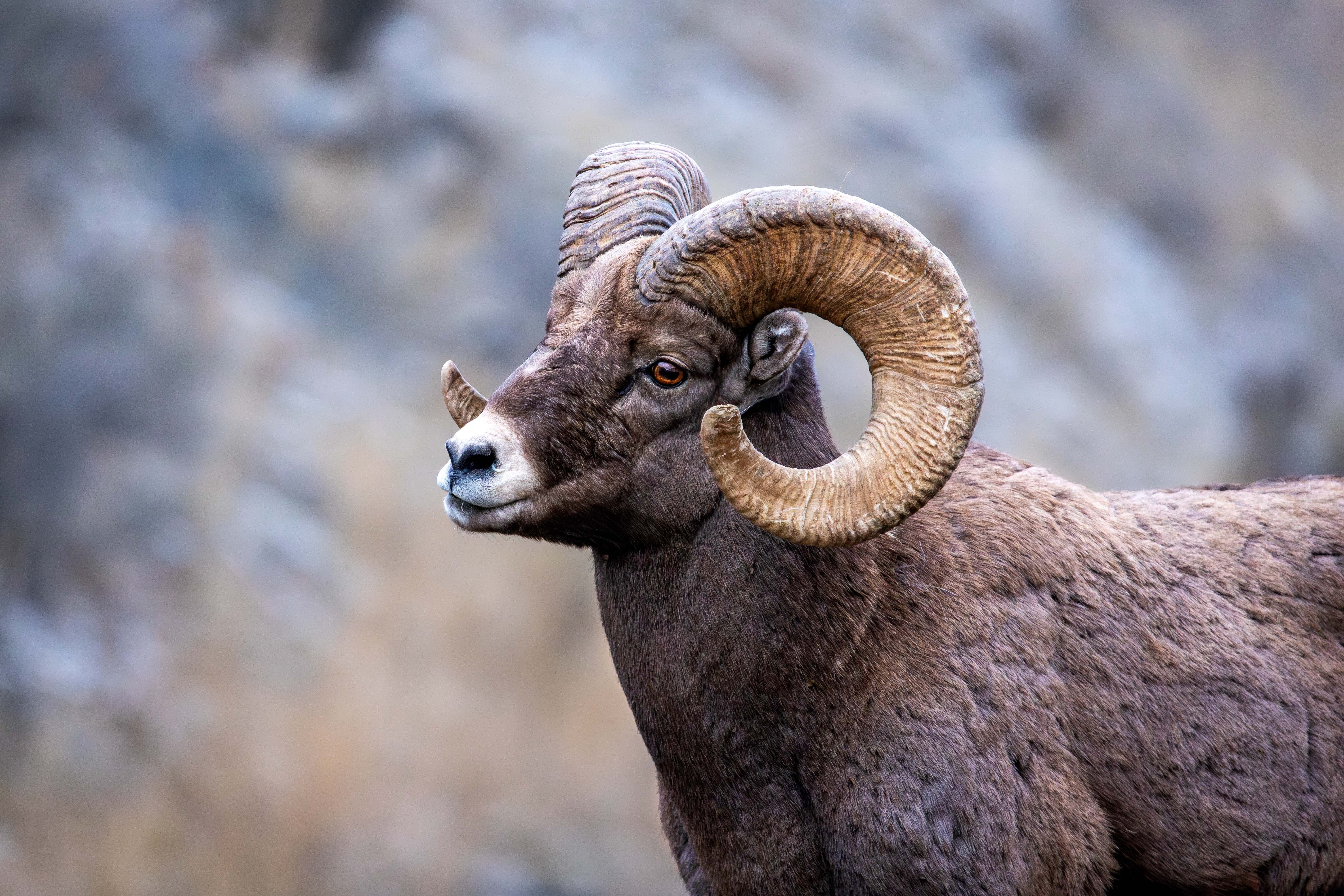
And when it comes to stellar wildlife behavior and displays at this time of the year, the bighorn sheep have to take the cake for me. They’re right in the middle of their rut and boy do they like to put on a show.
I could sit and watch bighorn sheep all day. There is something about watching a herd move across the landscape, seeing the interactions between individuals, and especially watching the mature rams during the rut that never gets old. I find myself spending as much time simply observing them as I do photographing them.
I remember one winter a few years ago when we were out on our Yellowstone's Lamar Valley workshop and found ourselves in just the right place at just the right time. Several mature rams were squaring up to fight, and right in front of us, two of them repeatedly backed away from one another before charging forward and slamming their massive horns together.
The sound was incredible.
Every time their horns collided, it sounded like gunshots going off nearby. You could hear and feel the force of the impact, and then the two rams would separate, regroup, and do it all over again. It was one of those moments where you almost forget to take photographs because you are too busy watching what is happening in front of you.
Then there was another morning when three rams were standing perfectly on top of a hill, almost as if they had been placed there specifically for photographers. All three were lifting their upper lips in the Flehmen response, trying to detect pheromones and determine which females were in estrus.
The composition was almost too perfect.
Three enormous rams silhouetted against the landscape, all displaying the same behavior at nearly the same time, made for an incredible photograph. Those are the moments I love most about photographing wildlife. You can understand where and when an animal might be found, but you can never manufacture a moment like that. You simply have to be there, watching and waiting, when everything comes together.
I've had similar experiences with other species in the Northern Ranges.
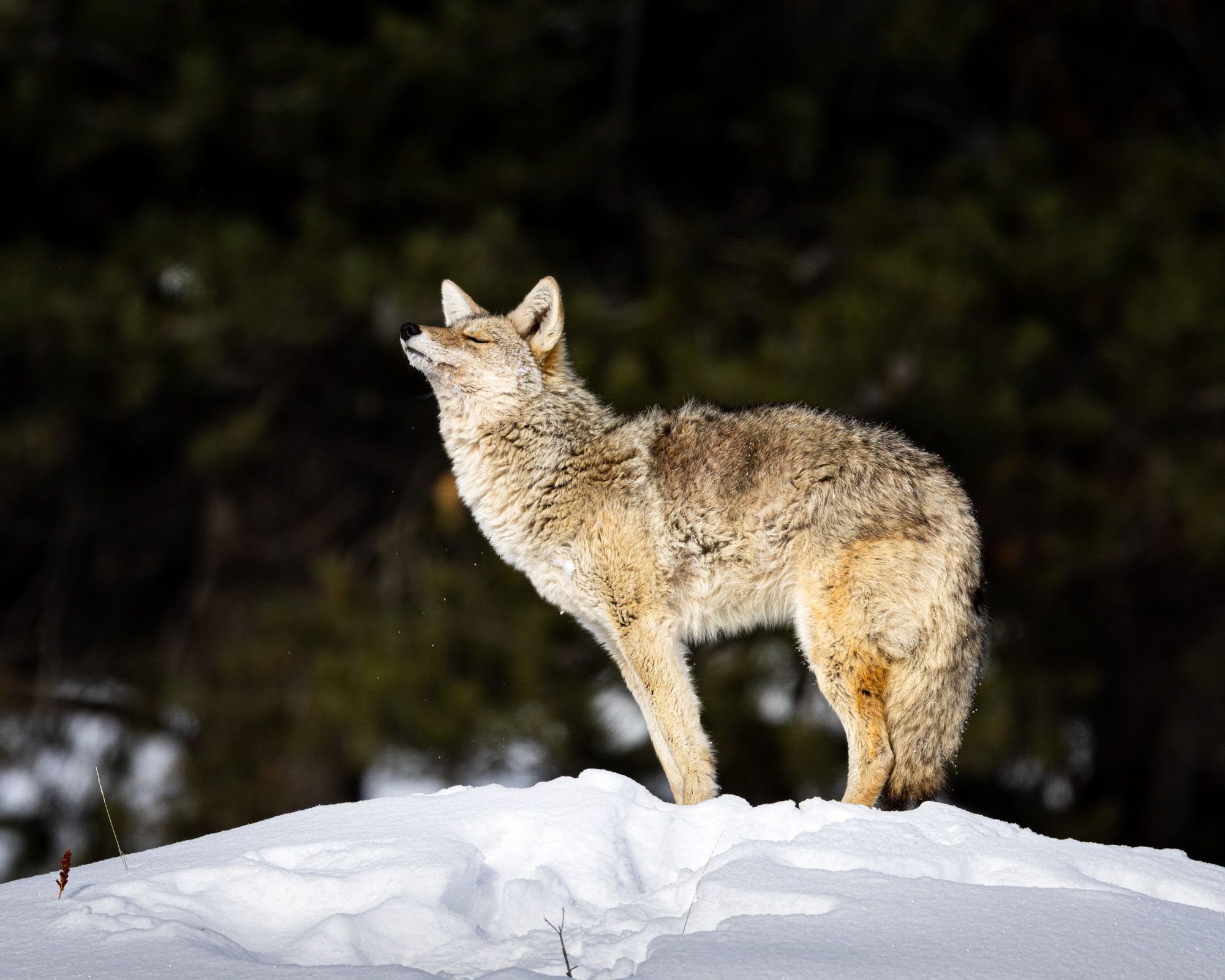
One winter, we encountered a coyote with an absolutely beautiful, thick, and colorful winter coat running along the road and making its way up a hill. We all quickly hopped out of the van, cameras in hand, and managed to photograph it just as it crested the ridge. For a few seconds, everything lined up—the animal, the light, the landscape, and the timing—and we came away with some beautiful images.
Encounters like these that can be found in the early winter months are the ones that keep me coming back for more.

Why Early Winter is an Ideal Time to Photograph Yellowstone
A Constantly Changing Landscape
One of the biggest reasons I love early winter in northern Yellowstone is the sheer variety of conditions you can experience.
From late November through early January, the park exists in this fascinating transition between fall and winter. At lower elevations, you can sometimes find open landscapes with golden grasses and very little snow. Travel higher or encounter a passing storm, and suddenly you are in a completely different world.
I've photographed the Northern Ranges when they looked like late fall and I've photographed them when they looked like the middle of winter. I've driven through blizzards, photographed beneath brilliant blue skies, watched moody clouds build over the mountains, and stood in some spectacular sunrise and sunset light.
That variability is a gift for photographers.
A landscape that looks fairly ordinary beneath flat midday light can become extraordinary when a storm moves through and creates layers of clouds across the mountains. Fresh snow can completely change the character of the Lamar Valley. A break in the clouds can illuminate one particular ridge while everything around it remains dark and stormy.
This is one of the things I enjoy most about photographing Yellowstone. You are constantly watching the sky, watching the landscape, and thinking about what might happen next. Sometimes the best photograph of the day is not the one you expected to make when you left the hotel that morning.
That unpredictability is part of the adventure.
The Park is Virtually Empty
Then there is one of my favorite parts of early winter in Yellowstone: the lack of people.
Yellowstone is an incredible place, but during the busiest months, it can also be an incredibly busy place. Traffic, crowds, packed overlooks, and lines of vehicles can become a dominant part of the experience and completely change you relationship with the park.
You don't have that problem in early winter.
Late November through early January is generally one of the quietest times of year in the park. The roads are empty, the pullouts are quiet, and you can spend hours exploring the best wildlife hotspots without feeling like you are surrounded by thousands of other visitors. For photography, this is fantastic.
When you find something interesting, you can take your time. If an animal changes direction, you can adjust your position without worrying about a crowd of people around you. If the light suddenly gets good, you can concentrate entirely on making photographs rather than worrying about traffic or competing for a viewing spot.
But the solitude is about more than photography. There is something special about standing in the Lamar Valley on a cold winter morning and realizing that you have the place almost entirely to yourself. You can hear the wind moving across the valley. You can hear wolves howling and elk bugling in the distance. You can watch the light slowly move across the mountains.
At the end of the day, Yellowstone just feels different when it is quiet and the hordes of tourists have returned home. It feels truly wild.
Enjoy Unique and Special Wildlife Encounters
Of course, the biggest reason to visit northern Yellowstone in early winter is the wildlife.
Some of Yellowstone's animals have already migrated out of the park or moved to other areas, and most of the bears have settled into hibernation. But the animals that remain are often quite active and provide some of the best wildlife behavior you can photograph all year.
As I touched on earlier, in my opinion, the bighorn sheep are the stars of the show.
Early winter coincides with the peak of their rut, herds of females and mature rams have descended into lower, more accessible elevations. They are energetic, aggressive, and completely focused on reproduction.
You can watch groups of mature males chasing females across the landscape. Rams will square off and slam their horns together with tremendous force. Females move through the herd with juveniles and calves nearby, creating opportunities for everything from intimate portraits to action shots and environmental images showing the animals within the broader Yellowstone landscape.
And because the animals are often at lower elevations, you can sometimes observe this behavior from relatively close range while still giving them plenty of space.
The elk and moose are also fantastic subjects during this time of year. The rut has ended, but the mature bulls are still carrying their enormous antlers and can often be found in bachelor groups. Seeing a group of massive bull elk or moose standing together in a snowy Yellowstone landscape is an experience in itself.
Then there are the bison.
Watching a bison move through snow is one of those quintessential Yellowstone experiences. They use their massive heads like snowplows to sweep snow aside and uncover grasses underneath, slowly working their way across the landscape. When the mountains are covered in snow behind them and their faces are caked in fresh snow or frost, it is hard to imagine a more iconic Yellowstone scene.
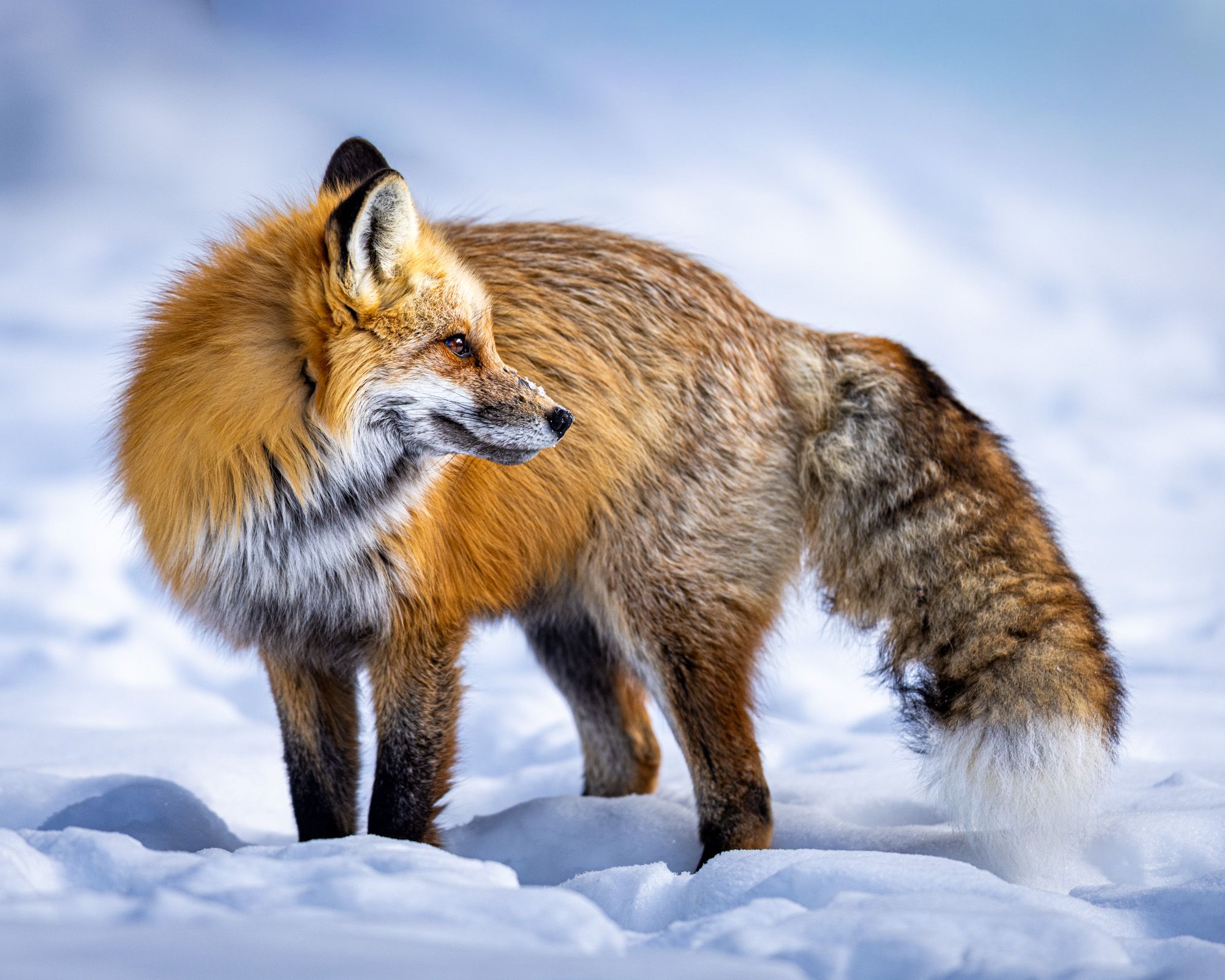
Of course, no Yellowstone wildlife conversation could be complete without talking about canines. Winter is, in my opinion, the best time of year to observe and photograph these animals. The wolf packs become the strongest they will ever be throughout the year as they hunt their weakening prey, foxes can be found diving headfirst into the snow hunting for small rodents, and coyotes can be seen roaming the wide open spaces with beautiful winter coats.
And above it all, bald and golden eagles can be seen perched along the river corridors or soaring through the skies.
Put all of this together, and early winter becomes an incredible time for wildlife behavior. You are not simply looking for animals sitting still and posing for portraits. You have the opportunity to photograph animals interacting, feeding, fighting, moving, and surviving in a dramatically changing environment.
Experience Yellowstone's Lamar Valley in Winter
This is exactly why I love leading the Backcountry Journeys Yellowstone's Lamar Valley in Winter photography workshop.
I've led this trip on four separate occasions and have had some of my favorite Yellowstone wildlife encounters on this workshop, including the bighorn sheep and coyote encounters described above. These are the kinds of experiences that make a photography trip memorable long after you return home.
The workshop is designed to take advantage of everything that makes early winter in the Northern Ranges so special. With multiple departures during this time of year, photographers have opportunities to explore the Lamar Valley and surrounding areas while wildlife is active, the landscape is transitioning into winter, and the crowds are at a minimum.
And this isn't simply about seeing Yellowstone. It’s about learning how to photograph it.
Whether you are an experienced wildlife photographer looking to expand your portfolio or a passionate photographer who wants to improve your skills and become more comfortable photographing wildlife, we work to help you make the most of every opportunity. We are constantly paying attention to animal behavior, light, weather, backgrounds, composition, camera settings, and all of those little decisions that can turn a good wildlife encounter into a great photograph.
Of course, you can never guarantee what Yellowstone will give you but that’s part of the fun.
You might find yourself photographing bighorn rams battling on a hillside. You might watch a coyote crest a ridge at exactly the right moment. You might encounter bison pushing through fresh snow or bull elk standing beneath dramatic winter skies. Or perhaps a storm will roll through the Lamar Valley and create a landscape photograph you never could have planned or imagined.
Capture Yellowstone in Early Winter for Yourself
After spending hundreds of days photographing this part of Yellowstone, I can honestly say that I still get excited every time I head into the Northern Ranges as Fall fades into winter.
There are plenty of places I love photographing, but Yellowstone just has a way of pulling me back. Maybe it is because no two visits are ever quite the same. Maybe it is because there is always another animal behavior to witness, another scene to photograph, another incredible sunrise or sunset waiting around the corner. Or maybe it is simply because there are few places where you can sit quietly in a valley and feel so completely connected to the wild.
Early winter brings all of that together.
The crowds disappear. The landscape becomes increasingly rugged. The weather becomes unpredictable and dramatic. Bighorn sheep are at the height of their rut, elk and moose are carrying their massive antlers, bison are working their way through the snow, foxes, wolves, and coyotes prowl the landscape, and eagles patrol the skies.
It is Yellowstone in a completely different light, and for me, that is exactly what makes it so special.
If you've been looking for a wildlife photography adventure that combines incredible animals, dramatic landscapes, unpredictable winter weather, and the opportunity to photograph one of America's most iconic national parks without the summer crowds, I can't recommend experiencing the Northern Ranges in early winter enough.
Come join the Backcountry Journeys team on Yellowstone's Lamar Valley in Winter. Bring your camera, bundle up, embrace whatever weather Yellowstone decides to throw at us, and come see exactly why I keep coming back to this incredible place year after year.

We offer world-class travel photography
experiences around the world.
Each tour is bundled with lodging, meals, and transportation between workshops included, allowing you to focus on photography instead of the stress of traveling.
experiences around the world.
Each tour is bundled with lodging, meals, and transportation between workshops included, allowing you to focus on photography instead of the stress of traveling.
Learn More About This Trip
Get Our Trip Catalog
Receive a trip catalog that highlights all of our upcoming photo tours and workshops.Schedule a Trip Consultation
Meet with a photo experience coordinator, and experience a personal touch to your booking experience.Landscape Guide
Receive a FREE Landscape Cheat Sheet Written By a Pro Photographer.Webinars
Our regularly hosted webinars provide photography instruction from our own guides on a wide range of topics.Education Portal
Explore our library of articles that cover everything from common questions, to in-depth guides on how to achieve that perfect shot.
Backcountry Journeys
Connecting Passionate People To
Exceptional Experiences.
Exceptional Experiences.
Business Hours:
Mon-Fri, 8AM-4PM MT
928-478-1521
adventure@backcountryjourneys.com
Mon-Fri, 8AM-4PM MT
928-478-1521
adventure@backcountryjourneys.com
arrow_drop_down_circle
Divider Text
All Images & Content Are Property Of Backcountry Journeys Photography Tours, Workshops & Safaris LLC - Copyright 2026


About Us
Receive a Digital Trip Catalog
Find an upcoming photography tour with our interactive catalog.