2025 Travelers' Choice

About Backcountry Journeys
Why Choose Backcountry Journeys
If you're considering a photography trip, hear why Backcountry Journeys delivers the best experience in the industry.Frequently Asked Questions
If you're new to photography trips, or new to BCJ, you can find our common travel questions here.Fitness Levels
Our trips vary on physical intensity, and by reviewing our fitness levels, you can find out which trips may be more challenging, or aligned more closely with your comfort level.Meet The Crew
We've built an amazing team of experienced guides, and dedicated office staff that elevate your travel experience. Get to know their backgrounds, and hear their stories.Loyalty Program
We reward our frequent photo adventurers with exclusive discounts on amazing photography trips.Contact Us
If you need to get in touch with our office staff, or have additional business inquiries, you can find our information here.Refer a Friend
Know someone perfect for one of our tours? Recommend them through this quick form.Stay Up To Date On All Things
Backcountry Journeys
Backcountry Journeys
Our Photography Community
Our Webinars
Our regularly hosted webinars provide photography instruction from our own guides on a wide range of topics.Our Education Portal
Explore our library of articles that cover everything from common questions, to in-depth guides on how to achieve that perfect shot.Community Testimonials
We're proud to foster an amazing group of photo travelers, and here you can find their stories from their past adventures.Resources For Photographers
About Our Company
Resources For Photographers
About Our Company
Why Fairbanks Offers Some of the Most Epic and Reliable Northern Lights Photography on the Planet
Published May 7, 2026
Witnessing the Northern Lights or Aurora Borealis is a truly life changing event. Photographing them is even better. To be able to go beyond the limits of the human eye and capture a breathtaking moment in nature is something truly special.
I remember the first time I witnessed and photographed a proper aurora display. It’s something I’ll never forget. I watched the sky ignite into vibrant shades of green, teal, red, and purple as curtains of light danced across the upper atmosphere. It was so beautiful and so impressive I almost forgot to capture any images as I was completely enthralled and immersed.
I had seen the Northern Lights before but never quite like this. The first time I really saw the night sky erupt was in Fairbanks Alaska on a crisp spring night.
For photographers, aurora chasers, and travelers dreaming of witnessing the Arctic sky erupt in light, Fairbanks has earned its reputation as one of the premier Northern Lights destinations on the planet. It is not simply a good place to see the aurora — it is one of the most reliable, accessible, and visually rewarding locations anywhere in the far north.
In today’s blog post we’re going to dive into exactly why Fairbanks is such a great destination for Northern Lights photography.
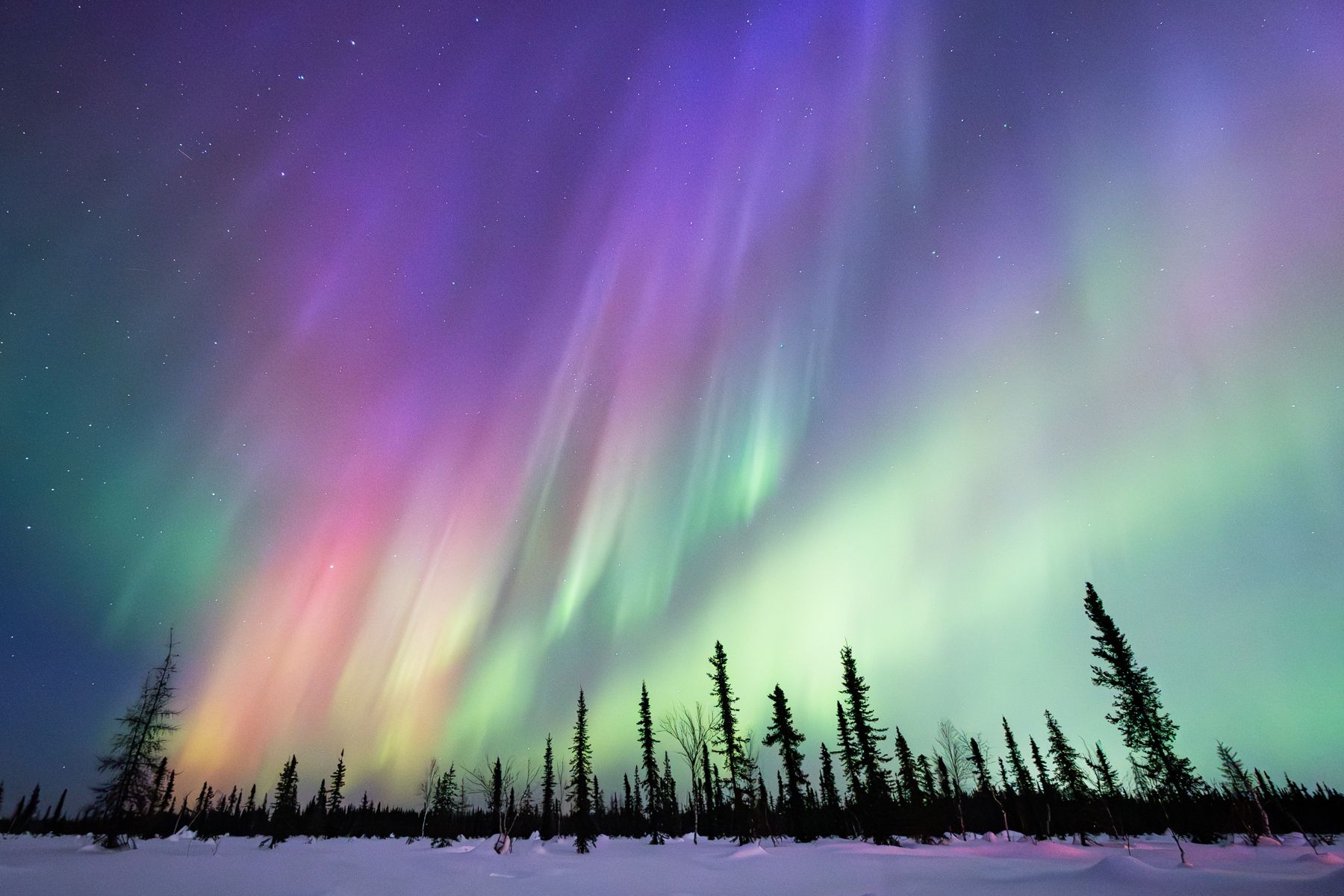
Why Fairbanks Is a World-Class Northern Lights Destination
There are many solid destinations to photograph the Aurora Borealis. In fact, if you go far enough north, and find clear dark skies between fall and spring, there’s a decent chance you’ll see something.
But not all destinations are created equal. Some places like Lofoten or Iceland may feature stunning foregrounds, but that’s not all that matters. There are many considerations to take into account and when you combine them all, Fairbanks quickly rises towards the top of the list of world-class Northern Lights destinations.
The magic of the aurora always involves some luck. Solar activity, weather, and timing all have to align. But Fairbanks stacks the odds in your favor better than almost anywhere else in the world. Let’s break it down even further and dive into these deciding factors:
Directly Beneath the Aurora Oval
To start, one of the biggest reasons Fairbanks is so exceptional is its geographic location.
Like many far northern cities at higher latitudes, Fairbanks sits directly beneath the aurora oval — the ring-shaped zone surrounding the Arctic where auroral activity is most concentrated and frequent. This places the city at an ideal latitude for viewing the Northern Lights on a regular basis throughout the winter months.
In many destinations farther south, photographers must wait for major geomagnetic storms to push the aurora lower into the atmosphere. In Fairbanks, strong displays can happen even during moderate solar activity because the aurora is already overhead.
That means more opportunities, more active nights, and a far greater chance of witnessing dramatic displays dancing across the sky from horizon to horizon.
For photographers planning a once-in-a-lifetime Arctic adventure, that reliability matters enormously.
Clearer Skies Than Many Northern Destinations
One of the most overlooked realities of Northern Lights photography is that the aurora means nothing if clouds are blocking the sky.
This is where Fairbanks has a major advantage over many popular aurora destinations in the far Northern Hemisphere.
Unlike coastal regions in places like Iceland, northern Norway, and even coastal Alaska, Fairbanks sits deep in Alaska’s interior. That inland location gives it a significantly drier and more stable climate during winter. This means less clouds, which means better opportunities to see and photograph the Northern Lights.
Coastal Arctic regions are often plagued by moisture-heavy weather systems and persistent cloud cover rolling in from the ocean. Fairbanks, by comparison, experiences long stretches of cold, clear nights that are ideal for aurora viewing and photography.
Cold temperatures may test your resolve, but they frequently come paired with crystal-clear skies — exactly what Northern Lights photographers dream about.
Many experienced aurora photographers will tell you the same thing: clear skies are every bit as important as solar activity. Fairbanks consistently delivers both.
Nice Foregrounds & Silhouettes for Photography
A great aurora photograph is about more than colorful light in the sky. The strongest images pair the aurora with compelling foregrounds that create depth, scale, and atmosphere.
Fairbanks offers an incredible variety of photographic compositions within easy reach of town.
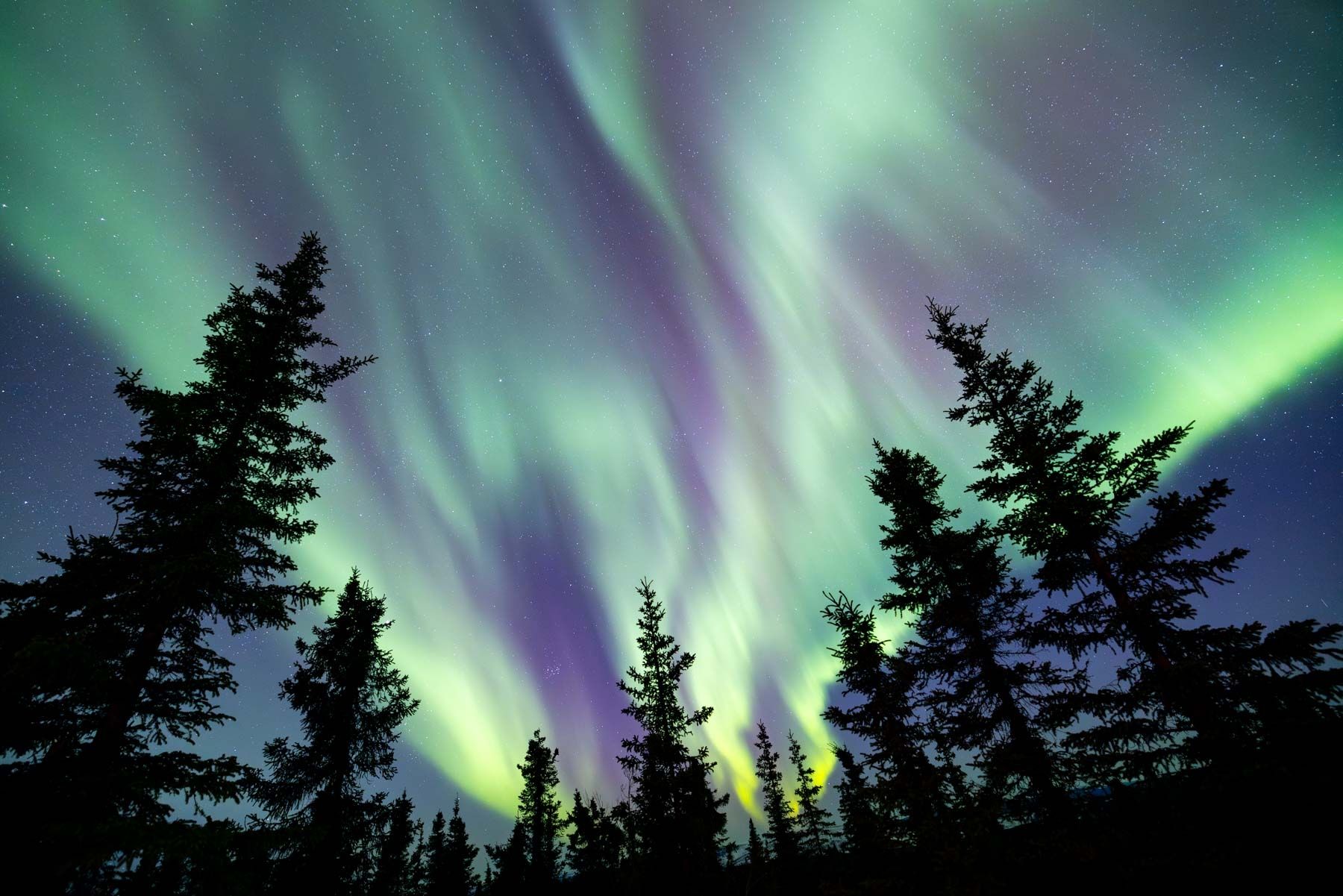
In the fall, lakes and ponds provide perfect reflections beneath dancing auroras. Snow-covered boreal forests create classic Alaskan winter scenes. Mountain ridges, cabins, winding roads, and ice-covered rivers all add powerful storytelling elements to an image. And silhouetted trees shooting into the sky can perfectly balance the dancing curtains of light up above.
Even better, many of these locations are remarkably accessible. Photographers do not need multi-day expeditions deep into the Arctic wilderness to find spectacular compositions. Some of the best viewing locations are only a short drive from Fairbanks itself.
On nights with strong activity, the aurora can fill the sky above black spruce forests while fresh snow reflects green light across the landscape. It is the kind of scene that feels almost surreal in person — and absolutely unforgettable through a camera lens.
Long Winter Nights Mean More Opportunities
Another advantage of Fairbanks is the sheer amount of darkness available during the aurora season.
From late August through April, Fairbanks experiences long nights that provide extensive viewing windows for aurora activity. During the heart of winter, darkness lasts for many hours, giving photographers ample time to scout locations, wait for activity to intensify, and experiment with different compositions.
Instead of feeling rushed into a brief viewing period, photographers can settle into the experience and truly immerse themselves in the Arctic night.
And when the aurora suddenly explodes overhead at 2:00 AM, you will be very glad you stayed out a little longer.
The Experience Feels Wild and Authentic
Part of what makes Fairbanks so special is that it still feels genuinely connected to the Arctic.
This is not just a quick roadside tourist stop where visitors pile out of buses for fifteen minutes before moving on. In Fairbanks, the Northern Lights experience feels immersive and adventurous.
You hear the crunch of snow beneath your boots in subzero silence. Frost forms on your camera and eyelashes. Steam rises into the cold night air while green ribbons twist overhead across an impossibly star-filled sky.
There is a rawness and authenticity to winter in interior Alaska that elevates the experience far beyond simply checking the aurora off a bucket list.
For photographers especially, that atmosphere becomes part of the image itself.
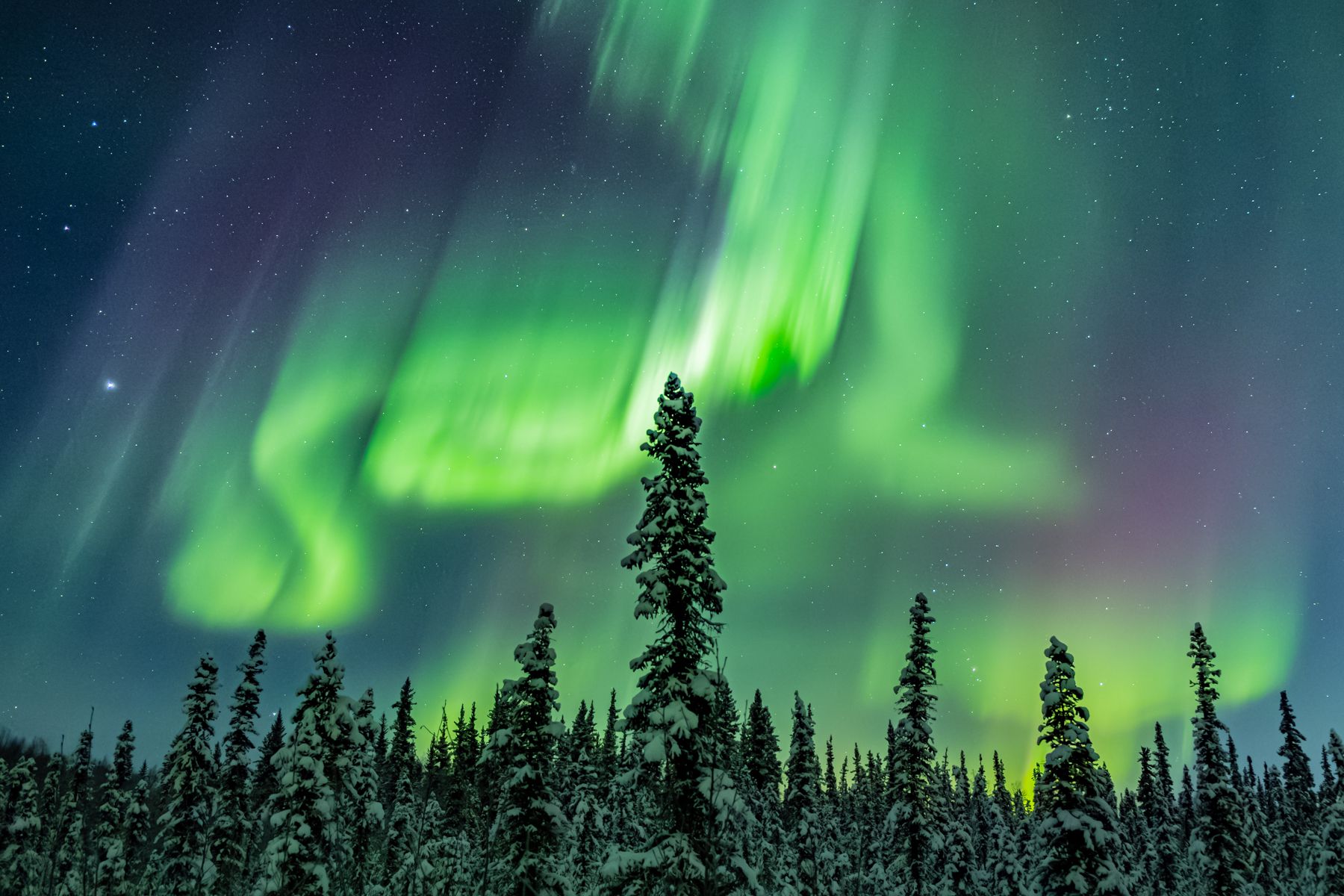
Photographing the Aurora in Fairbanks
Fairbanks is also exceptionally well suited for photographers who want to improve their skills while capturing truly world-class images.
Because aurora activity can be frequent and prolonged, photographers often have multiple nights to practice and refine their techniques. That can make an enormous difference compared to destinations where brief cloud-free windows or infrequent activity create immense pressure.
Whether you are learning how to shoot the aurora for the first time or refining advanced night photography techniques, Fairbanks provides an ideal environment to grow creatively while building an unforgettable portfolio.
And perhaps most importantly, every night feels filled with possibility.
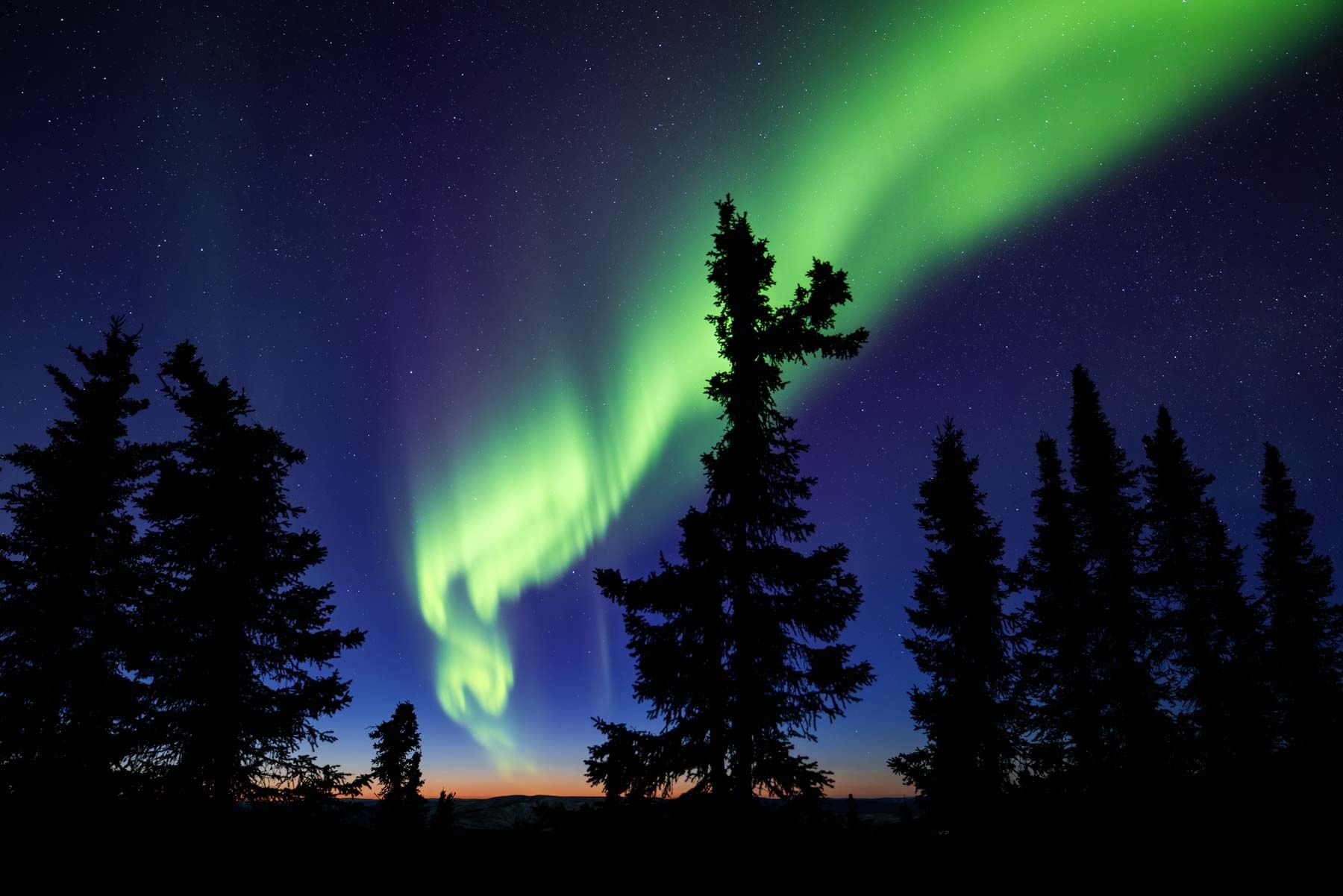
A Northern Lights Adventure Worth Experiencing
There are many places in the world where you might see the aurora. Few combine the reliability, accessibility, scenery, and photographic potential quite like Fairbanks.
Its location beneath the aurora oval, relatively clear interior climate, abundance of strong foregrounds, and long Arctic nights all come together to create one of the finest Northern Lights photography destinations on Earth.
For photographers dreaming of standing beneath swirling Arctic skies with a camera in hand, Fairbanks is the kind of place that delivers experiences — and images — that stay with you forever.
And for those looking to fully immerse themselves in the experience, the Backcountry Journeys ‘Ultimate Northern Lights’ photography workshop offers an incredible opportunity to explore Alaska’s interior alongside expert instructors who know exactly how to maximize both photographic opportunities and aurora viewing conditions.
Because once you witness and photograph the Northern Lights dancing above the Alaskan wilderness, it becomes very difficult to stop thinking about the next time you will return.
 Ultimate Northern Lights
 Lodge-Based Photo Workshop
From $5,995.00
Up To 7 Guests
Fitness Level 1 - What's This?
Wanna Get Away?
Starts
Current Price:$0.00
Start: Fairbanks, AK
Led By
Start: Fairbanks, AK
Led By

Backcountry Journeys
Connecting Passionate People To
Exceptional Experiences.
Exceptional Experiences.
Business Hours:
Mon-Fri, 8AM-4PM MT
928-478-1521
adventure@backcountryjourneys.com
Mon-Fri, 8AM-4PM MT
928-478-1521
adventure@backcountryjourneys.com
arrow_drop_down_circle
Divider Text
All Images & Content Are Property Of Backcountry Journeys Photography Tours, Workshops & Safaris LLC - Copyright 2026


About Us
Receive a Digital Trip Catalog
Find an upcoming photography tour with our interactive catalog.