2025 Travelers' Choice

About Backcountry Journeys
Why Choose Backcountry Journeys
If you're considering a photography trip, hear why Backcountry Journeys delivers the best experience in the industry.Frequently Asked Questions
If you're new to photography trips, or new to BCJ, you can find our common travel questions here.Fitness Levels
Our trips vary on physical intensity, and by reviewing our fitness levels, you can find out which trips may be more challenging, or aligned more closely with your comfort level.Meet The Crew
We've built an amazing team of experienced guides, and dedicated office staff that elevate your travel experience. Get to know their backgrounds, and hear their stories.Loyalty Program
We reward our frequent photo adventurers with exclusive discounts on amazing photography trips.Contact Us
If you need to get in touch with our office staff, or have additional business inquiries, you can find our information here.Refer a Friend
Know someone perfect for one of our tours? Recommend them through this quick form.Stay Up To Date On All Things
Backcountry Journeys
Backcountry Journeys
Our Photography Community
Our Webinars
Our regularly hosted webinars provide photography instruction from our own guides on a wide range of topics.Our Education Portal
Explore our library of articles that cover everything from common questions, to in-depth guides on how to achieve that perfect shot.Community Testimonials
We're proud to foster an amazing group of photo travelers, and here you can find their stories from their past adventures.Resources For Photographers
About Our Company
Resources For Photographers
About Our Company
Working in the Dark: How Night Photography Makes You a Better Landscape Photographer
Published November 4, 2026
Landscape photography often revolves around finding the right light. Photographers plan around sunrise and sunset, watch weather forecasts, scout locations, and wait for the perfect combination of color and contrast. But what happens when the light disappears entirely?
Night photography introduces an entirely different set of challenges. Familiar landscapes become harder to navigate, compositions that would be obvious during the day require more careful consideration, and camera settings that typically work in daylight suddenly need a complete rethink. Even focusing on a subject can become a technical exercise!
Yet learning to photograph in the dark can do more than help you capture a beautiful Milky Way photograph. It can change the way you approach photography altogether.
From understanding exposure on a deeper level to developing stronger compositional instincts, astrophotography encourages photographers to slow down, experiment, and become more intentional about every decision they make behind the camera.
Learning to See a Landscape Differently
One of the biggest adjustments in night photography is learning to visualize a composition when you can barely see the landscape in front of you.
During daylight, photographers have plenty of visual information to work with. They can identify leading lines, evaluate foreground elements, recognize interesting textures, and make quick adjustments to their framing. After dark, many of those visual cues disappear.
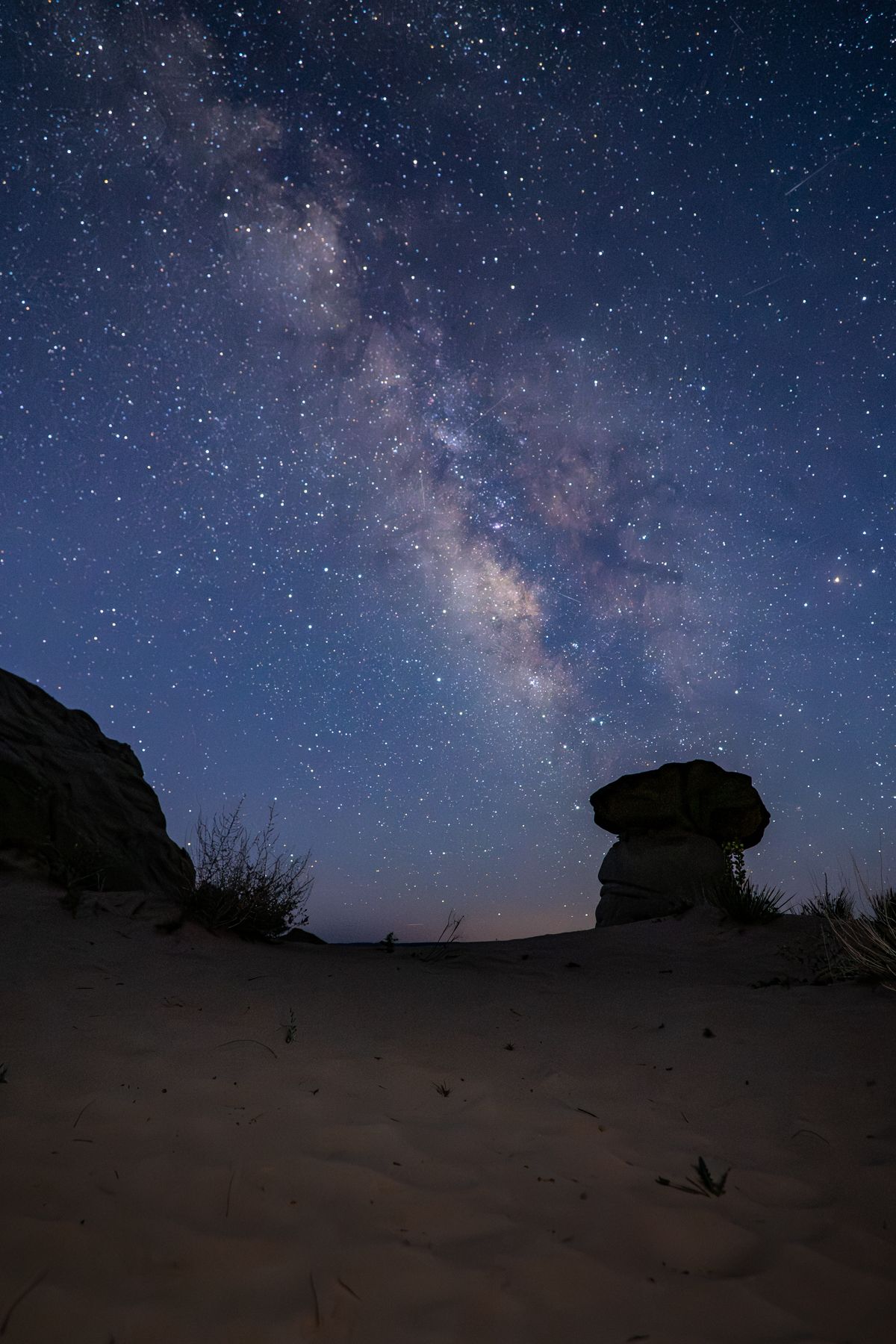
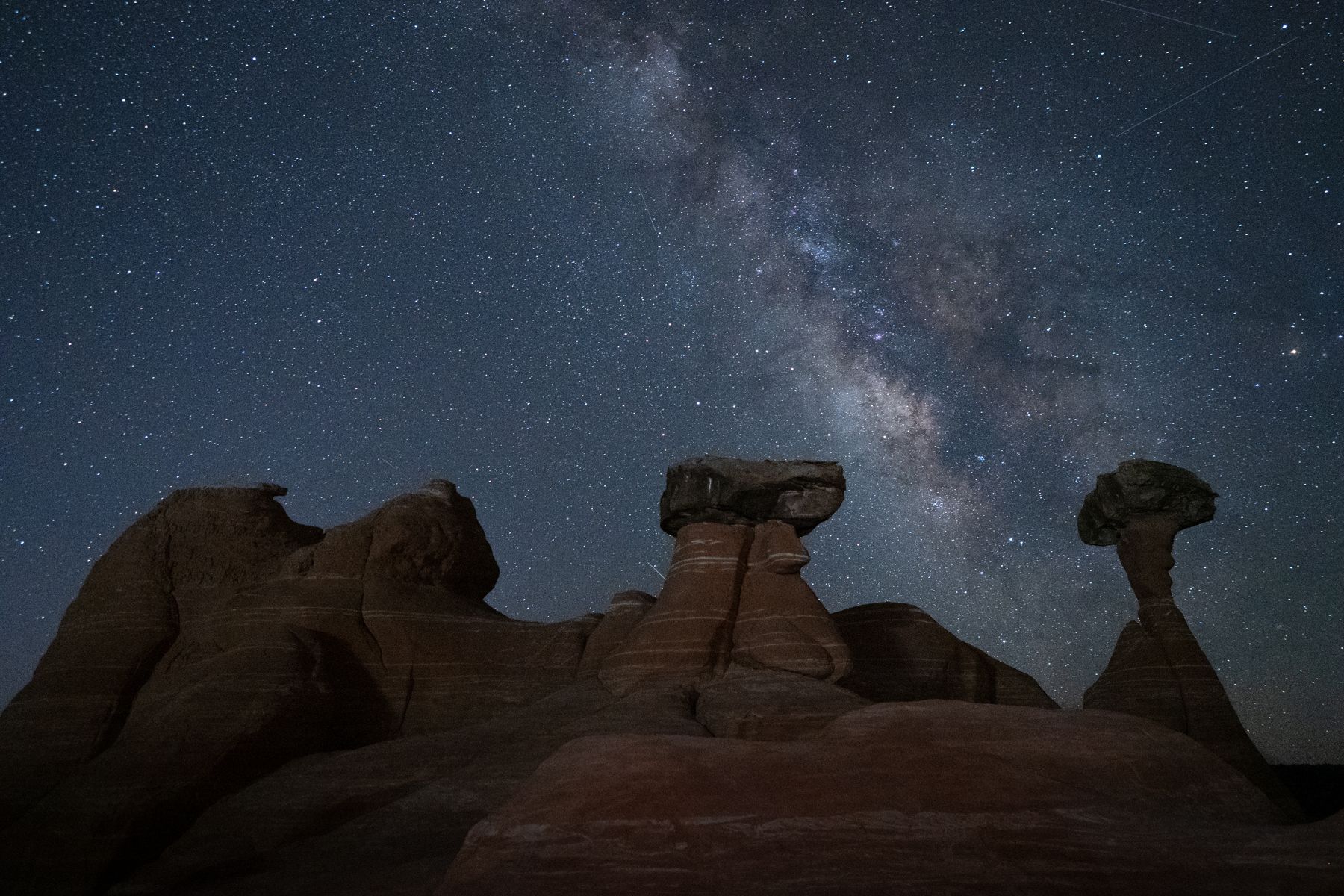
Instead, photographers must begin thinking about composition in a different way. Where will the Milky Way appear in relation to the landscape? Will a sandstone formation create an interesting silhouette? How might a distant ridge, rock formation, or desert horizon frame the stars?
This requires a greater understanding of the landscape itself, as well as an ability to anticipate how different elements will translate into a photograph.
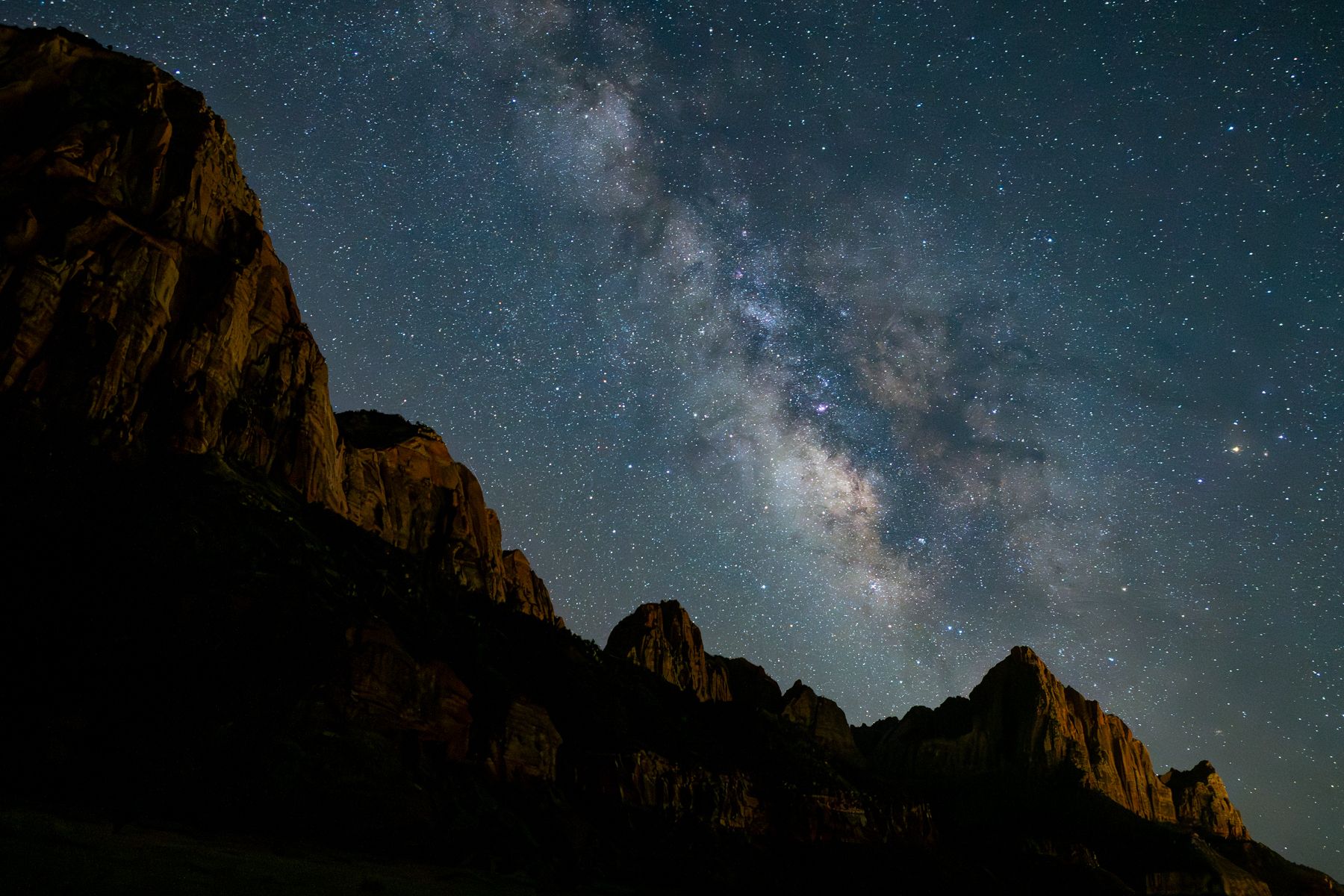
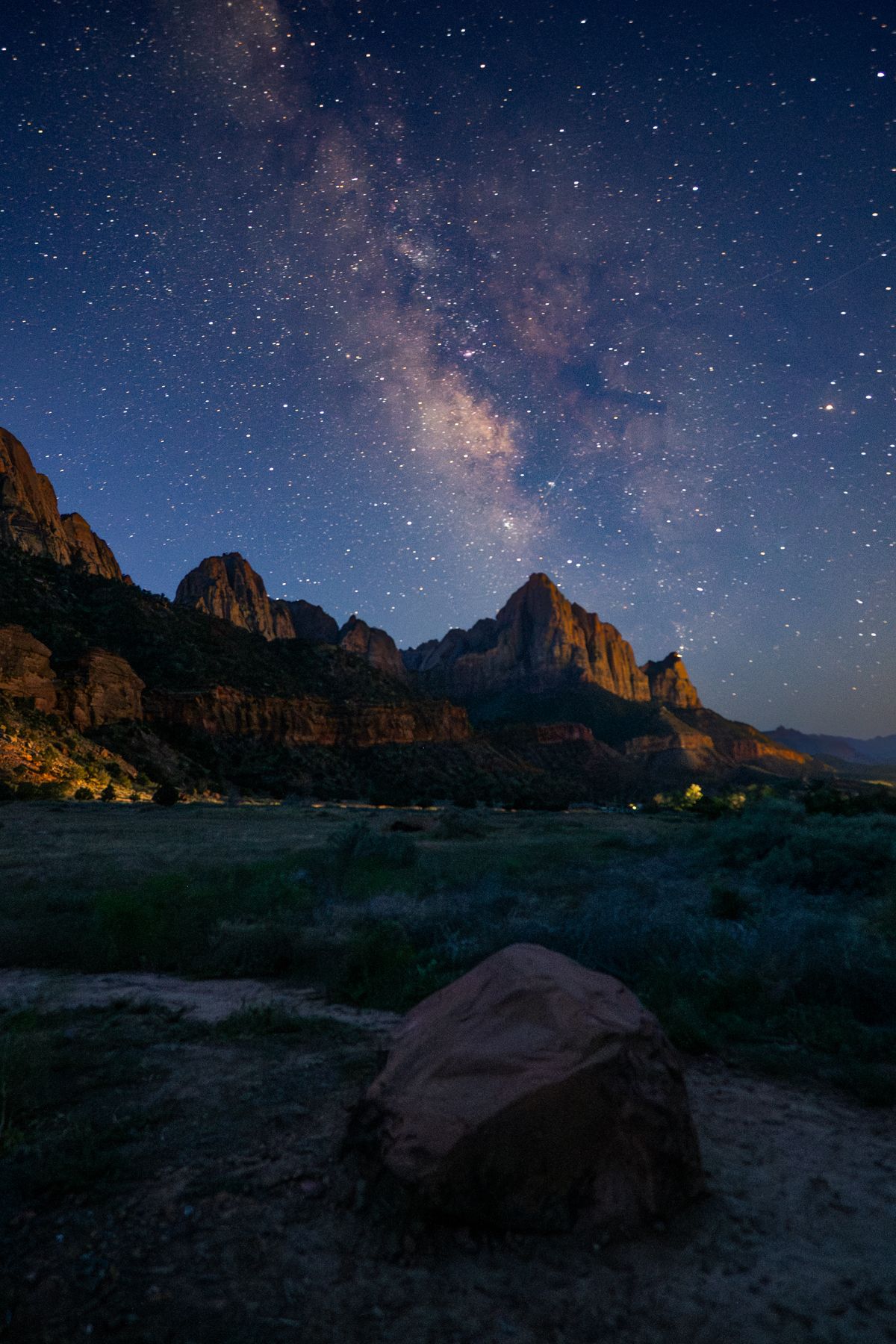
The American Southwest provides an especially interesting environment for developing these skills. Its dramatic geology offers an incredible variety of foreground subjects, from the towering formations of Zion National Park to the badlands, buttes, and hoodoos scattered across the Colorado Plateau.
Under daylight conditions, these features are impressive landscape subjects in their own right. At night, they become compositional elements in a much larger scene, providing scale, depth, and context beneath the stars.
Learning to visualize those relationships in limited light can make photographers more deliberate about composition even when they return to shooting during the day.
Getting Comfortable With Manual Focus and Limited Visibility
Autofocus is one of the conveniences photographers often take for granted. In well-lit environments, modern cameras can quickly identify subjects and lock onto focus with impressive accuracy.
At night, however, those systems have considerably less information to work with.
When photographing stars, autofocus may struggle to identify a subject at all. Photographers often need to switch to manual focus, carefully adjust their focus ring, and use tools like magnified live view to ensure stars appear as sharp points of light rather than soft, blurry circles.
This process requires patience and a willingness to check your work. A focus adjustment that seems minor on the camera's LCD can make a significant difference when reviewing the final image.
It also reinforces an important photography habit: never assume your camera has captured what you intended. Take the time to inspect your images, zoom in, and make adjustments when necessary.
These habits translate directly into other areas of photography. Whether you're photographing a distant wildlife subject, a landscape at sunrise, or a detailed foreground element, understanding how to take control of focus rather than relying entirely on automatic settings gives you greater creative control!
Understanding Exposure Beyond the Automatic Settings
Night photography is also an excellent exercise in understanding the exposure triangle: aperture, shutter speed, and ISO.
In daylight, photographers can often achieve their desired exposure without pushing any one of these settings particularly far. At night, there is considerably less available light, which means every setting becomes more important.
A wider aperture allows more light to reach the sensor, making it especially useful when photographing the Milky Way. ISO settings typically need to be increased to maintain a workable exposure, while shutter speed must be carefully balanced to collect enough light without allowing stars to appear as streaks due to Earth's rotation.
Understanding how these three settings interact is essential.
For example, increasing shutter speed allows more light into the camera, but it also increases the risk of star movement appearing in the image. Raising ISO can help achieve a brighter exposure without extending the shutter speed, but it may introduce additional image noise. Opening the aperture can help compensate for limited light, but it also influences depth of field and overall image characteristics.
There isn't one universal combination of settings that works for every situation. The right exposure depends on your camera, lens, focal length, composition, and the conditions you're photographing.
Night photography encourages photographers to stop thinking about camera settings as isolated numbers and start understanding how each decision affects the final image.
That knowledge becomes incredibly useful in daylight photography, too. When you understand the relationship between exposure settings, you're better equipped to make intentional decisions about motion, depth of field, and image quality in virtually any environment.
Why Image Review and Processing Matter
The learning process doesn't end when the shutter closes.
Reviewing photographs is one of the most valuable ways to identify what worked, what didn't, and what you might approach differently the next time you're in the field.
Night photography provides plenty of opportunities for this kind of learning. You might discover that your focus was slightly off, your exposure introduced more noise than expected, or a foreground element would have benefited from a different composition.
Processing also plays an important role in the final image. Astrophotography often requires a thoughtful approach to contrast, color, noise reduction, and detail. Understanding how to work with those elements in post-processing can help photographers bring out the details captured by their cameras while maintaining a natural-looking result.
Developing these skills is particularly useful because it reinforces the relationship between decisions made in the field and the final photograph.
During a photography workshop, having the opportunity to review images with an experienced instructor can make this process even more valuable. Questions that might take several outings to answer independently can become opportunities for immediate feedback and hands-on learning.
Discover the Night Skies of the Southwest With Backcountry Journeys
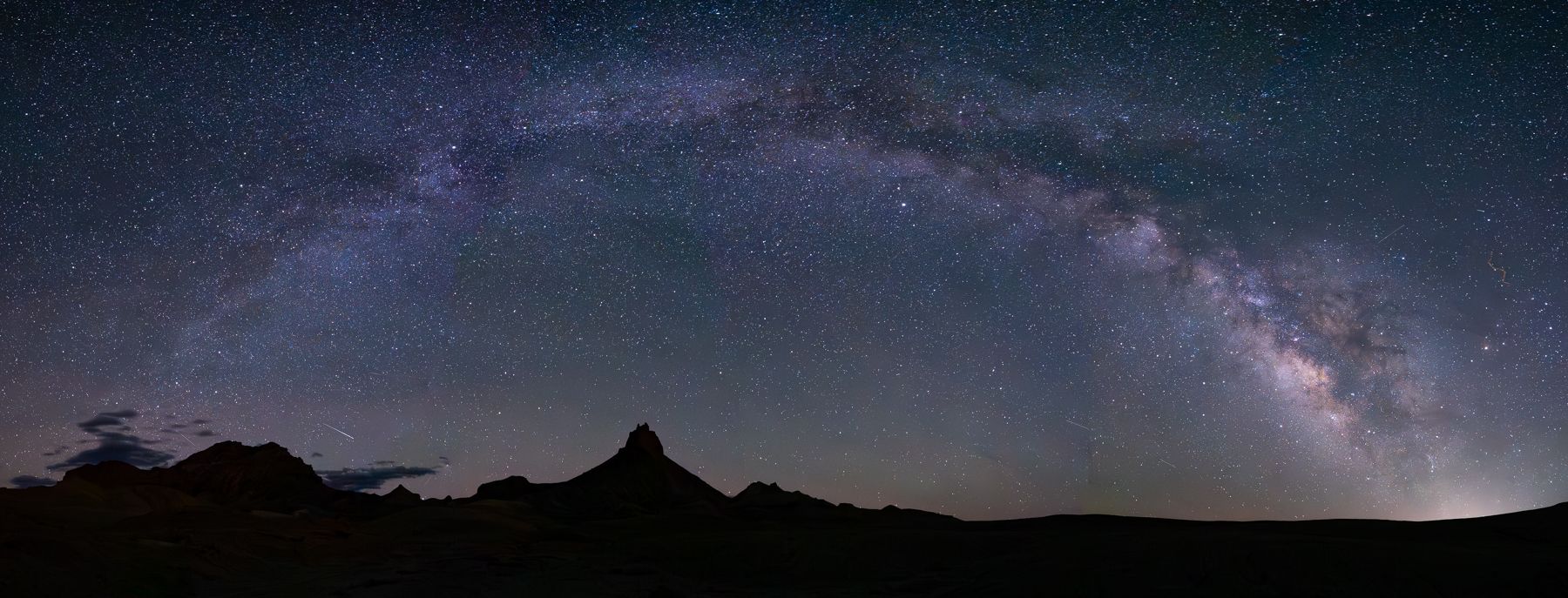
The Night Skies of the Southwest Photo Workshop brings photographers into some of the darkest skies in the United States, combining the dramatic landscapes of Utah and Arizona with hands-on instruction in astrophotography.
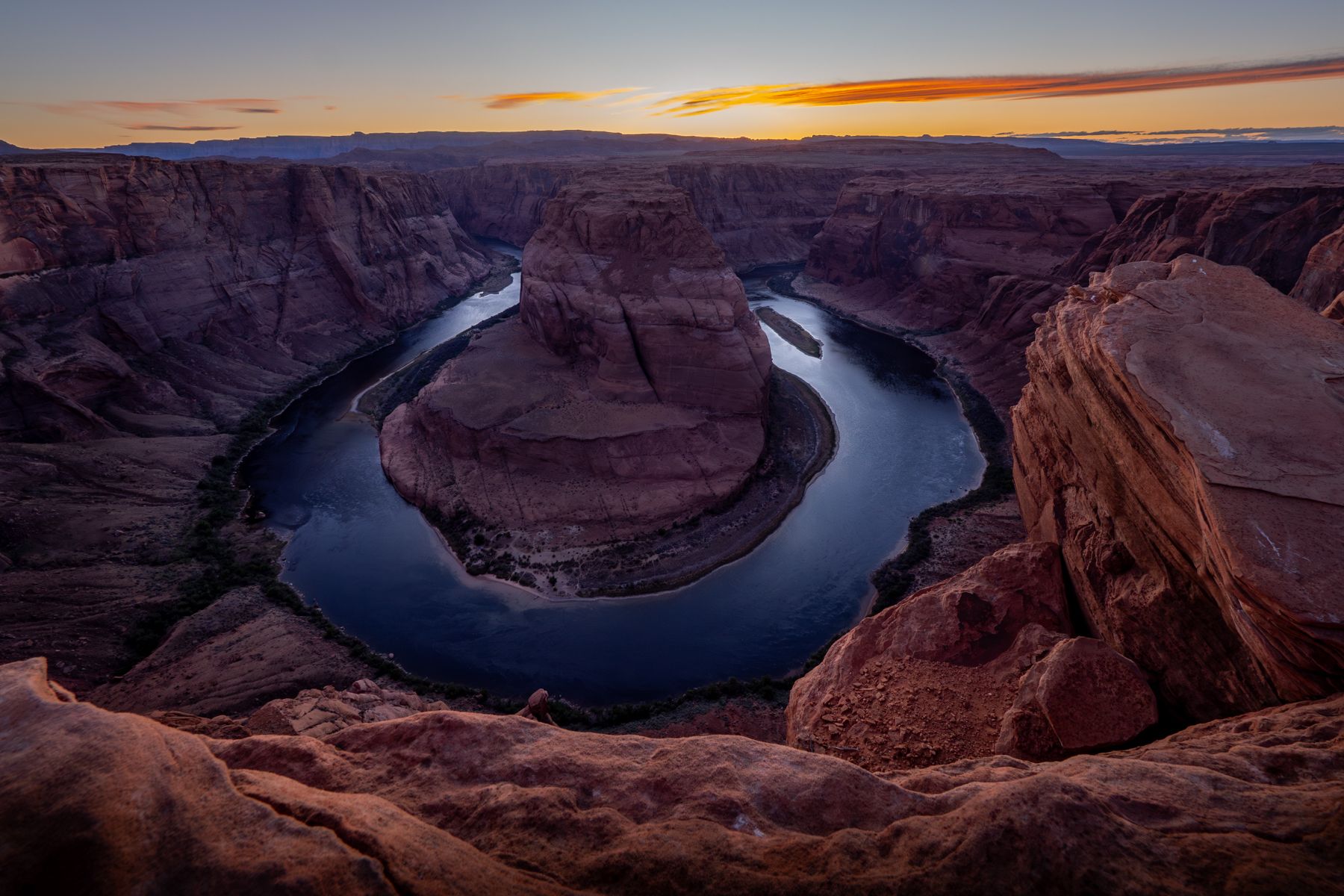
This six-day, five-night lodge-based workshop begins and ends in St. George, Utah, with opportunities to photograph the Milky Way around Zion National Park and explore night skies across the Colorado Plateau. Depending on conditions and the evening's photographic opportunities, subjects may include badlands, buttes, hoodoos, and the colorful sandstone formations surrounding the Page and Kanab areas.
Throughout the workshop, photographers receive personalized guidance and one-on-one instruction from experienced photography leaders.
With a group size of no more than seven guests, the experience offers plenty of opportunity to ask questions, experiment with new techniques, and learn alongside fellow photographers.
You don't have to be an experienced astrophotographer to get started. Bring your curiosity, your camera, and a willingness to see the landscape in a different light!

 Night Skies of the Southwest
Lodge-Based Photo Workshop
From $5,995.00
Up To 7 Guests
Fitness Level 1 - What's This?
Wanna Get Away?
Starts
Current Price:$0.00
Start: St. George, UT
Led By
Start: St. George, UT
Led By

Backcountry Journeys
Connecting Passionate People To
Exceptional Experiences.
Exceptional Experiences.
Business Hours:
Mon-Fri, 8AM-4PM MT
928-478-1521
adventure@backcountryjourneys.com
Mon-Fri, 8AM-4PM MT
928-478-1521
adventure@backcountryjourneys.com
arrow_drop_down_circle
Divider Text
All Images & Content Are Property Of Backcountry Journeys Photography Tours, Workshops & Safaris LLC - Copyright 2026


About Us
Receive a Digital Trip Catalog
Find an upcoming photography tour with our interactive catalog.