2025 Travelers' Choice

Stay Up To Date On All Things
Backcountry Journeys
Backcountry Journeys
Our Photography Community
Our Webinars
Our regularly hosted webinars provide photography instruction from our own guides on a wide range of topics.Our Education Portal
Explore our library of articles that cover everything from common questions, to in-depth guides on how to achieve that perfect shot.Community Testimonials
We're proud to foster an amazing group of photo travelers, and here you can find their stories from their past adventures.About Backcountry Journeys
Why Choose Backcountry Journeys
If you're considering a photography trip, hear why Backcountry Journeys delivers the best experience in the industry.Frequently Asked Questions
If you're new to photography trips, or new to BCJ, you can find our common travel questions here.Fitness Levels
Our trips vary on physical intensity, and by reviewing our fitness levels, you can find out which trips may be more challenging, or aligned more closely with your comfort level.Meet The Crew
We've built an amazing team of experienced guides, and dedicated office staff that elevate your travel experience. Get to know their backgrounds, and hear their stories.Loyalty Program
We reward our frequent photo adventurers with exclusive discounts on amazing photography trips.Contact Us
If you need to get in touch with our office staff, or have additional business inquiries, you can find our information here.Refer a Friend
Know someone perfect for one of our tours? Recommend them through this quick form.Resources For Photographers
About Our Company
Southwest Monsoon: Grand Canyon Country
Southwest Monsoon: Grand Canyon Country
Lodge-Based Photo Workshop
Upcoming Departures
arrow_drop_down_circle
Divider Text
[Block//Start Date %M j%+0] - [Block//End Date %M j, Y%+0]
[Block//Web Spots Left]
Trip Leader(s)
[Block//Trip Leader #1]
[Block//Trip Leader #2]
Starting From [Block//Current Price]
Single Supplement: +$1,260.00
[Block//Online Availability]
Deposit: $2,000.00
Start/End
Flagstaff, AZ / Flagstaff, AZ
Length
7 Days/6 Nights
Fitness Level
Level 1 - What's This?
Group Size
Up To 7 Guests
Highlights
Witness photogenic thunderstorms with sweeping rains, lightning, and swirling dust, creating stunning and dynamic photo opportunities.
Explore iconic locations like Monument Valley, Horseshoe Bend, and Lake Powell, capturing the breathtaking desert storms against magnificent backdrops.
Discover the hidden gem of Antelope Canyon X, offering an intimate and serene experience without the crowds.
Experience the awe-inspiring grandeur of the South Rim of the Grand Canyon, where over 525 million years of geological history are exposed, accompanied by the drama of thunderstorms during peak monsoon season.
Trip Description:
Each summer, the North American monsoon transforms northern Arizona into a photographer’s dreamscape. Towering thunderheads, dramatic rain shafts, booming thunder, shifting sunlight, and occasional lightning create extraordinary conditions for monsoon and storm photography, when light, texture, atmosphere, and movement come together in one of nature’s most powerful performances.
Join Backcountry Journeys for a 7-day photography workshop and tour focused on capturing Arizona’s canyon country at its most dynamic. Designed for landscape photographers who want to work with dramatic weather and rapidly changing light, this journey explores iconic landscapes of the Colorado Plateau, including Monument Valley Navajo Tribal Park, Page, Glen Canyon, and the Grand Canyon’s South Rim.
After gathering in Flagstaff, we travel to Monument Valley Navajo Tribal Park, located within the Navajo Nation. Here, massive sandstone buttes and mesas rise from the open desert, providing one of the Southwest’s most recognizable landscapes. During monsoon season, building clouds, rain curtains, sunlight, and distant storms can completely transform these familiar formations from one moment to the next.
From Monument Valley, we continue to Page, Arizona, where we’ll explore photographic opportunities around Horseshoe Bend, Glen Canyon, nearby sandstone formations and hoodoos, and Antelope Canyon X. The combination of sculpted desert terrain and volatile summer weather gives us a tremendous range of subjects, from intimate sandstone abstracts to expansive storm-filled landscapes.
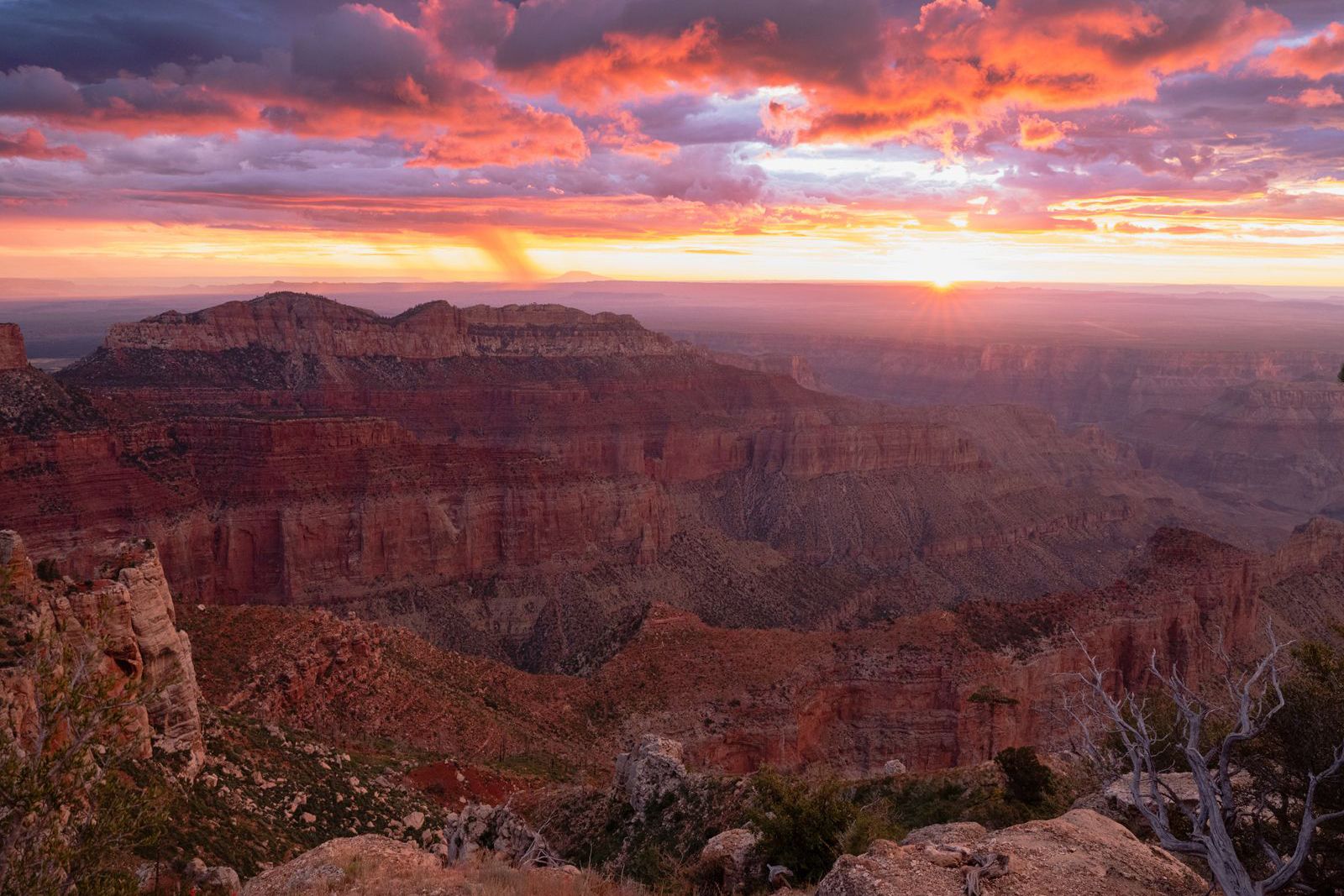
The journey culminates along the South Rim of the Grand Canyon, one of the most spectacular settings in North America for photographing monsoon weather. Immense canyon depth allows us to see weather systems developing across enormous distances, creating opportunities to photograph glowing rain shafts, isolated thunderstorms, crepuscular rays, dramatic cloud formations, and—when conditions safely allow—lightning over the canyon.
Rather than promising specific overlooks, we’ll photograph from permitted locations throughout the South Rim, selecting areas according to weather, light, accessibility, and current conditions. We may work from areas near some of the canyon’s most famous viewpoints, explore permitted locations along the park’s eastern corridor, and utilize the park shuttle to access photographic opportunities along portions of Hermit Road.
That flexibility is central to this workshop. Monsoon photography is inherently unpredictable, and the best image of the trip may come from a location we had not planned to visit that morning. Your professional photography guide will monitor weather systems, evaluate light and storm movement, help identify strong compositions, and teach techniques for photographing fast-changing conditions safely and effectively.
Our timing is designed to coincide with Arizona’s summer monsoon season, maximizing the potential for the dramatic atmospheric conditions that make this region so exciting for photographers. No storm, rainbow, beam of light, or lightning strike can ever be guaranteed—but that uncertainty is precisely what makes photographing the monsoon so rewarding.
More than simply a photo tour, this journey is an immersive exploration of the landscapes, geology, weather, and cultural history of Grand Canyon country. With a small group, expert photographic instruction, and an itinerary built around flexibility and the best available conditions, you’ll experience the American Southwest at its most dramatic—and return home with images and memories that could only have been created during monsoon season.
What's Included
All listed meals and non-alcoholic beverages during the workshop
All transportation during the workshop
All lodging during the workshop
All activities during the workshop
All permits and park fees
Professional photography guiding and instruction
Gratuity for service staff
What's Not Included
Transportation to and from Flagstaff, Arizona
Meals not listed as included on the itinerary
Lodging outside workshop dates
Alcoholic beverages
Souvenirs and personal items
Gratuity for photography guide(s). Please refer to our FAQ section for more details about gratuities
Trip Insurance & Medical Evacuation Insurance - see plans here.
Details
- Final Balance Due 120 days prior to Trip Start
- Standard terms & conditions apply. Please see our Cancellation / Transfer policy on our Frequently Asked Questions page.
- Trip Insurance Optional - but highly recommended


Trip Itinerary
Trip Itinerary
Most meals included – (B,L,D) denotes Breakfast, Lunch, Dinner
Day 1 (Travel Day) (D)
Arrive in Flagstaff, Arizona for an orientation and welcome dinner.
Day 2 (B,L,D)
We’ll make our way North and East to Monument Valley, located near the Arizona / Utah border and part of the Navajo Nation. Monument Valley has been seen in many movies and photographs, and really is one of the truly iconic places in the American Southwest. The magnificent landscape is dotted with eye-pleasing sandstone mesas, buttes and other curious rock features. Your guide will take you to the perfect location in order to capture the setting sun over this most famous of western landscapes.
Day 3 (B,L,D)
We’ll make sure to capture Monument Valley again this morning before relocating a few hours down the road to Page, Arizona, where we’ll spend the next two nights of this trip.
We’ll check in to our comfy hotel and get prepared for an evening shoot from an exceptional viewpoint overlooking glassy, Lake Powell. This reservoir is world-famous for its massive and curious shoreline as well as its colorful sandstone rock formations.
We’ll be shooting from a location not well known to most visitors.
Day 4 (B,D)
Today we’ll head to Antelope Canyon X, a stunning slot canyon every bit as amazing as Upper and Lower Antelope Canyon, without the overwhelming crowds of tourists. Here we’ll find a photographer-friendly slot canyon where we’ll fully emerge ourselves, and our cameras, in the magic of the towering glowing sandstone walls.
Day 5 (B,L,D)
This morning, we’ll depart Page and head south towards Grand Canyon National Park’s South Rim, one of the most celebrated landscapes in the world. Along the way, we’ll stop for a shoot or two—weather permitting. Once at the South Rim, we’ll settle into our lodge accommodations, which offer easy access to the rim’s best overlooks.
That evening, we’ll photograph from one of the South Rim’s iconic viewpoints,, each offering expansive vistas perfect for wide-angle storm and sunset shots. With the dramatic skies of monsoon season, this could be one of the most rewarding photo sessions of the trip.
Day 6 (B,D)
We'll rise early to capture sunrise over the canyon, where the interplay of light, mist, and shadow creates otherworldly images. After breakfast, we’ll remain flexible, tracking storm activity and light to position ourselves at the best spots for monsoons and storm photography. In the afternoon, we may explore the Historic Village District or venture further along Hermit Road, which boasts outstanding photo stops.
Our final shoot of the trip will be timed for sunset, where we’ll position ourselves for the best cloud build-up and golden hour glow—another chance to capture lightning, crepuscular rays, or canyon drama under moody skies.
Day 7 (B)
We’ll gather one last time for a sunrise session along the canyon rim—perhaps from Yavapai Point, which provides both excellent canyon views and an overlook of the mighty Colorado River.
After breakfast, we’ll make our way back to Flagstaff, closing the book on a phenomenal journey filled with unforgettable moments and an incredible portfolio of storm-filled skies and Grand Canyon beauty.
Please note that the exact sequence of the itineraries on all photography trips will be based on weather and lighting conditions. The goal on these trips is to make sure we are at the right place at the right time for the perfect light on our subjects. Also, itineraries can change for a variety of other circumstances including floods, forest fires, national park closures, road closures, and more. Due to the nature of wildlife and landscape photography, we do not guarantee any specific sightings or specific compositions.
Physical Requirements
This trip involves moderate physical activity with short hikes over uneven, rocky, and sometimes sandy terrain. Guests can expect to walk along desert trails and canyon rims, with occasional slight elevation changes. Some areas, such as the South Rim of the Grand Canyon at 7,000 feet, are at higher elevations where mild shortness of breath may occur. Typical walking distances include a 1.5-mile round trip to Horseshoe Bend on a sandy trail with some incline. Antelope Canyon X includes navigating tight spaces and a short hike out of the canyon at the end, though a side-by-side vehicle is available if needed. At the Guide's discretion based upon conditions and group fitness, we may also visit the Toadstools—a 1.5-mile round-trip hike through desert terrain.
Why Choose Backcountry Journeys?
UNPARALELLED
PHOTOGRAPHY
TRIPS
PHOTOGRAPHY
TRIPS
arrow_drop_down_circle
Divider Text
Explore over 100 worldwide photo tours and workshops tailored to photographers of all skill levels, from iconic U.S. National Parks to Africa's untamed savannahs.
THE BEST TEAM
IN THE
BUSINESS
IN THE
BUSINESS
arrow_drop_down_circle
Divider Text
We're proud to offer unmatched photography trips led by exceptional instructors who not only excel in photography but also serve as expert guides.
WORLD-CLASS
PHOTOGRAPHY
COMMUNITY
PHOTOGRAPHY
COMMUNITY
arrow_drop_down_circle
Divider Text
Join the Backcountry Journeys Tribe, where shared adventures in breathtaking locations foster lasting connections with fellow photographers in a warm, inclusive atmosphere.


[Block//Review]
[Block//Trip Reviewer//First Name] - [Block//Date Of Review %n/j/Y%+0]
Verified Guest

Worry Free Travel Guarantee!
Worry Free Travel Guarantee!

HERE’S THE DEAL
We offer one of the most rock solid guarantees in the travel industry - our worry free travel, peace of mind guarantee to you!We’re so confident that the Photography Trips we offer will not only meet but exceed the lofty expectations set forth on our website – if your trip experience does not 100% match the promises laid forth on our website we will gladly give you a credit toward a future trip.
Natural events such as wildlife & weather are certainly out of our control but every aspect of the trip including logistics, accommodations, vehicles, itinerary & your expert trip leaders will match the lofty promises we’ve made on the site – we guarantee it!

Backcountry Journeys
Connecting Passionate People To
Exceptional Experiences.
Exceptional Experiences.
Business Hours:
Mon-Fri, 8AM-4PM MT
928-478-1521
adventure@backcountryjourneys.com
Mon-Fri, 8AM-4PM MT
928-478-1521
adventure@backcountryjourneys.com
arrow_drop_down_circle
Divider Text
All Images & Content Are Property Of Backcountry Journeys Photography Tours, Workshops & Safaris LLC - Copyright 2026


About Us
Receive a Digital Trip Catalog
Find an upcoming photography tour with our interactive catalog.