2025 Travelers' Choice

Stay Up To Date On All Things
Backcountry Journeys
Backcountry Journeys
Our Photography Community
Our Webinars
Our regularly hosted webinars provide photography instruction from our own guides on a wide range of topics.Our Education Portal
Explore our library of articles that cover everything from common questions, to in-depth guides on how to achieve that perfect shot.Community Testimonials
We're proud to foster an amazing group of photo travelers, and here you can find their stories from their past adventures.About Backcountry Journeys
Why Choose Backcountry Journeys
If you're considering a photography trip, hear why Backcountry Journeys delivers the best experience in the industry.Frequently Asked Questions
If you're new to photography trips, or new to BCJ, you can find our common travel questions here.Fitness Levels
Our trips vary on physical intensity, and by reviewing our fitness levels, you can find out which trips may be more challenging, or aligned more closely with your comfort level.Meet The Crew
We've built an amazing team of experienced guides, and dedicated office staff that elevate your travel experience. Get to know their backgrounds, and hear their stories.Loyalty Program
We reward our frequent photo adventurers with exclusive discounts on amazing photography trips.Contact Us
If you need to get in touch with our office staff, or have additional business inquiries, you can find our information here.Refer a Friend
Know someone perfect for one of our tours? Recommend them through this quick form.Resources For Photographers
About Our Company
China Wildlife Photo Safari
China Wildlife Photo Safari
Lodge-Based Photo Workshop
Upcoming Departures
arrow_drop_down_circle
Divider Text
[Block//Start Date %M j%+0] - [Block//End Date %M j, Y%+0]
[Block//Web Spots Left]
Trip Leader(s)
[Block//Trip Leader #1]
[Block//Trip Leader #2]
Starting From [Block//Current Price]
Single Supplement: +$995.00
[Block//Online Availability]
Deposit: $3,000.00
Start/End
Chengdu, China / Chengdu, China
Length
11 Days/10 Nights
Fitness Level
Level 2 - What's This?
Group Size
Up To 8 Guests
Highlights
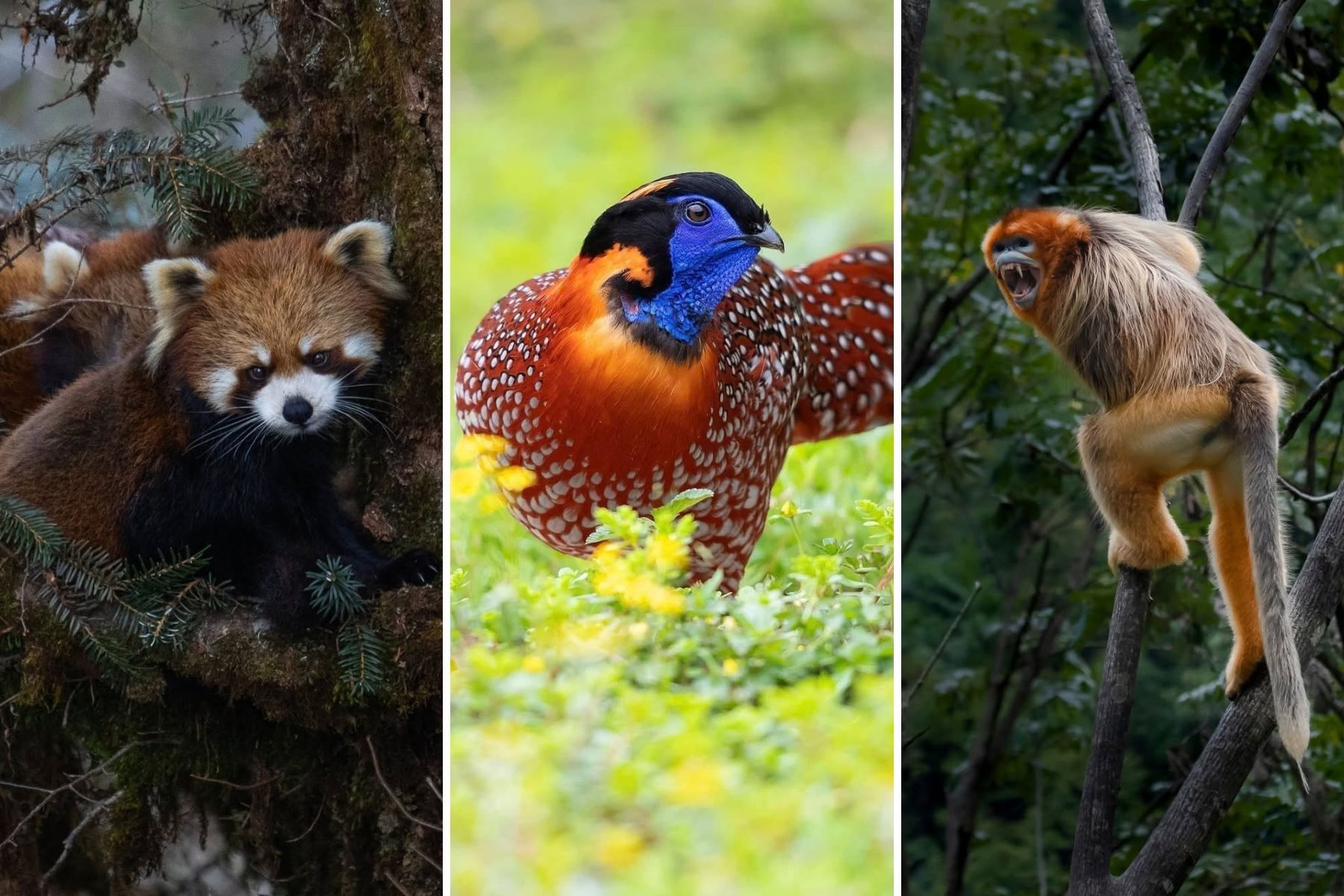
Wild Red Panda Photography — Spend dedicated time exploring the misty mountain forests of Mount Wawushan in search of wild Red Pandas in their natural habitat.
Golden Snub-nosed Monkeys — Photograph one of Asia’s most distinctive primates, with opportunities for portraits, family interactions, and behavioral images.
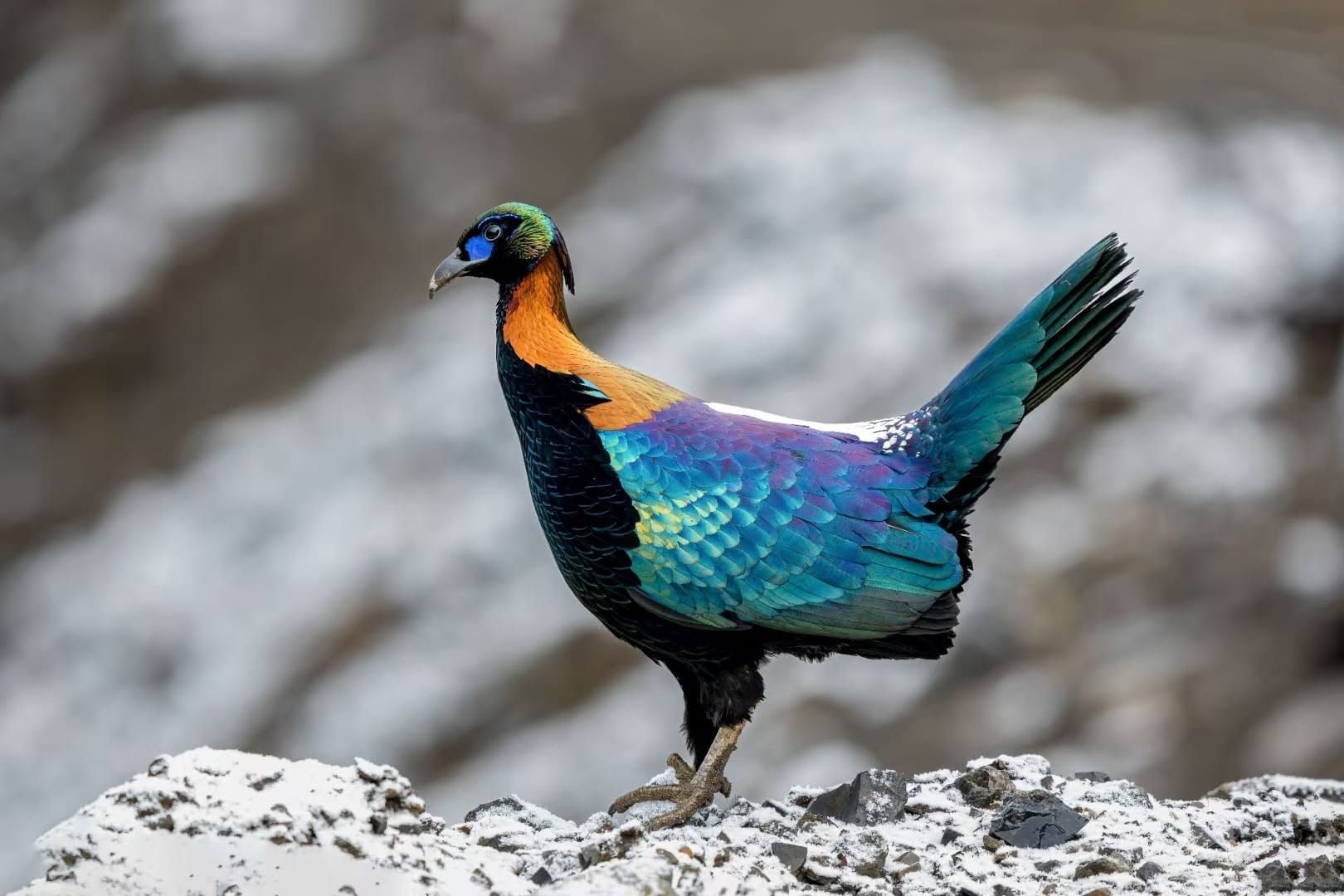
Spectacular Pheasants & Forest Birds — Work from specialized photography hides for species such as Golden Pheasant, Lady Amherst’s Pheasant, Silver Pheasant, and other Sichuan specialties.
Tangjiahe Wildlife & Giant Pandas — Search Tangjiahe for takin, Tibetan macaques, goral, serow, muntjac, and other mammals, then visit a Giant Panda breeding and research center for a reliable opportunity to photograph China’s most iconic animal.
Trip Description:
China’s Sichuan Province protects one of the most remarkable concentrations of wildlife in Asia. Temperate mountain forests, bamboo-covered slopes, river valleys, and rugged nature reserves provide habitat for an extraordinary collection of mammals and birds, including several species that are difficult to encounter almost anywhere else.
On this photography safari, we’ll travel through some of Sichuan’s richest wildlife areas in search of wild Red Pandas, Golden Snub-nosed Monkeys, takin, Tibetan macaques, mountain ungulates, brilliantly colored pheasants, and a remarkable variety of forest birds.
This is a journey built around photography. Some days will be spent actively searching forests and mountain habitats for mammals, while others will place us in dedicated photography hides where wild pheasants and other birds can be photographed at close range. Our local wildlife guide will help us respond to recent activity, weather, and conditions so that we can make the most of each location.
And while seeing a Giant Panda in the wild remains extraordinarily difficult, we’ll conclude our journey with a visit to one of Sichuan’s respected Giant Panda centers, giving us a reliable opportunity to photograph one of the world’s most celebrated mammals.
Wild Sichuan
Sichuan lies at a biological crossroads where subtropical forests meet the mountains of western China. Dramatic changes in elevation create a mosaic of habitats, from broadleaf forest and bamboo to coniferous woodland and high mountain terrain. That diversity supports an equally impressive collection of wildlife.
Our journey takes us well beyond China’s major cities and into quieter mountain landscapes where forests shelter Red Pandas, Golden Snub-nosed Monkeys, takin, Tibetan macaques, goral, serow, muntjac, pheasants, laughingthrushes, parrotbills, woodpeckers, and many other species.
Each destination has its own character. At Mount Wawushan, we’ll explore moss-covered mountain forest in search of Red Pandas. In dedicated hides, we’ll concentrate on Sichuan’s spectacular pheasants and forest birds. At Tangjiahe, we’ll search a large protected reserve for mammals and birds across forested slopes and river valleys. Later, we’ll spend dedicated time photographing Golden Snub-nosed Monkeys before turning our attention to the Giant Panda.
The result is an unusually diverse photographic experience, with opportunities ranging from intimate wildlife portraits to behavior, habitat, and environmental images.
In Search of Wild Red Pandas
Few animals are more closely associated with the mountain forests of Asia than the Red Panda.
Our search takes us into Mount Wawushan, a forested mountain rising above 3,000 meters in Sichuan. The area contains a mixture of broadleaf woodland, deciduous forest, bamboo, rhododendron, and coniferous habitat, with moss-covered trees and sweeping views toward the mountains of western Sichuan.
Red Pandas are quiet, arboreal mammals that spend much of their lives moving through the forest canopy and feeding heavily on bamboo. Their rust-colored coats blend surprisingly well with mosses, lichens, and autumn vegetation, and finding one requires patience and experienced local knowledge.
We’ll devote substantial time to searching Wawushan, giving ourselves more than one opportunity to find and photograph these elusive animals. The forest also supports an impressive assortment of regional birds, including parrotbills, laughingthrushes, scimitar babblers, treecreepers, fulvettas, woodpeckers, and the distinctive Emei Shan Liocichla.
Photographing Sichuan’s Pheasants
China is home to some of the most spectacular pheasants on Earth, and this journey gives us a chance to photograph several species that are rarely encountered by photographers elsewhere.
Rather than simply hoping for fleeting views along forest trails, we’ll spend time in dedicated photography hides positioned near productive feeding areas. The birds remain completely wild, but the hides allow us to work quietly and patiently as they move into photographic range. Kevin specifically describes these pheasant sites as wild-bird feeding locations rather than controlled or captive environments.
Potential subjects include:
- Lady Amherst’s Pheasant
- Silver Pheasant
- Temminck’s Tragopan
- Sichuan Partridge
- Chinese Bamboo Partridge
- Golden Pheasant
- Koklass Pheasant
Other forest birds may include laughing thrushes, parrotbills, fulvettas, scimitar babblers, blue-tails, and additional Sichuan specialties.
Working from a hide gives us time to pay attention to the things that matter photographically: backgrounds, head angle, posture, behavior, light, and composition. Instead of simply documenting a sighting, we can wait for the moments that create stronger images.
Golden Snub-nosed Monkeys
With dense golden fur, powder-blue faces, and extraordinarily expressive features, Golden Snub-nosed Monkeys are among the most distinctive primates in the world.
They are adapted to the cool mountain forests of central China and live in complex social groups, often moving through the trees and forest floor together as they feed and interact. We’ll dedicate nearly a full day to photographing these remarkable animals.
The experience offers much more than portraits. Family groups and social behavior may create opportunities to photograph interactions between adults, playful juveniles, grooming, feeding, movement, and animals framed within their forest environment. Their combination of color, expression, and behavior makes this one of the photographic highlights of the journey.
The Wildlife of Tangjiahe
Tangjiahe National Nature Reserve is one of the most important wildlife areas on our itinerary.
The reserve forms part of the greater Giant Panda ecosystem and protects extensive mountain forest inhabited by a diverse community of mammals and birds. We’ll spend two days exploring Tangjiahe and searching for wildlife with our local guide.
Potential mammal subjects include:
- Takin
- Tibetan macaque
- Chinese goral
- Chinese serow
- Reeves’s muntjac
- Tufted deer
- Wild boar
The reserve also supports Asian black bears, Golden Snub-nosed Monkeys, and wild Giant Pandas, although these species are considerably more difficult to encounter and sightings should never be expected. Kevin specifically notes that the chance of seeing a wild Giant Panda here is extremely low.
Birdlife can be equally productive. Golden Pheasants, Koklass Pheasants, woodpeckers, nuthatches, laughingthrushes, fulvettas, dippers, forktails, tits, and other forest species are among the possibilities.
Tangjiahe gives the trip a different rhythm from our hide photography. Here, we’ll spend more time actively exploring, watching the forest, and responding to wildlife as we find it.
Giant Pandas
No wildlife journey through Sichuan would feel complete without the Giant Panda.
Wild Giant Pandas still inhabit protected mountain forests in the region, including the greater Tangjiahe ecosystem, but encountering one in the wild is exceptionally difficult. Rather than build an itinerary around an extremely unlikely sighting, we’ve chosen to include a visit to a Giant Panda breeding and research center, where we can reliably observe and photograph the species in a managed setting.
This is the one primary wildlife experience on the trip that is not focused on completely wild animals.
It gives us an opportunity to photograph pandas feeding, resting, climbing, and moving through their enclosures while also learning more about the conservation work that has helped make the Giant Panda one of the best-known symbols of wildlife protection in the world.
It is an ideal complement to the rest of the journey: several days spent searching for wild animals in Sichuan’s mountain forests, followed by a guaranteed opportunity with China’s most iconic species.
Built for Wildlife Photography
Our schedule has been designed around wildlife.
We’ll use dedicated hides where they provide the strongest photographic opportunities, spend multiple days in key wildlife areas, and work with an experienced local bird and mammal guide who knows the locations and species we are seeking.
Throughout the safari, we’ll take advantage of:
- Dedicated pheasant and bird photography hides
- Multiple opportunities in important wildlife locations
- Experienced local wildlife guidance
- Small-group photographic instruction
- Flexible field schedules based on wildlife activity and conditions
- Opportunities for portraits, behavior, action, and environmental imagery
- A diverse combination of mammals and birds rarely found on a single photography itinerary
Long lenses will be particularly valuable. For the hide photography, we recommend approximately 500–600mm of reach for much of the trip, with shorter telephoto zooms useful for animals at closer range or for wider environmental compositions.
Wildlife is never predictable, and no individual species can be guaranteed in the field. That uncertainty is also part of what makes this trip so compelling. Each day begins with new possibilities.
The China Wildlife Photo Safari is an opportunity to experience Sichuan through its wildlife, its forests, and the animals that make this region one of Asia’s most extraordinary natural destinations.
What's Included
All listed meals and non-alcoholic beverages during the workshop
Transportation during the workshop
All lodging during the workshop
All permits and park fees
Professional photography guiding and instruction
Gratuity for service staff
What's Not Included
Flights to and from starting location
Meals not listed as included on the itinerary
Lodging outside workshop dates (our final day will not include lodging if guests choose to depart the next morning)
Alcoholic beverages
Personal items and anything not explicitly mentioned
Gratuity for photography guide(s). Please refer to our FAQ section for more details about gratuities
Trip Insurance & Medical Evacuation Insurance - see plans here.
Details
- Final Balance Due 150 days prior to Trip Start
- Standard terms & conditions apply. Please see our Cancellation / Transfer policy on our Frequently Asked Questions page.
- Trip Insurance Required


Trip Itinerary
Trip Itinerary
Most meals included. (B, L, D) denotes Breakfast, Lunch, Dinner.
Day 1: Arrival in Chengdu (D)
Welcome to China! Upon arrival at Chengdu Tianfu International Airport, we’ll make our way to our conveniently located airport hotel. This evening, we’ll gather for a welcome dinner and orientation, meet our fellow travelers, review the adventure ahead, and prepare for our journey into the mountains of Sichuan.
Day 2: Chengdu to Mount Wawushan (B,L,D)
After breakfast, we’ll leave Chengdu and travel approximately three and a half hours into the forested mountains surrounding Mount Wawushan.
After settling into our accommodations, we’ll begin exploring the area as time and conditions allow. This will be our first introduction to Sichuan’s mountain habitat and may provide opportunities for regional birds and other wildlife before our dedicated Red Panda search begins.
Day 3: Red Pandas of Mount Wawushan (B,L,D)
Today will be devoted to exploring the forests of Mount Wawushan, with wild Red Pandas as our primary photographic target.
Working with our experienced local guide, we’ll search productive areas while remaining alert for the region’s rich birdlife. Possible subjects include parrotbills, laughingthrushes, scimitar babblers, Sichuan Treecreepers, Emei Shan Liocichla, and other mountain specialties.
Wildlife activity and weather will help determine exactly how we spend our time in the field.
Day 4: Mount Wawushan to Pingshan (B,L,D)
We’ll return to the forests of Mount Wawushan for another opportunity to search for and photograph Red Pandas.
Having a second session gives us valuable flexibility should weather or wildlife activity prove challenging the previous day, while also providing additional opportunities with the region’s birds and mountain habitat.
Later, we’ll leave Wawushan and continue to the Pingshan area, where we’ll prepare for a very different style of photography.
Day 5: Pheasants & Forest Birds (B,L,D)
Today we’ll work from dedicated photography hides positioned to provide close, unobtrusive opportunities with some of Sichuan’s spectacular pheasants and forest birds.
Potential subjects may include Lady Amherst’s Pheasant, Silver Pheasant, Temminck’s Tragopan, Sichuan Partridge, Chinese Bamboo Partridge, and a variety of laughingthrushes, parrotbills, babblers, and other forest species.
The birds remain wild, and activity varies throughout the day, so our schedule will remain flexible based on conditions and the recommendations of our local guide.
Day 6: Pingshan to Tangjiahe Nature Reserve (B,L,D)
We’ll begin the morning with another photography session in the hides, giving us an additional opportunity to work with the area’s pheasants and forest birds.
Later, we’ll begin our journey to Tangjiahe National Nature Reserve, one of Sichuan’s most important protected wildlife areas. This will be our longest transfer of the trip and will take much of the day.
Upon arrival, we’ll settle into our accommodations inside the reserve and prepare for the next phase of our wildlife adventure.
Day 7: Wildlife of Tangjiahe (B,L,D)
Today we’ll begin exploring the forests, river valleys, and mountain slopes of Tangjiahe in search of mammals and birds.
Potential mammal subjects include takin, Tibetan macaques, Chinese goral, serow, Reeves’s muntjac, tufted deer, and wild boar. Birdlife may include Golden Pheasants, Koklass Pheasants, woodpeckers, nuthatches, dippers, laughingthrushes, and numerous other forest species.
The reserve also supports Asian black bears, Golden Snub-nosed Monkeys, and wild Giant Pandas, although these animals are considerably more elusive and should be considered special possibilities rather than expected sightings.
Day 8: Exploring Tangjiahe (B,L,D)
We’ll have another full day to explore Tangjiahe, giving us the flexibility to revisit productive areas or investigate different habitats within the reserve.
Our plans will be guided by recent wildlife activity, weather, road conditions, and recommendations from our local wildlife guide. Depending on the day, we may spend our time driving, walking, watching productive areas, or waiting for wildlife to emerge.
With two full days in Tangjiahe, we’ll be able to adapt our plans and concentrate our efforts wherever conditions appear most promising.
Day 9: Golden Snub-nosed Monkeys & Dujiangyan (B,L,D)
Today brings one of the signature wildlife experiences of the trip as we dedicate our photography to the extraordinary Golden Snub-nosed Monkey.
We’ll travel into their mountain forest habitat and spend as much time as conditions allow observing and photographing these highly social primates.
Access to the photography area involves an uphill walk along boardwalk stairs. We’ll take our time, allowing everyone to move at a comfortable pace before settling in for our photography session.
Afterward, we’ll continue to Dujiangyan for the evening.
Day 10: Giant Pandas, Golden Pheasants & Chengdu (B,L,D)
We’ll begin the morning with a visit to a Giant Panda breeding and research center, providing us with a reliable opportunity to photograph China’s most iconic animal in a managed setting.
Wild Giant Pandas do inhabit the mountains of Sichuan, including the greater Tangjiahe ecosystem, but encountering one in the wild is extraordinarily difficult. Our visit to the center ensures that we have an opportunity to see and photograph this remarkable species.
Later, we’ll turn our attention to Golden Pheasants and other birdlife, with our plans adjusted according to local conditions and recent activity.
In the afternoon, we’ll return to Chengdu and check into our included airport hotel for our final evening together.
Day 11: Departure
After an incredible journey through the forests and mountains of Sichuan, today we’ll say our goodbyes and begin our travels home.
Because we’ll already be staying at our conveniently located airport hotel, departing flights may be scheduled for any time today.
Please note that the exact sequence of the itineraries on all photography trips will be based on weather and lighting conditions. The goal on these trips is to make sure we are at the right place at the right time for the perfect light on our subjects. Also, itineraries can change for a variety of other circumstances including floods, forest fires, national park closures, road closures, and more. Due to the nature of wildlife and landscape photography, we do not guarantee any specific sightings or specific compositions.
Physical Requirements
This is a Level 2 trip. Most activities are relatively easy, with a few moderately demanding sections. Walks from the vehicle to the photography hides generally range from just a couple steps to 0.25 miles. One hide requires climbing approximately 500 steps uphill, but we’ll take the ascent slowly and allow plenty of time for rest along the way. Guests should be comfortable walking on uneven forest paths, standing for periods of time, and carrying their camera equipment between the vehicle and hides. Trails may be damp, muddy, or slippery depending on recent weather, particularly in the mountainous forests. Sturdy footwear with good traction, layered clothing, and rain protection are recommended to remain comfortable throughout the trip.
Why Choose Backcountry Journeys?
UNPARALELLED
PHOTOGRAPHY
TRIPS
PHOTOGRAPHY
TRIPS
arrow_drop_down_circle
Divider Text
Explore over 100 worldwide photo tours and workshops tailored to photographers of all skill levels, from iconic U.S. National Parks to Africa's untamed savannahs.
THE BEST TEAM
IN THE
BUSINESS
IN THE
BUSINESS
arrow_drop_down_circle
Divider Text
We're proud to offer unmatched photography trips led by exceptional instructors who not only excel in photography but also serve as expert guides.
WORLD-CLASS
PHOTOGRAPHY
COMMUNITY
PHOTOGRAPHY
COMMUNITY
arrow_drop_down_circle
Divider Text
Join the Backcountry Journeys Tribe, where shared adventures in breathtaking locations foster lasting connections with fellow photographers in a warm, inclusive atmosphere.


[Block//Review]
[Block//Trip Reviewer//First Name] - [Block//Date Of Review %n/j/Y%+0]
Verified Guest

Worry Free Travel Guarantee!
Worry Free Travel Guarantee!

HERE’S THE DEAL
We offer one of the most rock solid guarantees in the travel industry - our worry free travel, peace of mind guarantee to you!We’re so confident that the Photography Trips we offer will not only meet but exceed the lofty expectations set forth on our website – if your trip experience does not 100% match the promises laid forth on our website we will gladly give you a credit toward a future trip.
Natural events such as wildlife & weather are certainly out of our control but every aspect of the trip including logistics, accommodations, vehicles, itinerary & your expert trip leaders will match the lofty promises we’ve made on the site – we guarantee it!

Backcountry Journeys
Connecting Passionate People To
Exceptional Experiences.
Exceptional Experiences.
Business Hours:
Mon-Fri, 8AM-4PM MT
928-478-1521
adventure@backcountryjourneys.com
Mon-Fri, 8AM-4PM MT
928-478-1521
adventure@backcountryjourneys.com
arrow_drop_down_circle
Divider Text
All Images & Content Are Property Of Backcountry Journeys Photography Tours, Workshops & Safaris LLC - Copyright 2026


About Us
Receive a Digital Trip Catalog
Find an upcoming photography tour with our interactive catalog.