2025 Travelers' Choice

Stay Up To Date On All Things
Backcountry Journeys
Backcountry Journeys
Our Photography Community
Our Webinars
Our regularly hosted webinars provide photography instruction from our own guides on a wide range of topics.Our Education Portal
Explore our library of articles that cover everything from common questions, to in-depth guides on how to achieve that perfect shot.Community Testimonials
We're proud to foster an amazing group of photo travelers, and here you can find their stories from their past adventures.About Backcountry Journeys
Why Choose Backcountry Journeys
If you're considering a photography trip, hear why Backcountry Journeys delivers the best experience in the industry.Frequently Asked Questions
If you're new to photography trips, or new to BCJ, you can find our common travel questions here.Fitness Levels
Our trips vary on physical intensity, and by reviewing our fitness levels, you can find out which trips may be more challenging, or aligned more closely with your comfort level.Meet The Crew
We've built an amazing team of experienced guides, and dedicated office staff that elevate your travel experience. Get to know their backgrounds, and hear their stories.Loyalty Program
We reward our frequent photo adventurers with exclusive discounts on amazing photography trips.Contact Us
If you need to get in touch with our office staff, or have additional business inquiries, you can find our information here.Refer a Friend
Know someone perfect for one of our tours? Recommend them through this quick form.Resources For Photographers
About Our Company
Sandhill Cranes & Prairie Chickens of the Platte River Valley
Sandhill Cranes & Prairie Chickens of the Platte River Valley
Lodge-Based Photo Workshop
Upcoming Departures
arrow_drop_down_circle
Divider Text
[Block//Start Date %M j%+0] - [Block//End Date %M j, Y%+0]
[Block//Web Spots Left]
Trip Leader(s)
[Block//Trip Leader #1]
[Block//Trip Leader #2]
Starting From [Block//Current Price]
Single Supplement: +$699.00
[Block//Online Availability]
Deposit: $2,000.00
Start/End
Kearney, NE / Kearney, NE
Length
5 Days/4 Nights
Fitness Level
Level 1 - What's This?
Group Size
Up To 7 Guests
Highlights
Sandhill Crane Migration: Witness and photograph hundreds of thousands of Sandhill Cranes gathering along the Platte River, creating one of North America's greatest wildlife spectacles.
Great Plains Wildlife: Explore the unique ecosystems of Nebraska's Platte River Valley, with its braided river channels, wetlands, grasslands, and remarkable diversity of migratory birds.
Prairie Chicken Courtship: Photograph Greater Prairie-Chickens from specialized blinds as males perform elaborate courtship displays, complete with booming calls, inflated orange air sacs, and energetic dancing.
Trip Description:
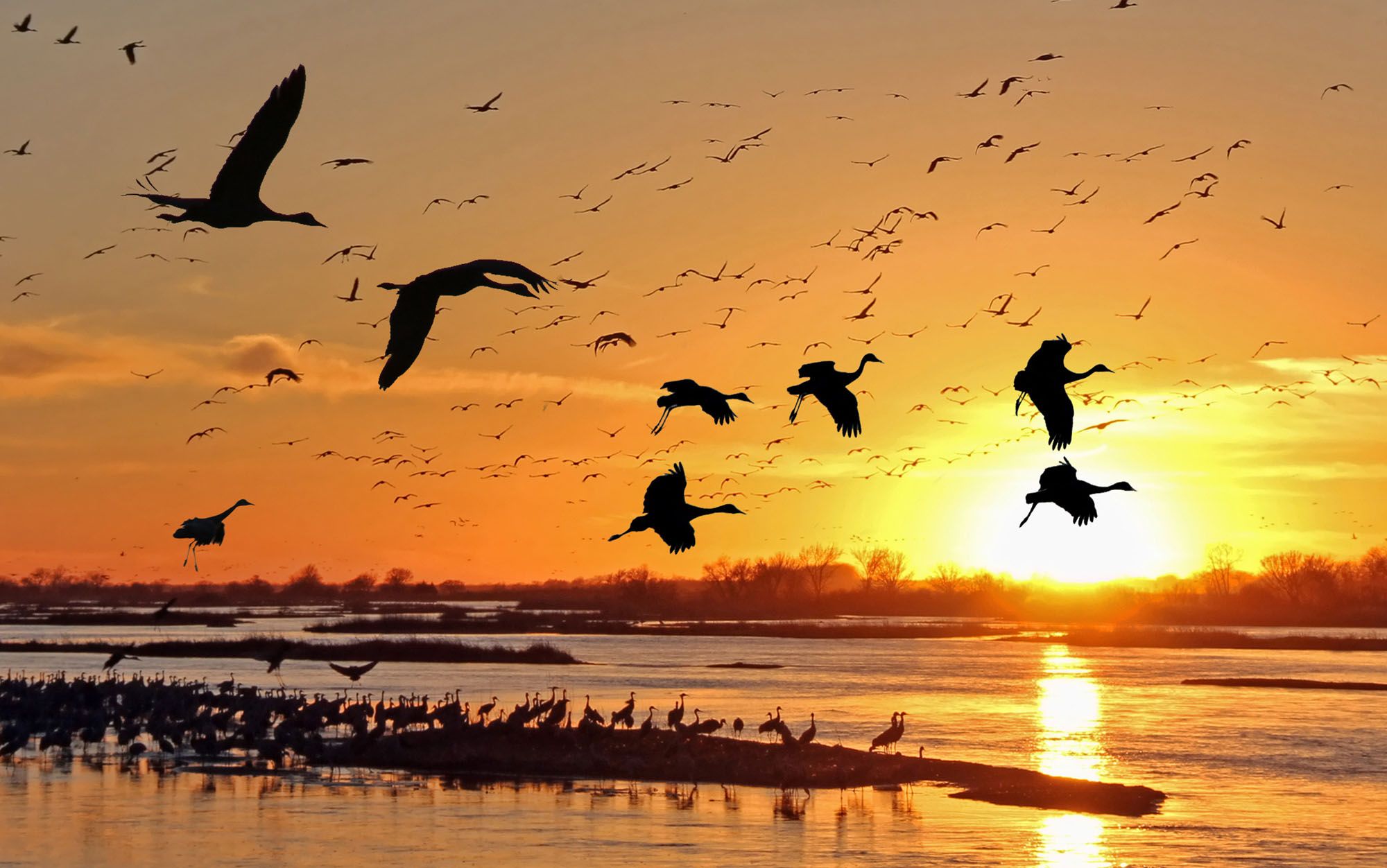
Every spring, the Platte River Valley of central Nebraska becomes the stage for one of North America's most extraordinary wildlife spectacles. As winter gives way to spring, hundreds of thousands of Sandhill Cranes converge on this stretch of the Great Plains during their annual northward migration. In fact, more than 80% of the world's Sandhill Crane population passes through the central Platte River Valley, making it one of the most important migratory stopover locations on the continent. The spectacle is especially impressive around Rowe Sanctuary, where the shallow river provides a safe overnight resting place for the cranes. Each evening, enormous flocks descend onto the river's sandbars, filling the landscape with their unmistakable calls. At first light, the birds lift off in waves, creating an unforgettable display of wings, movement, and sound against the Nebraska sunrise. During the day, cranes spread throughout nearby agricultural fields and wetlands to feed, socialize, and perform their elaborate courtship dances. These birds are remarkably ancient, with fossil records placing Sandhill Cranes in Nebraska more than nine million years ago.
The Platte River Valley is much more than a gathering place for cranes. Its distinctive landscape of shallow, braided river channels, exposed sandbars, wet meadows, native prairie, and agricultural fields creates an important ecosystem for hundreds of bird species. The river's broad, shallow channels provide protection from predators such as coyotes, while surrounding wetlands and farmland offer abundant food and resting habitat for migrating birds. More than 300 bird species have been recorded throughout the Platte River corridor, and millions of additional ducks, geese, and other migratory birds travel through the region each spring. This combination of open landscapes, rich wetlands, and extraordinary concentrations of wildlife makes central Nebraska a particularly rewarding destination for bird and wildlife photography.
Beyond the cranes, we'll have the opportunity to photograph another fascinating Great Plains species: the Greater Prairie-Chicken. Known for its unusual appearance and elaborate spring courtship rituals, this grassland grouse puts on one of the most entertaining wildlife displays in North America. Each spring, males gather at traditional breeding grounds called leks, where they compete for the attention of females through an elaborate combination of dancing, foot-stomping, and vocalizations. During these displays, males raise their distinctive ear-like neck feathers, inflate bright orange air sacs along their throats, fan their tails, and produce a deep, resonating sound known as booming. Some of these calls can carry more than a mile across the open prairie. We'll have the opportunity to photograph these remarkable displays from specialized photography blinds during the early morning hours, when the males are most active. Watching multiple birds compete, dance, and occasionally leap into the air makes for an incredibly entertaining and visually unique photography experience.
Together, these two experiences offer a remarkable look at the wildlife and natural history of the Great Plains. From the immense spectacle of thousands of cranes filling the Platte River Valley to the intimate and animated courtship displays of prairie chickens, this spring photography adventure offers opportunities to capture wildlife behavior, dramatic bird photography, and landscapes that are distinctly Nebraska.
What's Included
All listed meals and non-alcoholic beverages during the workshop
All transportation during the workshop
All lodging during the workshop
All permits and park fees
Professional photography guiding and instruction
Gratuity for service staff
What's Not Included
Flights to and from Kearney, NE (EAR)
Meals not listed as included on the itinerary
Lodging outside workshop dates
Alcoholic beverages
Souvenirs and personal items
Gratuity for photography guide(s). Please refer to our FAQ section for more details about gratuities
Trip Insurance - see plans here.
Details
- Final Balance Due 120 days prior to Trip Start
- Standard terms & conditions apply. Please see our Cancellation / Transfer policy on our Frequently Asked Questions page.
- Trip Insurance Optional - but highly recommended

Trip Itinerary
Trip Itinerary
Most meals included – (B,L,D) denotes Breakfast, Lunch, Dinner
Day 1 – Arrival in Kearney, Nebraska (D)
We'll arrive in Kearney and get settled into our accommodations in the heart of Nebraska's Platte River Valley. Depending on arrival times, we'll have an opportunity to get acquainted with the region and its incredible spring birdlife. We'll gather for a welcome dinner and discuss the photography opportunities ahead.
Day 2 – Sandhill Crane Migration at Rowe Sanctuary (B,L,D)
We'll start early with a photography experience at Rowe Sanctuary along the Platte River. During the spring migration, hundreds of thousands of Sandhill Cranes gather here to rest overnight before continuing their journey north. We'll photograph the cranes as they lift off from the river at sunrise, creating incredible opportunities for flight photography, flock behavior, and birds against the morning light.
After breakfast, we'll spend time exploring the surrounding agricultural fields and wetlands, where cranes can be found feeding, interacting, and performing their courtship displays. We'll return for another evening photography opportunity as the cranes gather along the river to roost for the night.
Day 3 – Cranes, Wetlands & Great Plains Wildlife (B,L,D)
We'll have another opportunity to photograph the Sandhill Crane migration, with an early morning outing focused on flight photography and changing light conditions. Depending on activity, we'll explore additional locations along the Platte River to photograph cranes and other wildlife.
The middle of the day will offer time to rest, review images, and work on photography techniques before heading back out for another evening in the field. We'll continue looking for opportunities to capture the scale of the migration, including large flocks arriving over the river at sunset.
Day 4 – Prairie Chicken Courtship Photography (B,L,D)
We'll trade the river valley for Nebraska's expansive grasslands and head out well before sunrise to photograph Greater Prairie-Chickens at their traditional breeding grounds, known as leks.
From specialized photography blinds, we'll have the opportunity to photograph males performing their elaborate courtship displays. We'll look for the birds' distinctive orange air sacs, raised neck feathers, stomping feet, and competitive interactions as they attempt to attract females. This is one of the most fascinating wildlife spectacles on the Great Plains.
We'll spend the morning photographing the lek before returning to our accommodations for some downtime. Depending on conditions and group interest, we can arrange another afternoon wildlife photography outing.
Day 5 – Final Prairie Chicken Photography & Departure (B)
We'll have one final early morning opportunity to photograph the prairie chickens at the lek, building on what we've learned during our previous outing. With additional time in the blinds, we'll work on capturing different behaviors, compositions, and interactions.
Following breakfast, we'll return to Kearney and prepare for departure, bringing our Nebraska wildlife photography adventure to a close.
Please note that the exact sequence of the itineraries on all photography trips will be based on weather and lighting conditions. The goal on these trips is to make sure we are at the right place at the right time for the perfect light on our subjects. Also, itineraries can change for a variety of other circumstances including floods, forest fires, national park closures, road closures, and more. Due to the nature of wildlife and landscape photography, we do not guarantee any specific sightings or specific compositions.
Physical Requirements
This trip involves moderate physical activity in a variety of landscapes including grasslands, wetlands, and woodlands. Guests should be prepared for short to moderate walks, typically up to one to two miles per day on uneven, sometimes muddy terrain. While trails are generally flat, some areas may include soft ground or uneven surfaces. The pace is relaxed, but guests should be ready for extended periods of standing or crouching while photographing wildlife. Weather can vary, with hot temperatures and humidity in some areas. Staying hydrated, sun protection, comfortable footwear, and appropriate clothing for the conditions are key to enjoying the trip.
Why Choose Backcountry Journeys?
UNPARALELLED
PHOTOGRAPHY
TRIPS
PHOTOGRAPHY
TRIPS
arrow_drop_down_circle
Divider Text
Explore over 100 worldwide photo tours and workshops tailored to photographers of all skill levels, from iconic U.S. National Parks to Africa's untamed savannahs.
THE BEST TEAM
IN THE
BUSINESS
IN THE
BUSINESS
arrow_drop_down_circle
Divider Text
We're proud to offer unmatched photography trips led by exceptional instructors who not only excel in photography but also serve as expert guides.
WORLD-CLASS
PHOTOGRAPHY
COMMUNITY
PHOTOGRAPHY
COMMUNITY
arrow_drop_down_circle
Divider Text
Join the Backcountry Journeys Tribe, where shared adventures in breathtaking locations foster lasting connections with fellow photographers in a warm, inclusive atmosphere.

[Block//Review]
[Block//Trip Reviewer//First Name] - [Block//Date Of Review %n/j/Y%+0]
Verified Guest

Worry Free Travel Guarantee!
Worry Free Travel Guarantee!

HERE’S THE DEAL
We offer one of the most rock solid guarantees in the travel industry - our worry free travel, peace of mind guarantee to you!We’re so confident that the Photography Trips we offer will not only meet but exceed the lofty expectations set forth on our website – if your trip experience does not 100% match the promises laid forth on our website we will gladly give you a credit toward a future trip.
Natural events such as wildlife & weather are certainly out of our control but every aspect of the trip including logistics, accommodations, vehicles, itinerary & your expert trip leaders will match the lofty promises we’ve made on the site – we guarantee it!

Backcountry Journeys
Connecting Passionate People To
Exceptional Experiences.
Exceptional Experiences.
Business Hours:
Mon-Fri, 8AM-4PM MT
928-478-1521
adventure@backcountryjourneys.com
Mon-Fri, 8AM-4PM MT
928-478-1521
adventure@backcountryjourneys.com
arrow_drop_down_circle
Divider Text
All Images & Content Are Property Of Backcountry Journeys Photography Tours, Workshops & Safaris LLC - Copyright 2026


About Us
Receive a Digital Trip Catalog
Find an upcoming photography tour with our interactive catalog.