2025 Travelers' Choice

About Backcountry Journeys
Why Choose Backcountry Journeys
If you're considering a photography trip, hear why Backcountry Journeys delivers the best experience in the industry.Frequently Asked Questions
If you're new to photography trips, or new to BCJ, you can find our common travel questions here.Fitness Levels
Our trips vary on physical intensity, and by reviewing our fitness levels, you can find out which trips may be more challenging, or aligned more closely with your comfort level.Meet The Crew
We've built an amazing team of experienced guides, and dedicated office staff that elevate your travel experience. Get to know their backgrounds, and hear their stories.Loyalty Program
We reward our frequent photo adventurers with exclusive discounts on amazing photography trips.Contact Us
If you need to get in touch with our office staff, or have additional business inquiries, you can find our information here.Refer a Friend
Know someone perfect for one of our tours? Recommend them through this quick form.Stay Up To Date On All Things
Backcountry Journeys
Backcountry Journeys
Our Photography Community
Our Webinars
Our regularly hosted webinars provide photography instruction from our own guides on a wide range of topics.Our Education Portal
Explore our library of articles that cover everything from common questions, to in-depth guides on how to achieve that perfect shot.Community Testimonials
We're proud to foster an amazing group of photo travelers, and here you can find their stories from their past adventures.Resources For Photographers
About Our Company
Resources For Photographers
About Our Company
Grand Canyon is Certifiable – As an International Dark Sky Park
The Grand Canyon is certifiable.
As an International Dark Sky Park, that is. GREAT news in general, and really great news for all of you astrophotography enthusiasts out there. Backcountry Journeys visits the north rim of the Grand Canyon on our Southwest Monsoon: Grand Canyon Country tour, set for late July, and we plan for a night shot, or two, as we spend two nights together under the blanket of stars that Grand Canyon protects.
This certification recognizes the park’s efforts to control and limit light pollution by retrofitting or replacing thousands of inefficient light fixtures over the past three years.
As an International Dark Sky Park, that is. GREAT news in general, and really great news for all of you astrophotography enthusiasts out there. Backcountry Journeys visits the north rim of the Grand Canyon on our Southwest Monsoon: Grand Canyon Country tour, set for late July, and we plan for a night shot, or two, as we spend two nights together under the blanket of stars that Grand Canyon protects.
This certification recognizes the park’s efforts to control and limit light pollution by retrofitting or replacing thousands of inefficient light fixtures over the past three years.
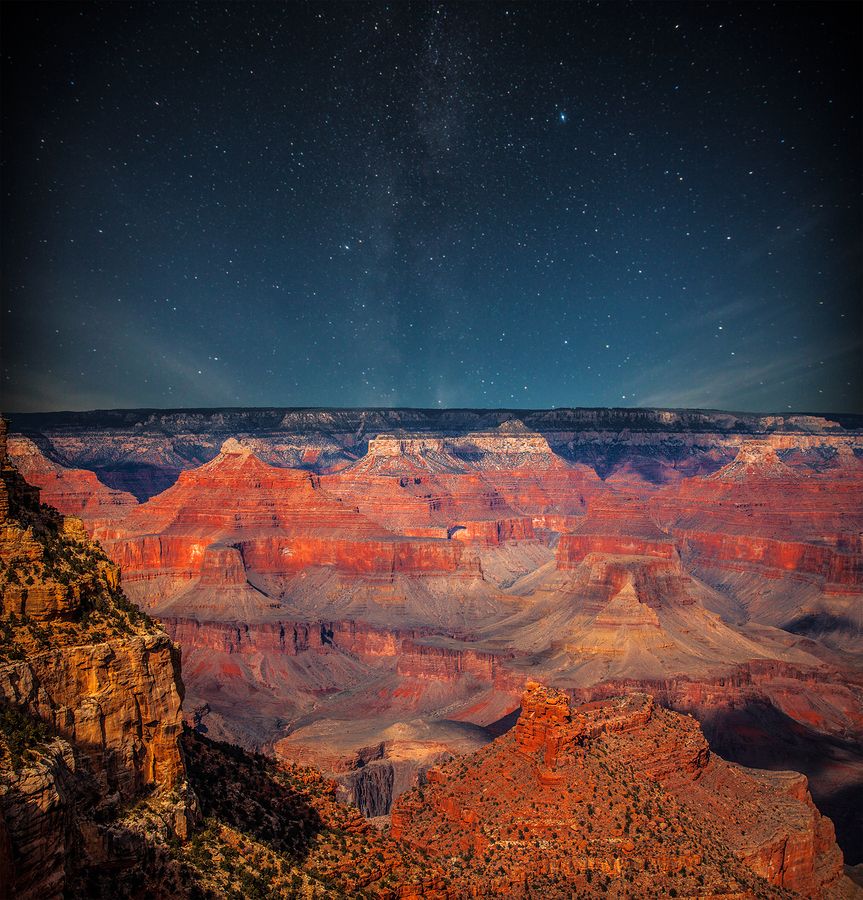
Preservation of the natural world
The mission statement for the National Parks Service, the folks responsible for all of our National Parks, is to “preserve unimpaired the natural and cultural resources and values…for the enjoyment, education, and inspiration of this and future generations.”
Limiting light pollution for the benefit of the many species of birds, bugs and nocturnal mammals that call Grand Canyon home is in line with this mission. Not to mention for the benefit and enjoyment of people who visit, and live nearby.
International Dark Sky
According to a news release on the Park’s website, the International Dark Sky Park certification will give Grand Canyon National Park support to continue to grow its educational programs and will create economic opportunity for neighboring communities as well through astronomy-based tourism.
The certification does not carry legal or regulatory authority; however, it demonstrates a commitment to improving night skies through the use of more energy efficient, sustainable lighting. Certification also reaffirms Grand Canyon’s commitment to educating the public and gateway communities about the importance of good lighting and opportunities to work together toward common goals.
To get this certification from the International Dark Sky Association the park had to show them a certain percentage of the lighting systems were compliant to their standards. And the scale of the operations at Grand Canyon makes this quite a feat. 5,000 lights in the park were surveyed, including their K-12 school. Yep, Grand Canyon has a school!
This process has been a long one. Efforts began in 2016 when the Park was given Provisional status after the initial assessment of over 5,000 exterior light fixtures was taken. At that time 35% of lights were already dark-sky compliant, but the Park had three years to achieve 69%.
In the coming years, the park plans on making 90% of the lights dark-sky compliant. The amount of lights inventoried and retrofitted in this process undoubtedly makes Grand Canyon National Park one of the largest, most complex, International Dark Sky Parks in the world.
Funding for this project came almost entirely from Grand Canyon Conservancy, the official non-profit partner of the park, which relies on donations in order to achieve long-term renovations and educational programming.
The mission statement for the National Parks Service, the folks responsible for all of our National Parks, is to “preserve unimpaired the natural and cultural resources and values…for the enjoyment, education, and inspiration of this and future generations.”
Limiting light pollution for the benefit of the many species of birds, bugs and nocturnal mammals that call Grand Canyon home is in line with this mission. Not to mention for the benefit and enjoyment of people who visit, and live nearby.
International Dark Sky
According to a news release on the Park’s website, the International Dark Sky Park certification will give Grand Canyon National Park support to continue to grow its educational programs and will create economic opportunity for neighboring communities as well through astronomy-based tourism.
The certification does not carry legal or regulatory authority; however, it demonstrates a commitment to improving night skies through the use of more energy efficient, sustainable lighting. Certification also reaffirms Grand Canyon’s commitment to educating the public and gateway communities about the importance of good lighting and opportunities to work together toward common goals.
To get this certification from the International Dark Sky Association the park had to show them a certain percentage of the lighting systems were compliant to their standards. And the scale of the operations at Grand Canyon makes this quite a feat. 5,000 lights in the park were surveyed, including their K-12 school. Yep, Grand Canyon has a school!
This process has been a long one. Efforts began in 2016 when the Park was given Provisional status after the initial assessment of over 5,000 exterior light fixtures was taken. At that time 35% of lights were already dark-sky compliant, but the Park had three years to achieve 69%.
In the coming years, the park plans on making 90% of the lights dark-sky compliant. The amount of lights inventoried and retrofitted in this process undoubtedly makes Grand Canyon National Park one of the largest, most complex, International Dark Sky Parks in the world.
Funding for this project came almost entirely from Grand Canyon Conservancy, the official non-profit partner of the park, which relies on donations in order to achieve long-term renovations and educational programming.
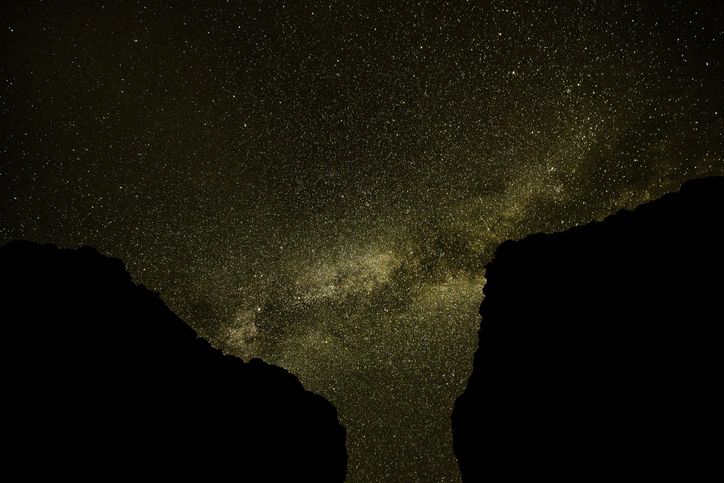
The natural world and those who love it are smiling
All of this is great news for lovers of the natural world, and specifically of the night sky. Sitting anywhere between 7,000 and 9,000 feet of elevation, Grand Canyon National Park is above a good portion of the atmosphere, and in a high desert where it’s very dry. Because of these things people are able to see the Milky Way in a way that most people in the country can’t. As long as the night sky stays dark. Astrophotography is a unique and fun style of photography, and Grand Canyon is one of the BEST places in the country to photograph the Milky Way.
All of this is great news for lovers of the natural world, and specifically of the night sky. Sitting anywhere between 7,000 and 9,000 feet of elevation, Grand Canyon National Park is above a good portion of the atmosphere, and in a high desert where it’s very dry. Because of these things people are able to see the Milky Way in a way that most people in the country can’t. As long as the night sky stays dark. Astrophotography is a unique and fun style of photography, and Grand Canyon is one of the BEST places in the country to photograph the Milky Way.
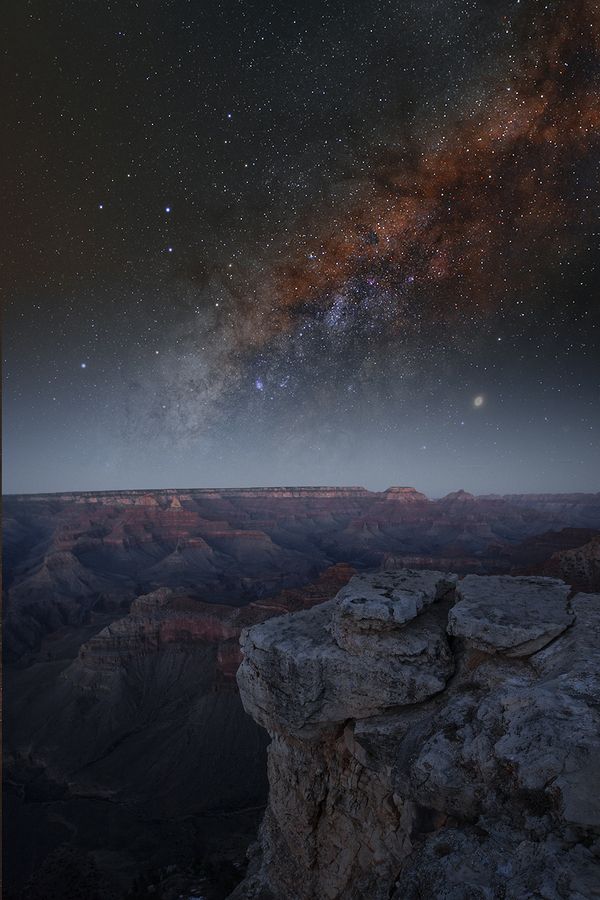
As our National Parks continue to draw record numbers of visitors it is important that the infrastructure at these parks continue to advance and managers consider the effects that growth has on the parks’ mission – to preserve the natural world while providing enjoyment for humans.
Humans such as all of us, who look to visit these natural wonders as a part of our love of photography and the natural world in which the wildlife and landscapes we enjoy so much are contained within.
Humans such as all of us, who look to visit these natural wonders as a part of our love of photography and the natural world in which the wildlife and landscapes we enjoy so much are contained within.

We offer world-class travel photography
experiences around the world.
Each tour is bundled with lodging, meals, and transportation between workshops included, allowing you to focus on photography instead of the stress of traveling.
experiences around the world.
Each tour is bundled with lodging, meals, and transportation between workshops included, allowing you to focus on photography instead of the stress of traveling.
Get Our Trip Catalog
Receive a trip catalog that highlights all of our upcoming photo tours and workshops.Schedule a Trip Consultation
Meet with a photo experience coordinator, and experience a personal touch to your booking experience.Landscape Guide
Receive a FREE Landscape Cheat Sheet Written By a Pro Photographer.Webinars
Our regularly hosted webinars provide photography instruction from our own guides on a wide range of topics.Education Portal
Explore our library of articles that cover everything from common questions, to in-depth guides on how to achieve that perfect shot.
Backcountry Journeys
Connecting Passionate People To
Exceptional Experiences.
Exceptional Experiences.
Business Hours:
Mon-Fri, 8AM-4PM MT
928-478-1521
adventure@backcountryjourneys.com
Mon-Fri, 8AM-4PM MT
928-478-1521
adventure@backcountryjourneys.com
arrow_drop_down_circle
Divider Text
All Images & Content Are Property Of Backcountry Journeys Photography Tours, Workshops & Safaris LLC - Copyright 2026


About Us
Receive a Digital Trip Catalog
Find an upcoming photography tour with our interactive catalog.