2025 Travelers' Choice

About Backcountry Journeys
Why Choose Backcountry Journeys
If you're considering a photography trip, hear why Backcountry Journeys delivers the best experience in the industry.Frequently Asked Questions
If you're new to photography trips, or new to BCJ, you can find our common travel questions here.Fitness Levels
Our trips vary on physical intensity, and by reviewing our fitness levels, you can find out which trips may be more challenging, or aligned more closely with your comfort level.Meet The Crew
We've built an amazing team of experienced guides, and dedicated office staff that elevate your travel experience. Get to know their backgrounds, and hear their stories.Loyalty Program
We reward our frequent photo adventurers with exclusive discounts on amazing photography trips.Contact Us
If you need to get in touch with our office staff, or have additional business inquiries, you can find our information here.Refer a Friend
Know someone perfect for one of our tours? Recommend them through this quick form.Stay Up To Date On All Things
Backcountry Journeys
Backcountry Journeys
Our Photography Community
Our Webinars
Our regularly hosted webinars provide photography instruction from our own guides on a wide range of topics.Our Education Portal
Explore our library of articles that cover everything from common questions, to in-depth guides on how to achieve that perfect shot.Community Testimonials
We're proud to foster an amazing group of photo travelers, and here you can find their stories from their past adventures.Resources For Photographers
About Our Company
Resources For Photographers
About Our Company
A Different Perspective on the Southwest: Mastering Drone Photography in Utah’s Badlands
Published October 19, 2026
Look beyond the horizon, turn geological patterns into abstract art, and discover a new approach to landscape photography from above.
The American Southwest has a way of making photographers stop in their tracks. Towering buttes, sculpted sandstone, and vast desert horizons offer an endless supply of dramatic compositions. But some of the region's most compelling images aren't made looking out across the landscape. They're made looking straight down.
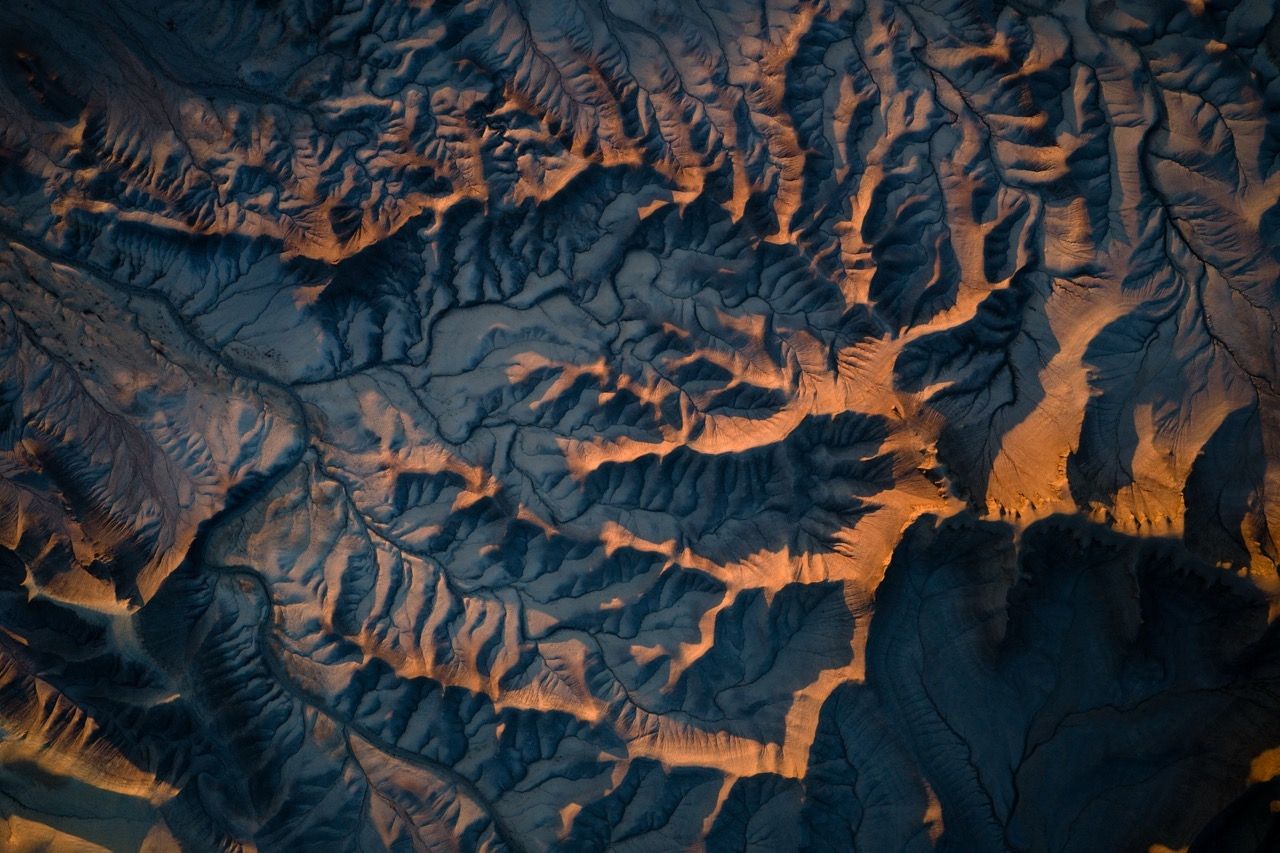
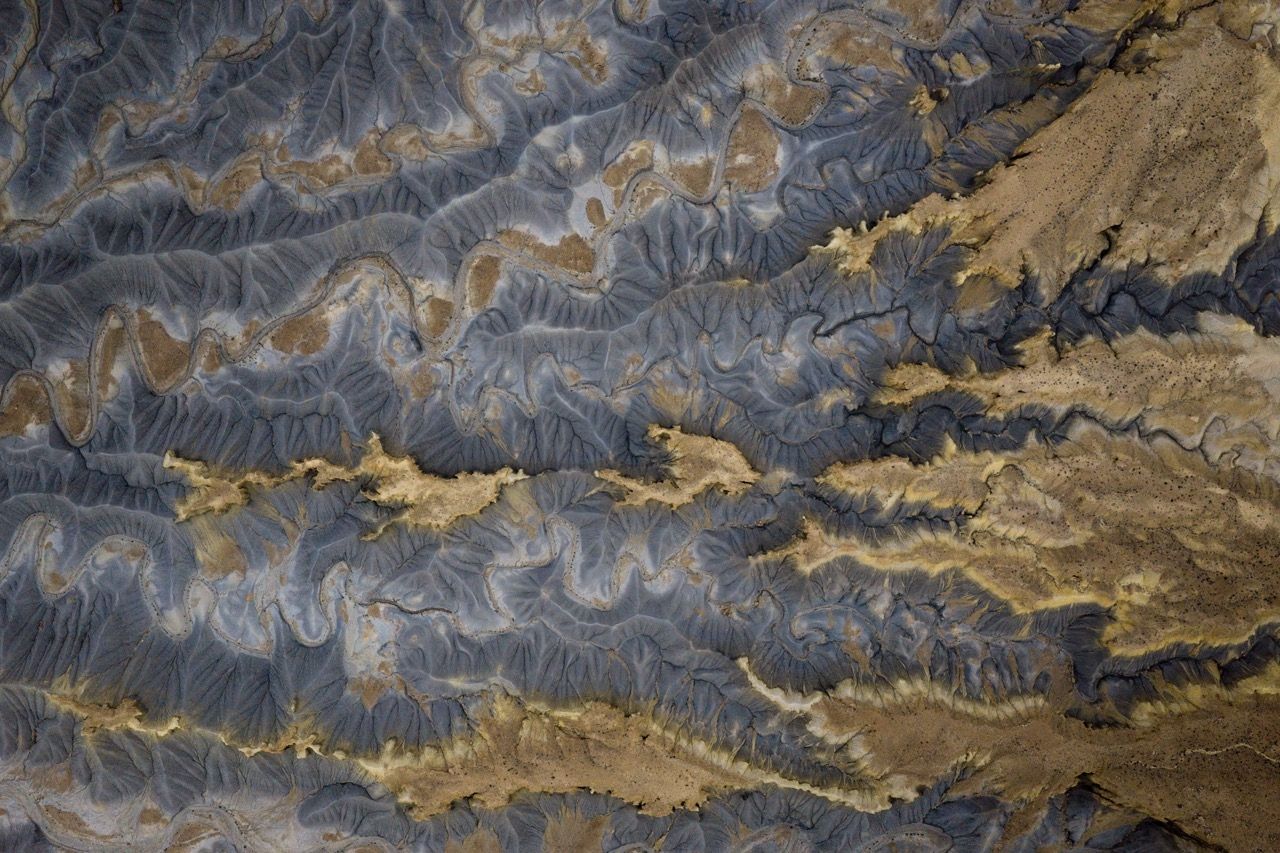
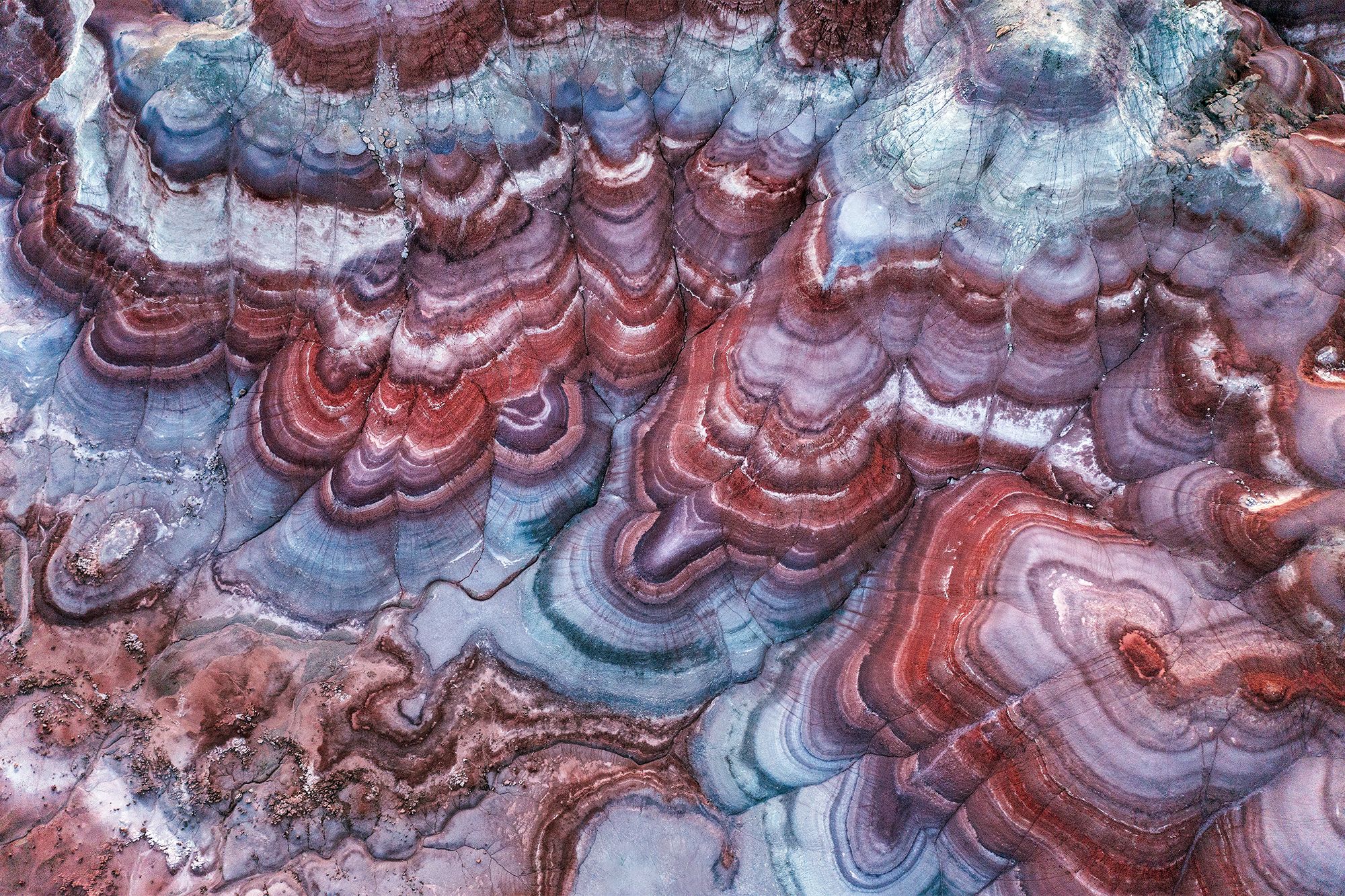
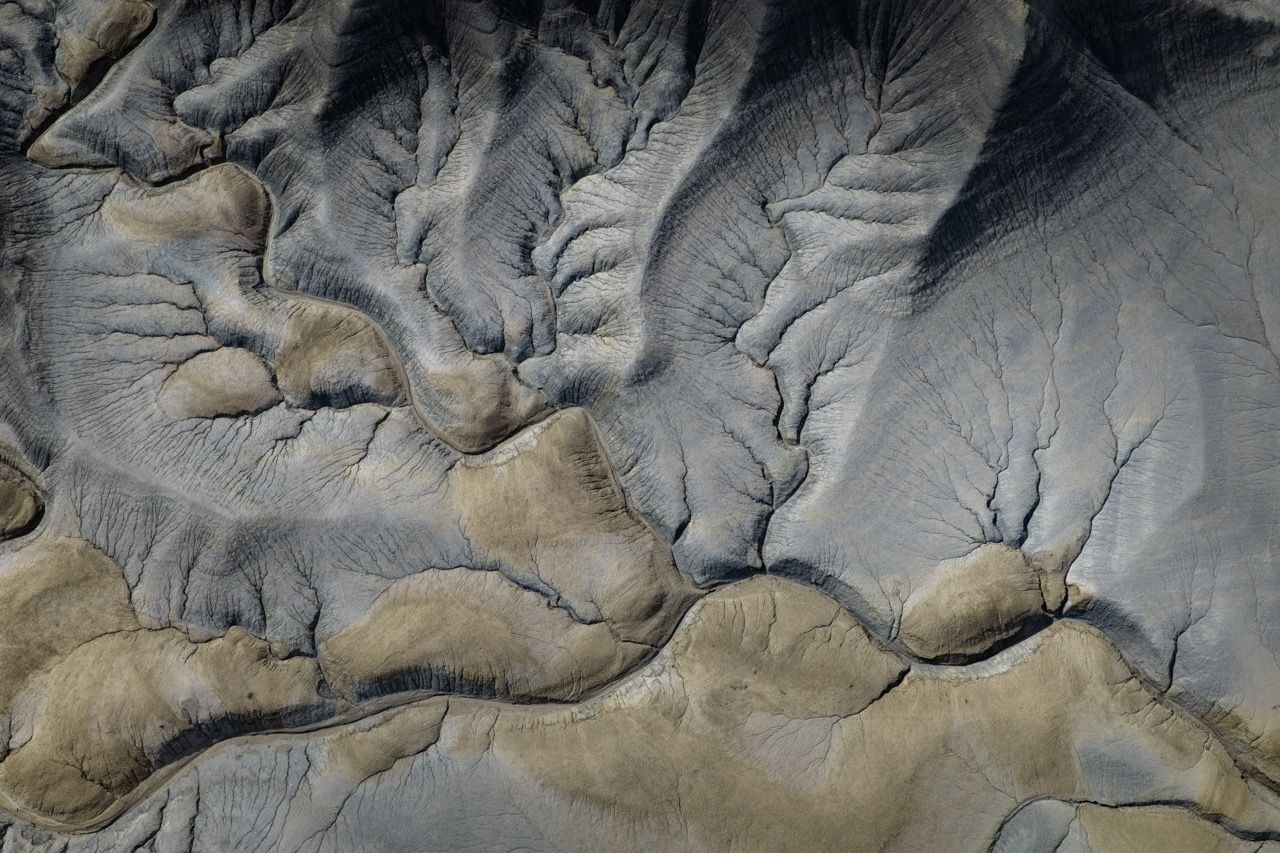
From the air, Utah's badlands become something entirely different. Slate-gray ridges intersect with golden drainages. Bentonite hills reveal unexpected bands of red, purple, and ash gray. Eroded channels branch across the desert floor like veins, creating intricate patterns that are difficult to fully appreciate from the ground.
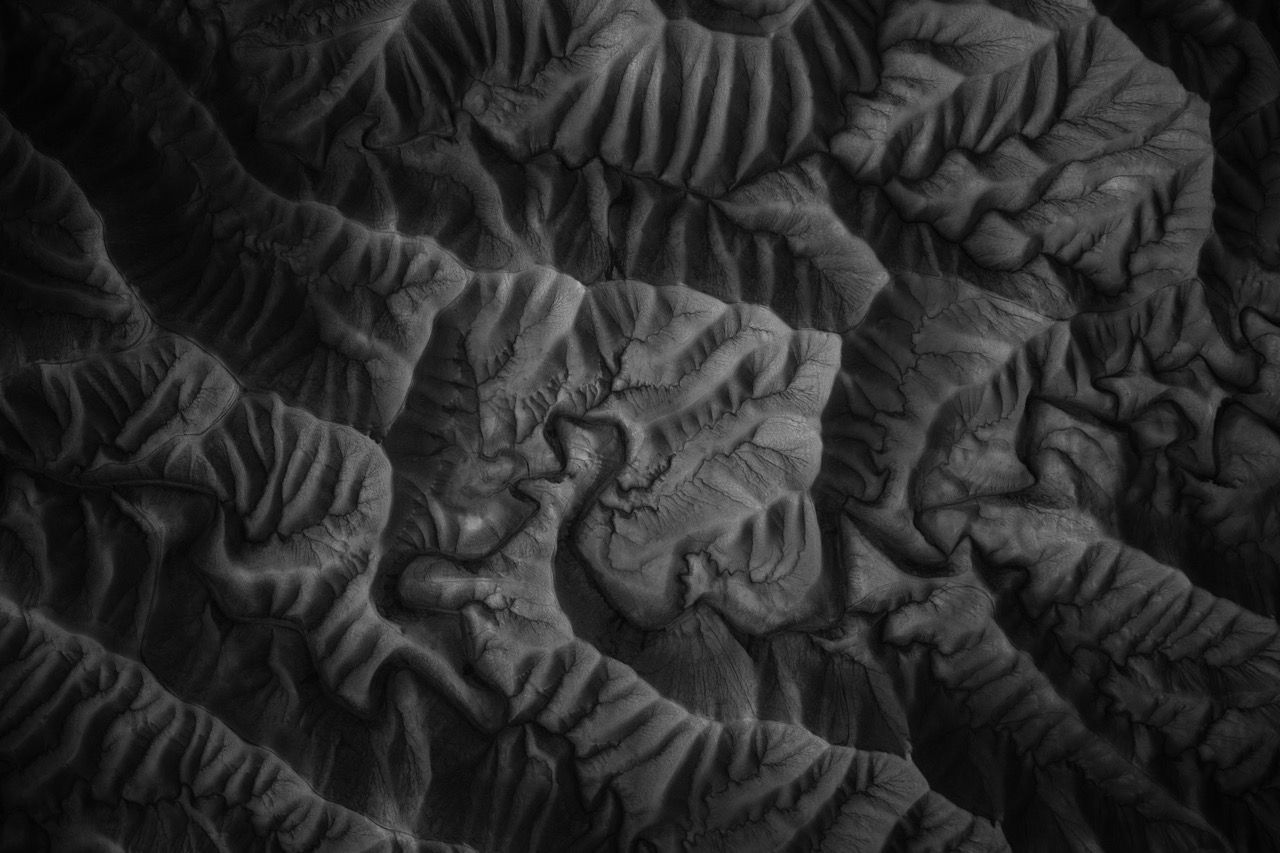
Familiar geological formations become abstract compositions. Texture becomes the subject. Lines become leading elements. Color and contrast take on a new role in shaping the frame.
For drone photographers, this is an opportunity to move beyond conventional landscape imagery and explore a more graphic, design-driven approach to photography.
The Utah Badlands Drone Photo Workshop from Backcountry Journeys is built around that creative potential. Over five days, you'll explore some of central Utah's most striking desert landscapes while developing the technical skills and compositional instincts needed to make more intentional aerial photographs.
Whether you're learning to fly with greater confidence or looking to refine an established drone photography workflow, this workshop offers an opportunity to expand your portfolio from an entirely different perspective.
Photograph the Badlands Like an Abstract Artist
Central Utah's badlands are particularly rewarding for photographers interested in abstract imagery.
The region's bentonite hills and eroded terrain contain a striking range of natural colors, from deep reds and purples to muted grays and golden highlights. Their surfaces are shaped by geological processes that have produced patterns, curves, and textures that become especially apparent from above.
In the right light, these features offer a natural study in color, contrast, and form.
Use light to reveal texture
Light is one of the most important tools in aerial landscape photography.
When the sun sits low near the horizon, subtle variations in terrain can produce small shadows that emphasize ridges, depressions, and eroded surfaces. These shadows add dimensionality and help distinguish one geological feature from another.
As the sun rises higher, shadows become shorter and the same terrain may appear flatter. That can still be useful, particularly when the goal is to emphasize color or create a more graphic, simplified composition.
Rather than treating sunrise and sunset as beautiful times to fly, think about how the direction and quality of light will influence the photograph you're trying to make.
Will side lighting emphasize the terrain's relief? Will softer light help preserve color across a broad scene? Would a different flight position place the shadows where they strengthen the composition?
These questions encourage you to work with the landscape instead of simply capturing whatever appears beneath the drone.
Build a portfolio around shape and color
Abstract aerial photography also offers a chance to experiment with visual consistency.
You might create a series of images built around branching drainages, contrasting geological bands, or repeating ridgelines. You could emphasize warm and cool color relationships or explore how different altitudes change the balance between detail and simplicity.
Thinking in series can help you move beyond individual successful shots and develop a more cohesive body of work.
And because the landscape contains so many variations in form, you can revisit the same general area with different compositional goals rather than treating each flight as a search for an entirely new location.
Master the Technical Side of Drone Photography
Creative vision matters, but aerial photography also depends on a reliable technical workflow.
The Utah Badlands workshop includes instruction designed to help photographers develop confidence with their equipment, plan flights safely, and use advanced techniques to expand what's possible with a drone.
HDR bracketing: Preserve detail across challenging exposures
High Dynamic Range (HDR) bracketing involves capturing multiple exposures of the same composition so they can be blended during post-processing.
This can be useful when a scene contains a broad range of brightness levels, such as sunlit terrain alongside deep shadows. By combining exposures, you may be able to retain more detail in both the brighter and darker portions of the image.
The key is understanding when bracketing is useful, how to capture a consistent set of frames, and how to blend them without creating unnatural transitions or excessive processing artifacts.
Panorama stitching: Create a broader view
A single drone frame doesn't always provide the field of view or resolution needed for the final image you envision.
Panorama techniques allow you to capture overlapping frames and merge them into a wider composition. Depending on your approach, this can produce expansive views of the badlands or provide additional resolution for a detailed final image.
Successful panoramas require thoughtful planning. Consistent exposure, sufficient overlap, and careful attention to the relationship between individual frames all contribute to a cleaner result.
Flight planning: Make each outing more intentional
Effective drone photography begins before takeoff.
Understanding your intended composition, considering the position of the sun, checking weather conditions, and planning a safe flight can help you spend less time improvising in the air and more time making purposeful images.
During the workshop, you'll have opportunities to develop your approach to flight planning and safe operating practices while learning how to identify promising compositions from the ground and refine them from above.
The goal is not simply to become more comfortable piloting a drone. It's to make better photographic decisions before, during, and after each flight.
Factory Butte and the Art of Aerial Scale
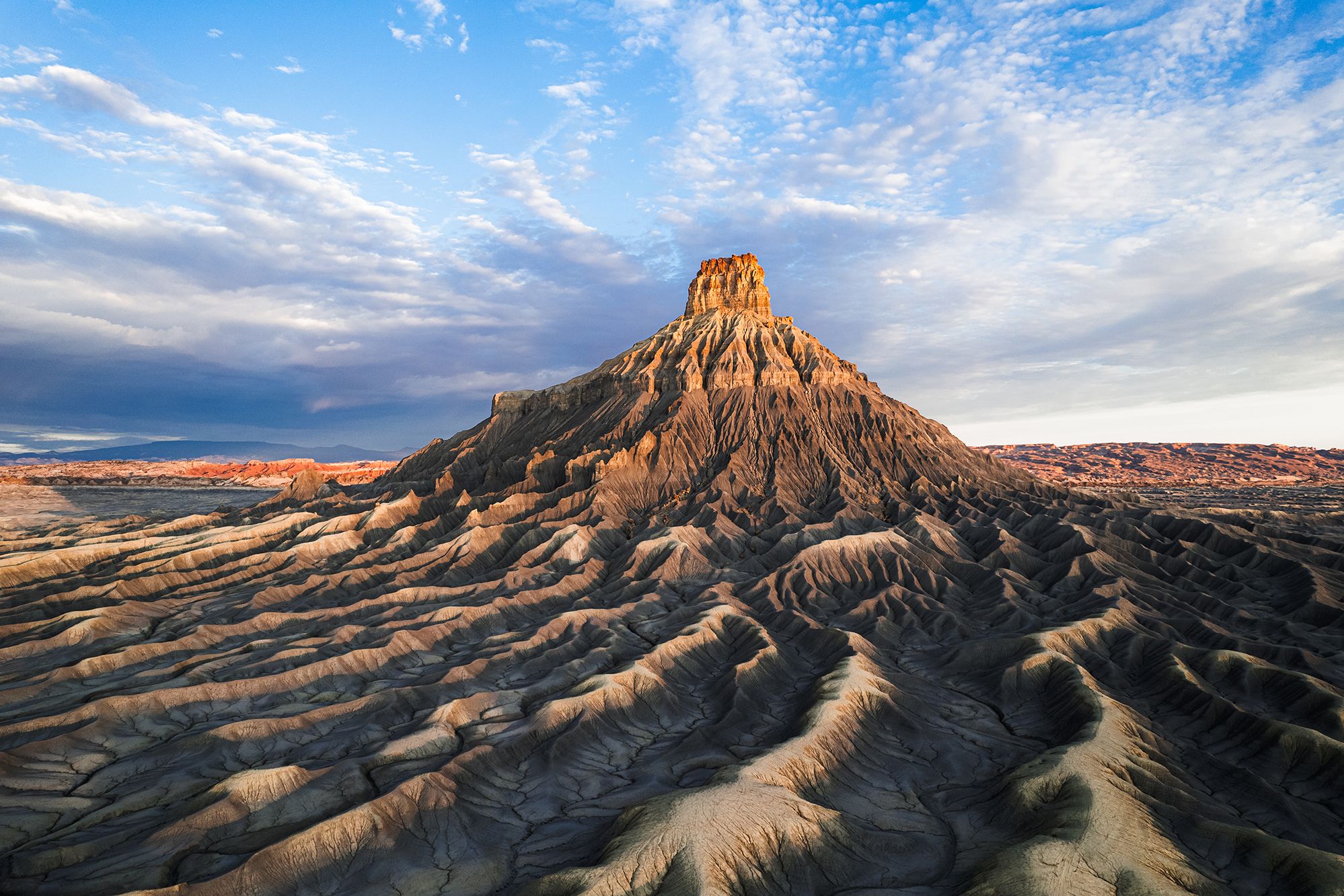
Utah's iconic buttes provide another compelling subject for aerial photographers.
Rising above the surrounding desert, these formations introduce a different compositional challenge from the intricate patterns of the badlands. Here, the relationship between an isolated landform and the surrounding terrain can become the central idea of the image.
You might emphasize the scale of a butte against an expansive desert floor, use surrounding drainages to lead the eye toward the formation, or explore how the shadows along its slopes create a sense of dimension.
From the air, you can also experiment with how much context to include. A wider frame may reveal the butte's relationship to the surrounding landscape, while a tighter composition can simplify the scene and emphasize its shape.
The important consideration is how altitude, camera angle, and framing work together.
An aerial photograph doesn't need to show everything. Sometimes, excluding the horizon and isolating a single geological feature creates a more powerful image than a sweeping panorama.
As you work through these choices, you'll begin to see how drone photography can complement traditional landscape photography rather than simply offering a different vantage point!
Bring a New Perspective to Your Photography
Drone photography opens up a different way of seeing the landscape. It challenges you to think about composition without relying on a horizon, recognize patterns that are invisible from the ground, and use altitude and camera angle as creative tools.
Utah's badlands provide an extraordinary environment for developing that perspective.
Here, geological formations become graphic compositions. Erosion creates intricate lines and branching patterns. Color emerges from the desert floor, while low-angle light reveals the structure of a landscape shaped over immense stretches of time.
With expert instruction, dedicated field sessions, and opportunities to review and refine your work, the Utah Badlands Drone Photo Workshop gives you the chance to explore those possibilities in depth.
Whether your goal is to master top-down abstractions, create more sophisticated aerial panoramas, or build a more intentional drone photography workflow, you'll have opportunities to experiment, learn, and develop your own visual approach.
Look beyond the obvious. Find the patterns others miss. Discover what your photography can become when you change your perspective!
 Utah Badlands Drone Workshop
 Lodge-Based Photo Workshop
From $4,495.00
Up To 7 Guests
Fitness Level 1 - What's This?
Wanna Get Away?
Starts
Current Price:$0.00
Start: Salt Lake City, UT
Led By
Start: Salt Lake City, UT
Led By

Backcountry Journeys
Connecting Passionate People To
Exceptional Experiences.
Exceptional Experiences.
Business Hours:
Mon-Fri, 8AM-4PM MT
928-478-1521
adventure@backcountryjourneys.com
Mon-Fri, 8AM-4PM MT
928-478-1521
adventure@backcountryjourneys.com
arrow_drop_down_circle
Divider Text
All Images & Content Are Property Of Backcountry Journeys Photography Tours, Workshops & Safaris LLC - Copyright 2026


About Us
Receive a Digital Trip Catalog
Find an upcoming photography tour with our interactive catalog.