2025 Travelers' Choice

About Backcountry Journeys
Why Choose Backcountry Journeys
If you're considering a photography trip, hear why Backcountry Journeys delivers the best experience in the industry.Frequently Asked Questions
If you're new to photography trips, or new to BCJ, you can find our common travel questions here.Fitness Levels
Our trips vary on physical intensity, and by reviewing our fitness levels, you can find out which trips may be more challenging, or aligned more closely with your comfort level.Meet The Crew
We've built an amazing team of experienced guides, and dedicated office staff that elevate your travel experience. Get to know their backgrounds, and hear their stories.Loyalty Program
We reward our frequent photo adventurers with exclusive discounts on amazing photography trips.Contact Us
If you need to get in touch with our office staff, or have additional business inquiries, you can find our information here.Refer a Friend
Know someone perfect for one of our tours? Recommend them through this quick form.Stay Up To Date On All Things
Backcountry Journeys
Backcountry Journeys
Our Photography Community
Our Webinars
Our regularly hosted webinars provide photography instruction from our own guides on a wide range of topics.Our Education Portal
Explore our library of articles that cover everything from common questions, to in-depth guides on how to achieve that perfect shot.Community Testimonials
We're proud to foster an amazing group of photo travelers, and here you can find their stories from their past adventures.Resources For Photographers
About Our Company
Resources For Photographers
About Our Company
Beyond the Northern Lights: A Photographer’s Guide to Norway’s Lofoten Islands
Published October 14, 2026
Photograph the Arctic after dark, work with dramatic coastal light, and discover new ways to compose the landscape on an immersive winter photography workshop in Norway.
Ask a landscape photographer about their dream destinations, and Norway’s Lofoten Islands will likely come up for good reason. Jagged mountains rise straight from the sea. Fishing villages punctuate the shoreline with bright red cabins. Waves sweep across rugged beaches, and, when conditions align, the Northern Lights dance above the Arctic landscape.
But for photographers, Lofoten’s real appeal goes beyond its iconic scenery.
It’s a place where the conditions themselves become part of the creative process. A passing snowstorm can transform a familiar mountain into a study in atmosphere. A break in the clouds can send bands of light across a fjord. A change in the tide can reveal a new foreground, while a sudden aurora display can turn an otherwise quiet night into a race to compose, focus, and expose before the sky changes again.
Lofoten rewards photographers who know how to work with the light, adapt to the conditions, and recognize an image when it begins to take shape.
On the Lofoten Islands: Arctic Landscapes & Aurora Photo Workshop, Backcountry Journeys brings photographers into this extraordinary winter environment for eight days of landscape and night photography, with professional instruction and an itinerary designed around the best available photographic opportunities.
Whether you want to refine your aurora technique, create more compelling coastal compositions, or learn to see familiar landscape subjects in a new way, this is an opportunity to put your photography skills to work in one of the Arctic’s most rewarding settings.
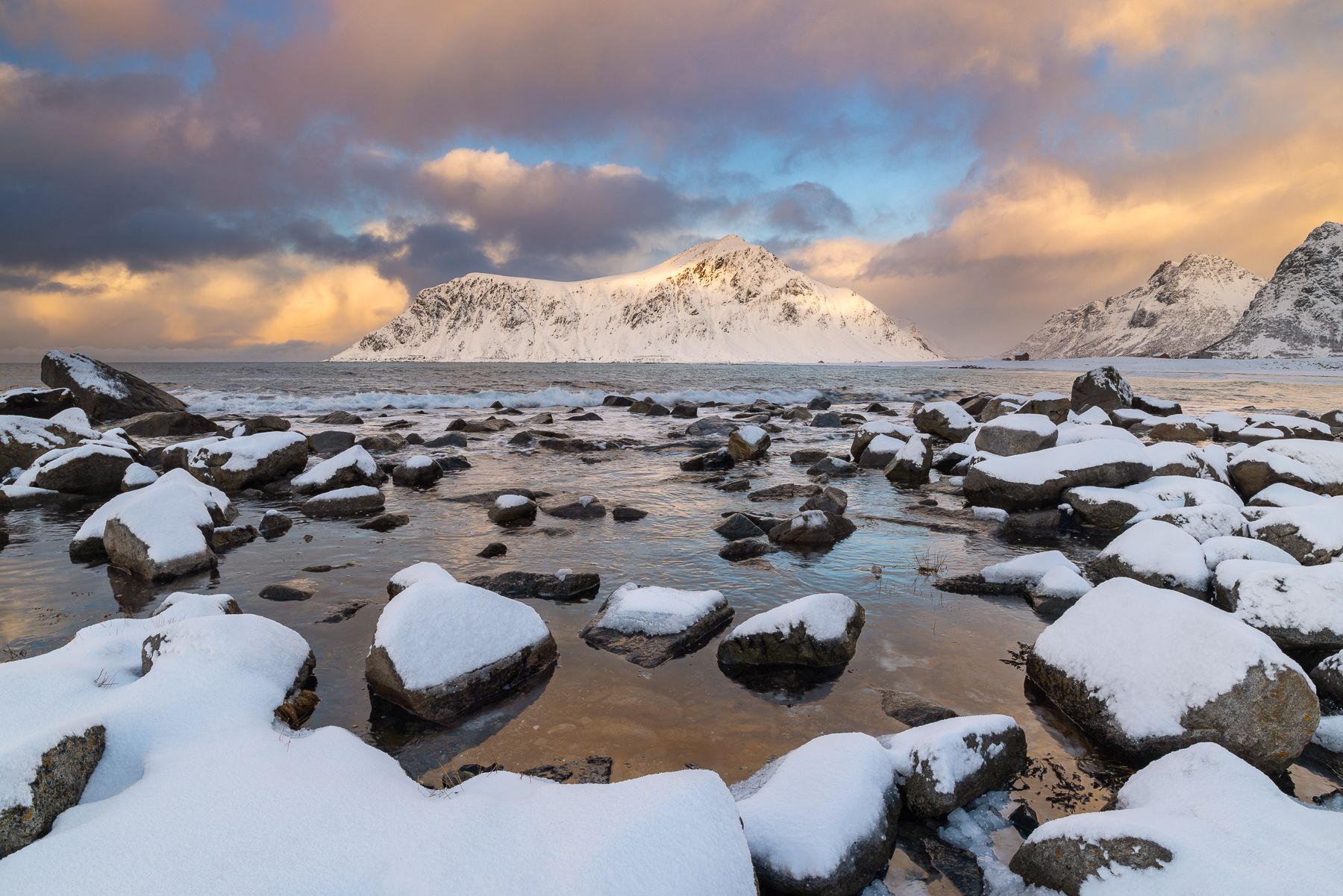
Photograph the Northern Lights With Intention
The aurora borealis is one of photography’s most captivating subjects. It is also one of the most unpredictable.
Unlike a mountain or coastline, the Northern Lights can change dramatically from one moment to the next. A faint glow may develop into sweeping curtains of green, while a bright display can shift across the sky before you have time to reconsider your composition.
Photographing the aurora well requires more than pointing a camera upward and selecting a long exposure. You need to understand your equipment, anticipate changing conditions, and make creative decisions quickly.
Lofoten offers an opportunity to develop those skills in a landscape that gives the night sky a compelling sense of place.
Balance exposure, focus, and movement
Aurora photography presents a series of technical decisions. You need enough light to record the display, but an exposure that's too long can blur fast-moving auroral structures and diminish their definition.
Learning to balance shutter speed, aperture, and ISO helps you respond to different levels of aurora activity. A brighter display may allow for a shorter exposure, while a fainter one may require more careful trade-offs between noise, detail, and light gathering.
Focusing in the dark introduces another challenge. Autofocus may struggle with a nearly black sky, making it important to understand how to establish and verify focus manually before the display intensifies.
These decisions become easier with practice. Under the guidance of a professional photography instructor, you can work through the process in the field and develop a more reliable approach to night photography.
Build a composition before the sky takes over
One of the most common challenges in aurora photography is creating an image that works as a landscape photograph, not just a record of colorful lights.
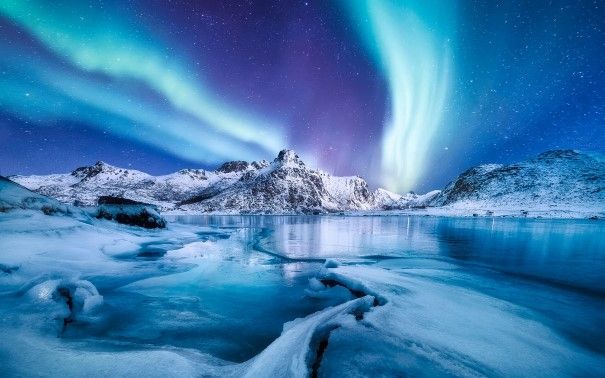
Lofoten provides compelling foregrounds and middle-ground elements for building that visual structure. A mountain ridge can anchor the composition. A shoreline can guide the eye toward the horizon. A fishing village can introduce color, scale, and a human connection to the environment.
Consider how the aurora interacts with those elements. Does a wide-angle composition communicate the scale of the landscape? Would a tighter frame emphasize the relationship between a mountain peak and a concentrated band of light? Can a reflection in the water create symmetry without making the image feel static?
These choices separate an exciting experience from a photograph with a strong visual story.
And when the aurora doesn't appear? The same dark skies and dramatic coastal environments offer opportunities to work on nightscapes, foreground illumination, and low-light composition. The aurora is never guaranteed, but the skills you develop while preparing for it are valuable well beyond a single display.
Turn Arctic Beaches Into Compelling Seascapes
When daylight returns, Lofoten offers an entirely different photographic challenge.
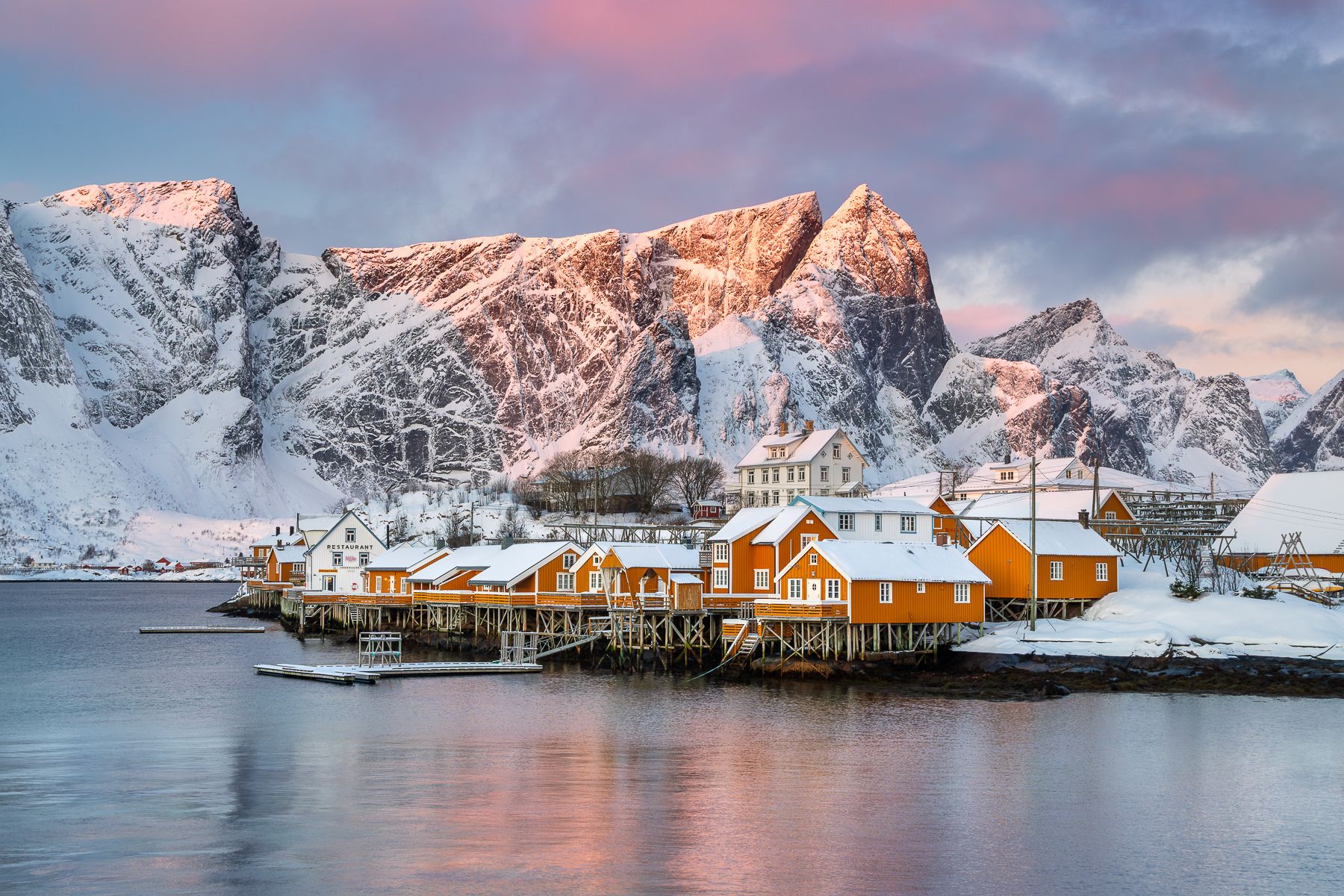
The islands are known for beaches such as Skagsanden, Myrland, Storsandnes, Uttakleiv, Haukland, and Vik. Here, the relationship between land, sea, sky, and light creates seemingly endless opportunities to experiment with landscape composition.
But an impressive coastline doesn't automatically make an impressive photograph.
The challenge is deciding what belongs in the frame, how the elements relate to one another, and when the conditions are working in your favor.
Use long exposures to shape the scene
Moving water gives landscape photographers a dynamic element to work with.
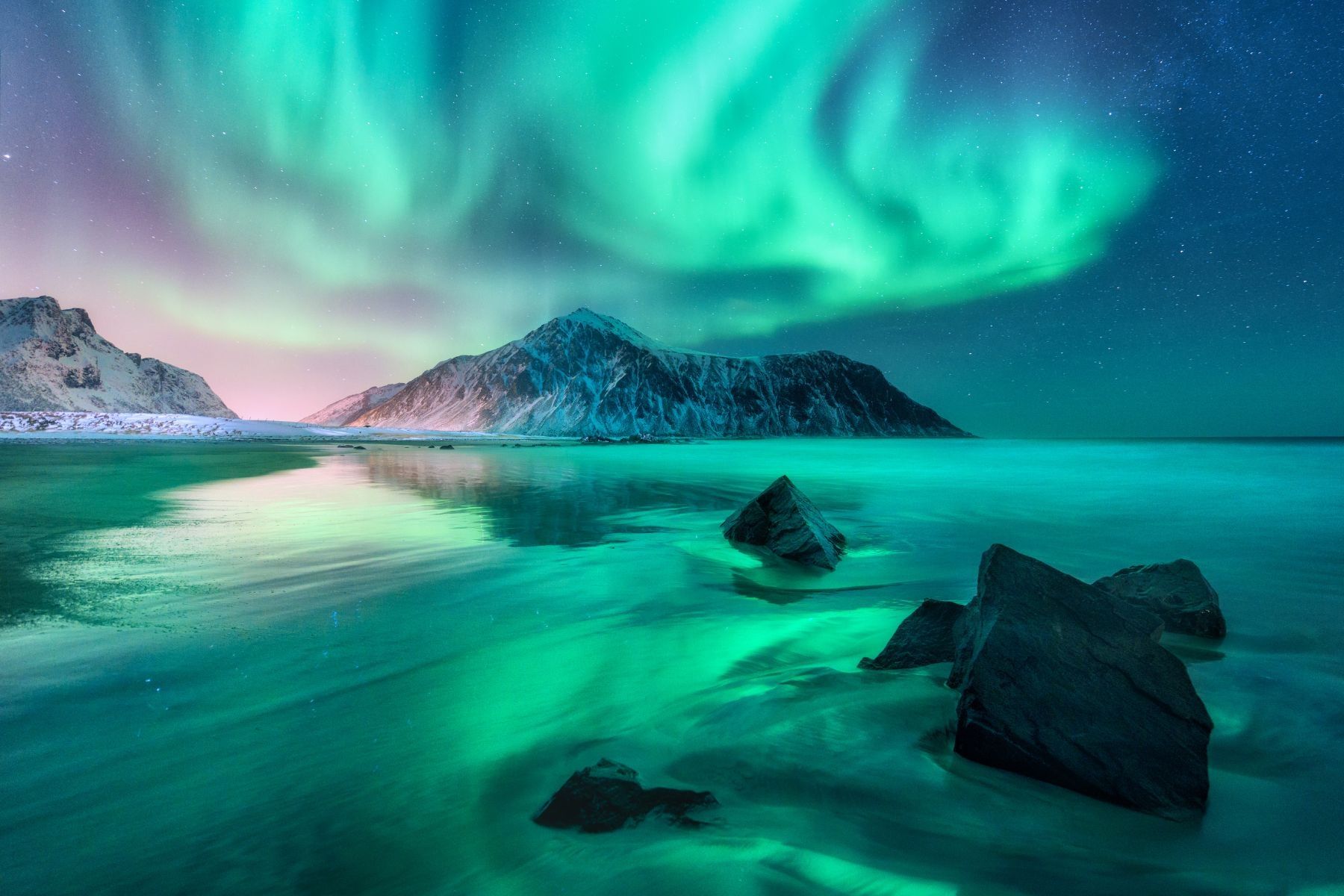
Depending on wave activity, shutter speed, and the direction of the light, you can render the ocean as a soft, flowing surface or preserve the texture and energy of individual waves.
A long exposure may simplify a busy shoreline, allowing water to become a smooth tonal element against dark rocks and rugged mountains. A faster exposure can emphasize the movement of surf, the structure of breaking waves, or the intricate patterns left along the beach.
The key is choosing a shutter speed that supports the image you want to create.
Lofoten's coastal environments provide a natural setting for experimenting with these approaches, refining your use of filters when appropriate, and learning how changing conditions affect the final photograph.
Find stronger foregrounds and cleaner compositions
A dramatic mountain range can be tempting to photograph as a wide panorama. Yet some of the most effective landscape images begin much closer to the ground.
Look for patterns in wet sand, reflections in tidal pools, the shape of a rock formation, or the curve of a shoreline leading toward the distant peaks. These details can give the viewer a clear path through the frame and create a stronger sense of depth.
On a beach, even a small change in camera position can alter the relationship between foreground and background. Moving a few feet to one side might separate a mountain from an overlapping ridge or reveal a reflection that wasn't visible from your original position.
With time in the field, you can explore these possibilities rather than settling for the first obvious composition.
Work With Winter Light, Weather, and Atmosphere
In Lofoten, the weather is not simply something to work around. It is part of what makes the photography compelling.
Clouds can add drama to the sky. Fresh snow can simplify a mountain's surface and emphasize its shape. Mist can soften distant peaks, while breaks in the clouds can create striking contrasts between illuminated terrain and shadow.
The winter season also brings a distinctive quality of light. Rather than relying on a high midday sun, photographers often work with lower-angle illumination, extended twilight, and the subtle colors that emerge around sunrise and sunset.
For landscape photographers, these conditions create opportunities to develop a more responsive approach to the scene.
Learn to recognize changing opportunities
A location that appears unremarkable under flat light can become extraordinary when a patch of sunlight reaches the mountainside. A stormy sky may produce more visual interest than a cloudless afternoon. Even a brief clearing can reveal a layered composition that wasn't there moments earlier.
The goal isn't to wait for perfect weather. It's to recognize what the available conditions make possible.
That might mean emphasizing contrast on a dark, overcast day, using fog to simplify a composition, or shifting your attention from a grand vista to a smaller detail when visibility is limited.
This is where flexibility matters. The workshop itinerary adapts to weather and lighting conditions, helping the group prioritize productive locations and photographic opportunities rather than treating the schedule as fixed.
Over eight days, you'll have opportunities to revisit different coastal environments and viewpoints, building familiarity with the landscape while responding to what the Arctic gives you each day.

The Fishing Villages: Color, Scale, and Visual Storytelling
Lofoten's mountains and beaches are only part of the photographic story.
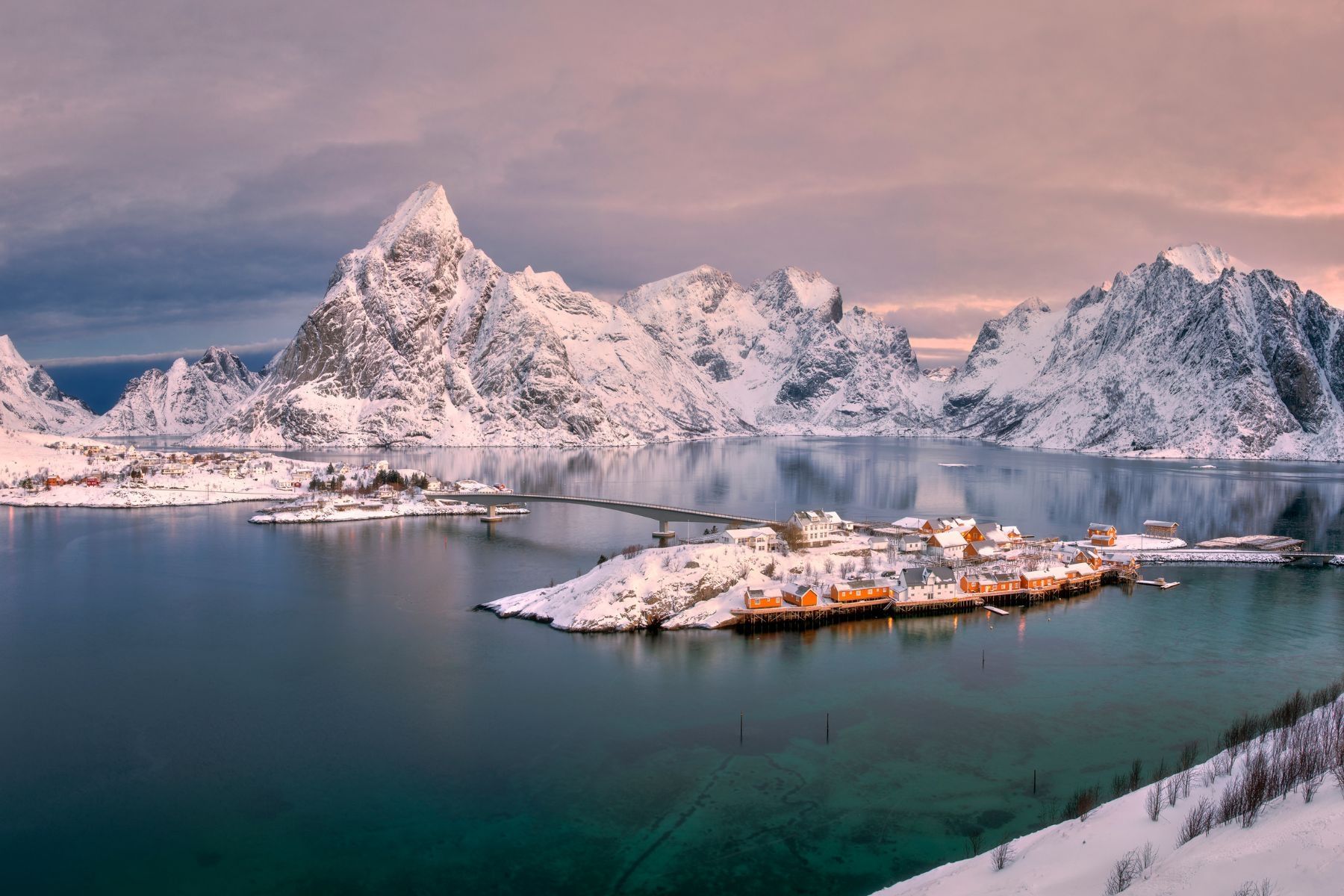
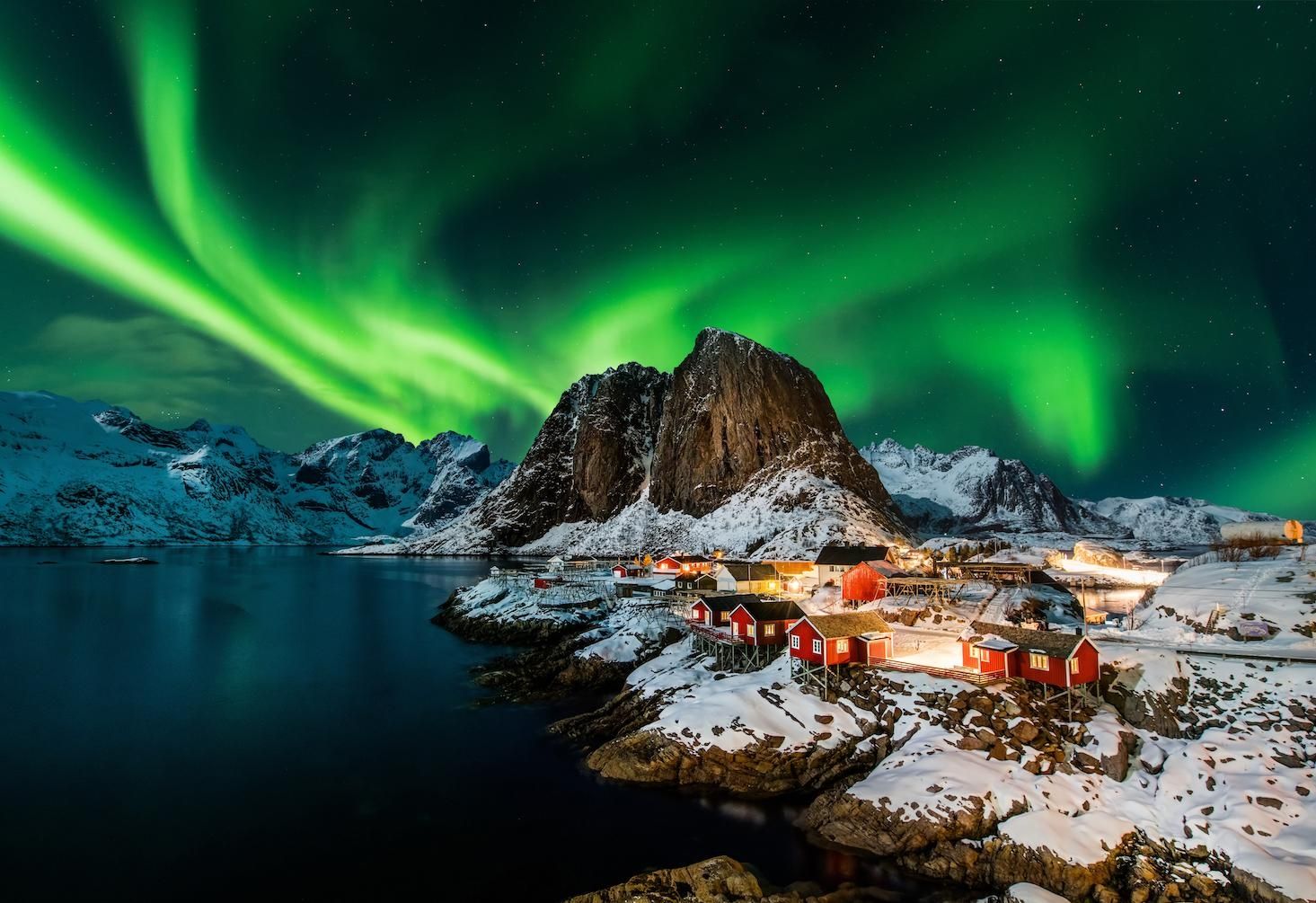
The islands' traditional fishing villages introduce another layer of visual interest. Red rorbuer cabins sit beside the water, contrasting with dark mountains, pale winter skies, and snow-covered ground when conditions permit.
These structures offer a useful exercise in working with color, geometry, and scale.
A wide composition can place a small village beneath an imposing mountain range, emphasizing the relationship between people and the Arctic environment. A tighter frame can isolate the color and texture of a cabin against a more restrained background. Reflections, repeating rooflines, and the arrangement of buildings along the shoreline can provide patterns that hold the composition together.
Rather than treating the villages as convenient stops between landscape locations, consider what they contribute to the photograph. They offer a sense of place and a visual contrast to the wildness surrounding them.
They also encourage you to look beyond the obvious mountain-and-fjord image and build a more varied portfolio of your time in Norway.
A Workshop Built Around the Photographer's Process
Great photography requires time, preparation, and the ability to respond when conditions change. That's especially true in the Arctic, where the best light can be fleeting and an aurora display may arrive after a long day outdoors.
This eight-day Backcountry Journeys workshop is designed to help you make the most of those opportunities.
You'll begin in Leknes before heading to the landscapes around Reine and the beaches of Flakstadøya. Later, the workshop shifts toward the Leknes area on Vestvågøy, with outings to Uttakleiv, Haukland, and Vik. Nights are reserved for potential aurora photography whenever conditions are favorable, while the final morning offers one more opportunity to photograph the fjords at sunrise.
The short distances between many of the shooting locations help the group remain flexible as weather and light evolve.
Professional photography guiding and instruction are included throughout the workshop. That means you can bring questions about exposure, focus, composition, equipment, and creative decisions into the field, where you can apply what you're learning to real scenes and changing conditions.
The group is limited to 10 guests, creating an opportunity to learn alongside other photographers while exploring the landscape together.
Lodging in traditional rorbuer cabins, transportation throughout the workshop, and included meals are arranged, allowing you to focus on photography rather than coordinating the logistics of moving between remote locations.
Winter conditions still require preparation. Expect potentially icy or uneven terrain, short walks to viewpoints, cold-weather shooting, late nights, and early mornings. Appropriate footwear, warm layers, spare batteries, and a reliable headlamp are important parts of your photographic kit.
The effort is worthwhile for photographers who enjoy working in changing conditions and want to become more confident behind the camera!

We offer world-class travel photography
experiences around the world.
Each tour is bundled with lodging, meals, and transportation between workshops included, allowing you to focus on photography instead of the stress of traveling.
experiences around the world.
Each tour is bundled with lodging, meals, and transportation between workshops included, allowing you to focus on photography instead of the stress of traveling.
Learn More About This Trip
Get Our Trip Catalog
Receive a trip catalog that highlights all of our upcoming photo tours and workshops.Schedule a Trip Consultation
Meet with a photo experience coordinator, and experience a personal touch to your booking experience.Landscape Guide
Receive a FREE Landscape Cheat Sheet Written By a Pro Photographer.Webinars
Our regularly hosted webinars provide photography instruction from our own guides on a wide range of topics.Education Portal
Explore our library of articles that cover everything from common questions, to in-depth guides on how to achieve that perfect shot.
Backcountry Journeys
Connecting Passionate People To
Exceptional Experiences.
Exceptional Experiences.
Business Hours:
Mon-Fri, 8AM-4PM MT
928-478-1521
adventure@backcountryjourneys.com
Mon-Fri, 8AM-4PM MT
928-478-1521
adventure@backcountryjourneys.com
arrow_drop_down_circle
Divider Text
All Images & Content Are Property Of Backcountry Journeys Photography Tours, Workshops & Safaris LLC - Copyright 2026


About Us
Receive a Digital Trip Catalog
Find an upcoming photography tour with our interactive catalog.