2025 Travelers' Choice

About Backcountry Journeys
Why Choose Backcountry Journeys
If you're considering a photography trip, hear why Backcountry Journeys delivers the best experience in the industry.Frequently Asked Questions
If you're new to photography trips, or new to BCJ, you can find our common travel questions here.Fitness Levels
Our trips vary on physical intensity, and by reviewing our fitness levels, you can find out which trips may be more challenging, or aligned more closely with your comfort level.Meet The Crew
We've built an amazing team of experienced guides, and dedicated office staff that elevate your travel experience. Get to know their backgrounds, and hear their stories.Loyalty Program
We reward our frequent photo adventurers with exclusive discounts on amazing photography trips.Contact Us
If you need to get in touch with our office staff, or have additional business inquiries, you can find our information here.Refer a Friend
Know someone perfect for one of our tours? Recommend them through this quick form.Stay Up To Date On All Things
Backcountry Journeys
Backcountry Journeys
Our Photography Community
Our Webinars
Our regularly hosted webinars provide photography instruction from our own guides on a wide range of topics.Our Education Portal
Explore our library of articles that cover everything from common questions, to in-depth guides on how to achieve that perfect shot.Community Testimonials
We're proud to foster an amazing group of photo travelers, and here you can find their stories from their past adventures.Resources For Photographers
About Our Company
Resources For Photographers
About Our Company
Capturing Wildlife Behavior in Borneo
Published November 16, 2026
A photograph of an orangutan looking directly into the camera can be striking.
So can a hornbill suspended in flight, a proboscis monkey leaping between branches, or an elephant feeding along a riverbank. But some of the most compelling wildlife photographs go beyond simply showing an animal. They reveal a moment unfolding: a decision, an interaction, a display of instinct, or a glimpse into the rhythms of life in the wild.
For wildlife photographers, this distinction changes the way a subject is approached. Instead of concentrating entirely on getting a sharp portrait, the photographer begins watching for what happens next. How does an animal move through its environment? What behaviors repeat? How does it interact with other members of its species? And what might happen if the camera stays ready for another few seconds?
Borneo offers an extraordinary setting for this kind of photography.
Its rainforests, river systems, and remarkable concentration of wildlife create opportunities to photograph animals in a variety of environments and behavioral situations. From orangutan family interactions high in the canopy to hornbills hunting bats at dusk, the island rewards photographers who look beyond the individual subject and pay attention to the story developing around it.

A Mother Orangutan and the Story of the Canopy
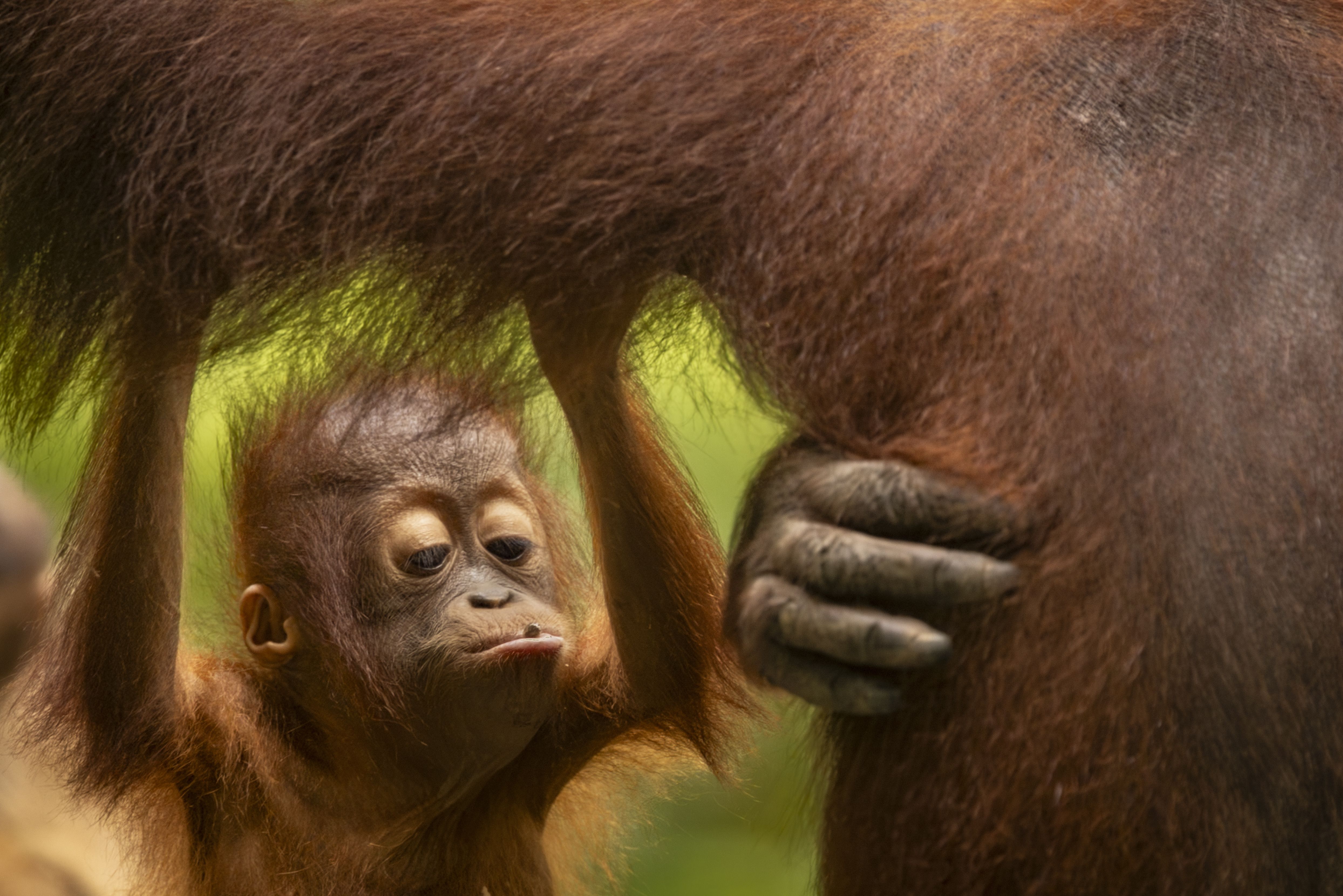
Few wildlife encounters offer the same photographic possibilities as watching an orangutan move through the rainforest. Their expressive faces, long arms, and deliberate movements make them fascinating subjects, but their behavior is what can turn an ordinary portrait into a more meaningful photograph.
An orangutan reaching for fruit, navigating a network of branches, or interacting with its young offers a series of moments that reveal more than appearance alone.
Photographing these interactions requires awareness of the animal's movements and an understanding of how quickly a scene can change.
One frame might capture a mother holding her young close. The next might show the youngster reaching toward a branch or beginning to explore independently. These small moments can communicate curiosity, protection, and the relationship between generations without requiring an elaborate composition.
At Semenggoh Wildlife Centre, photographers have an opportunity to observe semi-wild orangutans living within a forest reserve. The center rehabilitates orphaned and rescued orangutans, and some return for supplemental feedings. This creates opportunities to observe their behavior while also learning about the conservation work supporting their eventual independence in the wild.
Later in the journey, the forests surrounding Sepilok and the Kinabatangan River offer additional opportunities to look for orangutans in their natural surroundings.
The photographic lesson is to resist the temptation to make every frame a close-up.
Sometimes the branches surrounding an orangutan, the distance between a mother and her young, or the way an animal interacts with its environment provides the context that makes a photograph memorable.
When Timing Becomes Everything: Photographing Birds in Flight
Bird photography is often a lesson in anticipation. Even when a subject is visible and relatively stationary, the most interesting moment might last only a fraction of a second.
A bird preparing to take flight, extending its wings, or returning to a perch can transform a familiar subject into a much more dynamic photograph. Capturing that moment requires more than a fast shutter speed. It takes observation, preparation, and an understanding of where the action might happen.
Borneo offers an exceptional variety of bird photography opportunities, including hornbills, kingfishers, broadbills, trogons, and eagles.
The Rainforest Discovery Centre in Sepilok provides a particularly interesting environment for bird photographers. Its elevated canopy walkway and observation towers offer a different perspective on the rainforest, allowing photographers to look into the upper levels of the forest rather than always shooting upward from the ground.
At Bako National Park, the combination of coastal cliffs, mangroves, and forest creates opportunities for photographing birds in flight against more open backgrounds.
Kingfishers, bee-eaters, and sea eagles are among the species that may be encountered.
The Lower Kinabatangan River introduces yet another photographic perspective. From a boat, photographers can watch for birds moving between riverside trees, diving toward the water, or flying across the river.
One of the most important considerations when photographing birds in motion is giving the subject room to move within the frame. A bird flying toward the edge of an image can feel visually constrained, while leaving open space in front of its direction of travel creates a stronger sense of movement.
Autofocus tracking and continuous shooting can help increase the chances of capturing a sharp frame, but neither replaces preparation. Following a bird's movement, recognizing its flight path, and keeping the camera ready before it takes off can make a meaningful difference.
And sometimes, the most interesting photograph isn't the bird in flight at all. It might be the moment just before takeoff, when its posture and attention reveal what is about to happen.

The Unexpected Behavior of Sun Bears
Not every compelling wildlife photograph comes from an animal moving quickly or displaying dramatic behavior. Sometimes the most interesting subjects are those that invite photographers to slow down and watch the smaller details.
The Bornean sun bear is a good example. As the world's smallest bear species, it has a distinctive appearance, a short dark coat, and a characteristic orange or cream-colored chest marking. Its powerful claws and long tongue are adaptations that help it forage for food, including insects and honey.
At the Bornean Sun Bear Conservation Centre, photographers have an opportunity to observe sun bears as they move through their enclosures, forage, and interact with their surroundings. The center focuses on sun bear conservation, rehabilitation, welfare, and education.
These encounters offer opportunities to look for behavior that might otherwise be overlooked. A bear investigating a fallen log, using its claws to search for insects, or stretching to reach food can make for a more engaging photograph than a straightforward portrait.
Pay attention to the relationship between the animal and its surroundings. A photograph showing a bear actively working through a log, for example, communicates something about its natural instincts and feeding behavior.
For photographers, this is also a useful reminder that compelling wildlife images don't always require dramatic action. Texture, expression, posture, and the interaction between an animal and its environment can carry an image just as effectively.

Telling a Bigger Story Through Wildlife Photography
A memorable wildlife photograph doesn't necessarily need a rare species, dramatic action, or an unusual camera technique. Sometimes it is a small interaction that gives an image its meaning.
A young orangutan reaching toward its mother. A proboscis monkey navigating a narrow branch. A sun bear investigating a fallen log. A kingfisher poised above the water before its next dive.
These are the moments that help viewers connect with wildlife beyond its appearance.
Borneo offers photographers an opportunity to explore these stories across an incredible range of habitats, from mangrove forests and river systems to the towering rainforest canopy of Danum Valley. Each environment presents a different set of photographic challenges and opportunities, encouraging photographers to adapt their approach and remain curious about what might happen next.
On Backcountry Journeys' Borneo's Best: Orangutans & Rainforest Wildlife photo workshop, the experience extends beyond photographing iconic species. With opportunities to explore wildlife sanctuaries, photograph from riverboats, walk elevated canopy pathways, and search for nocturnal animals, photographers can experience several different sides of Borneo's remarkable ecosystem.
The goal isn't simply to come home with photographs of the animals you encountered. It's to return with images that communicate something about how they live, move, interact, and survive in one of the world's most fascinating rainforest environments.
Because sometimes the best wildlife photograph isn't the one where an animal looks directly into your lens. It's the one that makes someone looking at the image feel as though they've witnessed a moment in that animal's life.
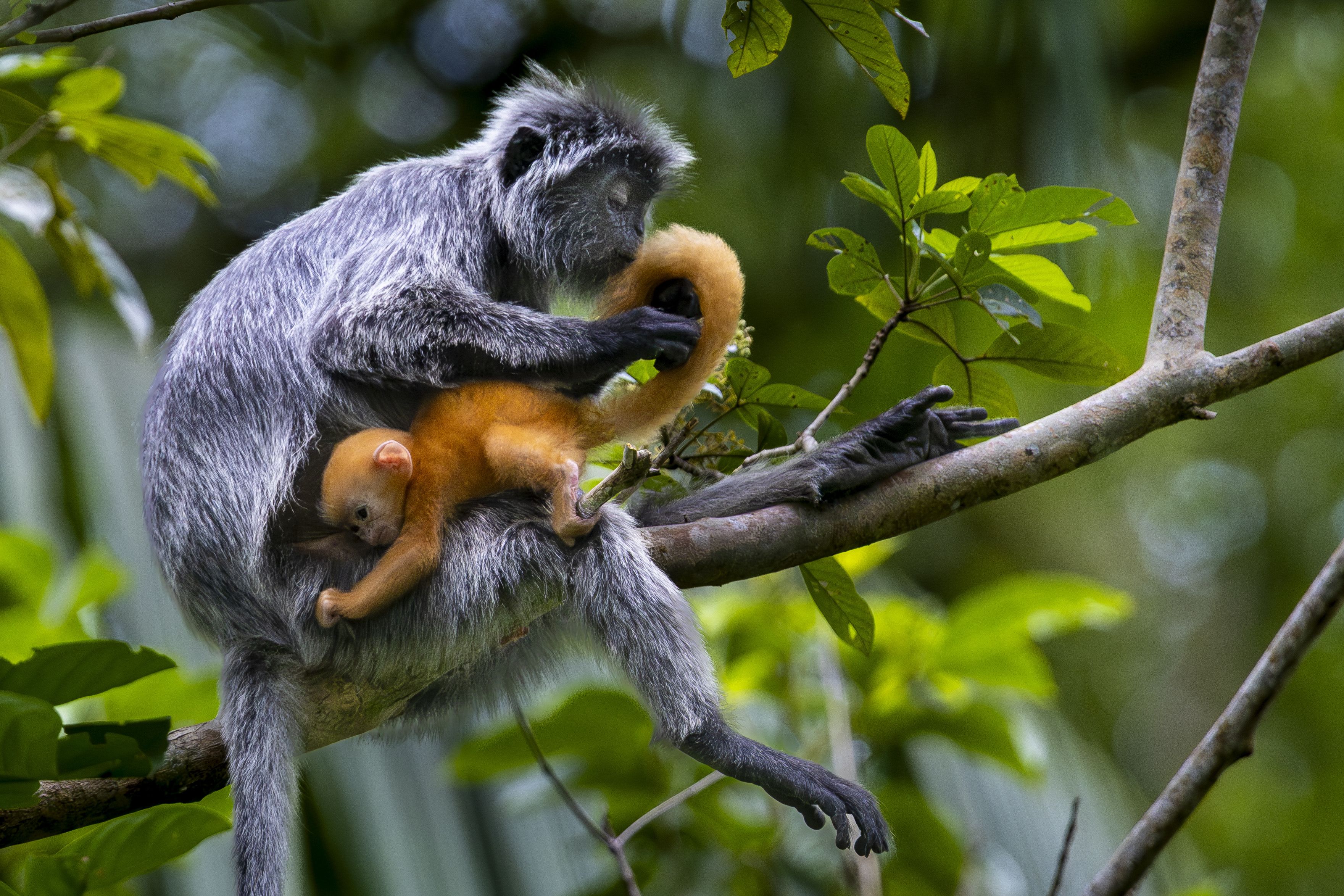

 Borneo's Best: Orangutans & Rainforest Wildlife
Lodge-Based Photo Workshop
From $10,995.00
Up To 10 Guests
Fitness Level 2 - What's This?
Wanna Get Away?
Starts
Current Price:$0.00
Start: Kuching, Malaysia (KCH)
Led By
Start: Kuching, Malaysia (KCH)
Led By

Backcountry Journeys
Connecting Passionate People To
Exceptional Experiences.
Exceptional Experiences.
Business Hours:
Mon-Fri, 8AM-4PM MT
928-478-1521
adventure@backcountryjourneys.com
Mon-Fri, 8AM-4PM MT
928-478-1521
adventure@backcountryjourneys.com
arrow_drop_down_circle
Divider Text
All Images & Content Are Property Of Backcountry Journeys Photography Tours, Workshops & Safaris LLC - Copyright 2026


About Us
Receive a Digital Trip Catalog
Find an upcoming photography tour with our interactive catalog.