2025 Travelers' Choice

About Backcountry Journeys
Why Choose Backcountry Journeys
If you're considering a photography trip, hear why Backcountry Journeys delivers the best experience in the industry.Frequently Asked Questions
If you're new to photography trips, or new to BCJ, you can find our common travel questions here.Fitness Levels
Our trips vary on physical intensity, and by reviewing our fitness levels, you can find out which trips may be more challenging, or aligned more closely with your comfort level.Meet The Crew
We've built an amazing team of experienced guides, and dedicated office staff that elevate your travel experience. Get to know their backgrounds, and hear their stories.Loyalty Program
We reward our frequent photo adventurers with exclusive discounts on amazing photography trips.Contact Us
If you need to get in touch with our office staff, or have additional business inquiries, you can find our information here.Refer a Friend
Know someone perfect for one of our tours? Recommend them through this quick form.Stay Up To Date On All Things
Backcountry Journeys
Backcountry Journeys
Our Photography Community
Our Webinars
Our regularly hosted webinars provide photography instruction from our own guides on a wide range of topics.Our Education Portal
Explore our library of articles that cover everything from common questions, to in-depth guides on how to achieve that perfect shot.Community Testimonials
We're proud to foster an amazing group of photo travelers, and here you can find their stories from their past adventures.Resources For Photographers
About Our Company
Resources For Photographers
About Our Company
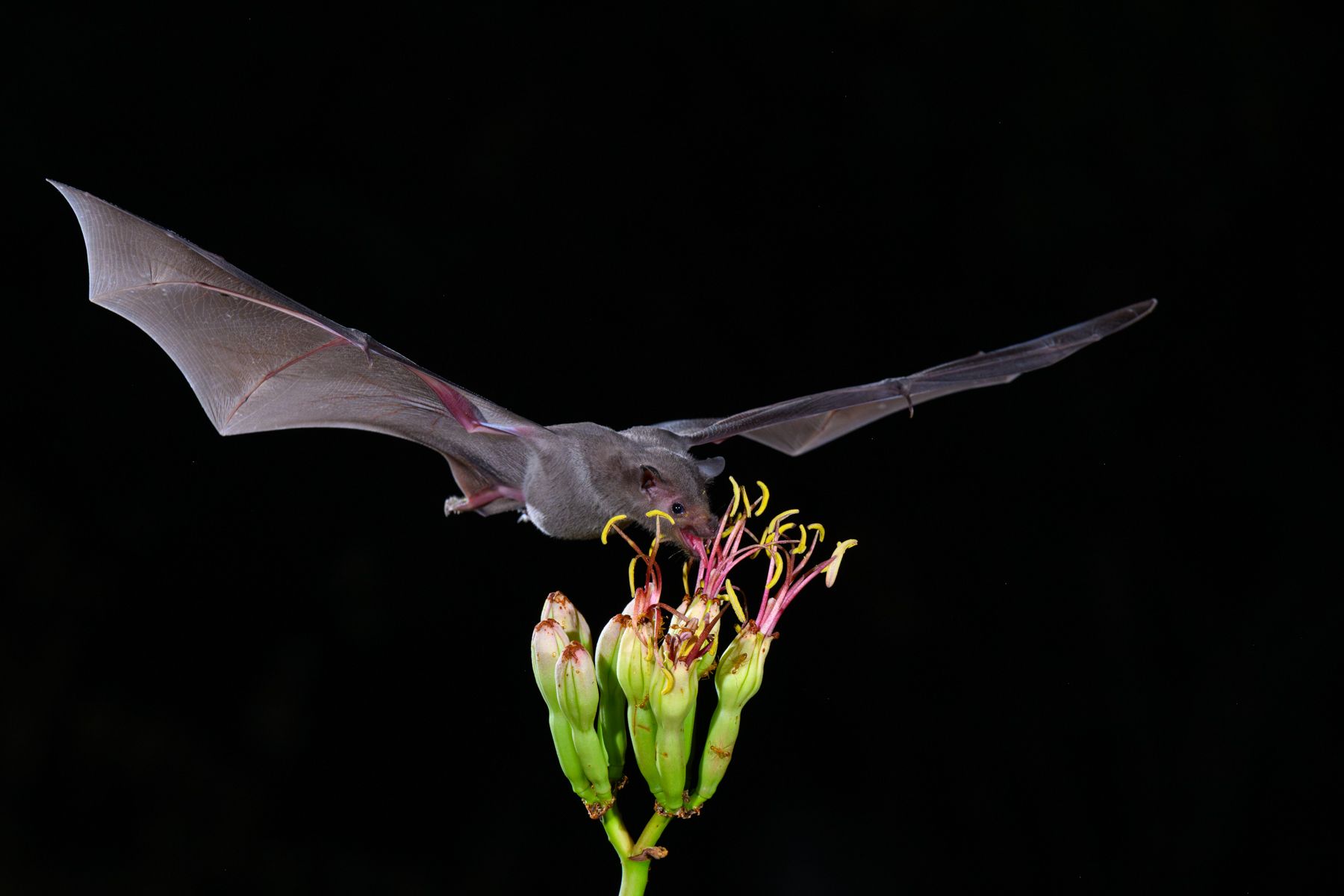
Photographing the Impossible: A Bat mid Flight
Published October 29, 2026
Why Bats Are So Difficult to Photograph
Photographing a bat in flight is one of the more technically demanding challenges in wildlife photography. Bats move quickly, change direction unpredictably, and often fly in near darkness. Capturing a sharp image requires more than a fast camera and a long lens. It takes a combination of precise timing, controlled lighting, and an understanding of how to manage motion.
Unlike birds that may launch from a perch or follow a predictable flight path, bats can accelerate toward insects, make sudden turns, and disappear into darkness within seconds. Their wing movements are especially challenging to freeze, and even a photograph that looks sharp on the camera's LCD may reveal motion blur when viewed at full resolution.
Low light adds another layer of difficulty. Raising ISO can introduce noise, while opening the aperture reduces depth of field and makes focusing more demanding. Autofocus systems may also struggle to identify a small, dark subject against a dark background, even on cameras with advanced subject recognition.
The solution often lies in high-speed flash photography. Rather than relying entirely on an extremely fast shutter speed, photographers can use a brief burst of light to freeze movement and reveal details that would otherwise disappear into darkness.
High-Speed Flash: Freezing Movement With Light
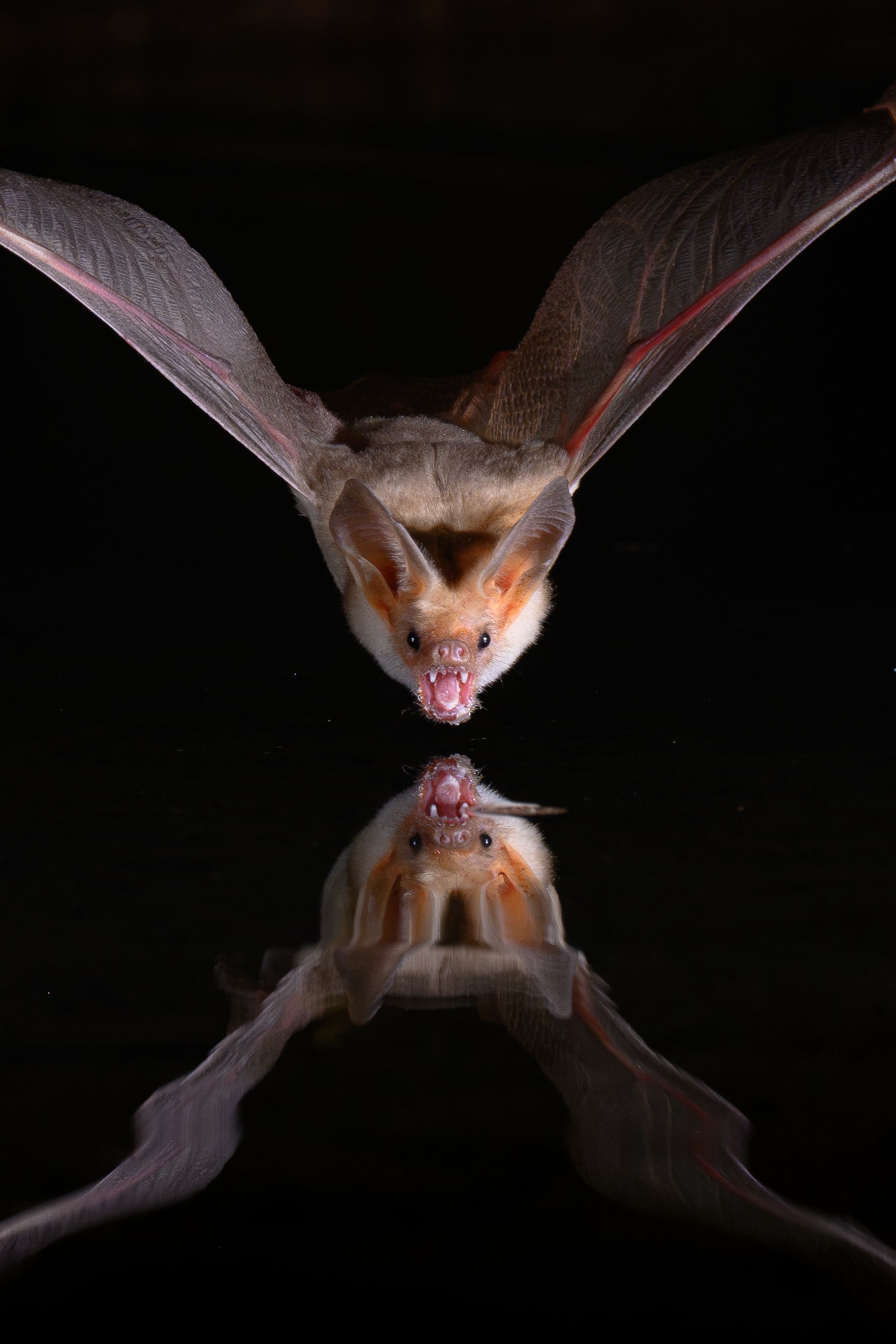
One of the most important principles in bat photography is understanding that flash duration can matter more than shutter speed. When photographing a moving subject in a dark environment, the camera's shutter may remain open for 1/200 of a second, while the flash illuminates the bat for only a tiny fraction of that time. If ambient light is sufficiently suppressed, the brief flash pulse effectively freezes the movement.
For example, a flash duration of approximately 1/20,000 of a second can help freeze a bat moving at around five meters per second. The shorter the flash pulse, the less the animal moves while being illuminated, preserving fine details in its wings and body.
This is why simply increasing shutter speed doesn't always solve motion blur.
Conventional flash systems have synchronization limits, and high-speed sync works differently from a short, single flash pulse. For maximum motion-freezing ability, photographers should look for flashes with short, documented t.1 flash durations, which measure the effective duration of the light output.
Reducing flash power often shortens the flash pulse, making manual flash photography at lower output particularly useful for fast-moving subjects. The trade-off is reduced light, which may require adjusting ISO, aperture, flash placement, or the number of lights used.
The goal is to balance these variables: use shutter speed to manage ambient light and flash synchronization, then use the flash pulse to freeze the bat. Once photographers understand this relationship, high-speed flash becomes a powerful tool for photographing not only bats but also hummingbirds, insects, and other fast-moving wildlife.
The Proprietary Multi-Flash Photography Setup
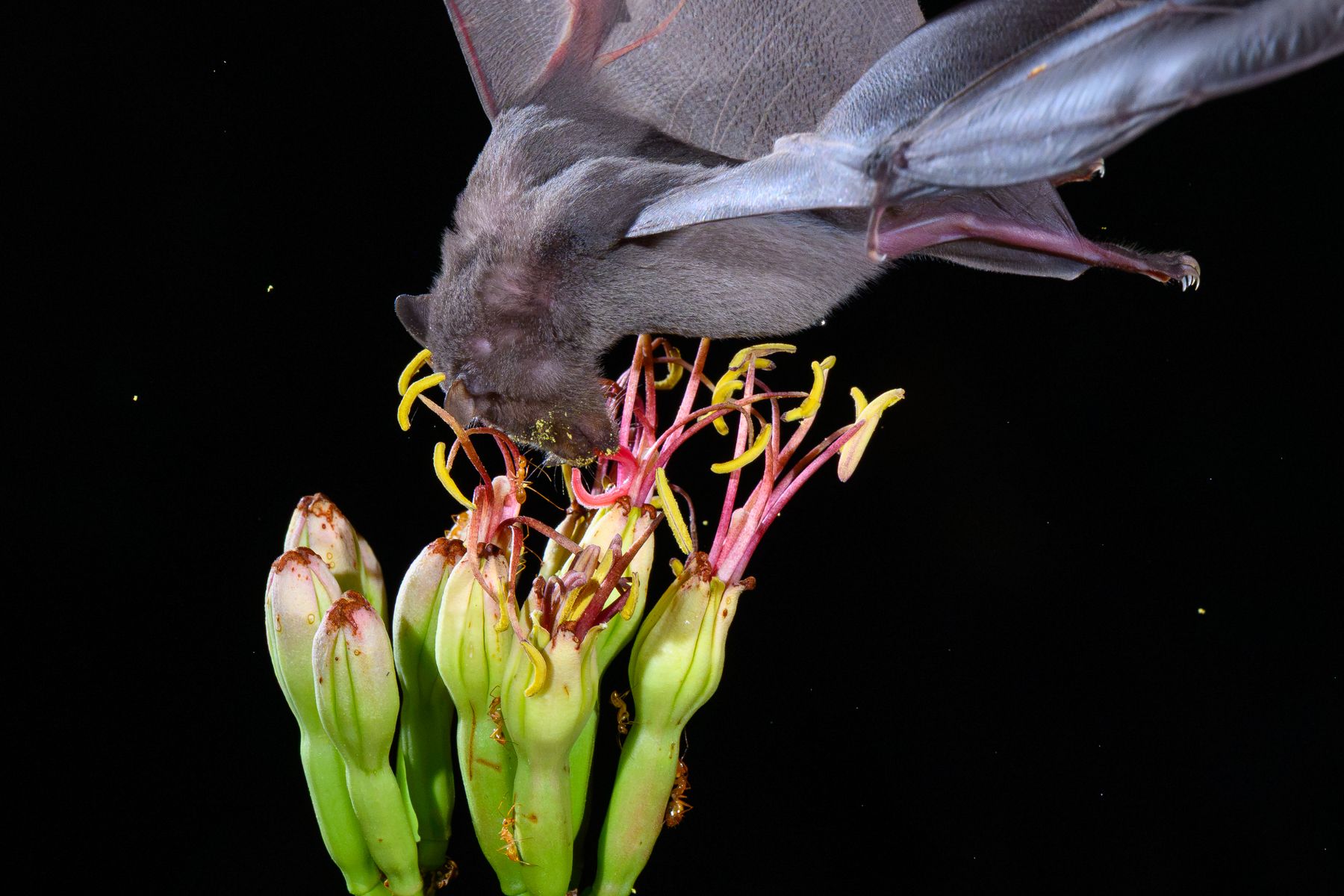
A single flash can freeze movement, but a multi-flash system offers greater control over the lighting. Imagine a bat flying above a pool of water. A flash positioned beside the camera might illuminate its face while leaving the far wing in shadow. Adding lights from the side or behind can reveal wing structure, create separation from the background, and give the photograph more depth.
A typical setup may include a key light to illuminate the bat's body, a fill light to soften shadows, and a rim or backlight to distinguish the wings from the darkness. An additional lower light can help illuminate the underside of a bat flying close to the water. The objective is to reveal detail without creating harsh, artificial-looking illumination.
While the actual technical set up is a proprietary one; we can shed some light on how the set up came to be.
Our expert worked closely with major studios, like National Geographic and the BBC, to develop this set up. His research began in the Amazon and he’s since worked closely with major film companies with his lighting systems; the same ones we take you to see in person on this departure.
More lights do not automatically mean better photographs. Flash placement, output, and consistency matter more than sheer power. With our expert behind the scenes’ diligence, he has perfected the lightings arrangement, evaluated the results, and adjusted one variable at a time until it was perfect.
With access to these systems, you get to skip identifying what improves sharpness, exposure, and the overall quality of the image and focus solely on taking incredible images of incredible wildlife!
Pre-Focusing, Trigger Systems, and Timing
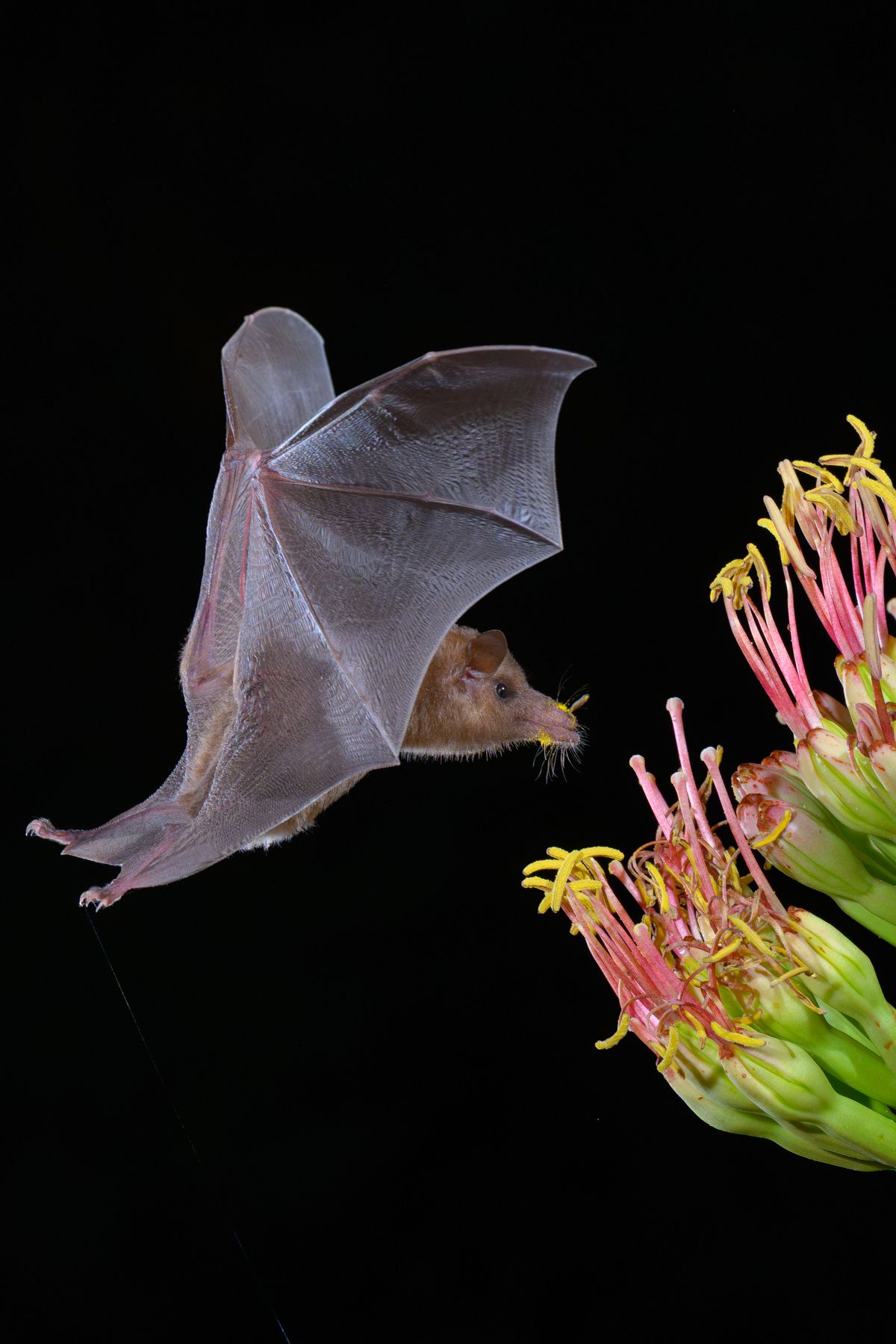
Even the best lighting system won't help if the bat is outside the focus plane when the photograph is taken. In controlled bat photography, pre-focusing can be more reliable than depending entirely on continuous autofocus to track an unpredictable subject.
Start by identifying a likely flight path, such as a route over water or near a feeding area. Manually focus on a specific point where the bat is expected to pass, then position the camera to capture that area. Using a smaller aperture, such as f/11, can provide additional depth of field and accommodate small variations in the bat's position, although it requires more light or a higher ISO.
Before photographing wildlife, test the setup using a stationary target placed at the intended focus distance. Take test frames, inspect the details at full magnification, and make sure the focus plane and lighting cover the desired area. Leave room around the subject, too: a bat with fully extended wings occupies considerably more space than one in the middle of a wingbeat.
Trigger systems can improve timing even further. A photoelectric beam can activate the flashes when a bat crosses a predetermined point. In some specialized setups, the camera shutter remains open in a dark environment while the beam triggers the flash, minimizing the delay between the bat reaching the target area and the exposure being made.
This approach shifts the challenge from reacting quickly to anticipating movement and designing a repeatable system. Photographers can refine focus, lighting, and composition before the animal enters the frame, increasing the likelihood of capturing a sharp, well-timed image.
Turning Technical Knowledge Into Better Wildlife Photography
Photographing bats in flight combines several disciplines: understanding flash duration, controlling depth of field, anticipating movement, and coordinating multiple light sources.
It is a demanding process, but the skills developed through high-speed bat photography can also improve work with birds in flight, hummingbirds, and other fast-moving wildlife!
The most important lesson is that successful high-speed photography isn't always about owning the fastest camera. It's about understanding the relationship between light, timing, focus, and movement. A carefully planned setup can often produce better results than simply increasing shutter speed or investing in more expensive equipment.
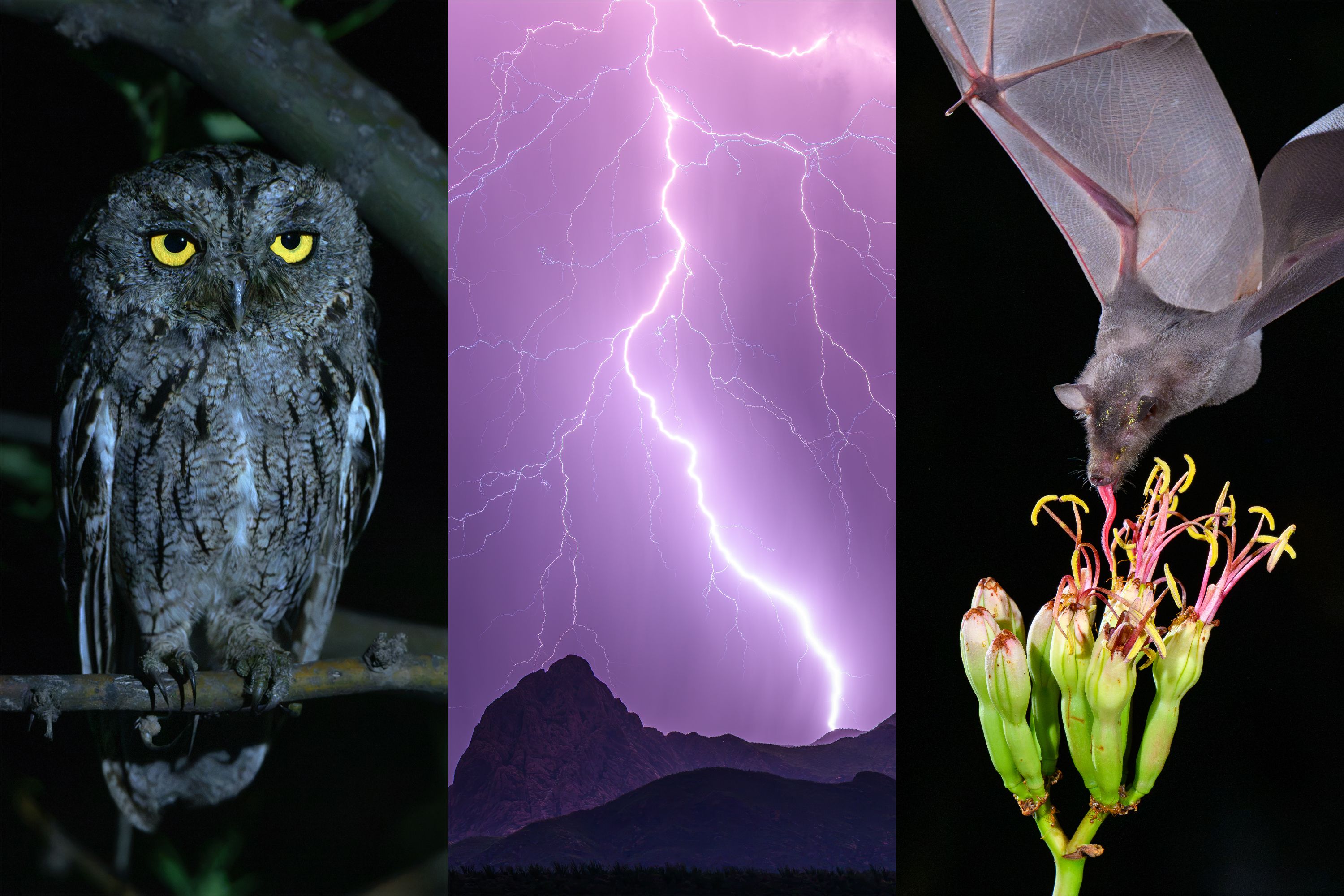
On Backcountry Journeys' Wild Arizona Birds, Bats & Desert Predators Photo Workshop, photographers have the opportunity to explore Arizona's wildlife through a photography-focused experience. Specialized bat photography opportunities provide a chance to experiment with studio-quality lighting techniques, refine technical skills, and learn how to approach one of wildlife photography's more challenging subjects.
Whether you're working with your first multi-flash setup or refining an advanced workflow, the process begins with observation and experimentation. Learn where the animal moves, determine where the light needs to fall, and create a focus zone that gives you the best chance of success.
Sometimes the most rewarding wildlife photograph isn't the result of reacting to a perfect moment. It's the result of understanding the subject well enough to make that moment possible!
 Wild Arizona: Birds, Bats & Desert Predators
From $4,995.00
Up To 7 Guests
Fitness Level 1 - What's This?
Wanna Get Away?
Starts
Current Price:$0.00
Start: Tucson, AZ
Led By
Start: Tucson, AZ
Led By

Backcountry Journeys
Connecting Passionate People To
Exceptional Experiences.
Exceptional Experiences.
Business Hours:
Mon-Fri, 8AM-4PM MT
928-478-1521
adventure@backcountryjourneys.com
Mon-Fri, 8AM-4PM MT
928-478-1521
adventure@backcountryjourneys.com
arrow_drop_down_circle
Divider Text
All Images & Content Are Property Of Backcountry Journeys Photography Tours, Workshops & Safaris LLC - Copyright 2026


About Us
Receive a Digital Trip Catalog
Find an upcoming photography tour with our interactive catalog.