2025 Travelers' Choice

About Backcountry Journeys
Why Choose Backcountry Journeys
If you're considering a photography trip, hear why Backcountry Journeys delivers the best experience in the industry.Frequently Asked Questions
If you're new to photography trips, or new to BCJ, you can find our common travel questions here.Fitness Levels
Our trips vary on physical intensity, and by reviewing our fitness levels, you can find out which trips may be more challenging, or aligned more closely with your comfort level.Meet The Crew
We've built an amazing team of experienced guides, and dedicated office staff that elevate your travel experience. Get to know their backgrounds, and hear their stories.Loyalty Program
We reward our frequent photo adventurers with exclusive discounts on amazing photography trips.Contact Us
If you need to get in touch with our office staff, or have additional business inquiries, you can find our information here.Refer a Friend
Know someone perfect for one of our tours? Recommend them through this quick form.Stay Up To Date On All Things
Backcountry Journeys
Backcountry Journeys
Our Photography Community
Our Webinars
Our regularly hosted webinars provide photography instruction from our own guides on a wide range of topics.Our Education Portal
Explore our library of articles that cover everything from common questions, to in-depth guides on how to achieve that perfect shot.Community Testimonials
We're proud to foster an amazing group of photo travelers, and here you can find their stories from their past adventures.Resources For Photographers
About Our Company
Resources For Photographers
About Our Company
The Science and Beauty of the Southwest Monsoon and Why You Should Capture It
Published May 5, 2026
Throughout the world, there are countless incredible natural phenomena taking place all the time. These moments or events often create some of the most interesting and unique nature photography opportunities. But, in my opinion, not all of these phenomena are created equal. While this can be very subjective, I believe that there are a handful of natural events that are so special, so unique, so inspiring and powerful, that they rise above the rest and emerge as something truly incredible.
The seasonal monsoon storms that sweep across the American Southwest shaping and reviving it’s desert landscapes are one of these extraordinary events. If you’ve never witnessed or photographed the Southwest monsoons, then you need to move them right to the top of your list.
In today’s article we’re going to not only dive into why these storms are so incredible and special for passionate nature photographers, but we’ll also discuss the science behind them and why they exist in the first place.
Let’s dive right on in…
The Science Behind the Southwest Monsoon
The term “monsoon” often brings to mind tropical climates like those that exist in India and Southeast Asia, but the Southwest experiences its own distinct version of this seasonal phenomenon. The North American Monsoon typically develops anywhere between late June and September, driven by a dramatic shift in atmospheric patterns over the continent.
During early summer, the desert Southwest is dominated by high pressure, resulting in hot, dry, and stable conditions. But as the season progresses, intense heating over the landmass creates a thermal low-pressure system. This shift begins to draw in moisture from two primary sources: the eastern Pacific Ocean and the Gulf of Mexico.
As this moisture-laden air moves into the Southwest—particularly over Arizona, Utah, New Mexico, and parts of Colorado—it collides with the region’s rugged topography. Elevated terrain like the Colorado Plateau plays a critical role here. As warm, moist air is forced upward over mountains and mesas, it cools rapidly, condenses, and forms towering cumulonimbus clouds.
These clouds are the engines and driving forces of powerful monsoon storms.
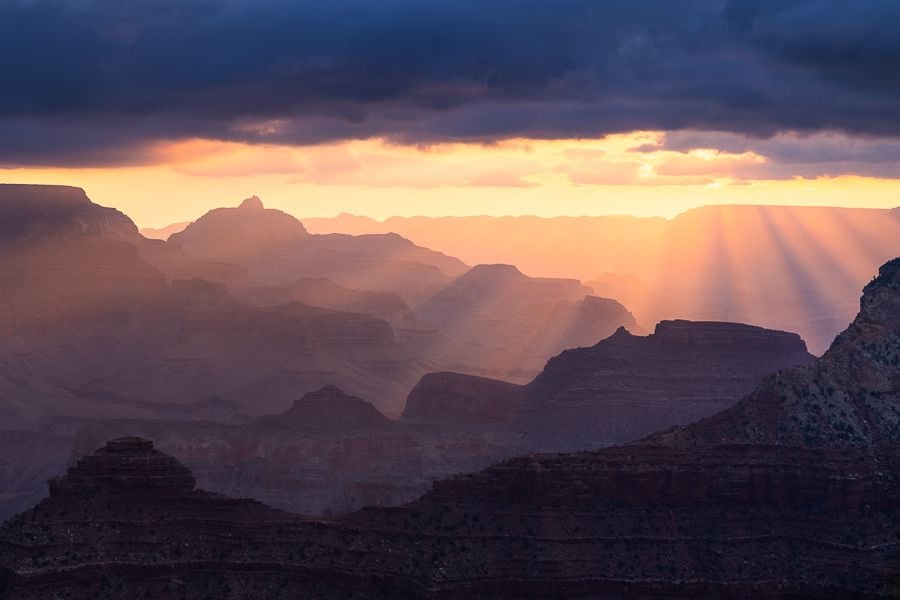
What makes them especially dramatic is the instability of the atmosphere. Strong surface heating combined with high moisture content creates explosive vertical development—clouds that can rise tens of thousands of feet into the sky. Within these systems, powerful updrafts and downdrafts generate intense rainfall, hail, and frequent lightning.
But perhaps the most visually striking characteristic of monsoon storms is their localized nature. One canyon may be drenched in rain while another, just miles away, remains dry and bathed in sunlight. This patchwork of light and shadow, rain and clarity, is what makes the Southwest monsoon so compelling—both scientifically and artistically.
These fascinating events are not only a beautiful product of nature and science but also a stunning and powerful subject for art.
Why Monsoon Season is a Photographer’s Dream
From a photography standpoint, the Southwest monsoon offers a rare combination of elements that are difficult to find anywhere else on Earth.
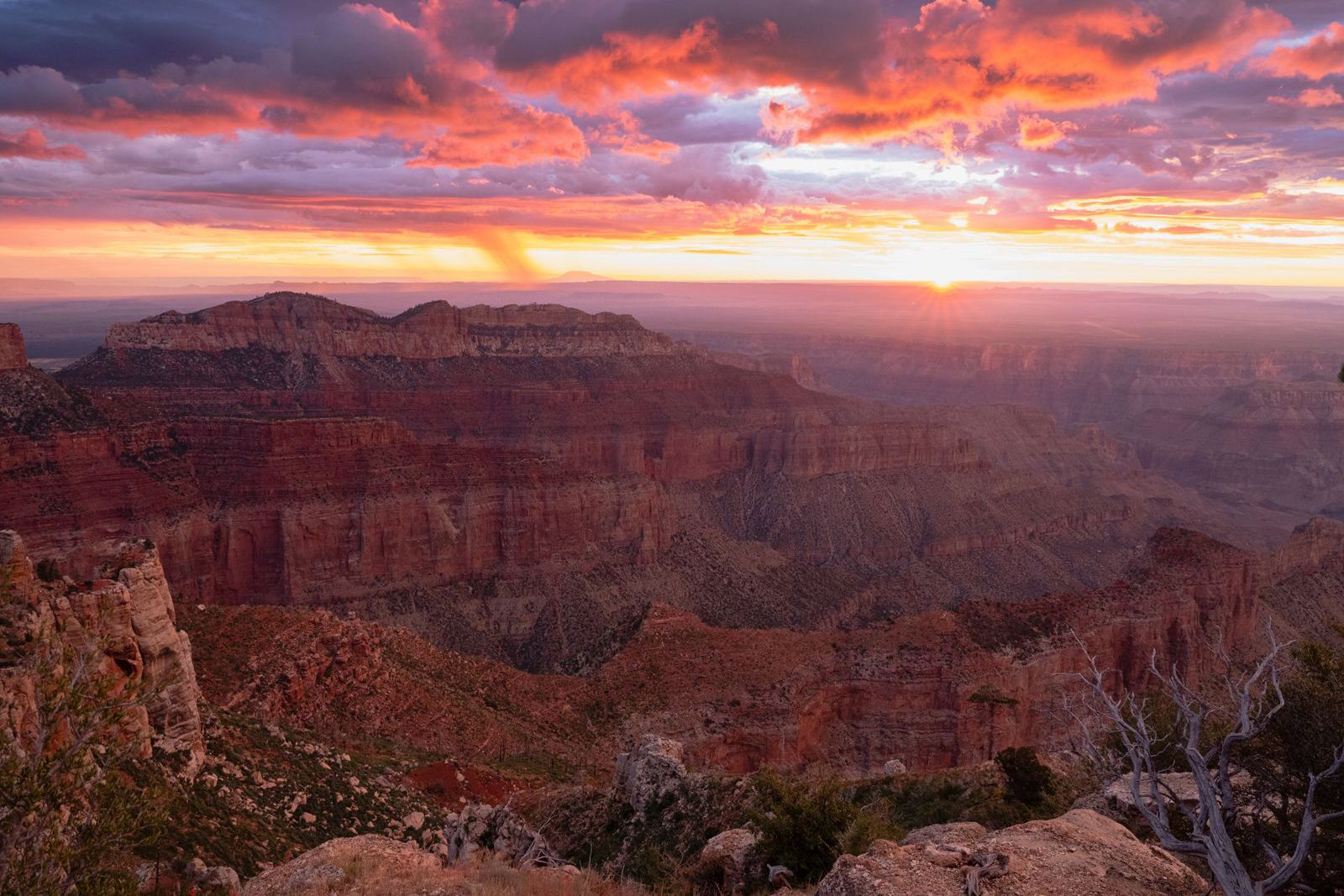
First, there’s the light. Storms act as massive diffusers, softening the harsh desert sun and creating rich, saturated colors across the landscape. Then, just as quickly, breaks in the clouds allow shafts of sunlight to pierce through—illuminating buttes, canyon walls, and desert plains with dramatic, almost theatrical intensity.
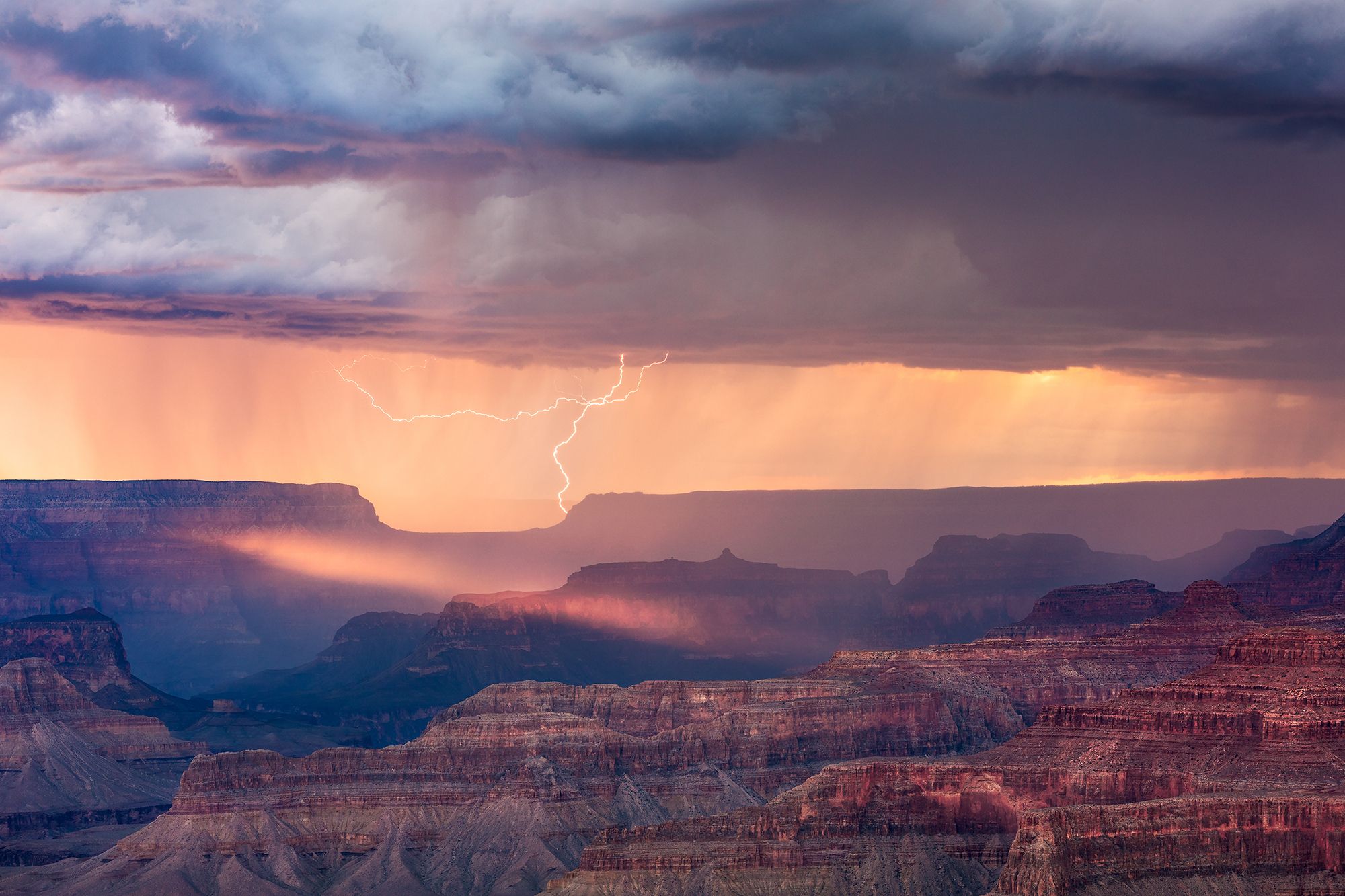
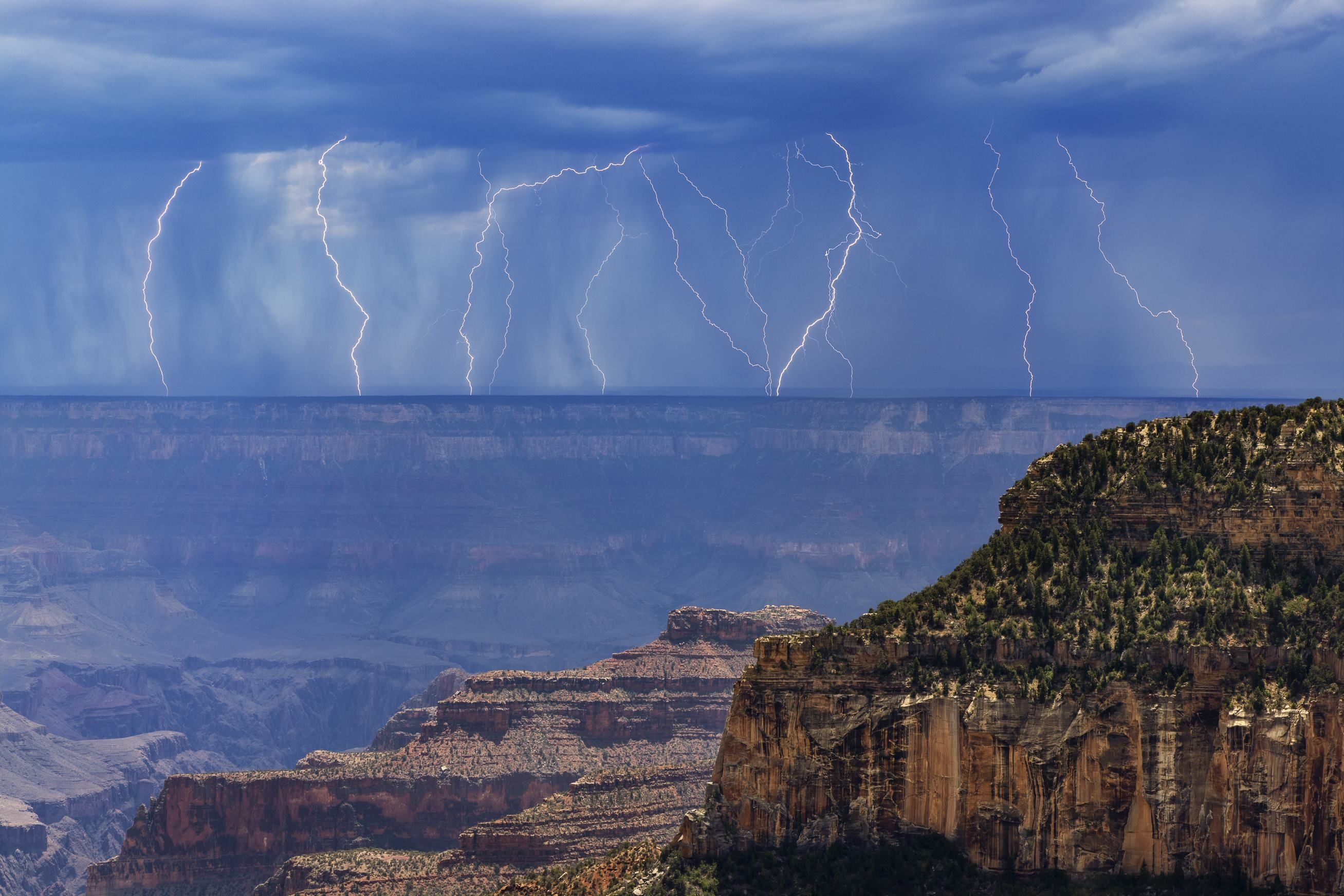
Second, there’s the scale. Places like the Grand Canyon, Monument Valley, and Canyonlands are already immense. Add towering storm systems above them, and the sense of scale becomes almost surreal. Rain curtains can stretch for miles. Lightning can arc across vast canyon systems. The sky becomes just as important—if not more so—than the land.
Then there’s movement. Unlike static landscape conditions, monsoon storms are constantly evolving. Clouds build, collapse, and reform. Light shifts by the minute. Rain advances across the horizon in visible waves. This dynamic environment challenges photographers to stay alert, think creatively, and respond quickly.
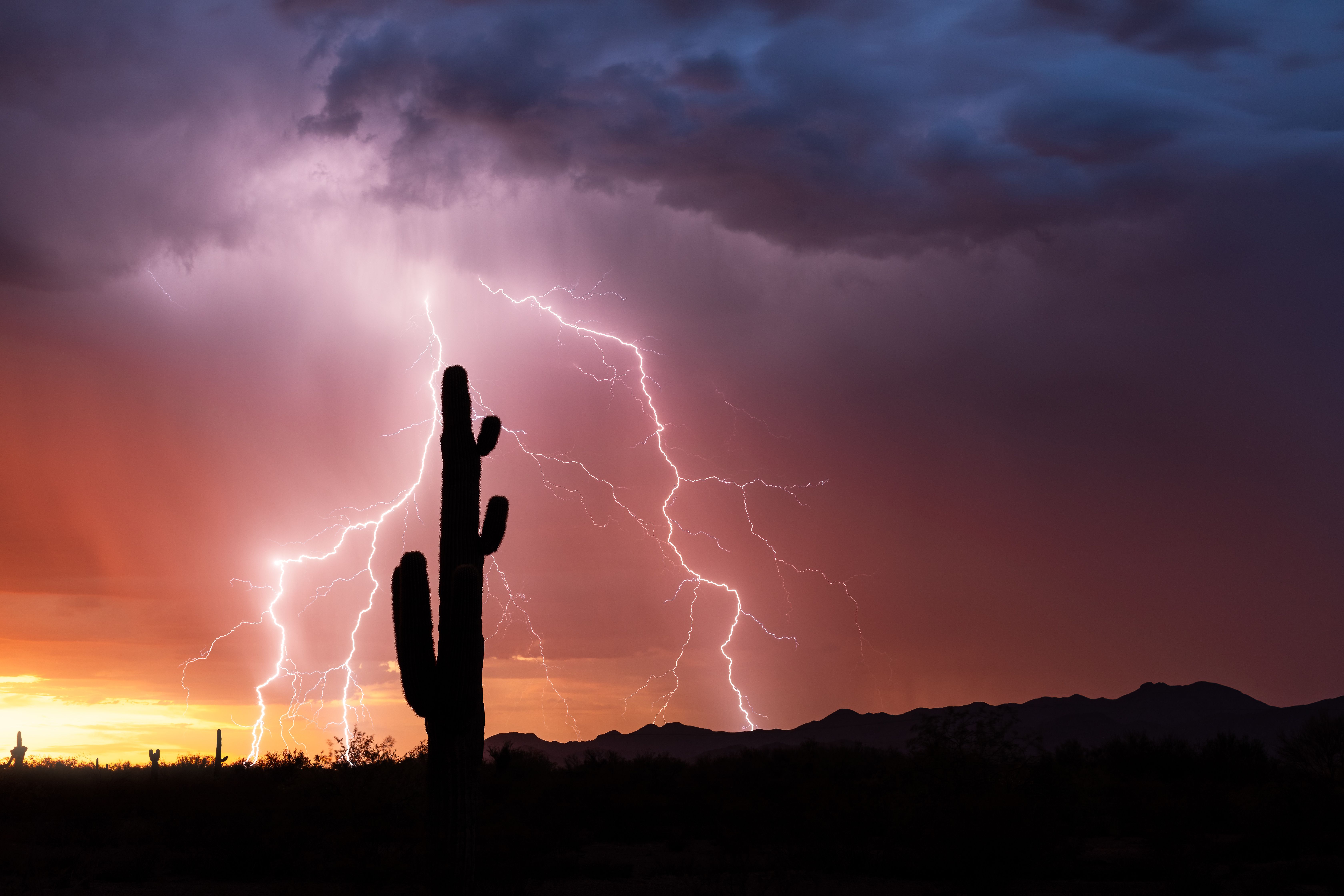
And finally, there are the ephemeral details—the things that only exist because of the storm. Temporary waterfalls cascade off canyon rims. Pools of water collect in sandstone depressions, creating perfect reflections. Rainbows emerge against darkened skies. Bright and powerful bolts of lightning streak across the sky. These fleeting moments are what elevate monsoon photography from beautiful to extraordinary.
The Art of Chasing and Photographing Storms
Photographing monsoon storms is about more than just being in the right place—it’s about understanding patterns, reading the sky, and anticipating change.
Successful storm photography often involves positioning yourself on the edge of the action. Too close, and you risk losing visibility in heavy rain and potentially your safety. Too far, and the drama diminishes. The sweet spot is where you can capture both the storm and the landscape it’s transforming at just the right distance.
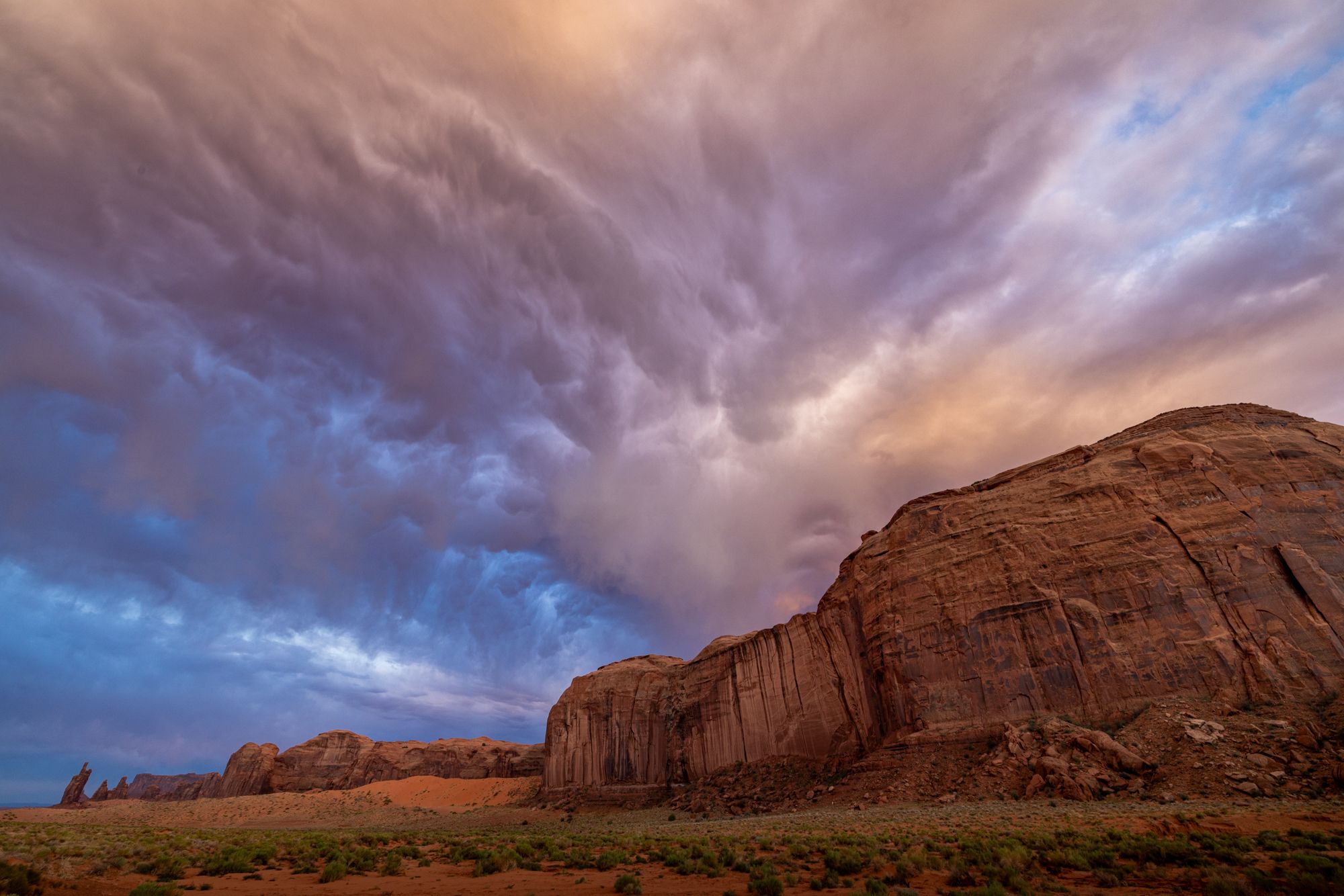
Timing is equally critical. Many monsoon storms build in the early afternoon and peak toward evening, often aligning perfectly with golden hour. This creates opportunities for some of the most dramatic light imaginable—warm sunlight illuminating foreground elements while dark, brooding clouds dominate the sky.
Of course, safety is paramount. Lightning, flash floods, and high winds are real risks during monsoon season. Experienced photographers know when to push forward—and when to step back.
Bottom line, monsoon photography is very nuanced and intricate. If you set out on your own, you might get lucky and capture a few nice images here and there. But if you embark on a professionally guided workshop, you’re odds of capturing truly stunning wall-hangers is drastically increased. Professional photography guides know where to be at just the right time and they will take care of all the logistics, keeping you safe and allowing you to focus on the photography and nothing else.
Experiencing the Southwest Monsoon Firsthand
There’s a reason photographers return to the Southwest year after year during monsoon season. No two storms are ever the same. No two evenings unfold in quite the same way. It’s a constantly shifting, endlessly inspiring environment that rewards patience, curiosity, and a sense of adventure.
I’ve made this pilgrimage myself the last couple years, and it’s something I love doing. Even on years when the storm activity is relatively low, this is a trip I never regret and one I dream about frequently.
For those looking to fully immerse themselves in this experience, guided photography workshops can offer a tremendous advantage—not just in terms of access and logistics, but in understanding how to work with these conditions creatively and safely.
Backcountry Journeys offers two immersive monsoon-focused experiences that place you right in the heart of the action:
On our ‘Southwest Monsoon: Grand Canyon Country’ workshop, you’ll chase storms across some of the most iconic landscapes in the Southwest—Monument Valley, Horseshoe Bend, and the Grand Canyon itself. With vast open views and dramatic terrain, this region offers unparalleled opportunities to photograph lightning, rain curtains, and light breaking through storm clouds over immense canyon systems.
Meanwhile, the ‘Southwest Monsoon: Arches & Canyonlands’ workshop brings a different but equally compelling perspective. Here, the interplay between storm light and sculpted red rock formations creates endlessly dynamic compositions. Temporary pools, glowing sandstone, towering vertical cliffs, intricate arches, and sweeping canyon vistas combine with volatile weather to produce images that feel both powerful and intimate.
Both experiences are built around the same core idea: placing photographers in the right place, at the right time, to capture the Southwest above iconic desert landscapes at its most dramatic.
Final Thoughts
The Southwest monsoon is more than just a weather pattern—it’s a seasonal transformation that turns an already stunning landscape into something truly extraordinary. It’s a time when the desert comes alive with motion, energy, and emotion.
For photographers, it represents an opportunity to capture something rare and fleeting—moments of light and atmosphere that can’t be replicated or predicted with certainty.
And perhaps that’s what makes it so compelling.
Because when you stand on the edge of a canyon, watching a storm roll in from miles away—lightning flashing, rain sweeping across the desert, sunlight breaking through at just the right moment—you’re not just taking a photograph.
You’re witnessing something powerful, something ephemeral, something unforgettable.
And if you’re ready to chase that experience, there’s no better place to start than beneath the monsoon skies of the American Southwest.
 Southwest Monsoon: Grand Canyon Country
 Lodge-Based Photo Workshop
From $6,995.00
Up To 7 Guests
Fitness Level 1 - What's This?
Wanna Get Away?
Starts
Current Price:$0.00
Start: Flagstaff, AZ
Led By
Start: Flagstaff, AZ
Led By

Backcountry Journeys
Connecting Passionate People To
Exceptional Experiences.
Exceptional Experiences.
Business Hours:
Mon-Fri, 8AM-4PM MT
928-478-1521
adventure@backcountryjourneys.com
Mon-Fri, 8AM-4PM MT
928-478-1521
adventure@backcountryjourneys.com
arrow_drop_down_circle
Divider Text
All Images & Content Are Property Of Backcountry Journeys Photography Tours, Workshops & Safaris LLC - Copyright 2026


About Us
Receive a Digital Trip Catalog
Find an upcoming photography tour with our interactive catalog.