2025 Travelers' Choice

About Backcountry Journeys
Why Choose Backcountry Journeys
If you're considering a photography trip, hear why Backcountry Journeys delivers the best experience in the industry.Frequently Asked Questions
If you're new to photography trips, or new to BCJ, you can find our common travel questions here.Fitness Levels
Our trips vary on physical intensity, and by reviewing our fitness levels, you can find out which trips may be more challenging, or aligned more closely with your comfort level.Meet The Crew
We've built an amazing team of experienced guides, and dedicated office staff that elevate your travel experience. Get to know their backgrounds, and hear their stories.Loyalty Program
We reward our frequent photo adventurers with exclusive discounts on amazing photography trips.Contact Us
If you need to get in touch with our office staff, or have additional business inquiries, you can find our information here.Refer a Friend
Know someone perfect for one of our tours? Recommend them through this quick form.Stay Up To Date On All Things
Backcountry Journeys
Backcountry Journeys
Our Photography Community
Our Webinars
Our regularly hosted webinars provide photography instruction from our own guides on a wide range of topics.Our Education Portal
Explore our library of articles that cover everything from common questions, to in-depth guides on how to achieve that perfect shot.Community Testimonials
We're proud to foster an amazing group of photo travelers, and here you can find their stories from their past adventures.Resources For Photographers
About Our Company
Resources For Photographers
About Our Company
Trip Report: Ultimate New Zealand - April 2026
Published May 25, 2026
New Zealand Isn’t Perfect… And That’s Why It’s Outstanding for Photography
New Zealand has a reputation for being impossibly beautiful, which is both true and, honestly, a little unfair. The mountains are dramatic. The lakes are absurdly clear. The forests look like they were cinematically curated. The birds have personality. The coastlines feel wild and ancient. And every now and then, the sky does something so colorful that everyone briefly forgets about traveling to the other side of the globe and waking up before sunrise for days on end.
But here’s the thing: New Zealand isn't perfect.
It doesn’t always give you the light you planned for. The clouds don’t always land where you want them. The mountains sometimes hide. The wind shows up uninvited. And occasionally, the scene you came for is not the scene that works, which is exactly why it’s such an outstanding place for photographers.
Our Ultimate New Zealand workshop this spring became a lesson in adapting, observing, and letting the country reveal itself on its own terms. We photographed sweeping mountain views, quiet coastal details, wildlife, mossy forests, glacial lakes, waterfalls, and plenty of moments that were not part of the original plan. As it turned out, those were often the best ones!
Part 1: Queenstown to Haast
We began in Queenstown, then headed toward the West Coast the following morning. By late afternoon, we arrived near the coast outside Haast for sunset. On paper, it had all the ingredients of a classic New Zealand scene: beach, ocean, dunes, coastal vegetation, and the possibility of color over the Tasman Sea. But in reality, the sunset didn’t exactly explode.
There was no grand, sky-filling spectacle or obvious “this is the shot” moment. Instead, we got something quieter: warm light slipping through dense coastal vegetation, grasses bending into the frame, footprints in the sand, and a scene that asked us to stop looking for the obvious photograph.
So we did.
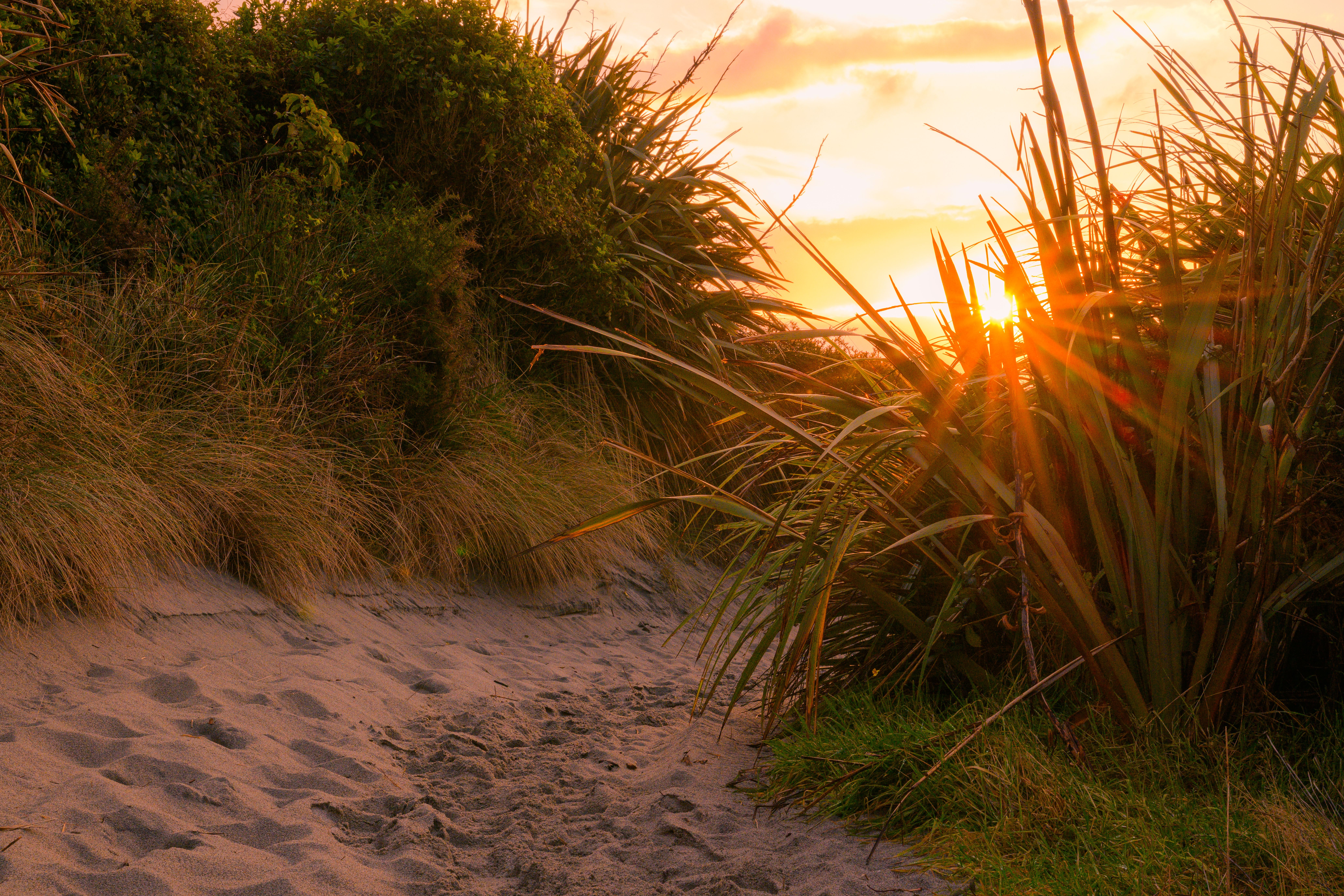
That first evening became a perfect introduction to photographing New Zealand. The country wasn’t going to perform on command. It wasn’t going to hand us the expected composition every time we showed up with tripods. Sometimes, the best option was to stop forcing the grand landscape and start paying attention to the details.
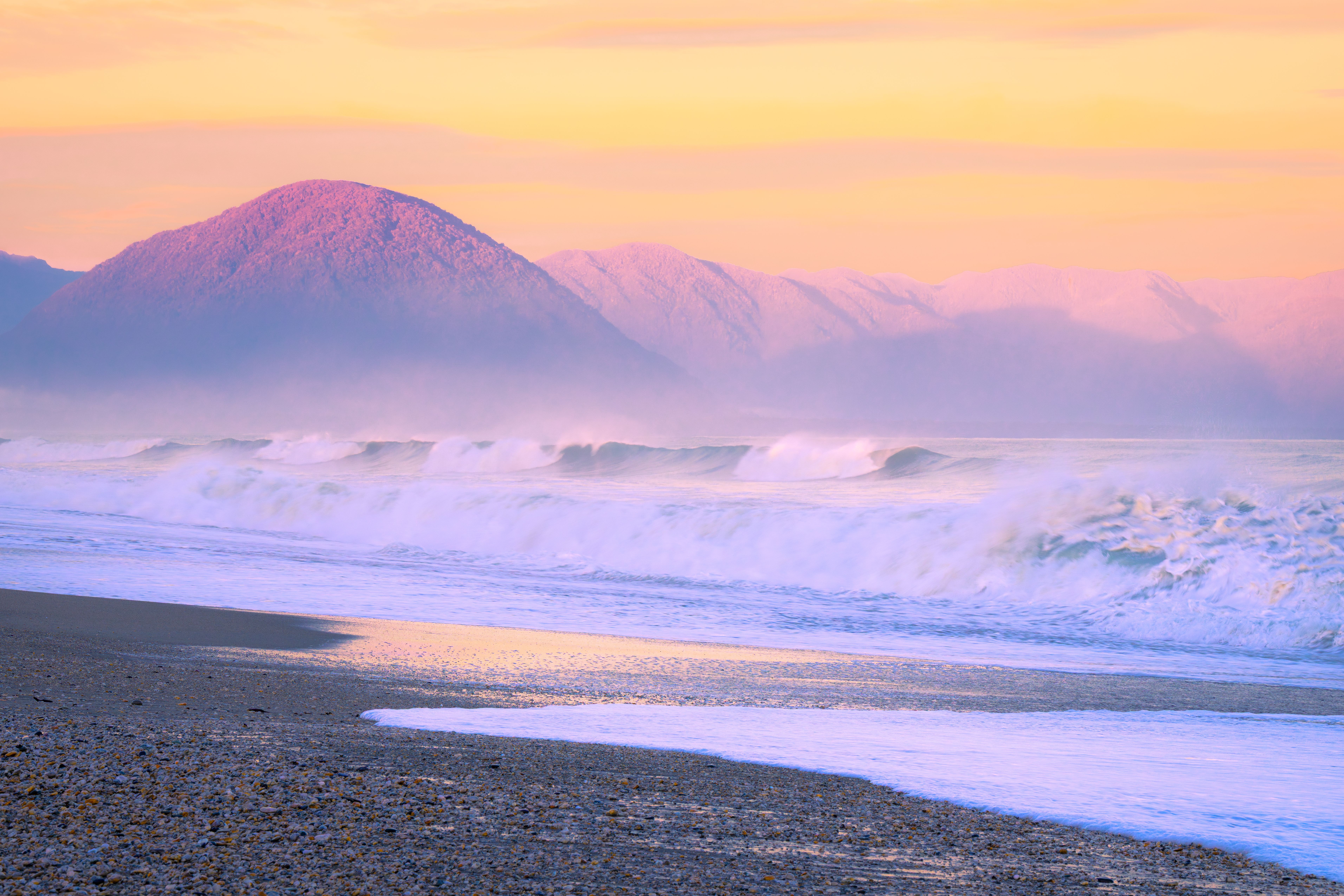
And then, because New Zealand enjoys keeping photographers emotionally unstable, the next morning at the very same location was spectacular!
The beach that had been subtle and restrained the night before suddenly filled with pastel color. Soft pinks, oranges, and purples layered over the surf. The mountains in the distance faded into atmospheric blue. Waves rolled in beneath a sky that looked exactly like the New Zealand people imagine when they sign up for a trip like this.
It felt earned. Not because we had suffered dramatically — this was still a photography workshop in one of the most beautiful countries on Earth — but because the previous evening had already recalibrated our expectations. We had learned to work with what was there. And when the color arrived, everyone was ready.
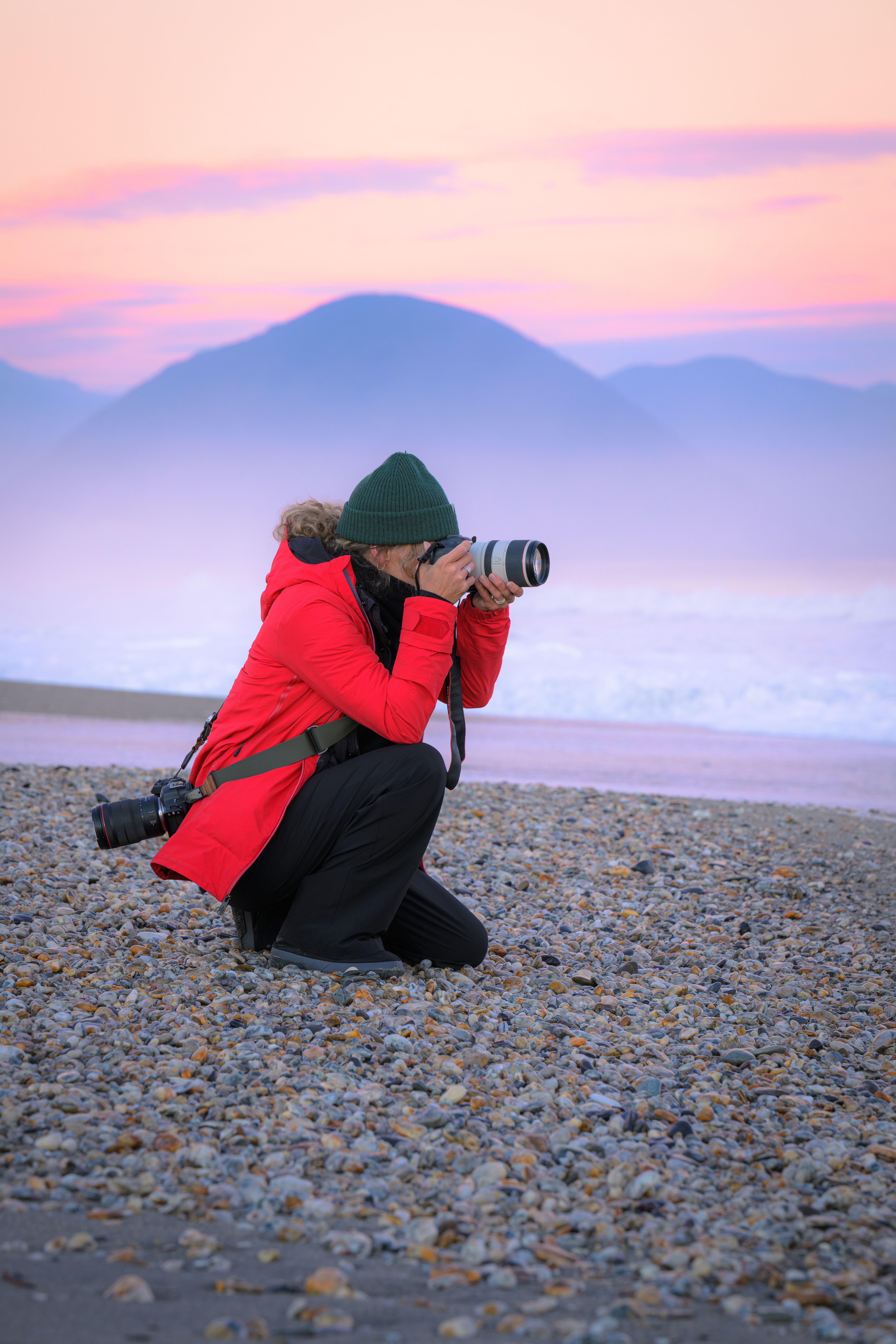
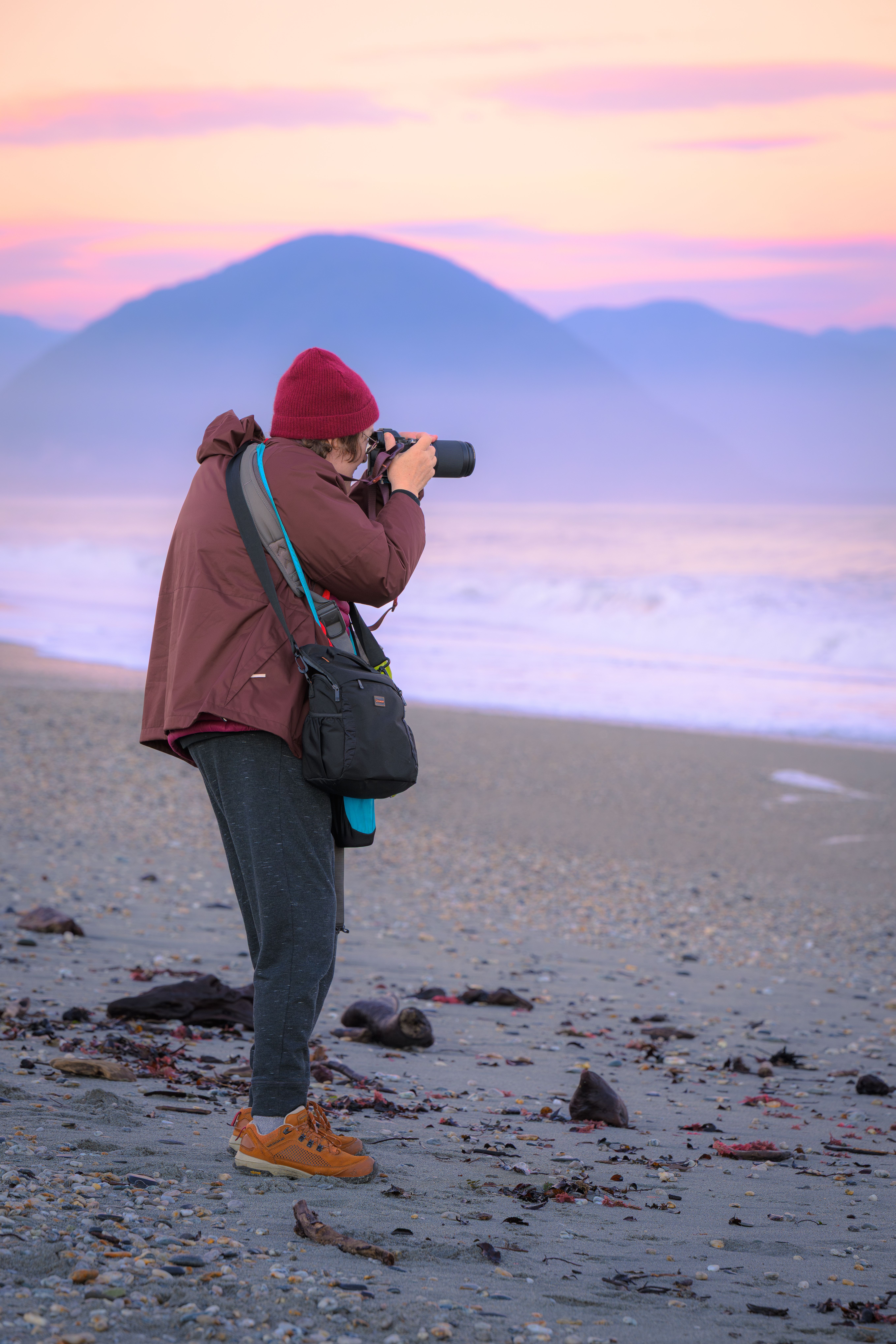
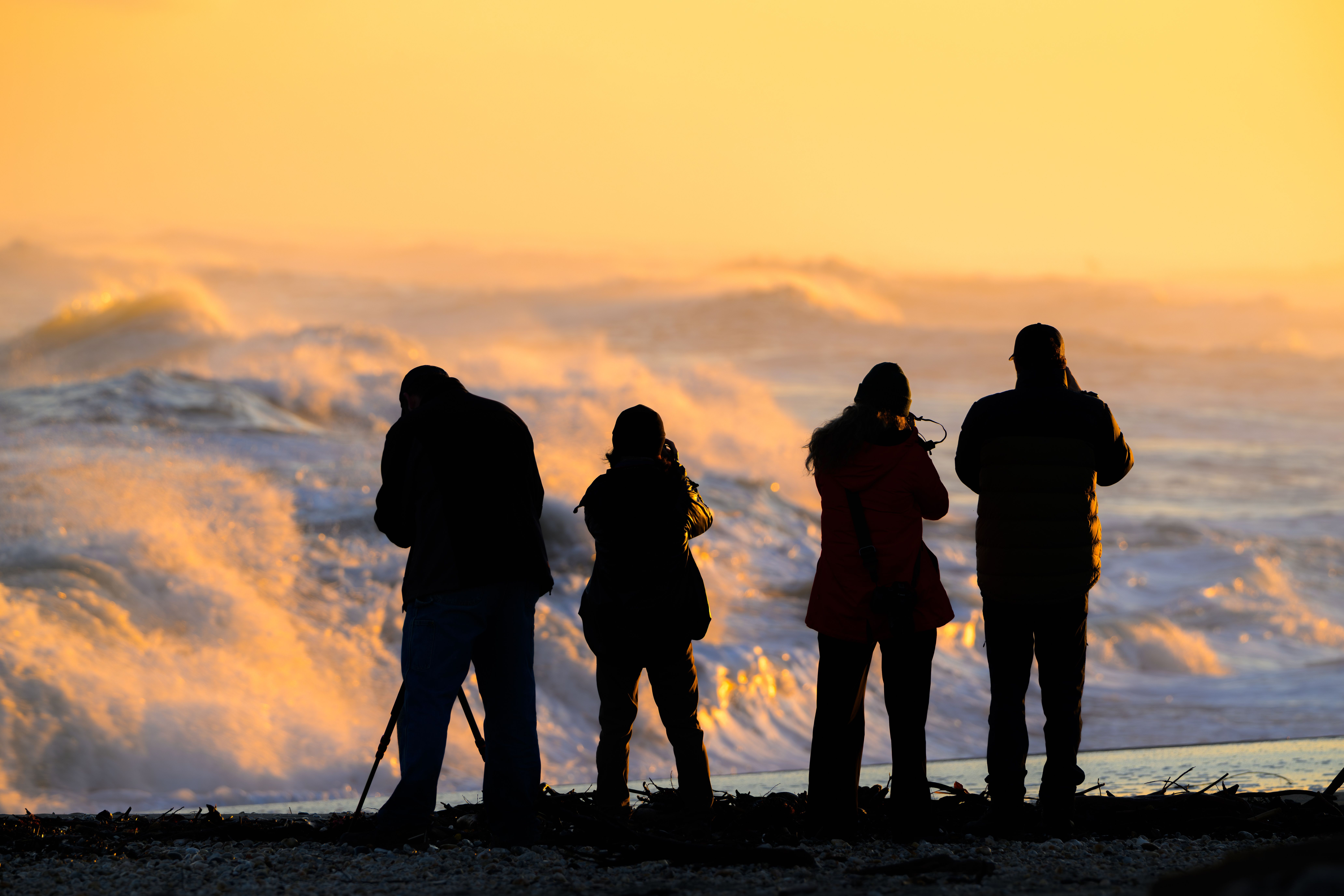
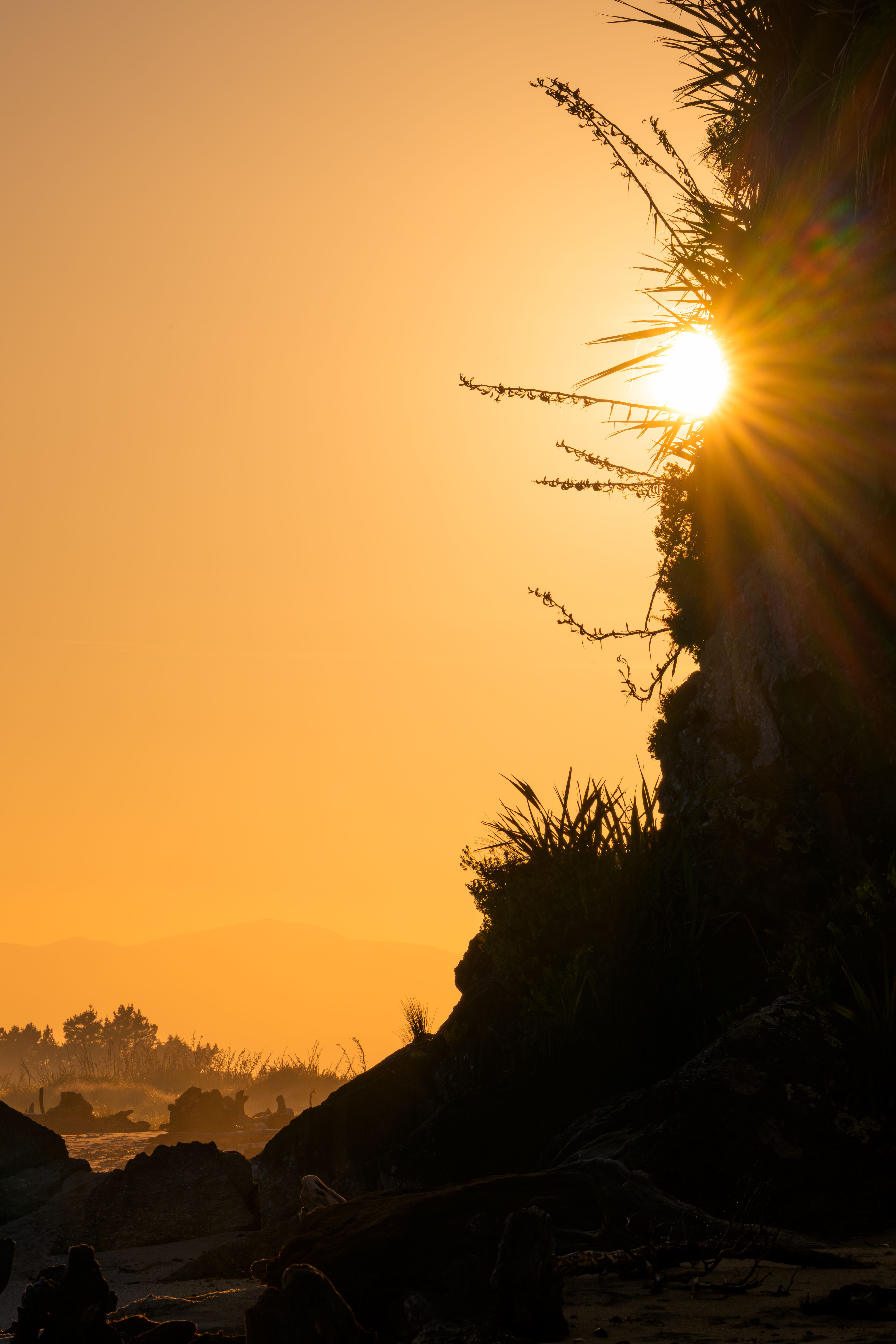
Our time around Haast continued to build on that same idea. The West Coast has a rawness that is hard to describe without sounding overly dramatic, but it really does feel like a place shaped by weather, water, forest, and time. It isn't manicured or tidy, and it isn't interested in being convenient.
We spent time photographing waterfalls and exploring coastal/estuary areas where the light, tide, and wildlife created different opportunities from one shoot to the next.
On our final sunset in the area, the sky again refused to do anything too theatrical. There was some color, but not the kind of full-sky eruption that makes everyone reach for the widest lens in their bag.
This was fine, because the real opportunity was waiting for us nearby.
At Hapuka Estuary, Royal Spoonbills moved through the water in soft golden light. Instead of chasing a sky that wasn’t developing, we quickly changed subjects. The spoonbills gave us elegant shapes, reflections, clean backgrounds, and quiet behavior. It was a completely different kind of photography from the beach sunrise, but every bit as rewarding.
Royal Spoonbills sweep their distinctive spoon-shaped bills side to side through shallow water, feeling for small fish, insects, and crustaceans. They’re considered naturally uncommon in New Zealand, which made the encounter feel even more special — especially in that warm, low-angle light.
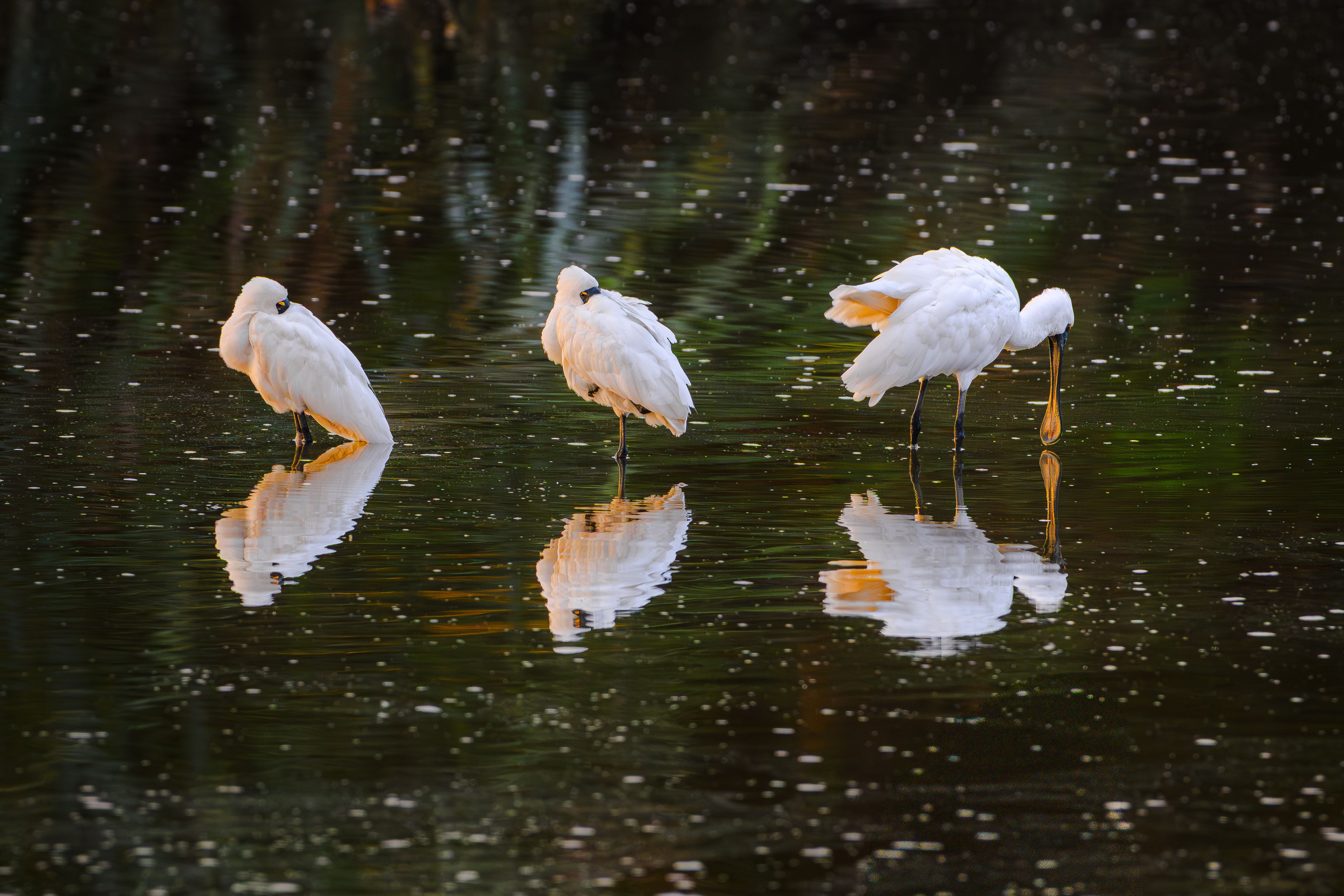
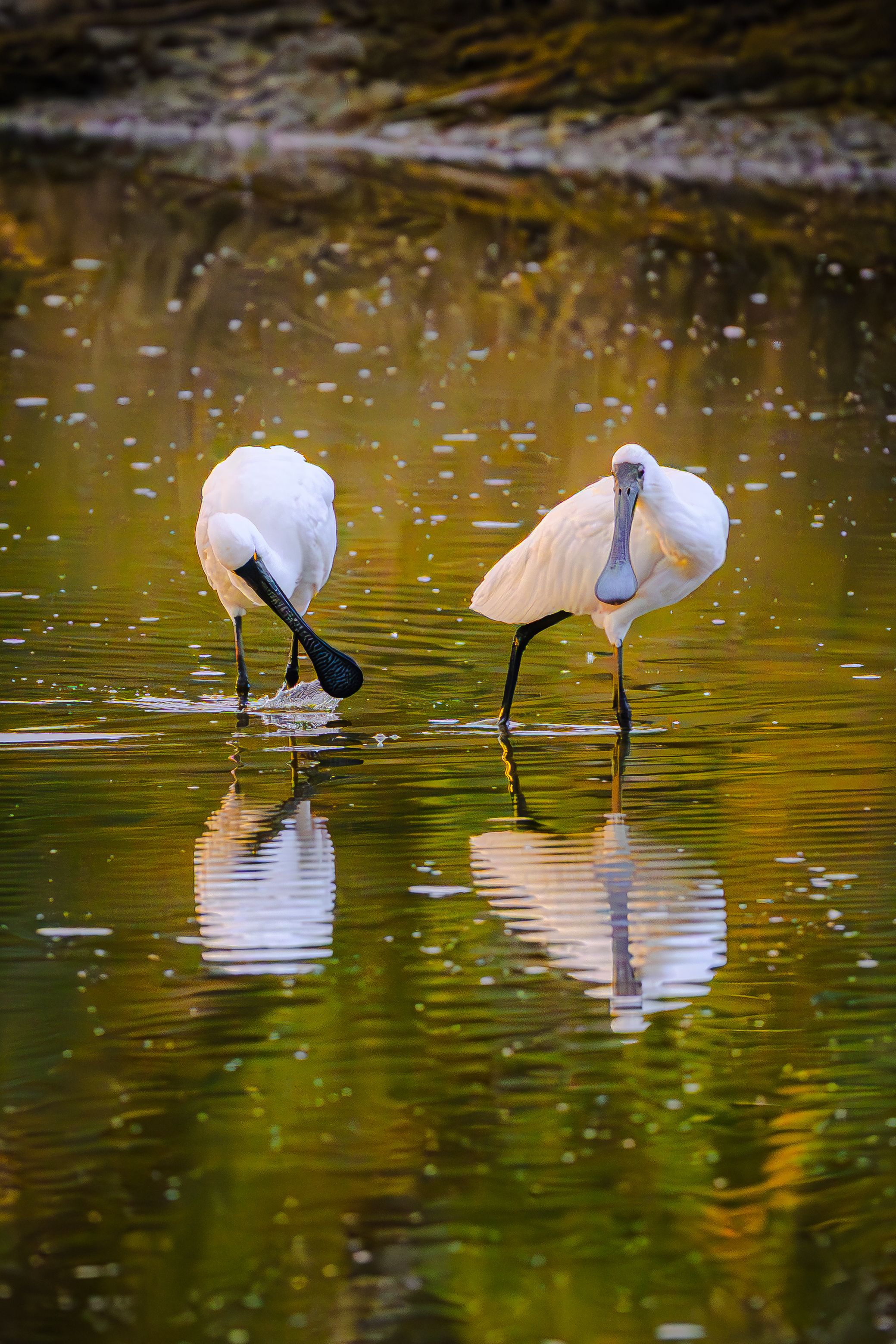
That evening reinforced one of the most useful lessons of the trip: sometimes the best photograph comes from changing the subject, not changing the conditions.
By our departure morning from Haast, the clouds and fog had settled in again. But overcast light isn't bad light. It's just light with a different job, so we used it for the countless waterfalls scattered throughout the region.
The soft, balanced conditions brought out deep greens in the forest, clean tones in the water, and subtle textures in the rocks. Without harsh sunlight blasting through the scene, we could slow down and work carefully with shutter speeds, foregrounds, and compositions. People experimented. Some worked wide. Some went tighter. Some included each other in the frame for scale and storytelling.
It was the kind of morning that might have looked disappointing at first glance, but photographically, it was exactly what we needed.
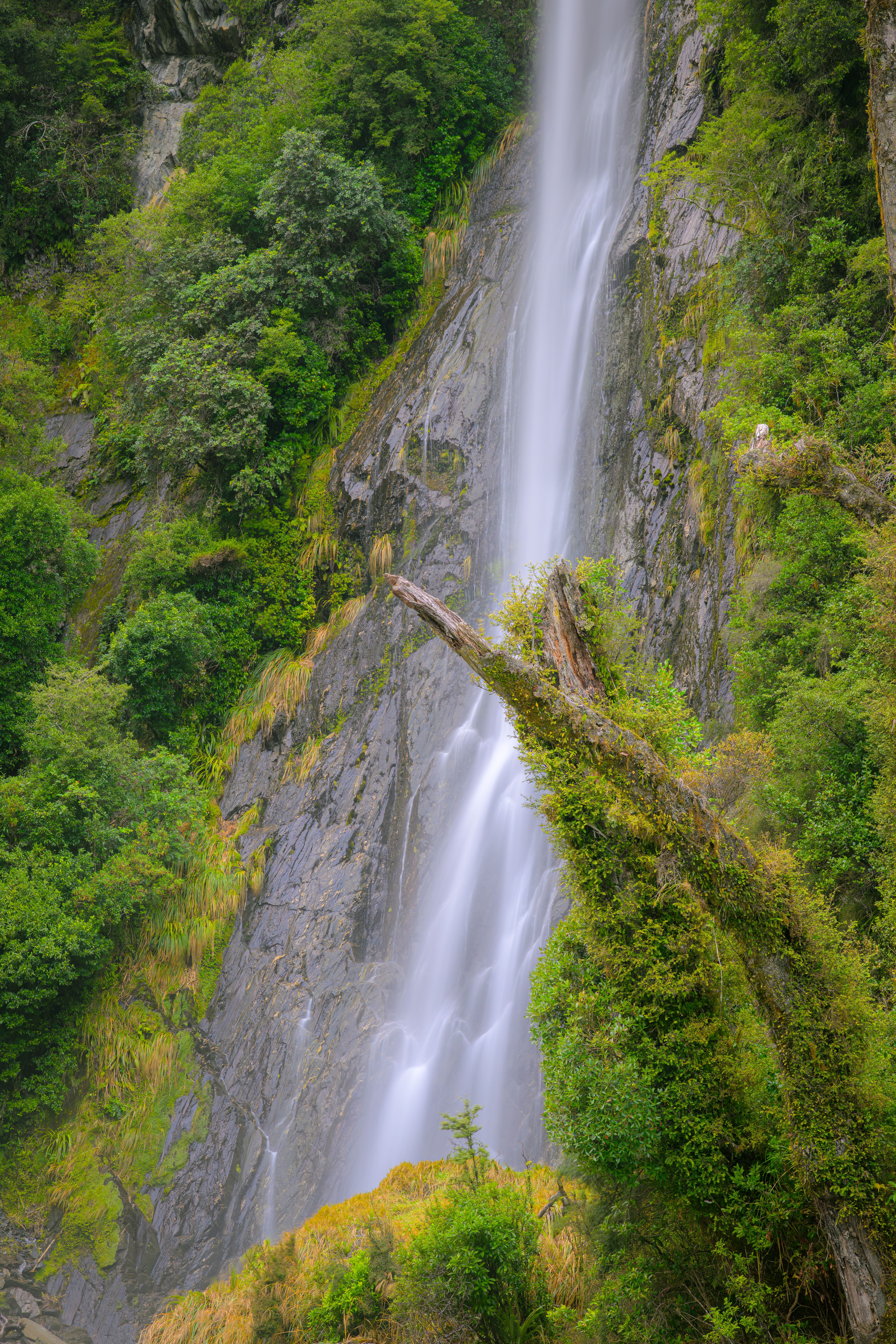
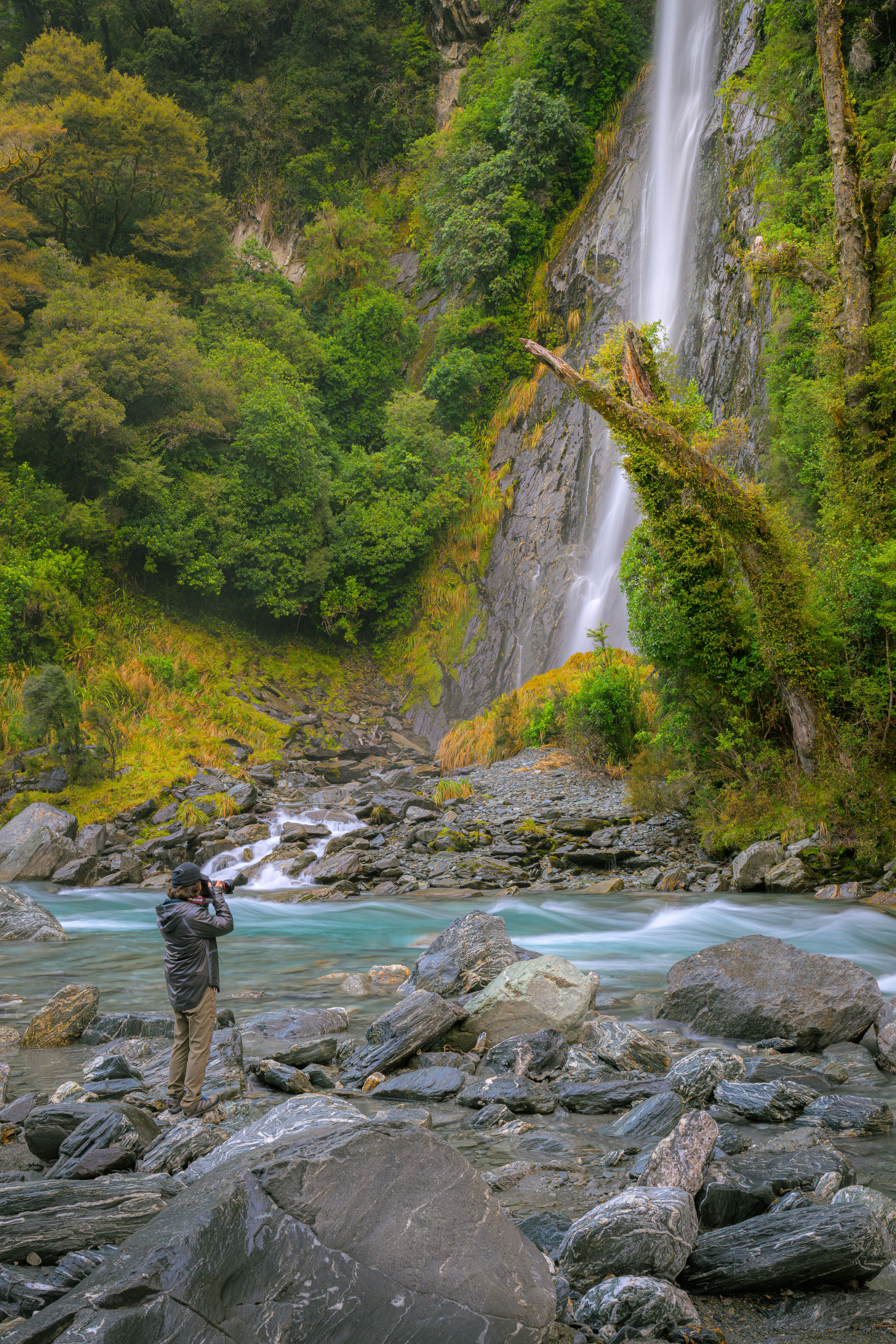
By now, everyone on this trip was starting to understand that New Zealand doesn’t always give you a sunrise, but it will always give you something useful if you know where to look!
Part 2: Haast to Twizel & Aoraki
After leaving the West Coast, we made our way toward Twizel, where the landscape began to open into the Mackenzie Basin. The shift was immediate. The dense, wet, moody feeling of Haast gave way to bigger skies, wider valleys, turquoise lakes, and distant snow-covered peaks.
The turquoise water in this part of the country always looks slightly unreal. Glacial lakes get that color from “glacial flour” — fine rock particles ground down by glaciers and carried into the water by meltwater streams. Those tiny particles stay suspended in the lake and scatter light, giving places like Lake Pūkaki and Lake Tekapō their famous blue-green glow.
Our sunset at Lake Pūkaki introduced us to a different kind of challenge: clear conditions.
Around Aoraki/Mt Cook, clouds are often part of the negotiation. Sometimes they drift dramatically around the summit. Sometimes they add atmosphere. Sometimes they swallow the mountain entirely and leave you photographing what is essentially a rumor. We were fortunate to have unusually clear views of the peak, which was incredible.
It also meant we didn’t always have dramatic clouds or intense color doing the heavy lifting.
This was one of the more interesting photographic problems of the trip because, on paper, it sounded like the opposite of a problem. The mountain was visible. The weather was cooperative. The views were spectacular. And yet, for photographers, perfect visibility does not automatically equal perfect photography.
So again, we adapted.
Around Aoraki, we used people in the landscape to show scale and give the scene a sense of experience. A person low to the ground with a camera in the foreground, the river and mountains beyond, and the snow-covered peak catching warm light told a fuller story than a clean mountain postcard ever could.
Aoraki/Mt Cook is New Zealand’s highest mountain, rising to 3,724 meters, and it anchors a national park that contains most of the country’s peaks over 3,000 meters. It’s one of those places where scale is hard to communicate in a photograph unless you include something human in the frame — which is exactly why those small figures and workshop moments became so useful compositionally.
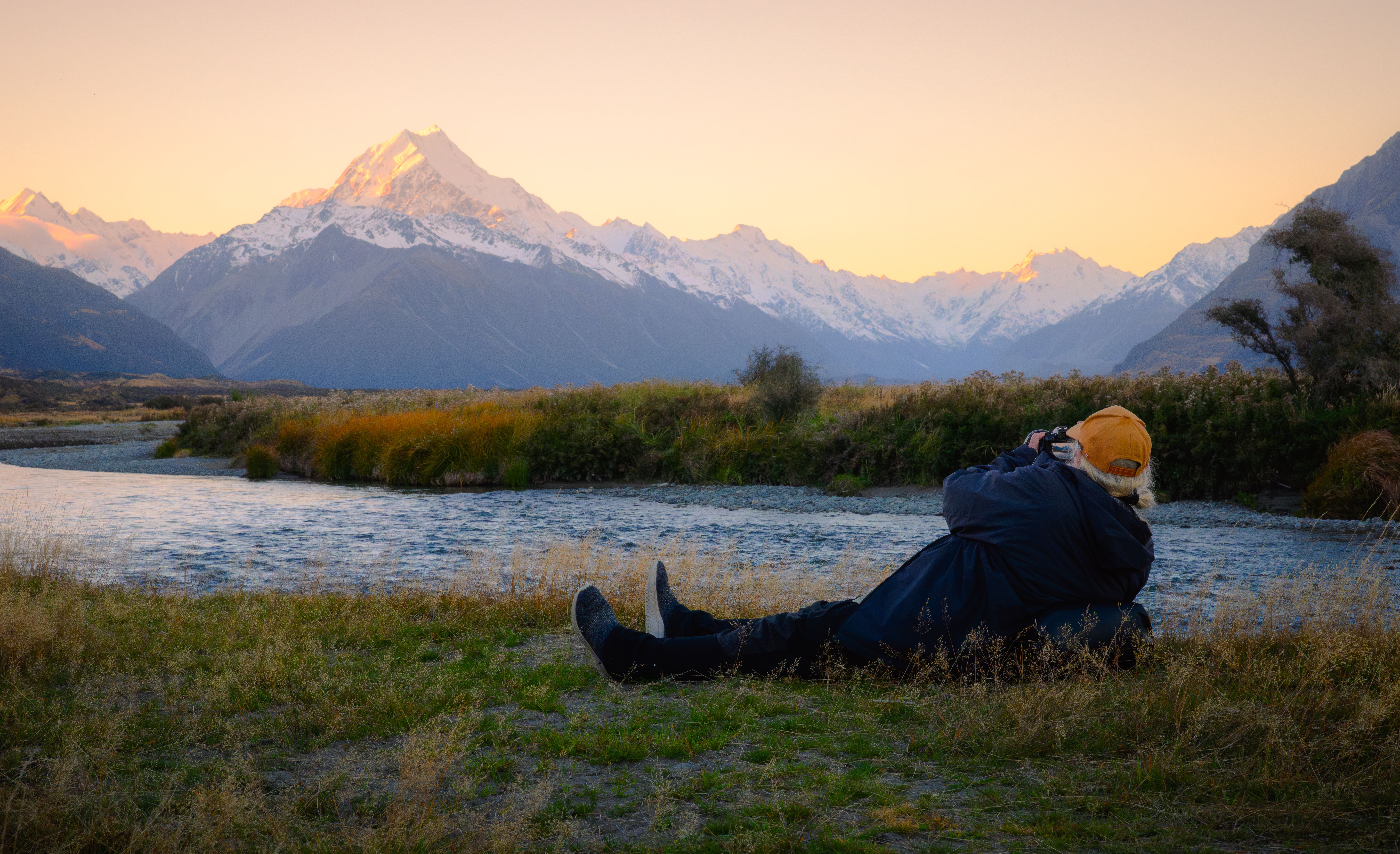
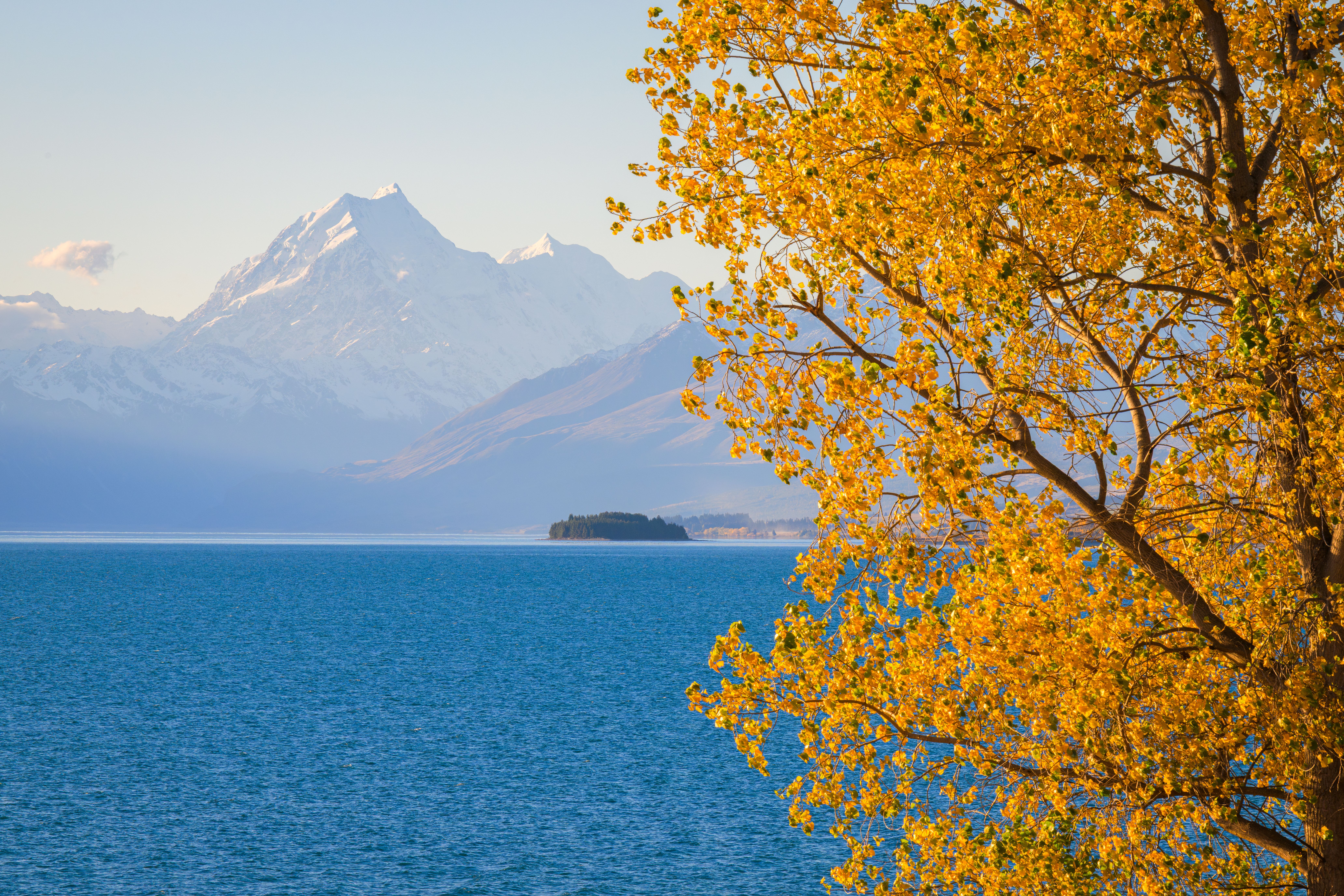
At Lake Ōhau, sunrise gave us another version of New Zealand’s favorite workshop exercise: here’s a beautiful scene, now figure out what to do with it.
The lake itself was stunning, but the wind had other plans. The surface was too choppy for the kind of clean, elegant slow-shutter water work I usually prefer. Instead of getting those smooth, glassy textures that can simplify a lakeshore composition, the waves felt busy and distracting to me. So rather than fight the conditions, I changed my approach.
I started working low in the grasses along the lake, using the rising sun as the main subject. The wind suddenly mattered less because I wasn’t relying on the water anymore. The grasses gave me shape, texture, and movement, while the bright sun opened the door for silhouettes, flare, and sunbursts. It turned into a completely different photograph than the one I had first imagined — less serene lakescape, more graphic backlit experiment.
It was a good reminder that sometimes the scene doesn’t need to be rescued. It just needs to be approached from a different angle. The lake wasn’t giving me the calm, slow-shutter image I wanted, but it was still giving me light, shape, and atmosphere. On this trip, that was often enough.
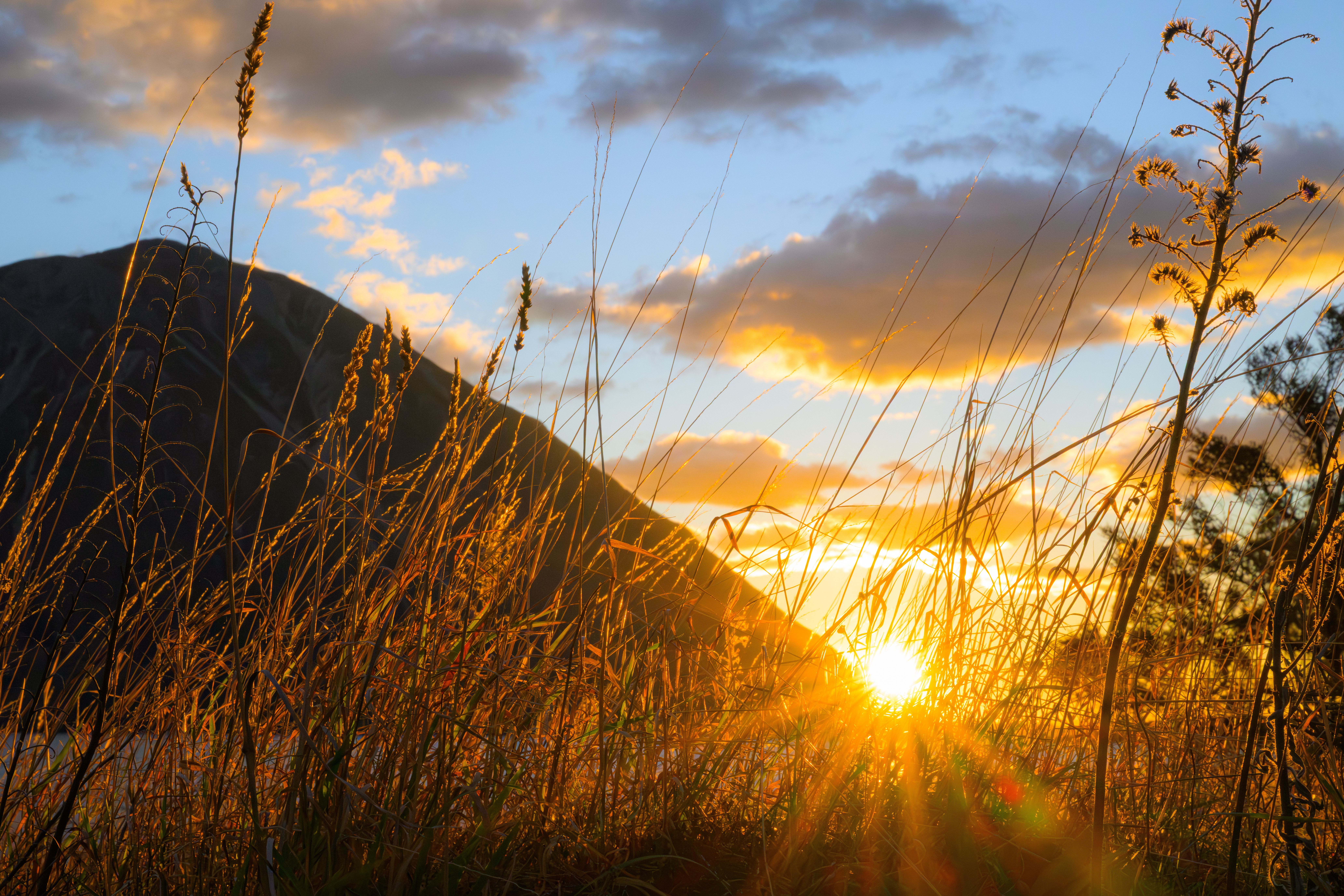
And when the grand landscapes quieted down, we looked closer again.
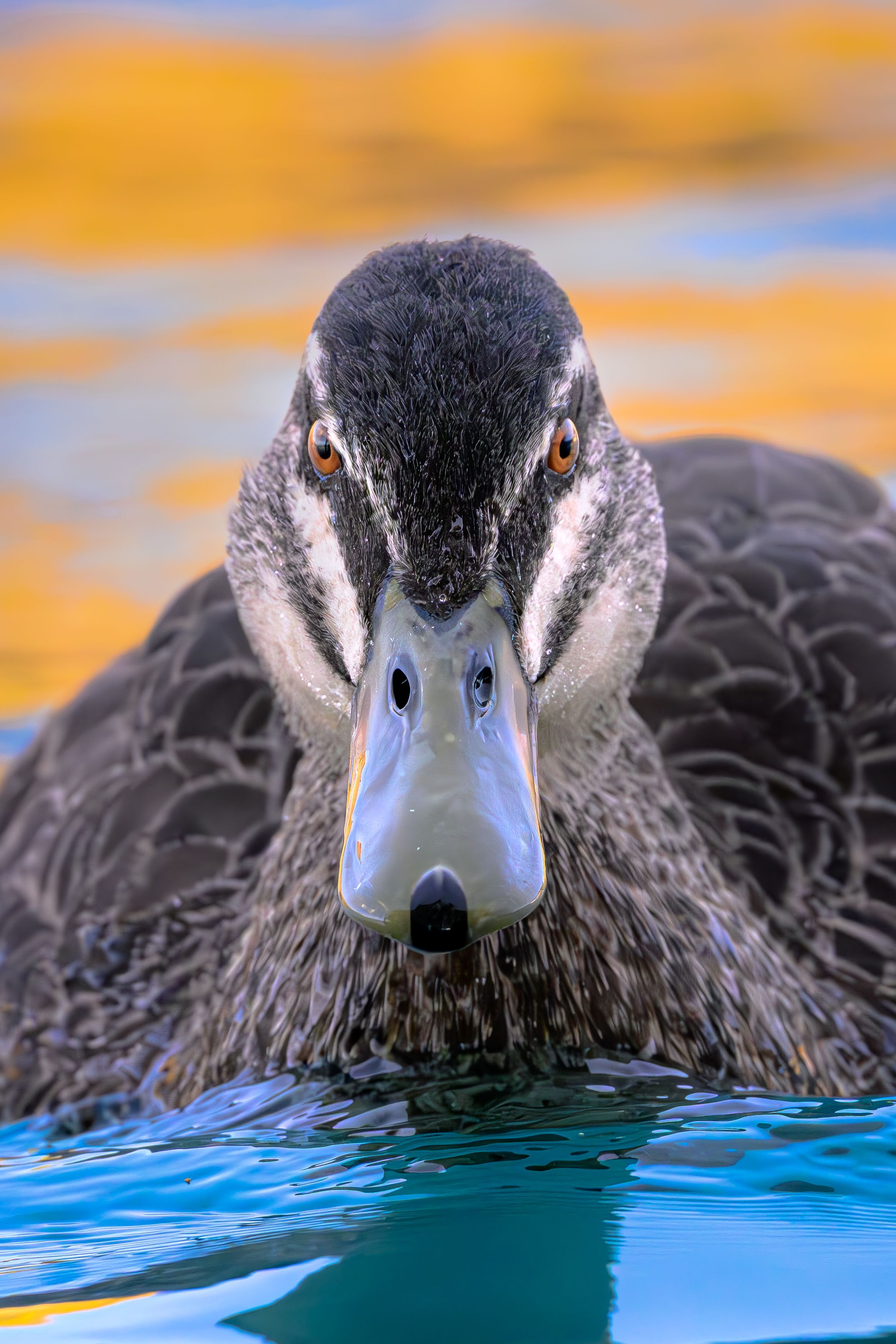
One of my favorite unexpected subjects from this part of the trip was a Pacific black duck, photographed tightly with beautiful color reflecting in the water. It wasn't the kind of subject that appears in bold print on an itinerary, but that’s exactly why it mattered. It was a reminder that New Zealand’s photographic opportunities are not limited to the obvious icons.
Also, the duck had an excellent face.
Like many waterbirds, the real photographic opportunity wasn’t just the bird itself — it was the behavior, the reflection, and the way the color of the surrounding landscape turned ordinary water into a painterly background.
Twizel gave us the opposite lesson from Haast. On the West Coast, we learned to work with fog, clouds, and subtle light. In the Mackenzie Basin, we learned that even “perfect” conditions require creativity. Clear skies gave us access to Aoraki, but they also pushed us to build stronger compositions through scale, subject choice, foregrounds, and timing.
Part 3: Twizel to Te Anau & Fiordland
From Twizel, we drove to Arrowtown for lunch and shooting before continuing to Te Anau, where Fiordland began to take over the story.
And Fiordland isn't subtle.
Fiordland is part of Te Wāhipounamu, the UNESCO World Heritage area that protects a huge sweep of southwest New Zealand, including Fiordland, Mount Aspiring, Westland, and Aoraki/Mt Cook National Parks. The region is recognized for its geology, biodiversity, and outstanding natural landscapes — which is a very official way of saying that the place feels wild in a way few places still do.
It's wet, green, steep, moody, tangled, and dramatic. After the open spaces around Twizel, arriving in Te Anau felt like entering a different country. The mountains closed in. The forests got thicker. The air felt heavier. The weather became less of a forecast and more of a personality.
We had beautiful color along Lake Te Anau for both sunset and sunrise, with soft pastels over the water and layered mountains in the distance. These were quiet, atmospheric scenes that rewarded careful composition rather than frantic shooting.
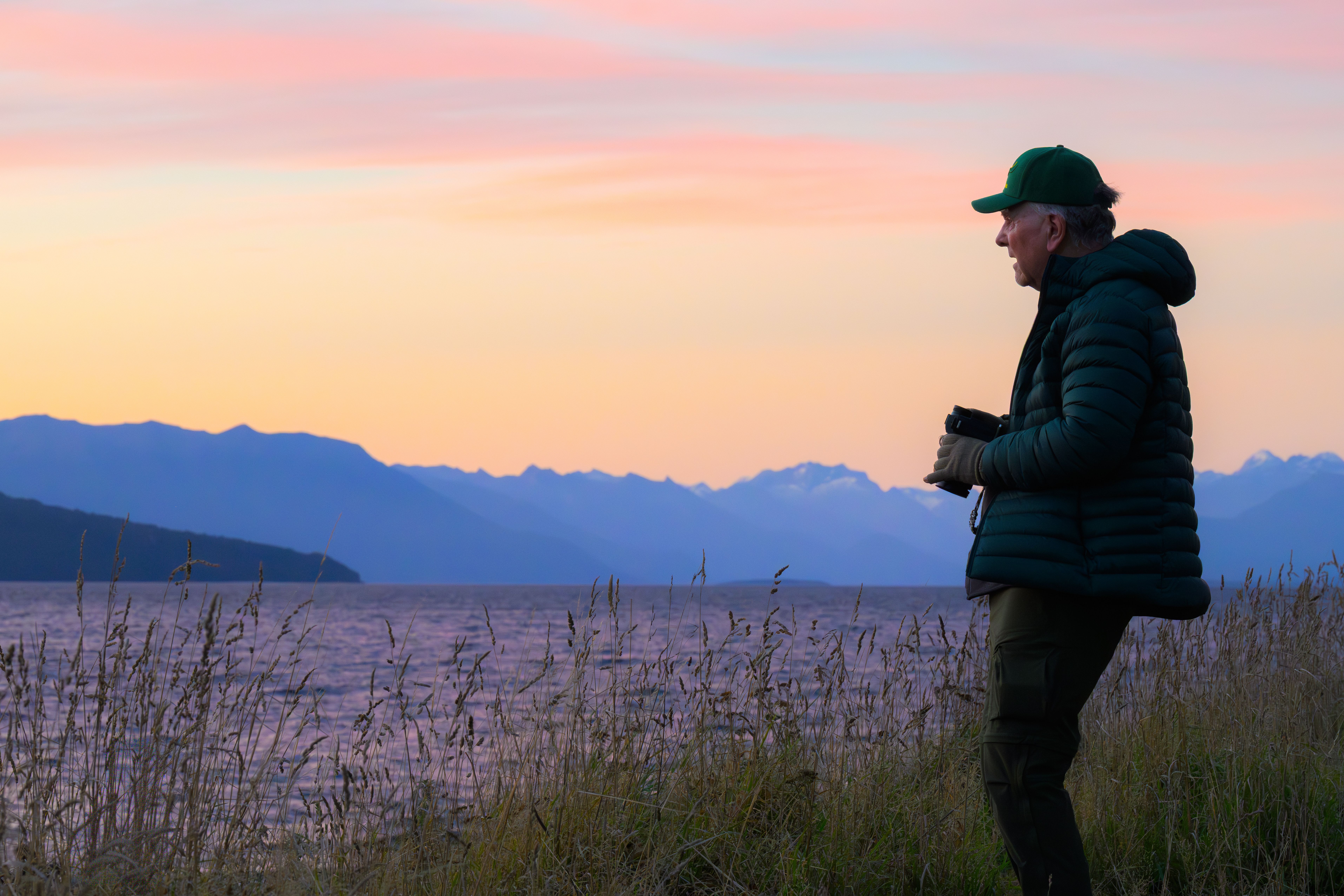
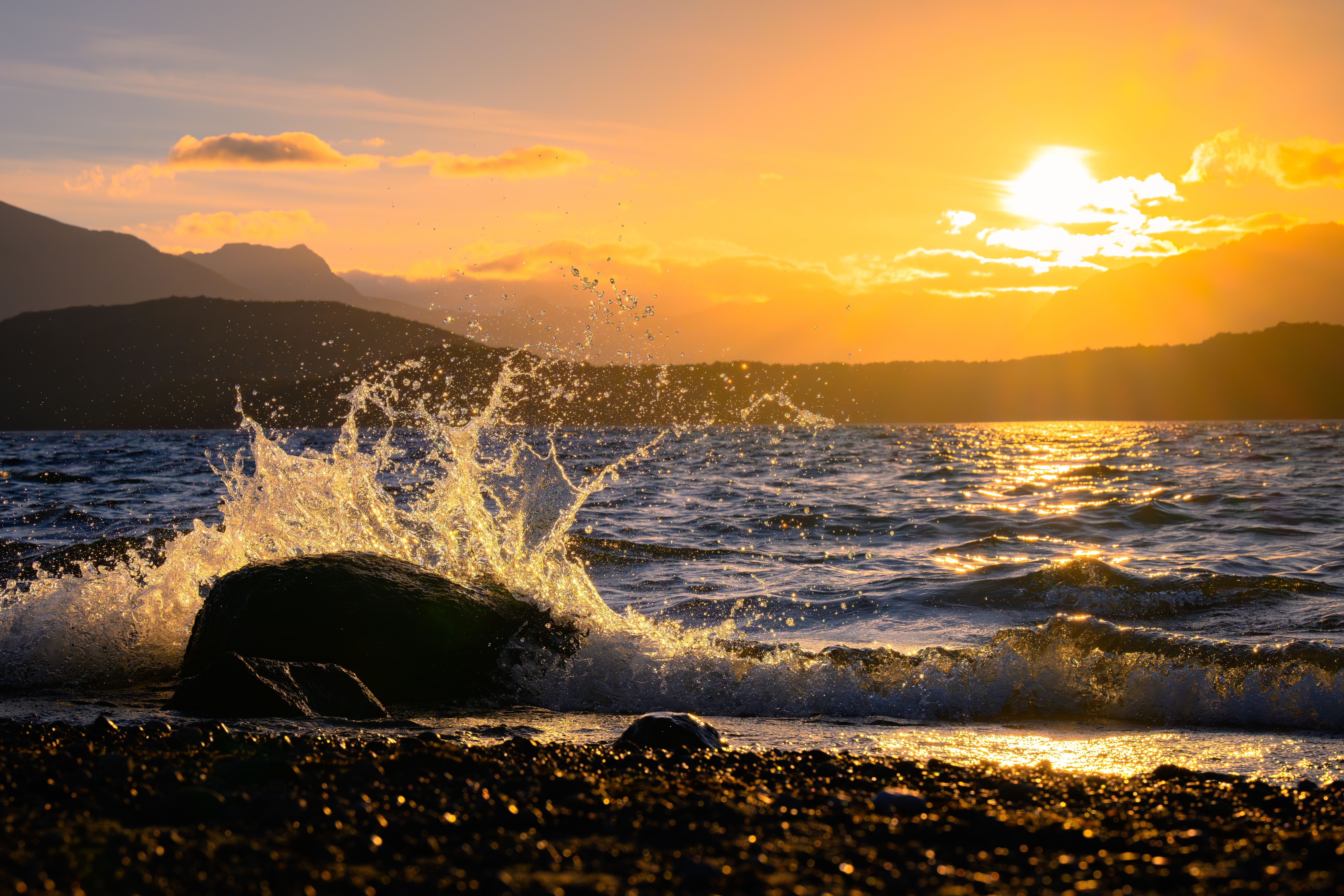
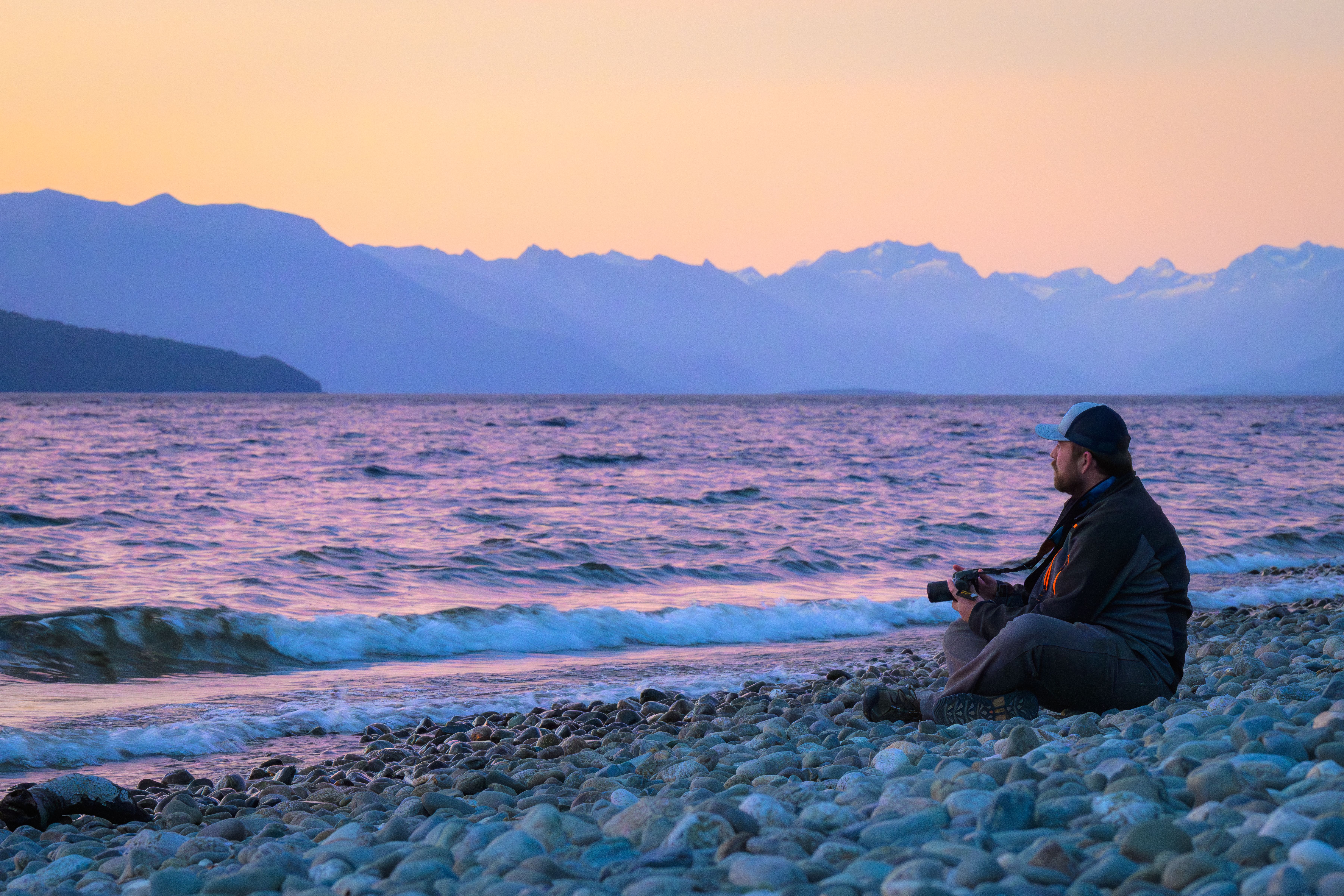
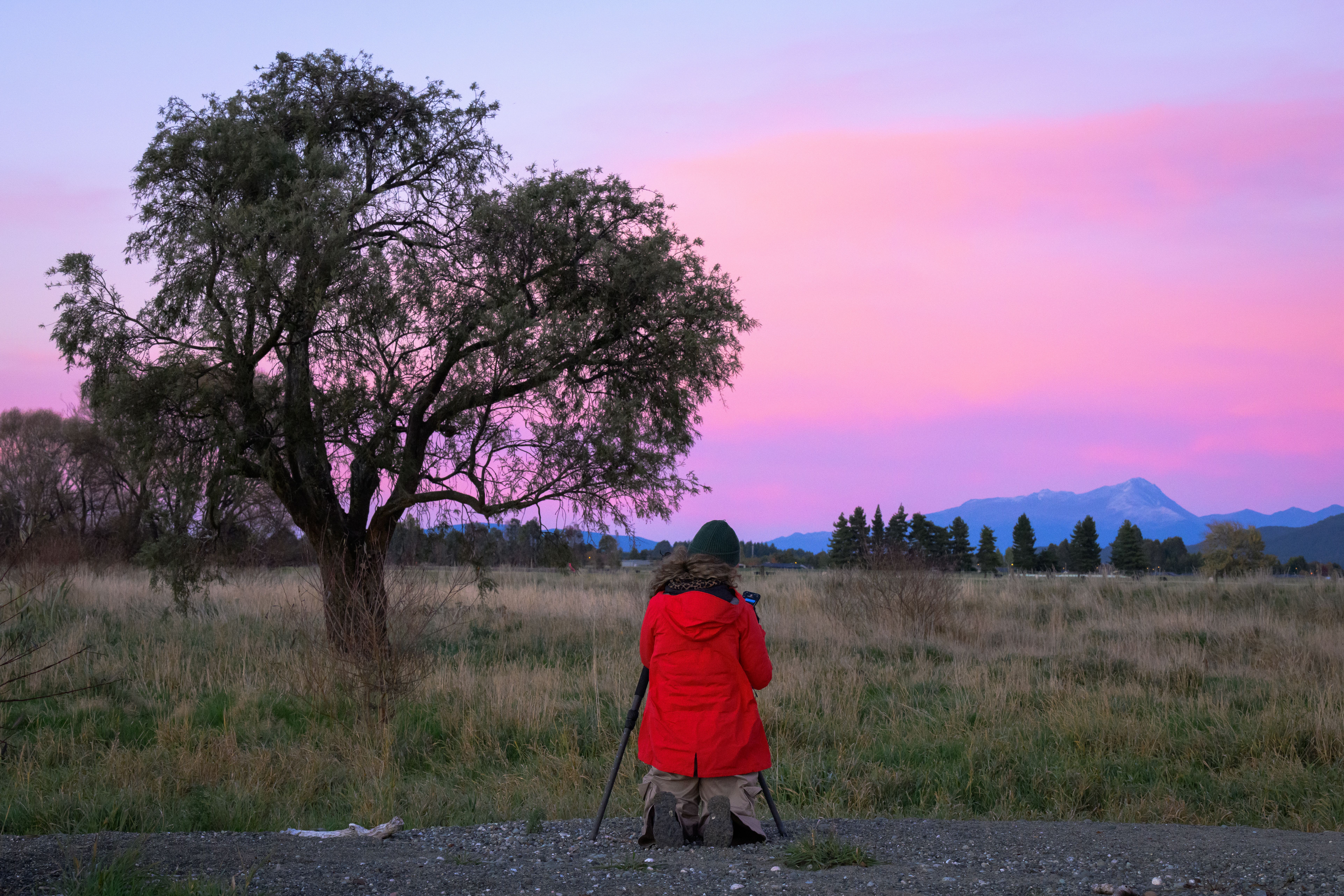
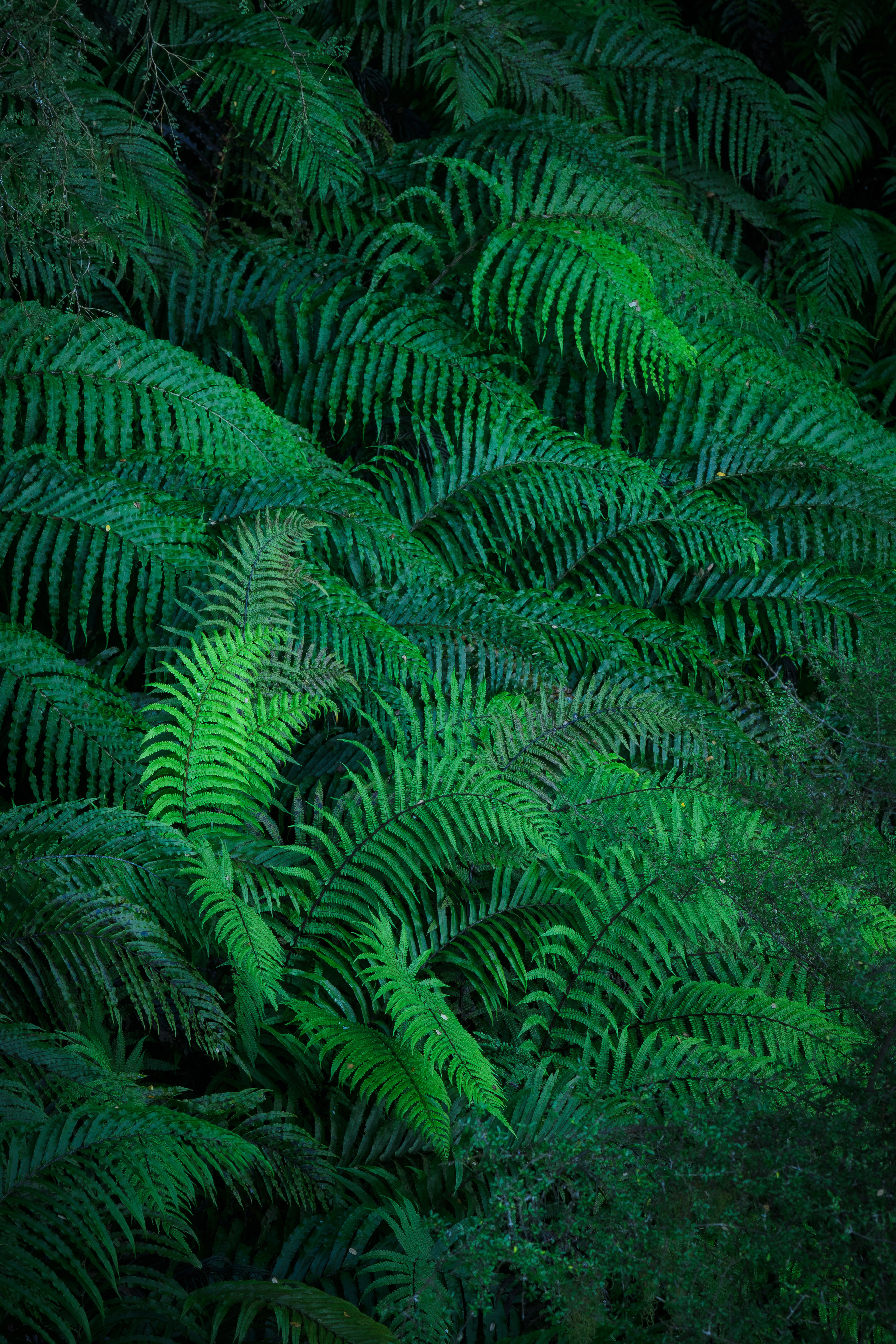
One of the best things about Fiordland is that it rewards both wide-angle drama and small-scale attention. Yes, there are massive valleys, lakes, cliffs, and waterfalls. But there is also moss. So much moss. Moss hanging from branches, wrapping around trees, glowing in soft light, and generally making the forest look like it's been growing undisturbed since the beginning of time.
The constant moisture is a big part of the story. Fiordland’s forests are packed with mosses, liverworts, ferns, and beech trees, all thriving in a landscape where rainfall and steep terrain shape nearly everything. For photographers, that means the forest is rarely clean or simple — but it's full of texture, pattern, and depth.
Balanced light in the forest gave us perfect conditions for these intimate scenes. No harsh highlights, no blown-out patches of sun, just green layers, texture, and atmosphere. It was the kind of environment where slowing down mattered.
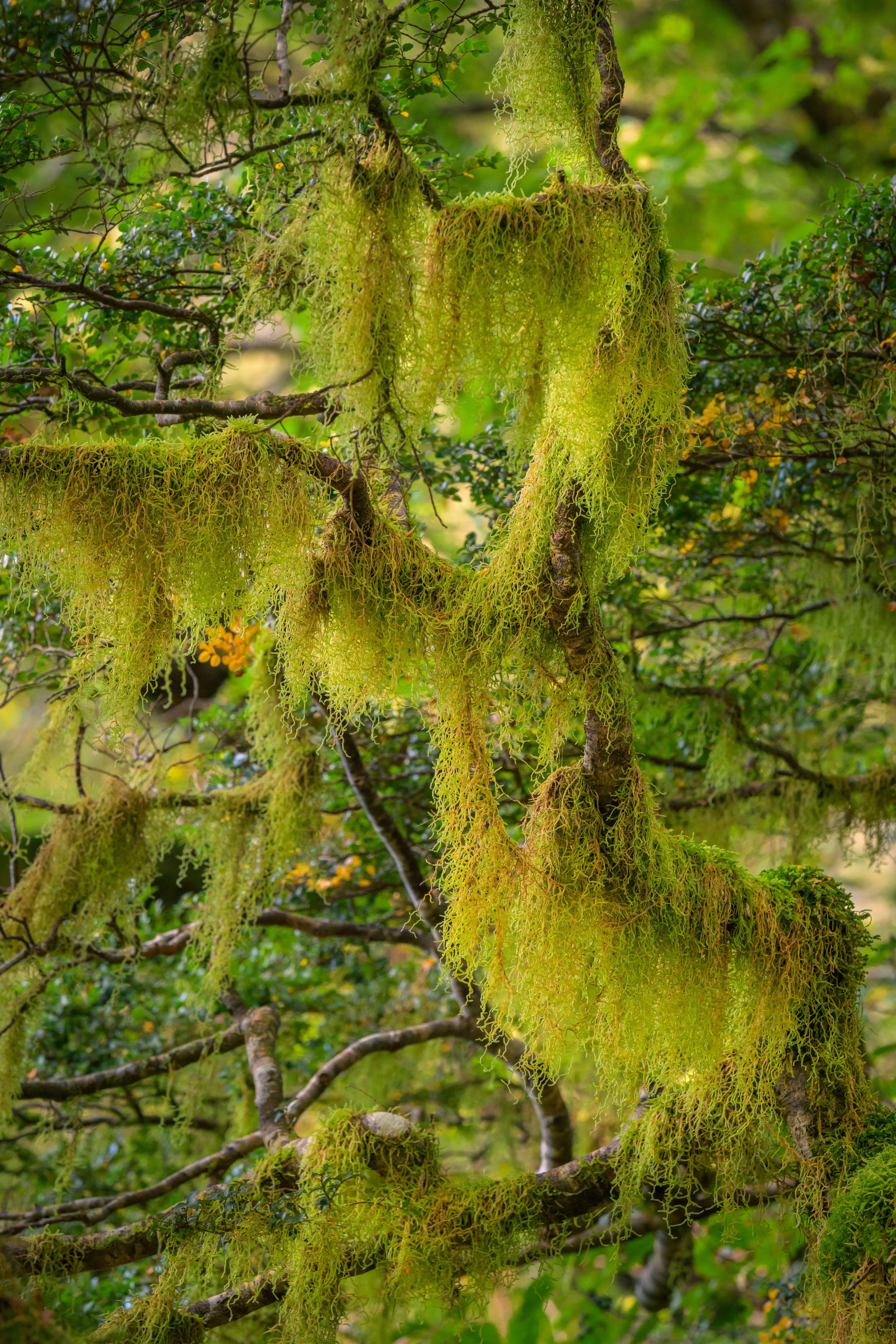
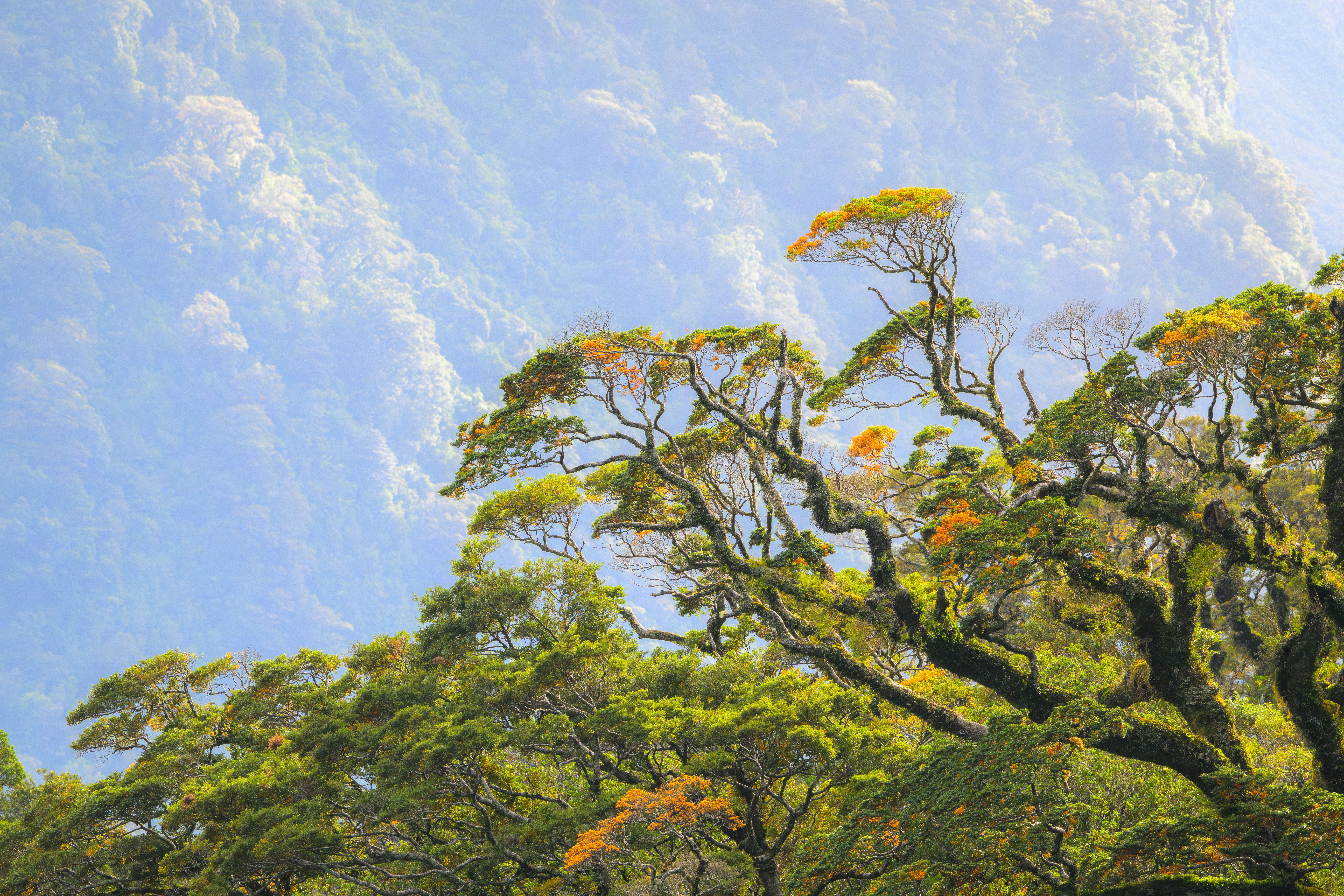
The forest also gave us beautiful layered compositions: orange-tinted beech trees against misty green hillsides, branches twisting into the frame, and backgrounds softened by distance and moisture. In a place like this, “messy” isn't a flaw. It's the subject.
And then there was the wildlife.
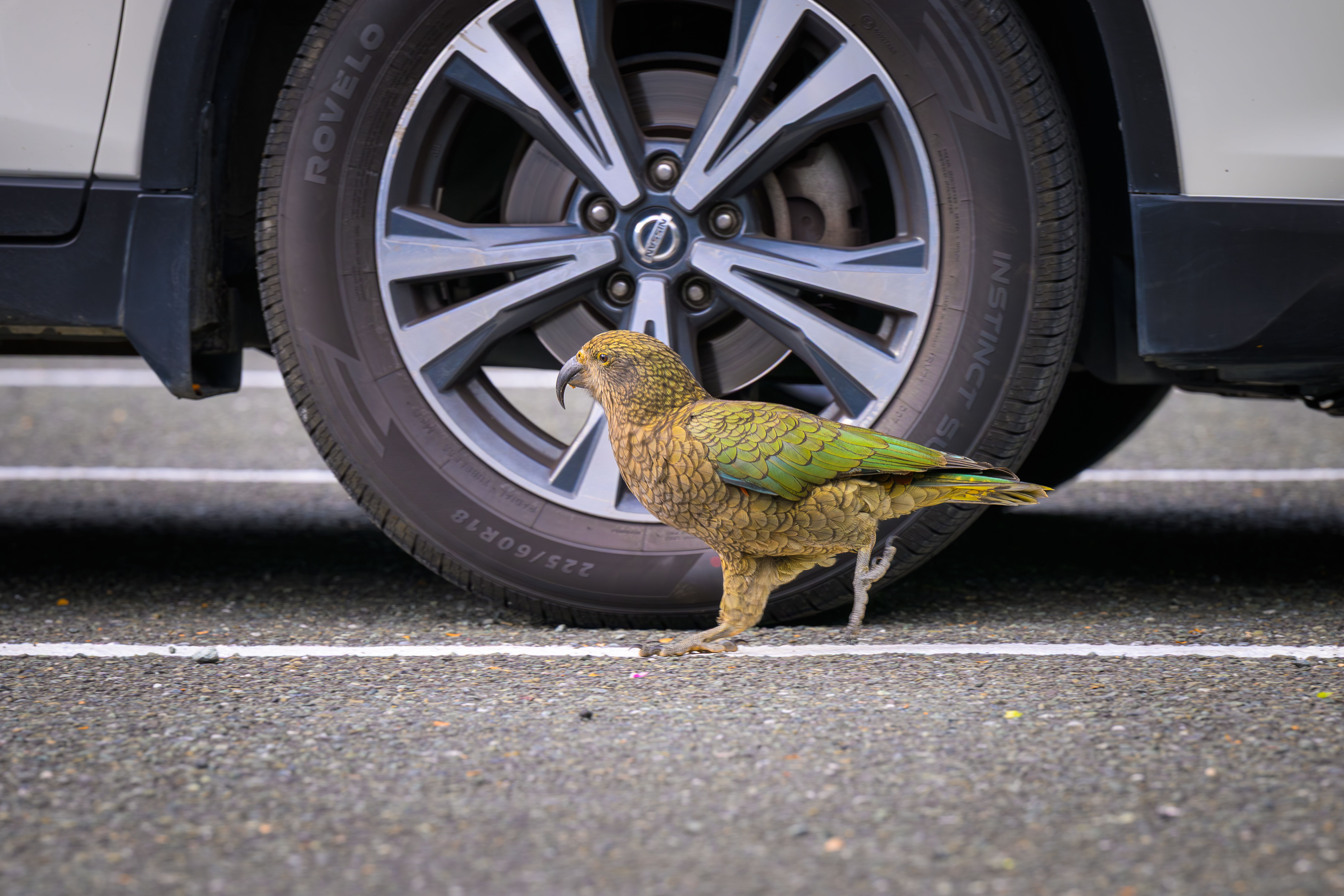
We encountered kea causing mischief, which wasn't surprising. Kea are the world’s only alpine parrot, endangered, highly intelligent, and famous for problem-solving — all traits that sound noble until one is investigating your vehicle like it has both motive and legal training. They are charismatic, clever, and just chaotic enough to be dangerous to unattended gear, vehicles, and dignity.
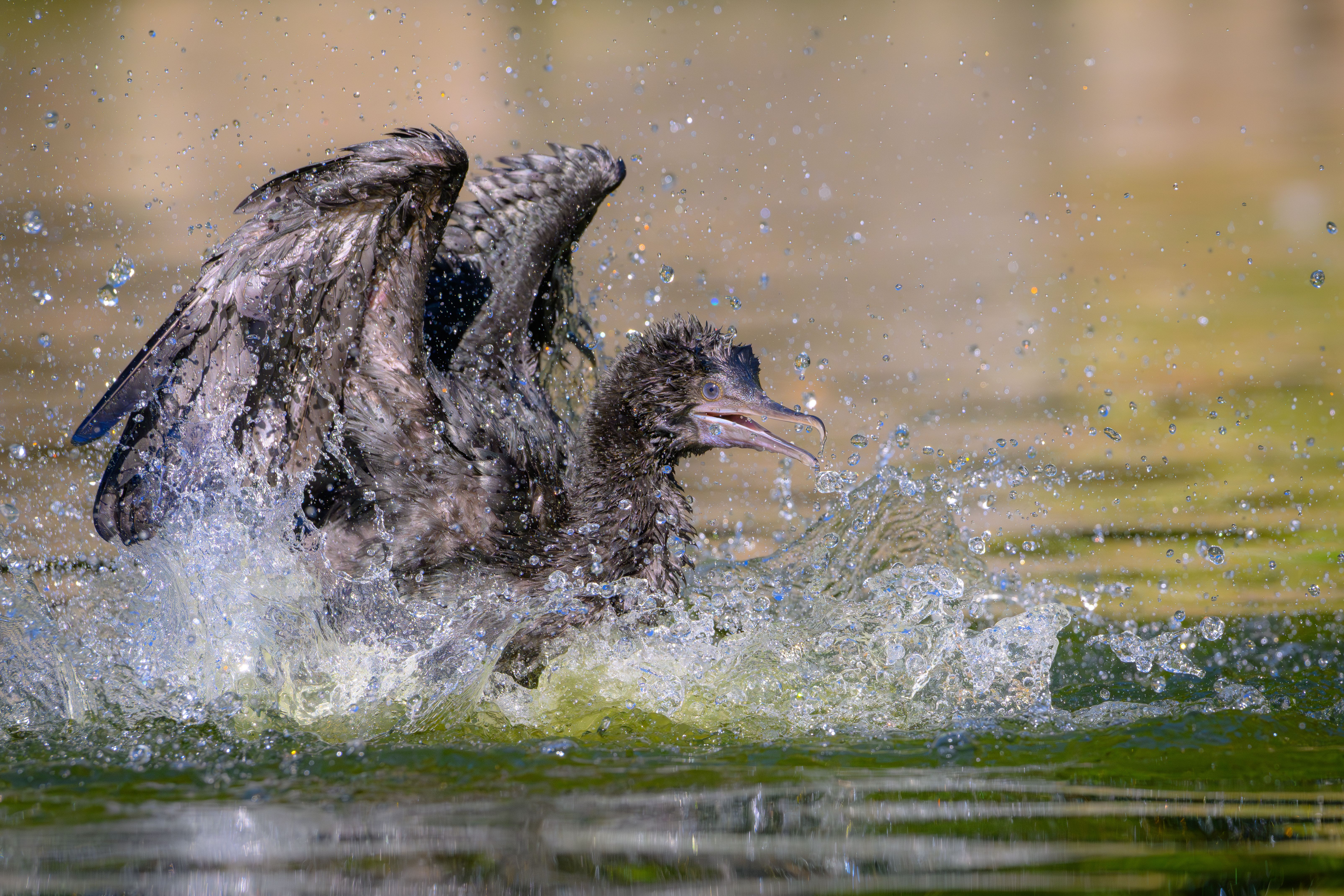
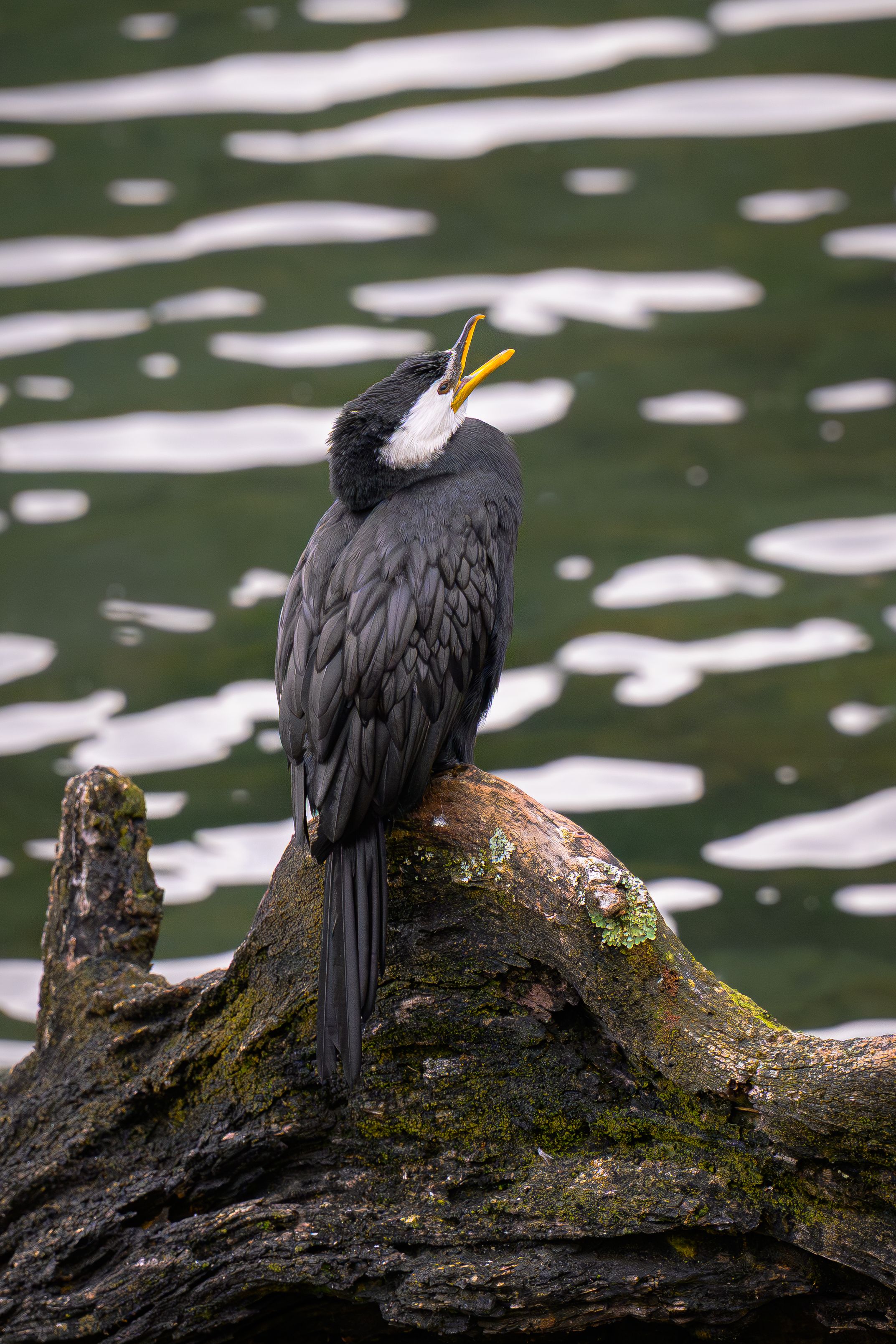
We also photographed little black cormorants and a little pied cormorant waiting for a hunt. Cormorants are built for fishing, and this one had that patient, prehistoric look they get when they’re perched and watching the water. It was another reminder that wildlife photography in New Zealand doesn’t always need a dramatic encounter. Sometimes it’s just a quiet bird, good posture, and the right background.
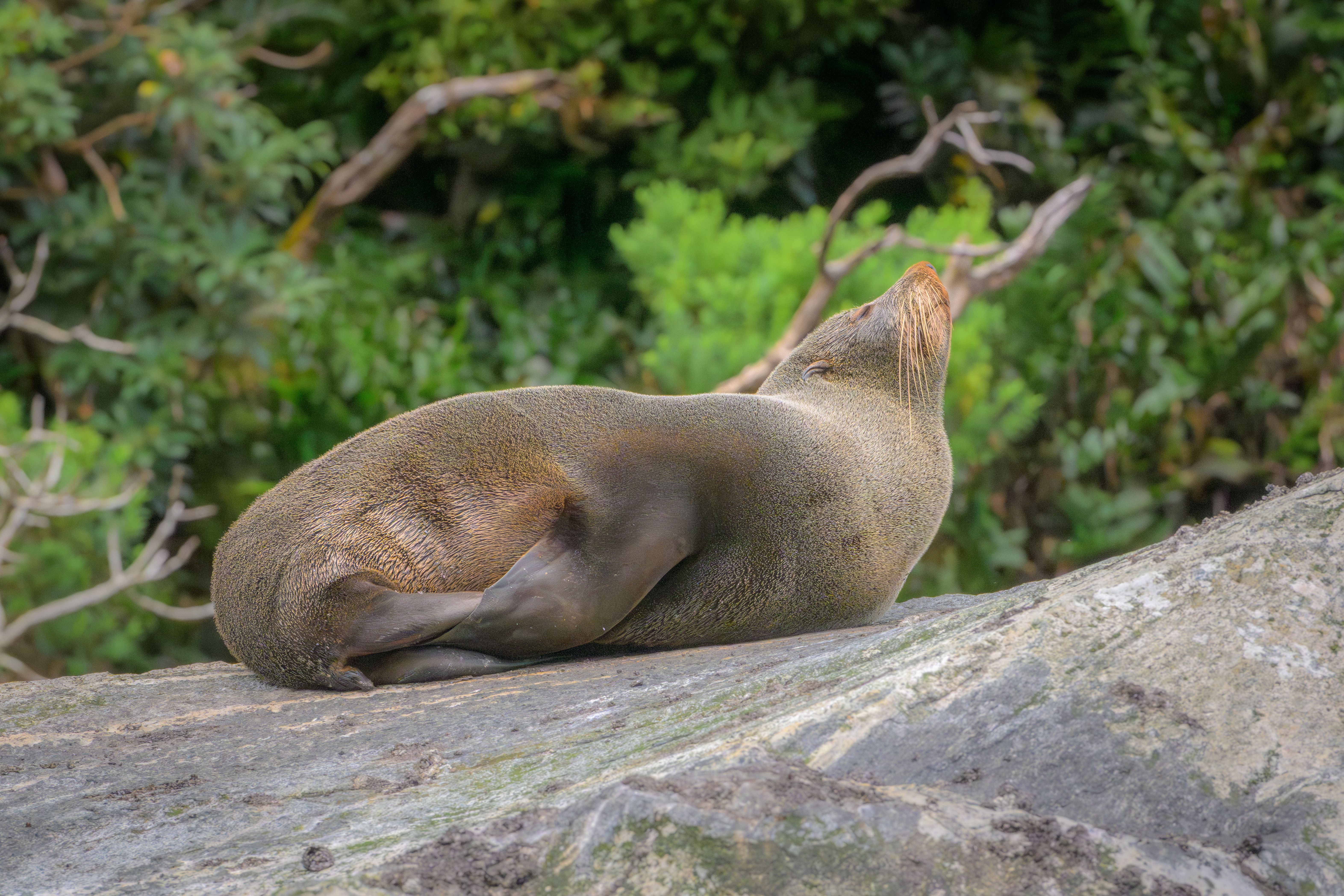
In Milford Sound, we even had a rare fur seal sighting. New Zealand fur seals, or kekeno, were once heavily hunted, but today they’re protected and are often seen resting on rocky ledges between feeding trips. They can look wonderfully lazy on land, but in the water they’re fast, agile predators — which makes their nap-heavy lifestyle feel a little more earned.
Milford Sound is called a sound, but geologically it’s a fiord — carved by glaciers, flooded by the sea, and built with the kind of vertical walls that make waterfalls feel inevitable. After rain, the cliffs start producing waterfalls from every seam, crack, and mossy ledge.
Milford Sound is famous for them, of course, but seeing them from the water is a different experience. They pour, streak, explode, drift, and vanish into mist. Some are clean vertical ribbons, and others crash down in chaotic sheets.
On our cruise, the waterfalls gave us both grand scenes and tighter abstract studies. Wide compositions showed the scale of the cliffs and water. Tighter frames revealed texture: white water against dark rock, green moss clinging to the walls, mist softening the edges, and water moving in every direction at once.
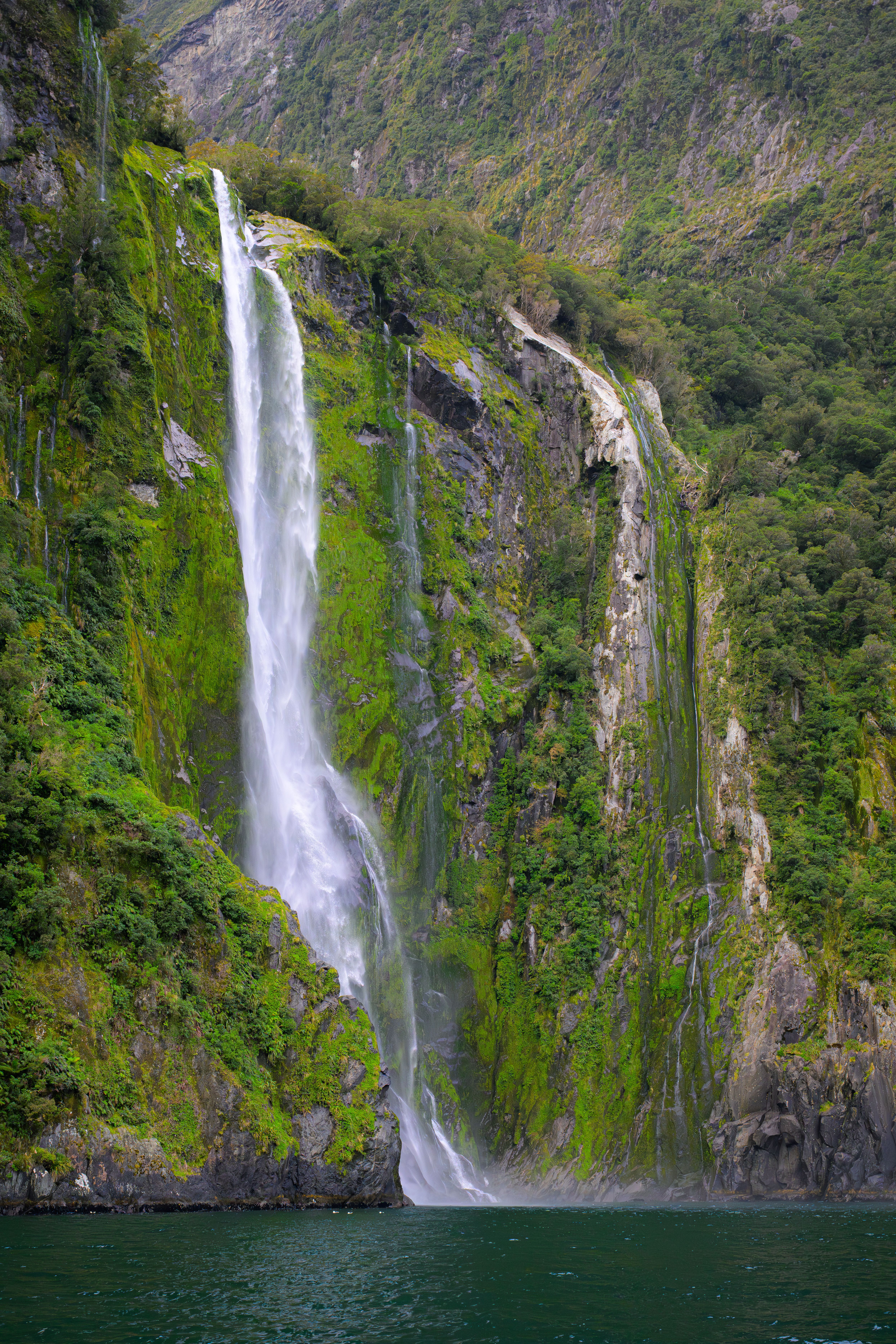
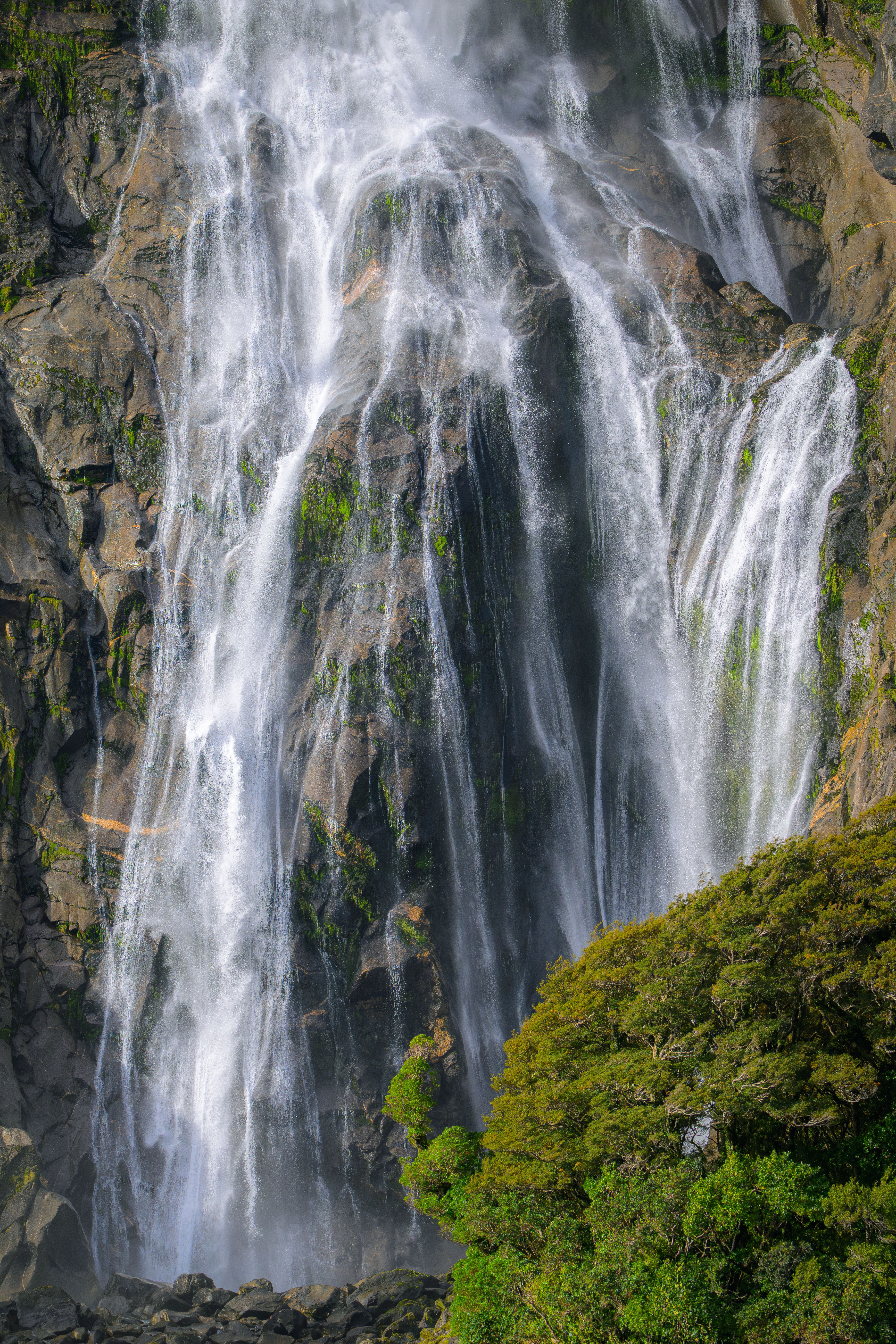
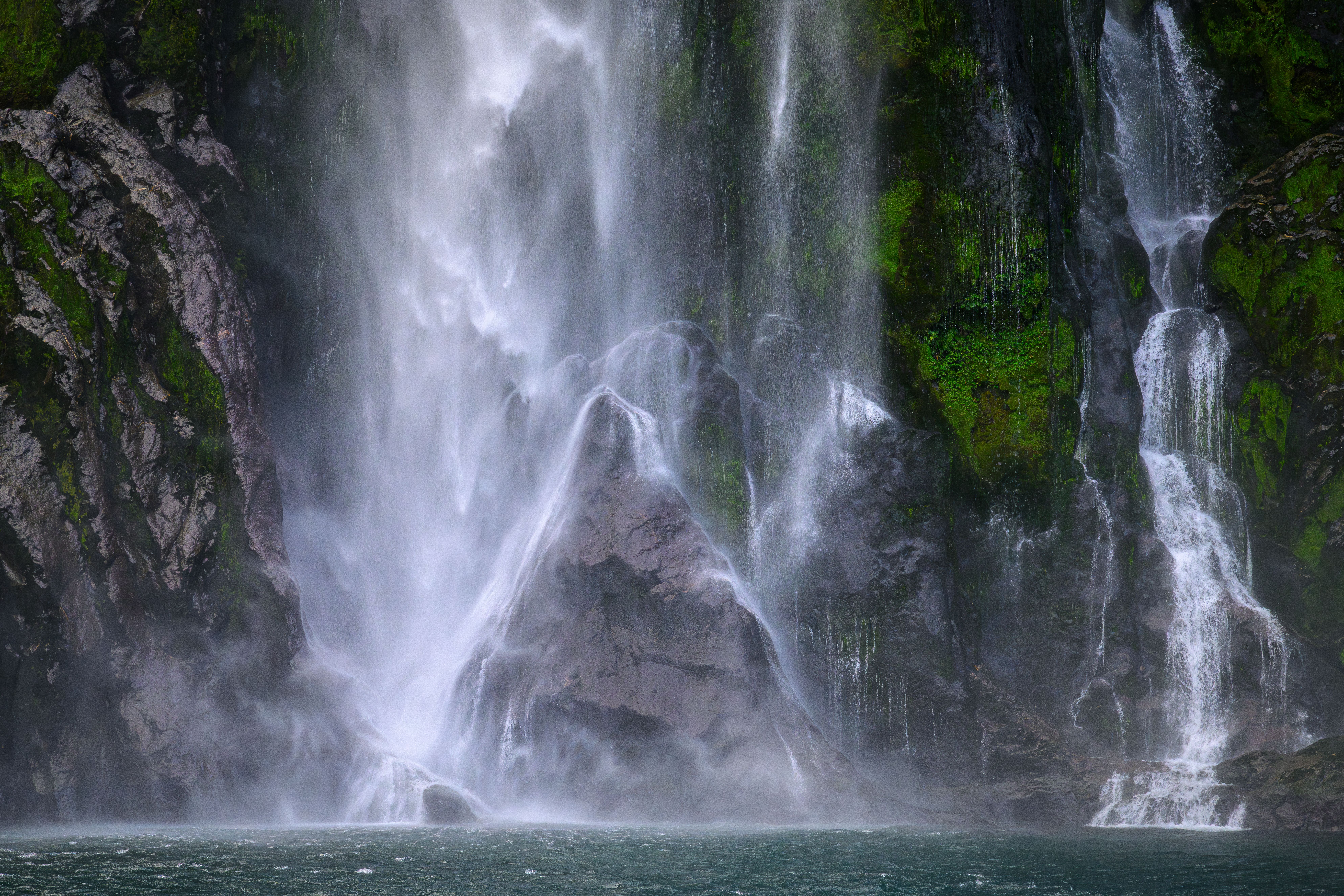
This was Fiordland at its best: not perfect, not tidy, not predictable — just alive!
By the time we reached Milford Sound, the theme of the trip had become obvious: New Zealand isn’t perfect, and this is a good thing!
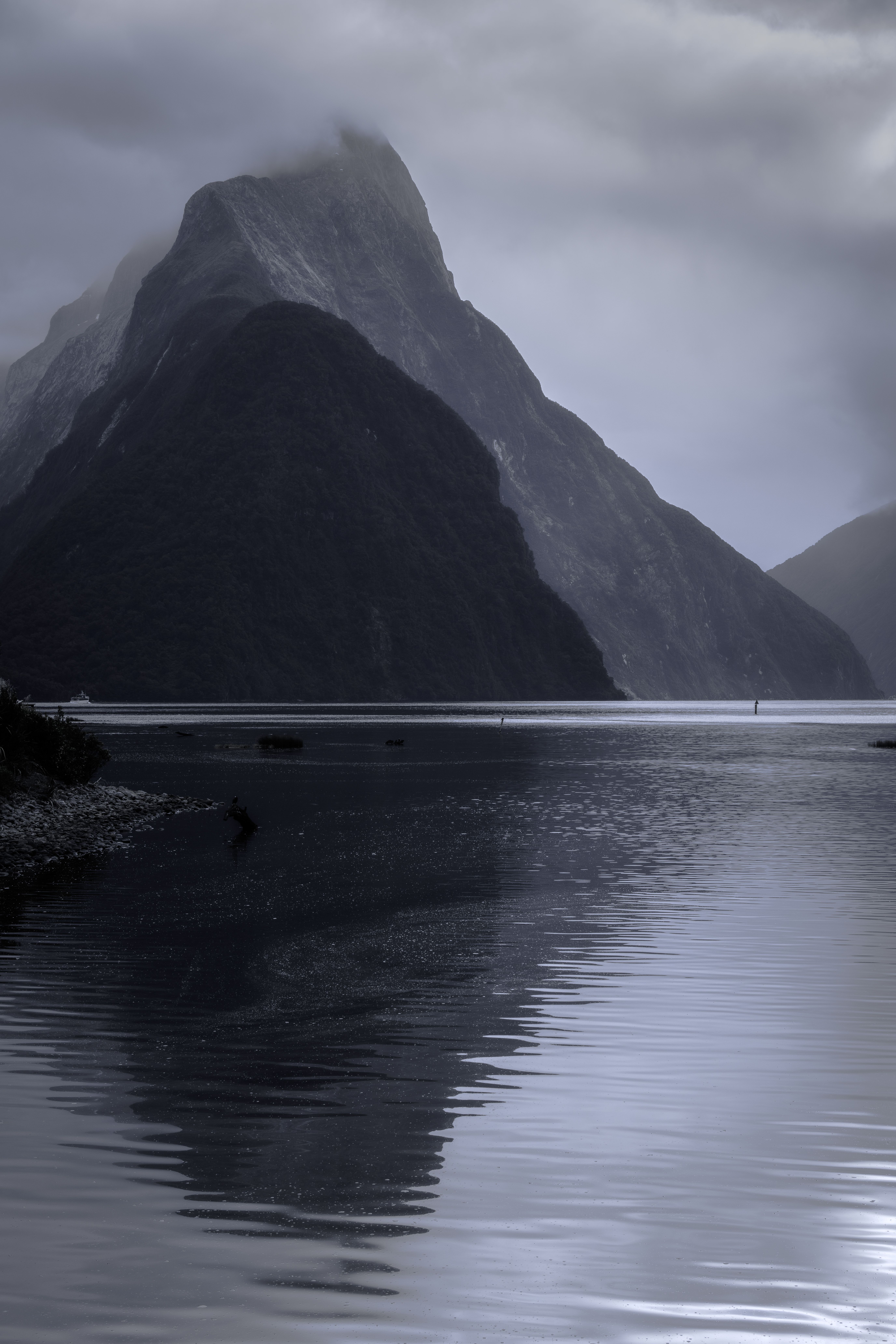
The sunsets don’t always ignite. The sunrises don’t always happen. Sometimes we have too many clouds. Sometimes we have none. Sometimes the best subject isn’t the mountain, but the common duck swimming in the foreground. Sometimes the best use of a foggy morning is a waterfall. Sometimes the forest is more interesting than the viewpoint everyone talks about. Sometimes the wildlife shows up with better timing than the weather forecast.
And that’s the point!
A “perfect” photography trip sounds nice in theory, but perfection can become static. It can make you lazy. It can reduce photography to showing up, pointing the camera at the obvious thing, and hoping the sky does the rest of the work for you.
New Zealand didn't let us do that. It made us work. It made us look closer. It made us change lenses, change subjects, change plans, and occasionally change our expectations entirely. It rewarded patience, but it also rewarded curiosity.
Looking back on the trip, the images that stand out aren't just the obvious New Zealand classics. Yes, we had beautiful pastel skies, clear views of Aoraki, dramatic waterfalls, and those grand scenes that make the country famous. But we also had photographers adapting in real time to whatever the landscape offered, and everyone walked away with a set of skills they wouldn’t have developed otherwise.
That mix is what makes New Zealand extraordinary.
It asks you to be flexible. It asks you to be observant. It asks you to stop waiting for the scene you imagined and start photographing the one in front of you.
And when you do that, New Zealand makes you a better photographer. I can honestly say that I’ve grown as an artist after my travels to this magical place, and I have New Zealand to thank.

We offer world-class travel photography
experiences around the world.
Each tour is bundled with lodging, meals, and transportation between workshops included, allowing you to focus on photography instead of the stress of traveling.
experiences around the world.
Each tour is bundled with lodging, meals, and transportation between workshops included, allowing you to focus on photography instead of the stress of traveling.
Learn More About This Trip
Get Our Trip Catalog
Receive a trip catalog that highlights all of our upcoming photo tours and workshops.Schedule a Trip Consultation
Meet with a photo experience coordinator, and experience a personal touch to your booking experience.Landscape Guide
Receive a FREE Landscape Cheat Sheet Written By a Pro Photographer.Webinars
Our regularly hosted webinars provide photography instruction from our own guides on a wide range of topics.Education Portal
Explore our library of articles that cover everything from common questions, to in-depth guides on how to achieve that perfect shot.
Backcountry Journeys
Connecting Passionate People To
Exceptional Experiences.
Exceptional Experiences.
Business Hours:
Mon-Fri, 8AM-4PM MT
928-478-1521
adventure@backcountryjourneys.com
Mon-Fri, 8AM-4PM MT
928-478-1521
adventure@backcountryjourneys.com
arrow_drop_down_circle
Divider Text
All Images & Content Are Property Of Backcountry Journeys Photography Tours, Workshops & Safaris LLC - Copyright 2026


About Us
Receive a Digital Trip Catalog
Find an upcoming photography tour with our interactive catalog.