2025 Travelers' Choice

About Backcountry Journeys
Why Choose Backcountry Journeys
If you're considering a photography trip, hear why Backcountry Journeys delivers the best experience in the industry.Frequently Asked Questions
If you're new to photography trips, or new to BCJ, you can find our common travel questions here.Fitness Levels
Our trips vary on physical intensity, and by reviewing our fitness levels, you can find out which trips may be more challenging, or aligned more closely with your comfort level.Meet The Crew
We've built an amazing team of experienced guides, and dedicated office staff that elevate your travel experience. Get to know their backgrounds, and hear their stories.Loyalty Program
We reward our frequent photo adventurers with exclusive discounts on amazing photography trips.Contact Us
If you need to get in touch with our office staff, or have additional business inquiries, you can find our information here.Refer a Friend
Know someone perfect for one of our tours? Recommend them through this quick form.Stay Up To Date On All Things
Backcountry Journeys
Backcountry Journeys
Our Photography Community
Our Webinars
Our regularly hosted webinars provide photography instruction from our own guides on a wide range of topics.Our Education Portal
Explore our library of articles that cover everything from common questions, to in-depth guides on how to achieve that perfect shot.Community Testimonials
We're proud to foster an amazing group of photo travelers, and here you can find their stories from their past adventures.Resources For Photographers
About Our Company
Resources For Photographers
About Our Company
Trip Report: Patagonia: Torres del Paine & Pumas - May 2025
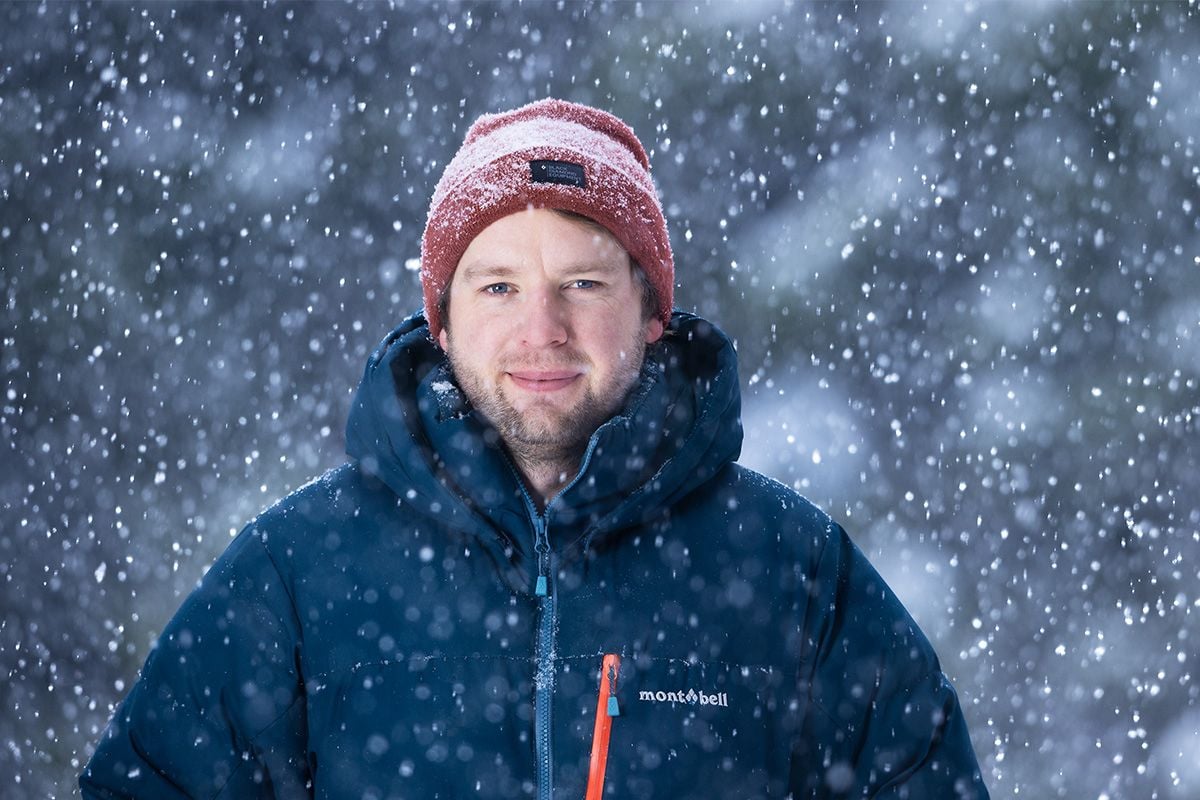
Published December 11, 2025
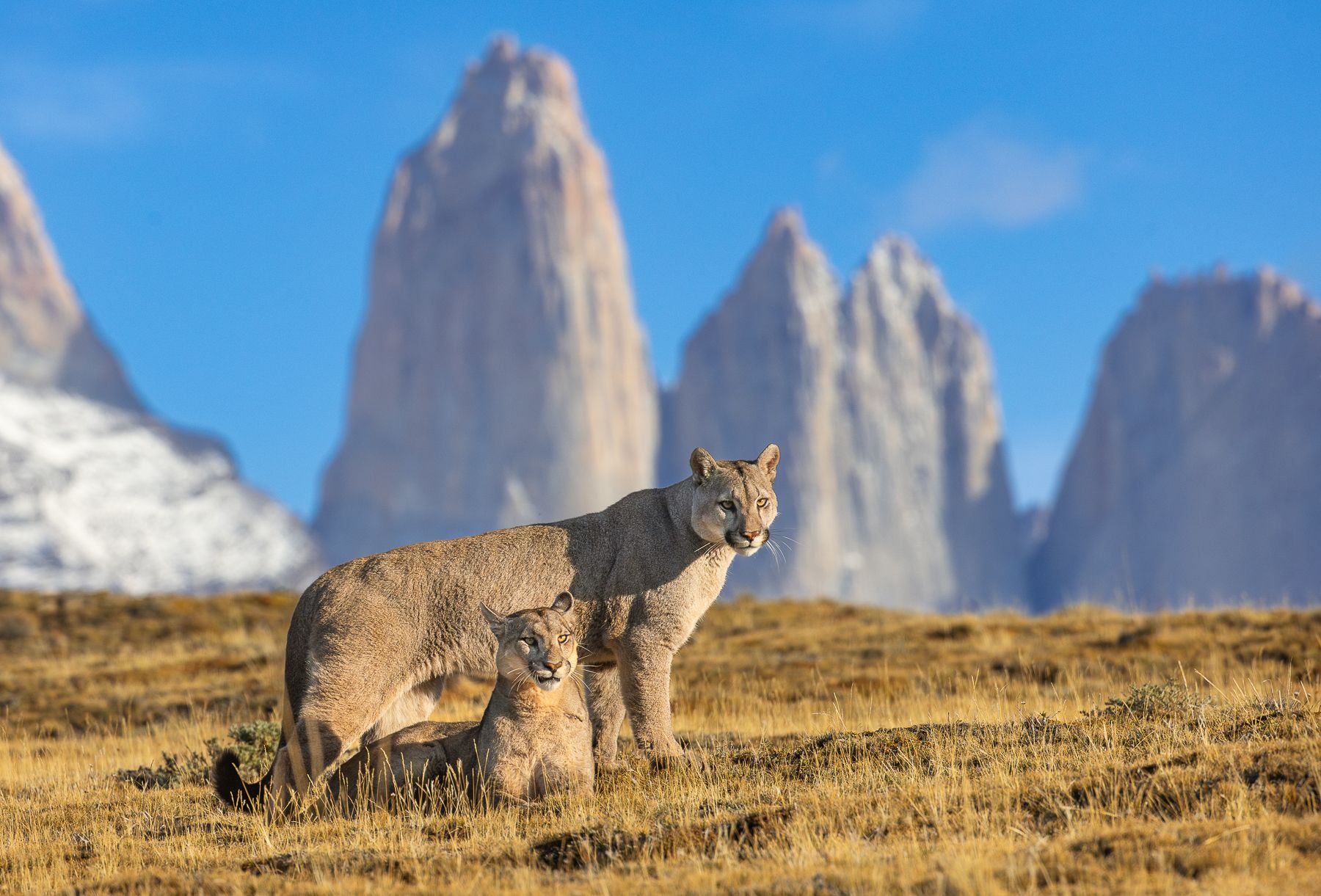
I have been very fortunate that photography has taken me all over the world. I frequently get asked what is my favorite place I have traveled. The answer always comes back the same and without hesitation: Patagonia. I have hiked all over Chilean and Argentinian Patagonia and there is just something about the windswept lands and incredible wildlife that draws me in. The peaks are bigger and more grand than any photo could ever show. From the red and orange lenga trees to the turquoise lakes and rivers, the landscape is vibrant. And where else can you walk the same ground as wild pumas?!
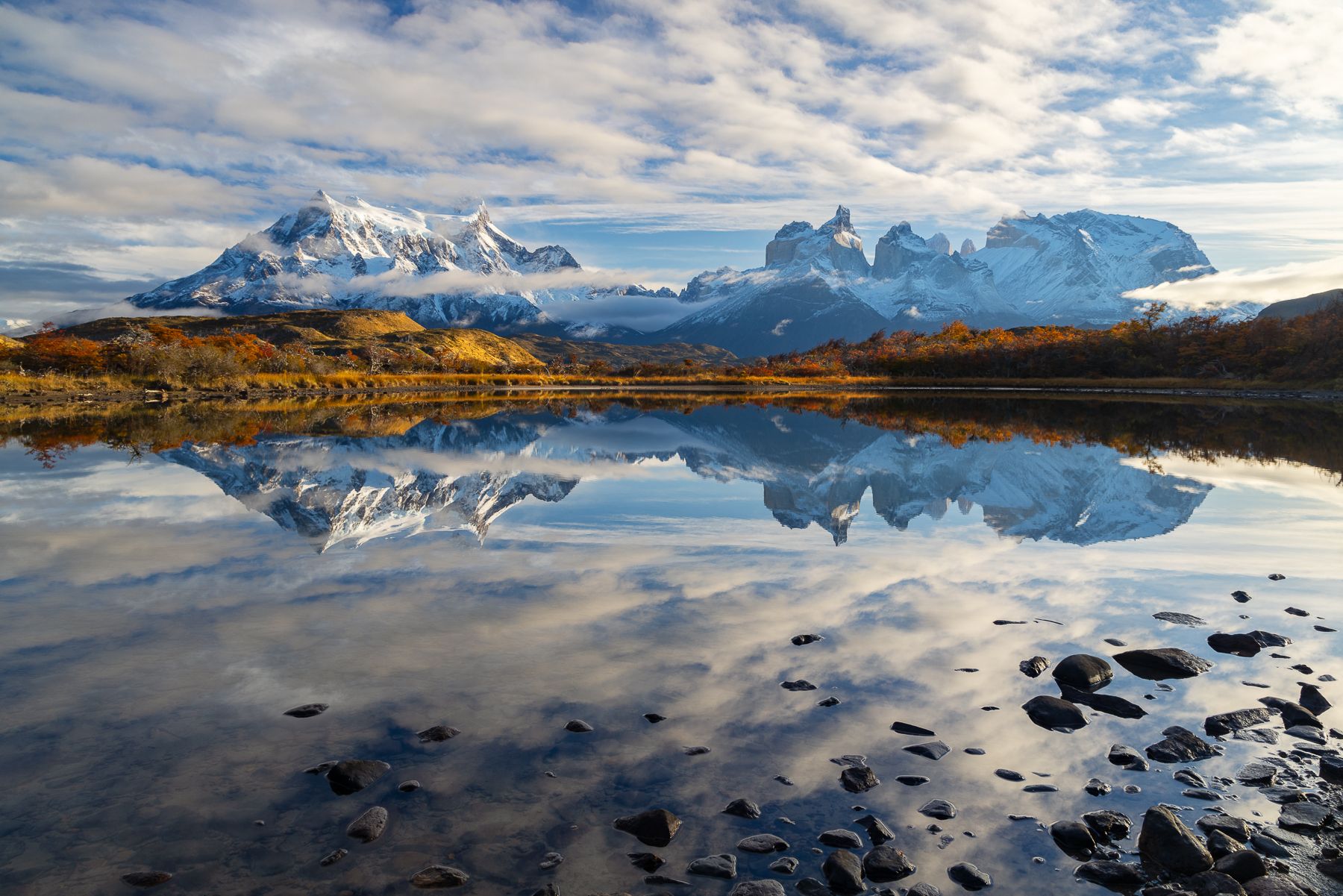
I was excited to be back in Chile to run our annual Torres del Paine and Puma photo trips with our friend and partner Susanne from Far South Expeditions. Torres del Paine is one of the crown jewels of Patagonia. A small but rugged mountain range, this place is a dream location for any nature photographer. World class landscapes along with world class wildlife is why this is one of my favorite trips we do here at Backcountry Journeys.
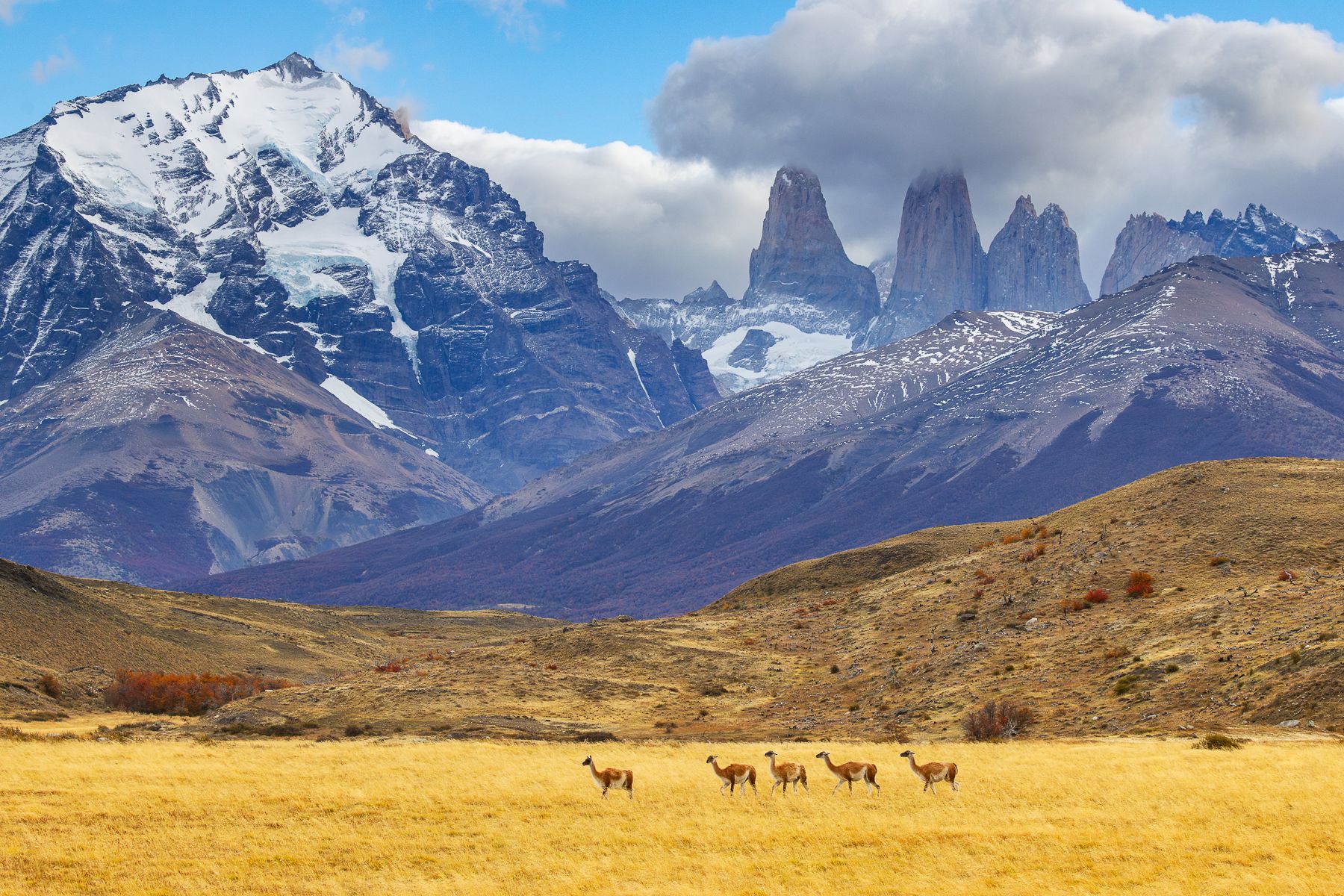
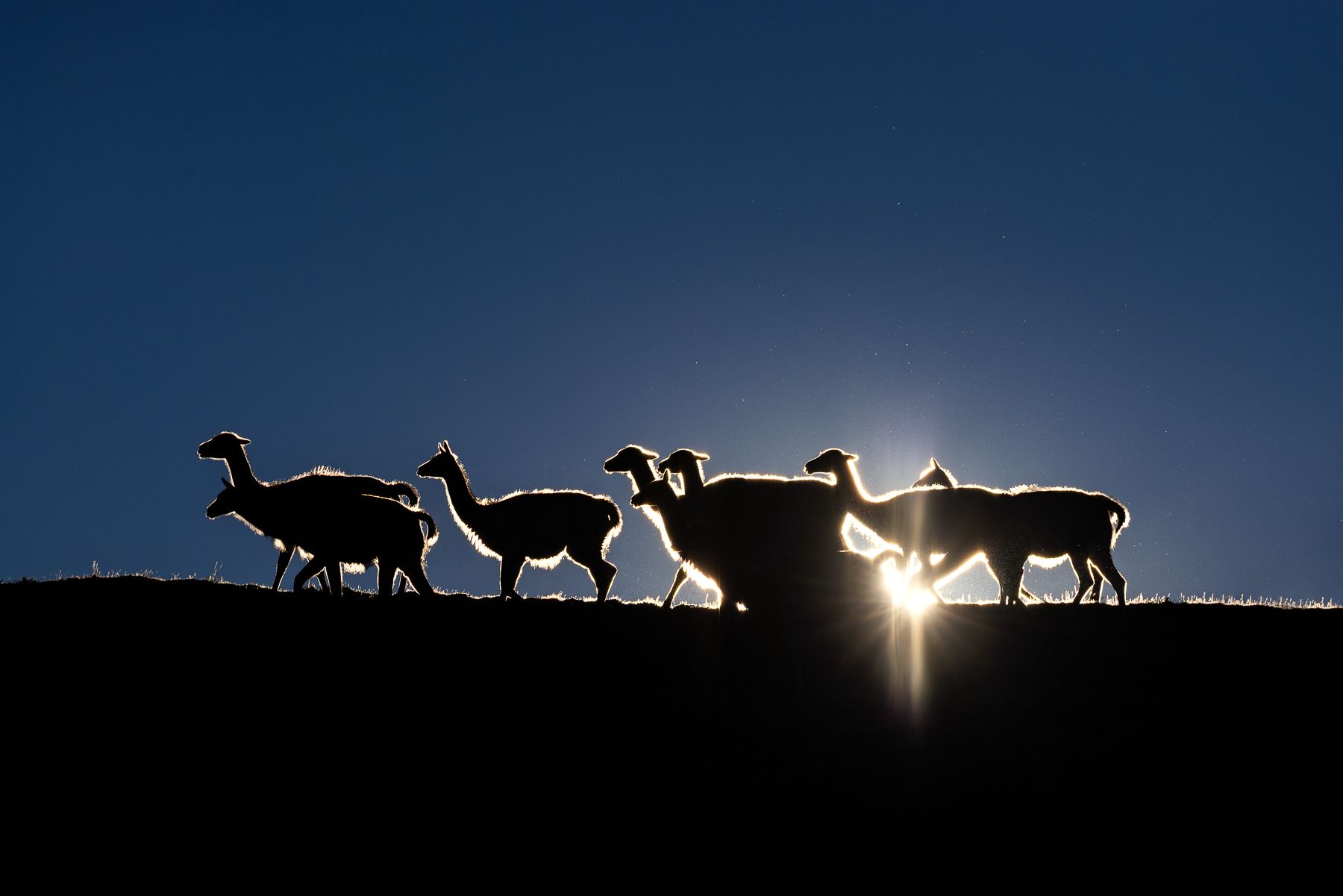
Our trip begins in the city of Punta Arenas for orientation and an excellent starting dinner. From Punta Arenas, it is four hour drive to the park. We stop along the way for wildlife opportunities such as guanaco, flamingo, condors, etc. As we progress north, the relatively flat landscape slowly begins to give way to some foothills and soon, on the horizon, I can see the unmistakable skyline of Torres del Paine.
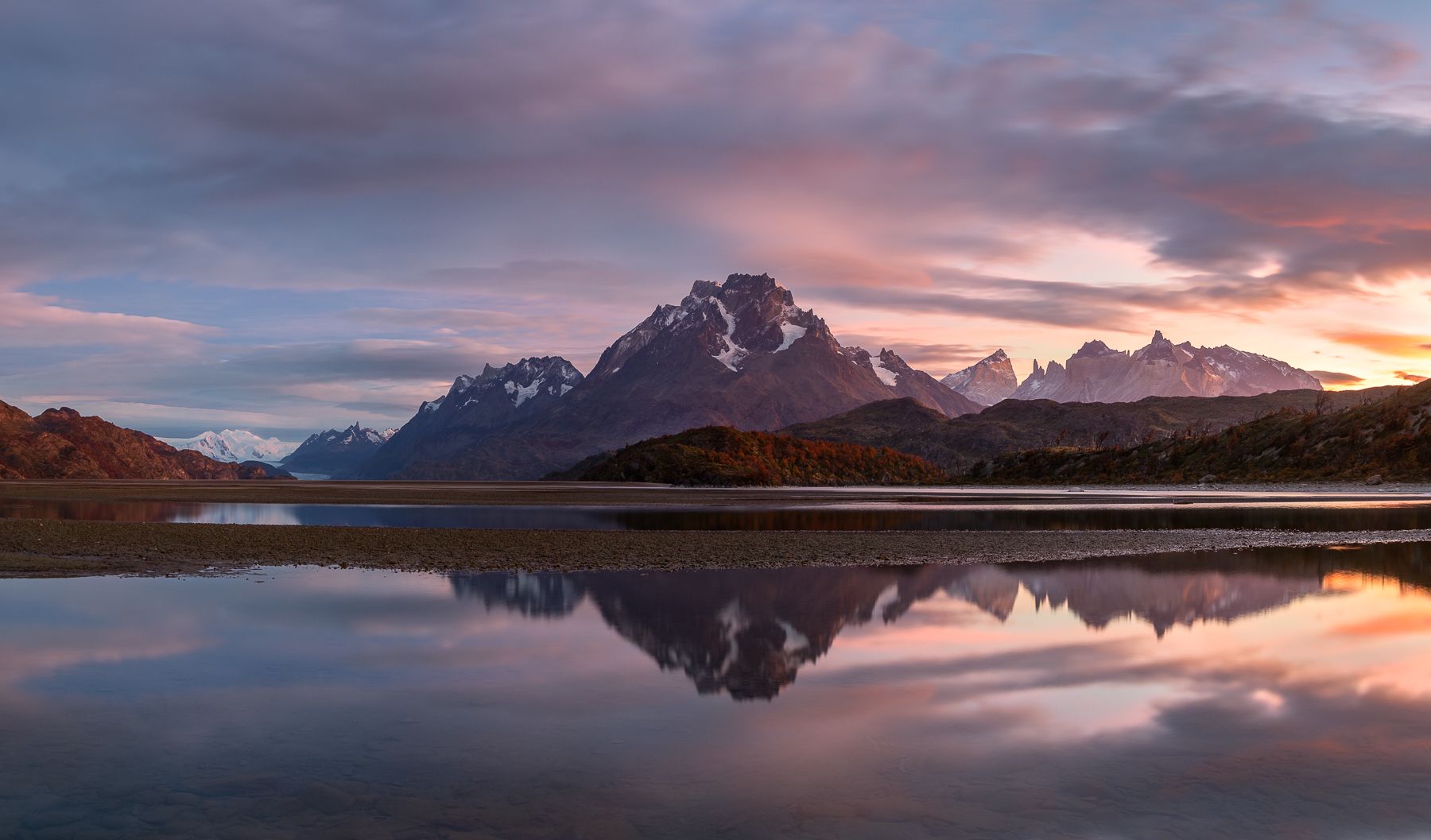
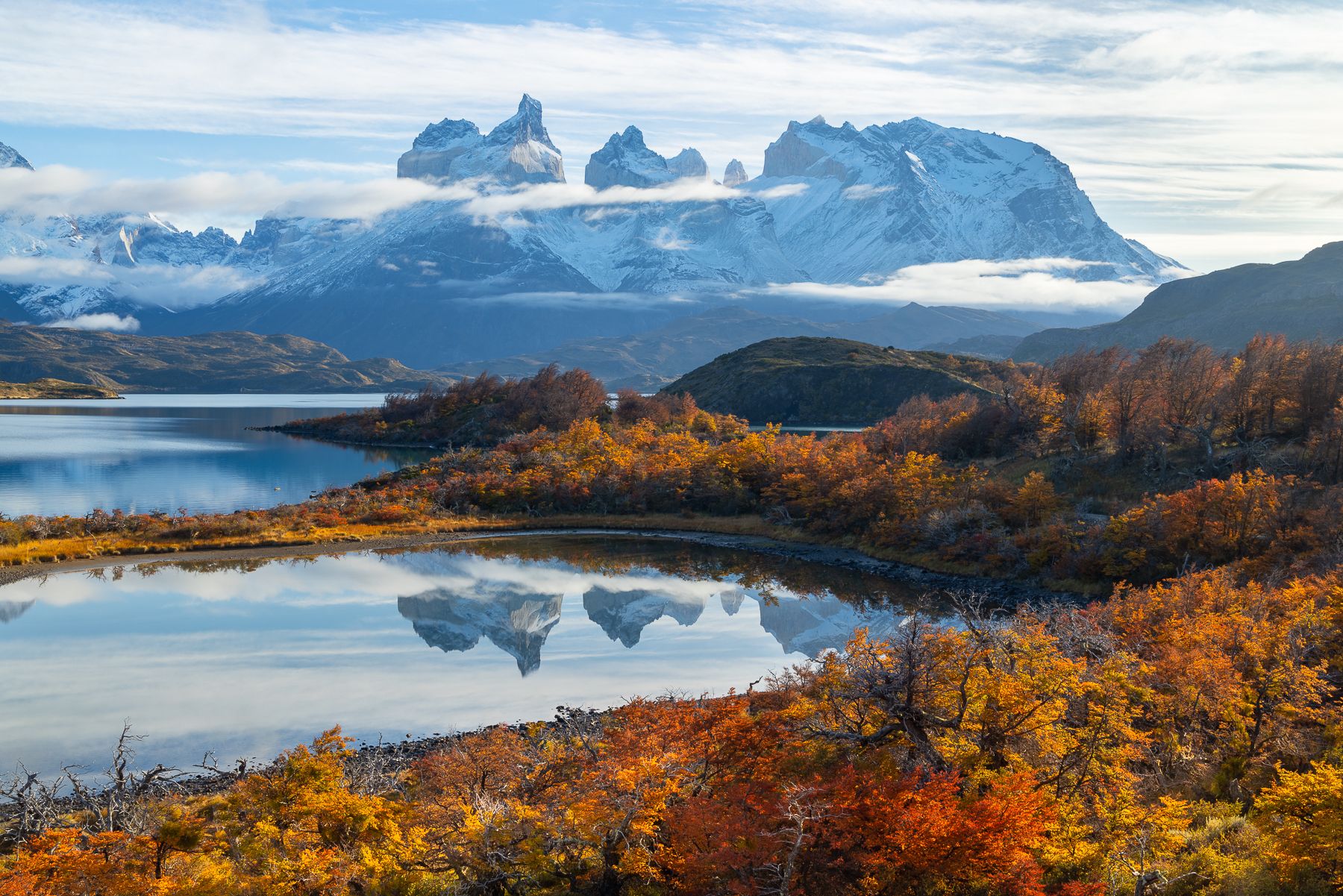
We make our home base at the amazing Hosteria Pehoe. This hotel may be one of the older hotels in the park, but the location cannot be beat. It sits on a small island in the middle of Lago Pehoe right below the iconic view of the Horns and Paine Grande. It probably has one of the best views of any hotel anywhere in the world.
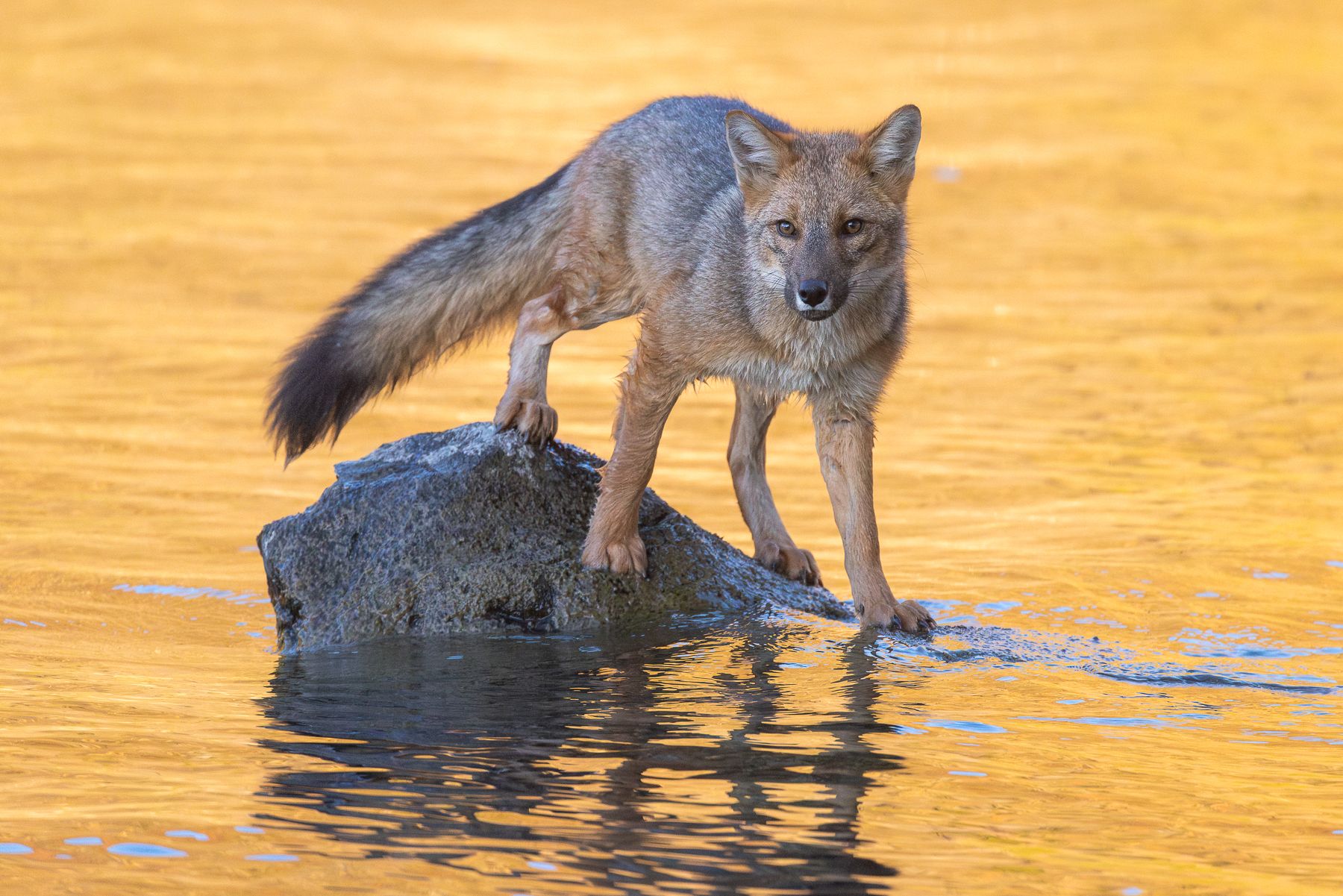
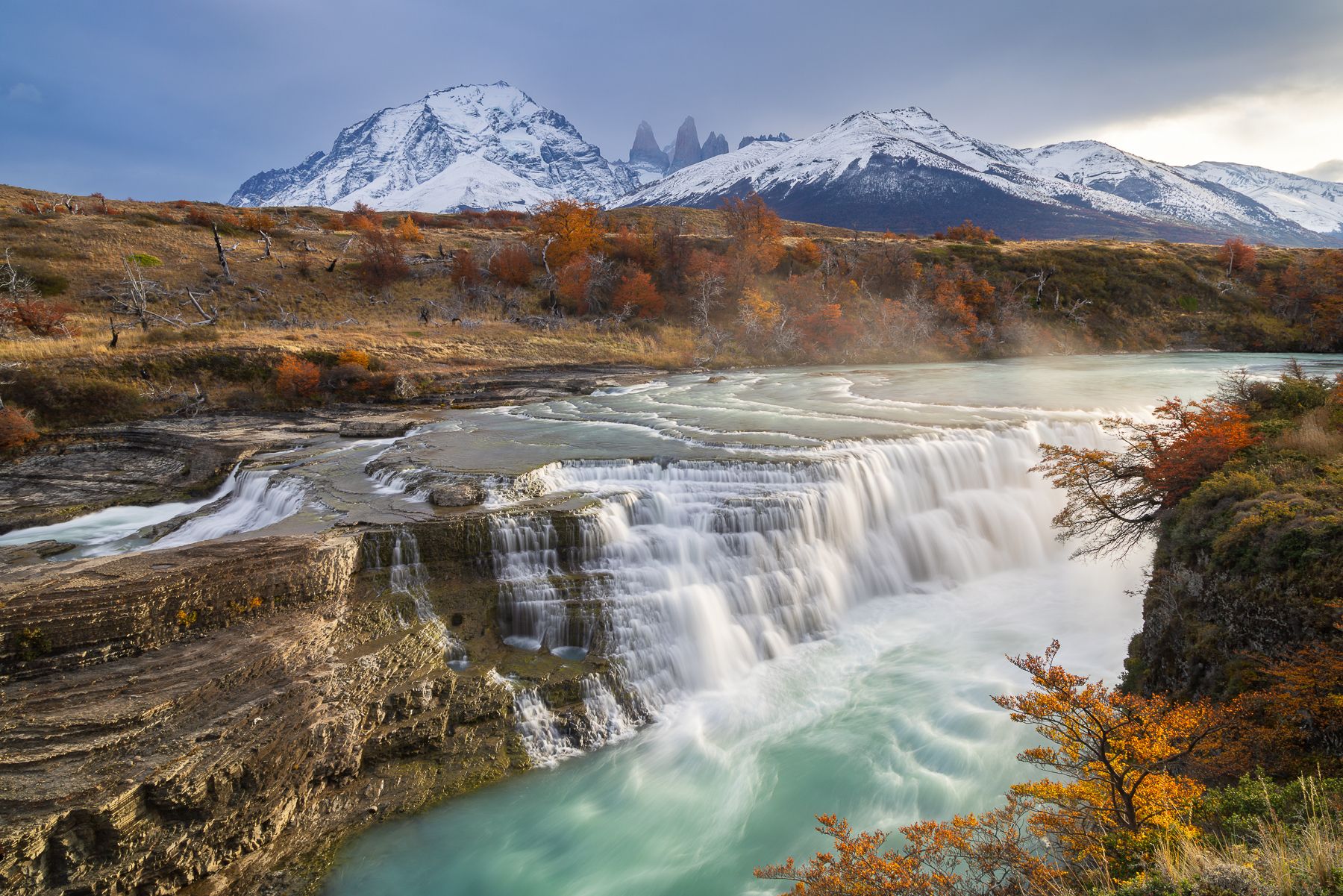
The beginning of our trip is primarily focused on landscape photography. Torres del Paine is one of the best places in the world for this type of photography. The massive peaks, fall color, and glacier fed rivers and lakes provide us with lots of opportunities. We take a flexible approach, always watching the weather and wind to decide which location to go to. We photographed all of the main peaks of the park from some of the best vantage points and were lucky with some great light and conditions.
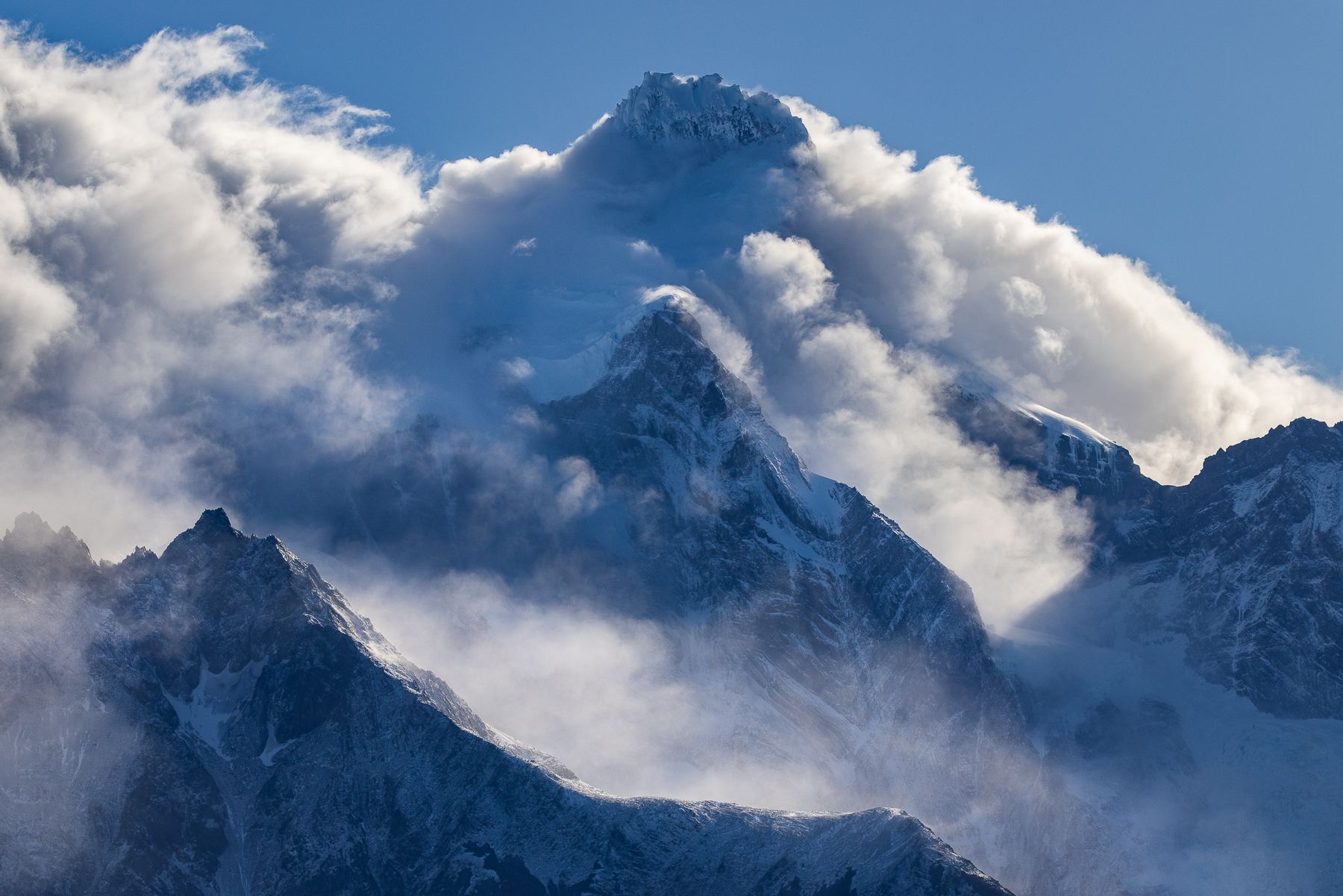
The Paine mountains (and neighboring Andes) mark a distinct line in the geography of southern Patagonia. To the west, everything is lush and green with a lot of precipitation all the way to the Pacific. To the east, the landscape dries out as rolling grasslands and arid landscapes stretch to the Atlantic. The sun comes up completely unobstructed on the eastern horizon with the first major mountains being the Paine Massif itself. This means that the predawn glow in Torres del Paine is so strong, even an hour before sunrise. We made sure we were on sight at least 45 min before the sunrise and we were treated to some of the best predawn glow I have ever seen.
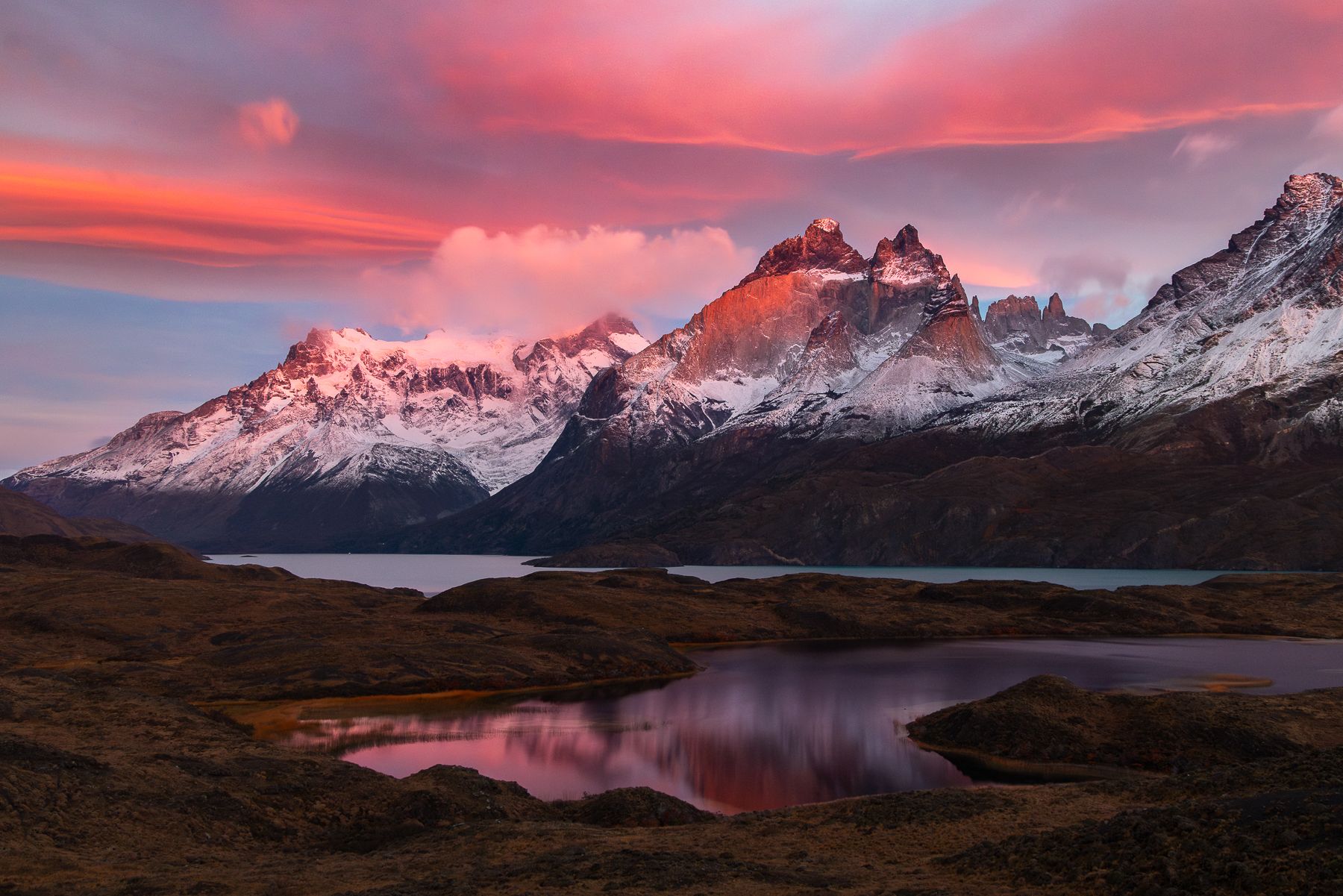
Despite our focus being landscape, we also always have our eyes open for wildlife. I probably sound like a broken record when people ask me what lens we need for a given subject. I usually respond with something like “Well its a wide angle shot… but you never know.” Torres del Paine is one of those places that whenever your outside, you could theoretically find wildlife.
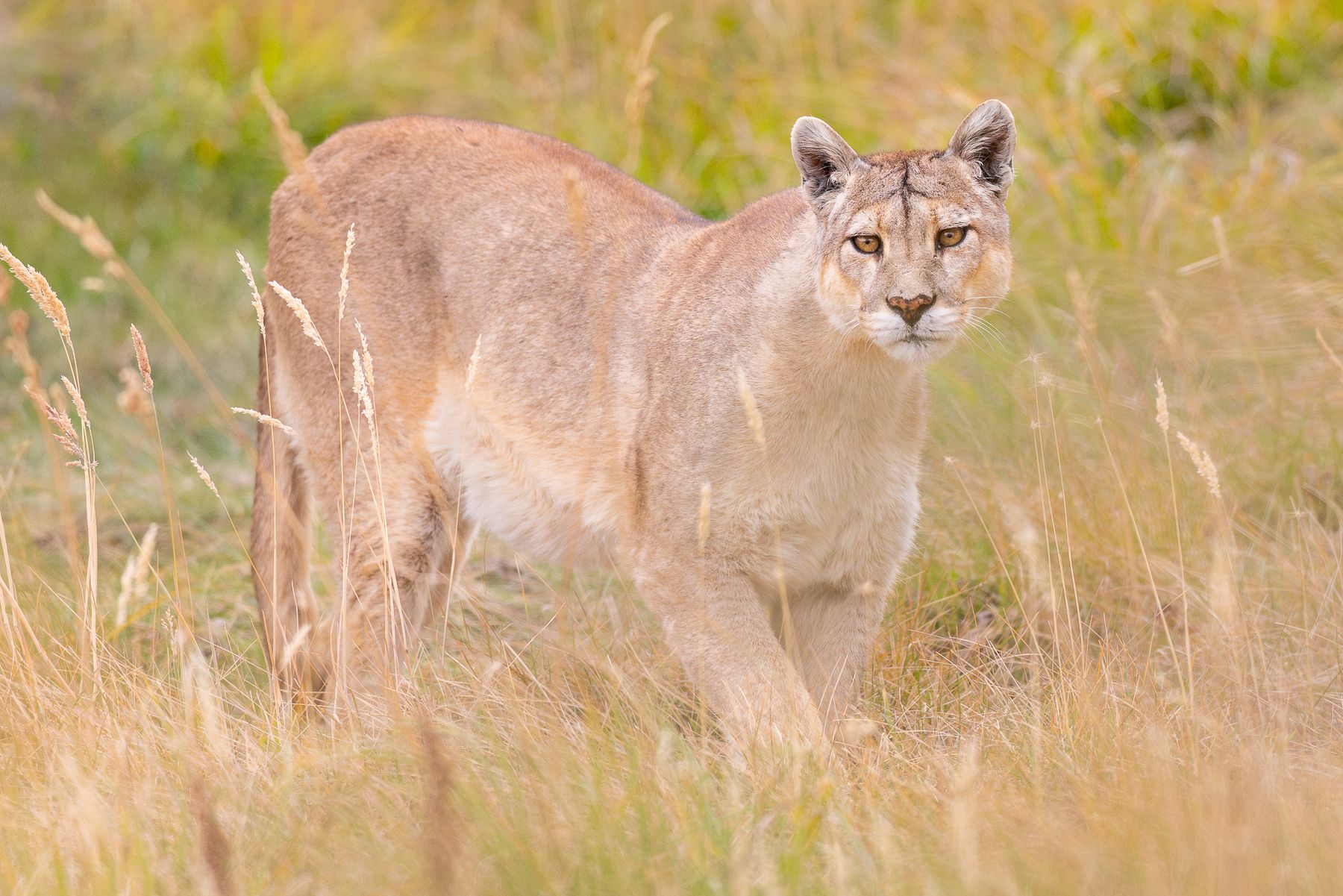
That was never truer than than one afternoon in the far eastern corner of the park. We had been working our way out to a few different locations, finding ourselves at a lake with a view of the towers in the background. We wandered around a mostly empty campsite taking photos of the scenery. Susanne made some hot drinks and snacks for us. While we were sitting around enjoying our afternoon break, a guest came back from the bathroom explaining that there might be an owl over there because there are a few photographers with big lenses. We wandered over to have a look. I was scanning all the trees and just could not find anything resembling an owl. The guest next to me asked if there were deer in the park. I replied yes, but they are very rare. Studying the back of his camera, he responded “Well this looks like fur”. I peered over at his LCD screen. “Uh that’s a puma!”, I whispered.
There we were standing right next to the campground bathrooms and the whole time we were there a puma was laying not fifty yards away. We were able to photograph her as she got up, had a stretch and walked back into the forest. Under closer inspection, we confirmed this was Rupestre, a well known puma famous for her appearance in Netflix’s “Predators”.
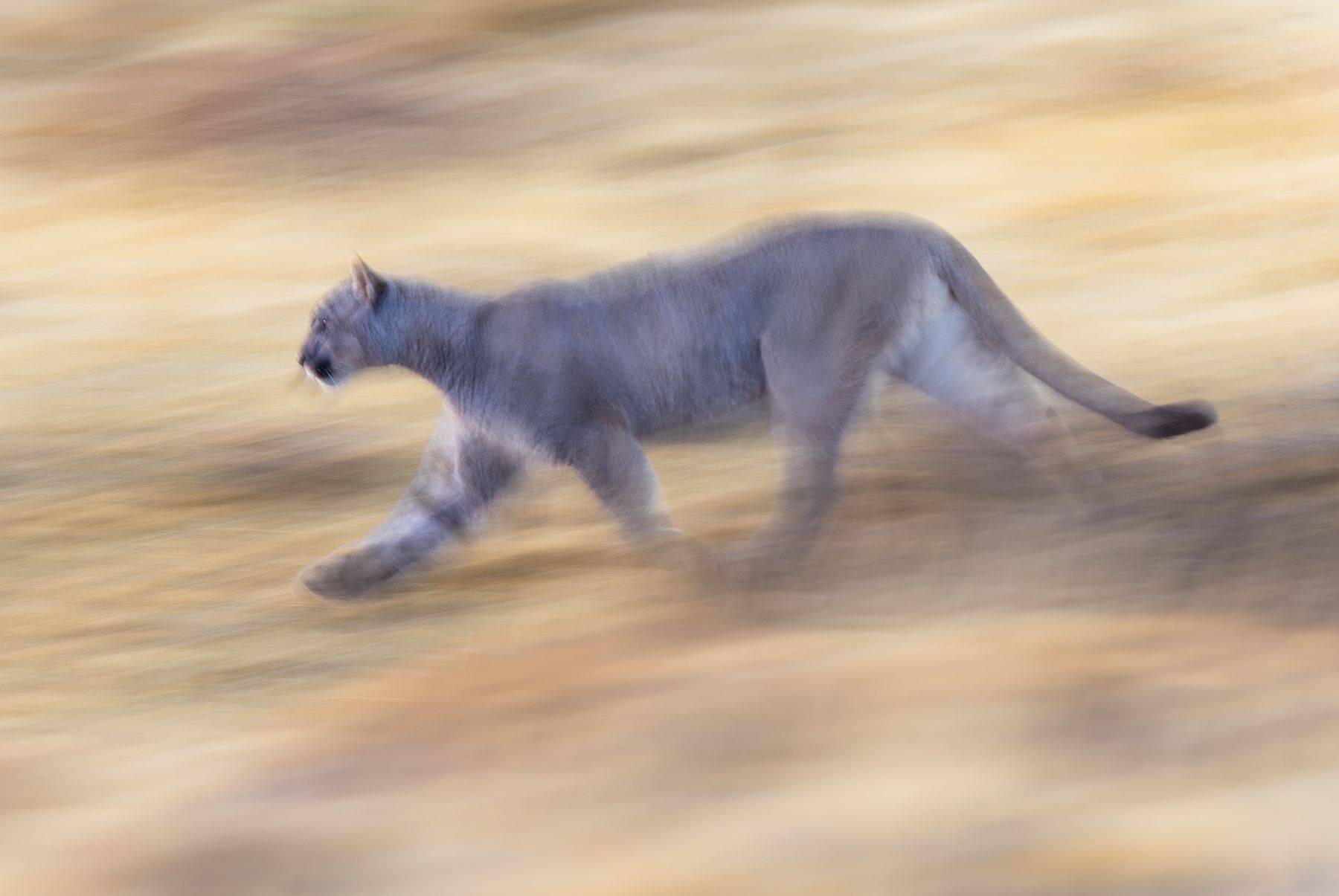
It was a great introduction to the pumas of Torres del Paine and it wasn’t even on an official “puma day”. The second half of the trip fully focuses on puma tracking. We utilize a private ranch immediately adjacent to the park which allows us the ability to follow the pumas on foot wherever they may be. We work with an expert photographer and tracker, Marcial. He (along with Susanne) are experts at finding beige cats stealthily moving through a beige environment. You never know what you're going to find on the ranch. Some sessions are slower, some are action packed, but no matter what, there are always photo opportunities.

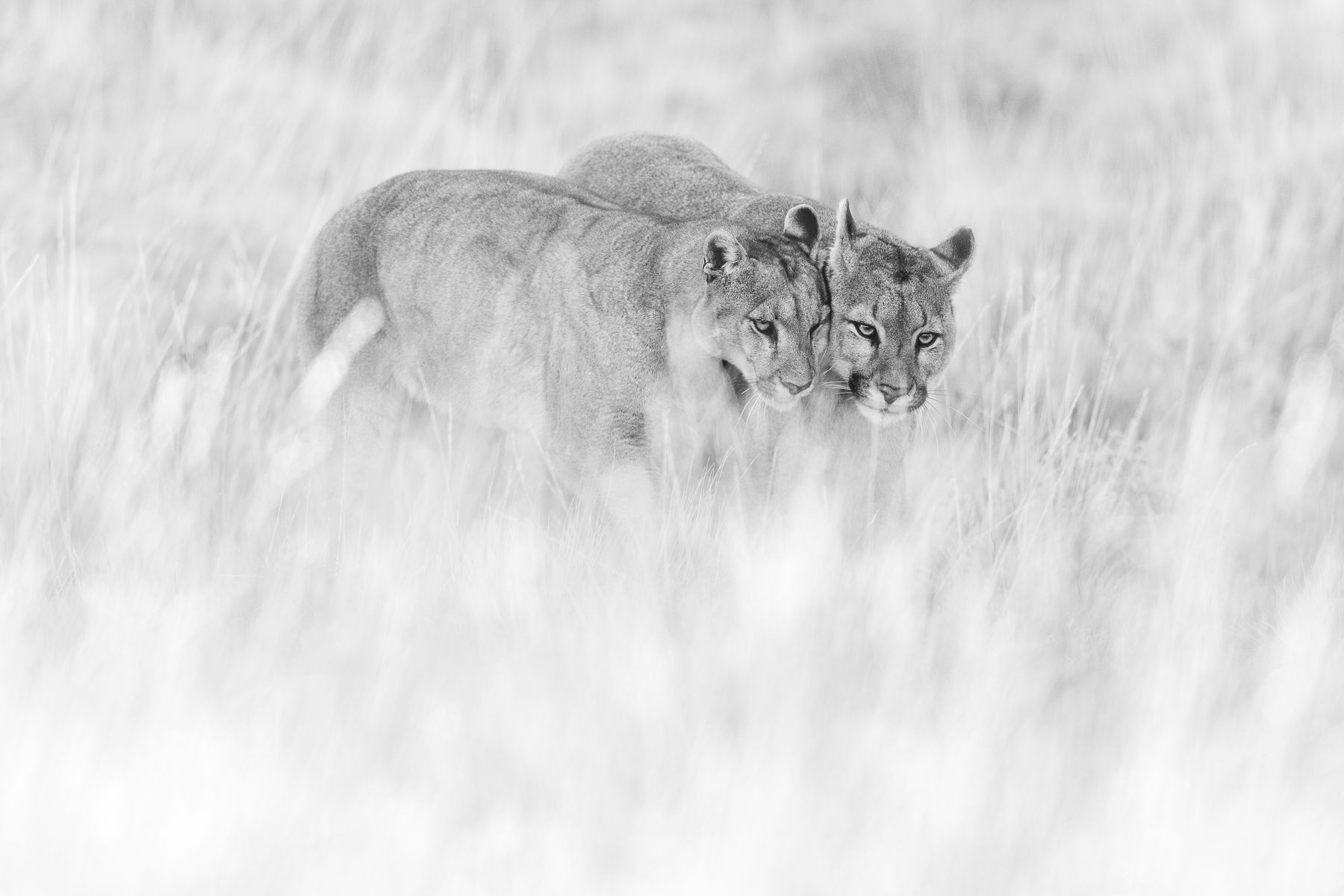
We were fortunate to see lots of individual pumas including Ginger, Corion, Virgo, and Dania among others. We had excellent opportunities with Petaca and her two adult cubs. We photographed these three extensively last year, so personally I was very glad to see them again. I love seeing wild animals year after year, it's like seeing old friends and makes me happy to see them doing well.
Of all our sightings, the unquestionable star of the show was a young female named Escarcha. Escharcha is Spanish for “Frost” and it becomes immediately clear where the name comes from. Her coat is a light grey, almost silver, and makes her one of the most striking pumas in the area. We saw her on consecutive days and she really gave us some excitement.
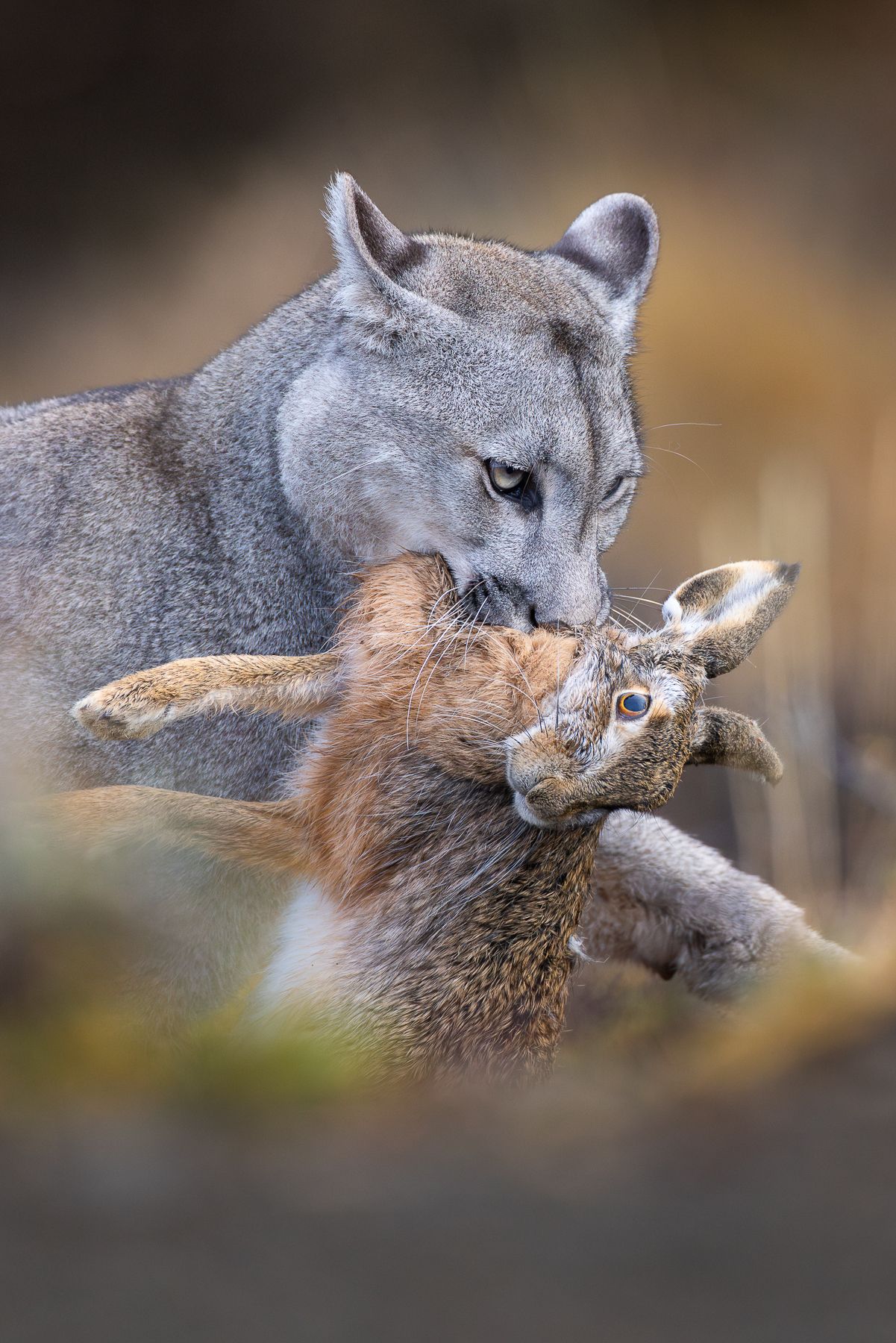
The first day we watched her stalk some oblivious guanaco, but she missed her target at the last moment. A few minutes later she struck into a bush and emerged with a large hare. We stood there in disbelief. Outside of Marcial, this was all of our first time witnessing a successful hunt. The cherry on top was that she turned around and walked twenty feet from us, as if she just wanted to show off her prized catch.
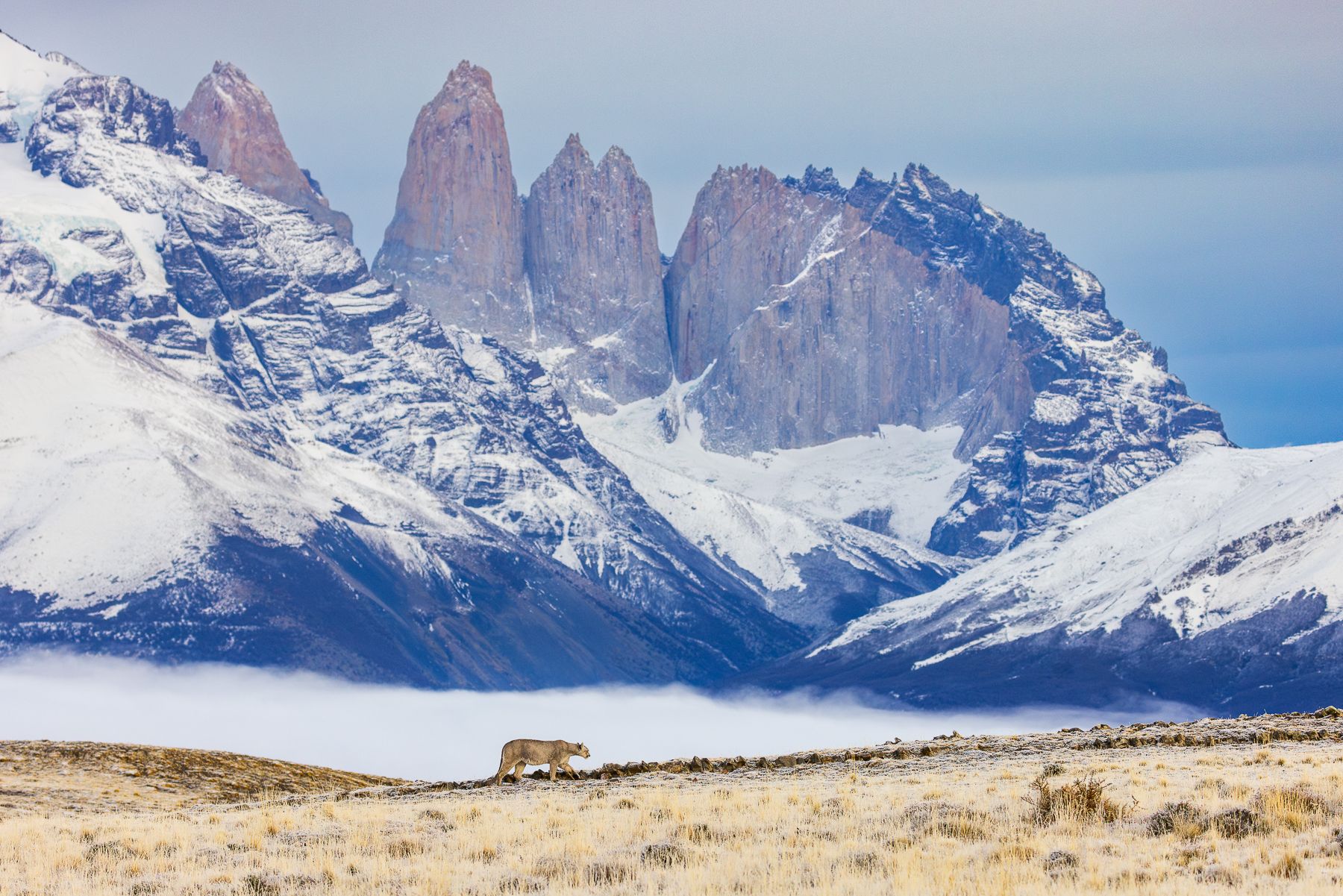
The next morning we were up early on the ranch and Marcial had found an older kill site and there was a puma feeding on it. Sure enough, it was Frost. Eventually she got up and started moving and so did we. Our group did a great job of hustling up the hillsides trying our best to stay in front of her. It was like she knew exactly what we were doing and what we wanted her to do. She posed repeatedly in front of some great backgrounds, always giving us just enough time to set up. I wish all models were that cooperative!

Finally, she crested a large plateau, walking right toward us. Susanne and Marcial whispered to not move. The situation was now fully in her control. She walked slowly and purposely at us. The only sounds were clicks of the shutters as she approached closer and closer. Eventually she paused right in front of us, picking her spot and walked through our group, passing by without bothering to look back. I think I can speak for the rest of the group when I say this was a moment none of us will ever forget.
After the close encounter with Escarcha, we regrouped at the cars and excitedly relived the experience and checked our photos. Again, we were getting some hot drinks when we noticed movement down the hill a little ways. Petaca and her cubs were walking by so we packed up as quick as we could and followed them. Like I said, you never know how things are going to go on the ranch!
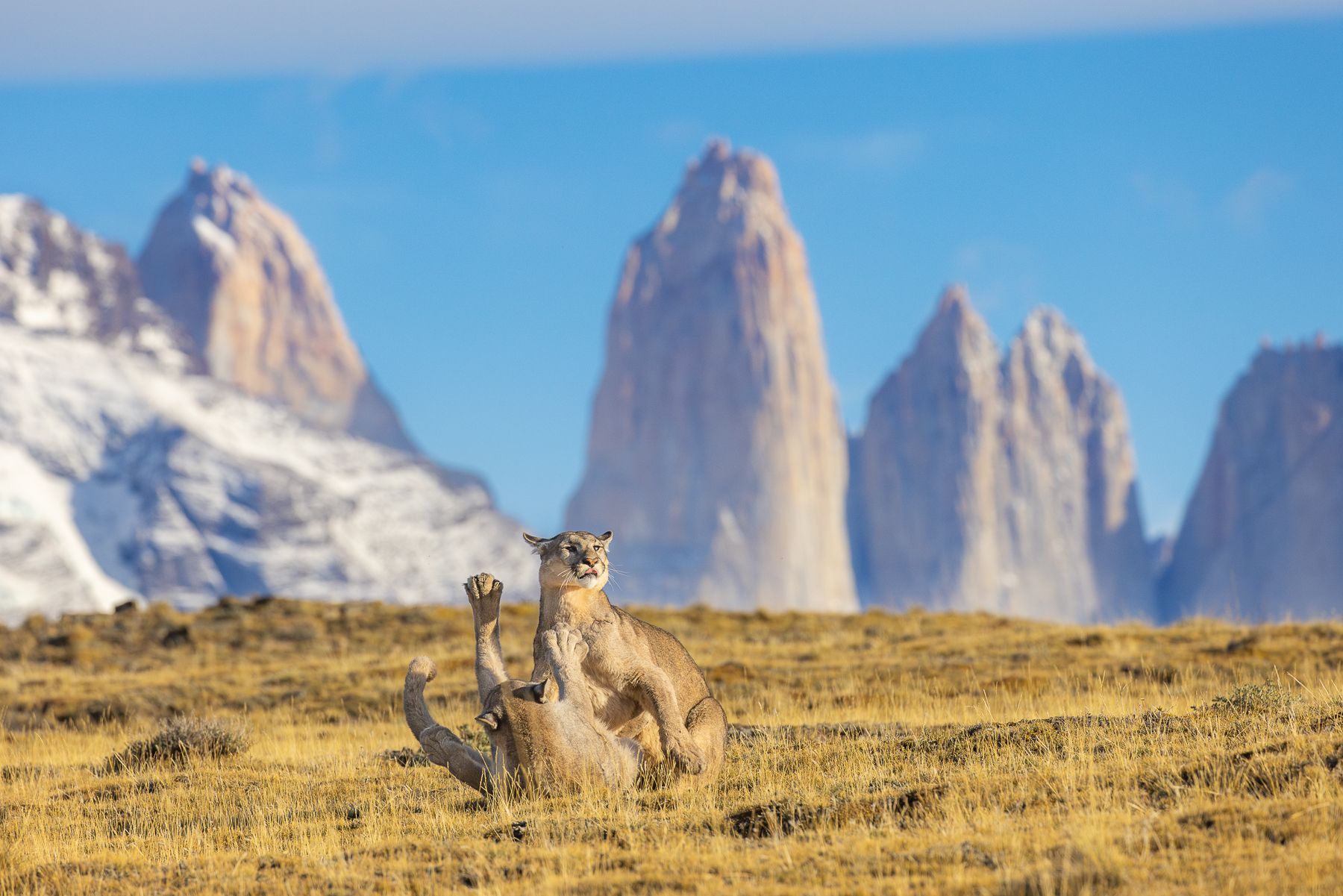
Looking back at the trips, I can’t help but be grateful that a place like Torres del Paine exists. It is such a special place and truly one of my favorite locations anywhere on earth. Thank you to all the guests who came and made the experience so great. Already looking forward to the next time!

 Patagonia: Torres del Paine & Pumas
 Lodge-Based Photo Workshop
From $12,995.00
Up To 8 Guests
Fitness Level 2 - What's This?
Wanna Get Away?
Starts
Current Price:$0.00
Start: Punta Arenas, Chile
Led By
Start: Punta Arenas, Chile
Led By

Backcountry Journeys
Connecting Passionate People To
Exceptional Experiences.
Exceptional Experiences.
Business Hours:
Mon-Fri, 8AM-4PM MT
928-478-1521
adventure@backcountryjourneys.com
Mon-Fri, 8AM-4PM MT
928-478-1521
adventure@backcountryjourneys.com
arrow_drop_down_circle
Divider Text
All Images & Content Are Property Of Backcountry Journeys Photography Tours, Workshops & Safaris LLC - Copyright 2026


About Us
Receive a Digital Trip Catalog
Find an upcoming photography tour with our interactive catalog.