2025 Travelers' Choice

About Backcountry Journeys
Why Choose Backcountry Journeys
If you're considering a photography trip, hear why Backcountry Journeys delivers the best experience in the industry.Frequently Asked Questions
If you're new to photography trips, or new to BCJ, you can find our common travel questions here.Fitness Levels
Our trips vary on physical intensity, and by reviewing our fitness levels, you can find out which trips may be more challenging, or aligned more closely with your comfort level.Meet The Crew
We've built an amazing team of experienced guides, and dedicated office staff that elevate your travel experience. Get to know their backgrounds, and hear their stories.Loyalty Program
We reward our frequent photo adventurers with exclusive discounts on amazing photography trips.Contact Us
If you need to get in touch with our office staff, or have additional business inquiries, you can find our information here.Refer a Friend
Know someone perfect for one of our tours? Recommend them through this quick form.Stay Up To Date On All Things
Backcountry Journeys
Backcountry Journeys
Our Photography Community
Our Webinars
Our regularly hosted webinars provide photography instruction from our own guides on a wide range of topics.Our Education Portal
Explore our library of articles that cover everything from common questions, to in-depth guides on how to achieve that perfect shot.Community Testimonials
We're proud to foster an amazing group of photo travelers, and here you can find their stories from their past adventures.Resources For Photographers
About Our Company
Resources For Photographers
About Our Company
Trip Report: Wild Arizona: Birds, Bats & Desert Predators - August 2026
Published
How the Desert Changed Me
There are places I visit because they are beautiful, and then there are places that entirely change the way I see. For me, the Sonoran Desert is one of those places.
I have always been fascinated by the desert, but seeing southern Arizona during monsoon season reminded me why. From a distance, the Sonoran Desert can look harsh—an immense landscape of rock, cactus and heat. But spend a little time here and that perception begins to disappear. Look closer and you find an ecosystem absolutely overflowing with life.
Our week in Arizona took us from the cacti of Saguaro National Park to the lush oasis of Agua Caliente Park, from the bird-rich forests of Madera Canyon to thunderstorms rolling across the Santa Rita Mountains. We photographed owls after dark, chased monsoons, photographed the Milky Way beneath the saguaros, watched bats drink from a desert pond and documented the remarkable relationship between nectar-feeding bats and agave flowers. We encountered rattlesnakes and a Gila monster, found a den of Burrowing Owls and spent hours watching hummingbirds and other desert birds from intimate photo hides.
But somewhere along the way, I realized that I wasn't simply photographing the desert. The desert was changing me.
A Landscape That Isn't What It Seems
The first lesson the desert teaches you is to look beyond the obvious. At first glance, the desert appears dry and unforgiving. But during the summer monsoon, that familiar landscape can transform almost overnight. Rain brings an explosion of green, flowers and activity. Plants that have spent months enduring heat and drought suddenly take advantage of the water, and wildlife responds accordingly. We experienced that transformation firsthand as we drove through the desert after sunrise. Areas that might otherwise appear brown and dormant were suddenly remarkably green.
The change was especially dramatic when we chased thunderstorms around Helmet Peak and along Mount Hopkins Road, where the landscape opened toward Elephant Head and the Santa Rita Range. One of those storms became one of the defining images of the trip for me.
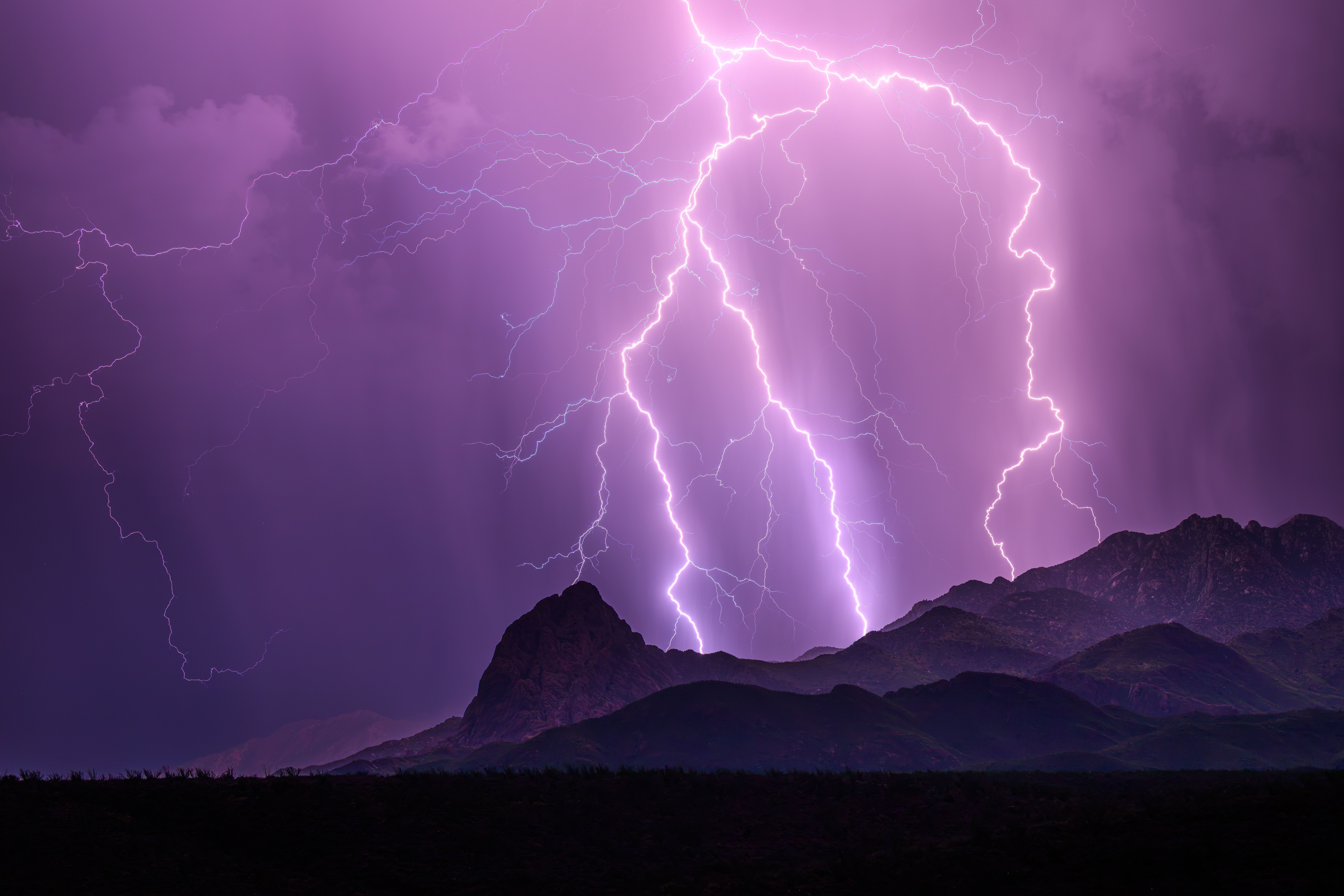
There is something humbling about watching a thunderstorm move across this landscape. The desert can look ancient and permanent, but it is actually a place of constant change. A storm can alter the landscape, replenish water sources and trigger a burst of life. And that made me think differently about what I was photographing. I stopped seeing the desert as a place defined by what it lacks. Instead, I started seeing it as a place defined by how remarkably well life has adapted to what it has.
The Incredible Biodiversity of the Sonoran Desert
The diversity we encountered throughout the week was extraordinary. We photographed Gila Woodpeckers, Northern Cardinals, Lesser Goldfinches, Hooded Orioles, Cactus Wrens, Mexican Jays, White-winged Doves and an almost endless parade of hummingbirds. The sheer number of White-winged Doves alone became a running joke. There seemed to be no shortage of them anywhere we went. And then there were the hummingbirds with their magnificent plumage.
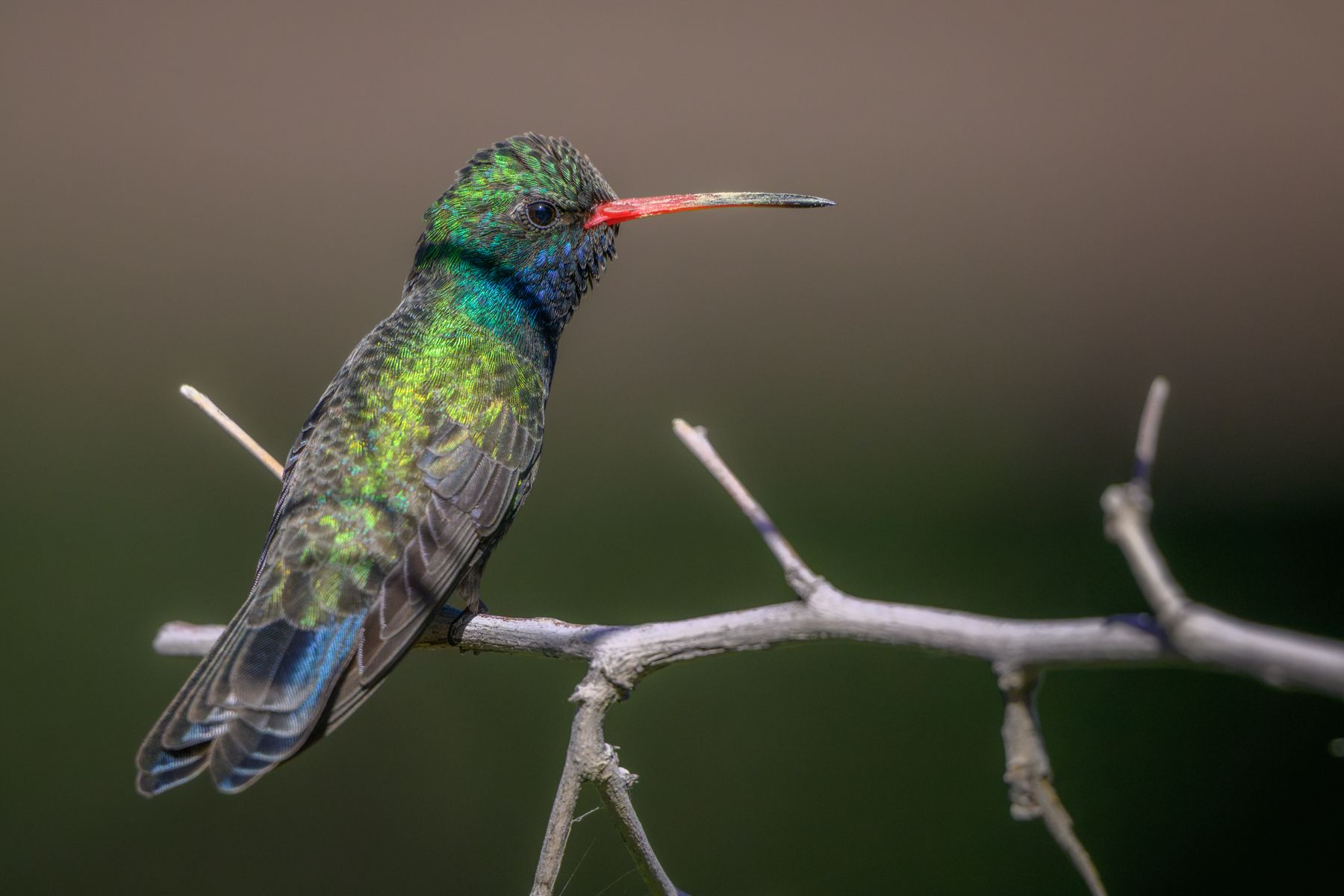
Sitting in bird hides gave us an opportunity to move beyond simply identifying species and start studying behavior. We watched where birds landed. We noticed the direction from which they approached. We paid attention to their routines and began predicting what they were going to do before they did it. That changed the way we photographed them.
Rather than constantly reacting, we began anticipating. Where is the bird likely to go? What will it do next? Where should I position myself to give myself the best opportunity? That sounds simple, but it is one of the biggest steps a wildlife photographer can take.
Looking Closer
Some of my favorite encounters weren't necessarily the largest or most dramatic animals. They were the ones that encouraged us to look more closely. Rattlesnakes are a perfect example. We had the opportunity to photograph both a Western Diamondback and a Tiger Rattlesnake, and each encounter provided opportunities to explore the animals beyond the traditional wildlife portrait.
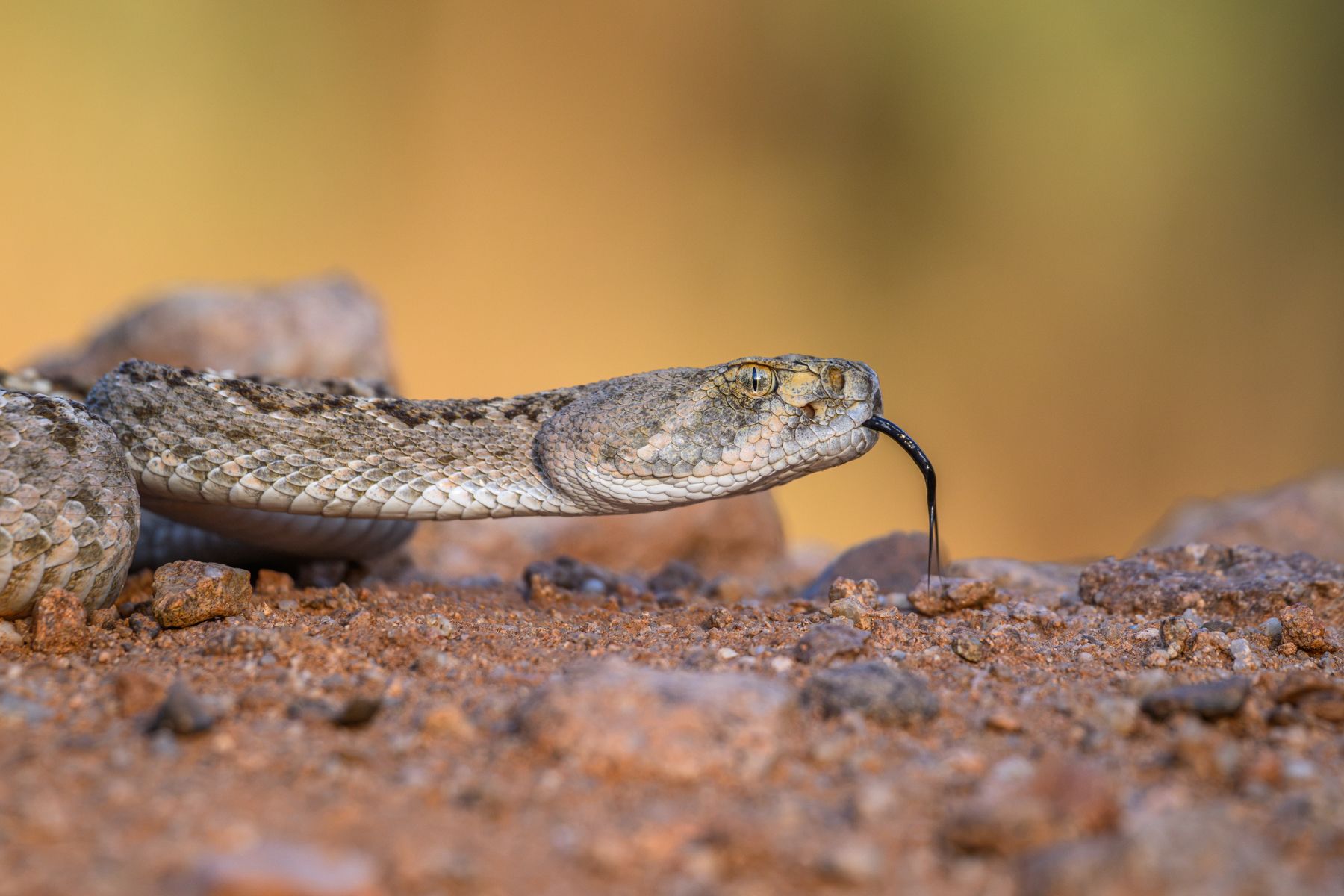
A snake's tongue is one of those details that can easily be overlooked. But once you start paying attention, it becomes fascinating. The forked tongue helps the snake collect chemical information from its surroundings, effectively allowing it to "sample" the environment. Then we got even closer.
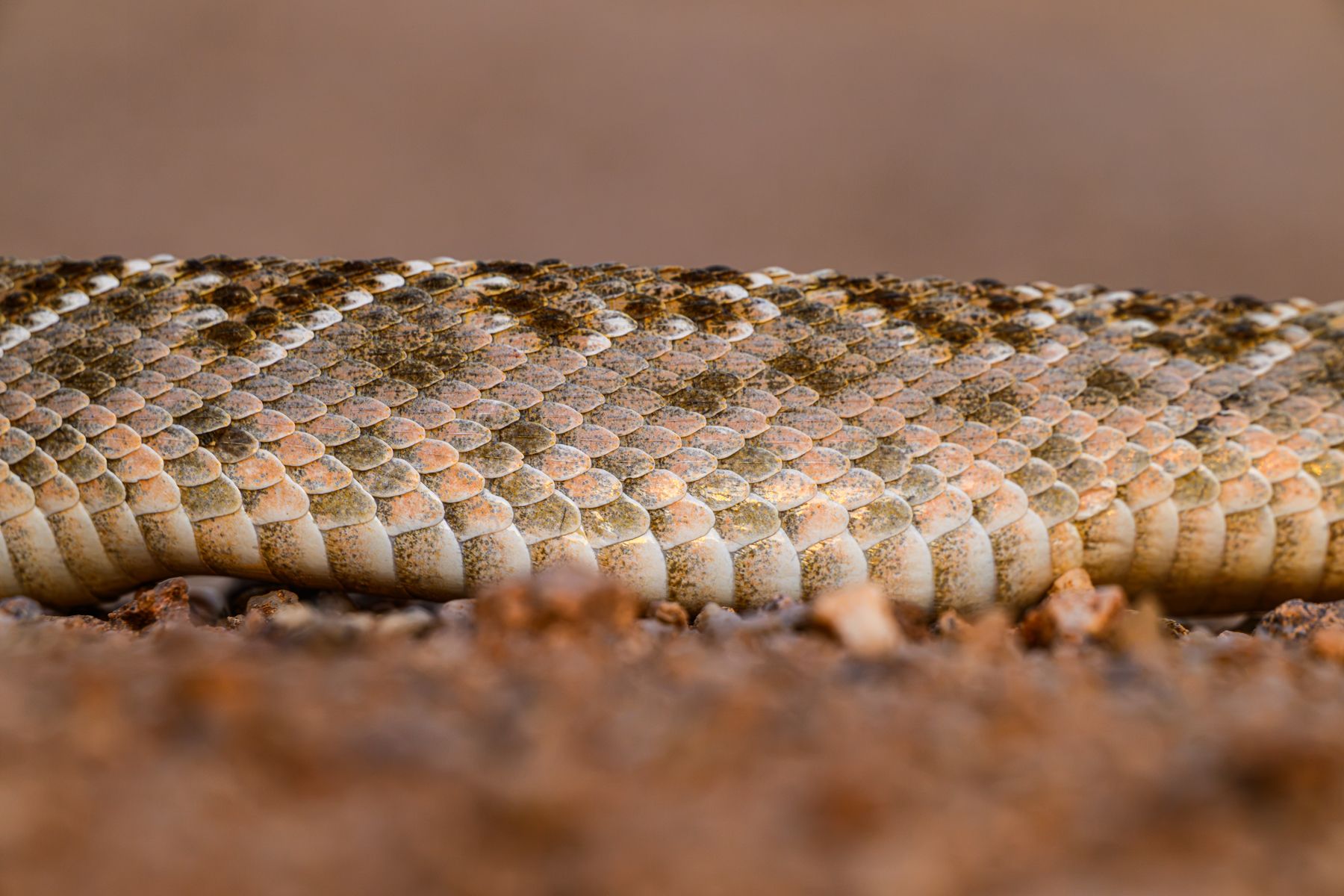
A photograph like this changes the way you think about the animal. It isn't simply a rattlesnake anymore. It becomes texture, pattern, geometry and color.
The same thing happened with the Tiger Rattlesnake.
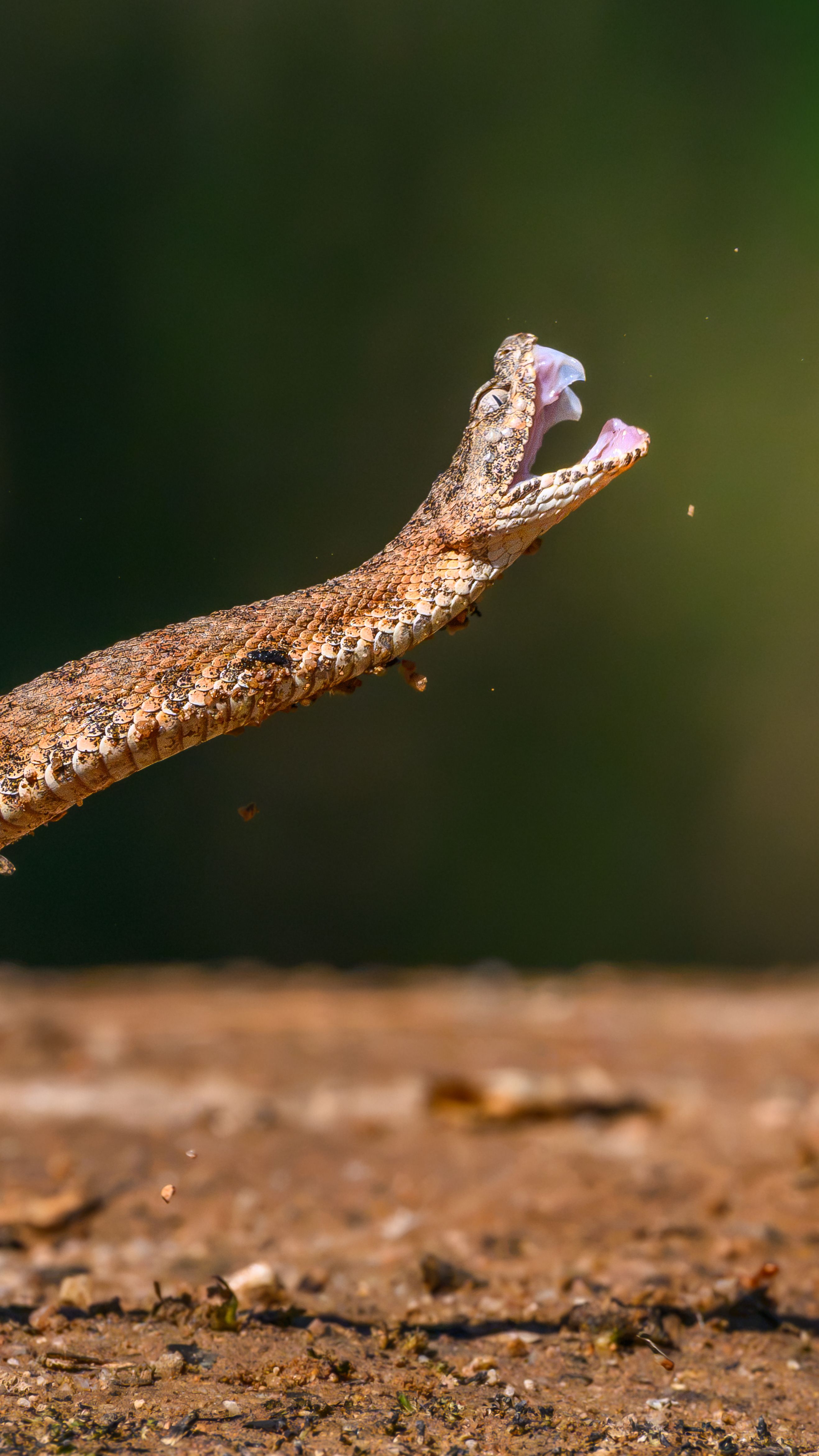
These encounters reminded me that wildlife photography doesn't always require stepping back to show the entire animal. Sometimes the story is in the details.
The Desert Comes Alive After Dark
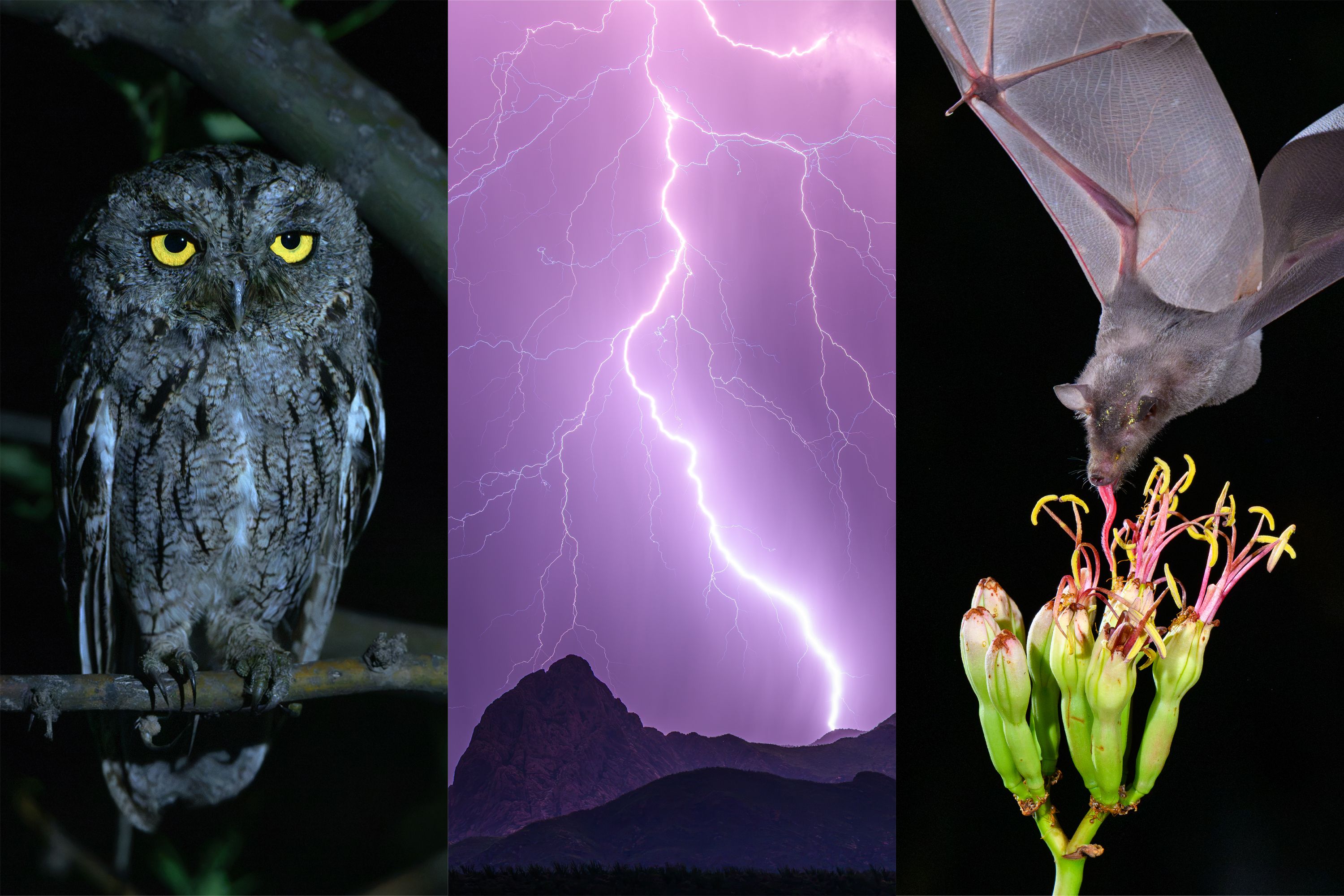
If the daytime desert is fascinating, the nighttime desert is something else entirely. Once the sun went down, the landscape seemed to transform again. We used thermal imaging to help locate nocturnal animals and specialized lighting to photograph them. That allowed us to find and photograph several owl species, including two particularly memorable encounters with Elf Owls.
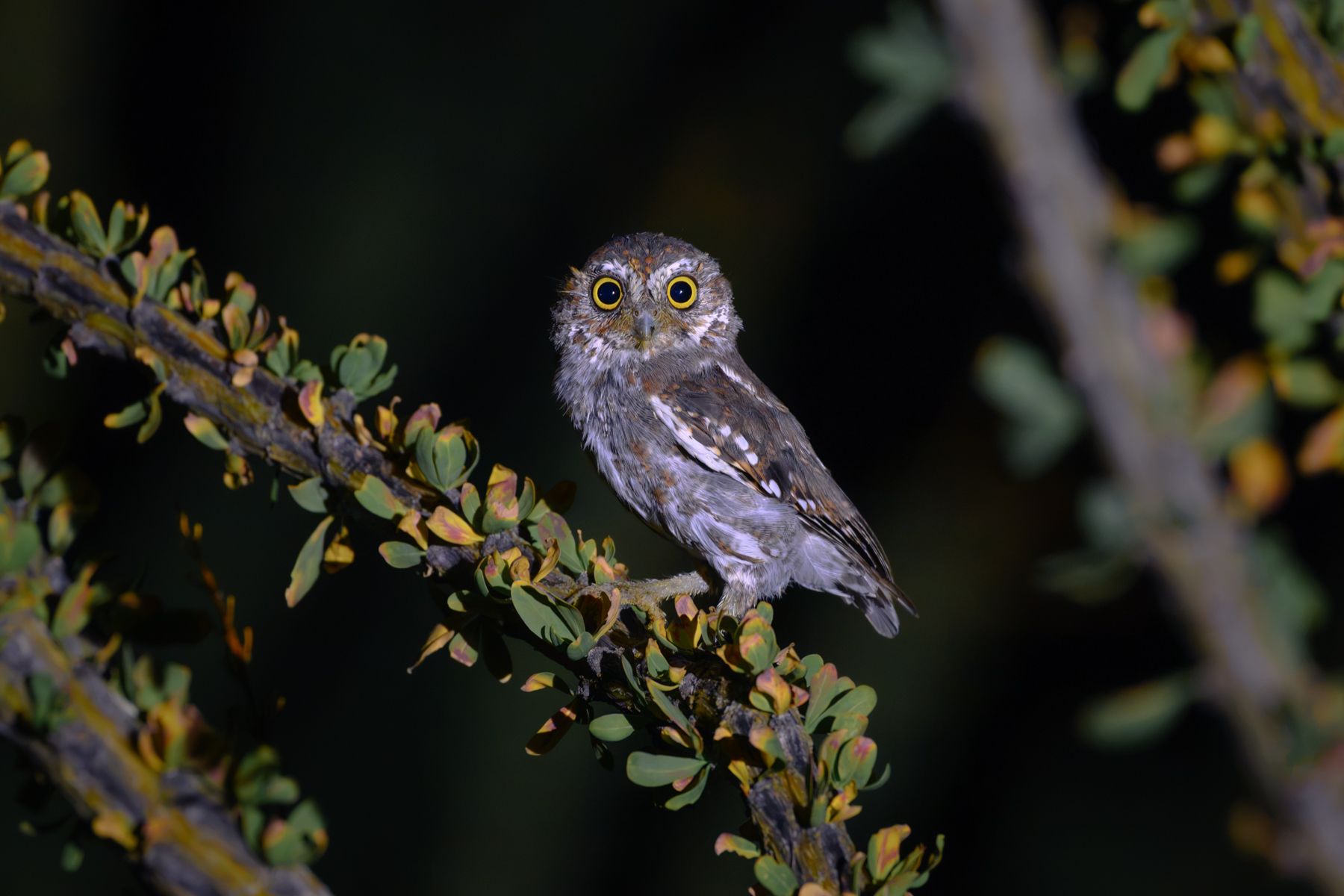
Elf Owls are tiny—in fact, it’s the smallest raptor and owl species in the world—and seeing one perched in the desert landscape makes just how small they are even more apparent. Then we found an adult.
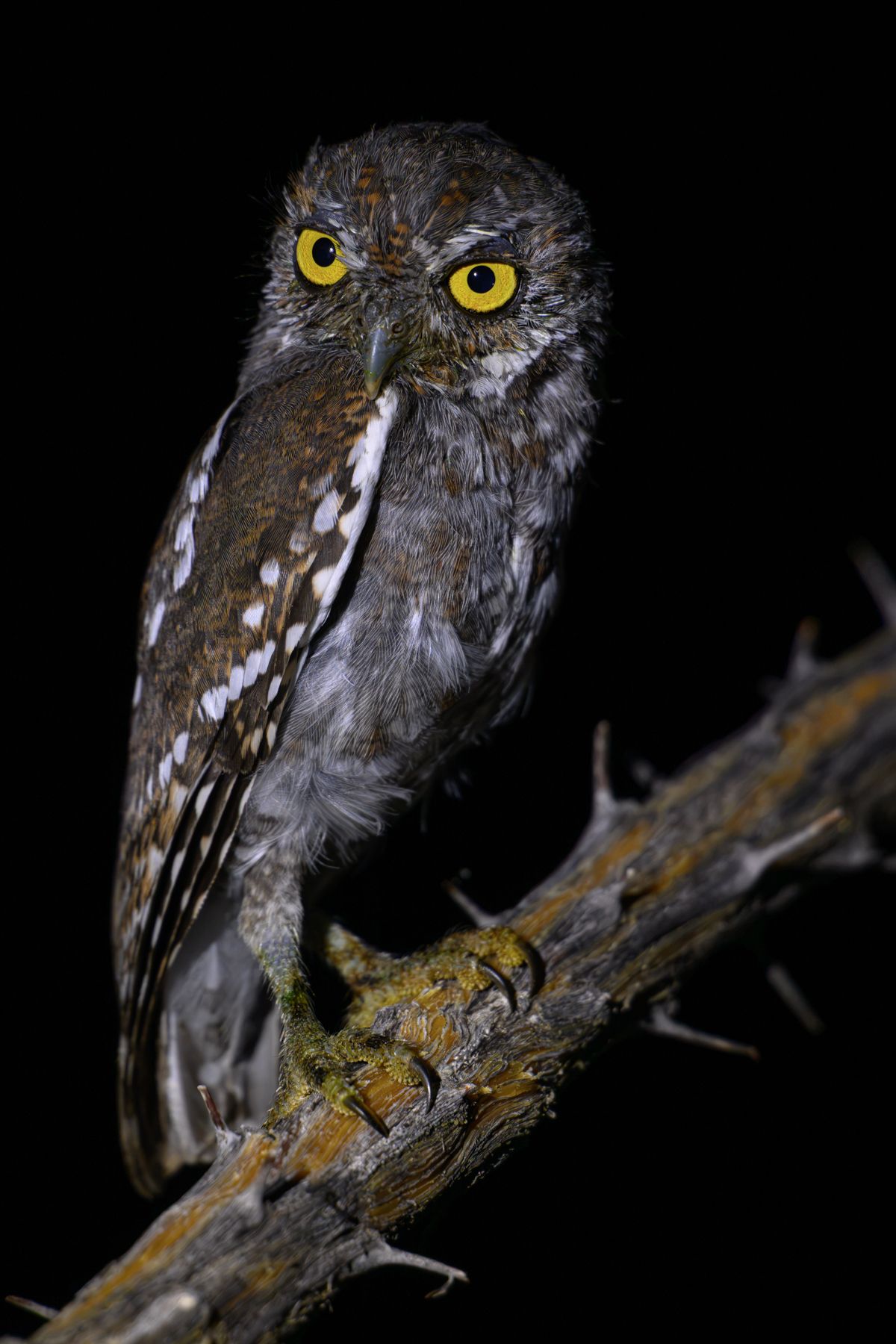
That bold expression will stop you in your tracks… that is, if you’re lucky enough to notice them. These little raptors are about 5 inches long, but don’t let their size fool you. Elf owls are kings of the night, feeding almost entirely on small invertebrates and insects like scorpions, spiders, small snakes, and beetles. Perfectly adapted to the desert, they get all their hydration directly from the prey they consume. Another fascinating fact is that they know how to cleverly remove a scorpion’s stinger before eating it!
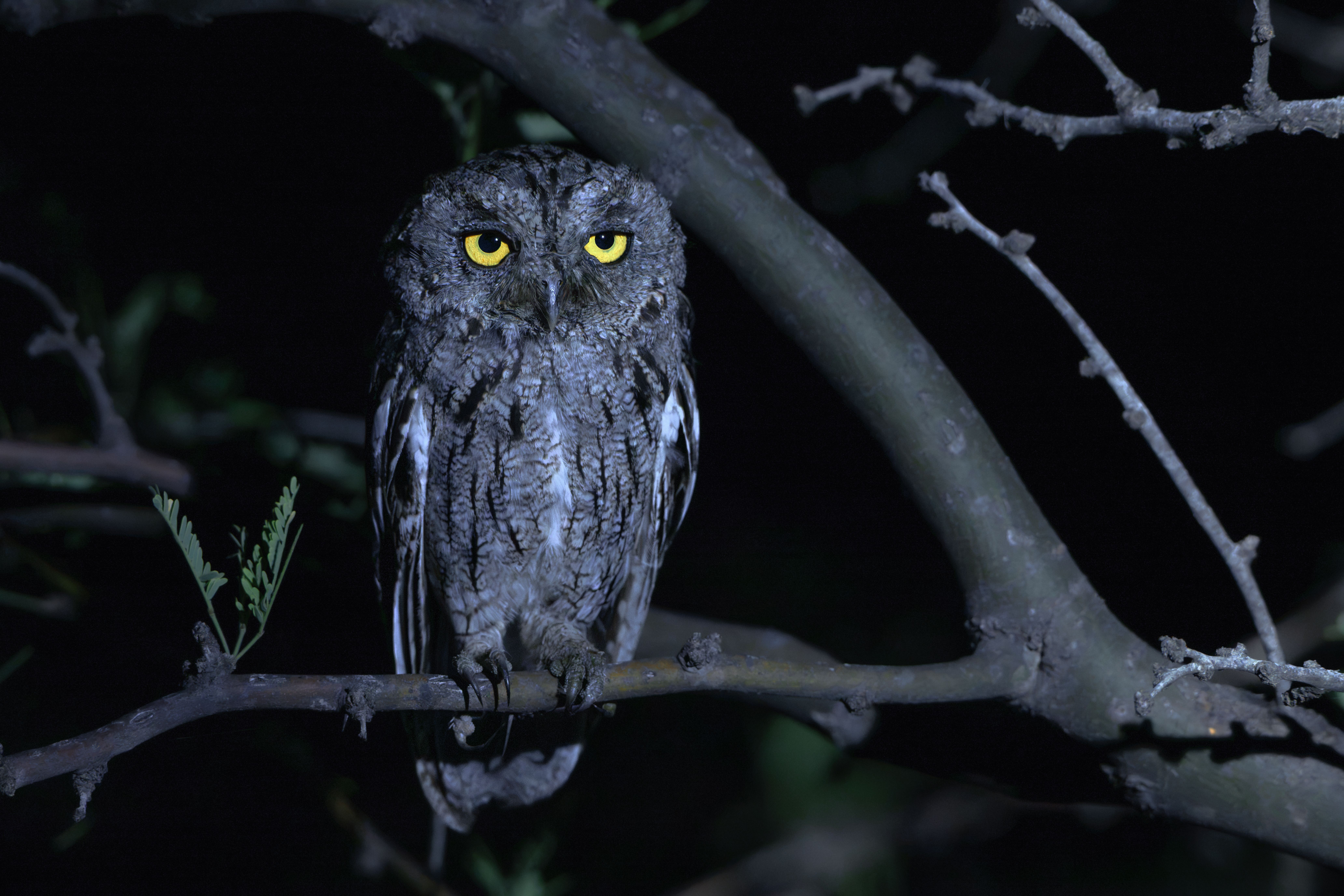
We also encountered a Whiskered Screech-Owl in Madera Canyon and a Western Screech-Owl (pictured above) at our ranch’s pond. Each sighting required a different kind of patience. Night photography doesn't offer the same visual feedback as shooting during the day. We had to locate the animals, anticipate their movements and carefully manage our lighting. The darkness forced us to slow down. And once again, the desert was teaching me to be patient.
The Art and Science of Photographing Bats
The bat photography at our private ranch was perhaps the most technically challenging—and rewarding—photography we did all week. At night, bats came to the pond to drink, swooping low across the water and briefly touching the surface. We weren't going to capture those moments by simply following them with a camera.
Instead, we created a photographic setup around their flight path. We positioned the camera and pre-focused on the area where we expected the bats to pass. A motion detector sensor triggered the flash system as the bats entered the predetermined zone, allowing us to freeze an incredibly brief moment in complete darkness. It required patience and experimentation.
We had to understand the flight patterns. We had to anticipate where the bats would pass. We had to carefully position the lighting. And then we had to wait. When everything came together, the results were spectacular.
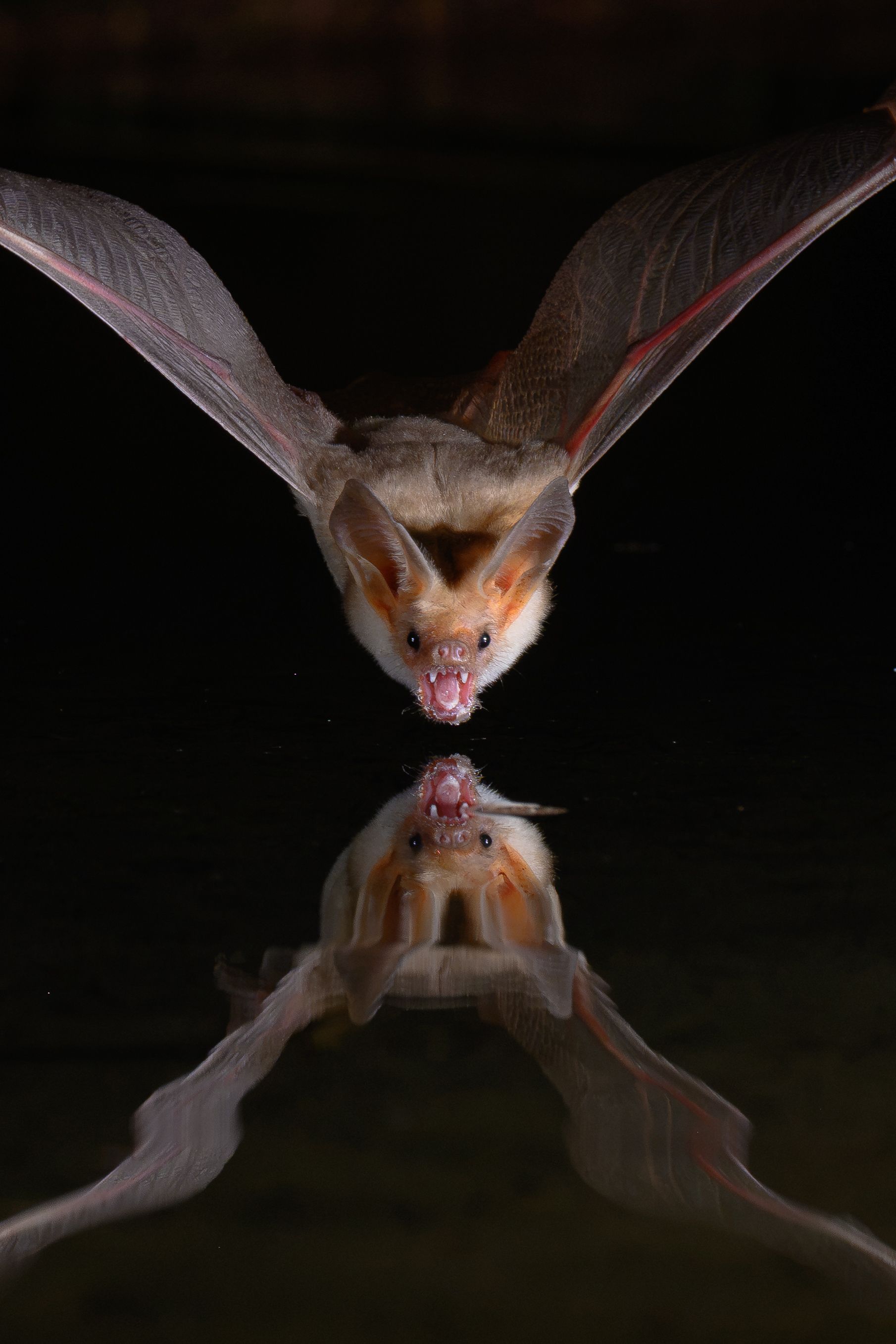
The reflection makes this image particularly special because it provides a second layer to the photograph. Instead of simply freezing the bat in flight, the image connects the animal to the water it depends upon.
This is the kind of photography that makes all the failed frames worthwhile… because there were plenty of failed frames. That's part of what makes this technique so rewarding. Wildlife photography often involves accepting that nothing happens most of the time. You wait, watch, and try again. Eventually, something extraordinary happens for a fraction of a second.
And you have to be ready.
The Desert Comes Alive After the Monsoon
One of the most memorable wildlife encounters of the trip happened at the ranch's pond, where we photographed a Gila monster drinking from the pond.
Gila monsters are famously adapted to life in the desert. They spend much of their lives hidden away, conserving energy and water. They rarely drink free water when it's available because they obtain much of their hydration from their prey (like the owls), which made watching this individual even more remarkable. The arrival of the summer monsoon can change that equation, bringing both water and an increase in available food and triggering a burst of activity.
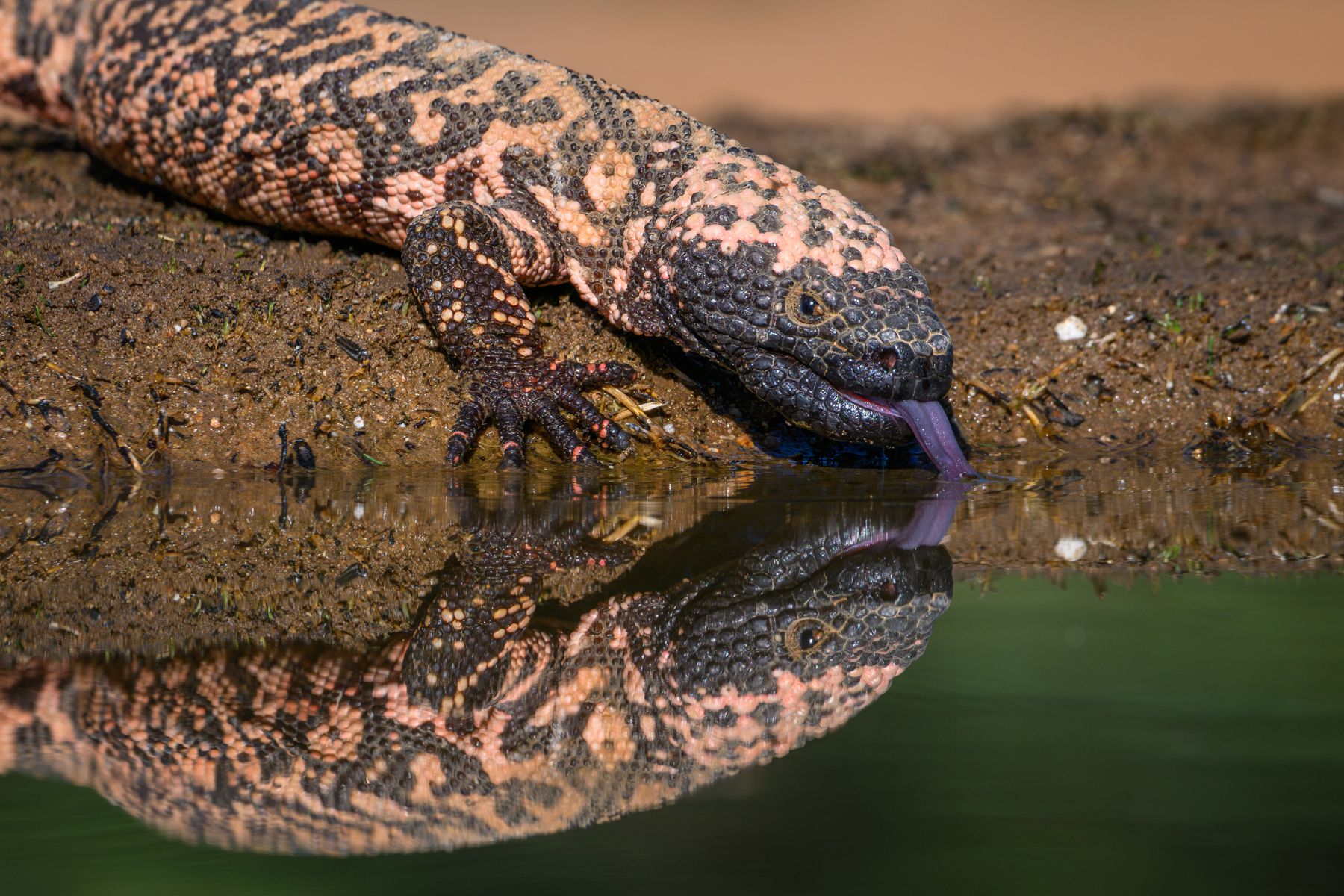
The Gila monster really does look like an animal built to withstand the desert—and it is. But even the toughest creatures depend on resources that can be remarkably scarce. That contrast stayed with me.
The desert is a place of resilience, but resilience doesn't mean independence. Everything in the desert is connected.
A World Built Around Flowers
The connection became even more apparent when we photographed nectar-feeding bats visiting agave flowers. These encounters were some of the most remarkable photography of the trip. Some of my favorites we photographed were the Mexican Long-tongued Bats and Lesser Long-nosed Bats.
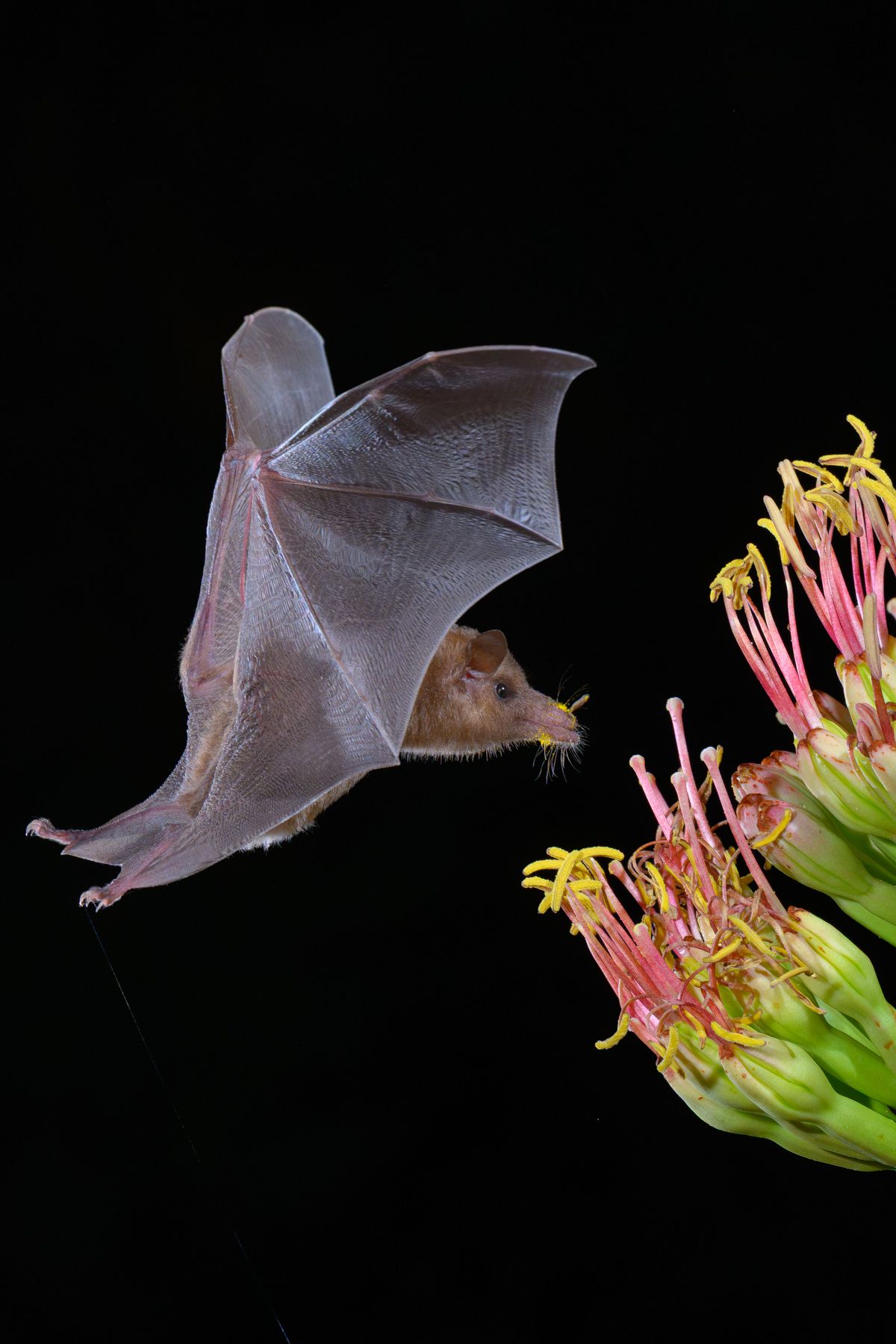
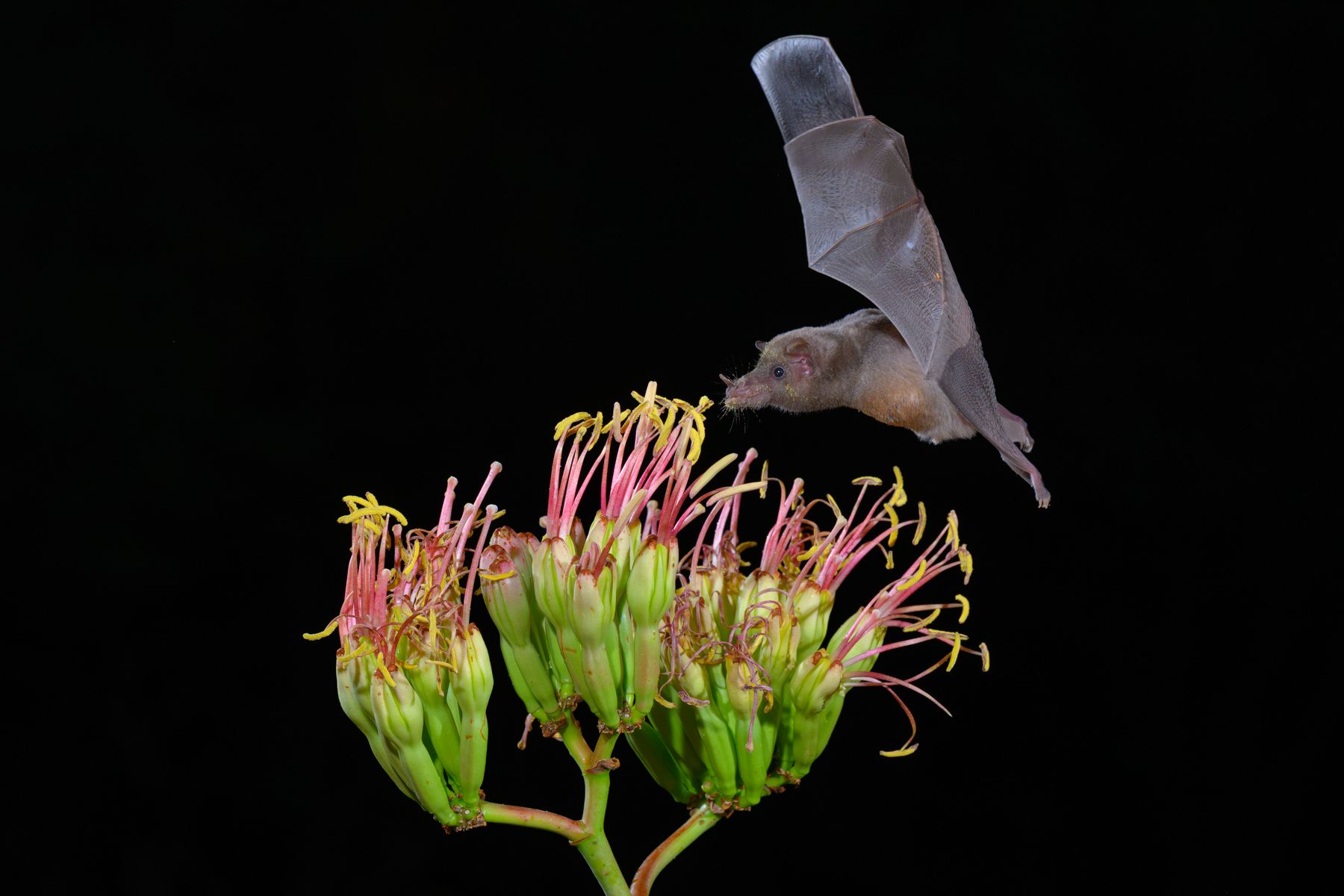
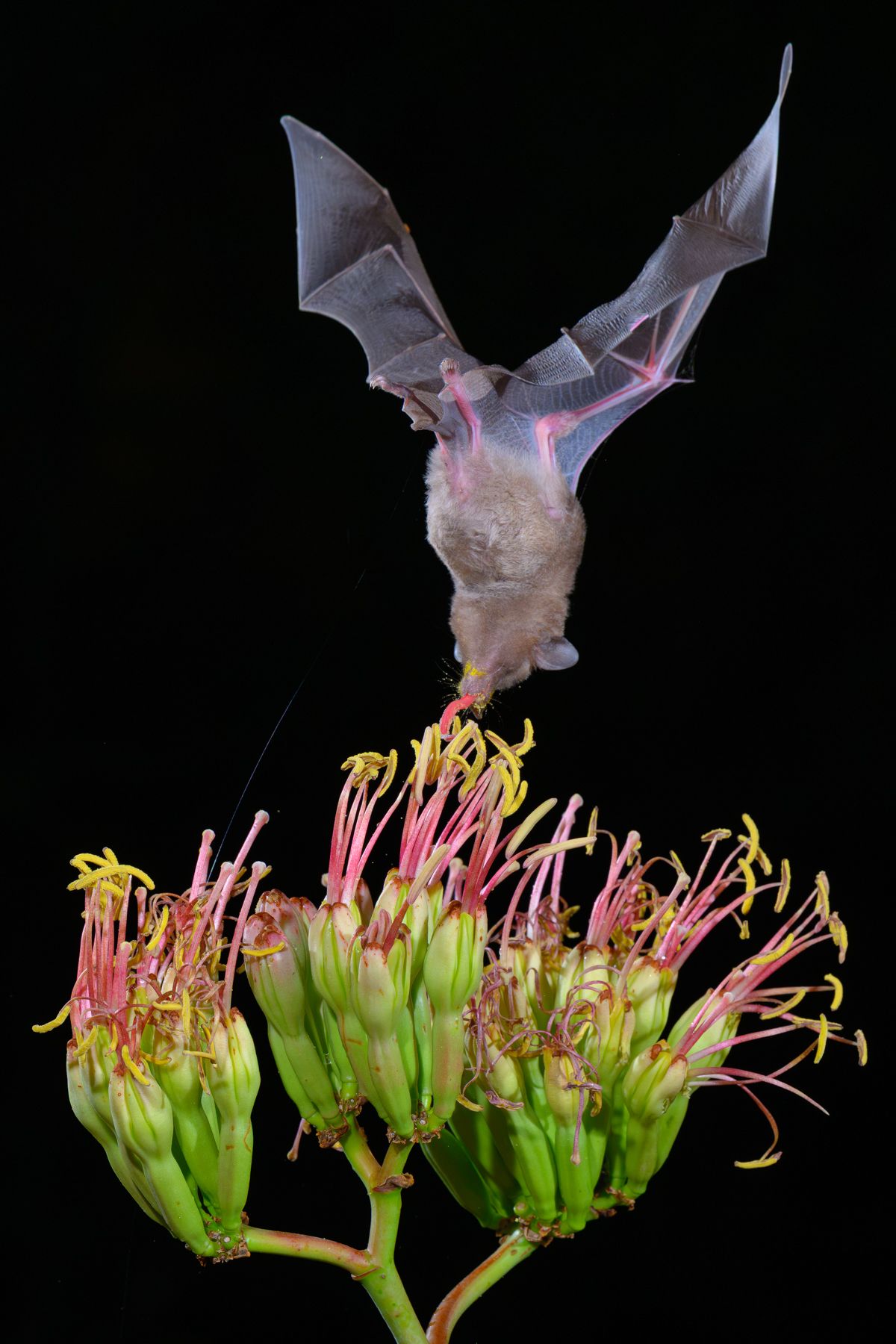
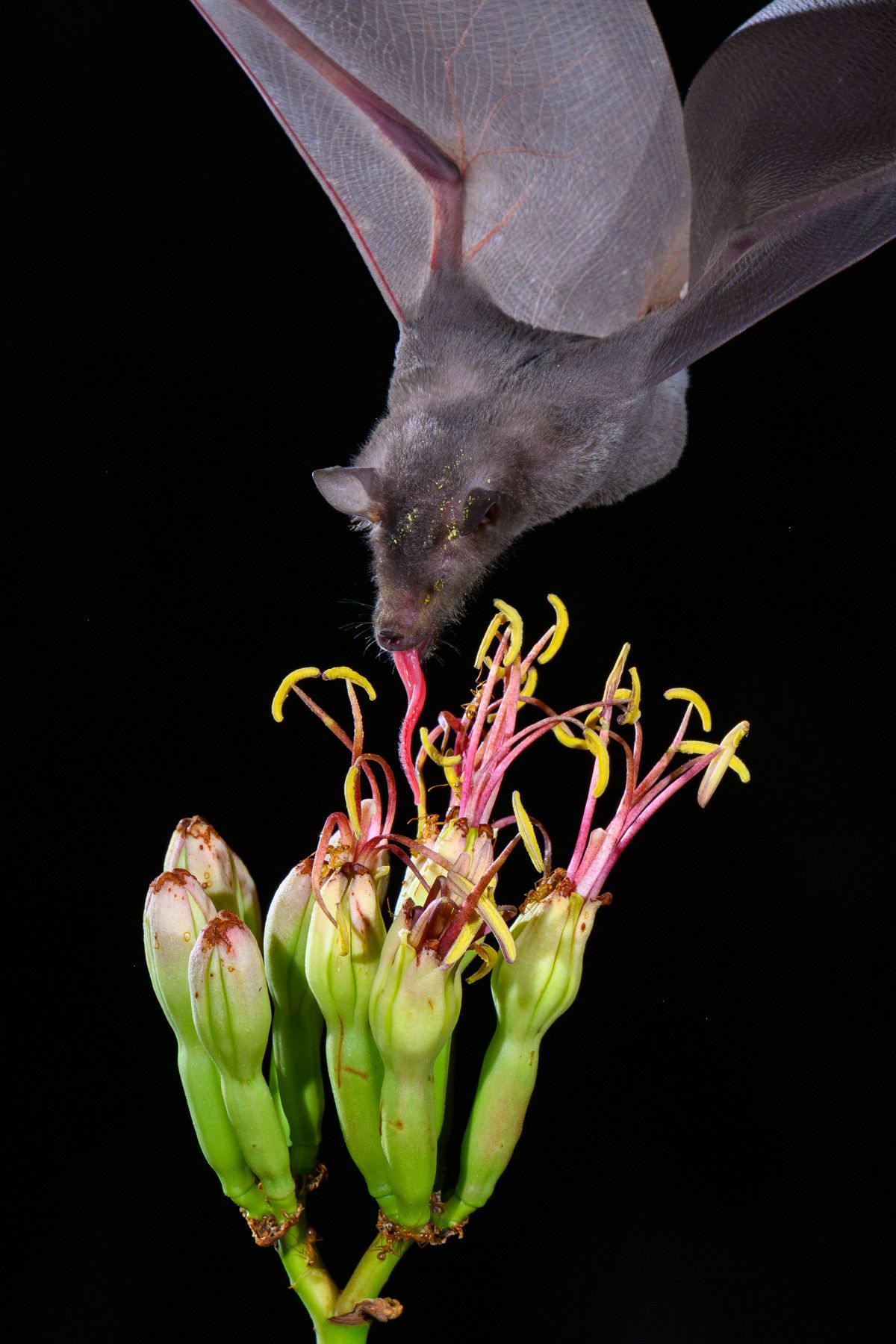
These photographs tell a story much bigger than the individual animals. The bats need the flowers. The plants benefit from the bats. And the relationship depends on timing—the flowers blooming when the bats are present and the bats arriving when the food is available. It is a beautiful example of how specialized desert life can be.
Finding Life Where We Least Expected It
One of my favorite discoveries of the trip was a den of Burrowing Owls. I was so enamored by this family of owls that I even made a special visit to see them after our trip had ended. Instead of finding a single owl sitting prominently on a branch, you’ll see them living underground, often with one standing guard outside the den. They rarely dig their own dens, so these cavities are usually left behind by prairie dogs, badgers, turtles, or other burrowing mammals. Aside from their hilariously long legs, my favorite trait is that they’re readily seen throughout the day, so you don’t need to go out at dusk like you would with most other species of owl.
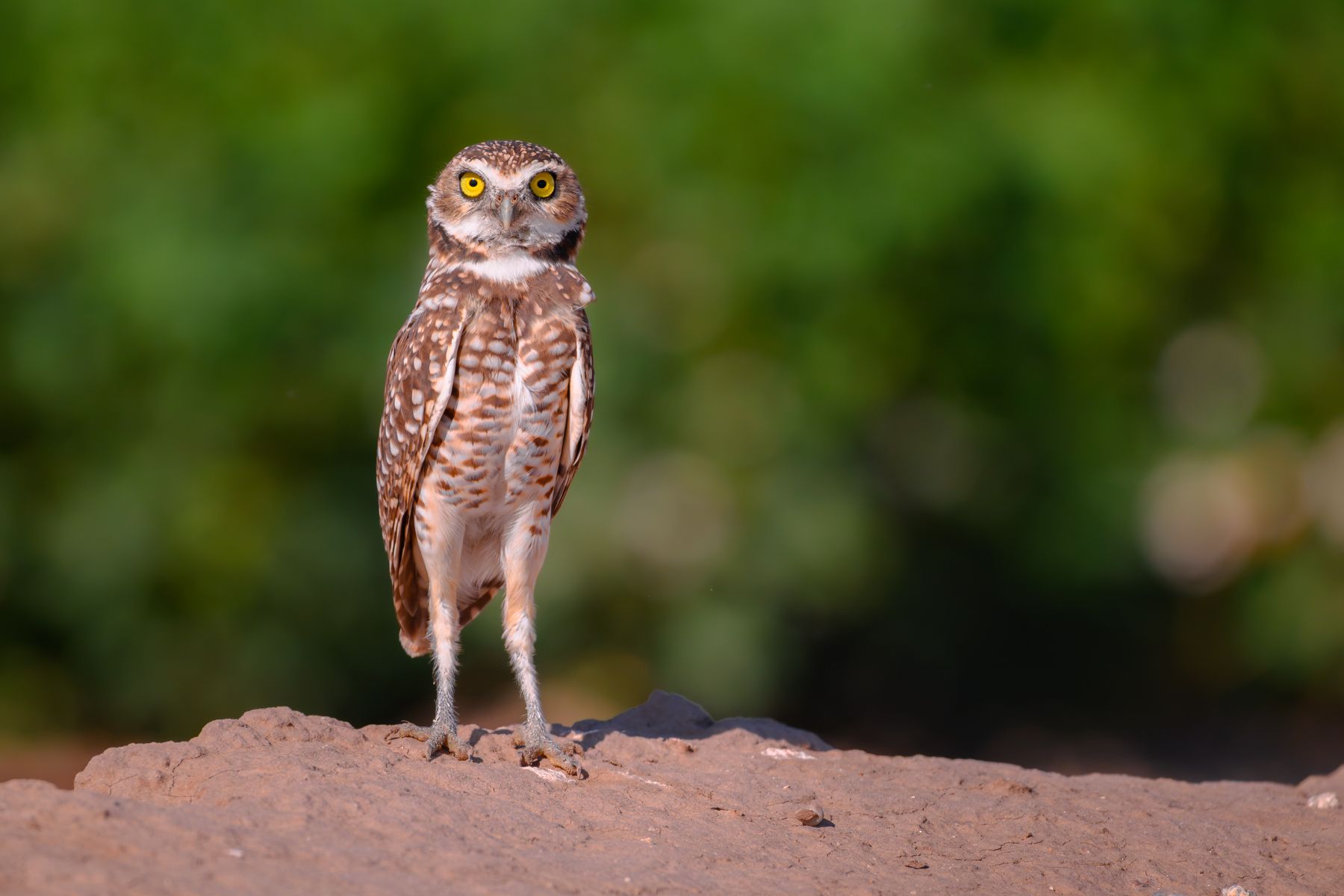
These owls are clearly built for the desert. In fact, they’ve even adapted to be able to mimic the buzz of a rattlesnake to ward off predators as they approach their dens. I witnessed this first hand as I approached their site, but I made sure to keep plenty of distance out of respect. This shot was taken with a 600mm lens plus a 1.4x teleconverter to give you a sense of proximity.
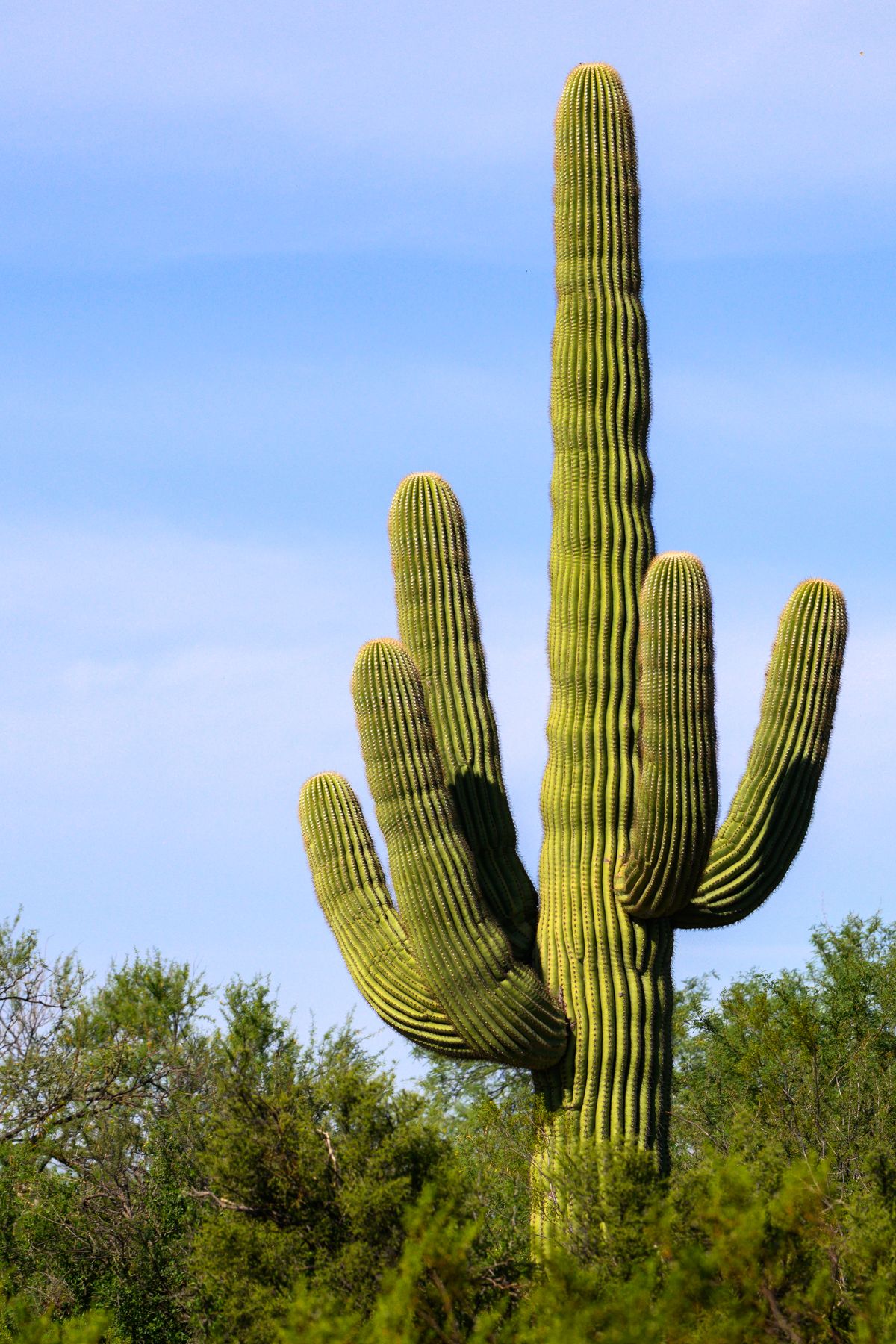
Saguaro: A Symbol of Survival
It is impossible to spend time in southern Arizona without becoming fascinated by the saguaro cactus. These enormous cacti are so closely associated with the American Southwest that they can almost become background scenery. But after spending a week photographing in their environment, I found myself looking at them differently.
A mature saguaro can live for well over a century. It grows slowly, stores water and has evolved to survive conditions that seem almost impossible. But the saguaro is much more than a symbol of endurance. It is an ecosystem in itself. Gila Woodpeckers excavate nesting cavities in the trunks. Other birds use those cavities after the woodpeckers move on. Its flowers provide food for insects, birds and bats. Its fruit becomes food for other desert animals.
The more I learned about the saguaro, the less I saw it as a solitary cactus. It became part of a much larger story. That realization changed how I photographed the landscape. I became less interested in simply photographing a beautiful cactus and more interested in photographing the relationships surrounding it.
Learning to See the Desert
That's probably the biggest way the desert changed me. It taught me that good wildlife photography isn't necessarily about finding the rarest animal or the most dramatic scene. It's about paying attention. It's about noticing that the birds have patterns. That bats follow predictable flight paths. That an owl might be hiding in the darkness. That a rattlesnake's tongue tells a story. That a Gila monster needs water. That a bat and an agave can depend on one another. That a monsoon storm can turn an apparently barren landscape green.
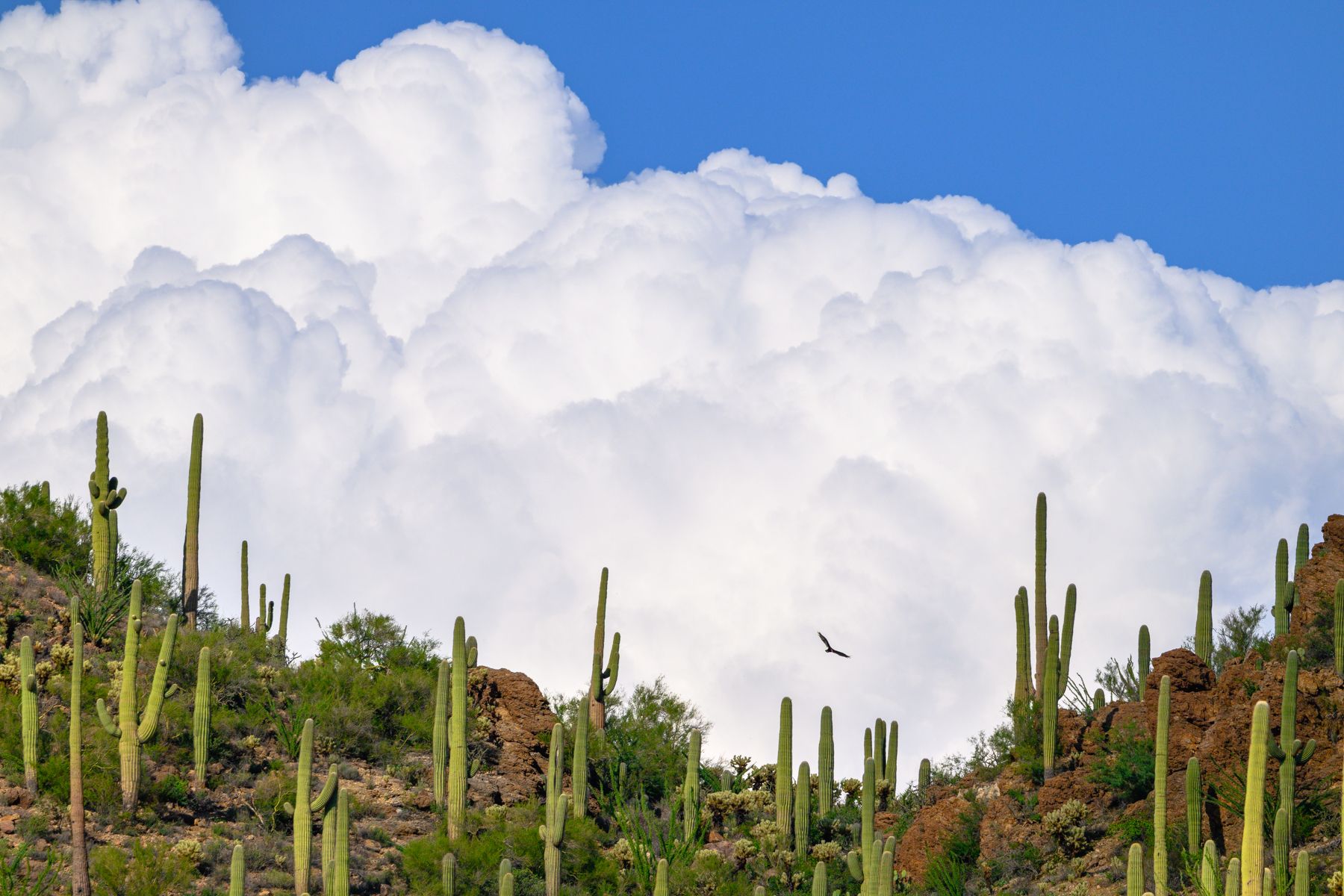
The desert taught me to slow down enough to see those connections. And when you do, you begin to see that what initially appears harsh and empty is actually one of the most vibrant and interconnected places on Earth. Instead of just giving us photographs, it reminded me why I photograph wildlife in the first place.
To pay attention.
To understand.
To witness.
And, hopefully, to help others see just how extraordinary this world really is!
 Wild Arizona: Birds, Bats & Desert Predators
 From $4,995.00
Up To 7 Guests
Fitness Level 1 - What's This?
Wanna Get Away?
Starts
Current Price:$0.00
Start: Tucson, AZ
Led By
Start: Tucson, AZ
Led By

Backcountry Journeys
Connecting Passionate People To
Exceptional Experiences.
Exceptional Experiences.
Business Hours:
Mon-Fri, 8AM-4PM MT
928-478-1521
adventure@backcountryjourneys.com
Mon-Fri, 8AM-4PM MT
928-478-1521
adventure@backcountryjourneys.com
arrow_drop_down_circle
Divider Text
All Images & Content Are Property Of Backcountry Journeys Photography Tours, Workshops & Safaris LLC - Copyright 2026


About Us
Receive a Digital Trip Catalog
Find an upcoming photography tour with our interactive catalog.